Home Blog Page 173

Government should introduce credit card to curb wastage in foreign trips

0

By Billy Mijungu
Expenditure

Prudent financial management in government is not a matter of choice but a necessity.

One key area requiring urgent reform is the handling of per diems and daily subsistence allowances for public officials.

The traditional system that allows for cash disbursements has not only created loopholes for misuse but has also led to inefficiencies in expenditure tracking.

The solution lies in transitioning to an electronic payment system using a dedicated government expenditure visa credit card.

The need for fiscal discipline in public service cannot be overstated.

Every year, millions of shillings are lost through exaggerated claims, double payments, and outright ghost expenditures linked to per diems and travel allowances.

By implementing a system where all official travel and office expenditures are made through a government-issued credit card, the state will ensure every transaction is recorded, justified, and traceable.

This will eliminate the culture of public officers pocketing allowances without actual expenditure.

An electronic payment system is the foundation of accountability.

With a government expenditure card, every payment is captured in real time, making it easy for audit trails to be established.

Public officials will no longer have the latitude to inflate costs since each transaction will be verified at the point of payment.

The days of withdrawing large sums of cash under the pretext of official duty only for the funds to be misused for personal expenses will be a thing of the past.

The impact of such a policy would be felt from the highest office to the lowest cadre of government staff.

The head of state, cabinet secretaries, principal secretaries, and all civil servants should be bound by this financial discipline.

If top officials lead by example, the rest of the public sector will follow suit.

This is not just about cost-cutting but about ensuring that public funds are used for their intended purpose.
Moreover, transitioning to an electronic system will enhance budgetary planning.

The government will be able to analyze real expenditure patterns, eliminate unnecessary costs, and allocate funds where they are genuinely needed.

With digital records, treasury officials can quickly assess trends and adjust policies to curb wastage.

Critics may argue that some situations necessitate cash withdrawals.

While exceptional cases may arise, these should be kept to the bare minimum and subjected to strict approval processes.

The primary mode of transaction must remain electronic to safeguard public funds.

Ultimately, the goal is to instill a culture of responsible public finance management.

The days of officers pocketing per diems for workshops they never attended or inflating travel costs to make personal gains must come to an end.

A government expenditure visa credit card is not just a convenience but a necessity for transparency, accountability, and fiscal prudence.

Public money belongs to the people and must be spent with the highest level of integrity.

The new and future leaders of Rift Valley

0

By Remmy Butia

The Rift Valley region of Kenya has long been a political and economic hub, producing some of the nation’s most influential leaders.

As the political landscape evolves, a new generation of leaders is emerging, bringing with them fresh ideas, energy, and a commitment to transformative leadership.

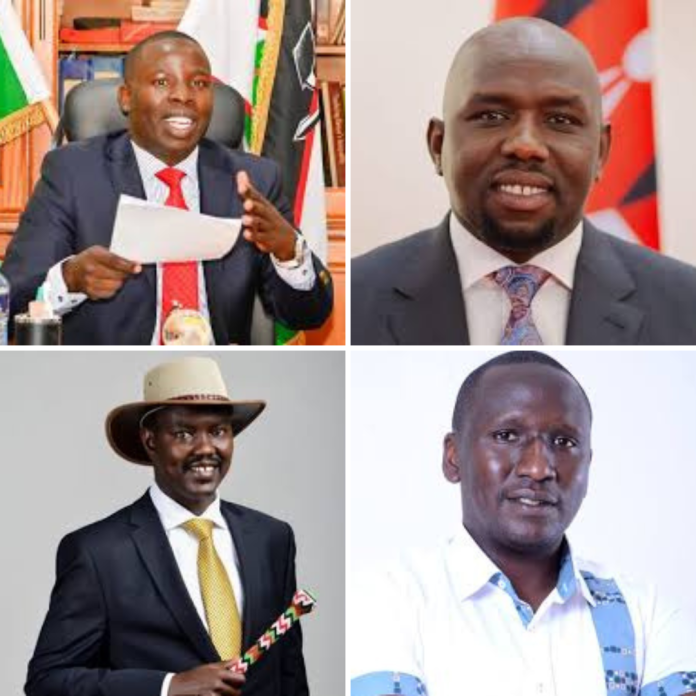
Among them are Interior Cabinet Secretary Kipchumba Murkomen, Nandi Governor Stephen Sang, Kericho Senator Aron Cheruiyot, and Uasin Gishu Senator Jackson Mandago.

These leaders, with their diverse experiences and proven track records, are not only shaping the present but also laying the foundation for the future of Rift Valley and Kenya at large.

Kipchumba Murkomen: From Senator to Cabinet Secretary

Kipchumba Murkomen, the current Cabinet Secretary for Interior and National Administration, is a seasoned politician and lawyer who previously served as the Senator for Elgeyo Marakwet.

Known for his sharp intellect, eloquence, and strategic political acumen, Murkomen quickly rose to prominence as one of the most vocal and influential leaders in the Senate.

His tenure as Senator was marked by his passionate advocacy for devolution, equitable resource allocation, and the rights of marginalized communities.

As Interior CS, Murkomen has taken on one of the most challenging and critical roles in the government.

His leadership has been characterized by a focus on improving national security, streamlining government services, and fostering unity and cohesion among Kenya’s diverse communities.

Murkomen’s ability to navigate complex political and administrative challenges has earned him respect across the political spectrum.

As a young leader from Rift Valley, he represents the region’s aspirations for effective and visionary leadership at the national level.

Stephen Sang: The Development Champion

Nandi Governor Stephen Sang, who previously served as the Senator for Nandi County, has established himself as a development-oriented leader.

As the Council of Governors’ Chief Whip and Chairman of the North Rift Economic Bloc (NOREB), Sang plays a pivotal role in coordinating development initiatives across the region.

His leadership in NOREB has been instrumental in promoting regional integration, economic growth, and resource sharing among the North Rift counties.

In Nandi County, Sang’s administration has prioritized healthcare, education, agriculture, and infrastructure development.

His efforts to improve access to clean water, enhance agricultural productivity, and empower the youth have earned him widespread acclaim.

Sang’s calm demeanor, inclusive leadership style, and commitment to service delivery make him a unifying figure in Rift Valley politics.

His role as a regional leader and his focus on sustainable development position him as a key player in shaping the future of the region.

Aron Cheruiyot: The Dynamic Senate Majority Leader

Kericho Senator Aron Cheruiyot, currently serving his third term in the Senate, has emerged as one of the most dynamic and influential leaders in the Rift Valley region.

As the Senate Majority Leader, Cheruiyot plays a critical role in steering legislative agendas and ensuring the passage of key bills.

His leadership in the Senate has been marked by his commitment to youth empowerment, education reform, and economic development.

Cheruiyot’s ability to articulate the concerns of young people and his proactive approach to addressing their challenges have made him a symbol of hope for many.

His legislative initiatives, particularly those aimed at creating employment opportunities and improving access to quality education, have had a significant impact on the lives of many Kenyans.

As a young and energetic leader, Cheruiyot represents the aspirations of a new generation and is poised to play a central role in the future of Rift Valley politics.

Jackson Mandago: The Experienced Statesman

Uasin Gishu Senator Jackson Mandago brings a wealth of experience to the table, having served as the Governor of Uasin Gishu for two terms before transitioning to the Senate.

During his tenure as governor, Mandago implemented transformative projects in education, healthcare, and infrastructure, earning him a reputation as a results-oriented leader.

His current role as the Chairperson of the Senate Standing Committee on Health allows him to leverage his experience to advocate for better healthcare policies and services for all Kenyans.

Mandago’s leadership is characterized by his ability to balance ambition with pragmatism.

His deep understanding of the region’s dynamics and his commitment to unity and development make him a stabilizing force in Rift Valley politics.

As a seasoned leader, Mandago provides mentorship and guidance to younger leaders, ensuring continuity and stability in the region’s leadership.

The Future of Rift Valley

Together, Kipchumba Murkomen, Stephen Sang, Aron Cheruiyot, and Jackson Mandago represent the new and future leaders of Rift Valley.

Their diverse backgrounds, unique strengths, and shared commitment to the region’s progress make them a formidable team.

Each leader brings a distinct set of skills and experiences to the table, creating a synergy that is essential for addressing the region’s challenges and unlocking its potential.

Murkomen provides strategic leadership at the national level, ensuring that Rift Valley’s interests are well-represented in the highest echelons of government.

Sang drives regional development through his roles in the Council of Governors and NOREB, fostering economic growth and collaboration among counties.

Cheruiyot champions the aspirations of the youth, ensuring that their voices are heard and their needs addressed in legislative and policy frameworks.

Mandago offers stability and experience, guiding the region with wisdom and a long-term vision for sustainable development.

As Rift Valley navigates the challenges and opportunities of the 21st century, the leadership of Murkomen, Sang, Cheruiyot, and Mandago will be critical in shaping its future.

Their ability to work together, inspire confidence, and deliver results will determine the trajectory of the region in the years to come.

With their collective vision and commitment, Rift Valley is well-positioned to reclaim its place as a beacon of progress, unity, and prosperity in Kenya.

In a rapidly changing political and economic environment, the emergence of such dynamic and visionary leaders is a testament to the resilience and potential of the Rift Valley region.

The future is indeed bright, and with leaders like Murkomen, Sang, Cheruiyot, and Mandago at the helm, Rift Valley is poised to achieve new heights of development and influence in Kenya and beyond.

Ndindi, the political dynamics: A debt of Gratitude?

0

By Remmy Butia

In the intricate tapestry of Kenyan politics, the 2022 general elections brought to light a fascinating interplay of loyalty, strategy, and historical alliances.

One of the most notable outcomes was the re-election of Ndindi Nyoro as the Member of Parliament for Kiharu Constituency.

Nyoro, a staunch supporter of President William Ruto, rode on the wave of the United Democratic Alliance (UDA) party’s popularity in the Mount Kenya region.

However, his victory and the overwhelming support for UDA in Kiharu and beyond cannot be fully understood without acknowledging the role of former President Uhuru Kenyatta and the political debt of “Kumi Yangu, Kumi Ya Ruto.”

The Rise of Ndindi Nyoro

Ndindi Nyoro, a young and dynamic politician, has steadily risen through the ranks of Kenyan politics. His re-election in 2022 was a testament to his growing influence in Kiharu and his alignment with William Ruto’s bottom-up economic model.

Nyoro’s campaign resonated with many voters who saw in him a representative of the younger generation, ready to champion their interests in the national arena.

However, his success was not solely a result of his personal appeal or political acumen.

The Role of William Ruto

William Ruto’s influence in the Mount Kenya region cannot be overstated.

Despite being from the Rift Valley, Ruto forged a strong political alliance with the Kikuyu community, the dominant ethnic group in Mount Kenya.

This alliance was crucial in the 2022 elections, as it helped Ruto secure the presidency and, by extension, bolstered the campaigns of UDA-affiliated candidates like Ndindi Nyoro.

Ruto’s message of economic empowerment and his promise to uplift the “hustlers” struck a chord with many voters in Kiharu and the wider Mount Kenya region.

Nyoro, as a close ally of Ruto, benefited from this wave of support.

His victory was, in many ways, a reflection of the broader political shift in the region, where voters were willing to break from traditional loyalties to support Ruto’s vision.

The Debt of “Kumi Yangu, Kumi Ya Ruto”

However, the story of Ndindi Nyoro’s success and the UDA wave in Mount Kenya is incomplete without mentioning the role of former President Uhuru Kenyatta.

The phrase “Kumi Yangu, Kumi Ya Ruto” (My Ten, Ruto’s Ten) became a rallying cry during the elections. It referred to the political debt that many Kikuyu voters felt they owed to Ruto for his loyalty to Uhuru Kenyatta during the latter’s presidency.

During the 2013 and 2017 elections, Ruto stood firmly by Uhuru’s side, even when it was politically expedient to do otherwise.

This loyalty created a sense of indebtedness among the Kikuyu electorate, who felt that it was now their turn to support Ruto in his presidential bid.

This sentiment was powerful in Kiharu, where voters overwhelmingly supported UDA candidates, including Ndindi Nyoro.

Gratitude to UDA and Uhuru Kenyatta

In light of this, Ndindi Nyoro and other UDA leaders in Mount Kenya owe a debt of gratitude not only to William Ruto but also to Uhuru Kenyatta.

It was Uhuru’s earlier alliance with Ruto that laid the groundwork for the political realignment that ultimately benefited UDA in the 2022 elections.

The “Kumi Yangu, Kumi Ya Ruto” ethos was a powerful force that drove many Kikuyu voters to repay their perceived debt by voting for Ruto and his allies.

Moreover, Nyoro should be grateful to the UDA party for providing a platform that aligned with the aspirations of his constituents.

The party’s focus on economic empowerment and its ability to mobilize support across ethnic lines were crucial factors in Nyoro’s re-election.

UDA’s success in Kiharu and other parts of Mount Kenya was a collective effort, driven by a shared vision and a sense of political reciprocity.

Ndindi Nyoro’s re-election as the MP for Kiharu is a testament to the complex and dynamic nature of Kenyan politics.

While his appeal and commitment to his constituents played a significant role, his victory was also shaped by broader political forces.

The alliance between William Ruto and Uhuru Kenyatta, encapsulated in the phrase “Kumi Yangu, Kumi Ya Ruto,” created a sense of indebtedness that influenced the voting patterns in Kiharu and beyond.

As Ndindi Nyoro continues to serve his constituents, he should remain mindful of the political debt that contributed to his success.

Gratitude to the UDA party and an acknowledgment of the role played by Uhuru Kenyatta in shaping the political landscape are essential.

In the ever-evolving world of Kenyan politics, understanding and appreciating these dynamics will be crucial for Nyoro and other leaders as they navigate the challenges and opportunities that lie ahead.

The Power of Small Actions: Reclaiming and Recreating Our Society

0

Dr.Edris Omondi(Advocate)
attorneyedris@ywcg.org

There are men of God, and there are men sent by God.

Several years ago, I met a man in the course of my legal profession who inspired my life beyond our average social set-up.

The story I’m about to share may seem tragic, but it carries with it a powerful message about the significance of small actions.

The wife of this man survived a plane crash.

She was admitted to a city hospital with the hope of recovery but tragically fell into a coma.

A year later, she succumbed to her injuries.

While the outcome of her recovery was heartbreaking, what struck me was the devotion of her husband.

For an entire year, he faithfully brought a fresh rose to the hospital every day, right around midday.

His wife had loved the fragrance of fresh roses.

Every day, as she held the rose to her nose and whispered a prayer, the nurse would clean the room in anticipation of another fresh rose the following day.

And indeed, he never failed.

It was a simple yet deeply touching act that impacted the entire hospital facility, leaving an indelible mark on everyone who witnessed it.

This story has been a perfect example in my life, of how small actions can have far-reaching consequences.

In a world where many often feel helpless in the face of overwhelming challenges, it’s easy to forget that the smallest of gestures can have a ripple effect that extends far beyond our immediate surroundings.

The late Nobel Environmental Laureate, Professor Wangari Maathai, once gave a compelling illustration of this reflective idea.

She told the story of a hummingbird determined to put out a huge fire that was consuming an entire forest.

All the great, powerful animals—elephants with their mighty trunks, lions with their strength, and other creatures who could have easily brought water to douse the flames—stood around, helplessly watching the fire destroy their habitat.

But one small hummingbird refused to give up.

It flew to a nearby stream, took a drop of water, and carried it back to the fire.

It repeated this, up and down, tirelessly.

The larger animals mocked the hummingbird, telling it that its wings were too small and its efforts were futile.

But the hummingbird, without hesitation, responded, “I am doing the best I can.”

How often do we get people ridicule our efforts in life, trying to pull us down that we are not good enough, perhaps based on our past encounter with them.

This small, determined bird’s actions mirror the choices we face every day.

In our families, in our communities, in our nations, we are all called to do the best we can, even when the task seems daunting.

Just like my friend who carried fresh roses every day for his wife, we, too, can make a difference with our small acts of faithfulness.

Keep on moving-keep perfecting your art.

It may seem insignificant at first, but over time, these daily gestures have the power to transform the world around us.

Take, for example, the mother who teaches her children kindness, respect, and empathy, instilling values that will shape their future and, by extension, society’s future.

It may seem like a small thing—one mother, one family—but it’s a seed planted in the hearts of the next generation, ensuring that kindness, love, and morality continue to flourish in the world.

Consider the individual who picks up litter from the streets, who conserves water, or who plants trees.

It may seem like a minor effort in a world overrun by environmental degradation, but these small actions, when multiplied by millions of people, can begin to heal the Earth, one step at a time.

And what about the businessman who runs his company with integrity, refusing to compromise on ethical standards, no matter the temptation? The impact of his leadership extends beyond his organization.

It sets an example for employees, clients, and competitors alike, fostering an environment of trust and responsibility.

In our communities, the simple act of helping a neighbor, standing up against injustice, or offering support to those in need may appear trivial.

Yet, each of these small acts creates a ripple that inspires others to do the same, gradually transforming our neighborhoods into stronger, more compassionate places.

It’s easy to feel discouraged, to think that our individual contributions don’t matter in the grand scheme of things.

But like the hummingbird, we must remember that doing our best, even in the face of enormous challenges, is what matters most.

Each small act adds up.

One fresh rose at a time.

One drop of water at a time.

In conclusion, we might have been victims of a defeatist bandwagon and the nay-sayers.

Perhaps worse off, fallen prey and joined their lackluster nature-who cares attitude.

My grandeur readers, desperation actions reclaiming and recreating our society does not require grand gestures or monumental changes all at once.

It requires us to commit to the small, everyday actions that reflect our values and our desire to make the world a better place.

As we move forward, let us remember, as the good book says-we could have all fallen short of the glory-but let us remember that it’s the little things, done consistently and with purpose, that ultimately shape the world we live in.

Like the fresh rose brought to the hospital each day, our individual actions, no matter how small, have the power to transform lives and inspire others.

The future of our society lies not in waiting for others to act, but in doing our best, every single day.

Ndindi’s bombshell likely to stir emotions in Mt Kenya

0

By Anderson Ojwang

The press conference was a bombshell.

Allies turning on one another.

No communication, and the whip cracked.

The Murima could be spitting fire after the revelation.

The cracks in the Kenya Kwanza Coalition (KK) of President William Ruto have been laid bare by the immediate former Budget and Appropriation Committee Chairman, Ndindi Nyoro

At a press conference in Nairobi, Ndindi, a once close and staunch ally of Ruto and his key point persons in Mt Kenya and nationally, revealed that he last spoke to the president in October last year.

Ndindi also revealed that he did not know why he was replaced, and nobody called and consulted him over the recent changes in the parliament committee leadership and that the leadership of the coalitions had not reached out to him on the subject matter.

“I do not know why I was replaced. I am saying it in good faith. I didn’t come here to accuse anyone today. I only came to set the record straight.

No one in the leadership of our coalition, from whichever position, has ever called me in regard to the position. In regard to what I need to do better. In regard to what I need to change. In regards things that needed to be done in a different manner.

It is very good for me to put the record straight. I was holding this position knowing that I was serving Kenyans. So, I am answerable to Kenyans too.

In sincerity, there is none who has ever called me. The decision makers of our coalition. That is the truth, “he said.

Ndindi was recently replaced by Alego MP Mr. Sam Atandi, a member of the Orange Democratic Movement (ODM) of former Prime Minister Raila Odinga.

Atandi became the first MP from Nyanza to hold the powerful parliamentary committee chair 60 years after independence.

Atandi had earlier, before his election, at a funeral in his village, hinted that Raila had promised him a powerful seat and asked his voters to support the broad-based government.

Recently, President Ruto and Raila signed a memorandum of understanding (MOU) on the engagement between ODM and UDA.

Before the signing of the MOU and during Genz’s protest over the controversial Finance Bill, Raila and Ruto formed a broad-based government that witnessed senior ODM leaders, John Mbadi, Hassan Joho, Wycliff Oparanya and Opiyo Wandayi appointed to the cabinet.

Interestingly, the political union between Raila and Ruto allowed the latter to successfully preside over the impeachment of his deputy, Rigathi Gachagua.

Currently, Gachagua has declared an all onslaught on President Ruto for what he alleges betrayal of the Mt Kenya community and is working with the opposition politicians, Martha Karua and Kalonzo Musyoka, with a view to clinching power in 2027.

Ndindi responded on his relationship with President Ruto saying that they last spoke in October last year and have not spoken for six months.

“The position I held is a consultative position. Before a decision is made, there has to be consultation.

But as I said before that I have not had any conversation directly or on the phone with any leader of our coalition in regard to the position I used to hold.

I respect everybody. I am the type of person who believes that one doesn’t just become a leader by being picked.

There are processes they go through. Because I am one and I know. I respect every leader.

Maybe for clarity’s sake, the last discussion was with the president of the country.

The last political discussion, either a chat or discussion, as it were, was before October last year, and I wouldn’t want, and you permit me not to discuss any further on any leader because, as you all are aware, I stopped serving in my position hardly a week.

Also need to understand many things before I talk. As a leader, I need people, there are people who look up to us as leaders. In this world, I only fear God.

We are given wisdom on what and how to say.”

The revelation of Ndindi is likely to ignite a political rebellion in Mt Kenya, which is becoming hostile to the president.

Mt Kenya was Ruto’s main political block in the last general election, and the votes he secured from the region enabled him to win the presidency.

Ndindi said he doesn’t regret leaving the office but warned that those who are at the vantage point should treat people better.

“No Regrets, what I believe is that I am the sum of my experience, both good and bad.

If I want to remove any bad experience from my CV, that is as a human being. Therefore, very rarely will I have regrets, but lessons. Treat people better. If at some point you feel you have been wronged, I always believe in that opportunity to know how to treat people better when you are at a vantage point.

City and Municipalities managers caucus gets new official with Wanga elected chair

0

By Sandra Blessings

The City and Municipality Managers caucus held its election with Kisumu City Manager Abala Wanga elected as the chair unopposed.

A new era of leadership begins. Kisumu City Manager Mr Abala took over from Nakuru’s Gitau Thabanja for a one-year term.

With over 120 municipalities and 5 cities, the influential caucus plays a vital role in shaping urban governance and development across the country.

Wanga was elected during the quarterly caucus meeting, which marked a significant milestone for Kisumu and urban leadership in Kenya.

His tenure is expected to usher in progressive policies, strategic collaborations and enhanced service delivery in cities and municipalities nationwide.

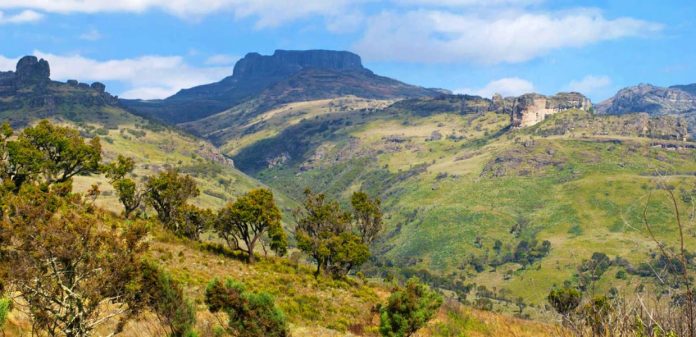
Stakeholders to plant 50 million trees to restore the degraded Mt Elgon Forest

0

By Anderson Ojwang and GPU

In a move aimed at restoring and conserving the degraded Mt Elgon Forest, stakeholders have embarked on an ambitious program to plant 50 million trees.

In a recent stakeholders consultative meeting in Bungoma, ominously agreed to protect and conserve the forest and contain human activities that degrade the facility.

Subsequently, several stakeholders have come together to ensure the degraded Mt Elgon Forest is conserved to its former glory.

At the consultative stakeholders meeting, the County Conservator Eric Abung’u said concerted efforts have been placed to conserve Mt Elgon Forest one of the five water towers in the country.

The Country’s water towers include Mt. Kenya, Aberdare Ranges, Mau Forest Complex, Cherangani Hills, and Mt. Elgon.

Mt. Elgon, a crucial water tower for Kenya and Uganda, is facing significant threats, including deforestation, over-extraction of groundwater, and climate change, impacting the water supply and local livelihoods. 

Mt. Elgon is a vital water tower, supplying major rivers like Nzoia, Turkwel, and Malakisi, which are crucial for households, farms, and industries in Western Kenya and beyond. 

Deforestation which includes the clearing of forests for cultivation, charcoal, and timber has dramatically impacted wildlife, infrastructure, and the livelihoods of communities. 

Deforestation and climate change have led to diminished surface water flows and groundwater levels, impacting communities that rely on irrigation for their farms. 

An increasing number of people are turning to groundwater as a reliable source of water, putting pressure on the aquifer.

Abungu mentioned areas of intervention which include soil restoration, agroforestry, siltation and taking care of riparian areas along the rivers and wet lands.

“We have embarked on efforts to replant trees in the Kiptogot and Suam Forests within the Mt. Elgon water tower to help reestablish a sustainable water supply. 

We will focus on sustainable water management practices, such as land and soil conservation, precision in fertilizer usage, and proper sewage and industrial effluent treatment, which is crucial. 

And we are engaging local communities in conservation efforts and ensuring they benefit from the ecosystem is essential,” he said 

Bungoma County Executive Committee member for Agriculture Mr. Herbert Kibunguchu appealed to the stakeholders to plant fruit trees like coffee and also herbal medicine trees to conserve the environment.

“This is the only way we will be conserving our environment and at the same time making money, I advocate for the conservation of our forests through growing money-making trees,” he said.

Ecosystem steward Director Apollo Edewa said they were advocates of the environment and campaigning for the growth of 50 million trees in Mt Elgon water tower by the year 2032.

“Cutting down trees for charcoal and timber has caused a lot of havoc to Mt Elgon Forest, as an organization we are campaigning for the growing of many trees to bridge the gap so that we don’t completely lose our ecosystem,” he said.

He said Mt Elgon was one of Kenya’s most critical water towers, supporting biodiversity, livelihoods and climate resilience for millions of people in Western Kenya.

This initiative aligns with the government of Kenya’s national tree growing and restoration campaign which seeks to plant 15 billion trees by 2032.

The campaign aims to mobilize multi-stakeholder support, including government, corporate entities, NGOs, academic institutions and Community groups to contribute towards ecosystem restoration in Mt Elgon.

Water company launches it’s website to enhance service delivery

0

By Erick Otieno

Migori Water and Sanitation Company (MIWASCO) has launched a website to streamline service delivery to Wananchi.

The website www.miwasco.ke is live after a colorful launch on Monday in Migori town.

MIWASCO Managing Director Sam Nyandiga said the website will be key in allowing for interaction between the company and their clients, partners, revenue clerks, staff and general members of the public.

“Now our clients will be able to reach us through the website and they can easily read their meters online, pay and track their bills online in addition to application of water connections,” he said.

He said the biggest beneficiaries will be clients and business people who can’t physically visit the office because they are far away and need to manage their water supplies from far.

“Once a photo of the meter is taken and uploaded to our website we can help in tracking payment, especially to homes and premises which are inaccessible,” he added.

The website also has an interactive interface for clients to chat with MIWASCO, and report on pipe leakages and illegal connections for prompt action.

For ease of response, clients can pin their locations and have a direct chat via the site and WhatsApp.

Migori Water and Energy Executive Silas Onyango who attended the launch said the move will be key in ensuring the services of the company are streamlined and ISO Certified.

The two said the company had over 7,600 clients and an audit reduced the number to about 4,000 paying clients with the rest riding on illegal connections.

“As we strive to take water services closer to the people, we also work hard to improve our revenue streams and seal all loopholes. From the website clients can easily get water bousers, get water drilling and exhaust services apart from other services,” Waziri added.

The website also has a history of the company, contact information, financial statements, job and tender opportunities, and services offered by MIWASCO.

Recently MIWASCO started a drive to mop out illegal water connections and is streamling high cost of electricity to pump water to clients while strengthening revenue streams stopping salary delays to workers.

Mudavadi Calls for Renewed Concerted Efforts in Finding Lasting Peace in Eastern DRC

0

By OPCS Press Service

HARARE – There is a need for renewed and concerted efforts towards addressing the deteriorating humanitarian and security situation in eastern Democratic Republic of Congo, Prime Cabinet Secretary Musalia Mudavadi has said.

Mudavadi stated that the security situation remains fragile, with the conflict escalating and rapidly mutating into other forms of threats to human security and dignity, such as sexual exploitation, abuse, and gender-based violence as a mode of war, illicit exploitation and trafficking of natural resources, and the erosion of state institutions and authority.

The Prime CS, who is the EAC Council of Ministers Chair, was speaking in Harare, Zimbabwe, where he co-chaired the joint ministerial meeting for the East African Community (EAC) and the Southern African Development Community (SADC) to assess progress made on the implementation of the February 2025 resolutions adopted in Dar es Salaam by the Heads of State and Government on the fluid humanitarian and security situation in eastern DRC.

The directive by the Heads of State and Government to merge the Luanda and Nairobi processes calls for EAC and SADC to consider accelerating a unified process to avoid duplication of outcomes geared towards the same goal. We need to fast-track the immediate, medium, and long-term implementation measures, including resource and finance mobilisation capacities aimed at supporting the peace process,” said Mudavadi.

Mudavadi regretted that several illegal armed groups, including local and foreign militias, have continuously precipitated protracted insecurity and the displacement of populations. He emphasised that all parties must converge at the negotiating table, as dialogue remains the most viable option for achieving sustainable peace in DRC.

The rising humanitarian toll calls for urgent regional and international intervention to prevent further suffering and displacement. It is high time the consolidation and adoption of key resolutions take place before the situation further spirals out of control,” said Mudavadi.

There is a need for an immediate cessation of hostilities and a ceasefire as a precursor to the ongoing peace initiatives, since all warring factions must be willing to engage in dialogue in search of a lasting solution,” added Mudavadi.

Monday’s ministerial meeting deliberated on, among other issues, the report by the EAC-SADC Chiefs of Defence following the Nairobi and Dar es Salaam meetings, and addressed other residual matters related to the attainment of sustainable peace and security in eastern DRC.

Mudavadi presented Kenya’s position, advocating for a non-partisan, non-coercive, and collective process based on diplomatic and political initiatives, collectively driven by African leadership.

As we look into the future, we need to establish mechanisms through which African problems and challenges receive African solutions via Africa-led processes. Many other countries outside Africa have now shown clear signs that they are focusing on their own issues, and this is a wake-up call for Africa,” noted Mudavadi.

We should uphold the sovereignty and territorial integrity of DRC, including minimising the influence of external actors, such as the involvement of mercenaries and foreign militaries, and the imposition of unilateral sanctions by the West against Rwanda, which undermines the authority of regional organisations, including the AU, EAC, SADC, and even the UN,” he added.

He stated that the EAC and SADC joint efforts recognise the need for the international community to support regional and continental initiatives to restore peace and stability in eastern DRC, but that this support should align strictly with the framework adopted under the ongoing new initiative.

He urged the ministers to support United Nations Security Council (UNSC) Resolution 2773, adopted by the Security Council at its 9865th meeting on 21 February 2025, which, among other points, endorses regional efforts, including those by the African Union (AU), the East African Community (EAC), the Economic Community of Central African States (ECCAS), the International Conference on the Great Lakes Region (ICGLR), and the Southern African Development Community (SADC). In particular, it acknowledges the high-level meetings and efforts under the Luanda and Nairobi mediation processes.

He highlighted the AU’s request to establish a Joint AU/EAC/SADC Coordination Mechanism to provide technical support to enhance, coordinate, and complement the Luanda and Nairobi Processes, in close collaboration with other concerned Regional Economic Communities (RECs) and Regional Mechanisms (RMs).

I commend the African Union for endorsing the communiqué of the Joint EAC-SADC Summit of Heads of State and Government convened on 8 February 2025 in Dar es Salaam, Tanzania; the communiqué of the Extraordinary Summit of the Heads of State and Government of the Southern African Development Community (SADC) held on 31 January 2025; and the communiqué of the 24th Extraordinary Summit of the East Africa Community Heads of State on the recent developments in eastern DRC held on 29 January 2025. In this, we are looking at the support from the AU, particularly in resource mobilisation capacities and mechanisms for accessing peace funds to support the process,” noted Mudavadi.

The Harare meeting resolved that there is an urgent need to finalise the appointment of an expanded panel of facilitators to aid in the ongoing process, with former African leaders being proposed, including ex-Presidents Uhuru Kenyatta of Kenya, Olusegun Obasanjo of Nigeria, and former Prime Minister Hailemariam Desalegn of Ethiopia, to lead regional peace efforts.

There was also a call for the inclusion of a fourth facilitator from the SADC bloc, with consideration for gender balance by recommending a female leader to join the existing list ahead of ratification by the Heads of State Summit scheduled for 31 March 2025.

290 Trainees Graduate from DigiTruck Digital Skills Training Program by Huawei

0

By Habil Onyango

Interior Permanent Secretary Dr Raymond Omollo has said that the Government is committed to expanding digital inclusion across all parts of the country.

Omollo, who chairs the National Computer and Cybercrime Coordination Committee, said that they will continue to bring digital skills to more communities, empower more youths, and foster greater innovation.

The PS, however, said that the Government cannot achieve this alone and called on local leaders, businesses, and stakeholders to join in this mission.

Omollo said that by investing in digital education, the nation invests in people, and through this, the country builds stronger communities, which creates stronger communities and a stronger and more prosperous country.

As Chair of the National Computer and Cybercrime Coordination Committee (NC4), I reaffirm our commitment to expanding digital inclusion across Kenya. We will continue to bring digital skills to more communities, empower more youth, and foster greater innovation,” said Omollo.

However, we cannot do this alone. We call on local leaders, businesses, and stakeholders to join us in this mission. Because when we invest in digital education, we invest in people. When we invest in people, we build stronger communities. And when we build stronger communities, we create a stronger, more prosperous Kenya,” said the PS.

The PS was speaking at Oriwo High School in Homa Bay when he presided over the graduation of 290 trainees from the Huawei DigiTruck digital skills training programme.

He was accompanied by Adam Lane, Director for Government Affairs and Policy, Huawei Kenya.

Omollo said that the country is not just producing digital users but is shaping digital leaders, entrepreneurs, and change-makers who will help Homa Bay and Kenya embrace the digital future.

To our 290 graduates, today is a proud moment not just for you, but for your families, your communities, and for all of us who believe in the power of education and technology,” said Omollo.

“Today, we mark a significant milestone here in Homa Bay, where 143 women and 147 men graduate after completing a six-week intensive digital skills training.

Like many counties, Homa Bay faces challenges in digital literacy, job access, and technology-driven entrepreneurship. That is why the Government, in partnership with Huawei, is bringing digital training directly to communities, ensuring that no one is left behind in this digital revolution,” he said.

Our graduates have completed an intensive program, gaining essential digital skills to thrive in today’s economy. They have mastered basic computer literacy, explored online job opportunities in remote work and the gig economy, and studied digital marketing and financial literacy to grow and sustain businesses.”

Most importantly, they have been trained in online safety and cybersecurity, ensuring they can navigate the internet responsibly, protect personal data, and avoid cyber threats,” he added.

This is not the end of your journey; it is just the beginning. You now have the knowledge, skills, and tools to compete, innovate, and thrive in a rapidly evolving digital world,” he added.

We expect to see higher enrolment rates into ICT-related courses as graduates apply their skills, increased self-employment driven by digital entrepreneurship, and a notable rise in the usage of digital solutions, particularly in rural areas.

According to Omollo, the programme is aligned with Kenya’s bottom-up economic transformation agenda of fostering growth in the digital superhighway and creative economy, which provides training in computer literacy, digital marketing, entrepreneurship, and online safety, ensuring that participants have the tools to thrive in today’s digital economy.

Digital skills are no longer optional; they are mandatory. Whether you aim to start an online business, work remotely, or leverage technology to enhance your daily life, digital literacy is the key to unlocking opportunities,” he said.

According to Alan, the programme has already been rolled out in Trans Nzoia, Kiambu, Nairobi, Uasin Gishu, Marsabit, and Homa Bay counties.

In 2024 alone, the program has equipped 1,648 individuals with digital skills, 906 of whom are women, reinforcing our commitment to gender inclusivity in digital empowerment.