Home Blog Page 3

Court Victory Brings Hope to Small Farmers Locked Out by Costly Seed Laws

0

By James Okoth

Photo | Courtesy

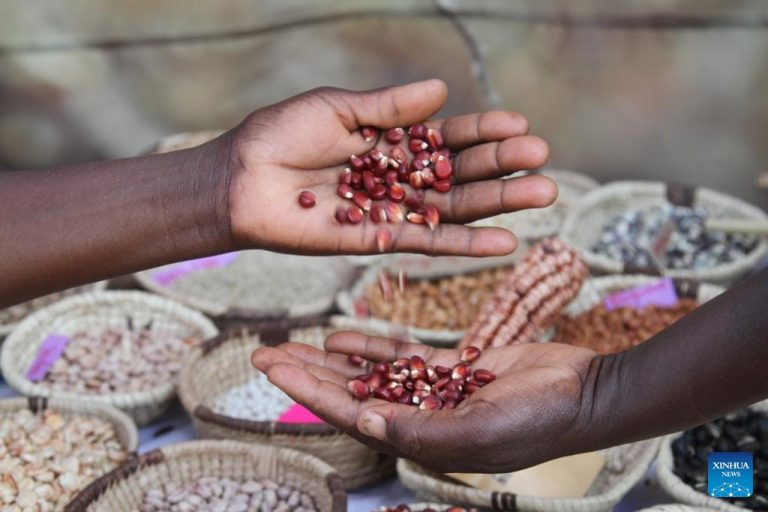
For years, farmer Thomas Odhiambo from Nyando has grown maize and indigenous vegetables on his two-acre farm, saving and sharing seeds from one planting season to the next, just like his parents did. But when Kenya’s seed laws changed in 2016, he suddenly found himself on the wrong side of the law.

I was told I could not sell or even share my seeds unless I paid thousands of shillings to register as a seed merchant,” he recalls. “It didn’t make sense. These are seeds my family has planted for generations.”

This week, Thomas and thousands of small-scale farmers like him finally breathed a sigh of relief after the High Court declared key sections of the Seed and Plant Varieties Act and its regulations unconstitutional, saying they discriminated against small farmers and violated their rights.

Court Sides with Small Farmers

Hon. Lady Justice Rhoda Rutto, delivering the landmark ruling, said that the government-imposed fees, including a Kshs 75,000 registration fee and Kshs 10,000 annual renewal, unfairly locked out smallholders from seed trade.

The court found that such high costs and strict conditions were indirectly discriminatory because they favoured large commercial seed companies over small farmers who could not afford to comply.

The measures effectively eliminate small farmers in favour of their well-established counterparts,” the judge ruled, adding that the State had failed to justify the heavy requirements or demonstrate their necessity.

Discrimination and Lost Livelihoods

The case was filed by farmers’ groups who argued that the seed law and its regulations violated Article 27 of the Constitution, which protects equality and freedom from discrimination. They said the law criminalised traditional farming practices such as saving, exchanging and selling indigenous seeds while benefiting wealthy commercial growers.

The judge agreed, saying that the laws put small-scale farmers at a disadvantage when compared with large-scale farmers.

Most small-scale farming is done through informal arrangements and such formalisation may not necessarily be of any benefit,” the court observed.

For farmers like Odhiambo, the ruling means much more than a legal victory.

Now I can plant and share my seeds without fear,” he said. “The law made us feel like criminals for farming the way we always have.”

Public Participation and Justice

The court also faulted the government for failing to properly consult the public when drafting the regulations, noting that adequate and meaningful public participation could have resolved farmers’ concerns earlier.

Public participation, the judge emphasised, is a living constitutional principle that ensures citizens remain part of governance decisions that affect their lives.

What Was Declared Unconstitutional

Among the provisions struck down were:

Sections 3D(1), 8(1), 8A, 10(4)(c)–(g), 20(1) and 20(1E) of the Seed and Plant Varieties Act; and
Regulations 6, 16, 19 and 21(1)–(5) of the Seed and Plant Varieties (Seeds) Regulations, 2016.

These sections, the court found, violated multiple constitutional rights including equality, property, economic and social rights, and fair administrative action.

A New Dawn for Peasant Farmers

The ruling, delivered on 27 November 2025, is being hailed as a major step towards restoring seed freedom and the right of farmers to save, share and trade indigenous seeds without harsh penalties.

Farmers’ groups say the decision gives them renewed confidence to preserve local seed varieties that have fed communities for generations.

It’s a victory for every small farmer who was afraid to share their harvest,” said a representative of a local farmers’ cooperative. “The court has reminded the government that agriculture belongs to the people, not just corporations.”

Each Party to Bear Own Costs

Given the public interest nature of the case, the court directed that each party bear their own costs, but urged the government to reopen discussions with farmers and the public to create a fairer, more inclusive seed policy.

For farmers like Thomas Odhiambo, that means a chance to continue planting, saving and sharing seeds freely.

It’s more than a ruling,” he said with a smile. “It’s justice for the soil and for the people who till it.”
Kevin Juma Triumphs at NCBA Golf Series Grand Finale 5th Edition

0

By Phillip Orwa

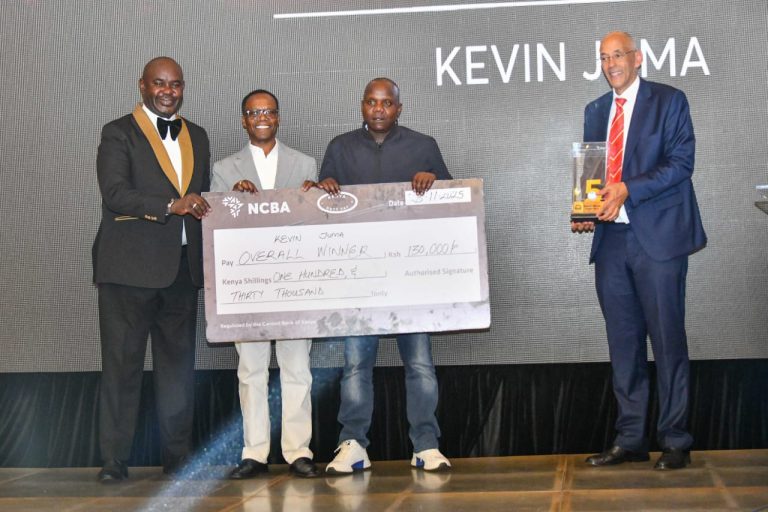
Kevin Juma posted a round 76 gross to the Clinch the Fifth edition of the NCBA Golf Series during the Grand Finale held on 28th November at the Muthaiga Golf Club.

The Royal Nairobi Golf Club handicap 4 player emerged victorious after a tightly contested round that brought together 90 qualifiers from Kenya, Uganda, Tanzania and Rwanda. The field featured some of the best amateur golfers from across the region, all battling for one of the most prestigious amateur golf titles in East Africa.

Speaking after his win, Juma said “This victory means a lot to me because the NCBA Golf Series brings together some of the strongest players from across the region. The Muthaiga course was demanding as usual, so I had to focus on every shot. I tried to stay patient and play my game, especially on the back nine where conditions were tough. I am grateful for the opportunity to compete at this level, and I want to thank NCBA for creating a platform that pushes golfers like us to keep improving.”

Juma, had also earlier won the Overall Men’s title at his home club’s leg of the series in September, with the win, the handicap 4 took home a cash prize of Sh130,000, an air ticket to London courtesy of Kenya Airways, a signature leather bag from Sandstorm and a bottle of Johnnie Walker courtesy of EABL.

Following in the second place was VetLab Sports Club’s John Odhiambo, playing off handicap 3, who carded 76 gross but lost on countback due to Juma’s lower handicap.
Odhiambo, who also secured his ticket to the Grand Finale by winning his home club leg, walked home with Sh130,000, an air ticket to Mauritius courtesy of Kenya Airways, a Sandstorm signature bag and a bottle of Johnnie Walker.

VetLab produced another champion through Mary Karano, who claimed the Overall Lady Winner title. Playing off handicap 12, she carded an impressive 79 gross to secure her place among the top performers of the tournament.
Karano also earned Sh130,000, an air ticket to South Africa courtesy of Kenya Airways, a Sandstorm bag and a Johnnie Walker bottle.

In the Nett divisions, Lugalo Golf Club’s Mwanansu Nsajigwa (handicap 8) from Tanzania won Division One with 77 points after beating Evans Kirui (handicap 12) on countback.

In Division Two, Kitale’s Joseph Kitavi (handicap 23) secured the top spot with 44 points, while the ladies’ Division Two winner was Lillian Kong’ani with 37 points.

In Division Three, Ann Atieno (handicap 29) edged Josephine Chesang (handicap 26) by a single point after posting 40 points.

Among the juniors, Marcel Adeyemo (handicap 28) posted an impressive 41 points to claim the junior title, showcasing the growing strength of youth golfing talent across the region.

In the subsidiary categories, Amon Ngecu (handicap 25) claimed the Staff prize with 38 points, while Patrick Cheruiyot (handicap 26) won the Guest prize after carding 44 points.
Speaking during the awards gala, NCBA Group Managing Director John Gachora said
“Tonight is special because it marks five years since we began this journey. When we launched the NCBA Golf Series in 2021, our vision was to build a platform that could help grow the sport, nurture talent, and bring communities together. Looking back today, I am extremely proud of what we have accomplished collectively.”

Over these five years, our investment of over Sh200 million in golf has seen us connect with more than 10,000 golfers, activate over 400 tournaments, and work closely with nearly all golf clubs across the region. The 2025 Golf Series season spread across East Africa hosted 38 events, including qualifiers, mugs and club nights. Together, these events formed a vibrant and connected golfing community,” he added.

Gachora also announced that rising star Njoroge Kibugu has officially joined the NCBA professional squad. He becomes the latest addition to the group of pros the bank is supporting on the PGK Equator Tour, which includes Edwin Mudanyi, Eric Obura and Abraham Galgalo.

The NCBA Golf Series Grand Finale attracted a field of 250 players, made up of the 90 regional qualifiers and invited guest players.

The tournament was supported by; EABL through its Johnnie Walker brand, Sandstorm Kenya, VISA, JCB Ganatra and Kenya Airways.

Kenya Needs to Revive Science, Technology and Innovation Ministry (STI)

0

By Otula Owuor

Kenya can revive the much-needed Ministry of Science, Technology and Innovation (MSTI). The country has highly skilled scientists and is among the African nations able to attain and sustain science-driven socio-economic development.

However, scientists and professional associations at universities, national and international research institutes need to take note of President William Ruto’s major policy statement that Kenya aims to attain first-world status by 2055.

According to the President, Kenya aims to allocate 2% of its Gross Domestic Product (GDP) to Research and Development (R&D).

He lamented that the country exports tea, coffee, cotton, fish, minerals and hides and skins in raw form, only to import them back at a premium as finished products.

The statements also constitute a strong wake-up call for scientific institutions and industries to help Kenya curb excessive dependency on imports and exports of raw materials.

Thus, scientists in Kenya and other African nations need to focus more on research aimed at producing goods and services for competition in local, national, regional, and global markets.

The country’s research institutes include Kenya Medical Research Institute (KEMRI), Kenya Agricultural and Livestock Research Organization(KALRO), Kenya Forestry Research Institute(KEFRI), Kenya Industrial Research and Development Institute (KIRDI) and Kenya Marine and Fisheries Research Institute (KMFRI).

Still, the Kenya Veterinary Vaccines Production Institute (KEVEVAPI) conducts research that leads to the development of effective veterinary vaccines to protect and improve the livestock industry in Kenya and other African nations.

Even more, there are very strong indicators that the country is on the path to advanced research and development activities if adequate funding is made available to the rapidly evolving Kenya Advanced Institute of Science(KAIS)

According to the country’s Cabinet News of March 11, 2025, KAIS is a specialized postgraduate degree-granting institution of strategic national importance, founded in collaboration with South Korea.

The institute’s advanced courses are mostly associated with various engineering fields, including civil, agricultural, chemical, mechanical, electrical, and electronic engineering. Nuclear science has also been included among others.

However, it is notable that worldwide scientific research is already highly integrated, including the use of similar or related equipment, processes and scientific skills, among others.

Kenya can revive the much-needed Ministry of Science, Technology and Innovation (MSTI). The country has highly skilled scientists and is among the African nations able to attain and sustain science-driven socio-economic development.

Otula Owuor is the Founder Of Science Africa

ODM in Slumber Slide, Worrying Stats, Potent Rebellion Ahead of 2027 Elections

0

By Anderson Ojwang

Orange Democratic Movement (ODM) may have won the just-concluded three parliamentary by-elections in its strongholds of Nyanza and the Coastal region, but the party could be walking into a slumber slide with emerging worrying statistics and a potent growing rebellion.

The statistics in the Ugunja and Kasipul by-election victories are so telling and worrying for the party ahead of the 2027 general elections that they cast aspersions on ODM’s future.

Similarly, the loss of Kariobangi North ward by-election to former Deputy President Rigathi Gachagua’s party DCP, and the failure to field candidates in Kakamega and Nyamira counties in the just-concluded by-elections—regions that were the late Raila Odinga’s strongholds—is baffling.

Low voter turnout — or is it a potent protest against the party?
In the 2022 presidential election, President William Ruto defeated Raila by only 200,000 votes to be declared the fifth president of Kenya. Raila got 6,942,980 against Ruto’s 7,176,141.

Siaya County alone, with a total of 533,595 registered voters, gave Raila 371,092 against Ruto’s 4,320, with 376,354 having voted.
Siaya alone, with 157,241 voters who elected not to vote, could have forced a rerun.

In Kisumu County, with 606,754 registered voters, Raila got 419,997 against Ruto’s 10,011. A total of 431,005 votes were cast, while 175,749 did not vote.

In Migori County, with 469,019 registered voters, Raila got 294,136 votes against Ruto’s 52,525, accounting for 347,773 votes cast, while 121,246 did not vote.

Homa Bay County had 551,071 registered voters, with Raila getting 399,784 votes against Ruto’s 3,497, while a total of 404,112 votes were cast. 146,959 did not vote.

From the above statistics, the four counties had a total of 2,095,863 registered voters, of which 601,195 did not vote—accounting for 28.7 percent.

The question, therefore: Why has there been a significant decline in voters during general elections in the region? Could it be a silent rebellion?

The answer could easily be derived from the just-concluded Ugunja and Kasipul by-elections.

The Ugunja and Kasipul by-elections opened a can of worms on what could have been affecting ODM for ages—flawed and manipulated party primaries.

In Ugunja and Kasipul, there were allegations of flawed nominations, which later reared their ugly head in the by-elections.

For instance, in Ugunja, with 60,114 registered voters, only 15,017 voted, translating to 24.9 percent turnout, while 45,097 voters did not turn out. A powerful statement.

The ODM candidate won with 9,447 votes. In the ODM primaries, the top three candidates shared 9,451 votes, with Moses winning with 5,326. Interestingly, Moses won the by-election with 9,447—a drop of 11 votes from the total garnered by the top three contenders in the party primary—while 5,570 electors voted against the party.

In the Kasipul ODM nomination, a total of 22,727 party members participated in the exercise, which was won by Boyd Were after getting 22,727 votes.

Were won the by-election by garnering 16,819 votes, meaning that along the way the party lost 5,908 loyal members, accounting for 26 percent of those who participated in the nomination. This statistic is extremely telling and worrying.

The voter turnout was 36 percent, accounting for 31,077 voters from the 67,017 registered voters in the constituency.

The joint opposition garnered 14,258 votes, translating to 45.9 percent, against ODM’s 16,819, which translates to 54.1 percent. A worrying trend in the absence of Raila in the 2027 general elections.

The reality remains that a majority of voters did not turn up in the last general election after the party issued direct tickets and denied several aspirants the opportunity to contest. The silent protest cost Raila the presidency.

Recently, Embakasi East MP Babu Owino claimed that ODM would not give him the party ticket to contest for the Nairobi gubernatorial race and preferred the incumbent Johnson Sakaja over him.

This forced the new party leader, Dr. Oburu Odinga, to summon and reassure him that the party would conduct a free and fair election.

But old habits die hard, and with 2027 approaching, the party may revert to old habits and issue direct tickets or manipulate the nomination exercise. Time will tell, as this is likely to lead to protest and rebellion.

Waning influence in Luhya and Kisii counties
Raila turned Luhya and Kisii counties into his strongholds, and ODM was the party of choice. But the recent by-elections and failure to field candidates in parliamentary and civic by-elections left the party colorless in the region.

In Kisii County, Deputy Party Leader of Jubilee Dr. Fred Matiang’i has rattled the vote bloc and threatens ODM’s existence in the region.

UPA, a party associated with him, won the Ekerenyo ward through Jeremiah Ongaro, while Jackson Mogusu of PDP won Nyansiongo ward. The two parties are allied to Matiang’i.

In Kakamega County, ODM failed to field a candidate in Malava constituency and Kisii East ward, while in Bungoma County’s Chwele-Kabuchai ward, it also did not have a candidate.

The emergence of Trans Nzoia Governor George Natembeya in Luhya politics is also rattling ODM and outfoxing it in the region.

Loss of Kariobangi North ward — tip of the iceberg of what awaits the party
Gachagua’s DCP won the Kariobangi North ward through David Warui, while ODM’s candidate came a distant third in what was previously known as their stronghold.

ODM Secretary General Edwin Sifuna is the Nairobi Senator, while Babu wants to be governor, and the duo enjoy massive support in the city. But they never went out of their way to aggressively campaign for the party candidate, which could have contributed to the loss.

The Oburu Odinga and Broad-Based Factor
The decision to confirm Oburu as the party leader has split the party down the middle, with some arguing that Kisumu Governor Prof. Anyang’ Nyong’o was still the party leader at the time of transition.

Winnie Odinga recently called for an NDC to elect new officials, while Babu also expressed interest in the seat.

The broad-based arrangement has also split the party, with one wing led by National Chairperson Gladys Wanga, Oburu, and Junet Mohammed supporting it, while another wing led by Siaya Governor James Orengo—including Sifuna and Babu—opposes it.

The demise of Raila leaves the party in a precarious position, and if not handled well, it may plunge into the fate that befell Ford-K, founded by Raila’s father, the late Jaramogi Oginga Odinga.

Election is Not Just an IEBC Affair: It’s a Collective Responsibility of All Civic Actors

0

Dr. Edris Omondi Esq.

Emerging Trends of Violence in the Just concluded By-Election Demand Urgent Action

The Just concluded by-elections in Kenya have revealed a disturbing pattern of violence, intimidation, and disruption that threatens the integrity of the electoral process. From clashes between rival supporters to attacks on polling agents, the incidents signal a worrying escalation that, if unchecked, could have serious consequences ahead of the 2027 general elections.

Across multiple counties, voters and candidates experienced a range of disturbing incidents:

Polling station disruptions: Party agents and candidates reported being threatened or physically attacked while overseeing voting. Some polling centers closed early due to fear of escalation.

Intimidation and property destruction: Vehicles and campaign offices were targeted, and youth groups armed with crude weapons were seen around several polling centers.

Low voter turnout: Fear of violence discouraged many citizens from participating, undermining democratic representation.

Experts say these incidents are not isolated, but rather indicate an emerging national trend: pre-election intimidation, organized youth mobilization, attacks on observers, and misinformation are becoming tools for manipulating outcomes.

The implications are serious. If these patterns persist, Kenya risks widespread instability during national elections, eroding public trust in democratic institutions.

The Crime Prevention Initiative Trust (CPIT), a leading civil society organization dedicated to crime prevention, is stepping forward with a solution-oriented approach. CPIT proposes:

• Electoral risk mapping and early-warning systems to monitor and prevent outbreaks of violence in high-risk areas.

• Community peacebuilding initiatives that engage youth, religious leaders, and local stakeholders to reduce recruitment into political violence.

• Election monitoring and documentation, providing evidence for accountability and ensuring that perpetrators of intimidation face justice.

• Public civic education campaigns to inform voters of their rights and promote peaceful participation.

CPIT emphasizes that elections are not only about casting votes, they are about creating safe, transparent, and credible environments for all citizens. Civil society, government institutions, security agencies, and community leaders must collaborate to address the current gaps and ensure that violence does not determine electoral outcomes.

“Peaceful elections are not a privilege, they are a constitutional right and a shared responsibility,” says CPIT. “We must act now to safeguard democracy before the 2027 general election.”

As Kenya looks ahead, the question is clear: will all stakeholders rise to the challenge, or will fear and intimidation continue to shape the country’s democratic future?

edris@crimeprevention.net
www.crimeprevention.net
The Writer is a former County Attorney and the Executive Director and Founder of Crime Prevention Initiative Trust.

Wanga Admits Split in Her Government, Vows to Crack the Whip, Says She Is Ready for a Grueling Gubernatorial Battle With Rivals

0

By Hope Barbra

Buoyed by Orange Democratic Movement (ODM) victories in the just-concluded three by-elections in Kasipul, Ugunja, and Magarini constituencies, Homa Bay Governor Gladys Wanga has declared she is ready to face off in a grueling battle with her opponents for the gubernatorial race.

Wanga also admitted there is a split in her government and promised to crack the whip on those who do not want to work but speak ill of her administration despite working for her.

Speaking at a funeral in Homa Bay, Wanga said she is adequately prepared to face her opponents for the gubernatorial seat in 2027, in what she termed a battle royale.

“Kom mar governor abedie higni apar. Kendo ng’ama obiro ni dwa dware odhi romo gin yar Wangaya ka. Athuon ka adhi kendo ka aduogo.”
(“I will serve my two terms as governor. Whoever wants to challenge me will meet the daughter of Wangaya. I am brave and not a coward,” she said.)

Wanga promised her opponents a battle of titans in the 2027 gubernatorial election, saying that even if she loses, the victor will appreciate her might.

“Wadwa lawore e dier pap kaye kweli. Ma be ka en wuoyi oloyo to bende owinjo ndi.”
(“It will be a fierce battle in the campaigns. If he is a man and he defeats me, it will not be a walk in the park,” she said.)

Wanga wondered why, despite her development projects, there was always a plot against women, yet a former governor who held the position and did not perform was never criticized or plotted against.

“Mine ocha malich, to chuo kata ka ne timo nono to onge ng’ama wuoye. Miyo kata tiyo to bura okinyi kod odichieng. Dhako ni oha kure ok owuog Homa Bay.”
(“Women are greatly downtrodden. Men, even when they fail, nobody plots against them. For women, meetings are held day and night. Some even ask if I am from Homa Bay, yet they know I’ve been married here for 25 years,” she said.)

Wanga is likely to face off with her deputy, Oyugi Magwanga, in the race, and the political marriage between them has collapsed. The late Raila Odinga prevailed upon Magwanga to become Wanga’s running mate in the last general election.

Magwanga now has his eyes set on the gubernatorial seat and did not support Wanga and ODM candidate Boyd Were in the Kasipul by-election. He instead supported Independent candidate Philip Aroko, who lost to Boyd.

Wanga admitted that some of the people she employed in her government were disloyal and said she will soon crack the whip.

“Nyocha amiyo jo Kanyada tich, to jo Kanyada ma dwaro tich ema nyalo tiyo.
Ng’ato ok nyal tiyo e sirkandi to owuoyo marach e wi sirkandi. Nikech sirkal manyo tek. Ne awuotho e piny ka malich ka asedo ka nyamarende kendo agonyo ma abarora ndasi.
Mondo eka abed governor ma Homa Bay.”

(“I employed people from Kanyada. Only those from Kanyada who want to work will work with me. Someone cannot work in your government and still speak ill of it. It was a big struggle for me to become governor,” she said.)

Wanga asked those unhappy with her administration to pack and go so she can bring in new people.

“To chieng’ ma owinjo ni sirkal rach ma ok onyal tiye, to ogwe tawo oweyo to ja-Kanyada machielo obed. Mano ekaka gini timore. Koso jo Kanyada orumo ma nyalo tiyo.”
(“If they are not happy with the government, let them resign so we bring in other Kanyada people who can work,” she said.)

Wanga said she will sack those who do not want to work in her government and stated she has adopted a new mentality.

“Omiyo an be koro awuok mager, adwaro pidho rasta sani. Ng’ama ok dwa tich inje. Ng’ama dwaro tiyo ne jopiny ndani. Ng’ama dwaro pesa ma ikawo here and there inje.
Ng’ama oyie ni nyalo tiyo ne jopiny kod misara michule cha ndani.”

(“I will no longer tolerate any insubordination. I have a new mentality now. If you want to work, good. If you don’t, you face the boot. I will not allow corruption in my government,” she said.)

The ODM national chairperson said she will no longer tolerate any misbehavior in her government and may request new officers.

“Mano e mbaka ma an adwa goyo koro. Kama achopie ni.
Ka anyisou ni miya uru joma oyie tich, utim kamano. Umiya joma oyie tich. Wati mondo water Homa Bay mbele.”

(“That is the stand I have taken now. If I ask you to give me new people willing to work, then do so. We must move Homa Bay forward,” she said.)

In the curtain raiser for the Homa Bay gubernatorial race, Wanga came out victorious, but she now has to face a combined force ahead of the 2027 elections.

Luo Council of Elders Co-opts Nine Eminent Persons to Boost Its Capacity and Guide New Dispensation

0

By Anderson Ojwang’

In a fast-emerging and changing political and socio-economic terrain in the Luo community, the Council of Elders has resolved to co-opt nine eminent personalities of the community into the council.

At a meeting held on Thursday, 27th November, chaired by Ker Odungi Randa, the council agreed and approved the co-option of the eminent persons.

The eminent personalities include Prof. George Outa (Chairman, Nyanza Professional and Business Caucus), Prof. Edward Oyugi Akongo, Hon. John Pesa, Hon. Sam Wakiaga, Eng. Phillip Okundi, Amb. Lazarus Amayo, Eng. Eric Opon Nyamunga, Prof. Nyabundi, and Rt. Justice Onyango Otieno.

The move is likely to infuse new life into the council and provide the community with the much-needed apparatus to handle its socio-economic and political issues.

“The Council resolved that, in order to enhance and strengthen its capacity, and to effectively discharge its important mandate, it is necessary and urgent to co-opt the following senior eminent members of the community, who have graciously accepted to serve the community and promote its interests.
May the Almighty God bless the Luo nation, and may God bless Kenya,”
read the minutes seen by Western Insight.

The move is likely to take back to the drawing board leaders from the community who had hoped to use the council as a vehicle to be coronated as kingpin.

Already, Cabinet Minister Opiyo Wandayi on Monday met with Odungi Randa in what he said was meant to discuss issues of the community.

Sources also revealed that Wandayi plans to host the council at his home on December 5th with a view to seeking their blessings.

Treasury Cabinet Secretary John Mbadi has also declared interest in becoming the community leader and is seeking to run for the presidency in the 2032 general elections.

“I do not want any other seat apart from the presidency in 2032. I have set my eyes on it, and I urge you to support me to take you to Canaan,” he said at a recent function in Nyatike.

Randa said the Extraordinary Council Meeting observed that the community should continue to uphold peace during the time of mourning for former Prime Minister, the late Raila Odinga.

“May it be known to all the members of the Luo community, both within Kenya and outside in the diaspora, and to all and sundry, that today, the Luo Council of Elders has held an Extraordinary Meeting under the chairmanship of Ker Mzee Odungi Randa, and wishes to state as follows:

The Council conveys its warm greetings of peace and unity to all Nyikwa Ramogi Ajwang’ throughout the world and beseeches the Almighty God to continue to protect you, bless your endeavours, and reward your efforts.

The Council, like other members of the Luo community and the rest of Kenya, remains in a mourning mood following the recent passing of the late Rt. Hon. Raila Amolo Odinga, and continues to condole with the Jaramogi Oginga Odinga family, especially now that the cruel hands of death have again snatched a member of the family, Beryl Achieng’ Odinga. May the Almighty God grant the family the grace and strength to bear the pain of the loss at this moment of grief,” it read in part.

The letter also noted that the community was at a critical moment and that it should show leadership.

“The Council, after deliberations and by consensus, unanimously resolved that at this critical point of reflection for the community, the Luo Council of Elders should fully exercise its mandate and responsibility of promoting and maintaining peace, harmony, and unity among members of our great community and between the Luo community and other Kenyan communities,” it said.

Golfers from Kenya, Tanzania, Uganda and Rwander to grace the NCBA Grand Finale at Muthaiga

0

BY PHILLIP ORWA

The NCBA Golf Series Finale that will be staged at the Par 72 Muthaiga Golf Club Today Friday has attracted 250 golfers from across East and Central Africa.

The Friday event will be marking the culmination of the fifth edition of the series, bringing together 250 golfers, with 90 of those coming from the qualifiers held in Kenya, Uganda, Tanzania, and Rwanda, competing for the series’ top honours in the overall, men’s, ladies’, and junior categories.

The Overall Winner Men, and the Ladies Winner will pocket Sh130,000 a-piece. Golfers will also have a chance to take home a JCB Backhoe Loader courtesy of JCB Ganatra for a hole-in-one at the par 3 hole number 13.

Since the series teed off in January at the Kenya Railway Golf Club, more than 5,102 golfers have participated in the 40 tournaments held across Kenya, Uganda, Tanzania, and Rwanda.

VetLab’s Mary Karano will be making her third appearance at the Grand Finale, having made a constant appearance in the previous two editions.

Speaking ahead of the finale, NCBA Group Managing Director John Gachora said: “The Grand Finale marks the culmination of a very successful series this year that has been bigger and better, transversing the region following the inclusion of Rwanda. We have made an effort to be at most clubs this year, whether through a main qualifier, a club night, or a monthly mug.
As we celebrate the fifth season, we are proud of the immense impact the series has had not just on the golfers but also on everyone else involved. We have made sure that everything at Muthaiga is in check to ensure we have a successful day as well. We remain committed to supporting golf in Kenya, and we look forward to hosting the golfers on Friday and experiencing a skillful round of golf.”

This will be the third time that Muthaiga will be hosting the grand finale since its inception in 2021. The inaugural edition’s grand finale was held at the Karen Country Club in 2021, before moving to Muthaiga Golf Club the following year, Sigona Golf Club in 2023, then Muthaiga again in 2024.

Goliath Deflated, David Triumphs in Mbeere North: Kindiki Embarrasses Gachagua as Mt Kenya Becomes a Battleground

0

By Anderson Ojwang’

The mountain roared and shook. Tremors and shockwaves rocked Murima. Tables turned—from chest-thumping to premium tears—a self-declared king of the mountain reduced to a humbled mountain cat.

That is how the political earthquake erupted in Mt Kenya, leaving beleaguered former Deputy President Rigathi Gachagua reeling from a shock defeat in the Mbeere North by-election, won by UDA candidate Leonard Wamuthende.

And the narrative by Gachagua that President William Ruto would not succeed in dividing Mt Kenya, and that he was the ultimate voice of the region, came tumbling down after the loss.

With the by-election over, Mt Kenya has emerged as a battleground between Ruto and the united opposition ahead of the 2027 general elections. If the results are anything to go by, the race for the vote-rich region will be hard fought and hard won.

Gachagua, who had pitched tent to campaign for DP candidate Newton Karish after withdrawing his DCP candidate, lost another highly billed duel with his successor Prof. Abraham Kithure Kindiki.

For Gachagua, the shock defeat was a reality check, sending him back to the drawing board. The assumption that he was the leader of the mountain was indeed a mirage, proving that the region is divided into two main political blocs.

Gachagua had dared President William Ruto to join the fray during the Mbeere North campaigns, but the President gave it a wide berth and instead enlisted his deputy to lead the contest.

Wewe Kasongo kuja. Mimi niko area na watu wa Mbeere. Tuoneze we kivumbi sasa. Hapana tuma mfanyakazi. Wewe Kasongo kuja mwenyewe… Huyu Kasongo watu wa Mbeere wamekula pesa yake, amenyolewa?” Gachagua said.

For Kindiki, he delivered on his promise by slaying the mountain Goliath, staking his claim as the biblical David of Mt Kenya and as a political leader.

Unakuja na kimbele mbele na kiherehere. Wewe wacha hizo bwana na uniachane na mimi. Wewe Goliath, umetesa watu siku mingi. Siku zako zimeisha—Alhamisi tunakumalizia. Fire si fire,” he said at a rally.

In the by-election, Kindiki deflated the self-declared leader of the mountain and claimed stake as the political leader of Murima, heightening a new wave of rivalry and tension in the region.

Hii tabia ya kujitangaza yenyewe eti wewe ndiye mkubwa wa mlima—nani alikuchagua mkubwa wa mlima? I am the senior-most political leader in Mt Kenya region for the avoidance of doubt,” Kindiki said.

He taunted Gachagua as a small man, claiming he never saw him during the struggle for former President Uhuru Kenyatta and Ruto at the ICC in The Hague.

When Uhuru Kenyatta and William Ruto had a problem in The Hague, I was their lawyer. I didn’t see him there. We fought against the white man called Ocampo and defeated him. We brought home Uhuru Kenyatta and William Ruto.
So who is this other one speaking? He is a small man—it’s only that he has inflated his muscles and is troubleshooting.

This election reaffirmed Kindiki’s first victory over Gachagua during the 2022 search for Ruto’s running mate.

He wrote on his X handle:
Congratulations to the respective winners in yesterday’s by-elections… The winners now assume the crucial role of rallying communities to unite for the collective good and expedite development. Faya.

CS Geoffrey Ruku said Kindiki would not be a one-term deputy president but would serve a second term and eventually become Kenya’s sixth president.

2027 tunachagua President William Ruto na Kithure Kindiki… Na tukimaliza 2032, sisi kama mlima tutaungana na Kenya yote kuhakikisha Kindiki amekuwa rais. Tunaona mbali kama giraffe.

For President Ruto, his brigades have delivered and passed the test against the united opposition, finally confining Gachagua to the political corner he had long desired.

The loss of the Mbeere North seat leaves Gachagua vulnerable, and the notion that he controls the Mt Kenya vote bloc has been debunked.

This gives Ruto a powerful impetus to seek at least 50 percent of Mt Kenya votes to win the 2027 elections.

IN THE JUST CONCLUDED BY ELECTIONS, 2027 IS ALL ABOUT MONEY

0

By Billy Mijungu

Stay out of the 2027 contest if you do not have significant influence around IEBC, street power and money. These remain the true tactics of political delivery in Kenya. There is also nothing like the so called Gen Z wave when it comes to the ballot. The hype without a grounded voting bloc means very little. Old habits die hard and Kenyan voters have not changed despite the noise on social platforms.

For years, the idea that development determines Kenyan politics has been repeated, but the truth is evident in every election. Development has very little weight. What matters is the heat of the political moment and who has the resources to fuel it. It is time Kenyans recalibrate their expectations and confront the reality that money still runs our elections.

Western Kenya has now emerged as the official battle ground region. It is a potent place for a future Deputy President or even a Premier, given the evolving conversation around governance structures. The region’s political weight has grown and it will shape alliances for the next phase of national politics.

The UDA wins in the by elections send a clear message to ODM within the broad based arrangement. William Ruto now has more options to challenge the mountain bloc and potentially take it. ODM cannot afford arrogance because the results point to a party that has been tamed. Even with shifting alliances, the most stable conclusion is that Kithure Kindiki is likely to remain the Deputy Presidential running mate for William Ruto. His loyalty and quiet competence have positioned him well within the presidential circle.

Another important observation is that UDA has widened its reach. The party has strengthened its presence in North Eastern and Turkana, regions that were previously unpredictable. This expansion means that ODMs continued stay in the broad based arrangement may give UDA more room to penetrate its traditional constituencies such as Coast, Western, North Eastern and the North Rift. If ODM is not careful, it may lose more ground than it gains.

Still, ODM retains the unique ability to shift the race for William Ruto if it reorganizes with clarity and strategy. DCP has also made visible inroads in Maasai land and Western Kenya, adding a new dynamic to the contest. When all is said and done, UDA, despite internal let downs and public concerns, has performed far beyond what many anticipated.