Home Blog Page 30

Migori celebrates promotion to Premier League as Migori Youth Football Club crowned NSL champions

0

By Sandra Blessing

Migori was all celebration on Sunday. The stadium was electric, packed with cheering fans. The town came to a standstill. Dance and songs formed part of the evening in the border town.

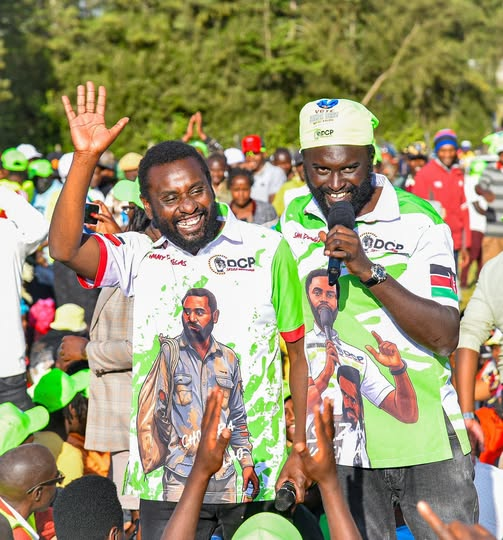
The long-awaited dream finally came to pass. Even the political opponents – the grandson of Sin Akuru Kuku Lubanga, Governor Ochilo Ayako alias Oyundi, and his political opponent, Uriri MP Mark Nyamita alias “Dhi Dala Koso Ok Dhi” – joined in congratulating Migori Youth Football Club for winning.

Migori Youth, ahead of the game, had been docked three points and slid to second position in the National Super League table. On Sunday, they wrote history by edging out Equity FC 2-1.

Migori Youth FC were crowned the 2025/26 FKF National Super League champions.

Following yesterday’s victory over Equity Bank FC, Migori Youth Football Club secured the top spot with one match still to play, making them mathematically unreachable at the summit.

The team wrote on its social media platforms: “Countless sacrifices. Countless prayers.”

Equity FC, after the game, wrote: “Congratulations to Migori Youth Football Club on successfully securing promotion to the Kenya Premier League for the 2026/2027 season. Wishing you growth and success as you step into the top tier.”

In attendance at the stadium was the patron, Nyamita, who said history was written after a long journey of sacrifice and commitment.

“History written. As Patron, I’m proud beyond words. What a journey, all glory to God. It’s finally done. ‘The rung of a ladder was never meant to rest upon, but only to hold a person’s foot long enough to enable them to put the other foot somewhere higher’ – Thomas Henry Huxley,” he wrote.

Nyamita said the NSL title was theirs, earned through hard work, resilience, and an unwavering spirit. The dream continues.

“For Migori Youth FC, somewhere higher is KPL. For Migori Youth FC patron, somewhere higher is a better Migori County. For you, somewhere higher is maybe something you value or someone you hold close to your heart, or better service for us all,” he wrote.

Governor Ayacko wrote: “Congratulations Nyikwa Sinakuru Kuklubanga ma Dognam. Congratulations Migori Youth Football Club for your merited promotion to play in the Kenya Premier League. We are immensely proud of you.”

Dr Ayacko, while congratulating the team, said the Migori Stadium is almost complete to host the Premier League matches in the new season.

The Premier League champions, the mighty Gor Mahia, joined the celebration, with Chairman Ambrose Rachier welcoming the new kids on the block to the Premier League.

“I take this opportunity to congratulate Migori Youth FC and its leadership, including Mr Aziz, for having qualified for promotion to the top league. On behalf of Gor Mahia FC, I wish them every success in their football engagement,” he wrote.

The coach, Sammy Owano “Otulo”, who has served the club in various capacities over the years, led the team to the crown from 37 matches played: 25 wins, five draws, and seven losses, scoring 56 goals.

Migori Senator Eddy Muok Oketch was full of praise for the team for winning the Super League and qualifying for the Premier League.

“Today I want to proudly congratulate Migori Youth Talent Academy for making it into the Kenyan Premier League. It has been a tough season, but this team has worked incredibly hard. Particular accolades must go to AZIZ for his passion and great commitment to this team. What many people do not know is that since 2009, AZIZ tirelessly worked from his M-Pesa shop to help our boys kick the ball and be engaged. We partnered together to create the WFTA, which we later renamed MYTA,” he wrote.

Muok said for all the years, he has supported the great team while staying in the background to avoid political interference with the team.

“Now that they have made it to the Premier League, I wish to proudly inform my larger network to offer even more support to the team to enhance their performance. I also want to sincerely thank those who have supported the team so far. The management, the fans, sponsors, and the players themselves. KPL resource requirements are high, and strengthened partnership is what will make the team do well in the season. While I will still hugely support from the background, let us all pull together and make MYTA excel. Congratulations, boys!” he wrote.

CREATING A MODERN FISHING INDUSTRY THROUGH VALUE ADDITION IN MIGORI

0

By Billy Mijungu

If there is one of the most underutilized sectors with the potential to deliver real economic freedom, it is the fishing industry in Migori.

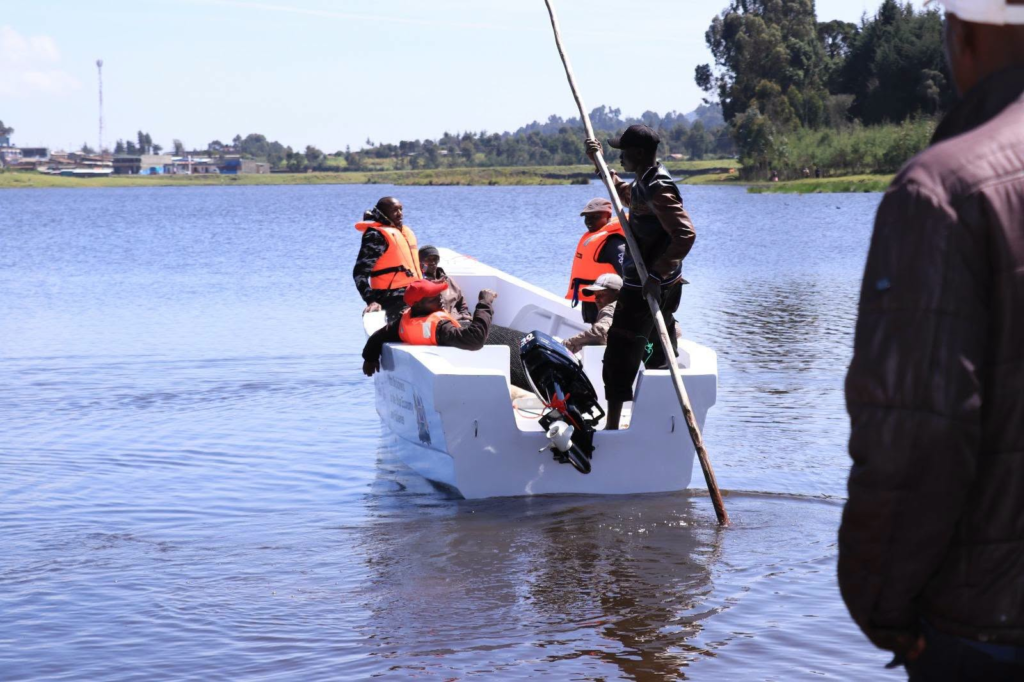
A closer look at the opportunities reveals that fishing, in its raw form, already employs thousands of people who venture out day and night to cast their nets. However, this effort remains largely informal and low-return. Productivity, safety, and income levels can be significantly improved through investment in modern fishing boats, motorized vessels, GPS technology, and high-quality nets. Training fishermen on sustainable fishing practices would also ensure long-term viability of the resource.

Beyond the waters lies an even greater opportunity—the value chain. At fish landing sites, a secondary economy can thrive through structured investment in cold storage facilities, ice plants, and modern processing units. This would drastically reduce post-harvest losses, which currently eat into fishermen’s earnings, while creating employment for technicians, machine operators, transporters, and traders.

Value addition is the true game changer. Instead of selling raw fish at low prices, Migori can process fish into fillets, packaged products, fish oil, and other export-ready goods. Proper branding and certification would open doors to regional and international markets, particularly within East Africa and beyond.

The ripple effects extend further. Growth in the fishing industry will naturally stimulate the hospitality sector—hotels, restaurants, and local eateries—turning fishing zones into vibrant economic hubs. With proper planning, these areas can evolve into tourism attractions, combining fresh fish cuisine with cultural experiences around Lake Victoria.

Additionally, fish by-products present untapped industrial potential. Fish waste can be processed into high-protein animal feed, directly complementing Migori’s sugarcane sector and strengthening agro-industrial linkages. This circular economy approach minimizes waste while maximizing value.

Infrastructure remains key. Improved road networks, reliable electricity, and access to affordable financing will determine the speed at which this transformation occurs. Cooperative societies and public-private partnerships can play a crucial role in mobilizing resources and ensuring inclusivity, especially for small-scale fishermen.

There is also a need for strong policy direction. County leadership must prioritize the blue economy by creating investor-friendly policies, enforcing quality standards, and supporting innovation in fish farming (aquaculture) to supplement natural fishing.

With both a ready local market and strong export potential, Migori stands at a strategic advantage. Yet, despite this promise, the fishing industry currently contributes only a modest 1.2% to the Gross Domestic Product (GDP).

This must change.

Migori County has the opportunity to establish modern fishing industrial complexes—integrated hubs that combine harvesting, processing, packaging, storage, and distribution. Such complexes would not only unlock economic growth but also create thousands of jobs, increase household incomes, and position Migori as a leading blue economy powerhouse in the region.

The future of Migori’s economy may very well lie in its waters. What is needed now is vision, investment, and deliberate action.

How Charcon Properties Limited, engaged by Kisumu City Board, has presided over the decline in rent collection by Sh14,263,595, precipitating a near collapse

0

By Anderson Ojwang

Kisumu City Board has witnessed a near collapse of property rent collections by Charcon Properties Limited from Sh20,447,477 in Financial Year 2023/24 to Sh6,183,882 in FY 2024/25.

This represents a sixty-nine point eight per cent (69.8%) reduction in a single financial year, occurring during the period in which Charcon Properties Limited was engaged as managing agent.

“The FY 2024/25 rent collection of Kshs. 6,183,882 represents the lowest recorded rent collection in the five-year period under review, and marks a decline of Kshs. 14,263,595 from the previous financial year — the steepest single-year collapse in any Own Source Revenue stream over the review period. This decline occurred in direct correspondence with Charcon Properties Limited’s engagement as managing agent,” the report read.

The Kisumu County Assembly Ad Hoc Committee was alarmed by the decline to Sh14,263,595 and summoned Managing Director, Mr Connel Osano, to appear personally before the committee for substantive interrogation.

“On the appointed date (7th May 2026), the Company sent Mr Martin Okumu (Head of Operations) and Mr Jairo Nyamwaya (Property Manager) without a letter of authority, which the Committee found unacceptable and recorded it as contemptuous disregard for the County Assembly’s oversight mandate,” the committee wrote.

The committee, in its engagement with the Kisumu City Board, revealed that revenue performance has consistently underperformed against targets over three years despite significant projection increases and despite delegation of revenue collection roles to the City Board; that revenue monitoring was mainly report-based rather than real-time; and that the city currently operates a billing-oriented system rather than a fully integrated revenue management system.

The committee found that Charcon Properties Limited was contracted to supervise rent collection on behalf of the City Board, and “that the County is in the process of procuring a new revenue system which did not appear materially different from the existing one as presented,” the committee wrote.

The committee found that the engagement of Charcon Properties Limited without adequate oversight mechanisms, performance benchmarks, remittance timelines, or contractual accountability provisions directly contributed to this outcome.

The committee further observed that the Kisumu City Board failed in its supervisory responsibility to monitor Charcon’s performance and enforce remittance of collected rents to the County Revenue Fund.

According to the Property Management Progress Report dated 3rd May 2026 and the handover documentation referenced, the following estates, residential blocks, and institutional houses were placed under Charcon Properties Limited’s management:

Residential Blocks — Estates and Housing Units:

  • Block 11 (Units 37, 38, 43, 46, 47, 47B, 47C, 47D, 48, 49 and 52)
  • Block 4 (Units 149A, 149B, 158A, 158B, 154A and 154B)
  • Block 8 (Units 79, 79A, 148A, 148B, 208, 208A, 258A, 258B, 258C, 258D, 258E, 258F, 259A, 259B, 259C and 259D)
  • Block 10 (Units A, B, C and D)
  • Block 12 (Units 91A, 91B and 91C)

Slaughter Houses:

  • Slaughter House A, Slaughter House B and Slaughter House C; and Kibuye Estate (approximately 45 units)

Institutional and Special Facilities:

  • Ober Kamoth Health Centre
  • Got Nyabondo Health Centre
  • Mama Ngina Children’s Home
  • Old Fire Station

On New Leases and Renewals:

The report records that lease renewals have been materially impeded by the non-availability of updated Finance Act rental rates. The report states: “Renewal of Tenancy Agreements and leases is further dependent on the new County Finance Act, which prescribes the updated rent rates to be applied. This document has not been availed to us, making it impossible to commence the latest round of lease renewals.”

On Maintenance:

The report identifies extensive maintenance deficiencies including: plumbing, electrical and structural repairs required urgently at Kibuye Estate; leaking roofs at Block 12-A and Block 12-B (requiring complete overhaul); non-operational plumbing at House 11/49; and the Ober Kamoth Health Centre units being described as uninhabitable due to absence of water and leaking conditions, rendering rent enforcement impossible until conditions are addressed.

On Occupancy:

Occupancy levels across estates remain high, with most units occupied despite ongoing disputes and maintenance challenges. Several units are non-revenue generating due to occupation by county departments, security personnel, and institutional users. Some units remain unoccupied due to dilapidated conditions, pending repairs, or unresolved ownership claims. A comprehensive physical verification exercise is stated to be ongoing.

On Non-Revenue Generating Units:

The report identified multiple units that were non-revenue generating, including: Houses 4/149, 4/149A and 4/149B — occupied by KIWASCO, whose headquarters were constructed on these sites; Houses 8/148 and 8/148A — occupied by the Governor’s security detail; Houses 8/208A and 8/208B — used by the County First Lady as offices; and Houses 8/258A through 8/259D — found to belong to NSSF and since demolished for modern housing construction. These units generate no rental income to the county.

On Senior County Employees in Default:

The report explicitly states that a significant number of county government employees in higher ranks, including County Executive Committee Members, have been unwilling to pay rent; that despite repeated follow-ups, many either ignore communication or remain non-responsive to official correspondence; and that this creates substantial challenges in enforcing tenancy obligations. Some tenants making payments through payroll check-off deductions continue to show arrears in their accounts, indicating gaps in remittance reconciliation between the payroll office and the rent accounts.

Findings

The committee found that the Property Management Progress Report dated 3rd May 2026 confirmed that Charcon Properties Limited was, throughout the reporting period, unable to enforce rent collection against a significant proportion of tenants, including senior county government employees and elected officials — and that this failure was compounded by unresolved ownership disputes, the non-availability of updated Finance Act rates, inadequate maintenance of managed properties, and a structural reconciliation deficit between Charcon’s accounts and the Revenue Board’s collection records.

The committee further finds that Charcon’s letter dated 20th November 2025 to Mr David Nandi requesting rent payment slips for September and October 2025 is direct evidence that the managing agent did not have a complete and current picture of rent collected and remitted to the county — a fundamental failure of agency accountability.

The committee found that property rent revenue collapsed by sixty-nine point eight per cent (69.8%) in FY 2024/25, representing a loss of Kshs 14,263,595 against the prior year’s collections. This collapse occurred during the period of Charcon Properties Limited’s engagement as managing agent.

As at April 2026, cumulative rent arrears across the managed portfolio stand at approximately Kshs 7,810,660, with a cumulative collection rate of approximately fifteen per cent (15%) over the fourteen-month reporting period.

How Kisumu County Government lost Sh34M in revenue collection during four days of system shutdown by Safaricom over non-payment of outstanding contractual arrears

0

By Anderson Ojwang

The decision by the County Executive Committee Member (CECM) for Finance, Mr George Omondi Okongo, and the county finance department to ignore repeated demands by Safaricom PLC to pay outstanding arrears resulted in the system shutdown.

The four-day system shutdown came at a huge revenue collection cost to the county government, after it lost revenue amounting to Sh34,734,540.25.

During the four days of system shutdown, the daily revenue collection collapsed by 74 per cent, and after restoration, revenue collection suffered depression for some time.

Formal demand notices had been duly issued to the County Treasury prior to the suspension, yet the contractual obligations were not settled in a timely manner.

The County Assembly Ad Hoc Committee, chaired by Lumumba Owade, observed that “in February 2026, Safaricom PLC suspended the IRMS following the County’s failure to settle outstanding contractual obligations.”

The committee found that responsibility for the shutdown rests primarily with the CECM Finance and the County Treasury for failure to honour a known contractual obligation for which formal notice had been given.

“The accumulated arrears comprised approximately Shs. 27,000,000 in SaaS commissions charged at four per cent (4%) of revenue collected through the platform and a further Kshs. 5,300,000 for auxiliary services including internet connectivity and system maintenance, totalling about Kshs. 32,000,000,” read the report.

The report says Safaricom had sent out invoices substantiating the arrears, including Invoice No. 2738 dated 21st April 2026 (Kshs. 13,546,887.00 excluding VAT; Kshs. 15,714,388.92 inclusive of 16% VAT) for ‘Billing of SaaS (RMS Revenue Share) up until January 2026’; and Invoice No. B1-30022081830 dated 1st August 2025, billing Kshs. 23,227,300.00 for the monthly service fee for the period 1st to 31st July 2025.

“These figures confirm that the four per cent (4%) commission grows proportionally with revenue collected, making it an escalating and uncapped obligation,” read the report.

The committee found that the IRMS shutdown of February 2026, which caused a seventy-four per cent collapse in daily revenue collections over four days and a sustained depression of collections in the weeks following restoration, was directly caused by the county’s failure to honour its contractual obligations. The shutdown was foreseeable, preventable, and attributable to systemic failures in contract management and payment authorisation within the CECM Finance’s department.

Tendering process

The IRMS was procured through Tender No. CGK/FIN/OP/2023-2024/005, titled “Supply, Delivery, Design, Development, Installation, Deployment, Testing, Commissioning and Maintenance of a Fully Automated and Integrated County Revenue Management System.”

The tender was published with a submission deadline of 31st August 2023. The contract was signed on 31st October 2023, with the Chief Officer for Finance and the County Attorney as county signatories.

The committee noted that the County Attorney, as a signatory to the contract, bears professional responsibility for ensuring the contract’s compliance with procurement law – a responsibility that must be examined in light of the post-award commission introduction.

Undelivered contractual obligations

The tender specifications required delivery of a comprehensive system including: automated IFMIS integration; GIS and Mapping integration; an e-Construction module for Physical Planning; full cashless payment channels; enforcement support capabilities; a Self-Service Portal; and real-time reporting dashboards.

As of the date of this report, several of these contractual deliverables remain undelivered or non-functional.

Contract execution: Safaricom PLC and RevTech

The contract was executed between Safaricom PLC and the County Government of Kisumu. RevTech (Red Tech Innovation Limited, referred to as ‘RTI’) was not a direct party to the county-Safaricom agreement but is explicitly referenced in the agreement as a named partner.

RevTech owns the intellectual property rights to the BILA software, while Safaricom holds an exclusive, non-transferable licence to use it. Safaricom PLC is the principal contractor and bears all liabilities related to the system under the county contract.

Weaknesses

The existence of a backend sub-contractor with IP ownership introduces a significant risk to the county: if either Safaricom’s licence or its relationship with RevTech is terminated, the county’s access to the system software is immediately at risk.

The contract did not designate specific county officers for day-to-day communication, only listing the signatories. This structural omission meant that any county officer could formally communicate with Safaricom, including authorising system changes or data modifications.

The committee found that this design flaw directly enabled the issuance of unauthorised data deletion instructions by Revenue Board personnel, as documented in the findings relating to the 887,086 archived transactions.

Revenue leakage and off-system collection

The committee has established, with direct and documented evidence, that revenue was being diverted from the county’s revenue fund through informal cash-based collection arrangements operating entirely outside the IRMS.

The Kibuye Market field visit provided concrete and unambiguous evidence of this practice. The IRMS data cannot, therefore, be relied upon as an accurate or complete representation of actual revenue generated at Kisumu County’s markets and collection points.

Systemic non-compliance at collection points

The committee found that revenue collection at key market sites was characterised by widespread non-compliance, selective enforcement, and the systematic omission of mandatory levies, including parking fees.

A non-compliance rate of approximately sixty-three per cent (63%) was documented at Kibuye Market, and the committee has no basis to assume that this rate is exceptional or atypical of other collection points.

Contractual mismanagement and systemic risk

The county’s dependence on a single service provider for its entire digital revenue management infrastructure, without adequate contractual safeguards, performance benchmarks, data protection provisions or exit provisions, constitutes an unacceptable operational and legal risk.

The system procurement

The committee investigated the procurement and tendering process, execution of the contract by Safaricom PLC and its sub-contractor RevTech (Rev Tech Innovation Limited).

It also looked at the management and governance of the system during its operational life, its performance against objectives, the technical audit findings, and the accountability failures arising from the system’s administration.

System ownership

The platform was procured as a Software-as-a-Service (SaaS) arrangement, meaning the county would not own the software but would pay for its use on a commission-plus-service-fee basis.

The IRMS contract was awarded to Safaricom PLC and went live on 18th December 2023, with an initial focus on unstructured revenue streams.

Risk

The decision to adopt a SaaS model with a revenue-sharing commission was a significant policy choice that, as the committee’s review has established, carried substantial uncapped financial risk for the county.

The commission

The committee found that the SaaS commission-based model, adopted without any cap, performance linkage or sunset provision, created an open-ended and escalating financial obligation that was not adequately risk-assessed at the procurement stage.

Kisumu County Assembly Ad Hoc Report reveals rot at the Finance department

0

By Anderson Ojwang

The heist. A well-planned and coordinated rip-off at the Kisumu County revenue and Kisumu City. The report by the Kisumu County Assembly Ad Hoc Committee gives an in-depth capture of how loopholes were created to allow for the heist.

In the report dubbed the “Revenue Performance and Root Causes Analyses on Integrated Automated Revenue Management System,” findings revealed gaps and loopholes in the system open to exploitation and corruption at the institution.

The committee investigated the Integrated Automated Revenue Management System (IRMS), the digital platform contracted by the County Government of Kisumu to automate and digitise its Own Source Revenue collection.

The system procurement

The committee investigated the procurement and tendering process, execution of the contract by Safaricom PLC and its sub-contractor RevTech (Rev Tech Innovation Limited).

It also looked at the management and governance of the system during its operational life, its performance against objectives, the technical audit findings, and the accountability failures arising from the system’s administration.

Establishment of the IRMS: Background and rationale

The County Government of Kisumu initiated the procurement of an Integrated Automated Revenue Management System as part of its broader strategy to modernise Own Source Revenue collection, eliminate cash-based revenue handling, improve real-time reporting, and seal documented leakages in the manual collection system.

Prior to this, the county’s revenue administration was characterised by manual receipting, inadequate audit trails, and significant opportunities for revenue diversion at the collection point.

The system was intended to provide a fully integrated, cashless revenue collection platform covering all major OSR streams, including markets, parking, bus parks, Single Business Permits, Outdoor Advertising, Land Rates, Physical Planning and e-Construction, and to support enforcement through real-time data access and geospatial mapping.

System ownership

The platform was procured as a Software-as-a-Service (SaaS) arrangement, meaning the county would not own the software but would pay for its use on a commission-plus-service-fee basis.

The IRMS contract was awarded to Safaricom PLC and went live on 18th December 2023, with an initial focus on unstructured revenue streams.

Risk

The decision to adopt a SaaS model with a revenue-sharing commission was a significant policy choice that, as the committee’s review has established, carried substantial uncapped financial risk for the county.

The commission

The committee found that the SaaS commission-based model, adopted without any cap, performance linkage or sunset provision, created an open-ended and escalating financial obligation that was not adequately risk-assessed at the procurement stage.

Tendering process

The IRMS was procured through Tender No. CGK/FIN/OP/2023-2024/005, titled “Supply, Delivery, Design, Development, Installation, Deployment, Testing, Commissioning and Maintenance of a Fully Automated and Integrated County Revenue Management System.”

The tender was published with a submission deadline of 31st August 2023. The contract was signed on 31st October 2023, with the Chief Officer for Finance and the County Attorney as county signatories.

The committee noted that the County Attorney, as a signatory to the contract, bears professional responsibility for ensuring the contract’s compliance with procurement law – a responsibility that must be examined in light of the post-award commission introduction.

Undelivered contractual obligations

The tender specifications required delivery of a comprehensive system including: automated IFMIS integration; GIS and Mapping integration; an e-Construction module for Physical Planning; full cashless payment channels; enforcement support capabilities; a Self-Service Portal; and real-time reporting dashboards.

As of the date of this report, several of these contractual deliverables remain undelivered or non-functional.

Contract execution: Safaricom PLC and RevTech

The contract was executed between Safaricom PLC and the County Government of Kisumu. RevTech (Red Tech Innovation Limited, referred to as ‘RTI’) was not a direct party to the county-Safaricom agreement but is explicitly referenced in the agreement as a named partner.

RevTech owns the intellectual property rights to the BILA software, while Safaricom holds an exclusive, non-transferable licence to use it. Safaricom PLC is the principal contractor and bears all liabilities related to the system under the county contract.

Weaknesses

The existence of a backend sub-contractor with IP ownership introduces a significant risk to the county: if either Safaricom’s licence or its relationship with RevTech is terminated, the county’s access to the system software is immediately at risk.

The contract did not designate specific county officers for day-to-day communication, only listing the signatories. This structural omission meant that any county officer could formally communicate with Safaricom, including authorising system changes or data modifications.

The committee found that this design flaw directly enabled the issuance of unauthorised data deletion instructions by Revenue Board personnel, as documented in the findings relating to the 887,086 archived transactions.

Revenue leakage and off-system collection

The committee has established, with direct and documented evidence, that revenue was being diverted from the county’s revenue fund through informal cash-based collection arrangements operating entirely outside the IRMS.

The Kibuye Market field visit provided concrete and unambiguous evidence of this practice. The IRMS data cannot, therefore, be relied upon as an accurate or complete representation of actual revenue generated at Kisumu County’s markets and collection points.

Systemic non-compliance at collection points

The committee found that revenue collection at key market sites was characterised by widespread non-compliance, selective enforcement, and the systematic omission of mandatory levies, including parking fees.

A non-compliance rate of approximately sixty-three per cent (63%) was documented at Kibuye Market, and the committee has no basis to assume that this rate is exceptional or atypical of other collection points.

Contractual mismanagement and systemic risk

The county’s dependence on a single service provider for its entire digital revenue management infrastructure, without adequate contractual safeguards, performance benchmarks, data protection provisions or exit provisions, constitutes an unacceptable operational and legal risk.

The series continues tomorrow.

What about Lake Victoria islands? Senator Kajwang’ on Ebola preventive measures

0

By Habil Onyango

For some time, the country has been on high alert for an Ebola disease outbreak following confirmed cases in neighbouring countries.

According to the latest reports, as of June 4, 2026, there were 452 confirmed cases and 82 deaths in the Democratic Republic of Congo (DRC), which is the epicentre of the disease. Additionally, there were 19 confirmed cases, one death, and one probable death case in neighbouring Uganda.

The government has assured Kenyans that the Ministry of Health has strengthened all key response pillars and heightened concern over the disease in the region, as well as the movement of Kenyans between neighbouring countries.

However, the matter is now causing worry among leaders, especially from the lake region counties bordering the already affected countries.

According to Homa Bay Senator Moses Otieno Kajwang’, the government should put in place adequate measures along the lake region to ensure that the disease does not enter through Lake Victoria.

Kajwang’ stated that Kenyan citizens, especially those along Lake Victoria, primarily do most of their business with citizens from the affected countries, putting their lives at risk of contracting the disease.

Kajwang’ questioned the measures the government has put in place to address the disease in case of an outbreak on the islands within the Nyanza region.

According to the senator, most lake users from Kenya buy timber from DRC to build their boats. Fishermen, especially on islands, often have contact with their Ugandan counterparts, despite trading with Tanzanian citizens. This exposes them to the risk of infection.

“Kenya’s Ebola epidemic response strategy must put her citizens first,” noted the Homa Bay Senator.

“Lake Victoria trade thrives on regular contact between Kenyans, Congolese, Ugandans, and even Tanzanians,” said Kajwang’.

“Islands such as Remba, Migingo, Sigulu, Ringiti, Mageta, and Mfangano, among others, are all melting pots of East Africa trade, both legitimate and otherwise,” he added.

The senator was speaking at Malela SDA Church, Ndhiwa Constituency, Homa Bay County, during a fund drive, accompanied by Seme MP Dr James Nyikal, hosted by MP Martin Owino.

According to Duale, Kenya has activated a nationwide Ebola preparedness plan covering surveillance, laboratory testing, case management, border screening, and emergency response coordination as the government seeks to prevent and contain any potential outbreak.

“How prepared are we if Ebola were to break out on those islands?” questioned the Homa Bay Senator.

Country preparedness to tackle Ebola in case of an outbreak

According to Health Cabinet Secretary Aden Duale, no Ebola case has been confirmed in the country, but preparedness measures are being strengthened to ensure rapid detection, isolation and response should the disease cross the country’s borders.

He said surveillance systems have also been strengthened across the country to improve early detection of suspected cases.

Duale revealed that the counties have also been directed to identify and operationalise isolation facilities, holding areas, and quarantine centres to ensure they can respond quickly if a suspected case is reported.

He highlighted the risks posed by the large number of Kenyans living and working in countries within the region, including Uganda and the Democratic Republic of Congo.

Contested Ebola patients at Laikipia Hospital

The government is already constructing and equipping 23 treatment centres across the country, including one at Laikipia Airbase which is being funded by the United States of America (USA).

However, the Laikipia project has triggered a legal, political and public debate over transparency, public participation and Kenya’s ability to manage a highly infectious disease.

According to Kajwang’, the facility should not only serve the Americans but all Kenyans.

According to Owino, who sits on the National Assembly Health Committee, the facility will serve all, including Kenyans and Americans.

“The CS for Health assured us when he appeared before Parliament that the Laikipia treatment centre will not only serve American citizens but everyone, including Kenyans,” said Owino.

Owino, however, warned Kenyans against engaging in politics regarding public health strategy programmes related to diseases, stating he has worked with the USA government for a long time and that the project benefits Kenyans.

He criticised those protesting against the project, citing the lack of public participation.

“When a pandemic or disaster is approaching, we do not need to wait and conduct public participation because the same people blaming the government for not doing so are the ones who will turn against the government once hit by the pandemic,” he said.

Owino advised the government to ensure they have the capacity in the established facilities for contact tracing and effective disease detection.

Nyikal, however, stated that they have no issue with the Laikipia treatment facility; the only concern was that some believed the facility was only meant to treat US citizens.

“We want the facility to serve all Kenyans, and if that is the case, it is acceptable; we have no other problem with it.”

Duale assured Kenyans that the facility is not exclusively for foreign nationals but is part of Kenya’s national public health preparedness and response framework.

“The hospital in Laikipia Airbase is not a quarantine centre for Americans only but one of the 23 treatment and isolation units planned under a Ksh 2.68 billion preparedness programme. We wish to assure Kenyans that Kenya remains Ebola-free, with surveillance and response systems fully operational to detect and respond swiftly to any potential public health threat,” said Duale.

THE POTENTIAL OF MIGORI SUGAR-BELT REGION UNTAPPED

0

By Billy Mijungu

The sugar belt region of Migori County stretches from Uriri, Awendo to Rongo, its political potential cannot go unnoticed but economically it sleeps. This contrast between political vibrancy and economic dormancy is what defines the paradox of this rich yet underutilized region.

The bastion of Agriculture, from Tobacco in Uriri to sugarcane all the way, the region stands as a backbone of primary production. In the Ministry of Finance, the County profile speaks for itself — a region also blessed with Gold minerals and historically recognized as the first region to have a factory for processing sugarcane. This is not just a legacy, but a foundation for a future industrial revolution waiting to be awakened.

With good leadership, Sony Sugar should be the anchor factory for more; it can be transitioned into a modern food technology company and drive the industrialisation agenda of the entire region. Think of how many industries can emanate from Sony Sugar: cogeneration (electricity and steam) could boost power reliability for both domestic and industrial use, production of ethanol for blending in biofuels, spirits, and supplies to medical industries — all largely unexplored opportunities.

Bio-fertilizer and compost production would strengthen local agricultural subsidy programs while improving soil health and sustainability. An animal feed factory would also come timely, supporting livestock farming across the region. Additionally, paper and pulp production for the packaging industry presents a viable opportunity, not letting go pharmaceuticals and specialty sugars which have high market value both locally and internationally.

Clearly, Sony is a sleeping giant of over 60 years in the region, and its stagnation can largely be attributed to leadership gaps and lack of strategic vision. Yet beyond large-scale industries, the ripple effect would be immense — I haven’t even covered the cottage industries that would emerge, from small-scale food processing to artisanal manufacturing and service-based enterprises.

The potential of the region is also boosted by local organized transport systems that terminate in the Migori CBD. This organic mobility network is an advantage that many regions lack. However, it calls for deliberate and decisive upgrading of infrastructure around mobility — better roads, modern transport hubs, and enhanced safety systems to improve efficiency and attract investment.

Furthermore, linking the sugar belt to regional and international markets through improved logistics corridors would unlock even greater economic value. Strategic partnerships between county governments, national institutions, and private investors would be key in transforming this potential into tangible growth.

Migori’s sugar belt is not just an agricultural zone; it is a future industrial corridor. What remains is bold leadership, policy alignment, and a shared vision to transform what has long been overlooked into a model of economic success.

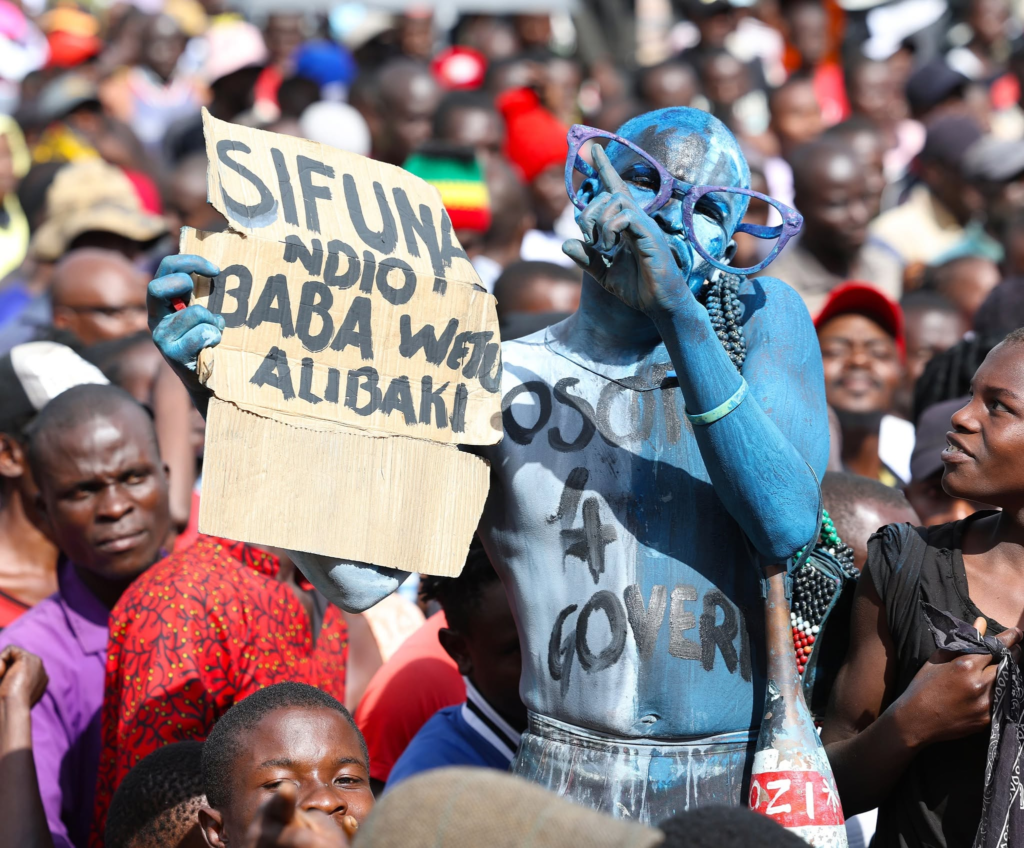
SIFUNA, KALONZO, MATIANG’I, ORENGO, BABU, WAMALWA, MUTURI, NDINDI, UHURU AND GACHAGUA — THIS IS THE LIST

0

By Billy Mijungu

With their respective support bases, we are reminded that Kenya is one nation. We must all learn to belong, to share, and to move forward together as a country. While some of these leaders have elevated their communities in different ways, they have also demonstrated the ability to coexist and exercise restraint. I will not judge how each has played their politics.

However, the arrangement above must now rise beyond individual positions and urgently come together to get the country back on track. Houses do not sprout—they are built. Likewise, policies such as the borrowing with housing levy should not be imposed abruptly. Sustainable progress comes from gradual, deliberate effort. We cannot continue borrowing beyond what we can realistically generate within a year.

Be that as it may, these are pressing national challenges that this team must confront. That is why nearly 74% of Kenyans have consistently remained in opposition since 2024. The President had a unique opportunity to put everything in order, but three years on, that opportunity appears squandered, and opposition against him has only grown stronger.

An urgent convention of the opposition is necessary—to unite this 74% into one coherent national voice. Kenyans understand what they need: a calm, steady hand capable of steering the country away from excessive debt.

The opposition must make a singular, clear promise—to wean Kenya off debt and institute firm safeguards so that no future administration borrows beyond 5% of the total cost of any fiscal policy program. We must leave this country better than we found it.

The opposition does not need an elaborate manifesto beyond a few critical commitments: repaying debt, ensuring government efficiency, providing free education to the University, delivering free universal healthcare, supporting agriculture to guarantee affordable food, and maintaining roads. Beyond this, long-term development should focus on efficient new rail systems and affordable energy for production. All other ambitions should be suspended until the country stabilizes.

Kenya must reinvent itself by upgrading its systems at every level. Corruption is choking the nation, and it must be confronted with unwavering resolve.

The team must give the Country a solid vehicle, the Azimio Vehicle is all here for rebrand and a reorganisation to save the Country. It must form to accommodate other newer party’s and draw a line on how to get Kenya Moving. It must accommodate Komboa Kenya, Skiza Wakenya and Linda Mwananchi, Those brands sell to 74% of Kenya.

The work is cut out, lets go.

The “reincarnate” Siaya Governor, Orengo, a political thorn in Kenya

0

By Anderson Ojwang

From public demands and rumours over his alleged demise, Siaya Governor James Orengo is a resurrected man, a political thorn in the flesh not only in the Orange Democratic Movement (ODM) but to President William Ruto and nationally.

From an outsider in the political negotiation at the high table of national politics to a major player at the altar of the determination of the opposition presidential candidate.

From holding no political leadership role in ODM to a self-declared de facto leader of the party causing the de jure party leader Dr Oburu Oginga sleepless nights.

In August last year, in Karachuonyo, at the burial of the matriarch Mama Phoebe Muga Asiyo, a rebirth of Orengo was marked. When mourners and the public did not expect him to appear at the funeral, Orengo arrived to a rousing welcome.

There had been rumours of his death, resignation as Siaya Governor over ill health, and a demand by a section of residents who had written a letter demanding his whereabouts.

Equally, the residents had demanded that his deputy, Dr Oduol Denge, should take over the running of the county during his absence.

But at the burial, marked the return of Nyatieng. He apologised for arriving late and announced that he was alive and fit as a fiddle.

“I am sorry I have arrived late. I am with you in all that has been said. I want to reiterate that I am alive. I am a stone, and there is nowhere I am going,” he said.

It took the intervention of the late former Prime Minister Raila Odinga, who criticised individuals for allegedly spreading malicious rumours and wishing death upon Orengo when he was out of the country for more than one month.

Raila termed the behaviour as primitive and likened the perpetrators to “witches.”

He expressed dismay over the false claims that Orengo had resigned, labelling the propaganda as deeply irresponsible.

“I was in constant communication with Governor Orengo throughout his time abroad and don’t understand the motives behind those who circulated such misinformation,” said the ODM leader.

“Orengo has returned to the country in good health and is more energised than ever.”

And Nyatieng’s return has opened a new chapter in Kenya’s politics and set a different political path.

The battle for Nyanza and ODM

After the death of Raila, Orengo had his eyes on controlling Nyanza politics, and with Embakasi East MP Babu Owino, they have destabilised the status quo.

Orengo has constantly rattled Dr Oburu and ODM National Chairperson Gladys Wanga’s hold on Luo leadership with series of rallies and meet-the-people tours.

The recent successful Linda Mwananchi rally in Kisumu rattled and changed the political status quo and threw Linda Ground into three weeks of planning to hold last week’s rally.

Linda Ground used Sh200 million to mobilise for the rally, while Orengo’s rally was organic, as he continues to receive a warm reception across Nyanza on his tours.

At the recent Kisumu rally, Dr Oburu told the crowd that he was ready to quit as the ODM party leader to avoid dividing the Luo community, to the chagrin and dismay of his allies.

“An ok ahero gima ilaro ma pogo oganda (I don’t like things people fight over that divide the community). An adwaro ni gimora amora ka oponi an ema de apog oganda to ayie weyo (If it’s me who is bringing division to the community, I am ready to quit). Ka pon ni an ema de apog ogandawa to ayie weyo (If it’s me who is the cause of division, then I am ready to quit).”

Orengo also gave conditions for his reconciliation and negotiation with Dr Oburu to avert the party from splitting.

The Siaya rumbles

Orengo has also come under a barrage of attacks from Alego MP Sam Atandi, CS Opiyo Wandayi, and John Mbadi, among others.

Plots to impeach Orengo have failed to materialise, with Atandi asking Orengo to retire from politics.

“Our community has had politicians who have been around since Jaramogi Oginga Odinga. They were with Jaramogi when he was alive. They were trying to help Jaramogi to become president; they failed. Then Raila Amolo Odinga adopted them; they tried to help Raila to become president. They also failed. Now that Raila Amolo Odinga has moved on, they still want to give us direction. I want to tell those politicians that your time is up. You will not give us direction now. Now we have a team of young competent leaders,” Atandi said then.

Broad-Based Government

Orengo has voiced his disapproval of the broad-based government and opposition to President William Ruto. He has given a wide berth to Ruto’s political engagements in Nyanza and Siaya County and only attended development engagements by the President in his county.

Orengo said: “There is no way that ODM can mbeleza Ruto. I can tell you. But if ODM is strong and you stand on the basis of your leader Raila Amolo Odinga, he wanted a strong and free country. We must fight everywhere. For me, if there are cowards, don’t sell us fear. We are prepared to go back to the streets. I, James Orengo, am prepared to go back to the streets.”

Wandayi said the community will remain in the broad-based government and support President Ruto’s re-election.

“We are going to move forward as one united people. We will walk together as members of the ODM party and as people belonging to this government, the broad-based government. This unity means a lot to our people,” Wandayi said.

In the Kisumu rally meeting, read by Wanga, it was resolved that ODM will negotiate with UDA for a pre-election coalition and support President Ruto’s second term.

Wantam

For President Ruto, the Siaya Governor has become one of his fiercest critics and the mover of the “Wantam” crusade.

Orengo has been holding a series of meetings with various leaders across the country with a view to negating President Ruto’s second term.

After the recent rally in Machakos, Orengo wrote: “Mlolongo mmesema WANTAM! Na sisi tumeskia hiyo nduru. Mnadai viongozi wanaowatambua na wanaowatetea, na Linda Mwananchi iko hapa kwa ajili yenu.”

The reincarnated Orengo finds himself on the right side of history and currently walking to inherit the Luo constituency and playing in the national league, which he has yearned for.

His reincarnation places him ahead of Dr Oburu and other ODM leadership and may just have a say in ODM’s strongholds.

Heads Roll as House Adopts Ad-Hoc Committee Report on Own-Source Revenue

0

By Kisumu County Assembly Press

The House yesterday (Wednesday, 3rd June, 2026) adopted a report by the Ad Hoc Committee on Kisumu County Own-Source Revenue, detailing how the county continues to lose billions in revenue figures and recommending a raft of measures to change the state of affairs.

The committee was established in February 2026 following persistent and systemic underperformance of the county’s own-source revenue against approved annual targets – a structural deficit that has progressively constrained the county government’s capacity to fund development and discharge its service delivery obligations to residents of the county.

The Ad Hoc Committee was therefore tasked to conduct a comprehensive, evidence-based inquiry into the root causes of this underperformance and recommend concrete and implementable reforms.

And yesterday, the committee chaired by the Deputy Majority Leader, Hon. Lumumba Owade, presented its report, which pointed to systemic weaknesses in institutional governance, technological infrastructure, enforcement culture and legal compliance that have facilitated leakages of billions of the county’s own-source revenue.

The report recommended a forensic audit of the county revenue management system and disciplinary actions against key officers at the Directorate of ICT for allegedly tampering with the system to “facilitate theft”.

It also indicted acting City Manager Mr Abala Wanga following poor performance of various revenue streams whose collections were delegated to the City Board; the committee recommended to the Governor to relieve the City Manager of his duties.

The report further recommended that the Kisumu City Board be stripped of all revenue collection functions and that revenue collection remain a sole responsibility of the Kisumu Revenue Board, recommending revocation of Gazette Notice No. 6298 on delegation of revenue collection responsibilities to the Kisumu City Board, issued in May 2024.

In line with this, the CEC Member for Finance, Economic Planning and ICT was directed to ensure that the Kisumu County Revenue Board is properly constituted within 60 days and that the current acting Chief Executive Officer of the Revenue Board be dismissed over alleged negligence.

The County Secretary and the County Public Service Board were also directed to immediately institute legal and disciplinary proceedings against all officers documented as having engaged in revenue malpractice, misappropriation or financial misconduct.

Debating the motion on adoption of the report, Hon. Members bemoaned that the low revenue figures had affected the implementation of development projects in the county.

“When we interact with residents, they complain that nothing is happening on the ground. We must therefore insist that those found culpable of revenue pilferage are held to account and that there are no sacred cows,” said nominated MCA Hon. Emily Oginga.