Home Blog Page 31

KENYA POWER LIGHTS THE WAY FOR RALLY STAR PAULINE SHEGHU WITH SH1 MILLION BOOST AHEAD OF WRC SAFARI RALLY ACTION

0

By Phillip Orwa

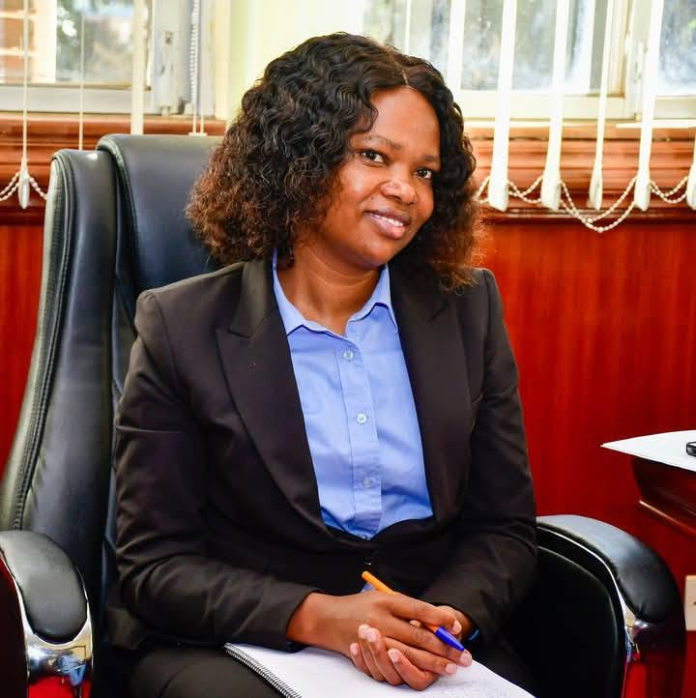
Former Journalist and Kenya’s leading female rally star and green energy trailblazer, Pauline Sheghu, has received a Sh1 Million sponsorship from Kenya Power ahead of the highly anticipated FIA World Rally Championship (WRC) Safari Rally event scheduled for March 12-15 in Naivasha.

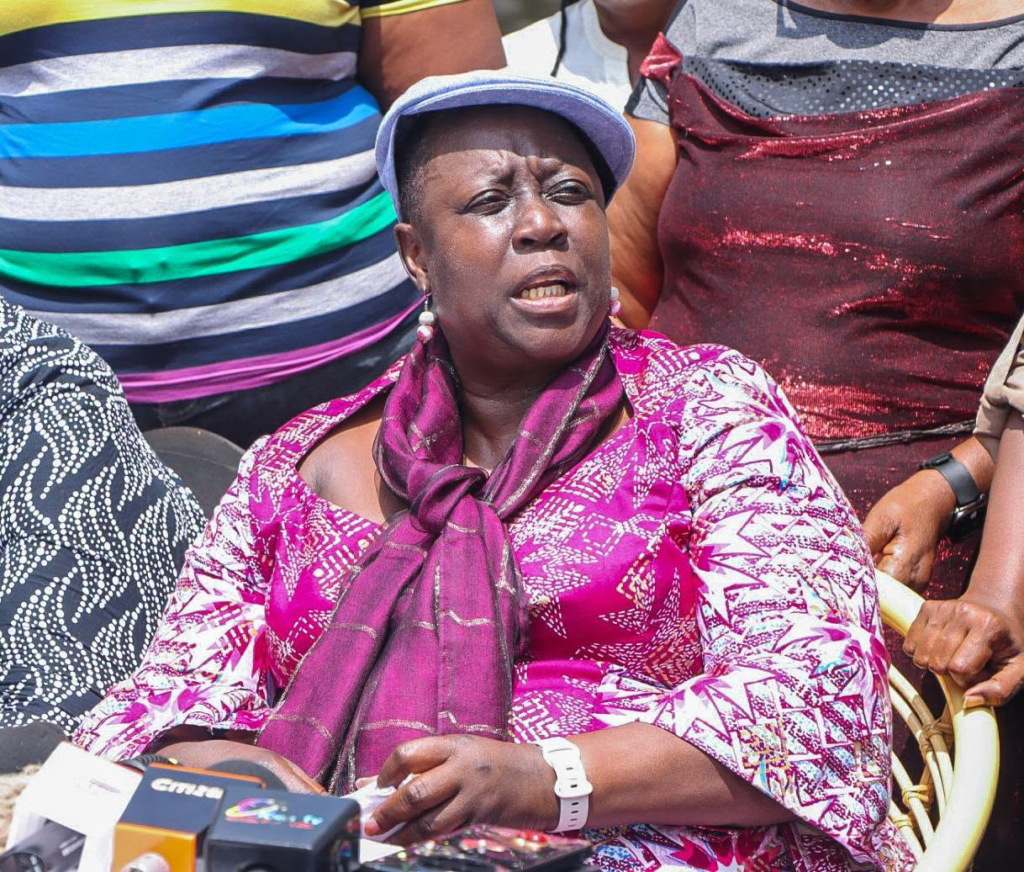
Sheghu a motorsport driver known for being fearless behind the wheel, has become a role model for aspiring motorsports enthusiasts in Kenya in a sport that demands both skill and grit, and who made history with podium finishes in 2023, 2024, and 2025 in both the WRC Safari Rally and the Kenya National Rally Championship.

The support will enable Sheghu to cover for key rally needs preparations, technical support and driver welfare, further ensuring that she has conducive environment and resources to fly Kenya’s flag high.

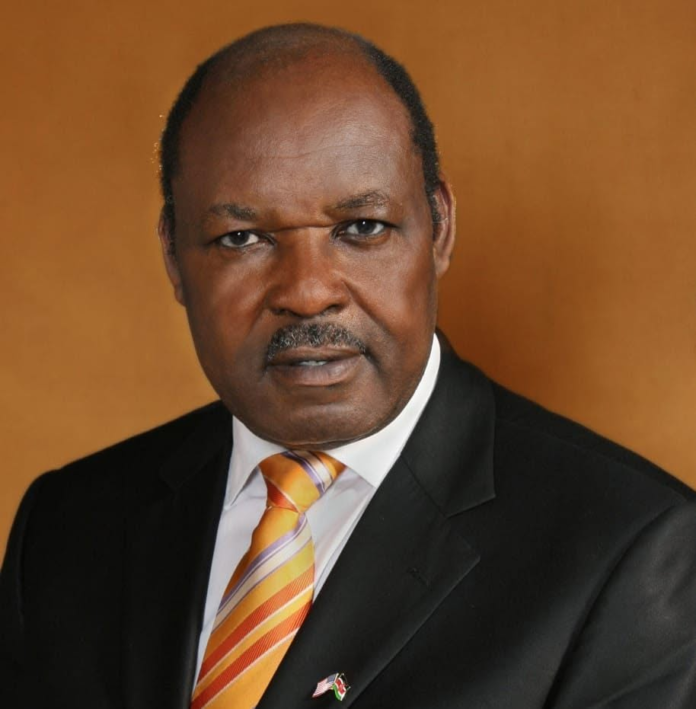
Kenya Power Managing Director & CEO, Dr. (Eng.) Joseph Siror said “Pauline embodies resilience, passion, and determination. These are crucial values that resonate with us at Kenya Power, and we are proud to be associated with her cause which has come with key aspects of green agenda. Through this sponsorship, we are seeking to empower her journey as she showcases Kenya’s strength on the global stage alongside the world’s best.”

The announcement comes at a crucial stage when Sheghu and her co-driver Linet Ayuko prepare to take one of WRC’s most demanding rallies in the world and the only leg in Africa alongside world’s top-rated motorsport champions on the Kenyan soil.

Commenting on the support, Sheghu said: “This sponsorship is a game-changer. It gives me the confidence to focus fully on performance, knowing that my team and I have the backing to compete strongly. I am grateful to Kenya Power and all sponsors for believing in me and in the future of Kenyan motorsport.”

The 2026 WRC Safari Rally Kenya is set to roar back into the Rift Valley region in March, cementing its reputation as one of the toughest and most iconic legs of the FIA World Rally Championship. The event will attract top international drivers alongside Kenya’s finest, drawing global attention to the country’s rugged terrain and passionate motorsport culture.

The WRC Safari Rally promises high drama, with international stars and local heroes battling across Kenya’s demanding gravel stages. Under its rallying call campaign Pamoja Twang’aa, Kenya Power continues to support local talent, further reinforcing its role in community empowerment and wellness.

Why Data Sovereignty is the New Frontier in Kenya’s Humanitarian War on Fraud

0

By Nicholas Odhiambo Goody Migot

NAIROBI, Kenya — In the digital age, the most valuable resource for a Kenyan is no longer just land or cattle; it is their data. Yet, for too long, our most sensitive information—our health records and humanitarian identities—has been treated like a commodity harvested by global entities, often processed far from our shores with little regard for our local security.

The recent signing of the Nairobi Declaration on Sensitive Data Sovereignty at Tangaza University marks a turning point. As a facilitator at the conference, I witnessed a collective realization: Africa can no longer afford to be a “data colony.” If we do not own our data, we cannot control our future.

The Fraud Crisis in Silence Nowhere is this more urgent than in our health and humanitarian sectors. We often hear of “ghost beneficiaries” in aid programs or fraudulent insurance claims that bleed our healthcare system dry. These are not just administrative errors; they are the result of fragmented, foreign-hosted data systems that lack local oversight.

During our breakout sessions on digital fraud prevention, a clear truth emerged: Fraud thrives in the shadows of “disconnected” data. When donor-funded programs use siloed apps that don’t talk to each other, malicious actors find the gaps.

Operationalizing the Solution To fix this, we must move beyond policy talk and into technical action. In my time as an ICT leader, I have seen that the best infrastructure in the world is useless if it is not “operationalized.” In Kisumu County, we took idle Tier 2 Server Infrastructure and breathed life into it to automate revenue and land management.

We must do the same for our health data. By localizing our servers and using FAIR OLR principles (Ownership, Localization, and Regulatory compliance), we ensure that:

The Citizen Owns the Identity: No more ghost recipients.

The State Owns the Jurisdiction: Fraud can be prosecuted under Kenyan law because the evidence is stored here.

The Security Mandate At the Crime Prevention Initiative Trust (CPIT), we believe that “Security by Design” is a human right. As we build the African Health and Humanitarian Data Space, we must integrate fraud prevention into the very code we write.

We must shift our mindset. Data sovereignty isn’t just about keeping files in a cabinet in Nairobi; it’s about ensuring that every byte of information serves the person who generated it. It is time for Kenya to lead the way in ensuring that our digital borders are as secure as our physical ones.

The writer is the ICT Manager at the Crime Prevention Initiative Trust (CPIT) and a former ICT Director for Kisumu County.

The Luhya Prophesy: Is Sifuna the fulfilment?

0

By Anderson Ojwang

Currently, the country is witnessing a new political excitement and a wave in the making. The excitement and the wave in the making could be linked to the old age prophesy by the Luhya Prophet Elijah Masinde wa Nameme of Dini Ya Msambwa.

In his prophesy, he said the Luhya leadership would come through Lake Victoria, specifically the Luo community.

Currently, Nairobi Senator Edwin Sifuna is creating a storm and a wave in the country’s political landscape, and his emergence is causing panic within the ruling coalition and the united opposition.

The developing wave and mantra Mimi Ndio Sifuna, wewe ni nani, Mimi ni Sifuna, after he was sacked by the Orange Democratic Movement (ODM) National Governing Council (NEC) as the Secretary General, created a political rapture.

Sifuna got a court reprieve and remains the ODM Secretary General but currently leads a faction, Linda Mwanainchi, which is fast gaining traction against the Linda Ground of the party leader Dr Oburu Oginga.

Prophet Masinde prophesy gets credence in Nyong’o’s choice of SG

In line with Prophet Masinde’s prophesy, Kisumu Governor Anyang Nyong’o also predicted that Sifuna was built for the future when he headhunted him to be the Secretary General.

“First is the issue of Edwin Sifuna. I think none of you knows how Edwin Sifuna came into ODM. The guy is built for the future. You know what I mean. Ukiangalia huko mbele, utaona Sifuna. If you don’t know what I am saying, go home and think,” he predicted then.

Nyong’o spotted Sifuna’s talents through his newspaper contributions and decided to tap his knowledge and potential for the ODM party.

Nyong’o was convinced and humbled in his first interaction, and that marked the beginning of a new Secretary General for the party.

“Before I say much, I want to deal with a few matters rising from what has been spoken here. Are we together?

Edwin used to write for the Standard Newspaper, very good articles. And after serving for 12 years as Secretary General of ODM, I asked the party leader to allow me to concentrate on developing the research wing of the party and give the technocracy to another Secretary General.

We tried a few people; it never worked. So one day, I said to myself, that young man who writes so well in the Standard.

Let me call him and have lunch with him at United Kenya Club. I met Sifuna and I was very impressed. So I went and talked to the party leader and he agreed to have him on board,” he said in a previous speech.

He said Sifuna never failed him and that he has performed exceptionally well as the spokesperson of the party.

Jaramogi Oginga Odinga baton to Wamalwa Kijana

The doyen of the opposition, the late Jaramogi Oginga Odinga, moved closer to fulfilling the prophesy by grooming and nurturing the youthful Wamalwa Kijana as his heir apparent.

The late Wamalwa became the Vice Chairman of Ford-K and, after Jaramogi’s death, he became the Chairman of the party.

Despite a power struggle with Jaramogi’s scion, the late Raila Amolo Odinga, Wamalwa gained control of the party, which eventually remained a Luhya party.

Raila resigned from the party to join the little-known NDP, on which he vied for the presidency in the 1997 general elections.

Wamalwa’s Ford-K party has remained a dominant political party in the Bukusu community for years but is currently slowly grinding to a halt after it lost in the by-election of Chwele-Kabuchai ward, the backyard and ward of the party leader Moses Wetangula.

Raila and Sifuna power play in the ODM

The late Raila, in his power gameplay and prison code messaging, often relied on Sifuna as his vehicle to pass his political messages.

For many, the contradictory stand Sifuna took on various emerging political issues in the country was actually Raila’s true position and opinion.

For instance, Oburu, ODM National Chairman Gladys Wanga, Junet Mohammed, among others, often criticised Sifuna for opposing the broad-based government of ODM and President William Ruto.

Raila, before his death, in an NTV interview, said he would support President William Ruto and the broad-based government up to 2027.

But a few days later, in a Citizen TV interview, Sifuna criticised the broad-based government and dismissed President Ruto’s administration, claiming the memorandum of understanding between ODM and UDA was dead.

The statement created a political storm in the party, and Raila, when he was in Kakamega for the party’s delegates meeting, came to the defence of Sifuna, saying the SG was free to express himself and should not be vilified for his constitutional right.

“It is not a must for people to have the same opinion, and we must defend the right to speak. If Sifuna has spoken, he has the right to do so, and if one feels they have a different opinion from what Sifuna is saying, then they should be free to say it. That is democracy,” Raila said then.

Sifuna said Raila entrusted him to prepare the final draft of the MOU with President Ruto against the protest of his close allies.

Raila indeed groomed Sifuna to be one of the country’s leading politicians.

Linda Mwanainchi Kakamega rally

The recent Kakamega rally birthed a new political dispensation in the Luhya community. The absence of all the elected political leaders from the region marked the birth of a new political leader.

The presence of Embakasi East MP Babu Owino and Siaya Governor James Orengo was a major statement in line with the prophesy.

In Luhya land, the rise of Sifuna is likened to the famous prophesy, but will he live up to the billing?

The Construction of the Standard Gauge Railway from Naivasha to Kisumu-Malaba to Begin in March

0

By Hope Barbra

The construction of the Standard Gauge Railway (SGR) Phase 2B and 2C from Naivasha to Kisumu and onward to Malaba is expected to begin in March this year.

Kisumu Governor Prof Anyang Nyong’o wrote on his social media platforms that after a consultative meeting with Kenya Railways and the community, the project is expected to begin next month.

He said the 269-kilometre extension from Suswa/Naivasha to Kisumu will include approximately 83 kilometres within Kisumu County, running from Sondu through Ahero to Kisumu Town and continuing toward Malaba via Kisumu West Sub-County.

“We held a consultative meeting with key stakeholders, including Members of Parliament and Members of County Assembly from affected areas in Kisumu County.

The meeting brought together leadership from Kenya Railways led by Managing Director Phillip Maingi, senior officials from the National Land Commission, and representatives of the National Government led by Regional Commissioner Flora Mworoa. Discussions focused on compensation for Project Affected Persons (PAPs), youth participation in construction, and other project impacts,” he said.

Nyong’o said the county government’s priorities are clear and include meaningful local participation, job creation for youth and skilled professionals, inclusion of local enterprises in procurement and supply chains, responsible environmental management, fair and transparent engagement with affected communities, and alignment of the railway corridor with sustainable urban and industrial planning.

“We resolved that all relevant agencies will conduct grassroots consultations in local villages as implementation begins, ensuring communities are directly engaged in this transformative project,” he said.

Maingi assured regional leaders that the corporation was committed to ensuring that the construction of the line—classified as a Category A project—will strictly adhere to all regulatory requirements while prioritizing public safety.

“The infrastructure and facilities affected along the corridor will be relocated where necessary, and the corporation plans to undertake various Corporate Social Responsibility initiatives to support communities affected by the project,” he said.

Nyong’o and technical teams conducted a site visit to the proposed Standard Gauge Railway (SGR) terminus in the Kibos area of Kisumu.

The visit enabled stakeholders to assess the proposed location and gain first-hand insight into the scope of the planned infrastructure and its anticipated impact on regional connectivity and trade.

Kenya Railways’ stakeholder consultative forum in Kisumu County brought together regional leadership to deliberate on the upcoming construction of the Standard Gauge Railway (SGR) Phase 2B project.

The forum brought together officials from the National Land Commission, Members of Parliament, and Members of the County Assembly to discuss the anticipated socio-economic impact of the project in the region.

The proposed SGR Phase 2B project will span approximately 264 kilometres, forming a critical link in the railway network connecting the region to the broader national and regional transport system.

Key components of the project will include:

  • 79 railway bridges with a combined length of approximately 43 kilometres.
  • 8 tunnels with a total length of 14.26 kilometres.
  • 376 culverts spanning approximately 7 kilometres.
  • 26 stations in the initial phase, comprising one major station, six intermediate stations, and eighteen crossing stations, as well as one freight port facility.
  • An 8.68-kilometre branch line linking the main railway to the proposed Kisumu Port, which will include one bridge and eight culverts.

Once completed, the line is expected to significantly enhance freight and passenger movement, strengthen intermodal connectivity between rail and lake transport on Lake Victoria, and stimulate economic growth in the Lake Region and beyond.

Acknowledging the significant economic contribution of the Metre Gauge Railway in the region, Governor Nyong’o noted that the SGR Phase 2B will mark a major advancement in transport capacity, efficiency, speed, and reliability.

He expressed optimism that residents of Kisumu will greatly benefit from the project through employment opportunities during construction and in the long term.

The Governor further emphasized that the project will elevate Kisumu’s strategic role as a logistics hub linking Kenya with neighbouring countries including Uganda, Tanzania, Rwanda, and South Sudan.

“The corridor is expected to expand regional trade, lower the cost of doing business, stimulate industrial parks, strengthen agricultural value chains, and catalyze new investments in warehousing, cold storage, fisheries, and manufacturing,” he said.

Also present at the meeting were Members of Parliament including Shakeel Shabbir, Rosa Buyu, and James Onyango K’Oyoo, alongside Members of the Kisumu County Assembly.

The leaders pledged their support for the project, citing its significance to the people of Kisumu. They commended Kenya Railways and the National Land Commission for holding the joint forum and urged them to conduct more engagements at the grassroots level to ensure the involvement of all Project Affected Persons (PAPs).

Representing the National Land Commission, Director Joel Ombati outlined the land acquisition and compensation process, emphasizing that due diligence will be conducted and that all individuals displaced by the project will receive fair and lawful compensation.

Why Kimani Wamatangi Should Be Re elected Governor in 2027

0

By Billy Mijungu

The performance of Kiambu County under Governor Kimani Wamatangi provides a practical evaluation of whether devolution can deliver priority services effectively. Current fiscal and infrastructure indicators suggest a deliberate focus on the core county functions of water, health, roads, education, and agriculture.

Kiambu’s Own Source Revenue increased from KSh 2.79 billion to KSh 5.45 billion during the present administration. Growth in internally generated revenue is significant because it strengthens financial independence and expands development capacity beyond national allocations. In many counties, Own Source Revenue has historically been associated with audit disputes, under declaration, and weak accountability, often leading to reluctance in appearing before Senate oversight committees. In Kiambu’s case, revenue growth has corresponded with visible service delivery outcomes.

In health, the County has constructed six Level IV hospitals and twenty eight Level III hospitals, significantly expanding access to primary and secondary healthcare. This reduces travel distance for residents and enhances preventative and emergency care capacity.

In education, more than 500 ECDE classrooms have been delivered since the Governor assumed office, including over 220 in the last financial year alone. Expansion of early childhood infrastructure at sub location level reflects prioritization of foundational learning.

Water services have been strengthened through rehabilitation of distribution systems and expansion of supply networks to improve household access. On roads, the County has invested in upgrading and opening access routes to enhance connectivity between residential areas, markets, and service facilities. These improvements reduce transport costs and support economic activity.

Agriculture has been supported through extension services, facilitation of farm inputs, and market linkages to stabilize farmer productivity and incomes, reinforcing food security and rural resilience.

A significant component of this delivery model is attributed to the performance of Chief Officer for Delivery, Julie Njeri Waweru. Her coordination of implementation frameworks, monitoring systems, and interdepartmental alignment has strengthened execution capacity within the County administration. Effective delivery structures often determine whether budget allocations translate into measurable outcomes. In this regard, administrative follow through has matched fiscal growth.

While no governance system is entirely free from inefficiencies, performance should be assessed based on trajectory and impact in essential services. In Kiambu, revenue expansion has been linked to visible investments across priority sectors.

If the current momentum in fiscal management and structured delivery continues, continuity of leadership in 2027 would represent consolidation of a development path grounded in service provision, institutional coordination, and measurable results.

Opposition Moves to Secure 960,262 Abagusii Votes as Matiang’i Is Made the Community Spokesperson

0

By Anderson Ojwang

The United Opposition has moved to secure 960,262 Gusii community votes from the clutches of President William Ruto and his partner, the Orange Democratic Movement (ODM).

In the 2022 presidential election in Kisii County, Azimio La Umoja presidential candidate, the late Raila Odinga, received 65.15 percent of the votes cast, accounting for 264,988 votes, while Ruto got 38.22 percent, accounting for 135,140 votes. The total registered voters as of 2022 were 637,010.

In Nyamira County, Raila received 61.20 percent of the votes cast, accounting for 104,477 votes, against 37.20 percent, which translated to 63,645 votes. The total registered voters were 323,283.

The installation of former Internal Security Cabinet Secretary and Deputy Leader of the Jubilee Party, Dr. Fred Matiang’i, as the community spokesperson has overhauled the community’s political terrain.

The move is similar to 2002, when the late former Cabinet Minister Simeon Nyachae founded Ford-P as his political vehicle to contest the presidency.

Nyachae’s Ford-P won most of the elective seats in the Gusii community and the majority of the presidential votes. But after Nyachae retired from politics, the late Raila Amolo Odinga and his party, ODM, became dominant in the area.

Raila and his party, ODM, have been dominant in successive elections from 2007 to 2022, where he received most of the presidential votes.

ODM has been the party of the Gusii community, with the majority of elected governors, MCAs, MPs, senators, and the Woman Representative elected on its ticket.

Currently, Kisii Governor Simba Arati is the ODM Deputy Party Leader and is aligned with the Linda Ground faction of party leader Dr. Oburu Oginga, which has expressed intent to begin pre-election coalition negotiations with President Ruto’s United Democratic Alliance (UDA).

This move has split ODM, with the Linda Mwananchi faction—associated with Secretary General Edwin Sifuna, Siaya Governor James Orengo, and Embakasi East MP Babu Owino—opposed to the talks.

The Monday installation of Matiang’i as community elder and spokesperson changed the political equation in the region and is likely to confine President William Ruto and ODM to the periphery.

Matiang’i, who has declared his presidential interest on a United Opposition ticket, thanked the elders and the community for making him their leader.

“The elders and people, I want to thank you for the honor and the traditional rites you have conducted. You have handed me instruments of power. I want to commit here that I will not let you down.

I will respectfully represent you and will work with you. I will consult the elders and the council of elders on weighty issues affecting the community and the country.

You will advise me on the course of action, and I will not go against your advice,” he said.

DCP Party Leader Rigathi Gachagua said the installation and making of Matiang’i as the community spokesperson has locked the community votes to the Opposition and will be an impetus to their winning the 2027 presidential elections.

“We have been invited here by our brother for an important ceremony for the Abagusii community. The elders, led by Mzee Matundari, Dr. Sam Ongeri, and Dr. Chris Obure, among others, were in attendance at Ekerenyo,” he said.

Gachagua said the making of Matiang’i as the community spokesperson was the best move and an added advantage to the United Opposition.

“This was a very important move to make Matiang’i the sole spokesperson of the Abagusii community. I am disappointed that during this important community ceremony, some people were hell-bent on causing chaos,” he said.

He said going forward, the community should shun and reject “fake” political spokespersons who have nothing to show for the community’s growth.

“I am happy you maintained peace to ensure the ceremony went uninterrupted,” he said.

He said Matiang’i would be able to negotiate for the community’s share of the national cake after he was handed the mantle.

DAP leader Eugene Wamalwa said the United Opposition has embarked on locking its vote bloc from President Ruto in order to win next year’s presidential election.

“Today, we have locked the Gusii community votes from President Ruto. Rigathi has locked the Mt. Kenya vote bloc, while Kalonzo has locked Ukambani. We are also locking the Luhya vote bloc, and we will make President Ruto irrelevant in the 2027 general election,” he said.

Wiper leader Kalonzo Musyoka said the United Opposition will easily win the 2027 presidential election.

“President Ruto recently claimed he will defeat us by more than 2 million votes. But you can see from Narok to here in Kisii, the mood is one term. Where will Ruto get the votes to win?” he said.

He said the Opposition will remain united and that none of them will bolt out of the coalition.

“The train has left. You are either with us or not with us. The team is riding to victory. We have what it takes to win the presidential race,” he said.

President Ruto is banking on Arati and UDA MPs from the region to lead his vote hunt in the community, and with the making of Matiang’i as the community spokesperson, the battle will be interesting and intriguing.

The Economy and the Election Cycle

0

By Billy Mijungu

Seemingly, the election cycle has kicked in in earnest. With barely fifteen months to the next General Election, the political temperature feels hotter than at any other time in our history. Rallies are intensifying, alliances are shifting, and the national conversation is slowly being swallowed by 2027.

Yet beneath the noise of politics lies a fragile economy.Kenya’s economy is tinkering on the edge due to massive public debt, expensive mega projects, and the persistent cancer of corruption. Our repayment obligations continue to exert pressure on revenue, while ordinary citizens grapple with the high cost of living. This places the country in a very precarious position and demands absolute duty of care from leadership across the divide.

History shows that election cycles often slow down investment, weaken the currency, and create uncertainty in markets. Businesses adopt a wait and see attitude. Investors become cautious. Government spending patterns shift toward politically attractive projects rather than economically sound ones. If not carefully managed, this season can erode the gains painstakingly built over years.

The security system must therefore stand at its highest patriotic alert to transition the country safely through this delicate period. We must not allow lawlessness to thrive, especially in our streets where daylight robberies are becoming common and criminal gangs operate with growing boldness. The perception that goons are sponsored or shielded by political actors, whether state aligned or opposition linked, is dangerous. On this matter, every sector of the political class must accept responsibility. We must change.

The economy cannot thrive where fear reigns. Investors do not invest where instability is normalized. Citizens cannot innovate or build wealth where insecurity stalks their daily lives.
There is also a deeper structural issue. The presidential system, as currently experienced in Kenya, has proven deeply divisive. It turns every election into a high stakes winner take all contest that fractures communities along ethnic and political lines. Perhaps it is time to seriously consider a softer parliamentary route that diffuses power, strengthens institutions, and reduces the toxicity of national elections.

As we move toward the next election, every actor must show clear direction and accountability. Why are we not safeguarding economic gains? Why are we tolerating insecurity? Why are we normalizing divisive politics?

Fifteen months is not a long time. If we get this season wrong, the economic consequences could last far beyond the ballot.The choice before us is simple: responsible transition or reckless competition.

Floods damages bridge and paralyses businesses in Migori town

0

By Erick Otieno
Residents of Migori town woke up to a rude shock after a key bridge linking Suna West and Suna East constituencies was damaged following heavy rainfall that has been pounding many parts of the country since Friday last week.

The downpour caused River Migori to break its banks, submerging sections of the central business district and disrupting business operations throughout the day. Traders counted losses as floodwaters swept through shops and access roads, leaving transport temporarily paralysed.

Speaking to the press, former Migori legislator John Pesa described the situation as alarming, noting that the damaged bridge is a critical link between the two constituencies. He recalled that during his tenure in the 10th Parliament, the larger Migori Constituency was divided into Suna West and Suna East, making the bridge an essential connection.

Pesa criticized what he termed as poor workmanship by some contractors, alleging that substandard construction has contributed to repeated infrastructure failures. He cited another bridge connecting Nyikendo and Migori that was swept away the previous night, leaving motorists stranded. He also referenced a footbridge linking Kadika area and Migori TTC, which he said had previously been destroyed by floods.

He further faulted Kenya National Highways Authority for failing to construct a bypass during the upgrading of the Kisii–Isibania Highway, arguing that such a project would have provided an alternative route during emergencies. At the same time, he commended former governor Okoth Obado for initiating the construction of Kiringi Bridge, which has now become the only viable route for motorists.

Migori County Commissioner Kisilu Mwilu confirmed that engineers from the highways authority had assessed the damaged bridge and temporarily cleared it for use. However, he noted that heavy trucks weighing 20 tonnes and above would be allowed to cross only in shifts as reinforcement works continue.

Mwilu urged residents living in low-lying areas to relocate to higher ground, warning that rainfall is expected to continue until the end of the month.

In a statement posted on his Facebook page, Governor Ochilo Ayacko advised residents to take precautionary measures as the rains persist.

He said his administration, through the Department of Disaster Management and other multi-sectoral agencies, is working closely to restore normalcy.

Suna West MP Peter Masara called on the national government, particularly disaster response agencies and the highways authority, to act swiftly to stabilize the situation and prevent further damage.

Last week, the Kenya Meteorological Department issued an advisory warning Kenyans of heavy rainfall expected between 21st and 25th February, urging those in flood-prone zones to move to safer, elevated areas.

Authorities continue to monitor the situation as residents grapple with the aftermath of the floods and uncertainty over transport and business operations.

Luhya Elders Forum Meets Dr. Oburu in Kisumu, Recognizes Sifuna as the ODM Secretary General

0

By Anderson Ojwang

The fallout in the Orange Democratic Movement (ODM) took a new twist after the Luhya Elders Forum held an intensive and high-voltage meeting with party leader Dr. Oburu Oginga in Kisumu, where they declared support for Edwin Sifuna as the Secretary General of the party.

The elders sided with Sifuna as Secretary General and rejected the appointment of Catherine Omanyo as the Secretary General of the party.

“Senator Sifuna went to the Dispute Tribunal and was given a reprieve until the matter is heard and determined. We have noted that the position of the Party Leader is that Senator Sifuna is the Secretary General of the court and that it is Hon. Catherine Omanyo who is the Secretary General of ODM.

This is far from the truth. ODM stands for the rule of law. If the Tribunal reinstated Senator Sifuna to his position, ODM should comply and allow Senator Sifuna to perform his duties,” the elders told Oburu at the meeting.

The Luhya Elders Forum convened the meeting over what they termed as alarming and worrying political divisions in ODM and the sacking of party Secretary General Edwin Sifuna by Dr. Oburu and his allies.

The meeting was also attended by the Ker of the Luo Council of Elders, Mzee Odungi Randa, who confirmed that the meeting delved into the emerging split in the party and possible solutions to arrest it.

“We had a healthy discussion with party leader Dr. Oburu and the elders from the Luhya community. We were concerned about the split in the party and how to find a solution to it,” he said.

The Luhya Elders Forum Demands

The meeting brief said it was arranged by the Luhya Elders Forum in order to find a solution to what they described as an escalating problem in ODM that was likely to affect the community.

The forum was angered by the recent decision to sack Sifuna as the ODM Secretary General and stated that they stand with the Nairobi senator as the bona fide Secretary General of the party.

“The elders were not happy with the decision that was taken to expel Senator Sifuna from the position of Secretary General of ODM.

The elders have reviewed many publications and can confirm that the position taken by Senator Sifuna aligns with the late Raila Odinga’s mind,” read the brief.

Recently, the ODM National Executive Council (NEC) sacked Nairobi Senator Edwin Sifuna as the Secretary General and spokesperson with immediate effect.

The move followed a protracted battle between the faction allied to party leader Dr. Oburu Oginga and Sifuna over the pre-election coalition pact with President William Ruto’s United Democratic Alliance (UDA).

In a statement read by ODM, “The Party National Executive Committee meeting in Mombasa today has resolved to relieve Secretary General Edwin Sifuna of his responsibilities with immediate effect.

Effectively, Catherine Omanyo, who is one of the Deputy Secretaries General, will act in this position until a substantive holder of the office is elected.”

But Sifuna moved to the Political Parties Tribunal Court and got a reprieve. Oburu maintained that Omanyo was the party Secretary General, while Sifuna was the court-recognized Secretary General.

The elders said the NGC resolutions made in Kilifi did not confine ODM to entering into a deal with UDA alone but allowed engagement with all political formations in the country, including President William Ruto’s UDA.

“We are aware that ODM does have structures that have been specifically created to deal with coalitions, and it is not proper for Senator Oburu and Chairlady Governor Gladys Wanga to handle discussions, nor is it proper to deal with the matters in public rallies,” they said at the meeting.

The elders supported sentiments by ODM Vice Chairperson Dr. Otiende Amollo over structured negotiations, where he asked Dr. Oburu to delegate the talks to other members of the party.

“We would like to refer specifically to sentiments attributed to Hon. Otiende Amollo on the same matter. We have given a copy of the publication, which we think spells out the exact position,” they said.

Otiende told Oburu at a recent ODM function in Kisumu that as party leader of ODM, he cannot double up as the lead negotiator in the ODM–President William Ruto United Democratic Alliance (UDA) pre-election coalition pact.

“At the beginning, it was me who spoke about structured dialogue. Currently, Dr. Oburu, you are our leader. Everyone in attendance is in agreement that we must have structured negotiations.

If we talk about structured negotiations, it doesn’t mean we are against the talks. We demand more slots.

Dr. Oburu, now we are heading to structured negotiations. You should not lead the talks. You are our leader, and you cannot be at the front. You can be killed and we remain without a leader.

You must have what they call the first right of acceptance and the first right of refusal.

If it is right, you accept, and when it is wrong, you refuse. Use your foot soldiers. Even if the foot soldiers are killed, that is normal provided the leader is safe,” he said.

The elders asked the party leadership to put in motion proper mechanisms to deal with the coalition discussions.

The elders also said the party leadership should move with speed to end the split in the party.

“They should, as a sign of goodwill, settle the Tribunal’s case. The party leader or any individuals should not be involved directly in the discussions. Once a decision is taken on the coalitions, then public participation can take place,” they said.

Randa said it was agreed at the meeting that the Elders Forum would engage Sifuna to break the ice and reconcile him with Oburu.

The elders asked Oburu that in future they should consider town hall meetings instead of public rallies to achieve the objective of public participation.

“Town hall discussions are a better way of carrying out participation since they give people a chance to interrogate the matter,” they said.

ODM currently has two factions: Linda Ground, allied to Dr. Oburu, which supports a pre-election coalition with President Ruto, and Linda Mwananchi, which is opposed to it.

Linda Mwananchi to Plan and Release Calendar of Activities up to December

0

By Anderson Ojwang

In a tactical move after three successful political rallies in Busia, Kitengela, and Kakamega, Linda Mwananchi is taking a brief break to embark on planning the next political course and activities.

Embakasi East MP Babu Owino said the group was temporarily taking a break from its activities in honor of the holy month of Ramadan before embarking on countrywide rallies.

Babu said the team will now engage in planning the next activities for the next 10 months up to December.

“Next we will go to Mombasa after Ramadan. We are meeting next week to discuss the timetable. We want to produce a timetable which will run up to December,” he said.

He said after December the team will again embark on activities leading to the August elections.

“After December, we will pick up from January up to the election period. This thing is going to be massive, and in the beginning there was the Word, and the Word was with God, and the Word was God,” he said.

Babu described Linda Mwananchi as a seed that grows into a forest and said that is why the group, just like a seed, is growing bigger day by day.

“We have just planted a seed. The power of a seed is to be fruitful. The reason why mankind was created is to be fruitful. The power of a seed, when planted, produces a tree. That tree will produce fruits. In those fruits are seeds. Those seeds, when planted, will produce many trees and eventually turn into a forest. That is what we are working at. We will work with the power of being fruitful, and we will also work with the power of multiplication,” he said.

Just like in the biblical parable of the mustard seed, the Linda Mwananchi group, from a tiny, humble beginning, is fast becoming and growing into the country’s expansive and prolific political outfit and movement.

The sacking became the political matchbox that transformed the country’s political landscape, with Sifuna posting on his X handle, “Tukutane Kite.”

From Busia, Kenya’s border with Uganda, the wave began even before the Orange Democratic Movement (ODM) National Executive Council (NEC) sat in Kilifi County to sack the party Secretary General Edwin Sifuna from the seat. The Busia wave caused panic within and across the political divide in the country and ODM, which culminated in the NEC, under party leader Dr. Oburu Oginga, sacking Sifuna.

Kenyans of goodwill also donated a van fully equipped with a public address system after the last weekend’s mess in Kitengela.

Sifuna wrote on his X handle, “We saw you struggling with sound. Bwana kumbe you guys are serious! They will not believe! Sasa ni wapi tunaeza chinja na kuchemedsha hizi 20 nimepewa hapo Kakamega?”

Siaya Governor James Orengo said the spirit of the enigma, the late Raila Amolo Odinga, has reincarnated in the group.

“This thing is huge. It is a tsunami. It is unstoppable. No force on earth is going to stand in our way. Rest assured, with their machinations, this meeting is going to take place, just like they tried in Kitengela and the meeting went on.

They better be prepared for this huge movement of the people and by the people,” he said.

The Kakamega Linda Mwananchi rally has not only caused panic and fear in Oburu’s Linda Ground and the United Opposition but also in President William Ruto.

It has pushed the United Opposition from boardroom meetings, unending press conferences, and monotonous campaign rounds in Mt. Kenya, Ukambani, and Narok to move to other parts of the country.

Stung by the emerging new political wave, President Ruto on Monday held a consultative meeting with MPs from Kakamega County, in what appeared to be a move aimed at containing the group and possibly diminishing the gains so far.

The train is currently witnessing an upsurge of new followers, including members of county assemblies, parliamentary aspirants, gubernatorial aspirants, women representatives, and other aspirants across the country.