Home Blog Page 32

24th June 2026 – The Gen Z Anniversary That Will Define 2027 Politics

0

By Billy Mijungu

If there is a day Kenya must pay attention to, it is 24th June 2026. This is not just another date on the calendar—it is a political turning point. On this day, strategies will be tested, alliances revealed, and intentions laid bare. Every serious political actor will be watching closely, calculating how to survive or succeed in 2027.

This anniversary has evolved into a symbol of youth political awakening. It is where narratives are shaped and where momentum begins to crystallize.
The President carries the greatest responsibility on this day. His strategists must be fully alert, ensuring the events of 24th June tilt in his favor. If mishandled, the political energy generated could build into an unstoppable force heading into 2027.

If the pattern of 2024 and 2025 repeats itself, then little will change. In fact, the consequences may be worse. By the time the country is just months away from the General Election, the political direction may already be irreversible.

Political capital must be spent wisely—and early. Half of all election resources should be deployed around this date. Waiting until 2027 will be too late. Elections are not won in the final months; they are decided in defining moments like this.

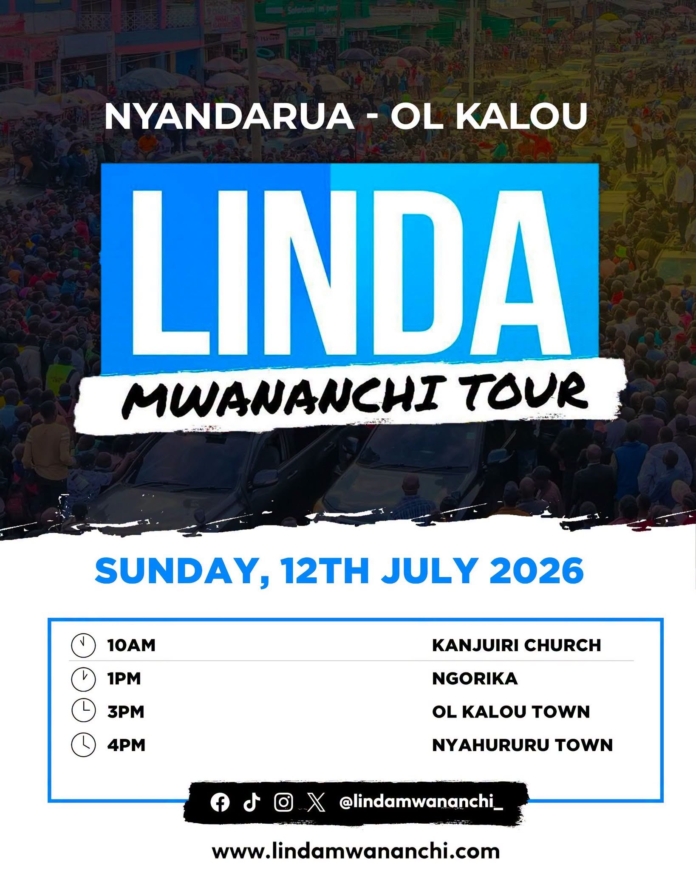
The Linda Mwananchi movement, largely backed by Gen Z, understands this reality. They will use the anniversary to draw clear lines—who stood with them, and who did not. In politics, perception quickly becomes truth.

One possible counter-strategy may resemble dramatic political maneuvers seen in past moments of symbolic defiance. But such approaches come with heavy risks. It is a delicate balance—act, and face consequences; fail to act, and lose ground.

Ultimately, beyond politics, one thing must prevail: peace. As the nation approaches 24th June 2026, all stakeholders must ensure that expression does not turn into unrest.

This day will shape not only political outcomes, but the spirit of the nation

Court upholds DPP’s application to detain Utumishi Girls’ students for 21 days

0

By Reporter

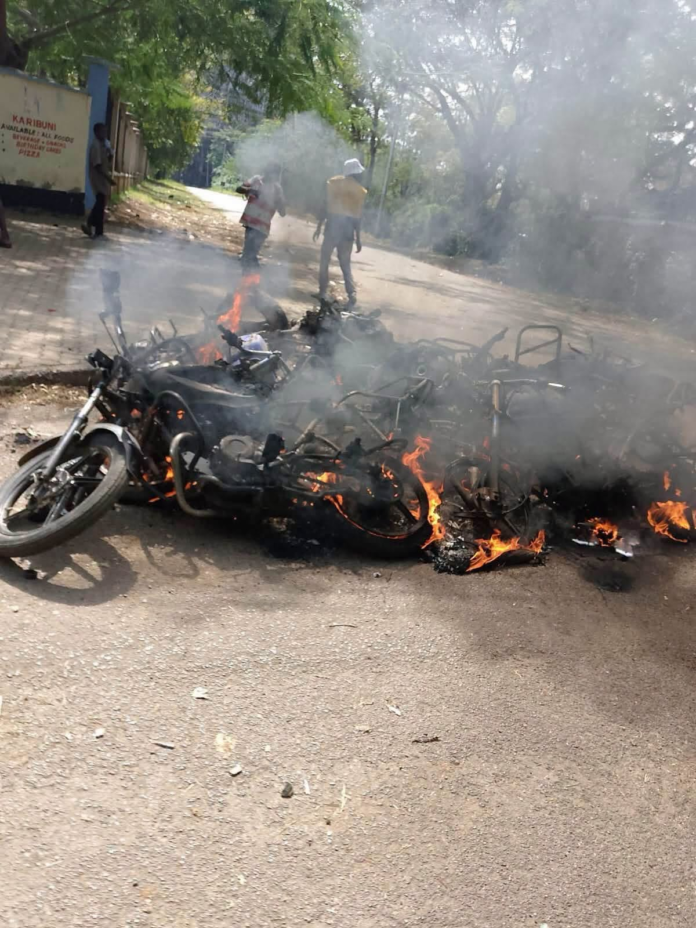
The Naivasha Law Courts has today accepted an application by the Director of Public Prosecutions (DPP) to detain nine Utumishi Girls Academy students for 21 days to facilitate investigations into an arson attack that claimed the lives of 16 students and caused extensive destruction of property.

In allowing the application, the court agreed with the DPP’s submissions that investigations into possible arson and murder charges remain ongoing and require additional time to be completed.

The prosecution informed the court that key forensic processes, including DNA analysis and other scientific examinations, are yet to be finalised.

Further, the prosecution argued that the continued detention of the minors is necessary not only to safeguard the integrity of investigations, but also for their own protection and welfare, given the sensitivity and public interest surrounding the matter.

The court directed that the minors be held at the Nakuru Children’s Home for the duration of the detention period. During this time, they will have regular and unrestricted access to officers from the Children’s Department to ensure their rights and welfare are fully protected.

Chief Magistrate Abdulqadir Ramadhan also barred members of the media and the public from taking, publishing, sharing, or disseminating images of the students. The order is intended to protect the children’s privacy and ensure compliance with legal provisions governing matters involving minors.

Additionally, the court directed that the students be granted access to legal representation and other necessary support services throughout the proceedings.

The matter will be mentioned on 24th June 2026 for further directions and an update on the progress of investigations.

ODM at a Crossroads: Why Leadership Renewal Can No Longer Wait

0

By Hon Sam Weya

The growing debate surrounding the future leadership of ODM should not be reduced to personalities or emotional loyalty. It is fundamentally about the survival, direction, and national relevance of one of Kenya’s most significant political parties.

There comes a time in every political movement when difficult truths must be spoken openly. That time has now arrived for ODM.

It is becoming increasingly clear that Dr Oburu Oginga cannot effectively steer ODM as a modern national political party operating in today’s highly competitive political environment. Leadership of a movement built by Raila Odinga requires energy, strategic coordination, national outreach, and constant engagement across every corner of the country. This is not a ceremonial role. It is a demanding 24-hour assignment requiring vision, organisation, negotiation, mobilisation, and relentless political warfare.

Instead, what we are witnessing is a narrow regional consolidation strategy centred almost entirely around Nyanza politics, without a compelling national agenda capable of reigniting ODM’s support bases in Western Kenya, Coast, Nairobi, North Eastern, Lower Eastern, and other regions where Raila painstakingly built political goodwill over decades.

ODM was never intended to become a regional preservation vehicle. It was built as a national reform movement.

The uncomfortable reality is that age is no longer on Oburu’s side. Politics today is fast, digital, aggressive, and unforgiving. The next ODM leader must possess the stamina to operate continuously – holding strategy meetings at midnight, engaging youth movements online, coordinating county structures daily, countering government narratives instantly, and rebuilding the party machinery nationally.

That is not happening.

In fact, Oburu’s declaration that he will defend the Siaya Senate seat speaks volumes. It sends a clear message that even he may not fully believe in ODM’s future prospects under the current arrangement, nor is he entirely convinced that the broader political realignments with UDA guarantee long-term security for the party.

Those of us who have been insiders within ODM politics for years are not surprised. Historically, whenever his political survival appeared uncertain, Oburu has often sought protective political arrangements. It has long been whispered within ODM circles that during tense nomination periods he would privately express doubts about Raila’s chances of winning, while simultaneously lobbying for control over candidate selection in Siaya to secure his own political interests.

This pattern reflects a deeper concern: the institutionalisation of self-preservation politics within ODM.

Many party members still remember how nomination politics in Siaya frequently revolved around personal loyalty networks rather than competitive democracy. The controversial backing of Cornel Rasanga over Engineer Gumbo, and how the late Jakoyo Midiwo was supporting, remains one of the most emotionally charged episodes within the Odinga political family itself. Jakoyo’s fallout with sections of the ODM establishment deeply wounded party loyalists who believed merit and independent political thought were being punished.

Questions have also persisted regarding why a senior political figure such as Oburu would continue accepting nominated parliamentary positions – including slots constitutionally designed to uplift youth and marginalised voices – rather than mentoring and creating space for a new generation of leaders.

ODM now faces a defining moment.

As Anyang’ Nyong’o recently observed, ODM is a national party and must continue behaving, organising, and presenting itself as one. That statement was not accidental. It was a warning.

The internal tensions between the so-called “Linda Mwananchi” and “Linda Ground” factions risk tearing the party apart if sober leadership does not prevail quickly. Unless these groups close ranks and agree on a coherent national strategy, ODM risks gradual decline into regional irrelevance at a time when Kenya’s political landscape is rapidly reorganising itself ahead of the next electoral cycle.

What ODM desperately needs now is not entitlement politics or inherited influence. The party requires generational renewal, ideological clarity, organisational discipline, and a leadership team capable of reconnecting with young voters, professionals, grassroots mobilisers, and forgotten reformists across Kenya.

The future of ODM cannot survive on nostalgia alone.

Raila built a movement rooted in sacrifice, detention, resistance, and national inclusion. Preserving that legacy requires more than family lineage – it requires bold leadership, fresh thinking, and the courage to embrace renewal before it is too late.

The writer is a former Alego MP and Siaya Senatorial Aspirant

Climate Finance Must Move From Global Promises to Local Proof

0

Why Africa’s next climate finance opportunity lies in practical systems, green lending, local institutions and measurable community resilience

By Simon Okola
Founder, Agenda Beyond Borders

Climate finance has become one of the most important development conversations of our time. Across global summits, national policy platforms, donor forums and investment meetings, the message has been consistent: the world must mobilise more resources to help vulnerable countries adapt to climate change, reduce emissions, protect livelihoods and build resilient economies.

The commitments are ambitious. The numbers are huge. The policy language is powerful.

Yet for many communities across Africa, one important question remains unanswered: when will climate finance become visible in people’s daily lives?

For a smallholder farmer in Kenya, climate finance is not meaningful simply because billions of dollars have been pledged at an international conference. It becomes meaningful when that farmer can access affordable credit for water harvesting, drought-tolerant seeds, improved dairy breeds, fodder production, soil conservation, solar-powered irrigation, climate advisory services or agricultural insurance.

It becomes meaningful when a coffee farmer can protect production from erratic rainfall, when a dairy farmer can maintain milk supply during dry seasons, and when a tea farmer can invest in practices that protect both productivity and the environment.

This is why climate finance must now move from global promises to local proof.

For many years, climate finance has been discussed mainly at the international level. The focus has often been on pledges, commitments, negotiations and large financial targets. These discussions are necessary because the scale of climate change requires serious global financing. However, the true test of climate finance is not only how much money is announced. The real test is whether that finance reaches communities, strengthens institutions and produces measurable change.

Africa remains one of the most climate-vulnerable regions in the world. Many economies depend heavily on climate-sensitive sectors such as agriculture, water, energy, livestock, forestry, fisheries, tourism and natural resources. When droughts, floods, heat stress or unpredictable rainfall occur, the effects are felt directly in household income, food production, school attendance, health, business stability and local markets.

In rural communities, climate change is not a future problem. It is already affecting how people farm, trade, borrow, repay loans, feed their families and plan for the future.

This means that climate finance must become more practical. It must move closer to the people and institutions that deal with climate risk every day.

One of the biggest challenges is that many local institutions are not yet fully prepared to access, manage and report on climate finance. Some county governments have strong climate priorities but lack bankable project proposals. Some NGOs have deep community experience but weak climate finance systems. Some microfinance institutions and SACCOs serve thousands of farmers but have not yet integrated climate-risk assessment into their lending models.

This creates a gap between global finance and local implementation.

A county government may want to invest in water security, climate-smart agriculture, renewable energy or waste management. However, without clear project documents, feasibility evidence, costed plans, implementation structures and monitoring systems, those priorities may fail to attract serious finance.

An NGO may understand community needs very well, but without a strong climate rationale, gender-responsive indicators, value-for-money analysis and evidence of scalability, its proposal may struggle to compete for climate funding.

A SACCO or microfinance institution may be lending to farmers every day, but without climate-risk screening tools, it may unknowingly finance activities that are highly vulnerable to climate shocks.

This is why the next frontier of climate finance is not only mobilisation. It is readiness.

Climate risk is now financial risk. A drought is not just an environmental event. It can reduce crop yields, affect livestock productivity, weaken household income, increase loan default, reduce savings and disrupt value chains. A dairy farmer who loses pasture and water access may reduce milk production, struggle to repay a loan and become a higher-risk client for a lender.

Flooding is not only a disaster management issue. It can destroy assets, damage roads, interrupt trade, displace households and affect business continuity. Heat stress is not only a weather concern. It can affect dairy productivity, labour performance, water availability and agricultural output.

For banks, SACCOs, microfinance institutions and agricultural lenders, these risks eventually appear in the balance sheet. They show up through delayed repayments, non-performing loans, reduced client savings, weakened collateral value and increased operational risk.

This is why green banking and climate-smart lending are no longer optional. They are becoming part of responsible financial management.

Local financial institutions have a major role to play. Microfinance institutions, SACCOs, cooperative banks and rural lenders are often closest to the people most affected by climate change. They understand farmers, traders, producer groups, women’s groups, youth enterprises and informal businesses better than many large institutions.

These institutions can become powerful climate finance delivery channels if they are properly supported.

For example, a microfinance institution working with dairy farmers in Meru may already be financing cows, feed, farm inputs or small businesses. With a climate-smart financing approach, it can go further. It can finance water storage tanks, climate-resilient fodder production, biogas systems, improved cowsheds, milk coolers, solar lighting, veterinary support and climate advisory services.

These investments would not only improve the farmer’s resilience. They would also protect the lender’s portfolio by reducing climate-related repayment risks.

The same applies to coffee and tea value chains. A lender serving tea farmers can support soil conservation, water harvesting, tree planting, renewable energy for processing and climate-smart farm management. A SACCO working with coffee farmers can finance shade trees, organic soil improvement, efficient water use and value addition.

These are not abstract climate actions. They are practical investments that connect climate resilience with income stability.

Agriculture remains central to Africa’s economy and livelihoods, but it is also one of the most climate-exposed sectors. This makes climate-smart agricultural finance one of the most important opportunities for governments, financial institutions, development partners and local communities.

Climate-smart agricultural finance is not simply about giving loans to farmers. It is about designing financial products that help farmers and value-chain actors increase productivity, adapt to climate change, reduce avoidable losses and build long-term resilience.

A loan for solar-powered irrigation can help a farmer reduce dependence on unreliable rainfall. A loan for a milk cooler can help a dairy cooperative reduce post-harvest losses. A loan for climate-resilient fodder production can help farmers maintain milk production during dry periods. A loan linked to crop insurance can protect both the farmer and the lender when climate shocks occur.

For financial institutions, this creates both social impact and business value. Climate-smart products can reduce default risk, attract concessional finance, expand the client base, strengthen loyalty and position institutions as serious green finance actors.

However, this requires a change in mindset. Credit officers must be trained to understand climate risk. Loan appraisal systems must include climate considerations. Product design must reflect agricultural seasons. Repayment models must consider climate realities. Institutions must collect data not only on repayment, but also on resilience outcomes.

A credit officer visiting a farm should not only ask whether the client can repay. The officer should also ask what climate risks could affect the client’s repayment ability, and what investment can reduce that risk.

This is where climate finance becomes practical.

Another major issue is evidence. Many climate-related projects still report activities instead of outcomes. They count the number of people trained, trees planted, loans issued or technologies distributed. These numbers are useful, but they are not enough.

Climate finance must go deeper. If a project finances water harvesting tanks, it should show whether households had more reliable water during dry periods. If a project supports agroforestry, it should track tree survival, soil improvement, farm productivity and income effects. If a financial institution offers green loans, it should monitor whether the financed investments improved resilience, reduced losses or supported income stability.

This is why Monitoring, Reporting and Evaluation must sit at the centre of climate finance. Strong evidence systems help institutions prove impact, attract investors, satisfy donors, improve accountability and learn what works.

Without credible data, climate finance becomes a story of good intentions. With credible evidence, it becomes a foundation for scale.

Africa also needs more investable climate project pipelines. Many institutions have good ideas, but not enough structured projects. A strong climate finance project must clearly define the problem, climate rationale, target beneficiaries, financing model, implementation arrangement, expected outcomes, sustainability plan and measurement framework.

It must show why the project is climate-relevant, who will benefit, how finance will be used, what risks exist, and how results will be measured.

This is where counties, NGOs, SACCOs, cooperatives and local institutions need practical technical support. They do not only need proposal writing. They need climate finance readiness, project preparation, business models, blended finance thinking, gender-responsive design, bankability analysis and data systems.

The future of climate finance in Africa will belong to institutions that can speak both the language of communities and the language of investors.

Climate finance must therefore become more practical, people-centred, accountable and locally relevant. It must move from pledges to pipelines. From policy language to financial products. From activities to measurable resilience. From donor dependency to blended finance. From isolated projects to scalable systems. From global commitments to local proof.

Africa does not only need more climate finance. Africa needs climate finance that reaches the right people, through the right institutions, with the right products and backed by the right evidence.

For NGOs, county governments, microfinance institutions, SACCOs, donor programmes and development partners, the question is no longer whether climate finance matters.

The real question is whether our systems are ready to access, manage and prove the impact of climate finance.

If climate finance is to transform Africa, it must not remain only in global declarations. It must be seen in farms, households, cooperatives, local enterprises, county plans, financial products and community resilience.

It is time to move climate finance from global promises to local proof.

About the Author

Simon Okola is an educator, project finance expert, UNFCCC negotiator and Founder of Agenda Beyond Borders (ABB), a Kenyan-based policy and advisory organisation focused on climate action, community development and sustainable financing solutions. He is also the founder of Digital Hustle Hub, an ABB-powered youth initiative that equips young people with digital skills, AI tools, remote work strategies, proposal writing, freelancing knowledge and employability support to help them build income opportunities in the digital economy.

Contact Agenda Beyond Borders:
Email: agendabeyondborders@gmail.com
Website: www.agendabeyondborders.org

Junet Mohammed resurfaces, claims they have stalled attempts to destroy ODM

0

By Anderson Ojwang

The Orange Democratic Movement (ODM) Director of Elections, Mr Junet Mohammed, has resurfaced with claims that they have stalled attempts to destroy the party.

Junet had missed the ODM Mombasa strategic meeting, the ODM empowerment engagement in Suna, and last weekend’s Kisumu rally, raising concern over a possible fallout in the party.

And on Wednesday, Junet paid a courtesy call on the party leader, Dr Oburu Oginga, at Pawa House and wrote: “It is always a great pleasure to visit with our Party Leader, Sen. Dr. Oburu Odinga.”

Junet said the ODM party was strong, united, and will strengthen the partnership with President William Ruto’s United Democratic Alliance (UDA).

“The ODM Party is strong, united and determined as never before to strengthen our ruling partnership as we prepare for next year’s polls,” he said.

He said the party had stalled attempts to destroy it and that it was consolidating ahead of next year’s general elections.

“We have stalled all attempts to destroy our party, consolidated our bases and kept our movement mission ready. Join the ODM Party today and secure your electoral future in Kenya,” he said.

But Oburu said he engaged in a strategic meeting with Junet, who is the Assembly Minority Leader, to evaluate the progress of the party.

“Today afternoon, I had a strategic briefing with the National Assembly Minority Leader, Hon. Junet Mohamed (MP, Suna East), and the acting Secretary General, Hon. Catherine Omanyo (County MP, Busia), to evaluate our party’s progress and review our upcoming organisational trajectory,” he said.

He said the deliberations centred on seamlessly anchoring the party’s grassroots mobilisation drives with their legislative priorities in Parliament, ensuring that their oversight and policy execution remain strictly aligned with their core manifesto.

“By bridging the tactical sharpness of our parliamentary leadership with the structural engine of the Secretariat, we continue to reinforce our institutional governance, streamline administrative efficiencies for our regional delegates, and consolidate our political capital as a unified force driven by a clear, long-term roadmap for national impact,” he said.

During the 2022 presidential campaign, Azimio La Umoja Secretary General Junet Mohammed coined a phrase “hii imeenda”, which implied the presidency was already won by their candidate, the late Raila Amolo Odinga.

For Junet, Kenya Kwanza candidate William Ruto had already lost the election, and the phrase has stayed and remained part and parcel of the Suba East MP.

And now the question Kenyans and ODM members are asking is: “hii imeenda” ama “enda wapi” (has it gone, or where has it gone to)?

He appeared after it became apparent of a fallout in Linda Ground, with Kisumu Senator Prof Tom Ojienda acknowledging there could be a problem.

During Raila’s life and after his death, Junet and Homa Bay Governor Gladys Wanga were like Siamese twins and called the shots within and without the party.

After Raila’s death, Dr Oburu told the public that while he was at the airport waiting for the remains of his brother to land, Junet broke the news to him of his appointment as the acting party leader of ODM.

Junet’s last appearance at an ODM Linda Ground function was during the Special Delegates Conference (SDC), where the acting party officials were confirmed, with Dr Oburu confirmed as the party leader.

Other officials confirmed into office were Governor Simba Arati and his Mombasa counterpart Abdulsamad Nassir as deputy party leaders, while Vihiga Senator Godfrey Osotsi was sacked.

Homa Bay Governor Gladys Wanga was confirmed as the chairperson, among others.

The Kisumu Rally

Last Sunday’s rally was meant to unite the community towards a common front, and MPs and leaders from the region were expected to attend.

After three weeks of planning and mobilisation, all constituencies from Nyanza were expected to ferry supporters to Kisumu, and Junet was once again missing in action.

In Wanga’s own words, she wrote: “The message from Kisumu is clear: we are done with fragmentation. We seek unity of purpose. We are building a formidable, united front designed to gain power, not for its own sake, but to drive the socioeconomic transformation our people deserve. Historically, our pursuit of power has been defined by resistance and rebellion. Today, we turn a historic page. We are embracing a strategy of cooperation and partnership. This is not a sign of weakness; it is the evolution of our strength. We move forward, stronger together, as one party and one people.”

The re-emergence of the Treasury Cabinet Secretary in the limelight

Treasury Cabinet Secretary John Mbadi has re-emerged to take a leading role in the ODM party and, in the company of Wanga, has been traversing Nyanza under what they call empowerment programmes.

Mbadi and Wanga, who were bitter political rivals, have today buried the hatchet and hold joint political functions, with Mbadi even declaring support for Wanga’s re-election as Homa Bay Governor.

Mbadi and Junet have for a long time had a frosty political association, and his current close ties with Wanga and the absence of the Suna East MP from the Dr Oburu Oginga-led faction of Linda Ground speaks volumes.

The CS also stated his readiness to contest the 2032 presidential election, positioning himself among emerging contenders to succeed President William Ruto after his final term.

Mbadi said he was prepared for future leadership responsibilities and used the Kisumu gathering to emphasise unity within the Luo community, urging residents to rally behind key leaders, including National Assembly Speaker Oburu Oginga and Homa Bay Governor Gladys Wanga.

“There is no way our Luo community will not be divided. We must be united behind Oburu and Wanga; we will support them to the end,” he said.

The re-emergence of Mbadi could be part of a wider political game plan for ODM leadership, and the emerging alliances in the political fold could be shaping up for the 2032 presidential contest.

Political analyst Oyugi Odedo said the absence of Junet from ODM functions could be down to a power struggle in the party.

“We have a new leadership structure in the party which may not give Junet direct access, control, and the ears of the party leader like he held during Raila’s time. This may be a discomforting moment, and he may have decided to lie low,” he said.

Odedo said the return of Mbadi into the political fold has also whittled down Junet’s influence, as he has the ear of Oburu and Wanga in the current political dispensation.

“You can see the current political closeness between Migori Governor Ochilo Ayacko, Mbadi and Wanga. This speaks volumes. Junet is closer to Hassan Joho and the Mombasa wing of the ODM team. So it goes without saying that competing interests are taking hold in the ODM party,” he said.

DPP secures landmark convictions in Ksh. 51 million Kilifi County graft case

0

The Director of Public Prosecutions (DPP) has today secured a major victory in the fight against corruption after the Anti-Corruption Court in Malindi convicted and sentenced individuals and companies involved in the fraudulent loss of more than Ksh. 51 million from the Kilifi County Government.

In a judgment delivered by Hon. E.K. Usui, the court-imposed fines exceeding approximately Ksh. 198 million and cumulative prison sentences of more than 75 years.

The case arose from fraudulent transactions conducted between 19th September and 7th October 2016, during which payments were unlawfully authorised amounting to Ksh. 51,569,775 through the Integrated Financial Management Information System (IFMIS) and internet banking platforms.

The court ruled that Prosecution, represented by Esther Macharia, Senior Assistant Director of Public Prosecutions, and Rachel Amala, Principal Prosecution Counsel, demonstrated that the funds were paid to private companies for goods that were never supplied and services that were never rendered.

In her ruling, Hon. Usui observed that the offences caused significant economic harm to the people of Kilifi by depriving them of resources meant for development and public services.

Those convicted are Sarah Wangui Kamau, proprietor of Daima One Enterprise, who was found guilty of fraudulent acquisition of public property and acquisition of proceeds of crime involving Ksh. 7.2 million. She was sentenced to pay a cumulative fine of approximately Ksh. 17 million or serve five years’ imprisonment in default.

Mary Munyiva Kamau, Director of Makegra Supplies Limited, was convicted on six counts, including fraudulent acquisition of public property, uttering false documents, making documents without authority and acquisition of proceeds of crime. She was ordered to pay approximately Ksh. 25 million or serve 13 years in prison. Makegra Supplies Limited was separately convicted on four counts and fined approximately Ksh. 26 million, with an eight-year custodial sentence in default.

Stephen Mutua Nguzi, Director of Kilingi Investment Company Limited, was found guilty on 12 counts, including fraudulent acquisition of public property, uttering false documents and acquisition of proceeds of crime. He was sentenced to pay approximately Ksh. 32 million or serve 12 years in prison.

Samuel Buku, Director of Leadership Edge Associates Limited, was convicted on four counts of fraudulent acquisition of public property, uttering false documents and acquisition of proceeds of crime. He was fined approximately Ksh. 18 million or face seven years’ imprisonment.

Lucy Wanjugu Kibogo, Director of Jahazi Investment Company Limited, was found guilty of seven counts, including fraudulent acquisition of public property, acquisition of proceeds of crime and conspiracy to commit an economic crime. She was ordered to pay approximately Ksh. 37 million or serve 13 years in prison. Following the conviction of Jahazi Investment Company Limited for its role in the fraudulent scheme, she was further ordered to pay an additional Ksh. 15 million or serve six years in prison in default. Zohali Investment, associated with Ms. Kibogo was also fined approximately Ksh. 20 million.

These convictions mark another significant milestone in the DPP’s sustained efforts to combat corruption and economic crimes.

BANK WITHDRAWAL CHARGES ARE UNCONSTITUTIONAL AND EVIL

0

By Billy Mijungu

I have been thinking deeply lately: why should any financial institution charge me to withdraw my own money, money that sits in their vaults and helps them thrive through lending activities?

It is time we reversed how we deal with banks. Instead, banks should be telling us what benefits they offer us for choosing to keep our money in their institutions.

While paying for certain financial products and services is understandable, any transfer of our own money to ourselves or withdrawal of our own funds should not attract charges because it is fundamentally our money.

The service of choosing to keep my money with a bank should naturally come with the freedom to access it without penalties. Allowing me to withdraw my own money should be complementary to the trust I place in the institution by banking with them.

What makes it even worse is the taxation attached to these withdrawals. Why should I pay tax on money that was already taxed before I deposited it in the bank? Through withdrawal charges, banks benefit and on top of that, I still pay excise duty. This system needs urgent reconsideration.

It is time financial institutions reorganized how they operate.

In fact, the greatest business opportunity in the banking sector today would be the creation of a bank that completely abolishes withdrawal charges. Any institution built on the principle of not charging customers to access their own money is bound to disrupt the industry and eventually surpass the existing players.

The question now is: who will blink first, the consumer protection sector or a bold new player in the banking industry?

Millions of shillings ODM spent in renting, branding the Kisumu crowd

0

By Anderson Ojwang

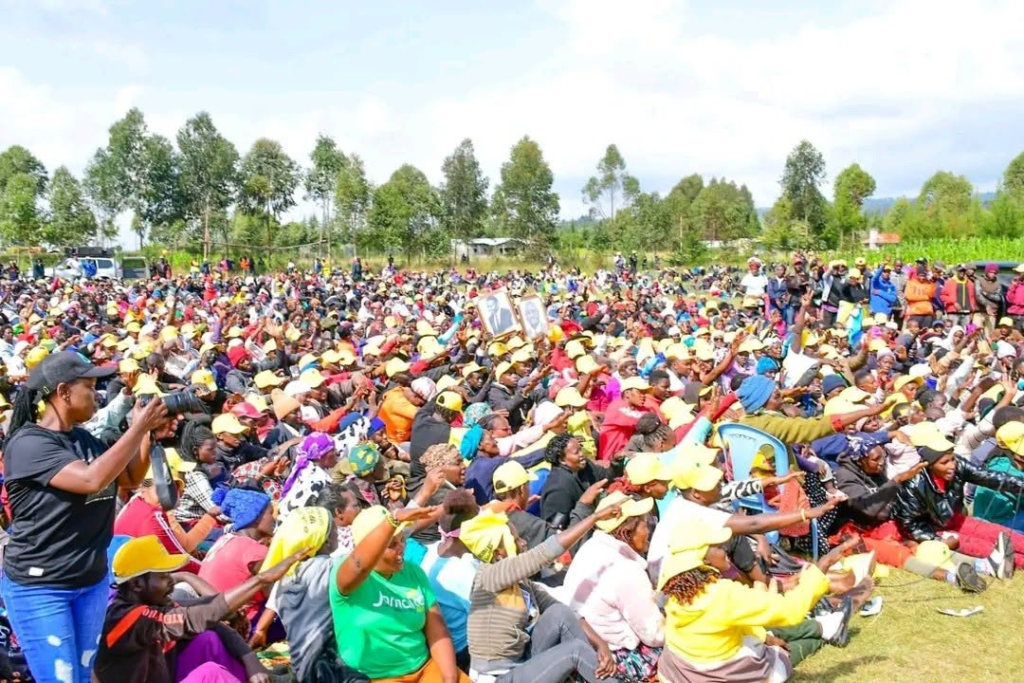
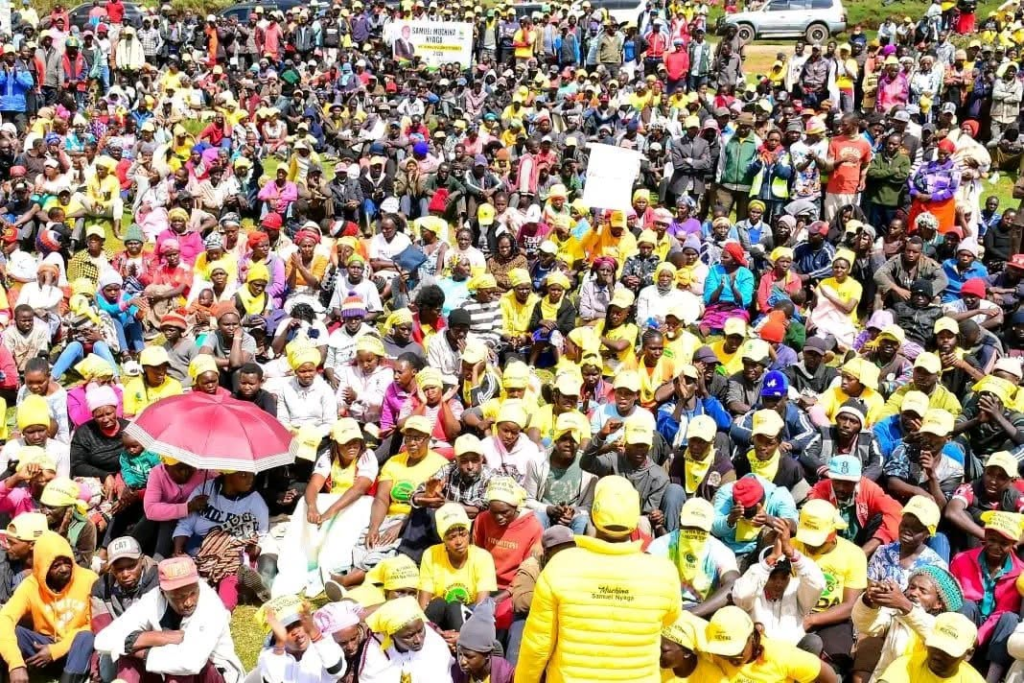
The much-hyped last Sunday Kisumu Orange Democratic Movement (ODM) rally, meant to make a statement to the splinter group Linda Mwananchi, has turned out to have been a rented and branded crowd.

Unlike the Linda Mwananchi rally, which was organic and successful despite attempts to disrupt it by goons and local leaders, last Sunday’s Linda Ground meeting told a different story.

The three weeks of planning and strategic meetings for the rally in the once bedrock of ODM and its founder, the late Raila Amolo Odinga, only culminated in renting and branding the crowd for a show of might and making a statement.

And yesterday, ODM National Chairperson Gladys Wanga claimed the rally was attended by 115,000 people and showed the might of the party in the region.

“We held one of the biggest rallies in Kisumu. We used drones to count the people, and we came up with 115,000. ODM is strong, and we have resolved to remain united and to be in the broad-based government,” she said.

But Kisumu Senator Prof Tom Ojienda has opened the lid to the inside story of how the party leadership used millions to ferry people to the rally.

Ojienda said Members of County Assembly from Kisumu were each given Sh100,000, while the MPs were given between Sh500,000 and Sh600,000 for the same purpose.

For instance, Kisumu County Assembly has 42 MCAs, which translates to Sh4.2 million, while there are seven constituencies; at Sh600,000 each, that comes to Sh4.2 million, totalling Sh8.4 million.

Apart from Kisumu, Migori, Homa Bay and Siaya were also expected to bring people to the rally, and all were bankrolled for the meeting, running into millions of shillings.

This was just the first avenue through which funds were channeled, including the county party office and the sub-branches.

Ojienda said: “I was never given a cent. But I know so well that the MCAs were given Sh100,000 each to bring people to the meeting. I know the MPs were given, I think, between Sh500,000 and Sh600,000 to bring people to the rally.”

The ODM party leader, Dr Oburu Oginga, in a recent interview with a local TV station, said the government had released Sh200 million for their operations.

The Sh200 million has also brought differences in the Linda Ground faction over its usage and threatens to divide it further after Linda Mwananchi of James Orengo, Babu Owino and Edwin Sifuna bolted out.

Ojienda also heard that each ward was given Sh700,000, and there was a problem in North Nyakach, where some officials were accused of disappearing with Sh700,000.

“There should be accountability in the party over the funds disbursed to enable the party to be built. I don’t think there is a problem over the usage of Sh200 million,” he said.

He said ODM gave out facilitation for the rally because the party seems to be in a strong and sound financial standing.

Ojienda said there were people mobilised from Kisumu, Siaya, Migori and Homa Bay, and the party had to mobilise.

“There were tractors from Muhoroni. There were 18 buses from Muhoroni which brought people to the rally. The party wanted to give everyone an opportunity to attend the meeting,” he said.

Ojienda said from Muhoroni, Wanga’s younger brother Robert Nyasuna ferried several people in trucks and lorries, while Migori Governor Ochillo Ayacko had buses and tractors ferrying people to the rally.

“From Homa Bay, Governor Wanga also brought hundreds of people, and the same from Siaya. This was a meeting meant to show Luo unity,” he said.

Nyong’o’s message

Kisumu Governor Prof Anyang’ Nyong’o, who for the first time attended the Oburu Oginga-led faction, told the team that ODM was not a Luo party and they should not make the party a tribal one.

“Finally, one fact is clear: the future of ODM will not be decided only in Kisumu, Siaya, Homa Bay, or Migori. It will be shaped in every corner of Kenya where citizens still believe in justice, equality, and democratic change. That is the movement. That is the mission, and that is the legacy worth defending,” he said.

Nyong’o said ODM was never formed to be permanently in government or in opposition, but to defend the dignity and rights of the people.

“As a matter of fact, ODM was never created to be permanently in government or permanently in opposition. The party was created to defend the rights, dignity and aspirations of the people. Basically, no individual can inherit Raila. Leadership is not transferred; it is earned through service, conviction and sacrifice,” he said.

Orengo, before the split, had warned that there was a scheme meant to devalue the party from a national outfit and regionalise it as a Nyanza party.

Orengo said that while other ODM strongholds have remained quiet, the civil war was being waged in Nyanza and specifically by the Luo.

“I see an attempt to drive ODM to become purely regional, and if not a Luo party. The elements of the party from other regions are fairly quiet when we have this civil war within the party,” he said.

Orengo, in a TV interview, said then that the move was meant to muzzle ODM and make it a small or marginal party in a probable alliance with UDA or Kenya Kwanza.

“When you do that analysis and when we choose to work with Kenya Kwanza or UDA, most likely ODM is going to be a small party if they push that into Luo Nyanza basically. We must be very conscious of that effort, and you can see some pronouncements which make ODM look like a regional party, but it is a national party,” he said.

Orengo warned that if the party leaders were not careful, they may be driven in that direction of ODM becoming a regional party.

Kenya’s bold move to transition sugar sector into bio-economy and renewable energy

0

By Hope Barbra

The Kenya sugar sector is making a deliberate shift in the industry from traditional sugar milling to a diversified agro-industrial model focused on ethanol production and renewable energy.

Dubbed “Sweetening the Future,” Kenya Sugar Board Chief Executive Officer, Mr Jude Chesire, recently told the Informa Africa Sugar Conference about the new trajectory the country was taking in the sugar industry.

In his keynote speech, Jude said “Sweetening the Future” was a detailed strategic pivot from traditional sugar milling to a diversified agro-industrial model centred on ethanol production and renewable energy.

He said the bio-energy focus aligns perfectly with global ESG (Environmental, Social, and Governance) expectations.

“By prioritising bagasse-based power and climate-smart agricultural practices, the industry is building a climate-resilient system that reduces the carbon footprint of manufacturing,” he said.

Chesire said for the industry to remain competitive, it must rethink its fundamental output.

“By moving ‘beyond sugar,’ the sector is unlocking the full economic potential of the sugarcane crop, transforming what was once considered industrial waste into high-value revenue streams,” he said.

Chesire, CEO of the Kenya Sugar Board (KSB) and Chairman of the International Sugar Organization (ISO), said the sector was scaling up ethanol production by increasing the distillation of molasses – a move designed to meet rising industrial demand while providing sustainable, cleaner fuel alternatives. Complementing this is a push for green energy generation, which leverages bagasse – the fibrous residue remaining after crushing – for large-scale power co-generation.

“This initiative transforms a by-product into a renewable energy source capable of feeding surplus electricity back into the national grid,” he said.

He said the industry was prioritising industrial molasses utilisation, diversifying its applications across emerging bio-based sectors to ensure that every element of the value chain is fully monetised and nothing goes to waste.

“This holistic approach positions the sugar sector as a critical anchor for Kenya’s energy and manufacturing sectors. By diversifying into energy and ethanol, mills can significantly lower their operational costs and buffer themselves against the volatility of global sugar prices,” he said.

Chesire said the innovations were essential for transforming the industry into a “strategic economic pillar” that supports over 8 million livelihoods while contributing to the country’s renewable energy targets.

“To fuel this bio-economy, the KSB is championing an aggressive modernisation drive. This includes closing the ‘yield and efficiency gap’ through superior cane varieties specifically bred for high biomass and sugar content, alongside the mechanisation of field operations,” he said.

He said the integration of GIS mapping and precision agriculture tools will ensure that the raw material required for both sugar and energy production is grown sustainably and efficiently.

“To support this industrial shift, the KSB has reimagined its mandate from a traditional regulator to a ‘strategic sector leader.’ New policy innovations focus on restoring farmer confidence – the ‘foundation of the value chain’ – through fair pricing and transparent agreements, ensuring that growers benefit directly from the high-value ethanol and energy streams,” he said.

Chesire called for a “Partnership for Transformation,” noting that leveraging the African Continental Free Trade Area (AfCFTA) will allow Kenya to export not just sugar, but bio-based industrial products across the continent.

“We are at an inflection point. Kenya is ready to lead Africa’s next chapter by transforming our sugar industry into a diversified, sustainable, and competitive agro-industrial powerhouse,” Chesire concluded.

Policy Analysis: Yala Integrated Development Plan vs Dominion/Lake Agro Developments

0

By Hon Sammy Weya

The original 1982 Yala Integrated Development Plan (YIDP) envisioned Yala Swamp as a carefully managed, community-oriented agricultural and ecological development zone. The current and historical development trajectory under Dominion Farms and later Lake Agro appears, in several respects, to diverge from the original recommendations of the consultants.

1. Original Vision of the YIDP

The YIDP proposed an integrated development approach built around:

  • smallholder settlement,
  • irrigation-supported farming,
  • food security,
  • fisheries,
  • livestock,
  • forestry,
  • erosion control,
  • and environmental conservation.

The consultants emphasised:

  • mixed farming systems,
  • gradual reclamation,
  • institutional support,
  • and balancing ecological sustainability with economic production.

The swamp was viewed not merely as “unused land,” but as:

  • a hydrological system,
  • a livelihood source,
  • and an environmentally sensitive wetland ecosystem.

2. Smallholder Settlement vs Large Estate Agriculture

What the YIDP Recommended

The consultants proposed:

  • approximately 4,000 smallholder farm families on irrigated land,
  • with average holdings of around 2 hectares per household.

The objective was:

  • rural employment,
  • household food production,
  • and broad-based economic participation.

The report did not envision the swamp becoming a predominantly large-scale privately controlled estate.

What Happened Under Dominion/Lake Agro

The Dominion Farms project and later Lake Agro arrangements evolved toward:

  • centralised large-scale commercial agriculture,
  • long leasehold arrangements,
  • industrial rice and later sugar-oriented production systems,
  • and highly consolidated land control.

Critics argue this reduced:

  • community access,
  • grazing,
  • fishing,
  • and traditional livelihood systems.

This appears fundamentally different from the original YIDP’s community settlement framework.

3. Food Security vs Commercial Monoculture

YIDP Recommendations

The report repeatedly stressed that:

  • local food security was fragile,
  • subsistence production was barely adequate,
  • and priority should be given to improving food crop systems.

The consultants specifically promoted:

  • Rice
  • Fish
  • Agroforestry
  • Beehives
  • Arabica Coffee
  • Palm Oil
  • Cotton
  • Poultry
  • Sorghum,
  • Cassava,
  • Sweet potatoes,
  • Beans,
  • Vegetables,
  • and diversified production systems.

Sugarcane was discussed only as:

  • one optional commercial alternative,
  • dependent on viability conditions,
  • and not as the dominant land use.

Current Situation

Recent developments around the licensing of sugar milling and sugarcane expansion have raised concerns among environmentalists and community groups that:

  • the swamp may increasingly shift toward monoculture cane production,
  • potentially undermining food production,
  • biodiversity,
  • fisheries,
  • and wetland functions.

This contrasts with the diversified agricultural model proposed in the YIDP.

4. Environmental Protection vs Wetland Conversion

YIDP Position

The consultants treated Yala Swamp as an ecologically sensitive area requiring:

  • drainage planning,
  • catchment management,
  • forestry,
  • soil conservation,
  • and hydrological control.

The report emphasised:

  • erosion control,
  • river catchment protection,
  • and controlled reclamation only where technically justified.

It also recognised that:

  • some parts of the swamp were unsuitable for intensive agriculture,
  • while others should remain under forestry or controlled use.

Concerns Raised by Later Developments

Environmental groups, researchers, and civil society organisations have raised concerns over:

  • wetland degradation,
  • destruction of papyrus ecosystems,
  • disruption of fisheries,
  • loss of biodiversity,
  • hydrological alteration,
  • and increased pollution risks.

The Yala Swamp is internationally recognised as an ecologically important wetland connected to:

  • Lake Victoria,
  • migratory bird habitats,
  • fish breeding systems,
  • and regional climate regulation.

Critics argue that intensive industrial agriculture without adequate environmental safeguards contradicts the ecological caution embedded in the YIDP.

5. Governance and Public Participation

YIDP Governance Philosophy

The original plan emphasised:

  • institutional coordination,
  • farmer participation,
  • extension services,
  • public investment,
  • and organised support systems.

The report assumed development would occur through:

  • structured planning,
  • phased implementation,
  • and government-supported community participation.

Contemporary Governance Questions

Public criticism surrounding Dominion and later Lake Agro has often focused on:

  • lack of adequate public participation,
  • opacity of lease agreements,
  • weak community consultation,
  • and concentration of decision-making.

These concerns are especially significant under Kenya’s 2010 Constitution, which strengthened:

  • public participation requirements,
  • environmental rights,
  • and community land protections.

Critics argue that major long-term land allocations involving wetlands should require:

  • transparent environmental assessments,
  • broad stakeholder consultation,
  • and county-level participation.

6. Fisheries and Community Livelihoods

YIDP Recommendations

The plan identified fisheries as a major economic pillar and proposed:

  • modernisation of fishing systems,
  • fish pond development,
  • processing facilities,
  • and improved market systems.

Fishing communities were considered integral to the swamp economy.

Reported Effects of Large-Scale Reclamation

Some local groups and researchers have alleged:

  • reduced fish breeding areas,
  • blocked access routes,
  • declining fisheries,
  • and disruption of traditional livelihood systems.

These concerns suggest tension between industrial land conversion and the original integrated livelihoods approach envisioned in the YIDP.

7. Key Contradiction

Perhaps the most important contrast is this:

YIDP VisionLater Large-Scale Model
Integrated rural developmentCommercial estate agriculture
Smallholder settlementConcentrated leasehold control
Mixed farming systemsIncreasing monoculture tendencies
Food security emphasisExport/commercial emphasis
Ecological cautionExtensive wetland conversion concerns
Participatory institutional supportGovernance transparency disputes

8. Strategic Interpretation

The YIDP did support:

  • partial reclamation,
  • irrigation,
  • commercial agriculture,
  • and infrastructure investment.

However, it did so within a framework emphasising:

  • community settlement,
  • environmental management,
  • food security,
  • and diversified livelihoods.

This is important because contemporary debate often frames the issue as “development versus conservation.”

But the YIDP itself proposed a third path: “integrated, environmentally managed, community-centred development.”

Possible Framing for Your Article

A strong evidence-based framing could be:

“The original Yala Integrated Development Plan did not envision Yala Swamp as a purely industrial agricultural estate. Instead, it proposed a carefully managed, smallholder-centred and ecologically balanced development framework. Subsequent large-scale leasehold arrangements departed significantly from the integrated vision proposed by the original consultants.”

The writer is a former Alego MP.