Home Blog Page 6

Debt Ceiling Is a Moving Target, Treasury Must Stop Budgeting for Debt

0

By Billy Mijungu

Kenya’s debt situation has reached a point where we can no longer pretend that the warning signs are not flashing. Our current borrowing stands at about 68 percent of GDP. This means a Kshs 17.6 trillion economy is carrying a heavy load of Kshs 12 trillion in public debt. When you subtract this burden from our total economic value, our real net worth as a nation is only Kshs 5.6 trillion. That is the painful truth.

To make matters worse, Kshs 5.6 trillion is the same amount of revenue we collect in only two years. That means our entire national worth is equivalent to just two cycles of tax collection. That is how badly we are doing. It shows a country living far beyond its means, trapped inside a shrinking fiscal space.

What should be the fuel that powers national development has instead become a revolving door of wastefulness, inefficiencies and overwhelming debt repayments.

A huge portion of what we collect is consumed before it can touch the real economy. What remains after paying debts is too little to transform the country in any meaningful way. It is no wonder our development is of tokenism and stalls, An economy cannot run on fumes forever.

It is time to consider a bold, painful but necessary solution. We must plan to clear our debts at once. This may involve selling significant stakes in key national assets, restructuring ownership of institutions and boisterous regulation, decisions that are unpopular today but lifesaving tomorrow. Debt is slavery and Kenya cannot continue to live in this state of dependency. The nation must reset.

Future administrations must be restrained by a strict law that limits borrowing only to private public partnerships for income generating projects that can pay for themselves.

In addition, any national borrowing must be approved either through a constitutional referendum or through a parliamentary super majority of two thirds. No approval should pass without at least two thirds of County Assemblies supporting it, also by super majority. Our budget must never run on debt again. These safeguards must not be vulnerable to political convenience.

If William Ruto’s Kshs 5 trillion dream were to materialize under the current debt structure, we would have no economy left to stand on. We are already on full time fuliza. It is time to pay it off and rebuild.

Court Halts Forums on Security Regulations

0

By Correspondent

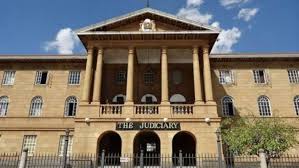
The High Court has stopped the government from holding planned public participation forums on draft regulations governing the private security sector after a security guard challenged the short notice issued for the meetings.

In a ruling delivered on Thursday, Lady Justice Roselyn Aburili certified as urgent a case filed by Security Academy, an ex-parte applicant, and allowed the guard to commence judicial review proceedings.

The challenge targets a public notice issued on November 18, 2025, by the Ministry of Interior and the Private Security Regulatory Authority (PSRA), announcing public participation forums scheduled for November 21 and 24 across several counties.

The applicant argued that the two-day notice was unreasonably short and violated constitutional requirements for meaningful public participation.

He said stakeholders in the private security sector—comprising thousands of guards, trainers, employers, and unions—would be denied adequate opportunity to engage with the draft regulations.

“I am satisfied that the application is urgent,” Justice Aburili said. “If this Court declines the stay sought, these proceedings will be rendered nugatory should the substantive motion succeed, since the process which is impugned would have been completed.”

Without delving into the merits of the case, the judge found that the application raised “an arguable case” that was neither frivolous nor hopeless. She granted the applicant leave to proceed with the judicial review motion challenging the notice and the conduct of the public participation exercise.

The judge further ordered that the leave granted will operate as a stay of the implementation of the November 18 notice.

The effect of the order is that the Interior Ministry, PSRA, the National Assembly, the National Treasury, and the Attorney-General—listed as respondents—cannot proceed with the scheduled forums in Garissa, Machakos, Kisumu, Kakamega, Mombasa, Nyeri, and Nairobi until the case is heard and determined.

The Kenya National Private Security Workers Union and the Law Society of Kenya are listed as interested parties.

The applicant is seeking, among other orders, the quashing of the notice, a declaration that it violated Articles 10 and 27 of the Constitution, and an order barring the respondents from issuing or conducting further public participation on the draft regulations without proper compliance with constitutional standards.

Justice Aburili directed that the substantive motion be filed and served within five days in a new file. After issuing the stay and directions, the court marked the miscellaneous file as closed.

The disputed regulations include the Draft Private Security (General) Regulations 2025, the Draft Regulations on Appointment of Board Members, and the Draft Regulations on Use of Animals in Private Security Services.

The new regulations stipulate that individual and corporate private security providers must register with the PSRA and obtain valid licences.

Applications require proof of identity, compliance with tax obligations, insurance coverage—including WIBA and public liability—police clearance certificates, audited financial accounts, and a full inventory of uniforms, equipment, and vehicles. Registrants are required to pay prescribed registration and annual fees, with penalties for late renewal.

Employment and training standards are rigorously defined. Private security firms must vet employees, verify their training and employment history, and ensure all personnel undergo mandatory annual security training.

Officers are required to wear legibly marked nameplates and uniforms that comply with specifications, including distinctive badges, headgear, and heavy-duty belts. Firms must also provide necessary safety gear such as reflective vests, torches, and defence equipment.

Kalonzo in Ugunja to Campaign for Wiper Candidate, Eng. Odhiambo Orodi

0

By Anderson Ojwang

Wiper leader Kalonzo Musyoka is in Ugunja to campaign for his party’s candidate, Dr. Johannes Orodi Odhiambo.

Kalonzo is the first high-profile politician to campaign in Ugunja for the Wiper candidate, a move that could tilt the race ahead of the by-election.

Dr. Orodi is among the top three leading contenders in the race and is enjoying strong support across the three wards of Sidindi, Sigomere and Ugunja. Kalonzo is expected to tour all three wards during his four-hour visit before heading to Malava to campaign for the DAP-K candidate, Seth Panyako.

Kalonzo’s visit is expected to boost Orodi’s campaign and potentially sway undecided voters ahead of the November 27 by-election.

Orodi has intensified a door-to-door campaign and has emerged as a strong candidate with support from civil society groups, youth, women and the elderly. He is widely credited for initiating various development projects, including electricity supply, borehole construction, education support for vulnerable learners, and other community empowerment initiatives.

Orodi expressed confidence, saying there was a visible shift in voter sentiment.

“I can tell you Ugunja is responding and the change is real. We are pulling and combing everywhere. I can guarantee you, victory is on the way,” he said.

Wiper Nyanza coordinator Odondi Kodo said Kalonzo is keen on securing the seat as part of a broader strategy to strengthen his support base in Nyanza ahead of the 2027 presidential election.

“We are on the ground and we will do everything possible to win the by-election. We are here for victory and we will camp here until the election is held,” he said.

The seat fell vacant after former MP Opiyo Wandayi was appointed Cabinet Secretary for Energy. Other candidates in the race include ODM’s Moses Okoth, Chris Budo (KANU), Benson Obol Otieno (United Green Movement), Erick Ofiro (Jubilee Party), Vincent Olengo (Kenya Moja), Fredrick Ochiel (United Democratic Movement), and Oliver Ochieng’ (National Liberal Party), Lilian Akinyi (National Alliance Party), and Maurice Okumu (Liberal Party of Kenya).

An ODM rally held on Wednesday left several people injured, with some sustaining gunshot wounds after the event turned violent.

Jaoko Oburu visits King Nabongo of Mumia Shrine, meets King Peter in search of leadership mantle

0

By Anderson Ojwang’

In a move aimed at retracing and seeking ancestral blessings and providence, Jaoko Oburu on Friday visited the Shrine of King Nabongo of Mumia in Mumias.

At Jaramogi’s mausoleum hangs a photo of Jaramogi Oginga Odinga’s father, when he served as the aide-de-camp and stood guard to King Nabongo Mumia of the Wanga Kingdom around 1890.

According to the late Raila Odinga, the 1890 photograph is proof of the historical ties with the Wanga Kingdom and a testimony that the family is a direct descendant of King Nabongo Mumia.

Jaoko, son to the current ODM party leader Dr. Oburu Odinga, was hosted at the palace by Nabongo Peter Mumia II, in a tour of the mausoleum and a visit to the graveside of the King.

Jaoko was also inducted into the family lineage and the relationship between King Mumia and the people of Sakwa, highlighting the importance of his visit.

“When Raila visited this place, he proved it to himself and that is why he came to launch this place in 2008. Raila was the one who launched this centre.
He is part of this family. When we remember where we migrated from, previously it was called Ka-Sakwa.
People from that place were called Jo Sakwa. If you look at this chart, Wanga Kingdom, the person Wanga III lived in Lela, Kawango, behind Maseno School. It is where one of our ancestors was born.
Wanga the King has brothers including Sakwa, where you belong, and the lineage goes up to the late Raila Odinga,”
the King explained.

Jaoko said the visit was important after the King invited him during Raila’s burial in October.

“It was a very important moment with the King. He inducted me and later offered his blessings in all my pursuits.
I am more prepared and you could see the convoy that escorted me from the home into Kakamega town. I later, in the evening, presided over a function in Vihiga County and was hosted by Governor Wilber Ottichilo,”
he said.

After the conclusion of the visit, Jaoko was escorted to Kakamega town on his way back to Bondo in a convoy of tuk-tuks and motorcycle riders as they snaked through the town, waving and greeting residents from the rooftop of his vehicle.

“I went to visit the King. I have come here to condole with you after the death of Baba. It is important that we maintain Raila’s legacy, and that is why I want us to work together, including the boda boda sector,” he said.

He wrote on his X handle:
“It was an honor to deliver a keynote address at the Vihiga County Business Awards 2025 Edition at Kaimosi Friends University. The theme, ‘Honoring Excellence Shaping Enterprise Development,’ perfectly captures our shared mission to strategically build a more inclusive and prosperous economic future of Vihiga County. A big thank you to Governor Dr. Wilber Ottichilo for gracing this important event and being a champion of youth-led, women-led, and PWD-led enterprises.”

Jaoko has been engaging Bunge La Wananchi across the country in a move viewed as an attempt to extend his political tentacles to potentially inherit his late uncle Raila’s political constituency.

He wrote on his X handle:
“It was an honor to engage Bunge La Wananchi in Siaya.”

“Those who want to divide the Luo community must be rejected. Raila left us united, and we must remain in broad-based government, and that is why I am here,” he said.

But Jaoko will have to contend with his cousin Winnie Odinga, who also eyes the mantle and recently called for the ODM National Delegates Conference (NDC) to appoint a new team to manage the broad-based arrangement with President Ruto.

On Wednesday, opposition leader George Wajackoyah claimed Raila’s spirit had descended on Winnie as the heir apparent.

Crying and calling Winnie’s name, and asking where she probably could be, he circled the grave chanting that Raila’s spirit had descended on his last-born daughter, Winnie.

“Let me sound this warning. I am sounding it openly. Whoever is trying to play his foul mouth on Min Piny’s daughter Winnie Odinga — and I spoke with her yesterday — try me.
Baba’s spirit is here. If you are running your mouth on Winnie, try me. Winnie, where are you? I will support you. Anybody who dares Winnie, that is a direct attack on me.
Baba is not dead, the spirit is with Winnie. As the elder brother from Mumias, I will defend Winnie,” he mourned.

Mama Ida Odinga, speaking to the team, confirmed that what Wajackoyah had said was the true position.

“You know Wajackoyah is a very open person. He says things as they are. He doesn’t know how to sugarcoat his words and make them flowery.
If it is bad, it is bad, and if it is right, it is right — and he will say it as it is. This trait of his he started much earlier, way back in 1991, when he got into problems with the system because he revealed some secrets which were not supposed to be revealed,
” she said.

Kasipul by-election: A referendum on Wanga’s reign and Magwanga’s revival

0

By James Okoth

As Kasipul prepares to go to the polls, what would ordinarily be a constituency by-election has now evolved into a high-stakes political duel with a quiet referendum on Governor Gladys Wanga’s leadership and the resurging influence of her estranged deputy, Oyugi Magwanga.

The simmering tension between the two, once presented as a seamless partnership brokered by the late ODM leader Raila Odinga, has finally spilled into the public domain. The cracks that began as whispered dissent within the Homa Bay County corridors have widened into open confrontation, triggered by the Kasipul by-election that has now drawn in every major political player from the lakeside region.

The “forced marriage” unravels

When the late Raila Odinga midwifed the Wanga–Magwanga ticket ahead of the 2022 General Election, it was hailed as a masterstroke with a unifying ticket designed to consolidate Homa Bay’s fractious ODM family. But three years later, the union lies in ruins.

Recent remarks by Magwanga, captured in viral clips circulating across social media, laid bare the tension long hidden behind party unity slogans. The deputy governor’s sharp criticism of Wanga’s political choices, particularly imposition of Boyd Were as ODM’s preferred candidate in Kasipul, has thrown the county’s political structure into turmoil.

In a move interpreted as outright rebellion, Magwanga rallied his supporters behind independent candidate Tom Aroko, describing him as “the people’s true voice.” His open defiance has unsettled the ODM hierarchy and injected new energy into an election that was expected to be a routine win for the ruling party.

A by-election that mirrors 2027

The Kasipul by-election, observers now say, has become a rehearsal for the 2027 gubernatorial race. Should ODM’s Boyd Were lose, it would be interpreted as a rejection of Governor Wanga’s leadership and a validation of Magwanga’s growing political clout. Conversely, an ODM victory would restore Wanga’s grip and reaffirm the party’s enduring authority over the region’s political direction.

“Kasipul has become the political thermometer for Homa Bay. Whoever wins here will set the tone for 2027. If Wanga’s camp falters, Magwanga will walk into the next election with momentum and legitimacy,” said a Homabay resident.

ODM’s balancing act

For the ODM leadership, this election presents both a challenge and a test of its ability to hold its western flank intact. The party’s dominance in Nyanza has recently shown signs of fatigue, with internal rifts emerging between younger leaders seeking autonomy and traditional loyalists defending the old order.

ODM insiders admit that the decision to back Boyd Were, viewed by some as a Wanga loyalist, has deepened divisions rather than heal them. A planned visit by top ODM officials to Kasipul ahead of the vote could either calm the waters or amplify the storm, depending on how they navigate the Magwanga question.

Magwanga’s gamble

Magwanga’s open defiance of the ODM establishment is both risky and strategic. By positioning himself as the voice of “betrayed loyalists” within the county, he is setting the stage for a direct challenge in 2027. His endorsement of Aroko, though framed as a matter of “principle,” is widely viewed as a proxy war with Wanga in a calculated attempt to test the strength of his support base without directly confronting the party.

Yet, if Aroko loses decisively, Magwanga could find himself isolated and politically weakened, branded as the man who defied ODM only to fall flat.

“I am a man of principle with a strong Christian background. I can not be blackmailed or intimidated to support Boyd Were,” Magwanga roared, “Between Tom Aroko and Were, who was in ODM first? Why force him into our guts? To serve whose interests?” He paused.

What’s at stake

For Governor Wanga, the Kasipul race is more than just about party discipline but more of the control of her political backyard. A win for Boyd Were would cement her position as the undisputed leader of Homa Bay politics, silencing critics who view her as politically detached and over-reliant on Nairobi’s ODM elite.

A loss would however expose her to intense scrutiny and embolden rivals who have long accused her of centralizing power and sidelining her deputy. It would also revive whispers of succession politics that could shape the 2027 race well beyond Homa Bay.

Ultimately, the Kasipul by-election is shaping up as a defining moment for the future of ODM’s internal democracy in Nyanza. It is a contest between loyalty and defiance, control and autonomy, unity and rebellion.

Whatever the outcome, the political aftershocks will be felt far beyond Kasipul’s borders. The veil has been torn. In Homa Bay, the battle lines are no longer blurred.

Why it is Winnie for the mantle, Wajackoyah opens the lid, Ida confirms

0

By Anderson Ojwang

At Kango ka Jaramogi, at the graveside of Raila Amolo Odinga, opposition leader George Wajackoyah, appearing to be possessed by spirits, opened the lid over the preferred new leader to inherit Raila’s mantle.

Crying and calling Winnie’s name and asking where she probably could be, he circled the grave chanting that Raila’s spirit had descended on his last-born daughter, Winnie.

“Let me sound this warning. I am sounding it openly. Whoever is trying to play his foul mouth on Min Piny’s daughter Winnie Odinga — and I spoke with her yesterday — try me.
Baba’s spirit is here. If you are running your mouth on Winnie, try me. Winnie, where are you? I will support you. Anybody who dares Winnie, that is a direct attack on me.
Baba is not dead, the spirit is with Winnie. As the elder brother from Mumias, I will defend Winnie,” he mourned.

Mama Ida Odinga, speaking to the team, confirmed that what Wajackoyah had said was the true position.

“You know Wajackoyah is a very open person. He says things as they are. He doesn’t know how to sugarcoat his words and make them flowery.
If it is bad, it is bad, and if it is right, it is right, and he will say it as it is. This trait of his he started much earlier, way back in 1991, when he got into problems with the system because he revealed some secrets which were not supposed to be revealed.
That was the secret of Dr. Robert Ouko’s death, which was not supposed to be revealed.

The harassment was something you had not seen in your life or in the near future. But somehow, he was smuggled out, and I remember that time, Mzee Jaramogi had just started Ford party. He was brought there and nobody could go near him. He was hiding in the car.

We were planning for his exit to go into exile. I was sent by Jaramogi to go and identify if the person being hidden in the car was indeed the person he was expecting. I went back and told Jaramogi he was the one, and from there he was sneaked out through a cargo plane,” she said.

When Raila died in India last month, it was Winnie who delivered his Fedora hat and other personal belongings to the mother in a symbolic power transition.

At the burial, Winnie told President William Ruto that she was ready to come back to the country from the East Africa Legislative Assembly, where she currently serves.

Winnie, who is a member of the East Africa Legislative Assembly (EALA), told mourners that in Bondo, there still lives a lion.

“I have heard people talk badly about Bondo. I want to say here: we have a lion here. I am the lion. Do not be worried.
For President Ruto, I am ready to come back home,”
she said as Ruto smiled and consulted with Mama Ida.

Winnie has been the cornerstone of Raila’s political journey after the death of his son Fidel Odinga, and she has been significant in his presidential campaigns.

At the recent ODM 20th anniversary in Mombasa, Winnie readied her troops and embraced Embakasi East MP Babu Owino, in a show of unity and comradeship.

Winnie, who holds Raila’s secrets and cards — having witnessed her dad slip away from her in India while undergoing treatment — recently threw a gauntlet at her uncle, the current party leader Dr. Oburu Odinga, by demanding a National Delegates Conference (NDC).

Winnie said:
“There is something I wanted to tell you. When it came to the matter of the broad-based government, the people of ODM entrusted one person with the management of that relationship. That person was Baba Raila Amolo Odinga.
That relationship is complicated, and therefore we are looking and wondering: those who are taking it upon themselves to manage it now — are they capable of managing that relationship?

I don’t think that is the question for me to answer. That is the question for the people of ODM to answer. That is why I am requesting we need to go back to the people and have an NDC to see who the people want to pick to manage that same relationship,” she said.

But tactical Oburu, an old and shrewd politician, did not swallow the bait but offered to use a different path to resolve the emerging contention.

“When my child Winnie said Raila was at the center of the management of the broad-based relationship, somebody should come to help manage the broad-based government. That is my child. I will speak to her and resolve the matter internally as the Odingas.

But the seat you have given me as the party leader of ODM, I will hold it the way Raila did and ran the party.
I have taken the responsibility and do not be scared. I will do all that appertains to the office and what my brother Raila wanted done and accomplished. We will remain in the broad-based government,”
he said.

Currently, the battle for kingship has emerged in Nyanza, with Cabinet Secretaries John Mbadi and Opiyo Wandayi expressing interest in it.

Why Raila Chose Nyong’o as Acting Party Leader — and Could He Have Been Betrayed by ODM in Death?

0

By Anderson Ojwang

Could former ODM leader, the late Raila Amolo Odinga, be restless in his grave? And did his closest political allies betray him in death through the party’s recent re-organization?

These are some of the unsettling questions emerging a month after his burial, as developments in ODM appear to contradict the transition path Raila had himself set while still alive.

In October 2024, Raila broke the intense lobbying for control of the party by appointing Kisumu Governor Prof. Anyang’ Nyong’o as the acting party leader during his AU Commission chairperson campaign.

This decision shocked many, especially Siaya Governor James Orengo, who had campaigned intensely for the role but was bypassed when Raila instead named Nyong’o.

Interestingly, had Raila won the AU seat and later died while in office, Nyong’o would have automatically led ODM — making the transition smooth. But in Raila’s death, the party leadership appears to have moved in a different direction altogether.

Why Nyong’o Was Raila’s Preferred Choice

During the Mombasa announcement, Raila emphasized that Nyong’o had been instrumental in grounding the party ideologically for over 20 years.

“Today, in line with a recent decision of the Central Committee, I formally task our founding Secretary General, Professor Anyang’ Nyong’o, to step in and provide leadership to our great party to enable me immerse myself fully into the final and more intricate phase of my campaign for chairmanship of the African Union Commission,” Raila said then.

He praised Nyong’o as central in giving ODM direction and ideological clarity since inception.

“We are therefore assured of ideological continuity and clarity that have been the hallmarks of our party,” Raila insisted.

This raises a key question:
Did ODM’s Central Committee betray Raila by appointing his elder brother, Siaya Senator Dr. Oburu Oginga, as acting party leader despite Raila having publicly shown his preferred successor?

Why did the Central Committee rush to appoint—and later lead the Governing Council to confirm—Dr. Oburu without considering Raila’s own criteria for interim party leadership? Was this a politically calculated move to protect certain interests in Raila’s absence?

How Oburu Was Appointed — Even He Was Shocked

Dr. Oburu, speaking candidly, said he did not seek the position and was shocked to learn about it from Suna East MP Junet Mohamed while waiting at the airport for Raila’s body arriving from India.

Oburu said Mombasa Governor Abdulswamad Nassir proposed his name — and he accepted.

“I want to thank my party ODM for making me the acting party leader. I will take that mantle with vigour and I will not disappoint, even though Raila’s shoes are too big,” Oburu said.

“It is my brother, the Mombasa governor Abdulswamad Nassir, who proposed me. I didn’t apply to be party leader. I was surprised when you people made me party leader. Now I hear there is bickering that I do not fit the bill — but Oburu is capable,” he added.

Rising Tensions: Other Claimants Emerge

Embakasi East MP Babu Owino has publicly expressed interest in the ODM party leader seat.

Winnie Odinga, Raila’s niece, has called for an NDC to elect a new team to negotiate the broad-based governance arrangement with President Ruto’s administration.

Fresh confusion erupted when a group of ODM life members, led by Rachael Tabitha, filed a petition demanding Oburu’s resignation.

Dated November 18, 2025, the petition accused Oburu of violating the ODM Constitution, undermining internal democracy, and sidelining long-serving members.

“It is deeply inappropriate for some leaders to speak with pride and boldly declare that they are legitimately in office, while Article 6.2.2(b) of the party constitution has been blatantly violated,” the petition stated.

The life members issued three demands:

  1. Immediate resignation of Oburu from all party leadership positions.
  2. An urgent National Delegates Convention to resolve what they call a governance crisis.
  3. Full recognition of the rights of life members in party decision-making.

They gave the NEB a 30-day ultimatum, threatening mass resignation in honour of Raila’s legacy should the demands not be met.

Oburu’s Defenders Hit Back

Migori Governor Ochilo Ayacko and Nyakach MP Aduma Owuor strongly defended Oburu, calling him the most suitable leader at this time.

“We will defend our party leader Dr. Oburu Oginga. If push comes to shove, we will discipline those against him,” Aduma said.

The Big Question: Was Raila Betrayed?

Why did ODM ignore Anyang’ Nyong’o, whom Raila had publicly appointed as acting party leader?

Did the party abandon Raila’s wishes once he was no longer alive to enforce them?

And is this reshuffle a genuine transition — or a consolidation of power by factions seeking influence in a Raila-less political landscape?

As ODM battles internal storms, the question lingers:

Did Raila’s own party betray the succession plan he left behind?

Government advertises for Coffee Extension Champions as former MP Weya challenges Governors from LREB to seize the opportunity

0

By Sandra Blessing

Governors from the Lake Region Economic Bloc (LREB), MPs and farmers should seize the emerging opportunity by the government to revive coffee farming in the country to invest in the sector in order to open a new economic frontier.

The government, through New Kenya Planters Cooperative Union in collaboration with the Ministry of Cooperatives and MSMEs Development, plans to revive coffee through cooperative societies in a programme dubbed national coffee revival programme.

In a recent advert, they invited passionate community-rooted individuals to join an intensive Coffee Extension Champions training programme which will be ward-based and seeks to recruit 1,600 champions.

“This initiative aims to expand coffee production within the cooperatives movement from 51,852MT to 152,000MT. Listed wards within the following coffee-growing counties (two positions available per ward, one for a male and female applicants,” read the advert.

The counties from the LREB bloc include Kakamega, Kericho, Homa Bay, Busia, Kisii, Kisumu, Migori, Nandi, Nyamira, Siaya, Vihiga and Bungoma.

Former Alego MP Sammy Weya challenged the region’s leadership to seize the opportunity and invest in coffee farming as the new economic frontier.

Weya said a tree of coffee is capable of earning a farmer Sh 24,000 a year and this would be a milestone in the region’s new economic dispensation.

“Coffee should be the new economic frontier in our region. I am happy to witness the kind of investments the governors from Rift Valley have placed in coffee growing in the region and I challenge our governors from Nyanza to learn from their colleagues,” he said.

Studies have shown that Western Kenya has the greatest potential for producing the highest quality of coffee and to spur economic growth in the region.

In one of the studies undertaken by experts hired by some emerging coffee farmers in Nyanza, it was revealed that the temperature and the soil in the region were best for coffee farming.

Weya said with temperatures of between 23 degrees centigrade and good soil, it only takes 10 days for seeds to germinate, unlike Central Kenya, where it takes 34 days.

“In Western Kenya, because the soil is slightly acidic, coffee cherries have a natural sugar taste, making it one of the best and high quality. This is an economic potential for Nyanza and Western to join the league of coffee-growing regions in the country,” he said.

Weya said that Homa Bay, Siaya, Kisumu, Kakamega, Busia and Migori counties have the potential of producing high-quality coffee to reverse the region’s economy.

He said an acre of coffee plantation will earn the farmer Sh 1 million and this can go a long way in addressing poverty in the region.

He said that already the following varieties — Ruiru II, SL 28 and Batian coffee — are being grown in the region.

Weya said the colonial government created a myth that coffee cannot grow well in Nyanza because of the fear of malaria attacks and opted to live in the White Highlands that were malaria-free.

**“It is simple knowledge that colonialists did not want to venture into Western Kenya to grow coffee because of the fear of malaria attack, and then developed a myth that the crop cannot grow in Nyanza. This myth has been debunked by various studies and the growth of the crop in the region.

Arabica coffee was not promoted in Nyanza because the colonialists were afraid of malaria and successive governments were never interested in promoting high-value cash crops in Nyanza, thus marginalising the community,”** he said.

Arabica coffee (Coffea arabica) thrives in cool, tropical highlands with the following conditions: temperatures between 23 and 32 degrees centigrade day and night January to January, and an altitude above 1,200 metres above sea level. Loamy soils are slightly acidic, making the berries naturally sweet.

Weya said coffee can be grown in the upper canals and intercropped with legumes, macadamia and pawpaw to provide cover.

He said the government disbursed the Coffee Cherry Advance Revolving Fund, and Nyanza was left out despite the potential, and some farmers were already growing the cash crop.

**“Between 3rd February 2025 and 10th February 2025, New KPCU disbursed Sh 28,785,253.85 to 2,243 beneficiaries across 14 counties: Baringo County, Bungoma County, Kakamega County, Embu County, Kericho County, Kiambu County, Murang’a County, Machakos County, Meru County, Migori County, Tharaka Nithi County, Trans Nzoia County, Uasin Gishu County and Nyeri County, but Nyanza was left out.

Mumunyonzo FCS in Kakamega County applied for cherry advance for the first time and is the second FCS to benefit from cherry advance in the county. Ten farmers benefited from the cherry advance of Sh 366,880,”** he said.

Weya said it was unfortunate that despite agriculture being devolved, the local leadership has continued to sleep and is yet to take advantage of the emerging coffee farming opportunity.

He said Uganda, which shares common weather, rainfall patterns and soil types, has continued to grow coffee while Nyanza and Western — which neighbour it — are yet to venture into farming.

Former Nyakach MP Ochieng Daima said in the area, there are already farmers growing coffee, and the yield is high with huge earnings.

“Kabondo is one region in Nyanza where coffee has done well; even in Nyabondo, we have farmers growing it. It is time our people ventured into coffee farming. It is a high-value crop that will change the economy of Nyanza and Western region,” he said.

Weya said that through irrigation, Nyanza can sustain coffee farming, and this will be a milestone in revolutionising the local and national economy.

He said that currently, China has emerged as a leading coffee market, and Nyanza and Western farmers must be prepared to explore and exploit the opportunities.

“China’s coffee market is booming! Expected to hit $23 billion by 2032, with a 2.10% annual growth rate. Rising middle-class incomes and the demand for premium coffee are fuelling this surge. Coffee chains and online shopping are making it more accessible than ever,” he said.

Kindiki hits back at Gachagua: You are a small man, I defeated Ocampo, I am the king as Gachagua dares President Ruto to join the fray

0

By Anderson Ojwang’

It’s all gloves off. It’s murkier and deadly. Punches flying all over in the air. This time, there is no President William Ruto to intervene as the referee, but the Independent Electoral and Boundaries Commission (IEBC) presiding over the duel.

Mbeere North is burning. Deputy President Prof. Kindiki Kithure has discarded his gentleman nature to also play rough, hard and tactical on his predecessor, Rigathi Gachagua, the self-declared leader of the mountain.

Kindiki taunted Gachagua as a small man and said he didn’t see him when he fought for former President Uhuru Kenyatta and Ruto at the ICC court in The Hague.

“When Uhuru Kenyatta and William Ruto had problem in Haque, I was their lawyer… I did not see him there. We fought against the white man called Ocampo (Ocampo was the ICC prosecutor during the ICC trials) and defeated him. We brought back home Uhuru Kenyatta and William Ruto.
So who is this other one speaking? He is a small man. It’s only that he has inflated his muscles and troubleshooting,”
he said.

Kindiki dismissed Gachagua’s claims that he was the kingpin of the mountain, saying that he was the senior-most political leader of the region.

“Hi tabia ya kujitangazo wewe mwenyewe eti mimi ndio mkubwa ya hi mlima. Nani alikuchagua mkubwa wa mlima? (This tendency of self-declaration that you are the king of the mountain. Who elected you to be the leader of the mountain?) I am the senior-most political leader in Mt. Kenya region for the avoidance of doubt.”

Gachagua also did not take the challenge lying down and upped the game when he invited President Ruto to the ring.

“Wewe Kasongo kuja. Mimi niko area na watu wa Mbeere. Tuoneze we kivumbi sasa. Hapana tuma mfanyakazi. Wewe Kasongo kuja mwenyewe. Hii Kasongo watu Mbeere wamekula pesa yake, amenyolewa (You Kasongo come, I am here with the people of Mbeere, let us show you dust. Don’t send a government employee. You Kasongo come yourself. This Kasongo, the Mbeere people have eaten his money, do we shave him?)” Gachagua said.

Kindiki exuded confidence that UDA candidate Leonard Wamuthende will win the Mbeere North by-election scheduled for this month, November 27th.

Gachagua is rooting for DP candidate Newton Kariuki. Both are immediate former Members of County Assembly of Embu after they resigned to vie for the seat.

“Hata sijui ametoka wapi. Alikuja tu juzi. Mimi nimekua kwa siasa for over 20 years, tangu wakati wa Kibaki (I don’t know where he is from. He just came the other day, while I have been in politics for the last 20 years, from the time of President Kibaki),” he said.

CS Geoffrey Ruku said Kindiki will not be a one-term deputy president but will successfully serve his second term and eventually be the sixth president of Kenya.

“2027 tunachagua President William Ruto and Kithure Kindiki. Na tukimaliza 2032 sisi kama mlima tutaungana na Kenya yote kuhakikisha kwamba Kindiki amekua rais wa Kenya. Tunaona mbali kama giraffe. (In 2027 we will re-elect President William Ruto and Kithure Kindiki, and after that in 2032, we as the mountain will unite with all Kenyans to ensure that Kindiki becomes the president of Kenya. We can see far, like a giraffe),” he said.

For five years, the two senior leaders from Mt. Kenya have been sparring, and finally, Mbeere North has provided the ring for the leaders to sort out their age-long differences.

In what was billed as the first contest between the two leaders, it ended prematurely when the referee William Ruto called off the match and instead annulled the initial results.

Ruto, then Deputy President and UDA presidential candidate for the 2022 presidential election, had invited then Mathira MP Rigathi Gachagua and then Tharaka Nithi Senator Prof. Kithure Kindiki to a duel for his deputy.

In this contest, a stalemate that lasted over 17 hours was characterised by failed consensus-building, with the opinion polls that favoured Kindiki.

Ruto and his team resorted to opinion polls conducted internally to unlock the stalemate. The first poll, conducted internally by a strategy and research team headed by Cabinet Secretary Davis Chirchir, involved 10,000 respondents drawn from 10 Mt. Kenya counties. In that poll, Kindiki trounced Gachagua, with Governor Anne Waiguru coming in third.

In the second survey, conducted nationwide in the 47 counties, involving 25,000 respondents, Kindiki yet again emerged top, with Waiguru and Gachagua second and third respectively.

The final vote involved the Central Kenya UDA MPs, who were called in for a vote. Senator Kindiki once again trounced Gachagua.

Out of the 31 Mt. Kenya UDA MPs present, 22 voted in favour of Kindiki, 5 voted for Gachagua, two backed Waiguru, while Muturi obtained one vote, with one rejected vote.

The referee had no alternative but to annul the results and instead awarded the mantle to Gachagua, who was later impeached by the Parliament and Senate.

And now the Mbeere North by-election is the battleground. On one corner of the ring is Gachagua, the second deputy president, representing the United Opposition and the self-declared leader of Mt. Kenya.

For Kindiki and Gachagua, Mbeere North is the test ground, and the battle will end up in premium tears with casualties.

The clock is ticking and hearts pounding. Who will have the last laugh?

The Reinvention of Dr. Oburu Oginga, The Man Draped in his Brother’s Legacy

0

By James Okoth

In style and spirit, Dr. Oburu Oginga is walking out of the shadows to embody the legacy his brother Raila Odinga built. An embodiment of a quiet transformation stitched in confidence, colour and purpose.

For decades, Dr. Oburu Oginga lived in the long shadow of his younger brother Raila Odinga, the man whose name stirred nations, whose rallies filled stadiums and whose wardrobe spoke its own language of charisma and command.

Now, in what feels like both a personal and political awakening, the elder Oginga is stepping forward. The new-look Oburu is impossible to miss: refined, deliberate and echoing the elegance long associated with the Odinga dynasty.

Those close to the Siaya Senator say this shift goes beyond appearance. It signals readiness, a man who has watched power up close now choosing to embody it. The crisp suits, the polished gait and the quiet confidence all suggest a rebirth.

To keen observers, the message is clear. A senior statesman who once stood behind the curtain is emerging into the light. The transformation feels like an answer to a question Kenya has whispered since Raila’s semi-retirement: who carries the Odinga aura next?

When Raila Odinga began to pull back from the daily grind of politics, he left more than a leadership gap. He left a void of presence. His fitted jackets, his Afrocentric scarves and his keen sense of visual symbolism were extensions of his politics, the wardrobe of a reformist who understood that appearance is persuasion.

Oburu seems to have studied that grammar.

At recent public events from Siaya to Nairobi, his new look has drawn admiration. Gone are the oversized blazers and neutral tones. In their place are tailored suits, bold hues and a refinement that commands quiet respect. He appears transformed, walking with the air of continuity.

An aide close to him captures it simply: “He’s always been the thinker in the background. Now he’s preparing to be seen.”

That preparation is steeped in legacy. From Jaramogi’s defiance to Raila’s reformism, the Odinga family has shaped Kenya’s political imagination. Oburu’s new form of expression seems to extend that lineage, measured, dignified and symbolically loaded.

Political analysts see in him a man reading the moment. In a country where image precedes influence, every appearance counts. The designer behind this change clearly understands the intersection between fabric and influence.

Each stitch tells a story.

In the evolving script of ODM, Oburu’s emergence reassures loyalists that the family flame still burns. Raila’s voice may have softened, but the values of resilience, reform and resolve continue through a man who has chosen to appear ready.

He may lack Raila’s thunder, but he carries his composure. He may not draw crowds by magnetism, but he reflects the steadiness that gave the Odinga name its weight. The new Oburu is a bridge between the familiar and the uncertain.

His transformation feels deliberate, a visual declaration of continuity. In the theatre of Kenyan politics, where meaning hides in every gesture, his elegance speaks loudly. It tells of legacy preserved, of transition managed with grace and of destiny worn with ease.

The clothes whisper that leadership, like heritage, is sometimes passed through quiet evolution. They suggest that the Odinga story, far from ending, is simply being restitched, thread by thread, step by steady step, by a man finally ready to carry both the name and the narrative.

The new Oburu stands, draped in destiny.