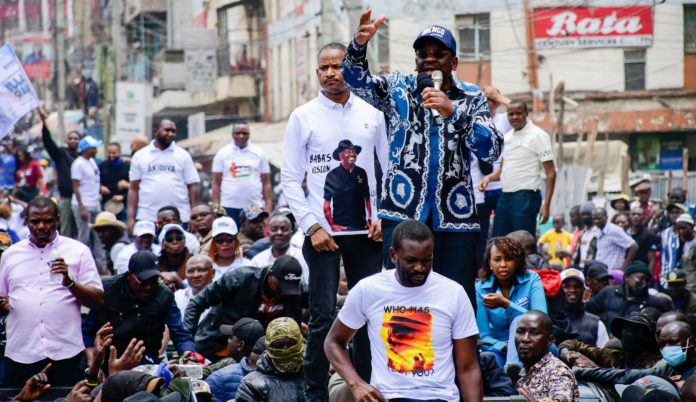
Local sugar cane millers and sector experts have expressed concern over the lack of stringent policies that have led to unfair market competition.
They want the Government to enforce stringent policies to regulate sugar importation into the country.
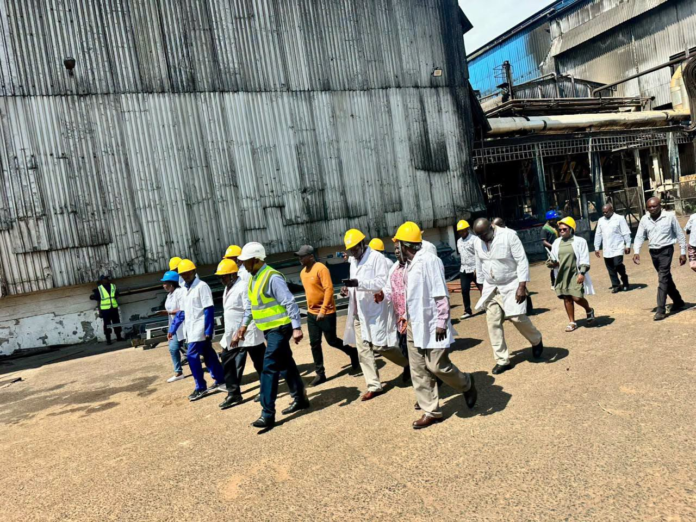
They spoke before the National Assembly Committee on Trade, Industry and Cooperatives during the first day of inspection visits to sugar companies in the Western region.
The delegation, led by the Committee Chairperson, Hon. Benard Shinali (Ikolomani), was told that when sugar was imported without proper planning on how to release it into the market, the locally produced sugar ends up with no market.
Butali Sugar MD, Mr Sanjay Patel, told the Committee that imported sugar only benefits a few individuals and the local farmer shoulders the burden of higher cane production costs.
“What we produce locally cannot fully satisfy the need; however, we want good importation structures to be put in place for us to compete fairly. We should be on board in the decision-making table to give our input on when the sugar should be imported, how much should be imported and also advise on when it should be released into the market,” the MD said.
According to the MD, the imported sugar should not all be released at once into the market but should be released in batches in order to protect the local millers and give them a fair playing field.
While making recommendations to the Committee, Butali Sugarcane Millers management also wants restrictions on the repackaging of sugar. They argued that only the millers should be allowed to repack it into smaller quantities to assure consumers of sugar hygiene.
Meanwhile, while at Mumias Sugar Mills, the Committee was told that the recent importation of 27,000 metric tonnes of raw sugar by the Mombasa Sugar Refinery Ltd did not impact them in any way since the imported sugar was for industrial purposes.
Mr Stephen Kihumba, who is the operations manager at Mumias Sugar, told the Committee that importation of sugar helps regulate and balance prices; however, they also called for the streamlining of the importation sector.
Addressing the media after the visits, Hon. Shinali stated that the inspection was necessitated by the imported raw sugar and to check how it had affected the local millers and farmers.
The Committee also inspected the progress of the Constituency Industrial Development Centre (CIDC) at Ikolomani Constituency. They heard that it is yet to be operationalised due to a lack of electricity.
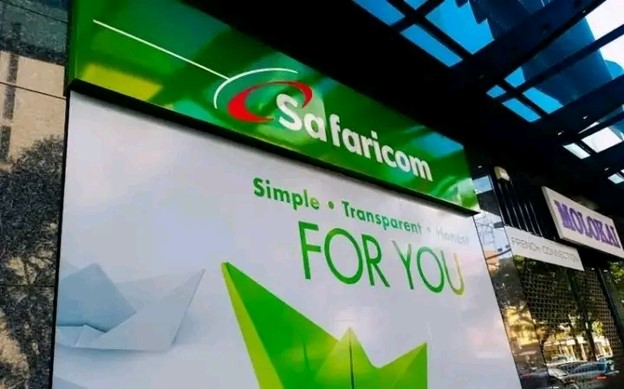
The High Court has nullified the Government’s sale of a 15 per cent stake in Safaricom to Vodacom, ruling that the multibillion-shilling transaction violated constitutional requirements on public participation, transparency and accountability.
A three-judge bench declared the partial divestiture null and void and ordered that the 15 per cent shareholding be restored to the Government of Kenya to be held on behalf of the people.
The decision overturns a transaction that was completed in June after Vodacom acquired the Government’s stake at Sh34 per share, with the State receiving about Sh204 billion for the shares. Vodacom also acquired an additional effective five per cent stake from Vodafone, taking its overall ownership of Safaricom to about 55 per cent.
The court found that the Government failed to undertake meaningful public participation before disposing of the strategic State asset.
The judges further faulted the Government for failing to provide the public with adequate information about the transaction, including key details concerning the intended buyer.
The bench described the Government’s handling of information surrounding the transaction as involving “unexplained obscurity”, finding that material information and documents were concealed or withheld during the public participation process.
The court said public participation cannot be reduced to a cosmetic exercise, stressing that citizens must receive sufficient information to make informed contributions when the Government makes decisions involving public assets.
The judges consequently quashed the agreements, approvals and arrangements relating to the sale, merger, takeover or transfer of the Government’s Safaricom shares.
How the deal unfolded
The Government announced the planned sale in December 2025, arguing that the partial divestiture would mobilise non-tax revenue for national development while allowing the State to retain a strategic stake in Safaricom.
Treasury said the transaction would generate about Sh244.5 billion in gross proceeds and that the money would provide seed capital for the National Infrastructure Fund and Sovereign Wealth Fund. The Government initially held a 35 per cent stake in Safaricom before the sale.
The transaction immediately attracted legal challenges, with petitioners questioning the legality of reducing the Government’s ownership in one of Kenya’s most strategically important companies.
In May, the High Court had issued conservatory orders blocking the planned transfer of the 15 per cent stake while the constitutional petitions were being determined.
The Court of Appeal later lifted the orders in June, clearing the way for the transaction to proceed. Vodacom subsequently announced that it had completed the acquisition of the additional 20 per cent effective stake, comprising 15 per cent from the Kenyan Government and five per cent from Vodafone.
The High Court’s latest ruling has now reversed that position, ordering the restoration of the Government’s 15 per cent holding.
The Government is expected to challenge the decision, setting the stage for another legal battle over the ownership of the shares and the process through which the State disposed of the strategic asset.
The ruling also places renewed focus on how the Government disposes of public assets, particularly transactions involving companies considered strategically important to Kenya’s economy and national interests.
London – Kenya’s High Commissioner to the United Kingdom, Amb. Maurice Makoloo, has lauded its successful bid to host the 2029 World Athletics Championships in Nairobi.
Amb. Makoloo strongly rejected claims that Kenya is a “doping country”, defending the country’s record in athletics.
Amb. Makoloo was responding to comments by British sports journalist Matt Lawton, who questioned the decision to award the 2029 championships to Nairobi and referred to Kenya’s doping challenges.
Nairobi was selected by the World Athletics Council on Tuesday, becoming the first African city to host the global championships.
In a strongly worded post on X, Amb. Makoloo said it was “unjustified and incorrect” to portray Kenya as having a “massive doping problem”, arguing that such a characterisation unfairly undermines the country’s long-standing contribution to international athletics.
“Kenya has rightfully won the bid to host this event. Kenya, home to champions of sports has waited too long. It should not be denied its moment in the sun,” Amb. Makoloo said.
The envoy also used Kenya’s record in competitions hosted in the UK to challenge the suggestion that Kenyan sporting success should be viewed primarily through the lens of doping.
He pointed to Kenya’s performance at the 2026 Commonwealth Games in Glasgow, where Kenyan athletes won 12 medals, as well as the country’s 22-medal haul at the 2022 Commonwealth Games in Birmingham.
Makoloo further highlighted Kenya’s remarkable record at the London Marathon, noting that Kenyan men have won the prestigious race 19 times, including the historic 2026 edition, while Kenyan women have claimed 14 victories.
He also cited the enduring world record set by Kenyan legend David Rudisha in the men’s 800 metres at the London 2012 Olympic Games, describing the mark as “clean and unbroken.”
“Indeed, Kenya has consistently helped shine light on the UK – a country with which we enjoy long historical relations,” Makoloo said.
His comments come as debate continues over Nairobi’s selection to host the 2029 World Athletics Championships.
World Athletics has acknowledged Kenya’s anti-doping challenges but defended the decision, saying the country has made significant improvements and that hosting the championships could further strengthen its fight against doping.
The Kenyan Government is reported to be committing Sh650 million (US$5 million) annually towards anti-doping testing and personnel.
World Athletics President Sebastian Coe said Nairobi presented a “compelling and emotional bid”, stressing Kenya’s deep connection with athletics and describing the decision to take the championships to Africa as historic.
Amb. Makoloo said the Nairobi victory should be viewed primarily as recognition of Kenya’s contribution to global athletics and the country’s capacity to stage major international sporting events.
“Kenya will deliver clean championships in 2029! Because that’s who we are. Capable!” he declared.
The 2029 championships are expected to be staged at the renovated Kasarani Stadium, further cementing Nairobi’s position as a major international sports and events destination.
Amb. Makoloo’s intervention also adds a diplomatic dimension to the debate, coming from Kenya’s representative in the very country whose bid Nairobi defeated.
London had mounted a strong campaign backed by significant UK Government and London authorities’ funding, but World Athletics ultimately chose Nairobi after assessing factors including financial guarantees, budgets and the growth potential of athletics.
The cocktails of events that preceded the selection of the United Democratic Alliance (UDA) running mate to the presidential candidate, then Deputy President William Samoei Ruto, paints a dark shadow of the underground manoeuvres, blackmails, betrayals and underhand deals.
The dark secrets during the selection of a running mate to deputise President Ruto in the 2022 General Election can now be revealed.
The Peoples Party of Kenya party leader, Ndindi Nyoro, in a recent interview revealed how they applied manipulations, threats, blackmails and intimidations to coerce Ruto to select Rigathi Gachagua as the running mate.
Ndindi also revealed how some of the potential and possible running mates they approached turned down the offer.
Among those who were approached but declined the offer was then Cabinet Secretary for Transport James Macharia.
“We approached several people to become running mates to Ruto, among them were former CS Transport James Macharia to become our running mate, he refused. We had been so beaten on our side that we were not attractive,” he said.
After failing in the approach to Macharia, the team cast their net on the banking sector and settled on the Chief Executive Officer (CEO) for Equity Bank, James Mwangi.
“We approached Chief Executive Officer of the Equity James Mwangi because we were looking at geography, the quality of the person and one person who was not having political injuries, But Mwangi also declined. And several other people declined,” he said.
Mt Kenya election
Ndindi said, left with no alternative, the search for the running mate zeroed in among the Mt Kenya supporters for Ruto.
“We had a consultative meeting of the 40 leaders from Mt Kenya. It was not an easy task. We ended up spending over 30 hours. We arrived at voting,” he said.
For the voting, there were two candidates, namely Gachagua and then Tharaka Nithi Senator Prof Kithure Kindiki.
“At the election Kindiki won by garnering 28 votes against Gachagua’s five votes. This couldn’t happen. Kindiki was not part pf the team and we couldn’t allow him run with the throne,” he said.
Intimidation and blackmail
Ndindi said they took Ruto to a private room for a meeting over the running mate slot.
“Gachagua and I went to another room and tagged along William Ruto. Gachagua removed his phone and told Ruto, you have started to play with us, even President Uhuru Kenyatta is looking for us and let us go to him. We brought trouble and this worked,” he said.
Ndindi, who later fell out with Gachagua, said he was the chief campaigner for Gachagua and they were very good and close friends.
Disappeared
Ndindi said Kindiki had disappeared from the team for almost two years and they could not accept that with his return he could be the automatic running mate.
“I was wondering, how, Kindiki just came back could be the running mate. We told Ruto to give the slot to Gachagua whom we have been in the trenches together with. We had injuries. I was Gachagua’s chief campaigner for the deputy president slot. We received five votes but eventually won,” he said.
Switched phone
“Kindiki had just come to the team when we were in the trenches, he had switched off his phone. No one in our team was accessing him.
We never knew where he was and he was talking to none,he said.
Ndindi said from 2019, as they were facing the previous government, Kindiki went missing from action.
“If you look around did you see Kindiki in any of our rallies? For two years he switched off his phone., he was not even picking Ruto’s calls. We couldn’t reach him,” he claimed.
Gubernatorial ambition
Ndindi said when Kindiki returned he had gubernatorial ambition and they tried to persuade him from contesting.
“He had just resurfaced in our team and he came and declared he wanted to contest for governor in Tharaka Nithi,” he said.
Ndindi said Kindiki asked for the ticket, but that time Ruto was enticing the incumbent Muthomi Njoki to join him.
“Kindiki asked for the ticket. We were enticing our first governor to join us and it was Governor Muthomi Njoki. We wanted him so much so that the other governors they could join us.
But here Kindiki has resurfaced and wants to be the governor. We went to his home to tell the people he may not vie. We were chased away by the public,” he said.
Karen plot
Ndindi said after the election, they plotted to have Ruto declare Gachagua as the running mate, and this enraged most of the Mt Kenya leaders.
“Following Morong, which was a Sunday, we plotted in Karen naming of Deputy President Rigathi Gachagua. Several Mt Kenya leaders failed to turn to Karen for the occasion,” he said.
After the naming, some of the MPs boycotted Ruto’s rallies, forcing the group to develop a new campaign strategy.
“Some leaders told Ruto from today henceforth we are not coming to your rallies. And actually some never came to the rallies. We divided two with Ruto leading one and Gachagua the other. We delivered victory,” he said.
President William Ruto went bare-knuckle on his former boss, retired President Uhuru Kenyatta, terming him a rebel leader.
“He was the president of Kenya. Instead of going into retirement to be a statesman, you have turned yourself into a rebel leader, the leader of the opposition,” he said.
Ruto also said that Uhuru cannot defeat him in the 2027 presidential election after having defeated him in the 2022 General Election.
Ruto reminded Uhuru that he defeated him in the last General Election and that he lacks the capacity to defeat him this time.
Ruto wondered how Uhuru could defeat him in the 2027 presidential election now that he is the President.
“If I defeated you when you were the president, how can you defeat me now when you are in retirement? Surely, that can never happen,” he said.
But former Deputy President Rigathi Gachagua told Ruto his victory was achieved through him, Gachagua, and the people, and was not an individual achievement.
“Mr William Ruto, I have heard you brag and fallaciously argue that Rtd. President Uhuru Kenyatta did not defeat you when he was President and that he can’t defeat you now that he is retired.
Put logically, you were elected President despite President Uhuru Kenyatta having been against you.
Let me remind you, because memory seems to fail you; you were not elected as President because President Uhuru Kenyatta failed to defeat you. No!” he said.
Ruto termed his former boss as a rebel who has refused to retire as a statesman and was busy sponsoring an outfit to challenge him in the 2027 elections.
Ruto said it was a shame that the court had to force Uhuru out of the political terrain.
“You have refused to retire honourably as a statesman and you continue to sponsor the opposition against me. I will defeat you once again,” he said.
Ruto said it was shameful that the High Court had to give a directive on the former President’s engagement in politics.
But Gachagua said Uhuru did not sufficiently convince him and a majority of Kenyans that Ruto was incapable of leading the country.
“Today, you have proven to me and the whole country that President Uhuru was right. Based on that, he has no further role in convincing us that we must get rid of you on 10th August 2027 at the ballot,” he said.
Gachagua told Ruto that Uhuru was not his opponent in this election and should stop the politics of deflection.
“55 million Kenyans are your opponents. These are your real opponents, and you should not confuse them with the shadow of President Uhuru Kenyatta,” he said.
Recently, Uhuru has said Kenyans will independently decide who to elect in the 2027 General Election, saying no voter should be forced to support a particular political side.
Uhuru made the remarks on Sunday, August 23, 2026, while speaking at a memorial service for former Vice-President Michael Kijana Wamalwa in Kitale, Trans Nzoia County.
“Jameni… Jameni chungeni. Mimi sitaki kuitwa sponsor bana. Mimi sitaki mambo ming” (I don’t want to be called the sponsor), he said.
Uhuru supported the Azimio La Umoja presidential candidate, the late Raila Amolo Odinga, in the last General Election. Uhuru has remained the leader of the Azimio La Umoja coalition.
Ruto criticised Orengo Gor for being a merchant for Uhuru and a stooge of Uhuru for having allowed himself to play a low-fiddle role.
Court ruling
The High Court upheld a law restricting former presidents from holding political party office beyond six months after leaving State House.
And subsequently, Uhuru cleared the way for the handover of the Jubilee Party chairmanship.
In a statement on Tuesday, the Office of the 4th President of the Republic of Kenya said Uhuru had received the ruling with respect for the Judiciary and was ready to have the handover completed openly, lawfully and in line with the party constitution.
“Uhuru Kenyatta has received this ruling in a spirit of profound respect for the Judiciary. He notes that the court’s ruling is not a restriction on his political life; it is a reaffirmation of our democratic maturity,” the office spokesperson, Kanze Dena, said.
Dena added that the former President recognised that leadership was not defined by the position held but by the trust built among the people.
The development follows a ruling by Justice Lawrence Mugambi upholding Section 6(1) of the Presidential Retirement Benefits Act, which states that a retired president cannot hold office in a political party for more than six months after leaving the presidency.
The court, however, clarified that the provision does not stop retired presidents from belonging to political parties or taking part in political activities.
“A reading of Section 6 (1) is clear, as was strongly submitted by the respondents and the Interested parties; it does not forbid the retired President from being a member of a political party, what it restricts is taking up a leadership role in the political party for more than six months after retiring,” Justice Mugambi said.
The ruling comes amid a long-running leadership dispute in Jubilee Party, where Uhuru has been the party leader since its formation in 2017 and retained the position after leaving State House in September 2022.
In May 2023, a faction of party members declared his position vacant and installed nominated MP Sabina Chege as acting party leader, citing the six-month restriction.
The move resulted in competing claims over who had authority to convene party meetings, remove officials and communicate with the Registrar of Political Parties. Uhuru’s allies rejected the changes, saying the process went against the party constitution.
Azimio La Umoja
In a press statement on Tuesday, September 15, 2026, Wiper Leader Kalonzo Musyoka said Uhuru’s acceptance of the court ruling does not shut him out of politics, noting that the former President remains free to belong to a political party and participate in its activities.
The Azimio leader was responding to Uhuru’s decision to relinquish his leadership of the Jubilee Party following the judgment delivered by Justice Lawrence Mugambi on Monday, September 14, 2026.
Kalonzo welcomed the retired President’s decision to respect the ruling, describing it as a demonstration of statesmanship and respect for the Judiciary.
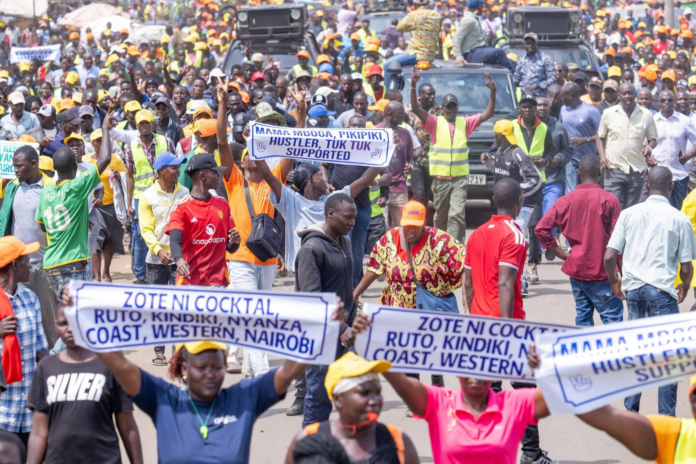
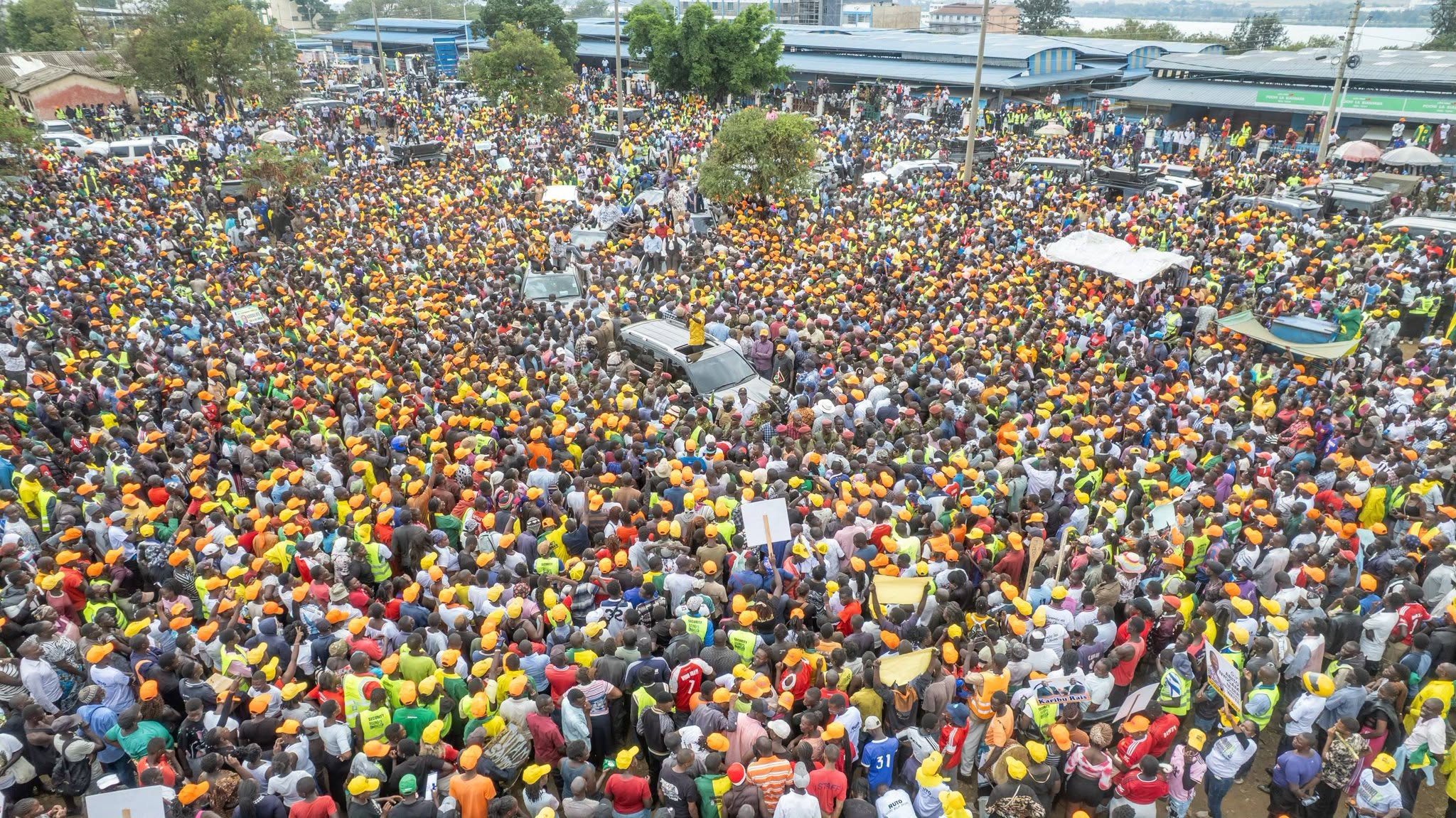
On Monday, for the first time at a political and development tour by President William Ruto in Kisumu, turned Nyanza yellow, the colour of the United Democratic Alliance (UDA).
Similarly, the Independent Electoral and Boundaries Commission (IEBC) published the notice of the General Election.
Nyanza, which has been synonymous with the orange colour of the Orange Democratic Movement (ODM) in the last two decades, was swarmed by yellow at the various events, marking a new political dispensation in the region.
Yellow became more pronounced and prominent, while the orange colour was marginal, highlighting the changing political terrain for both political partners in the broad-based alliance.
Ironically, there was no single poster bearing the inscription of ODM and its leadership, with most banners and posters having writings and images of President Ruto and Internal Security Permanent Secretary Dr Raymond Omollo.
Invasion
Kisumu, which has been the stronghold and political barometer for ODM and Nyanza for the last two decades, looked to be slipping into the hands of President Ruto and UDA.
The scenes witnessed on Monday told a different story about the party of the Enigma, the late Raila Amolo Odinga, and his legacy.
With only 11 months to the next General Election, UDA is now hell-bent on muzzling ODM in its stronghold and dictating the political tone and terms.
Save for ODM deputy party leader Simba Arati, who spoke loudly over the ODM centrality and control of Nyanza, the ODM national chairperson, Gladys Wanga, and broad-based allied governors and MPs elected to watch with eyes closed as UDA ravaged ODM in its backyard.
The crowd, draped in UDA tops, caps and scarves, while the orange colour diminished in the invasion and attack.
New chapter
Ruto said the 2027 General Election will be a watershed for our country, bringing to an end the politics of tribalism, division and discrimination, and ushering in a new chapter defined by national unity, inclusivity and a shared national purpose.
“As a result, Kenyans will rally together around a common national transformation agenda, expanding opportunity for every citizen regardless of the region, religion or background.
This is the Kenya we envisioned with the late former Prime Minister Raila Odinga,” he said.
Publication of Notice
On Monday, 14th 2026, IEBC gave a notice of the 10th August General Election.
It read in parts: “The public is hereby notified that pursuant to powers conferred by Article 88(4) of the Constitution of Kenya, the provisions of the Elections Act, Cap 7 and the Elections (General) Regulations, 2012, the Independent Electoral & Boundaries Commission has published the Notice of the General Election scheduled to be held on Tuesday, 10th August, 2027 for the respective elections and election campaign financing timelines as carried in the Kenya Gazette Notice Numbers 13497, 13498, 13499, 13500, 13501, 13502 and 13503 Vol. CXXVIII – No. 144 published on 20th August, 2026 and Gazette Number No. 13771 Vol. CXXVIII – No. 150 published on 26th August, 2026,”
Arati’s plea
Arati appealed to the people of Nyanza and Kisumu not to fall into the political trap of electing leaders on different parties instead of ODM.
“I want to request the people of Kisumu let remain in ODM. I want kindly request in Kisumu don’t bring political cocktail. Kisumu and Nyanza is an ODM zone. We as members o in Nyanza at large we have agreed to work with Ruto,” he said.
Arati said in the pre-election coalition arrangement ODM will demand half of the government slots.
“President Ruto in this government we are forming we will take a half as ODM and we leave UDA the other half. That is how we will negotiate,” he said.
The Flock
Last Sunday, Kisumu Governor Anyang’ Nyong’o said Raila tasked Ruto to look after his political flock.
Nyong’o, who has remained guarded over the infighting and eventual fallout in Raila’s Orange Democratic Movement (ODM), with the Linda Mwananchi of former Secretary-General Edwin Sifuna and Embakasi East MP Babu Owino walking away to join the opposition.
While the Linda Ground retained the identity of ODM and are currently crafting a pre-election coalition pact with President William Ruto’s United Democratic Alliance (UDA).
At a church in Kisumu attended by Ruto and leaders from the region, Nyong’o took to the podium and spoke in Dholuo to announce Raila’s last wish to Ruto.
Nyong’o made a biblical reference to Jesus’ last days and directive to his trusted disciples and what he expected of them.
“Ka Yesu ne wuok e piny ka odhi e polo ne en gi jopuonjre ne ariiyo mane ohero kabisa.” (When Jesus on his final days to return to heaven. He had his disciples whom he loved most.)
“Petro kod johana. To ne oluongo gi ma owacho ni yani. Petro kod johana kua romba.” (They were Peter and John. He called and told them to take care of my flock), he said.
Nyong’o said in Raila’s last days before his death, he directed President Ruto to take care of his political flock.
“Ka ne Raila ae pinyni mikech nyasaye oluonge nikech odhi kuma bor ne onyiso rais mar this country Wiliam Samoei Ruto ndugu Samoe kwa romba.” (Before Raila died because God had called him and he was going to a new world. He told President of the country William Samoei Ruto, take care of my flock), he said.
Raila told Ruto to protect his flock, and that was the reason why Ruto found time to be in Kisumu and also to meet grassroots leaders.
“Take care of my flock. President Ruto came here despite his busy schedule. He came and he will meet with local leaders because God had spoken to him, so Ndugu Ruto take care of my flock,” he said.
Legacy
President Ruto committed to protect Raila’s legacy and the party, and that was the reason behind the formation of the broad-based government.
“As the president and a student of Raila Amolo Odinga I want to reassure you that we will walk together, ODM and UDA are not competitors but are partners in the broad-based government,” he said.
Ruto said in honour of Raila he will take responsibility to ensure his legacy lives on.
“In honour of my late brother Raila, I will make it my responsibility and business to ensure that his legacy, his party and what he believed in lives on as we work together to build a better Kenya,” he said.
Ruto told the residents of Nyanza not to be worried because he had their interest at his heart.
“Do not be worried because he that you will negotiate with is not a stranger. He is former deputy leader of ODM.
I am very confident that the partnership that the late Raila Odinga gave us when he was alive. We are going to respect his wishes and work with his vision.
We are going to make sure his party ODM, vision will be a vision we will carry into the future,” he said.
The lessons of the Orange Democratic Movement (ODM) last year’s celebrations of the party at @20 could have forced the late Raila Amolo Odinga family to form a committee to handle his first anniversary.
The family, in a press statement, stated the anniversary was not a preserve for a particular organisation or political entity but Kenyans at large.
“This anniversary belongs neither to an individual nor to an institution. It belongs to the people whose lives Baba touched. As a family, our responsibility is to make sure they have their chance to remember him,” read the letter.
The family recognised Raila’s enigma, whose anniversary should include all his friends regardless of their political affiliations, race and tribe.
“We therefore want this first anniversary the people their moment with Raila – to remember him, mourn him, celebrate him and honour the journey they shared with him,” read the statement.
The letter also said the family had formed a committee to be chaired by Prof Adams Oloo to coordinate commemorative activities during the week of 15th October 2026.
“The Committee is currently developing the coordination, inclusivity and a meaningful, unified commemoration. Anyone who wishes to participate in, support or organise any activity as part of the anniversary is kindly requested to do so through the committee,” read the statement.
The move by the family could halt the ODM’s earlier released plan for the anniversary, which was met by criticism from Kisumu Women Representative and Raila’s younger sister, Ruth Odinga.
Ms Odinga said the family decided to give direction to allow all parties to participate in the anniversary.
“The ODM @20 was hurried one and did not take into consideration the family mourning period and left out several Raila supporters,” she said.
She said Raila’s first anniversary was not an ODM affair but a people-driven moment and that is why they had formed a committee to drive the agenda.
Last week, Ms Odinga sparked a storm with her post on social media platforms, pointing fingers at vultures in the party planning for the anniversary.
Odinga wrote, “We are heading for 15th October and already vultures of ODM cups and tents are now planning- Raila was an enigma! Wacheni Upuzi!”
Cups and Tents
During the Linda Ground rallies, Ruth Odinga complained of money flowing into ODM that was used to hire tents and hotels, a new concept in the party.
“Where is the money used to fly choppers, procure big tents, and mobilize and brand crowds in ODM colors coming from, yet the same money cannot be sent to the ODM Party bank accounts? That only means one thing: control.
So they must be the ones controlling the show, where they decide who is ‘invited’ to the Linda Ground tents and what they say once they get there. Anything outside the script attracts immediate booing, as was the case with Suba North MP Hon. Millie Odhiambo at the Ciala Resort in Kisumu,” she said then.
Press statement
On Thursday, the ODM Central Committee, after its meeting, released a statement detailing the programme and events to mark Raila’s anniversary.
The ODM leadership christened the month of October as Mwezi wa Baba (Baba’s Month) commemoration.
The statement read in parts, **“Ladies and Gentlemen, October marks one year since the demise of the Rt. Hon. Raila Amolo Odinga, the founder of the Orange Democratic Movement (ODM) party. It was a tearful moment; we were all heartbroken. God plucked the best flower from our midst.
The ODM party has dedicated the entire month of October to his memory,”**.
The party said, in recognition of Raila’s tireless contribution to the country’s democracy and his Pan-Africanism, the party was dedicating the month of October as MWEZI WA BABA with the following activities:
“2nd October 2026 – Candle lighting; Kenyans will be requested to light candles wherever they are, either in organised groups or individually, in remembrance of BABA. This candle-lighting will take place at 6:00 pm across the country,” read the statement.
On 9th October 2026, the statement said the party would hold a major Memorial rally in Kakamega Town, which would bring together supporters from all the counties of the Western Kenya region, namely Kakamega, Vihiga, Busia, Bungoma and Trans Nzoia.
“From 10th to 15th of October 2026: family-led activities;
This will culminate in the main memorial service at Kang’o Ka Jaramogi in Bondo,” read the statement.
Itinerary
On 17th October 2026 – a memorial rally in Garissa Town.
This will bring together members and supporters from Northern Kenya counties of Garissa, Wajir, Mandera, Isiolo and Marsabit.
On 18th–19th of October 2026 – Memorial activities in the Coastal region.
On 21st October 2026 – Kajiado County memorial activities, 23rd to 25th October 2026 – Turkana County memorial activities and 31st of October 2026 – MWEZI WA BABA memorial rally in Nairobi County.
“We urge all our supporters to rededicate their commitment to BABA’S ideals,” read the statement.
The Kenya Government is yet to implement the African Union 2003 declaration committing Member States to allocate at least 10 per cent of national budgetary resources to agricultural and rural development within five years.
The declaration objective was to achieve at least 6 per cent annual agricultural growth and specifically covered livestock, forestry and fisheries, not just crops.
In 2003, African Heads of State met in Maputo, Mozambique, and made a historic commitment.
They agreed that African countries should allocate at least 10 per cent of their national budgetary resources to agriculture and rural development and work towards 6 per cent annual agricultural growth.
The commitment included crops, livestock, forestry and fisheries.
More than two decades later, the question is:
WHEN WILL KENYA FULLY TURN THIS COMMITMENT INTO ACTION?
Kenya is an agricultural country. Agriculture feeds us, employs millions of people and supports our rural economy.
Yet we continue to struggle with expensive food, unemployment, low farmer incomes and dependence on food imports.
KENYA 10% AGRICULTURE INVESTMENT LAW
The proposal was envisaged to put Agriculture at the Centre of Kenya’s Economic Transformation
The principle was simple: Kenya cannot defeat poverty, unemployment and food insecurity without investing seriously in the sector that feeds the nation.
The African commitment already exists
In July 2003, African Union Heads of State and Government adopted the Maputo Declaration on Agriculture and Food Security in Africa.
African leaders committed themselves to:
Allocate at least 10% of national budgetary resources to agriculture and rural development.
Achieve at least 6% annual agricultural growth.
Revitalise agriculture, including livestock, forestry and fisheries.
Invest in water management, infrastructure, agricultural research and technology.
Support small-scale farmers.
Encourage private-sector participation.
Involve farmers, women and youth in agricultural development.
Expectations
The AU continues to identify the 10% agricultural-budget target and 6% growth target as central elements of CAADP.
The question for Kenya is therefore not whether Africa recognised the importance of agricultural investment. It did in 2003. The question is whether Kenya will finally turn that commitment into a properly funded and accountable national programme.
THE KENYA PROPOSAL
Legislate that:
At least 10% of the County Government equitable share shall be ring-fenced annually for agriculture, agricultural development and rural economic transformation.
The National Government shall provide a matching allocation equivalent to the county agricultural allocation.
THE BIGGER ECONOMIC IDEA
Agriculture should be treated as an economic engine, not merely as a social programme.
If farmers produce more:
More production → more processing → more businesses → more jobs → higher rural incomes → greater food supply → lower food prices → more exports → more tax revenue.
This is why the AU’s CAADP framework describes agriculture-led development as a route to reducing hunger and poverty and expanding exports.
A PROPOSED AGRICULTURE TRANSFORMATION FUND
KENYA AGRICULTURE TRANSFORMATION FUND — KATF
Funded by: 10% County allocation + 10% National Government matching contribution, with money channelled into county and national programmes according to agreed agricultural investment plans.
The Fund should have:
County-level implementation
National oversight
Farmer representation
Private-sector participation
Annual independent audits
Public expenditure dashboards
Performance contracts
County agricultural targets
Annual parliamentary reporting
This would also fit the original spirit of Maputo, which emphasised country-owned agricultural programmes, investment planning and participation of farmers, women, youth and the private sector.
TOTAL: APPROXIMATELY KSh 84 BILLION EVERY YEAR FOR AGRICULTURAL TRANSFORMATION.
This money should be invested in:
Food and commercial crops, Mechanisation, Irrigation and water harvesting, Certified seeds and seedlings, Livestock, Aquaculture, Agroforestry, Agro-processing and value addition, Storage and markets, Women and youth agribusiness, Agricultural extension and Research and technology
It must be a productive investment fund, with every shilling accounted for and linked to measurable increases in production, farmer incomes, jobs and food security.
KENYA AGRICULTURAL TRANSFORMATION SYSTEM
A proposed structure for implementing the 10% Agriculture Investment Law
1. Governance Structure
National Agriculture Transformation Board ↓ 47 County Agriculture Transformation Boards ↓ Constituency Agricultural Centres ↓ Ward Agricultural Service Units ↓ Farmers / Cooperatives / Agribusinesses
The National Board would establish standards, coordinate financing, research, technology and national programmes, while County Boards would implement programmes according to the agricultural potential of each county.
PHASE ONE — BUILD THE COUNTY AGRICULTURAL HUBS
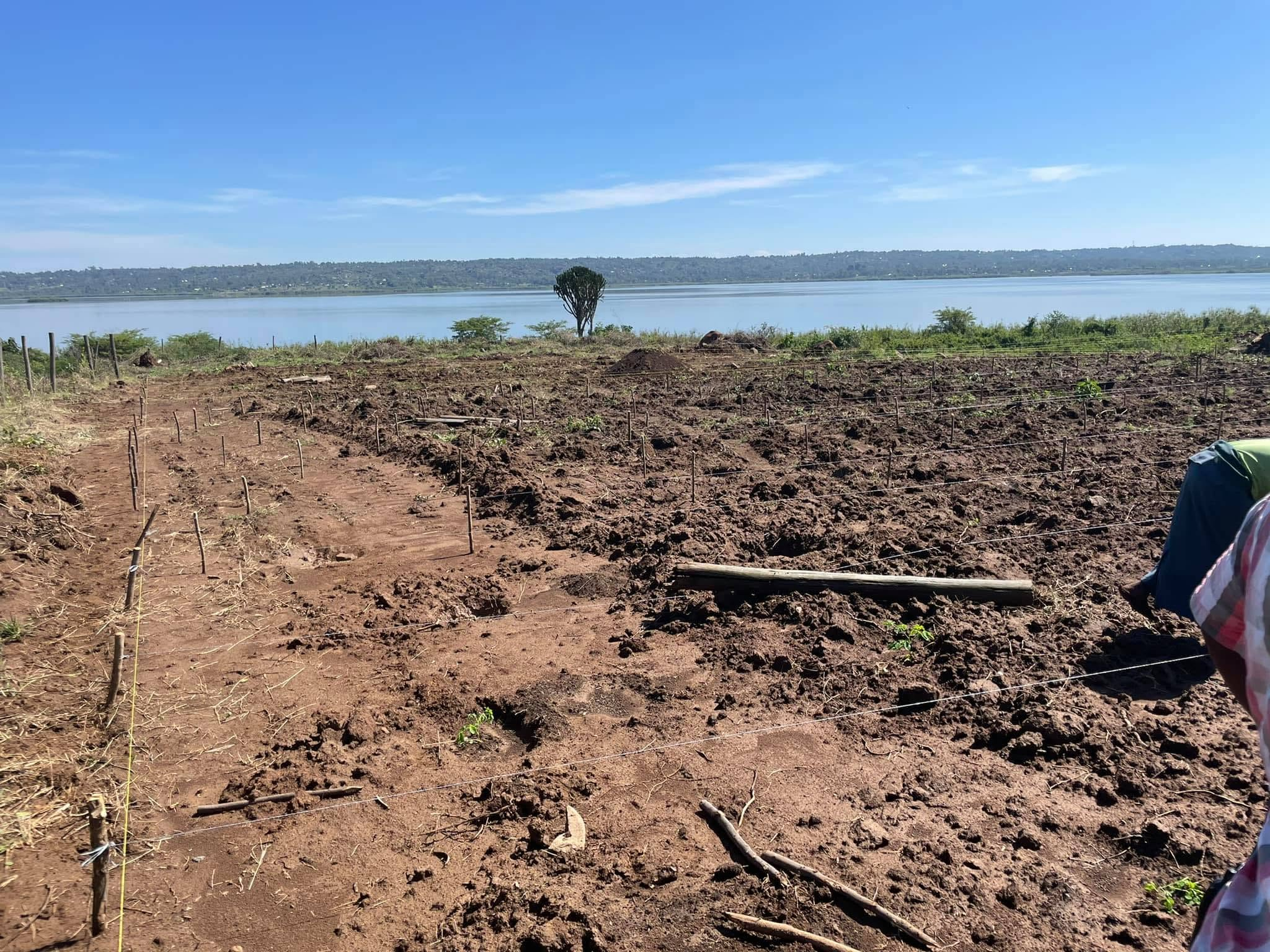
One 300-acre Agricultural Transformation Centre in every county. 47 counties × 300 acres = 14,100 acres of demonstration and agricultural infrastructure.
These should not be ordinary demonstration farms. Each should become a County Agricultural Transformation & Aggregation Centre.
Functions of the 300-acre centre
Function
Purpose
Demonstration farm
Demonstrate modern commercial farming
Agricultural testing
Test crops, varieties, soils, fertilisers and technologies under local conditions
Research
Work with agricultural research institutions and private sector
Seedling propagation
Produce certified/quality planting material suited to the county
Farmer training
Practical hands-on training
Mechanisation centre
Demonstrate tractors, planters, harvesters, irrigation and other machinery
Machinery training
Train young people as machinery operators and technicians
Aggregation centre
Farmers bring produce for grading, bulking and marketing
Value addition
Demonstrate processing and packaging
Warehousing
Store grain and other agricultural commodities
Cold chain
Handle perishables such as horticulture, dairy, fish and meat
Digital agriculture
Demonstrate precision farming, sensors, data and modern technology
Irrigation
Demonstrate efficient irrigation and water management
Agroforestry
Demonstrate commercial and climate-smart tree systems
Livestock
Demonstrate modern animal husbandry
Aquaculture
Demonstrate modern fish production
Agribusiness
Train farmers to operate agriculture as a business
The principle:
Every county should have a place where a farmer can come, see the technology, receive training, obtain quality planting material, access services, aggregate produce and connect to markets.
PHASE TWO — TAKE SERVICES TO THE FARMER
The county centre becomes the hub, but farmers cannot be expected to travel 50 or 100 kilometres to access services.
Therefore, the system progressively moves downwards:
COUNTY 300-acre Agricultural Transformation Centre
CONSTITUENCY Agricultural Service & Crop/Livestock Management Centre
The constituency units would specialise in the agricultural activities appropriate to that area.
They could provide:
Crop management, Animal husbandry, Aquaculture service, Seedling distribution, Mechanisation services, Irrigation support, Soil Testing, Extension officers, Farm records and production data, Veterinary services, Pest and disease diagnosis, Aggregation and marketing and Digital agricultural services
WARD LEVEL — THE FARMER’S FIRST POINT OF CONTACT
The ward should eventually become the frontline agricultural service point.
A farmer should be able to access:
Agricultural extension, Veterinary services, soil testing, Crop disease diagnosis, Seedlings and planting materials, Mechanisation booking, Irrigation advice, Farmer training, Digital farm information, Cooperative development, Market information and Production planning
The ward agricultural team should also know what is being produced, where it is being produced and approximately how much will be available for market.
That changes agriculture from:
“Plant and hope.”
to:
“Plan → Produce → Aggregate → Process → Market.”
THE LONG-TERM VISION
The system should eventually support the entire agricultural value chain.
FARMER
Production, Extension, Inputs, Mechanisation, technology, Aggregation, Storage, Processing, Value addition, Marketing and Domestic & Export Markets
This is how the KSh 84 billion annual investment can become an economic transformation programme rather than simply another government expenditure programme.
THE KENYA AGRICULTURAL TRANSFORMATION NETWORK — KATN
Its mission:
“To put modern agricultural production, technology, knowledge, markets and value addition within reach of every Kenyan farmer.”
MY VISION FOR A NEW KENYAN AGRICULTURAL SYSTEM
If Kenya is going to use the proposed 10% Agriculture Investment Law effectively, we must not simply put more money into agriculture.
We must build a system that delivers modern agriculture directly to the farmer.
I propose the creation of a:
KENYA AGRICULTURAL TRANSFORMATION NETWORK
With a National Agricultural Transformation Board and County Agricultural Transformation Boards in all 47 counties.
PHASE ONE
Every county should establish a 300-acre County Agricultural Transformation & Aggregation Centre.
47 counties × 300 acres = 14,100 acres of agricultural transformation infrastructure across Kenya.
A farmer should be able to visit the centre and see modern agriculture working in practice, receive training, obtain quality planting material, access machinery and ultimately aggregate and market their produce.
PHASE TWO
The services would progressively move closer to farmers:
COUNTY CENTRE → CONSTITUENCY → WARD → FARMER
At constituency level we would develop crop management, animal husbandry, aquaculture, mechanisation, veterinary, extension and agricultural business services.
At ward level, farmers would receive practical agricultural services directly where they live.
The objective is that every farmer eventually has access to modern agricultural technology, extension, quality inputs, mechanisation, veterinary services, soil testing, production information, aggregation, storage and markets.
THE END RESULT
We move Kenya’s agriculture from:
SUBSISTENCE → COMMERCIAL
FRAGMENTATION → AGGREGATION
RAW PRODUCTS → VALUE ADDITION
MANUAL FARMING → MECHANISED FARMING
GUESSWORK → DATA & TECHNOLOGY
FARMER → FARMER + ENTREPRENEUR
The objective is not to create another government bureaucracy.
The objective is to create an agricultural production system that makes the Kenyan farmer more productive, more profitable and more competitive.
Kenya now has the opportunity to build the institutions and infrastructure needed to make that vision a reality.
This will become much bigger than a funding proposal. It is essentially a blueprint for a Kenyan agricultural operating system—from national policy and financing all the way down to the individual farmer.
The writer is former Alego MP and Senatorial Aspirant for Siaya County
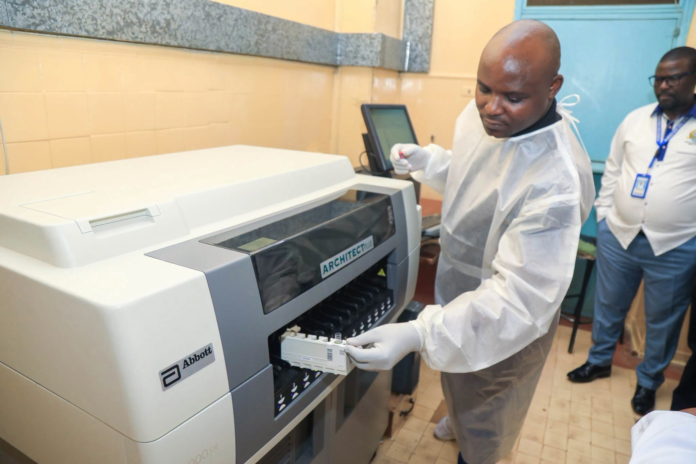
The introduction of a fully automated blood screening analyzer at Jaramogi Oginga Odinga Teaching and Referral Hospital (JOOTRH) has strengthened blood safety.
The fully automated blood screening analyzer has improved the speed, accuracy and reliability of screening.
This explains why blood donated by family members to their patients is delayed but goes through processes to determine the safety before it can be transfused.
For many, they believe that once blood was donated, it was immediately available for transfusion.
What is not known to them is that every unit must first undergo a rigorous process to ensure it is safe.
Mr Kenneth Onyango, Medical Laboratory Technologist at JOOTRH, explained that every donated unit was first treated as potentially unsafe until laboratory testing confirms otherwise.
“Blood is screened for transfusion-transmissible infections including HIV, Hepatitis B, Hepatitis C and Syphilis.
Any unit that tests positive is immediately discarded, regardless of demand,” he explained.
He said preparing blood for transfusion involves far more than screening, with each donation collected in a sterile blood bag before undergoing blood grouping, RhD typing and separation into components such as red blood cells, plasma and platelets.
“The products are then stored under a strictly monitored cold chain at 2°C to 6°C. Before transfusion, compatibility testing, including crossmatching, is performed to ensure the donor’s blood is safe for the recipient,” he said.
Onyango said the automated analyzer has replaced many manual processes, allowing multiple samples to be tested simultaneously while reducing the risk of human error.
“This has improved efficiency in a referral hospital serving thousands of patients across Kisumu County and the Lake Region,” he said.
Healthcare experts estimate that by the time one unit of blood has been collected, screened, processed, stored and safely transfused, the investment ranges between KES 5,000 and KES 7,500.
“The cost covers donor recruitment, laboratory reagents, equipment maintenance, storage, compatibility testing, transfusion consumables and waste management,” he said.
He said many people mistakenly believe hospitals sell blood, but in reality, patients were charged for the processing required to make donated blood safe, not for the blood itself.
“Under the Social Health Authority (SHA), eligible ward patients receive basic blood transfusion services free of charge or at a subsidised cost,” he said.
He said the delay was ultimately not a sign of inefficiency but of a healthcare system committed to ensuring that every unit of blood heals rather than harms.
For the first time, Nairobi breathed after the departure of the general, the late Raila Amolo Odinga.
The mood was ecstatic, and the crowd was beaming with hope of a new dawn.
Jacaranda ground lived up to its tradition, buzzing as it welcomed and accepted all shades of walk, and the music sublimed the audience.
Sweet memories of the late Raila Odinga were revived, and the fondness and joy of his rallies returned once after eleven months of his absence.
The new kids on the block were born, rocked and carried the day, reviving the old Nairobi.
Nairobi Senator Edwin Sifuna, who will lead Linda Mwananchi’s presidential pursuit, and Embakasi East MP Babu Owino, who will fly the outfit for the Nairobi gubernatorial seat, woke the sleepy city in the sun.
Nairobi accepted the new kids on the block, and indeed they passed the red line to be the new generals of the city politics.
From the heart of Kenya’s constitutional moment, the All Saints Cathedral, Linda Mwananchi gathered for the morning prayers.
The excitement within the congregants was palpable and, indeed, a new wind was blowing directly from the sanctuary to Jacaranda grounds.
Nairobi oozed and organically breathed a sigh of relief after several months of dullness, confusion and inactivity.
The departure of the king and the general, the former Prime Minister, the late Raila Odinga, left a vacuum.
A vacuum that for the last eleven months has been beckoning for a new sheriff and new players to occupy and assume the throne.
Declaration
Finally, Linda Mwananchi made a bold political declaration at the Jacaranda ground of presenting a presidential candidate in the 2027 General Election.
The fallout in the ODM was precipitated by one wing, Linda Mwananchi, advancing the party to present a presidential candidate, while the Linda Ground supported President William Ruto’s re-election and pre-election coalition agreement with UDA.
Suba South MP Caroli Omondi lit the crowd with his pronouncements that marked the climax of the rally as he read out the declaration.
‘We have now agreed that Babu Owino shall be the governor of Nairobi and the second question as Linda Mwananchi we have agreed that Edwin Watenya Sifuna will be our presidential candidate.
We have agreed going forth that all ODM seats in Nairobi, the eight legislators and the 36 MCAs seat will now belong to Linda Mwananchi.
We have also agreed to be in one political party. Those are the Jacaranda declaration,’ he read.
Sifuna said political feedback he had received during his countrywide tours pointed to a growing support for his presidential ambitions.
The Senator told residents that people from different parts of the country had been urging him to take up a bigger political role, in what appeared to be a fresh signal of his intention to seek the presidency.
“I want to tell Nairobi, other parts of the country want to give me another job. Do you know the job they want me to take?” Sifuna asked. “People in other parts want to take me to a certain job. Do you also want me to take that job?” he said.
Sifuna thanked Nairobi residents for electing him to the Senate, saying the position had provided him with a platform to build a national political profile.
“Because you elected me as Senator, I am now known across the country. I thank you for that opportunity you gave me,” he said.
Babu, speaking at the rally, urged the residents to support his gubernatorial bid, saying he has what it takes to make Nairobi work again.
He used the rally to pitch his plans for Nairobi, saying he would seek to address the city’s longstanding challenges if elected governor in 2027.
Siaya Governor James Orengo said they had put Ruto on notice and that he would be defeated at the elections.
“On August 10, 2027, Kenya takes its power back. William Ruto, your era of state capture and forced abductions ends at the ballot box, constitutionalism and rule of law return,” he said.
Babu said the unity of the opposition was important to defeating President Ruto at the elections.
“We continue to call for unity within the opposition. If we are to defeat this regime in 2027, we must put our differences aside and rally behind ONE Presidential candidate who can unite Kenyans and deliver victory at the ballot.
Today, the people of Jacaranda, Embakasi East, came out in their numbers to make their voices heard.
The message is clear: Unity is our strength. Victory is possible. Kenya First,”he wrote.
We use cookies to ensure that we give you the best experience on our website. If you continue to use this site we will assume that you are happy with it.