Home Blog Page 8

The intrigues behind Mbadi’s Treasury appointment, the seven-hour night meeting and the pressure

0

By Anderson Ojwang

The appointment of John Mbadi as the Cabinet Secretary for the Treasury was not a walk in the park.

It was the most difficult for President William Ruto and the late former Prime Minister Raila Odinga.

For President Ruto, he had put his foot down to end decades of marginalisation of the Luo community from assuming the coveted seat.

And for Raila, he was known as a man who never reneges on his promise and wanted to meet part of his bargain.

Hard moment

President Ruto said the appointment of the CS for Treasury was the only instance during the formation of the broad-based government that he defied Raila.

“I remember very well that Raila Odinga had a different opinion on who should be the Minister of Finance. I remember I told him that ‘my brother, if there is one place I will defy you, it is that I am going to appoint a person from Luo Nyanza to be the first Minister of Finance,'” he said.

President Ruto said this was meant to correct the negative profiling of a whole community that they don’t care about property and that property belongs to some people.

“Listen, good people, it is also the same reason why I have made the decision that development in Kenya is never going to be done again on account of which citizen has voted in which direction,” he said.

Raila’s pre-election cabinet

Ahead of the 2022 general elections, Raila announced the list of some of his preferred cabinet members. On the list for Cabinet Secretary was Wycliff Oparanya, then Governor of Kakamega. Oparanya was also the deputy party leader of ODM and a key pillar in Raila’s campaign.

So when Raila lost the elections, Oparanya and other cabinet ministers Raila had announced were left without portfolios.

So Raila was committed to handing over the position to Oparanya in the broad-based arrangement.

Wako and Luhya pressure

Former Busia Senator Amos Wako led Luhya elders, professionals, and politicians to pressure Raila to make good on his promise.

Raila found himself in a difficult situation over the cabinet position as Wako and his team never gave him a chance.

Mama Ida Odinga, Raphael Tuju and Junet Mohammed

The trio of Mama Ida Odinga, Raphael Tuju, and the Minority Leader in the National Assembly, Junet Mohammed, scuttled any move to take away the position from Luo Nyanza.

Multiple sources told Western Insight that the trio applied pressure on Raila to accept the appointment of Mbadi as the Finance Minister.

“The trio did not want to hear anything about Oparanya as CS for Treasury. It was like a bloodless coup to have Mbadi appointed. The pressure from Wako and his team was not small, but the trio never budged,” said the sources.

The seven-hour night meeting

At a hotel in Karen, Oparanya, Tuju, Ida, and Junet held a seven-hour meeting. The meeting, which started shortly after 6.00 pm and ended at 1.00 am, was a marathon and tiring affair.

The trio had to do everything to convince Oparanya to drop his demand for the CS Treasury.

“It took us seven hours to convince Oparanya. We burned the midnight oil, and finally, we had white smoke. We drank kettles of tea that night. We ate samosas and chicken wings as we tried to broker a truce,” said our sources.

After a marathon consultative meeting, Oparanya agreed to settle for the CS Energy portfolio, and that is how Mbadi landed the seat.

Oburu

The team then invited Dr Oburu Oginga to the camp so that he could ratify the resolution.

The members feared that if the proposal did not have Oburu’s support, he would scuttle it.

Oburu aligned with the CS Treasury proposal and went ahead to put additional pressure on Raila.

The Energy docket

But Oparanya swallowed the humble pie when the cabinet was announced, and the Energy portfolio went to Opiyo Wandayi while he settled for Cooperatives and MSMEs.

The whining Oparanya

Oparanya has been whining and threatening to defect from ODM to unite the Luhya community under one political umbrella.

Oparanya has been blowing hot and cold and has been critical of the ODM party.

Oparanya has been sending mixed signals within and without the government and the Orange Democratic Movement (ODM) party, which has not only baffled but left tongues wagging over what he could probably be up to and whether he is preparing for a presidential stab in the 2027 general elections.

Recently, Oparanya shocked the public with his revelation that selling President William Ruto’s second term was becoming difficult after ODM sacked its Secretary General Edwin Sifuna.

President Ruto expects Oparanya to lead his campaign in Western Kenya and other parts of the country, and such a statement undermines the campaigns and the re-election game plan.

“Kazi yetu ya kutafutia rais kura imekuwa ngumu. Ukienda mahali unaulizwa mbona Sifuna alifukuzwa (Our work to seek votes for the president is becoming very difficult. They are asking why did you chase away our son). Ukienda kwa bunge wanafukuza wengine (In parliament now they want to chase away others). Na hii ni kipindi cha lala salama (This is the dying minute). Hiyo itasaidia sisi? (How will that help?)” he said.

Hot and cold

Oparanya has been advocating for Luhya unity and even threatened to resign from the ODM party to front a common community political objective.

“Tunataka sisi wote tuwe pamoja wakati huu (We all want to be united at this moment). Kama mtu amekukosea, sema sorry (If someone has wronged you, ask for forgiveness). Ikifika 2027, tukaye chini tushiriane na tulize (In 2027, we can sit down and negotiate),” he said.

Oparanya has called on the Luhya political class to have one political vehicle to drive their agenda.

“Jirongo tried to unite the Luhya community. Whenever I met him, he would talk to me about Luhya unity. One day I asked him if I was the problem and impediment to the unity. Because I am in ODM, if I am the obstacle, I am ready to leave the party as the deputy party leader at that time to unite the community and form a single political party. We have three Luhyas who are party leaders of political parties: Eugene Wamalwa, Moses Wetang’ula, and Musalia, but he dissolved his party. These are the party leaders. Let me say this: I am ready to leave ODM to unite the Luhya community. I know if we come together, we are the sleeping giant in this country,” he said.

Luo to repay the support

Oparanya declared that the Luhya community was also looking for power and it was time the Luo community supported them.

“We have supported the late Raila Odinga with one heart. That support should not be taken for granted. Now it is our time. For all these years, Raila contested for the presidency, and we have been with him. Now they must look into it: what do those people from Western in ODM get? If they are not looking at the interests of Western, we tell them bye. We will have a meeting. Raila left us, and they have forgotten that we were close to Raila. We were leaders in that party. They are busy with their programmes of power, and they do not know that even we from Western want power,” he said.

Could Oparanya be preparing his exit strategy and finally have a stab at the presidency in the 2027 general elections, or is he repositioning himself for the altar of power negotiation?

And will President Ruto hold on to Oparanya despite his scaring and confusing statements to the public? Time will tell, whichever way.

Thika rally, a testimonial for Linda Mwananchi as Governor Kangata graces the occasion

0

By Anderson Ojwang

Linda Mwananchi faction of the Orange Democratic Movement (ODM) is gaining momentum in the country’s current political matrix after it caused a political earthquake in Mt Kenya.

Viewed as an outsider in Mt Kenya’s political matrix and dispensation, the Linda Mwananchi rally in Thika, Kiambu County, was a testimonial.

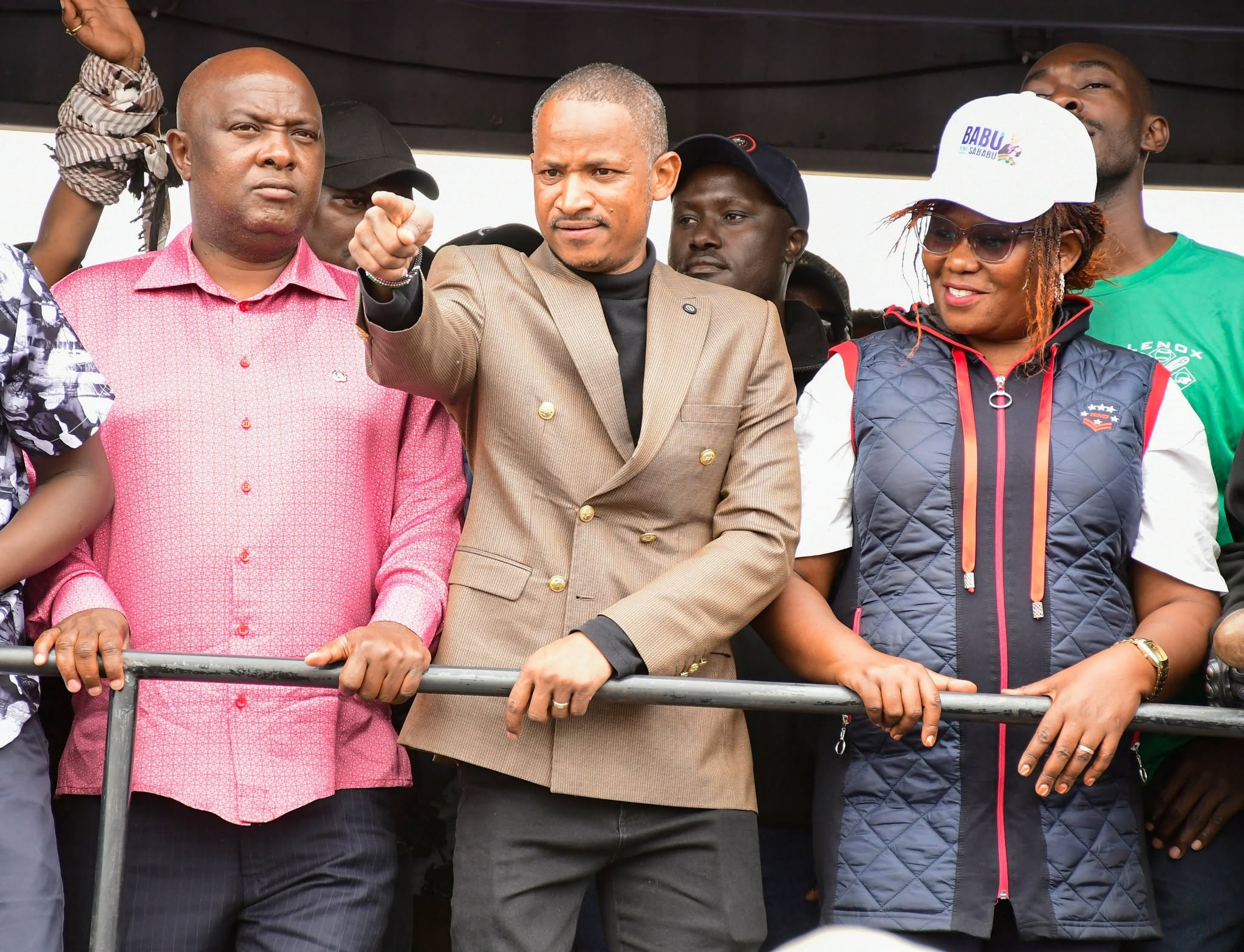
For the Siaya Governor James Orengo, ODM Secretary Edwin Sifuna and Embakasi East MP Babu Owino-led faction, the wing is fast coming of age to claim political steak and stake in the country.

For naysayers, the faction seems to have run away with the masses and left Linda Ground of Dr Oburu Oginga limping to the grave and holding the instrument.

And Murang’a Governor Irungu Kangata’s presence at the rally after he recently ditched President William Ruto’s United Democratic Alliance (UDA) was a political earthquake in the current dispensation.

Linda Mwananchi is writing their own political story and venturing into regions viewed as strongholds of other political formations in the region.

The mountain opened and roared when Kangata mentioned Sifuna and Babu’s names. It vibrated, and Kenya shook. A new sense and political course was birthed.

Kangata

Kangata whipped the crowd, saying he had attended the rally because the movement was uniting Kenyans for a common purpose.

“I have come here for a reason. I know Kenya is for us all, regardless of your tribe. You did not apply to be born in a particular community. We are one family brought together by a common desire – a united Kenya,” he said.

He said Linda Mwananchi was the movement which has brought Kenyans together, led by Sifuna, Babu, and Orengo.

“I look at the manifesto for the country. This country is overtaxing companies, leading to unemployment in Thika and every part of the country. Unemployment is a serious cancer in this country which we must tackle,” he said.

He took a swipe at the government for failing to prioritise education and health sectors and only concentrating on the construction of houses.

“We are prioritising education and health sectors, and currently we have a serious crisis. The government is only constructing houses,” he said.

The stranger in the bedroom

The successful Linda Mwananchi rally in the mountain could have rattled the self-declared leader of the region, Rigathi Gachagua.

The strangers in the bedroom could have exposed the potential of the region opening up to other political formations and not Rigathi alone.

Coming after the declaration of a 45-day conclave to come up with a united opposition presidential candidate, the rally’s success was the least Wamunyoro expected.

Orengo

Orengo, the self-declared people’s party leader, said his return to Mt Kenya was a testimonial and held a special place in his heart.

“Today, I return to the mountain not as a visitor, but as one who was born in Kiganjo, Nyeri, many years ago. Mt Kenya is everything. The Thika declaration will redefine the country’s politics,” he said.

He maintained that Kenyans were speaking and have spoken, and that President William Ruto was losing the support of the public.

“Kasongo has no votes. Our work is to reorganise. I want us to unite. I am the longest-serving politician in Kenya, and I will work towards the unity of Kenyans. We shall succeed. Here, Kenya’s only problem is Kasongo. I want to thank former President Uhuru Kenyatta for supporting the late Raila Odinga. If you are not part of the problem, you must be part of the solution,” he said.

Doubters

Political activist Pauline Njoroge said they ignored the advice to hold meetings at market stopovers to get the crowd, but they stuck with the ground despite the distance.

“When we settled on these grounds in Thika, some people from the region advised against it. They argued that the venue was a little far from where people naturally congregate, and that unless we organised transport, few would walk. They advised us to hold stopovers in busy markets, bus stops, and other populated areas where crowds are readily available,” she said.

Njoroge said that was the known script of campaigning in Thika, and they rewrote the story of the region’s politics.

“According to them, that is how every politician campaigns in Thika. But as the organising team, we put our foot down. We said, ‘Sisi ndio Sifuna,’ and we were going to do things differently. We believed that where there is strong conviction, people would walk whatever distance to see leaders who represent their hopes and aspirations,” she said.

She said they did not need to be ferried or paid to show up; they would just show up in their numbers.

“The grounds did not even have an official name. But because they sit opposite Kivulini Estate, we named them Kivulini Grounds, and from now on, that is what they shall be called. And the people did not disappoint. Even before we arrived from church, the grounds were already full. Many people also walked with us all the way from town,” she said.

She said the mountain shook, and indeed the people made the leaders of the day.

“As I said yesterday, it is beautiful to watch the making of Edwin Sifuna into a national phenomenon. Together with the incoming Governor of Nairobi, Babu Owino, Orengo, Osotsi, and the entire Linda Mwananchi team, a formidable movement is taking shape and sweeping across the country. Na jana, tuliguza murima!” she said.

The train is rocking every part of the country, and more passengers are likely to board ahead of the 2027 elections.

Wafula Claims Inaugural NCBA Ruiru Open Title

0

BY PHILLIP ORWA

Muthaiga Golf Club’s Eugene Wafula secured his inaugural Kenya Amateur Golf Championship (KAGC) title after winning the 2026 NCBA Ruiru Open at Ruiru Sports Club on Sunday.

Wafula carded two-under-par 217 to emerge victorious in the fourth edition of the championship, during the three-day World Amateur Golf Ranking (WAGR) event.

The win is a significant milestone in the golfer’s amateur career and comes at a crucial stage of the KAGC season as players continue to chase ranking points and improve their standing ahead of major regional and international competitions.

Wafula started off with a great outing on Friday, firing a three-under-par 70 that included seven birdies. He followed it up with a level-par 73 in the second round to maintain his position at the top of the leaderboard heading into the final day.

In Sunday’s decisive round, Wafula produced a composed one-over-par 74 to finish the tournament at two-under-par overall and secure the title by a single stroke.

Wafula expressed his delight at finally breaking through for his first KAGC win.

“It feels great to finally get my first win on the KAGC circuit. I’ve been working hard on my game and putting myself in contention, so to come through and get the victory means a lot. The competition was very strong throughout the week, and I had to stay patient and focused, especially in the final round. This gives me a lot of confidence heading into the rest of the season,” said Wafula.

Former Nakuru Golf Club captain John Kamaisi finished second on one-over-par 218 after closing with an impressive four-under-par 69. He was joined on the same score by Tanzania’s Madina Hussein and Golf Park’s Josphat Rono, who tied for third place overall.

Rwanda’s Felix Dusabe completed the tournament on 219 to finish fifth, while Kiambu Golf Club’s Steve Kiaro was sixth on 220.

Meanwhile, golfers in Western Kenya were competing in the fifteenth qualifier of the 2026 NCBA Golf Series at Kakamega Sports Club, with participants battling for spots at the season-ending Grand Finale scheduled for November 28 at Karen Country Club.

Elvis Mbagaya emerged as the Division One Men’s winner after returning 67 points, while Dr Beatrice Shikuku claimed the Division One Ladies’ title with 74 points.

In Division Two, Dr Protus Oketch won the men’s category with 71 points, while Dr Irene Ashioya secured the ladies’ title on the same score. Dennis Munyendo won the Division Three Men’s category with 70 points, while Carolyne Wambugu topped the Division Three Ladies’ category with 64 points.

The junior categories saw Wayne Getanda claim the Junior Boys’ title with 65 points, while Gianna Oketch emerged victorious in the Junior Girls’ category with 63 points. Bob Odhiambo posted the highest score of the day, returning 85 points to win the Guest category.

The seven top performers became the latest to qualify for the Grand Finale, with Elvis Mbagaya, Dr Beatrice Shikuku, Kunal Chandaria, Carolyne Wambugu, Dennis Munyendo, Immaculate Oketch and Gianna Oketch securing their places at Karen Country Club later this year.

The NCBA Ruiru Open and the Kakamega qualifier form part of NCBA’s broader golf sponsorship programme, which supports junior, amateur, professional, and club golf across the country.

Mohit Mediratta Takes an Early Lead at Sunshine Development Tour at VetLab

0

BY PHILLIP ORWA

Sigona Pro Mohit Mediratta commandeered the leaderboard after the opening round of the Kabete Challenge, the third leg of the Sunshine Development Tour – East Africa Swing, being played at VetLab Sports Club.

Mediratta, who had earlier dropped shots on the 1st and 3rd holes, overcame the shaky start and recovered to sink birdies on the 2nd, 11th, 14th, 15th and 17th to card a round of 3-under par 69, giving him a one-shot lead heading into the second round.

“I stayed patient throughout the round despite the slow start. After dropping a couple of early shots, I focused on sticking to my game plan and taking advantage of the opportunities that came my way. The course is playing well and there is still a lot of golf to be played, so the focus now is on staying consistent heading into the next two rounds,” Mediratta said.

Taimur Malik, who recently turned professional, is perched in second place after he returned 2-under par 70. Malik’s scorecard featured birdies on the 4th, 13th, 16th and 17th holes, with his only dropped shots coming on the 1st and 12th.

“I’m pleased with how I played today. I gave myself a number of birdie chances and managed to convert some of them. It’s always encouraging to be near the top of the leaderboard, but there are still two rounds to go, and my goal is to keep hitting good shots and remain in contention,” said Malik.

Nigeria’s Godwin Okoko, one of the Tour’s rising young stars who recently turned 20, is currently placed third; he is the highest-ranked foreign player after the opening round.

The Nigerian carded 1-under par 71, courtesy of birdies on the 4th, 10th, 11th and 14th holes. His only setbacks came on the 3rd hole and a double-bogey on the 7th, but he recovered strongly to remain firmly in contention heading into day two.

Okoko said after his round:

“It was a good day overall. I made a few mistakes along the way, but I stayed positive and kept fighting. Being in contention after the first round is a good position to be in, and I’m looking forward to the challenge over the next two days.”

Tied for fourth place on level-par 72 is a four-man group comprising Nyali Golf & Country Club amateur Adel Balala, Ndumberi Golf Club’s Michael Karanga, Rwanda’s Celestin Nsanzuwera, and Karen Country Club professional Edwin Mudanyi.

Nsanzuwera, who won the season-opening event at Thika Sports Club, will be looking to continue his strong start to the campaign, while Karanga continues to impress in his debut season in the professional ranks following his tied-second finish at the NCBA Royal Classic earlier this month.

The three-day tournament has attracted a strong field of players from across Africa and beyond, all competing for a share of the Sh1.5 million prize purse, as well as valuable Official World Golf Ranking (OWGR), World Amateur Golf Ranking (WAGR), and Sunshine Development Tour Order of Merit points.

Round two resumes on Monday with players seeking to position themselves for a final push towards the title in what is shaping up to be another tightly contested Sunshine Development Tour event.

Three-Way Tie Sets Up Thrilling Finale at Kabete Challenge

0

By PHILLIP ORWA

The battle for the Kabete Challenge title, the third leg of the Sunshine Development Tour – East Africa Swing, intensified after round two at VetLab Sports Club, with three players tied at the top of the leaderboard on 1-under par 143 heading into Tuesday’s final round.

The trio comprised Michael Karanga of Ndumberi Golf Club, veteran professional Dismas Indiza, and Karen Country Club’s Edwin Mudanyi, setting the stage for an exciting battle for the title and a share of the Sh1.5 million prize purse.

Karanga, who continues to impress in his debut season as a professional, carded a second-round score of 1-under par 71, with his round featuring birdies on holes 2, 7, 9, 14 and 17. While he dropped shots on 8, 10, 11 and 16, he settled for a share of the lead.

“I’m happy to be in contention heading into the final round. The course is demanding, but I’ve stayed patient and trusted my game. Tomorrow will be about keeping the same mindset and giving myself a chance down the stretch,” said Karanga after his round.

Kakamega pro Indiza produced one of the day’s best rounds, returning a 3-under par 69 to erase the deficit from his opening-round 74 and move into contention. The veteran’s scorecard featured birdies on the 3rd, 7th, 9th, 15th and 16th holes, with his only blemishes coming on the 5th and 14th.

Commenting on his round, he said: “I played much better today and managed to capitalise on a few opportunities. It’s always good to be in the mix going into the final day, and I’m looking forward to the challenge ahead.”

Mudanyi also worked his way into a share of the lead after carding 1-under par 71. His round included birdies on the 7th, 8th and 11th holes, while bogeys on the 2nd and 17th prevented him from taking sole possession of top spot.

Mudanyi said: “It was a solid day overall. I kept myself in position and remained patient when things got tough. The leaderboard is very close, so I’ll focus on playing my game and seeing where it takes me tomorrow.”

Just one shot behind the leaders on level-par 144 is a two-way tie featuring VetLab’s own Robinson Owiti and Nyali Golf & Country Club amateur Adel Balala.

Owiti carded a round of 1-under par 71, while Balala battled to a level-par round to remain firmly in the hunt for the title.

Tied for sixth place on 1-over par 145 are Samuel Njoroge Chege and Taimur Malik, while the Nigerian duo of Godwin Okoko and Sunday Olapade share eighth position on 2-over par 146.

A total of 30 players and ties made the cut and will return for the final round on Tuesday, where they will battle not only for the trophy and prize money, but also for valuable Official World Golf Ranking (OWGR), World Amateur Golf Ranking (WAGR), and Sunshine Development Tour Order of Merit points.

With just a single shot separating the leaders from the chasing pack, the Kabete Challenge is poised for a dramatic finish as players seek to claim the third title of the 2026/27 Sunshine Development Tour season.

How Ksh2.2 billion tilapia farming expansion by Victory Farms will boost access to affordable tilapia in Kenya

0

By Habil Onyango

The capture fisheries in Lake Victoria have been under pressure from overfishing and climate change variability.

Aquaculture is increasingly seen as the sector that will bridge the country’s fish supply gap.

Kenyan fish consumption has been rising steadily, driven by population growth, urbanisation, and increasing awareness of fish as an affordable protein source.

However, despite the country’s significant blue economy potential, annual fish consumption remains below 5kg per capita, highlighting the gap between current production levels and opportunities.

Driven by demand and the catch deficit in Lake Victoria, Joe Rheman and his partner Steve Moran of Victory Farms (VFs) saw an opportunity to invest in cage fish farming at Roo Beach, Suba South Sub-County, Homa Bay, in 2016.

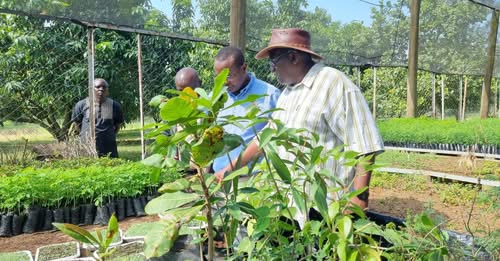
Currently, VFs has begun expanding its operations in Homa Bay aggressively at a cost of Ksh2.2 billion at Doho, Homa Hills, within Homa Bay, on a 100-acre site, which aims for a capacity of 50,000 tons of tilapia annually.

The site will become the second facility after the 50-acre plot at Roo, where they have built a 30,000-ton hatchery, employing over 1,000 locals.

Rheman stated that they are expanding further, which is expected to boost access to affordable tilapia for millions of Kenyans in partnership with the local community.

“We are excited to be launching a second farm to continue growing in Kenya. Kenya can produce its own fish; we always believe that, but by improving it, we can grow and supply everything at home,” he said.

This new project is undertaken by the company in partnership with the Homa Hills Community Development Organisation (HHDO), directly employing 400 people and indirectly supporting 3,000 others.

“There is a need for us to invest in our people; it is the most critical investment we can make in our community,” he said.

“We are not here for one fish pond and a few jobs; we are here to build the Doho site into the largest tilapia hatchery in the world,” said Rheman.

Beyond production volumes, the expansion aims to create employment opportunities across farming, logistics, and retail, strengthening supply chains nationwide.

Investment in technology

Rheman emphasised that for Kenya’s business growth, investing in technology is essential.

He noted that Kenya is the original home of tilapia, and Homa Bay is the home of Victory Farms, where most tilapia in the Kenyan market is currently farmed.

“For us to continue to grow and remain leaders, we must invest in technology, which is how we create long-term success,” he said.

“If Kenya is to be the world leader in tilapia farming, which I believe it will, we need to invest in technology, research, and development to do everything locally,” he added.

HEAP programme benefits farmers

The Homa Bay Extensive Aquaponics Programme (HEAP) is an innovative partnership between Victory Farms and local landowners, emerging as one of the region’s most promising rural economic empowerment models.

Through HEAP, smallholder farmers earn steady monthly royalties from fish-egg production on their underutilised land.

Victory Farms installs ponds on farmers’ land, stocks them with fish, manages the ponds, and harvests eggs weekly, paying farmers in return.

Landowners earn Sh1,200 per kilogram of harvested tilapia eggs, creating a reliable monthly income while supporting the company’s aquaculture supply chain.

“The HEAP model allows landowners to participate in our success. The goal is to bring families a reliable monthly income that can help them meet essential needs such as school fees and household expenses,” said Rheman.

Beyond income generation, the HEAP system boosts local food production through an integrated aquaponics approach.

Solar-powered pumps installed on the ponds regularly flush nutrient-rich water into nearby farms, where it is used to irrigate vegetables and other crops, creating a natural fertiliser system driven by fish waste.

“Landowners earn a steady monthly royalty based on the eggs harvested and are paid Ksh1,200 per kilogram of tilapia eggs,” revealed Rheman, “with some earning up to Sh30,000 per harvest cycle.”

The CEO mentioned that the ponds generate income for 10–11 months of the year, offering stability compared to traditional rain-fed agriculture.

“Since its launch, the HEAP project has empowered dozens of local pond partners with long-term financial stability to support household expenses like school fees. We are currently engaging 130 members of the Roo community in the programme,” he said.

Rheman assured that the company will replicate the programme and implement it for the people of Doho.

He also thanked Governor Gladys Wanga, who attended the event, saying that through her leadership, they have managed to build confidence in the community and government.

He also appreciated the trust she has placed in VFs to be an honourable employer that fosters business growth and development, adding that “confidence is the currency of investment.”

Wanga expressed gratitude to the Victory Group, noting that their efforts have combined modern practices and technology to help address Kenya’s growing protein gap, driven by declining wild fish stocks, rapid population growth, and persistent undernutrition.

She stated that through their fully integrated farming, processing, and distribution model, the company is scaling the production of affordable, high-quality tilapia for consumers.

Wanga urged residents and the entire community of Homa Bay to embrace the project, as it will create thousands of jobs both directly and indirectly.

“We are excited with VFs on their expansion of the farm to Homa Hills in Karachuonyo to come and set up a huge investment here,” she said.

“As the Governor of Homa Bay, I am very happy that in another five years, we will create nearly 400 jobs directly and an additional 3,000 indirectly for our people, as promised by the farm management,” she noted.

She, however, requested the management to consider locals when it comes to employment opportunities.

Ceazer Asiyo, the farm’s Chief Development Officer, thanked Wanga for transforming Homa Bay, known as the County of Endless Potential, into a genuinely enabling environment for serious investments.

Asiyo said that with her support, she has opened doors for serious investors to come to the county not only to make money but also to improve the lives of the locals.

“To the Homa Hills community, we are entering a long-term partnership grounded in trust, ambitions, and shared responsibility,” he said.

“We are committed to creating meaningful jobs, delivering impactful community projects, upholding the highest environmental and social standards, and honouring the history and aspirations of this land,” he added.

“Victory Farms is here as a long-term neighbour and partner, determined to turn promises into tangible progress for our county.”

Charles Ayieko of the Homa Hills Community Development Organisation (HHDO) said the region has been left behind in terms of development for a long time, urging the community to support and embrace the initiative for their benefit.

He noted that they agreed the farm will provide clean drinking water, create jobs, offer scholarships to local learners, build new roads, and support local farmers – tangible benefits that will touch every household as a way of giving back.

“For some time in the past, we have seen false starts with several investors, where agreements are made without involving the community, losing many opportunities,” he said.

“The experience has taught us one lesson: development must begin with our people and not end with them,” he added.

“The programme is not only an investment in land but an investment in the future of locals and the entire country,” he stated.

“The farm has promised to protect the environment by ensuring that our land and water remain safe for future generations,” he said.

“This land is cherished – our heritage – and we must all work to protect it,” he added.

The project will have an oversight committee to monitor progress, ensuring accountability and fairness, with representatives from the community, Victory Farms, the county government, and the HHDO.

He urged youths and women to seize the opportunity to learn, acquire necessary skills, and work to become part of VFs in the future.

Bafana Bafana: Victims of Xenophobia or Casualties of South Africa’s Image Crisis?

0

By Edris Omondi (Advocate)

By any football standard, the opening match of the 2026 FIFA World Cup should have been a moment of continental unity. When South Africa National Football Team walked onto the global stage against Mexico National Football Team, many expected Africa to rally behind one of its own.

Instead, social media revealed an uncomfortable reality. Across parts of Africa, support for Bafana Bafana appeared lukewarm, divided, and in some quarters openly hostile.

The reaction raised a difficult question: Was South Africa suffering the consequences of years of xenophobic violence against fellow Africans?

Football Usually Unites Africa

Historically, African football transcends borders.

When Senegal National Football Team reached the latter stages of major tournaments, Africans celebrated. When Morocco National Football Team stunned the world in the 2022 World Cup, the entire continent embraced their success. The same spirit has often followed teams from Ghana, Cameroon, Nigeria, Algeria, and Côte d’Ivoire.

African football supporters traditionally adopt a continental identity once their own nations are eliminated. A victory for one African nation is often viewed as a victory for Africa itself.

Yet South Africa appears to occupy a unique and increasingly uncomfortable position.

The Shadow of Xenophobia

For more than two decades, South Africa has periodically witnessed violent attacks against foreign African nationals.

Migrants from Zimbabwe, Mozambique, Malawi, Somalia, Ethiopia, Nigeria, Kenya, the Democratic Republic of Congo, and other African countries have often been targeted during outbreaks of violence. Businesses have been looted, homes destroyed, and lives lost.

While many South Africans have condemned these attacks, the images have travelled across the continent. They have become deeply embedded in the collective memory of millions of Africans.

The result is that many Africans no longer distinguish between the actions of violent groups and the image of South Africa as a nation.

When a football match occurs, these memories resurface.

For some observers, supporting South Africa feels emotionally difficult because they associate the country with hostility toward fellow Africans.

From Xenophobia to “Afrophobia”

Many scholars and commentators argue that the term “xenophobia” is inadequate.

Traditional xenophobia refers to fear or hatred of foreigners generally. However, critics note that many attacks in South Africa have disproportionately targeted black Africans from other African states rather than Europeans, Americans, or Asians.

As a result, terms such as “Afrophobia” or “Negrophobia” have increasingly entered public discourse.

The perception across Africa is that fellow Africans have been treated as outsiders despite sharing a common history of colonialism, liberation struggles, and Pan-African aspirations.

Whether that perception is entirely fair is debatable. What matters politically and socially is that it exists.

The Cost to South Africa’s Soft Power

South Africa was once viewed as Africa’s moral giant.

Following the end of apartheid and the leadership of Nelson Mandela, the country occupied a special place in global and continental politics. It symbolized reconciliation, democracy, and African leadership.

Today, repeated reports of xenophobic attacks have damaged that reputation.

The consequences extend beyond football:

  • Reduced continental goodwill.
  • Strained diplomatic relationships.
  • Negative perceptions among investors and tourists.
  • Challenges in advancing Pan-African leadership ambitions.
  • Growing skepticism toward South African influence in continental institutions.

Soft power is built on admiration and trust. Once damaged, it takes years to rebuild.

Bafana Bafana: Innocent Victims?

The players themselves bear no responsibility for xenophobic attacks.

Most members of Bafana Bafana are young athletes whose only objective is to represent their country with pride.

Yet national teams often inherit the political and social baggage of their nations.

Just as countries can benefit from positive international reputations, they can also suffer from negative ones.

In this sense, Bafana Bafana may be victims of circumstances beyond their control.

The team is judged not only by its football but also by the image of the country whose flag it carries.

A Warning Sign for South Africa

The mixed reaction to South Africa’s World Cup appearance should not simply be dismissed as social media noise.

It may represent a deeper warning sign.

The absence of widespread African solidarity toward Bafana Bafana suggests that parts of the continent feel alienated from South Africa. The emotional bond that once existed after apartheid may be weakening.

For a nation that aspires to continental leadership, this should be cause for reflection.

The Way Forward

Football offers South Africa an opportunity to rebuild bridges.

But lasting change will require more than sporting success.

It will require:

  • Stronger protection of migrants and refugees.
  • Consistent condemnation of xenophobic violence.
  • Greater Pan-African engagement.
  • Education promoting African unity and shared identity.
  • Accountability for perpetrators of xenophobic attacks.

Africa remembers who stood with it during times of struggle. It also remembers when its people feel rejected.

As Bafana Bafana compete on the world’s biggest stage, the real challenge facing

South Africa may not be winning football matches. It may be winning back the hearts of

Africans who once viewed the Rainbow Nation as their second home.

Until that happens, every major sporting event will continue to reveal a painful truth: the greatest opponent South Africa faces is not on the football pitch, but in the court of African public opinion.

“For God the crown belongs”: Migori YFC at All Saints Cathedral for dedication

0

By Anderson Ojwang

A precedent was set on Sunday. At All Saints Cathedral, Nairobi, Migori Youth Football Club took the crown to be blessed by the Head of the Anglican Church of Kenya, Archbishop Jackson Ole Sapit. While several winning teams take to street parades and celebrations, Migori YFC took a different and new path altogether – the Church.

After a torturous and tormenting journey, escaping relegation by a whisker last season and only to be declared the champions this season and automatically promoted to the Premier League was a milestone.

All Saints

For most of the players, it was historic. Worshipping at All Saints Cathedral was an achievement, a dream come true. Having the Head of the ACK Church, Archbishop Rev Jackson Ole Sapit, preside over the dedication was momentous.

It was their first time flying to Nairobi, and yesterday, at All Saints Cathedral, engaging with the Archbishop was a life-changing exposure for the team, the majority of whom come from very difficult backgrounds.

A buffet at a high-end Nairobi hotel marked a move to a new chapter.

Rev Canon Evans Omolo captured it all, saying: “The club draws its players from a very difficult background within Migori County. They are translating their youthfulness into meaningful members of society instead of joining the culture of goons that is being propagated by politicians for their own profiteering.”

Rev Ole Sapit said the achievement of the team was just a step towards greater things for the players and that they should never allow themselves to be used as goons.

“We are grateful for Migori Football Club because they came here to celebrate in the presence of God. At Moi Stadium in Embu, they were crowned champions. Today they have come to seek God’s blessing. This is a positive move,” he said.

Rev Owuor said gaining promotion after near relegation showed a sense of commitment and resilience in the team and its management to achieve success after 10 years of struggle.

“For the boys have served Migori County and are now shining lights. They are here to thank God for their achievement,” he said.

Rev Owuor challenged the team to ensure they are not relegated in their first season in the Premier League and should strive to remain a dominant player in the league.

“You don’t go back too soon. Stay in the Premier League. For parents and leaders, kindly discover, develop, and deploy the talent of young people to create economic paths.”

Ole Sapit thanked the management for nurturing the great talents and honoured those who use youths for the right cause. “Let all the politicians engage youths in economic activities and not as goons,” he said.

The patron, Mark Nyamita, said: “A special thanksgiving moment with Archbishop Ole Sapit, a former football player who once served as an MP. Faith. Wisdom. Blessings. Before the next challenge, we show gratitude. Today, I led our champions to church to thank God for a season written in gold. NSL Champions. FKF SportPesa League bound. To God be the glory. After church, it was time to share a meal and good conversation. Lunch with the boys and the technical bench, courtesy of a friend of the team.”

Migori Governor Ochilo Ayacko wrote: “What a memorable day at Embu Stadium as Migori Youth FC emerged champions of the Kenya Super League! This remarkable achievement has brought pride, joy, and celebration to Migori County. Congratulations to the players, coaching staff, and loyal fans for their dedication and support. Victory is home, and now we march proudly into the Kenya Premier League.”

Theatrics

They say success has many fathers while failure is an orphan scorned by many. So it was with Migori Youth Football Team’s success.

But the victory was not short of theatrics and comedy, as after the game, the two leaders retreated to their usual nickname banters.

The theatrics and comedy over nicknames in Migori County politics form part of the comic relief during public engagement by local leaders.

“Oyundi” is a small bird known for its laziness but often appears where success and food have been laid on the table, while “Chiwawa” is the domestic pet dog known for making noise but can never bite.

In Migori County, the political theatrics and banters between Governor Dr Ochilo Ayacko and Uriri MP Mark Nyamita have often created comic relief for the electorate and reached fever pitch.

Nyamita has nicknamed Ayacko “Oyundi” in reference to his traits and capped it with another, “Grandson of Sinakuru Lubanga ma Dogman,” while Ayacko in retaliation refers to Nyamita as “Othuogo” because of his height.

Last Sunday at Migori Stadium, Chiwawa and Oyundi converged to cheers as Migori Youth Football Club played their defining game against Equity Football Club.

Ayacko, for the first time, came to the stadium to be part of history-making, while Nyamita, the patron, was also present to be part of history.

Migori FC, which last season survived relegation, rewrote their story to be crowned National Super League champions.

Ayacko promised the team that before the kick-off of the new season, the construction of Migori Stadium would be complete to host home games.

Sources also told Western Insight that Ayacko was even proposing the possibility of the county government sponsoring the team.

But Nyamita has gone ahead to open the team to a new class of engagement by flying the team to Nairobi and Embu for their final game.

Chiwawa scored the first one over Oyundi by ensuring that for the first time, the team enjoyed a flight to Nairobi, opening a new chapter in their dispensation.

Beyond Gachagua: Can Constitutional Wrongs Be Reduced to Damages?

0

Part II: The Remedy Question, Electoral Sovereignty, and the Limits of Judicial Intervention

By Edris Omondi (Advocate)
edris@crimeprevention.net

Edris Omondi is a lawyer and a crime prevention practitioner and the Executive Director of the Crime Prevention Initiative Trust (CPIT), Kisumu. He works on behavioural approaches to crime prevention, governance, and social policy.

The publication of my earlier article, “When Impeachment Becomes Wrongful Termination: The Constitutional Question Facing Kenya’s Courts,” generated extensive reactions from lawyers, judges, law students, political actors, and ordinary Kenyans across the country.

What has been particularly encouraging is not whether readers agreed or disagreed with the arguments advanced. Rather, it is the realisation that many Kenyans are increasingly taking time to read court judgments, interrogate constitutional questions, and engage critically with legal reasoning. Constitutional democracy thrives when citizens move beyond political slogans and begin examining the legal foundations upon which State power is exercised.

Several readers raised thoughtful questions that deserve further analysis. Some agreed that impeachment cannot be equated to ordinary employment termination. Others questioned the nature of the remedy granted by the court. A number pointed to historical constitutional controversies where courts identified violations but left unresolved the structural issues that made those violations possible.

These observations raise a broader question that goes beyond the impeachment of former Deputy President Rigathi Gachagua:

When courts identify constitutional wrongdoing, are they merely compensating victims, or are they restoring constitutional order?

That question may ultimately define the legacy of this case.

The Forgotten Principle: Courts Only Determine What Is Brought Before Them

One of the most important observations emerging from public debate concerns the appellate process itself.

Many commentators have assumed that the Court of Appeal of Kenya will automatically address every constitutional issue arising from the impeachment.

That is not how appellate litigation works.

Courts do not roam freely through constitutional controversies searching for issues to determine. They are constrained by the pleadings, grounds of appeal, evidence, and legal arguments presented before them.

This is a critical point.

The Court of Appeal may very well agree that profound constitutional questions exist regarding: the nature of Senate impeachment proceedings; the relationship between popular sovereignty and impeachment; the scope of remedies available after unconstitutional removal; and the institutional consequences of an unlawful impeachment.

However, the court can only determine those questions if they are properly raised and argued by the parties.

The quality of the appeal may therefore become just as important as the quality of the judgment being challenged.

The Constitution can only answer questions that litigants actually ask.

The Jurisdictional Puzzle Remains

Among the most compelling observations raised after publication of the first article concerns jurisdiction.

If the injury suffered was essentially personal and compensable, what distinguishes it from a wrongful removal dispute?

This question is not merely academic.

Kenya’s constitutional architecture deliberately created specialised courts, including the Employment and Labour Relations Court, to handle employment and labour disputes.

No serious constitutional scholar would argue that the office of Deputy President is an ordinary employment relationship. The Deputy President is not recruited through an employment contract, supervised by an employer, or removable through ordinary disciplinary procedures.

The office exists because the people created it through the Constitution and fill it through elections.

Yet this is precisely why some observers find the remedy difficult to reconcile with the reasoning.

The more the remedy resembles compensation for loss of office, the more one is tempted to ask whether the constitutional injury has been transformed into something resembling wrongful dismissal.

And if it has, what does that mean for the constitutional character of impeachment itself?

These questions deserve serious appellate consideration.

Can Courts Award What Was Never Asked For?

Another concern repeatedly raised by readers relates to judicial remedies.

Kenyan jurisprudence has long maintained that parties are generally bound by their pleadings.

Courts determine disputes presented before them; they do not ordinarily invent claims or remedies that litigants never sought.

Constitutional litigation admittedly provides greater flexibility.

Courts are empowered under Article 23 to craft innovative remedies capable of vindicating constitutional rights and freedoms.

But even constitutional remedies require legal justification.

They must be anchored in principle.

They must be supported by evidence.

They must be rationally connected to the constitutional injury identified.

This is where the debate becomes particularly interesting.

If compensation was appropriate, how was the figure determined? What constitutional principle guided the award? What evidence informed the quantum? And perhaps most importantly, what constitutional objective was the award intended to achieve?

The answers to these questions may become central issues on appeal.

The Lessons From Kenya’s Electoral Jurisprudence

Several readers drew comparisons with the historic presidential election petition of 2017.

Whether one agrees with those comparisons or not, they raise an important constitutional concern.

The Supreme Court’s decision to nullify the presidential election was celebrated globally as a bold affirmation of constitutional supremacy.

The court found that constitutional and legal standards had not been met.

Yet many observers argued that while the election was nullified, the deeper institutional failures that produced the irregularities were never comprehensively resolved.

The subsequent political developments, including the boycott of the repeat election by Raila Odinga, exposed the difficulty of addressing constitutional violations without fully curing their underlying causes.

The lesson is not that the court was wrong to intervene.

Rather, the lesson is that constitutional remedies must be capable of addressing the constitutional problem itself.

Otherwise, courts risk treating symptoms while leaving the disease untouched.

That concern now resurfaces in the impeachment debate.

If the Senate’s process was indeed unconstitutional, then the question is not merely whether someone should be compensated.

The larger question is whether the constitutional defect that produced the unlawful outcome has been corrected.

The Sovereignty Question

At the heart of this matter lies Article 1 of the Constitution.

Sovereign power belongs to the people.

The President and Deputy President derive their authority directly from voters.

This makes impeachment fundamentally different from disciplinary proceedings involving public officers.

An impeachment does not merely affect the office holder.

It alters the outcome of a democratic choice.

This is why some constitutional scholars argue that an unlawful impeachment creates two distinct injuries.

The first injury is personal. The office holder loses office, status, benefits, and reputation.

The second injury is constitutional. The electorate loses the benefit of its political choice through a process that may not have complied with constitutional standards.

Compensation can address the first injury.

Whether it can address the second remains an open constitutional question.

The Court of Appeal’s Constitutional Opportunity

The appeal presents a rare opportunity for constitutional clarification.

The Court of Appeal need not determine whether one supports or opposes Gachagua.

It need not enter political contests.

Its task is much larger.

The court has an opportunity to define: the constitutional nature of impeachment; the obligations imposed upon the Senate when exercising impeachment powers; the distinction between personal rights and institutional constitutional duties; the relationship between popular sovereignty and parliamentary accountability; and the remedies available when constitutional office holders are removed through defective processes.

These issues will outlive the current political moment.

Future Presidents, Deputy Presidents, Governors, and other constitutional office holders may all be affected by the principles established in this litigation.

A Case Bigger Than Its Parties

Ultimately, the significance of this case lies in the fact that it is no longer merely about one politician.

It is about how constitutional democracies respond when institutions exercise immense power.

The Constitution anticipates that mistakes will occur.

It anticipates that public bodies may occasionally exceed their authority.

What matters is how the legal system responds.

Does it merely compensate individuals after the fact? Or does it restore and protect the constitutional order that has been disturbed?

That is the question now moving toward the appellate courts.

And it is a question that every Kenyan, regardless of political persuasion, should care about.

For constitutional democracy is not tested when institutions behave perfectly.

It is tested when they do not.

And the true measure of constitutionalism is not whether courts can identify wrongdoing, but whether they can fashion remedies that protect both individual rights and the sovereignty of the people.

Lorot, Nyirarukundo Win LOOP Safari Gravel Series in Naivasha

0

BY PHILLIP ORWA

Uganda’s Lawrence Lorot and Rwanda’s Claudette Nyirarukundo won the men’s and women’s races of the second leg of the 2026 LOOP Safari Gravel Series, held today at Hell’s Gate National Park.

The event drew 956 cyclists from across the world, a record number for a leg since the inception of the Series in 2024.

The 21-year-old Lorot won the race after clocking 3:29:04, closely followed by Stanley Ngugi, who timed 3:29:05, with Ivan Kipruto rounding up the podium finish with a time of 3:29:22.

“It was a brutal pace, and you could feel the tension every kilometre. In the last few hundred metres, I just gave everything I had. Those one-second margins are what make racing special – you can train for months and still have to trust your instincts in the sprint. I am so happy to come here and win today. I have been racing more on the road, and I am just getting into gravel. I look forward to more wins on the gravel.”

In the women’s 100KM race, Nyirarukundo crossed the line in 4:16:52, narrowly defeating Sarah Diekmeyer by one second (4:16:53), with Theresa Rindler completing the women’s podium in 4:27:23.

“The race was everything I hoped for and more. It was fast, tactical, and unpredictable,” said Nyirarukundo, who added: “We rode as a tight group for most of the day, and it came down to pure determination at the finish. I was second last year here, and I am happy to step onto the podium as the winner this time around.”

The 60KM men’s category was won by Michael Matindi, who took the win in 2:16:18, followed closely by Ravan Ngugi (2:16:19) and Kelvin Kamore (2:32:44).

The 60KM women’s category was won by Jacinta Wanjiru in 3:01:24, with Marit Luijckx coming in second (3:18:11) and Faith Kangichu third (3:42:21).

Eric Muriuki, CEO of LOOP Digital Financial Services, said: “Today’s turnout of 956 riders and the calibre of competition demonstrate that LOOP Safari Gravel has matured into a marquee event on the continent, being one of only four UCI Gravel World Series Qualifiers in Africa. Our goal has always been to build an inclusive, challenging platform that elevates gravel cycling in Africa, and today, we witnessed that vision in full. We thank the athletes, volunteers, partners, and Hell’s Gate National Park for making this edition unforgettable.”

Up next on the Series calendar is the Vipingo Ridge edition in August.

The LOOP Safari Gravel Series is organised by the Amani Project, an initiative focused on developing and supporting athletic talent across the region, with support from LOOP DFS as the title sponsor.