Home Blog Page 9

SAVE COSTS BY ADOPTING UTILITY CORRIDOR DEVELOPMENT IN MIGORI

0

By Billy Mijungu

For safety, effectiveness and cost reasons, the integrated installation of utilities during road construction brings continuous advantages across the entire lifecycle of infrastructure. It ensures that once a road is completed, it remains undisturbed for long periods, eliminating the need for repeated digging that often weakens road surfaces and increases maintenance costs.

By placing water, sewer, electricity and broadband systems together in a planned corridor, construction becomes more efficient, saving both time and public funds while improving coordination among agencies. This approach also enhances safety, as organized utility layouts reduce the risk of accidental damage during repairs or upgrades.

In addition, it supports better urban planning by creating a cleaner, more structured underground environment, which is especially important for growing towns in Migori County. Service delivery becomes more reliable since faults can be identified and fixed faster through accessible ducts or tunnels. It also encourages future expansion, as additional lines can be added with minimal disruption.

Environmentally, it reduces waste and emissions associated with repeated excavation works. Overall, this method promotes durability, efficiency, cost-effectiveness and smarter infrastructure development, making it ideal for modern road projects.

Other references to this method include Integrated Utility Infrastructure (IUI), Multi-Utility Duct System (MUD), Common Utility Trench (CUT), or Utility Ducting / Utility Tunnel System, but the objective remains the same.

Even the National Government should explore these possibilities more deliberately. Companies within the telecommunications industry have already begun adopting these cost-saving measures and are now competing based on service delivery rather than constantly reworking infrastructure layouts.

For upcoming towns within the County, early planning is critical so that future service providers can simply plug into an already established system. It is comparable to wiring a building and installing sockets in advance—what remains is simply plug-and-play.

Follow on Facebook, X, Instagram, TikTok and LinkedIn @BillyMijungu

Forward #TusongeMbele #Change

Ochillo has fallen short of his mandate as Migori Governor – Former Woman Representative Dr. Odhiambo

0

By Habil Onyango

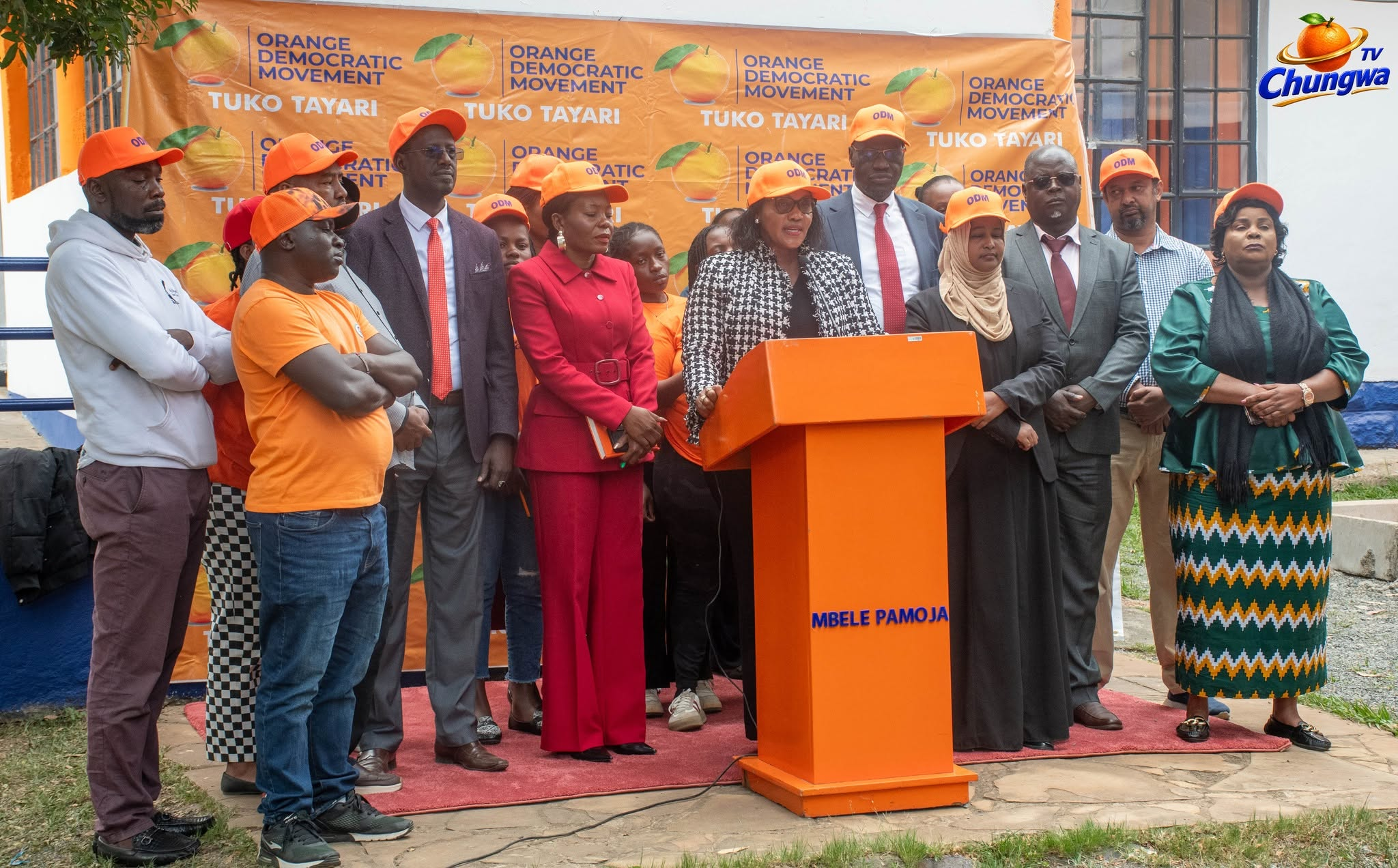
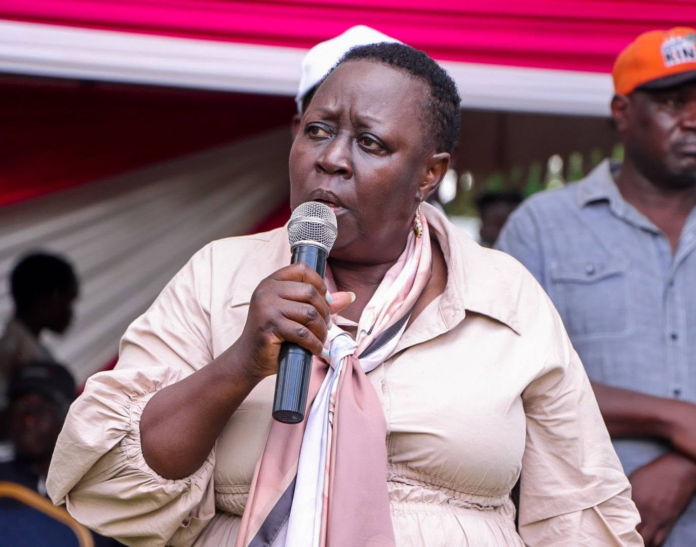
The race for the Migori 2027 Governor seat continues to gain momentum with the entrance of former County Woman Representative Dr. Pamela Odhiambo, joining a growing number of aspirants.

Dr. Odhiambo has vowed to make Ochillo Mbogo Ayako a one-term governor in the next general elections.

She joins other leaders, including Uriri Member of Parliament Mark Nyamita and Peter Masara, who have been making inroads across the county to unseat Ayako.

According to Dr. Odhiambo, who served as the Migori County Woman Representative from 2017 to 2022 in the 12th Parliament, the current Migori County Government under the leadership of Ochilo Ayacko has fallen short of its mandate.

“As I highlight the projects I successfully undertook through NGAAF, it is evident that the current Migori County Government under the leadership of Ochilo Ayacko has fallen short of its mandate,” she said.

“Many county-funded projects, including several market facilities, remain underutilized or unable to operate at full capacity due to poor planning and implementation,” added Dr. Odhiambo.

According to her, with over Ksh. 12 billion allocated to the county annually, residents expected transformative development in healthcare, infrastructure, agriculture, water, and youth empowerment.

Unfortunately, she regrets that the county leadership has little to showcase for these massive allocations.

“Migori deserves better. The current governor should consider taking a sabbatical leave to reflect, re-energize, and learn from effective leadership,” she noted.

“Come the next general election, I am ready to offer visionary, accountable, and results-oriented leadership that will unlock Migori County’s full potential and deliver tangible development to our people,” she said.

Dr. Odhiambo said that it is only in Migori where a governor cannot confidently stand before the people and account for development projects undertaken across all constituencies despite the billions allocated to the county every financial year.

Call for accountability

“Of late, the governor who proudly calls himself “Nyakwar Sinakuru” has resorted to hoodwinking electorates by claiming that mentioning projects completed during his four years in office would “waste people’s time,” yet he comfortably goes ahead to list projects implemented by the national government,” she alleged.

Dr. Odhiambo said that Migori residents deserve honest leadership, accountability, visible development, and proper utilization of public resources.

“Leadership is about service, not empty rhetoric and borrowed achievements,” said the governor hopeful.

“Come next year, 2027 general elections, I, Dr. Pamela Odhiambo, am fully prepared to show him dust at the ballot,” she assured her supporters.

She added that the people of Migori County deserve better, and together, they shall usher in a new era of transparency, development, and inclusive leadership.

Youth empowerment

On youth empowerment, Odhiambo regretted that many qualified youths continue to struggle for employment despite their skills and dedication.

She blamed the current county leadership, saying it has failed to adequately prioritize the empowerment and placement of young professionals, leaving many feeling excluded from the county’s development agenda.

“As I prepare to take up the mantle of leadership after next year’s elections, I remain committed to building an inclusive county government that values merit, talent, and equal opportunity,” she said.

“My administration will work towards creating a conducive environment where our young professionals can thrive and actively contribute to the growth and transformation of Migori County,” Dr. Odhiambo promised.

When CV and academic credentials become the yardstick in Kisumu gubernatorial debate, goon politics takes a backseat

0

By Anderson Ojwang

Renowned Nigerian writer Chinua Achebe, in his book Things Fall Apart, wrote: “When the dry bones are mentioned, the old feel uneasy.”

In the Kisumu gubernatorial race, the debate on curriculum vitae and academic credentials is likely to cause unease among some aspirants.

Indeed, things may start to fall apart, not only for gubernatorial aspirants but for various elective posts in Kisumu County and Nyanza at large.

The emerging CV and academic conversation is likely to radically change the old order in the Orange Democratic Movement (ODM), where nominations of candidates for various elective posts were based on other preferential factors with least consideration for education.

Aduma’s thunderbolt

Nyakach MP on Saturday opened the academic battlefront by saying Kisumu County cannot afford to vote in a nurse instead of a professor.

“The Governor’s seat requires one with a degree. How does Kisumu leave a professor and go for a nurse officer to be the governor?” he asked.

Founding Governor Jack Ranguma last weekend doubted some of the academic credentials of some of the gubernatorial aspirants.

“I highly doubt some of the aspirants who call themselves with some non-existent academic prefixes; they must be called out. We know the history of education of our people, and we will soon tell the truth,” he said.

Kisumu Deputy Governor Dr Mathews Owili said sound academic excellence and managerial competence were some of the ingredients required in the next Kisumu governor.

The CVs of the two governors

Ranguma

The founding governor, Ranguma, is a former Kenya Revenue Authority Commissioner of Income Tax and later Domestic Taxes. In 2008, he became a senior policy advisor for Taxes Justice Network Africa, a Pan-African organisation.

He holds a Master of Science (International Accounting and Management Information Systems) from the University of Illinois at Urbana-Champaign.

Prof Nyong’o

The incumbent, Prof Anyang’ Nyong’o, is a respected academic, having taught at the University of Nairobi, where he was a professor of political science, and a visiting professor at universities in Mexico and Addis Ababa.

From October to December 2013, Nyong’o was a Brundtland Senior Leadership Fellow at the Harvard T.H. Chan School of Public Health.

In 2023, UN Secretary-General Antonio Guterres appointed Nyong’o to his Advisory Group on Local and Regional Governments, co-chaired by Pilar Cancela Rodriguez and Fatimatou Abdel Malick.

Aspirants

The gubernatorial seat has attracted several aspirants, including Ranguma, Deputy Governor Dr Mathews Owili, Kisumu Central MP Dr Joshua Oron, Nyakach MP Aduma Owuor, Kisumu Senator Prof Tom Ojienda, Kisumu Women Representative Ruth Adhiambo Odinga, and Kisumu West MP Rosa Buyu.

The declaration will see Kisumu Central, Nyakach, and Kisumu West producing new MPs, as will the seats of Senator and Women Representative.

The goon politics

Kisumu county politics had degenerated into a goon paradise, with the majority of aspirants using them to harass their opponents.

The first casualty of goon politics was Vihiga Senator Godfrey Osotsi, who was attacked at Kisumu’s Java restaurant. Osotsi suffered injuries and was admitted to Kisumu Aga Khan Hospital before being airlifted to Nairobi’s Karen Hospital.

At the burial of the father of Seme MP Dr James Nyikal, goons disrupted the function, nearly killed his son, and forced Siaya Governor James Orengo to walk out of the burial.

Nyikal, the chairman of the Luo MP caucus popularly known as “Duol,” was not impressed at his father’s burial and called on Prof Ojienda to rein in his goons.

The chaos briefly disrupted the funeral programme and forced security officers to escort Orengo out of the venue to a safer exit.

Nyikal, the bereaved, lamented that the goons nearly killed his son at his father’s burial and was forced to ask Kisumu Senator Prof Tom Ojienda to go out and calm his goons.

“They nearly killed my son. I walked there to Senator Ojienda and asked him, ‘These people came with you. Can you tell them to stop?’ Senator, were you able to stop them?” he asked.

Nyikal said popularity is like love and cannot be bought with money, and wondered why fellow politicians walk to funerals in the company of goons.

“Let us be truly popular. Let us be able to walk to a funeral alone. I think popularity is like love. You cannot buy it with money. You may get it with money, but it will be lust,” he said.

Maseno South Bishop Rev Charles Onginjo accused politicians of encouraging the culture of handouts in the community and taking advantage of the poverty among the youths.

He said politicians have formed a bad habit of transforming youths into political goons by exploiting their economic constraints for their own good.

“You are reducing our people to dogs and beggars. Stop cheating our people and riding on the ignorance of the people. It’s a very unfortunate culture we are developing,” he said.

Rev Onginjo challenged the politicians to develop a culture of truth and honesty to avoid sinking the community into beggary.

“If you walk around with goons, thinking you are popular, then you are cheated. That doesn’t make you popular. Empower the youths and make them economically independent,” he said.

On Saturday, Aduma accused one of the MPs of allegedly sponsoring goons in the lake town and failing to come out to condemn the act.

The emergence of issue-based politics at the gubernatorial level is likely to escalate to the lower seats and provide the electorate with the opportunity to elect credible representatives.

REGENERATION PROGRAMS FOR MIGORI’S 12 MAJOR TOWNS

0

By Billy Mijungu

Migori’s urban future will not be shaped by chance—it must be engineered through deliberate, structured regeneration.
A practical pathway already exists: a legally anchored, renewable three-year framework contract for town regeneration, backed by ring-fenced budgets. This is not an abstract idea—it is a governance decision.

The program should deliver continuous tarmacking of town streets, modern drainage systems, coloured cabro walkways, and clearly defined lanes for pedestrians, cyclists, and motorcycles. Complemented by solar-powered street lighting and integrated CCTV systems, these interventions will restore order, enhance safety, and create an environment where enterprise can thrive.

Critically, implementation must be devolved further to empowered town-level leadership—through legally recognized offices such as a Mayor or Town Chairman—supported by a lean but highly accountable technical secretariat. This structure ensures decisions are local, execution is faster, and accountability is visible. Coordination with ward and constituency administrators will anchor the program at the grassroots.

Urban order is not cosmetic—it is economic infrastructure. Well-organized towns attract investment, formalize businesses, and expand the tax base without increasing tax rates. Through structured public-private partnerships, waste management becomes efficient, compliance improves, and municipalities generate more revenue from the same economic activity.

This transformation does not demand new money—it demands discipline in how current resources are planned and deployed. Reprioritization, not expansion of budgets, is the key.

Beyond physical infrastructure, regeneration must integrate knowledge infrastructure: public libraries, technology hubs, and prior learning certification centres to uplift artisans and the informal sector. Standardizing vocational and informal learning spaces will further unlock productivity and dignity of work.

The choice before Migori is clear: planned growth or unmanaged expansion. One creates opportunity; the other entrenches inefficiency.
Regeneration is not optional—it is foundational. Towns do not fix themselves. They are built, managed, and sustained through leadership that treats responsibility as duty, not privilege.
Migori can—and must—become orderly, competitive, and forward-looking. The time to act is now.

How the 40 minutes’ drive in response to the daughter’s distress call at Utumishi Girls rewrote the Koskei family’s life and story

0

By Anderson Ojwang

It was meant to be a 40 minutes’ drive. A drive in response to a daughter’s distress call. A rescue mission. The supposed 40-minute drive and the rescue operation turned into pain, heartbreak, and tragedy.

On Saturday, in Kapkures Ward, Nakuru Town West Sub-County, stood the heartbreaking testimony of the 40-minute drive and rescue operation.

In the casket lay the mother and wife, Faith Chepkemoi Koskei, and on the wheelchair, wheeled straight from his hospital bed to witness the last ceremony of his love, sat pensively, Wakili Emmanuel Koskei.

After undergoing two successful surgeries, Koskei was expected to return to the hospital after the service to undergo a third operation.

Faith died on her way to Utumishi Academy in Gilgil following a fire tragedy that left 16 girls at the school dead. Nine suspects were recently arraigned in court and have been remanded for 21 days at Nakuru Children’s Remand Home.

Naivasha Court Chief Magistrate Abdulqadir Ramadan ordered the detention of the suspects and denied the release of the minors on bond or bail, saying the reasons advanced by the prosecution were compelling.

Emotional drain

The cloud was thick and pregnant with emotional turmoil. The unusual stealth silence spoke loudly of the profound pain and sad moment the mourners, relatives, children, and husband found themselves in at the burial service of Faith.

The presence of Wakili Koskei on a wheelchair with white bandages strapped on his limbs, and medical aides wheeling and monitoring him, sent the mourners into tears.

When he took the microphone to eulogise the love of his life, in a soft, slow voice, calm but wrenched in pain, Wakili said: “My love, I release you with a promise: I will take care of our beautiful child.”

The Moment

“The relationship of more than 22 years has just come to an end. My best friend, confidant, and pillar… My base has just left me. She was a pillar, the way my sister-in-law said. For me to be what I am, to wake up in the morning and go to work for all those years, it is because of her.”

The path

“She chose a path which I don’t think any other educated, graduate lady can take. Right from our first born, Abel, Patience, and Baraka, she told me: ‘I need no maid to take care of my kids.’ So all my children never passed through the hands of a maid, and it was her choice.”

A woman of all seasons

“We did not live a rosy life all through, and I call her an all-season woman. Whenever we were down, just like any other family, none could know that we were down as a family. My children have called her a name and saved her in their phones. I know in Abel’s phone, he has saved her as Wonder Woman.”

The 40 minutes

“I have released you. I have accepted to release you. We were going for our daughter because of the distress call. I could only do what a father can do. If Patience could have been in Mombasa, I would have planned to travel the following one. I saw it was only 40 minutes away, and I would be in school. Little did I know that that was our last journey.”

The promise

“The children we have had together, as my father-in-law has said, I will take care of them as long as I am living. So be rest assured wherever you are that they are happy.”

The last treasure

“Two months ago, I looked for that message. She wrote a long text. I was in Nairobi. At 3.00 am, as usual, you can check your phone, and I saw a message. I only read three paragraphs and told myself, in the morning, I will finish reading it all. Everything was appreciation. She wrote about Abel from the day he was born until the day he went to Mombasa and to date. She wrote about Patience and Baraka. She then concluded by writing about ourselves, the two of us. How I approached her in Moi University. How we met. She was very clear to write to me that you didn’t even tell me ‘excuse me.’ I told her I was brought up in the savannah.”

Love beyond the boundary

“Thank you for the time we have had together. Thank you for the love. Thank you for loving our children. Wherever we lived, I never heard anyone saying you had abused her or him. My village and neighbours here, you can bear me witness: my wife does not have any debt, not even Sh100 owed to anyone. I thank you for the time God gave us together,” he said.

Kericho Governor Dr Erick Mutai described Faith as a loving mother and wife who was the rock of the family.

“One day, we engaged in a late political discussion with Wakili. The wife called. He gave me the phone to talk to her. I excused myself and asked her for an additional two years before my friend could go home. Koskei respected and loved his wife; he didn’t want anything that interfered in their marriage,” he said.

Nakuru Governor Susan Kihika said the death of Faith was tragic and wished the family well.

Memorial service

On Friday, a joint memorial service was held for the 16 girls who lost their lives in the tragic Utumishi Academy school fire.

Fifteen hearses were lined up at the Naivasha Funeral Home and transported the bodies to the memorial service, after which they were released to their respective families for burial ceremonies.

Why Senator Kajwang’ believes the country must take early warning systems seriously

0

By Habil Onyango

Persistent and heavy rainfall in Karachuonyo, within Homa Bay County, and other parts of the Nyanza region have caused major rivers, such as Miriu, Kibuon, and Awach Tende, to burst their banks, displacing hundreds of families and submerging vast tracts of farmland.

Many residents of Kano Plains in Kisumu County also live under the constant threat of devastating floods caused by River Nyando overflowing its banks and backflow from Lake Victoria.

Hundreds of families are typically displaced and seek shelter in Karachuonyo, often camping at local centres such as Simbi Dispensary, Kandiege Primary School, Koyugi, and Yala Primary School.

Overcrowded camps and a lack of adequate mosquito nets have raised concerns over waterborne diseases and malaria outbreaks.

Government and aid relief organisations such as World Vision and the Kenya Red Cross have always been actively responding, conducting household assessments and providing emergency aid.

Global and local weather agencies, including the National Oceanic and Atmospheric Administration (NOAA) and the Kenya Meteorological Department (KMD), have issued an official El Niño warning.

Forecasters project an 80-96 per cent likelihood of a moderate to potentially “super” El Niño developing, which could lead to a stark shift from dry conditions mid-year to heavy, disruptive floods toward the end of 2026.

However, according to Homa Bay Senator Moses Otieno Kajwang’, the Kenyan government must rely on early warning systems, which indicate an 80-90 per cent chance of El Niño.

He emphasised that this is crucial for activating emergency protocols, protecting public health, and safeguarding climate-sensitive sectors like agriculture.

Furthermore, the Senator urged politicians from flood-prone regions to find permanent solutions to the recurring crisis.

Kajwang’ stated that residents in flood-prone areas like Karachuonyo Constituency and other parts of Nyanza should not wait until the rains start to call for help.

He suggested the country focus on building dams at Magwagwa and the Soin-Koru multi-purpose project to permanently address the ongoing crisis.

“I am pleased that Finance Cabinet Secretary John Mbadi, when presenting the budget, indicated that funds have been allocated for the Soin-Koru Multi-purpose project,” he said.

“While this may be a long-term solution, as a nation, we must also start constructing dykes and making early preparations before the El Niño phenomenon begins.”

According to the KMD, global forecasts indicate that El Niño conditions could develop in 2026, significantly affecting weather patterns across Kenya.

Most models suggest the event will be at least moderate, possibly strong.

“While forecasts remain subject to change, there is an 80-82 per cent chance of El Niño occurring between June and August 2026, with probabilities near or above 90-96 per cent for it to persist through the end of 2026,” they warned.

“This phenomenon typically impacts Kenya and the East Africa region in various ways,” they added.

Kano Plains flooding

According to Kajwang’, both the national and county governments, under the leadership of Governor Gladys Wanga and other Nyanza counties, must ensure they have effective early warning systems.

Kajwang’ described it as embarrassing and a sign of poverty that people rely on relief food labelled GOK every year due to inadequate preparedness.

In Homa Bay, heavily affected areas include Kobala, Kanyango, Kawuor, Kojwang, and Kobala.

However, Internal Security Permanent Secretary Dr Raymond Omollo noted that the government has implemented lasting flood mitigation infrastructure in the Kano plains to restore dignity, productivity, and stability.

He highlighted the West Kano-Kanyagwal flood control project in Kadibo sub-county, Kisumu County, managed by the National Water Harvesting and Storage Authority (NWHSA).

“For years, the call of ‘Serikali siadie’ echoed across the Kano flood plains whenever River Nyando overflowed and Lake Victoria backflows caused destruction,” he stated.

“The ongoing flood mitigation infrastructure project is transforming the region, offering hope and stability.”

He explained that the project is reclaiming nearly 7,000 hectares of farmland through the construction of a 3.5 km flood protection dyke, drainage system rehabilitation, upgrades to high-capacity pumping systems, and environmental bio-stabilisation through large-scale grassing and tree planting.

A community footbridge has been built to improve government connectivity and accessibility for residents.

“The intervention is now protecting 2,230 acres of the West Kano irrigation scheme, safeguarding almost 1,000 farmers from repeated crop losses and enabling displaced families to rebuild homes after five years in camps,” Omollo said.

“To ensure the project’s sustainability, the State Department of Internal Security and the National Administration continue coordinating disaster preparedness, community awareness, and emergency response efforts across flood-prone areas, working closely with local leaders and national agencies to strengthen resilience against future climate disturbances,” he added.

The World Meteorological Organization (WMO) also urges nations to strengthen their early warning systems.

Three suspects in connection with drug trafficking worth Ksh1.2 million arrested in Homa Bay

0

By Habil Onyango

The police in Rachuonyo North Sub-County, Homa Bay County, have seized cannabis sativa (bhang) worth Ksh1.2 million while arresting three suspects.

According to the National Police Service, a multi-agency security team in Homa Bay County conducted a successful operation in Rachuonyo North Sub-County, arresting three suspected drug traffickers and seizing a large consignment of cannabis sativa (bhang) with an estimated street value of Ksh1.2 million.

The team comprised police officers from Kendu Bay Police Station and National Government Administrative Officers (NGAO), including the Area Chief of Rambira Location and the Assistant Chief of Kamser Seka Sub-Location.

During the raid, security officers recovered 636 rolls of cannabis sativa packed into two green sacks and one white carrier bag.

The three suspects were escorted to Kendu Bay Police Station and placed in custody, pending processing and arraignment in court. The recovered narcotics are also being securely kept at the station as exhibits.

The National Police Service commends the seamless collaboration between station officers, local administrators, and residents. This operation underscores their unwavering commitment to eradicating drug trafficking and protecting communities from illicit substances.

“We encourage members of the public to share information on criminal activities through the nearest police station,” they noted.

When Impeachment Becomes Wrongful Termination: The Constitutional Question Facing Kenya’s Courts

0

By Edris Omondi (Advocate)
edris@crimeprevention.net

Edris Omondi is a lawyer and a crime prevention practitioner and the Executive Director of the Crime Prevention Initiative Trust (CPIT), Kisumu. He works on behavioural approaches to crime prevention, governance, and social policy.

The debate surrounding the impeachment of former Deputy President Rigathi Gachagua has largely been reduced to political loyalties. Some view the matter through the lens of personalities, alliances, and political victories. Others see it as a contest between supporters and opponents of an individual.

But beneath the political noise lies a far more important question: what does the Constitution actually require when a democratically elected constitutional office holder is removed from office?

This is not a question of whether one supports or opposes the former Deputy President. It is a question of whether Kenya’s constitutional architecture has been properly understood.

The emerging and anticipated appeals before the Court of Appeal of Kenya will definitely raise profound constitutional issues.

The first task before the Court of Appeal would be to determine whether an unlawful impeachment is merely an injury to an individual removed from office, or whether it is an injury to the constitutional order and for that matter an injury to the voters who entrusted that person with office.

That distinction may determine the future of impeachment law in Kenya.

The Senate: Parliament or Constitutional Tribunal?

The starting point must be the understanding of the special role of the Senate.

Under the Constitution of Kenya, 2010, the Senate is primarily a legislative and representative institution. It represents counties, participates in legislation, and exercises oversight.

However, when it handles impeachment proceedings under Articles 145 and 150, its role changes.

It does not merely debate.

It does not merely take a political vote.

It performs a constitutional adjudicatory function.

In that moment, Senators are not acting only as politicians. They are required to determine whether allegations against a constitutional office holder have been proven through a fair process.

This does not transform the Senate into a court.

It remains Parliament.

But it means that constitutional fairness applies.

A body exercising a power that can remove an elected constitutional office holder must exercise that power within constitutional boundaries.

The Fair Hearing Question

A significant misunderstanding in this debate is the assumption that the issue is simply whether the Deputy President had a personal right to a fair trial before the Senate.

That may not be the correct constitutional framing.

The Senate is not a court where ordinary citizens appear for trials. Its primary role is not judicial.

The issue is broader:

When the Senate exercises an extraordinary constitutional power, does it have a duty to conduct that process fairly?

The answer must be yes.

The obligation arises not merely because the individual before it has personal rights, but because the Constitution demands that public power is exercised lawfully, rationally, and fairly.

The Senate’s responsibility is therefore not only owed to the person facing removal.

It is owed to the Constitution and to the Kenyan people.

The Problem With Treating Impeachment Like Employment Termination

This is where the criticism of the High Court reasoning becomes important.

If the constitutional injury is reduced to a private violation suffered by the individual, the remedy naturally becomes compensation.

The logic becomes: a person was unlawfully removed; therefore, compensate that person.

But impeachment is fundamentally different from ordinary dismissal.

A Deputy President is not an employee.

A Deputy President is elected by the people on a joint ticket with the President.

The office represents the sovereign choice of citizens under Article 1 of the Constitution.

Therefore, if that office is unlawfully taken away, the injury is not limited to the individual.

The injury is also democratic.

The question becomes: can damages restore the constitutional choice of millions of voters?

The answer is difficult to justify.

Money may compensate personal loss. It cannot restore an electoral mandate.

The Constitutional Remedy Question

The real issue before the Court of Appeal is therefore not only whether there was unfairness.

The deeper question is: what should happen when a constitutional institution removes an elected office holder through an unconstitutional process?

There are competing constitutional considerations.

On one hand, courts must respect Parliament’s constitutional space. The Senate has been given the responsibility to determine impeachment matters. Courts should not replace the Senate’s judgment with their own.

But on the other hand, Kenya’s Constitution is built on constitutional supremacy, not parliamentary supremacy. Article 2 makes clear that every State organ is bound by the Constitution. Parliament has power, but that power is not unlimited. A constitutional organ cannot escape constitutional scrutiny merely because it is exercising political authority.

Three Possible Paths for the Court of Appeal

The Court of Appeal has several possible approaches.

First, it could uphold the High Court approach. It could find that constitutional rights were violated and that compensation is an appropriate remedy.

The challenge with this approach is that it risks creating a troubling precedent. A future parliamentary majority could unlawfully remove constitutional office holders and later treat damages as the price of political action. That would transform impeachment from a constitutional safeguard into a financial liability.

Second, it could declare the impeachment invalid. The court could hold that where the Senate fails to conduct a constitutionally fair process, the resulting removal cannot stand.

The principle would be simple: a decision made outside constitutional limits cannot produce a lawful constitutional outcome. This would place constitutional order above political convenience.

Third, it could adopt a middle path. The court could recognise that the process was unconstitutional while developing a remedy that protects both institutional stability and constitutional accountability. Such a remedy could include strong declarations on future impeachment procedures and clarify the constitutional limits of parliamentary power.

The Larger Constitutional Principle

At its heart, this case is not about one man. It is about whether Kenya’s Constitution protects the people’s vote beyond election day.

Elections give leaders authority. But the Constitution determines how that authority can be taken away.

If a constitutional office created by the people can be removed unlawfully and the only consequence is compensation, then the country risks creating a dangerous principle: that constitutional violations can be cured by paying damages after political objectives have already been achieved.

That is why this case matters.

The Court of Appeal has an opportunity not merely to decide the fate of a former Deputy President, but to define whether impeachment in Kenya is a constitutional safeguard or simply another political instrument.

The ultimate question is this: when a constitutional office is unlawfully taken away, who has really been wronged – the person who lost the office, or the people who gave it?

The answer will shape Kenya’s constitutional democracy for generations.

Volunteerism was for Raila; time for Oburu to start paying for services

0

By Anderson Ojwang

For decades, Kenyans of all shades and Orange Democratic Movement (ODM) supporters volunteered and gave their best to the party leader, the late Raila Amolo Odinga.

For Raila, it was organic, and the people volunteered, donated, sacrificed, and died without any hesitation. It was a mission of and for a purpose.

Raila led, and the masses followed. With their sweat, pain, and soul, they sacrificed for Raila and ODM.

With Raila’s demise, the equation changed from volunteering to payment for any service – from DJ service to renting crowds for rallies.

Tip of the iceberg

This week, Kenyans and the world have been treated to the drama over non-payment of DJ Pinto Cahil for the last eight gig services he offered to the party.

ODM, founded on the tenets of advocating for human rights, found itself contrary to its mission and vision after a service provider demanded his right.

DJ Pinto wrote on his social media platforms: “HAKI YANGU IS ALL I ASK FOR. ENOUGH IS ENOUGH.”

He listed the functions for which the party had not paid for his services, including: Ragumo Rally in Kisumu – not paid; Migori Rally – only transport of Sh7,000 was given; Narok Rally – also Sh7,000; Nairobi Special Delegates Conference – payment was made; Bondo Kango Ka Jaramogi party leader declaration – he was not paid; fundraising at Nyanza Golf Club – not paid; aspirants’ meeting at Royal Swiss – he was not paid; and Kisumu Wabiro Mega Rally – was not paid.

He went ahead to ask: “How much is enough?”

Fighting on

The DJ escalated his complaint to Langata MP Phelix Odiwuor Jalang’o over non-payment for his services.

“Good morning. It’s not right at all… Mweshimiwa Jalas, please pick up my calls. After the rally, I have been trying to reach out to you, and it seems you are too busy to communicate. Please boss… PAY ME. I have a big family to take care of. I have siblings who need school fees. I have my bills to sort out. Acheni hii ushenzi na upuzi mnafanya. After you have been entertained, paying DJs becomes hard for you, why? My laptop was hit by the sun at that rally, now it is damaged; I cannot go to work. No one cares,” he wrote.

Jalang’o responded to the DJ’s post, saying the mistake the DJ made was offering services without a formal contract from the party.

“I have spoken to DJ Cahill regarding his claims that ODM owes him payment for services rendered at several rallies. According to him, he voluntarily attended and performed at these events without being formally engaged or contracted by anyone from the party,” he wrote.

Jalang’o warned artists to ensure they have formal and written agreements before they provide their services.

“This serves as an important lesson for artists and service providers: never undertake professional work without a clear agreement in place. Always ensure there is a contract outlining the scope of work and payment terms, and where possible, secure payment before delivering your services. Professional engagements require professional arrangements to avoid misunderstandings and disputes. All said, I’ll get him the money he has requested,” he wrote.

“Wapi DJ? Hatuna DJ”

The first reality check that hit ODM party leader Dr Oburu Oginga was the absence of a DJ after the faction allied to Secretary General Edwin Sifuna moved away with Raila’s revered DJ to their fold.

At the function, Dr Oburu screamed: “Wapi DJ? DJ, DJ hakuna DJ? DJ ako wapi?” and then he sang “Leo ni leo,” then reverted, “DJ hakuna, leo ni leo,” as the crowd burst into laughter.

In a recent interview with Citizen Digital, DJ Spice said he was now allied to Edwin Sifuna’s Linda Mwananchi group, declaring his unwavering support for the splinter group and revealing that, even before joining the Sifuna-led brigade, he had not been playing at Linda Ground rallies anyway.

“I had been away from Linda Ground for a long time. I didn’t play at the Homa Bay rallies or elsewhere. It suddenly became an issue after I joined Edwin Sifuna in Busia. I’m fully affiliated with the Linda Mwananchi team!” he said.

But the Oburu faction’s Secretary General, Catherine Omanyo, wrote on her X handle: “Tuko na DJ. The new ODM DJs are DJ Ibra and DJ Pinto Cahil,” which drew mixed reactions in the comment section.

Some wrote: “Kindly heal; you are posting some rookie DJs from who knows where, always cheapening the discussion at every turn.”

Pay your DJ

Sifuna, while contributing in the Senate, took issue with Oburu’s wing for failing to pay the DJ and threatened to recruit him for Linda Mwananchi.

“Lipe ni DJ, or you will find him in Thika on Sunday at the Linda Mwananchi function,” he said.

After the Narok rally, ODM posted on its social media platforms: “And the DJ is not disappointing.”

Kisumu rally

ODM spent Sh200 million to mobilise the Kisumu rally, and the organisers held consultative meetings for three weeks to ensure the event was a success.

For the first time in history, ODM spent millions of shillings to mobilise people for a rally in its stronghold of Nyanza.

According to Kisumu Senator Prof Tom Ojienda, each MP was given Sh500,000–Sh600,000, while the MCAs received Sh100,000 for mobilisation.

For Oburu and his team, the era of volunteerism and freebies in ODM is over. Now it is payment for service. A new chapter, a new dawn.

When soccer success united political rivals “Oyundi” alias Ayacko with “Chiwawa” aka Nyamita

0

By Anderson Ojwang

Last Sunday, the political banter between Migori Governor Ochilo Ayacko and his rival, Uriri MP Mark Nyamita, converged at Awendo Stadium to cheer and support the local football club, Migori Youth Football Club.

The temporary unity and peace delivered the crown to the sugar belt, with each leader claiming contributions to the success.

They say success has many fathers while failure is an orphan scorned by many. So it was with Migori Youth Football Team’s success.

But the victory was not short of theatrics and comedy, as after the game, the two leaders retreated to their usual nickname banters.

The theatrics and comedy over nicknames in Migori county politics form part of the comic relief during public engagement by local leaders.

Oyundi” is a small bird known for its laziness but often appears where success and food have been laid on the table, while “Chiwawa” is the domestic pet dog known for making noise but can never bite.

In Migori county, the political theatrics and banters between Governor Dr Ochilo Ayacko and Uriri MP Mark Nyamita have often created comic relief for the electorate and reached fever pitch.

Nyamita has nicknamed Ayacko “Oyundi” in reference to his traits and capped it with another one, “Grandson of Sinakuru Lubanga ma Dogman,” while Ayacko in retaliation refers to Nyamita as “Othuogo” because of his height.

Last Sunday at Migori Stadium, Chiwawa and Oyundi converged to cheers as Migori Youth Football Club played their defining game against Equity Football Club.

Ayacko, for the first time, came to the stadium to be part of history making, while Nyamita, the patron, was also present to be part of history.

Migori FC, which last season survived relegation, rewrote their story to be crowned National Super League champions.

Ayacko promised the team that before the kick-off of the new season, the construction of Migori Stadium would be complete to host the home games.

Sources also told Western Insight that Ayacko was even proposing the possibility of the county government sponsoring the team.

But Nyamita has gone ahead to open the team to a new class of engagement by flying the team to Nairobi and Embu for their final game.

Chiwawa scored the first one over Oyundi by ensuring that for the first time, the team enjoyed a flight to Nairobi, opening a new chapter in their dispensation.

Nyamita wrote: “A decade ago, Migori Youth Talent Academy was a bold vision recognised nationally through the Chairman’s Award. Today, that vision stands as a testament to what is possible when purpose, commitment, and community come together.”

Nyamita said ten years later, countless lives have been transformed through football and education, talents have been nurtured, and opportunities have been created for young people across their county. Now, Migori Youth FC have been crowned National Super League Champions and await official coronation in Embu following their final fixture against 3K FC.

“As Patron, I sincerely thank our Director, technical bench, players, management, supporters, and the entire Migori County community for believing in this journey. This promotion is not only a victory for the club but a big milestone for Migori County, one that will enhance our sporting profile and contribute to economic growth. From humble beginnings to the national stage, our journey continues. The best is yet to come.”

Migori Youth Football Club wrote: “The team has departed for Nairobi aboard Fly Skyward Express ahead of our final match of the season against 3K FC. A special thank you to our patron Hon. Mark Nyamita for his unwavering commitment to the team. A team that works hard together, stays united together, and prays together will always find a way to win together. Earlier on, the second lot departed from Kabunde Airstrip. Calm, focused, and ready for the task ahead.”

Nyamita wrote: “From Migori to Embu, the champions fly. A special thank you to Fly Skyward Express for getting us closer to our moment of glory. The crown awaits. Shortly after landing, the team was picked by one of the finest ‘Nganyas’ on the land, courtesy of George Kimutai, owner and founder of 82 Sports.”

But Ayacko capped it, saying: “In Central Kanyamkago ward alone, from where Chiwawa hails, we have implemented 52 visible tangible development projects in 3 financial years. Tiyo koso ok ti?”

From the political theatrics, the grandson of Sinakuru Kukulabanga, alias Oyundi, Governor Ochilo Ayacko, and his rival for the gubernatorial seat, Othuogo, alias Chiwawa, Uriri MP Mark Nyamita, are lacing Migori politics ahead of next year’s elections.