Home Blog Page 6

Digital Systems Fight Corruption More Effectively

0

By Billy Mijungu

One of the most effective ways of fighting corruption is to reduce unnecessary human-to-human interfaces and replace them with well-designed digital systems.

Wherever possible, government services should move from paperwork, physical queues, discretionary approvals and face-to-face transactions to graphical user interfaces such as websites, software applications and integrated government systems. The objective is not simply to digitise existing processes, but to redesign them so that corruption becomes harder to initiate, conceal and sustain.

Paperwork and excessive human interaction have historically created weak points in public administration. Files can disappear, documents can be altered, approvals can be delayed and decisions can become dependent on personal relationships. A properly designed system can instead create an electronic trail showing who initiated a transaction, who approved it, when it happened, what was changed and under which authority.

Government therefore needs to treat systems development as a core governance investment, not merely an ICT project. Every major public service should have clear digital workflows, automated approvals where appropriate, secure records, audit trails, payment tracking, procurement controls and real-time reporting. Systems should also communicate with one another so that citizens do not repeatedly provide the same information to different government departments.

The same principle should apply to public procurement, licensing, revenue collection, land administration, health services, education, payroll, social protection and county services. The more transactions can be completed transparently through standardised systems, the less room there is for discretionary interference.

With manifesto season almost upon us, political players and their think tanks should tell Kenyans not only what they intend to build, but how they intend to build systems that prevent leakage of public resources.

If corruption and wastage consume anything close to a third of public resources, the opportunity cost is enormous. Hundreds of billions of shillings that could finance roads, hospitals, schools, water, housing and productive infrastructure can instead disappear through inefficiency, fraud and weak controls.

Every government programme should therefore have measurable system performance requirements. Contractors and technology providers should be evaluated not only on whether they deliver software, but whether the systems remain secure, interoperable, compliant, auditable and continuously improved.

The ultimate goal should be simple: a government where the system itself makes corruption difficult, records are permanent, approvals are traceable and accountability does not depend on the honesty of an individual officer.

Pending Bills: The Missing Link in Kenya’s Public Finance Reforms

0

By Paul Njenga

Every financial year, county governments across Kenya inherit billions of shillings in pending bills. Despite repeated commitments to clear these obligations, new arrears continue to accumulate, often exceeding those that have been settled. Pending bills have gradually become accepted as an inevitable feature of public finance. They should not be.

Pending bills are far more than accounting balances awaiting payment. They represent broken promises to contractors who have completed projects, suppliers who have delivered goods, employees awaiting their lawful dues, and citizens denied timely public services. They weaken businesses, increase the cost of government, fuel litigation, discourage investment, and erode public confidence in government institutions.

The debate, however, has focused almost exclusively on how to pay pending bills rather than why they continue to accumulate. The answer lies not in cash flow alone but in governance.

The accumulation of pending bills is largely a consequence of unrealistic budgeting, weak commitment controls, inaccurate revenue projections, delayed budget adjustments, poor project planning, and the absence of accountability across the public expenditure cycle. Governments frequently prepare budgets based on optimistic Own Source Revenue projections and overstated opening balances that create the illusion of financial capacity. Consequently, procurement proceeds against approved budget provisions that appear legitimate on paper but are not supported by actual funding.

This distinction is critical. A budget appropriation does not necessarily mean that cash is available. When projected revenues fail to materialise or opening balances are overstated, governments find themselves with legally approved budgets but insufficient liquidity to honour the obligations created through those budgets. The inevitable outcome is the accumulation of pending bills.

The first reform, therefore, must be restoring credibility to the budgeting process. Governments should prepare budgets using realistic revenue forecasts and verified opening balances. Budget appropriations must be supported by credible financing plans and realistic cash flow projections. Public finance begins with honesty, not optimism.

Equally important is fiscal discipline. No procurement should commence unless there is reasonable assurance that the resulting contractual obligation can be financed. The purpose of budgeting is not merely to authorise expenditure but to ensure that commitments can be honoured when they fall due. Every unfunded commitment simply postpones today’s planning failures into tomorrow’s pending bills.

Governments must also rethink the way pending bills are managed. Existing contractual obligations should be treated as the first charge on available resources before embarking on new projects. There is little justification for commissioning new projects while contractors who completed earlier assignments remain unpaid. Sound financial management requires governments to honour existing commitments before creating new ones.

Every pending bill should undergo a rigorous verification and authentication process before payment. Only bills supported by valid contracts, inspection reports, completion certificates, invoices, and all statutory documentation should qualify for settlement. A verified pending bills register should be maintained and regularly published to promote transparency and public confidence.

Authentication should not merely identify bills that deserve payment; it should also establish accountability. Bills found to be unsupported, duplicated, fraudulent, irregular, or otherwise ineligible should immediately trigger administrative action against the officers responsible for initiating, approving, certifying, or processing those obligations. Where criminal conduct is suspected, the matters should be referred to the relevant investigative and prosecutorial agencies. Public officers must understand that creating irregular financial obligations carries personal consequences.

As a former Chief Officer for Finance, I have experienced firsthand the immense pressure associated with managing pending bills. Public criticism, political pressure, and reputational damage are often directed at the County Treasury because it is the office responsible for making payments. Yet, in many cases, the Treasury is merely dealing with the consequences of policy and management decisions made much earlier in the expenditure cycle. Unrealistic budgets, unfunded procurement, poor project planning, delayed implementation, and weak commitment controls originate elsewhere, but the blame invariably falls on the finance office when payments cannot be made. It is therefore unfair to judge the performance of finance officers solely by the stock of pending bills while ignoring the governance failures that created them.

There is another uncomfortable truth that Kenya must confront. The accumulation of unfunded pending bills is not merely a fiscal risk; it is a fertile breeding ground for corruption.

The first corruption risk arises at the point of contract award. In many instances, contracts are awarded against budgetary provisions that exist on paper but are not backed by actual funding. This disconnect often results from unrealistic revenue projections, overstated opening balances, or expenditure plans that exceed the government’s actual financing capacity. Although the procurement process appears compliant because the budget contains an allocation, there is no realistic cash flow to settle the contract once the work is completed. Such an environment creates fertile ground for corruption. Some public officers may be tempted to award contracts primarily to secure illicit kickbacks or other personal benefits, knowing that the immediate financial consequences will only emerge much later as pending bills. The beneficiaries walk away with private gains while taxpayers inherit unfunded obligations, stalled projects, escalating interest, and costly litigation. Budget credibility is therefore just as important as budget approval.

The second corruption risk emerges during the payment process itself. When the value of verified invoices significantly exceeds available cash, payment becomes uncertain and vulnerable to manipulation. Contractors and suppliers, unsure of when—or even whether—they will be paid, may resort to informal influence to accelerate settlement. Likewise, officers responsible for prioritising payments may face pressure or inducements to favour particular invoices. Where there is uncertainty, discretion flourishes; where discretion flourishes, opportunities for corruption inevitably arise.

The antidote to both forms of corruption is transparency, predictability, and accountability.

Governments should establish a transparent, predictable, and rules-based payment cycle. Every supplier and contractor should know where their invoice sits in the payment queue, the criteria used for prioritisation, and the expected payment timeline. The County Treasury should maintain and regularly publish a verified pending bills register together with an approved payment schedule while strictly applying the First-In-First-Out (FIFO) principle, except where the law or overriding public interest dictates otherwise.

Such a system removes unnecessary discretion, reduces opportunities for corruption, minimises lobbying by suppliers, and restores confidence in public procurement. More importantly, it allows contractors to plan their cash flows, access financing, price their bids competitively, and participate in government procurement without factoring in the cost of payment uncertainty.

Institutional reforms are equally necessary. Responsibility for managing pending bills should be decentralised to spending departments, with Accounting Officers assuming full responsibility for commitments made under their votes while the County Treasury provides policy direction, oversight, monitoring, and coordination. Governments should also strengthen commitment controls, improve cash flow forecasting, enhance Own Source Revenue performance, negotiate structured settlement plans with major creditors, and simplify payment procedures for verified pending bills.

Ultimately, the conversation must move beyond paying pending bills to preventing them. Accountability must extend across the entire public expenditure cycle—from policy formulation and budgeting to procurement, contract management, project implementation, and payment. Every Accounting Officer, Chief Officer, procurement professional, project manager, and approving authority must bear responsibility for decisions made within their respective mandates.

Good public financial management is not measured by how effectively governments clear accumulated arrears. It is measured by their ability to prevent those arrears from arising in the first place. Counties that commit only what they can finance, pay legitimate obligations promptly, hold public officers accountable for irregular commitments, and institutionalise transparent and predictable payment systems will restore supplier confidence, improve audit outcomes, reduce corruption opportunities, and strengthen public trust.

The true legacy of public finance leadership is not the number of pending bills inherited but the number that future generations will never have to inherit.

Ruto tells Uhuru to stop sabotaging his government

0

By Habil Onyango

President William Ruto urged his predecessor Uhuru Kenyatta to stop sabotaging the Government of Kenya.

The President told the retired leader that it is unpresidential for a former head of State to undermine the Government that he once led, saying that is the role of a rebel leader like Ugandan Joseph Kony.

Kony is a fugitive Ugandan warlord and founder of the Lord’s Resistance Army, a rebel group notorious for decades of extreme violence and human rights abuses.

The President also hit out at Mr Kenyatta for funding the opposition to wreck his Government.

Saying he is not seeking the support of the former President even though he supported him in four elections — in 2002, 2013 and 2017 twice — President Ruto said Mr Kenyatta should stop frustrating the Government’s efforts to transform Kenya.

Speaking at Sindo in Suba South Constituency, Homa Bay County, on Thursday, the final day of his development tour of Nyanza, he pointed out that the economy the former President “left in tatters” has now been stabilised.

“You left the economy in tatters, but we have stabilised it,” the President said.

He told Mr Kenyatta that he failed to deliver on roads, healthcare, affordable housing and education while in Government, but was now using political allies to oppose the same programmes President Ruto’s administration is implementing effectively.

“The housing programme that you failed to implement now has 300,000 units under construction and it is employing 1.1 million Kenyans. We are building 600 modern markets and 180,000 student hostels in our universities, technical colleges and Kenya Medical Training College, things he failed to deliver,” he said.

He questioned Mr Kenyatta’s decision to remain involved in opposition politics after leaving State House, saying former presidents should use their experience to guide and advise the country rather than remain actively involved in political affairs.

“My brother Uhuru Kenyatta, you are lowering the dignity of the Office of the Retired President and your own dignity,” the President told Mr Kenyatta.

He regretted that the former President has been sabotaging his administration for the past four years, saying he was jealous of the transformation agenda taking place in the country.

“What you are doing with opposition leaders, including those in Linda Nothing, is wrong. The country is bigger than any individual, including yourself,” the President told Mr Kenyatta.

At the same time, President Ruto said Kenyans will shame the proponents of tribalism and ethnic mobilisation at the ballot come the next General Election.

The President pointed out that Kenyans are seeking leaders who have a transformative agenda for the country.

“We are going to shame those who perpetuate the politics of discrimination, hate and tribalism,” he stated.

Explaining that the UDA-ODM-Kenya Kwanza broad-based arrangement was Kenya’s sole transformative path, President Ruto dismissed the opposition parties as personality cults and tribal outfits.

He lashed out at the opposition, terming them clueless and driven by malice and hate, with no plan for the present or a vision for the future.

The President told the people of Homa Bay County that the 2027 election will be a vote for national unity, saying the politics of tribalism, exclusion and discrimination have no more room in Kenya.

“It’s only the Broad-Based Government that has a transformative, practical agenda for all Kenyans. The other formations are clueless on the future of the country,” he pointed out.

Meanwhile, President Ruto announced that the Government is investing KSh27 billion in affordable housing, modern markets and hostels for students at universities, technical colleges and the Kenya Medical Training College in Homa Bay County alone.

Of this, 21 markets are being built across the county at a cost of KSh3.5 billion.

“We are building the markets because we promised Mama Mboga and other traders that we would provide decent and dignified working spaces for them,” he explained.

On the day-long development tour, the President inspected construction of Misambi Modern Market in Kabondo-Kasipul Constituency. The market will accommodate 200 traders and will be ready by November 2026.

He also handed over Kendu and Kijebi modern markets in Karachuonyo and Suba South constituencies respectively, each of which will accommodate 300 Mama Mboga and other traders.

President Ruto pointed out that Homa Bay has lagged behind in development for decades, saying that is now in the past.

“In 2022, there was barely any infrastructure development in Suba South Constituency. There were no fresh produce markets and not a single kilometre of tarmac road,” he noted.

The President said his administration is addressing such marginalisation in various parts of the country to ensure that every part of Kenya gets a fair share of development.

“In Suba South today, we have completed 30km and, by next year, we will have built 90km,” he said.

In Sindo, Suba South Constituency, he handed over a modern market, inspected construction of the town’s roads and laid the foundation stone for Sindo Kenya Medical Training College.

And finally, in Homa Bay town, the President commissioned the completed Junction Kodoyo-Pier Road.

Cabinet Secretaries Opiyo Wandayi (Energy) and John Mbadi (National Treasury) accompanied the President. Others were Governors Gladys Wanga (Homa Bay), Ochilo Ayacko (Migori) and Simba Arati (Kisii).

National Assembly Minority Leader Junet Mohamed and several MPs also accompanied the President.

Mr Mbadi pointed out that late former Prime Minister Raila Odinga told him that ODM should support President Ruto in delivering his development agenda.

“When Raila brought us to the Broad-Based Government, he was very clear. He told me that I must support President Ruto to deliver on his agenda,” he said.

Speaking during the many stops of the county tour, the leaders said the implementation of the development agenda was a new dawn for the people of Nyanza courtesy of President Ruto.

Concern over special diets levy charged by national schools

0

By Reporter

Concerns have been raised over additional fees imposed by some national schools to finance enhanced diets, warning that parents should not be compelled to pay levies that have not been approved by the Ministry of Education.

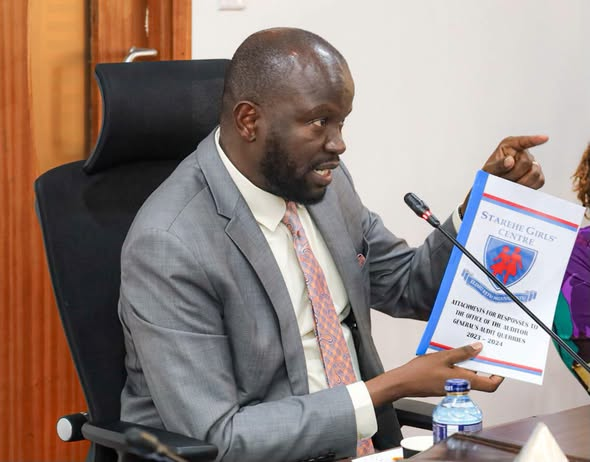
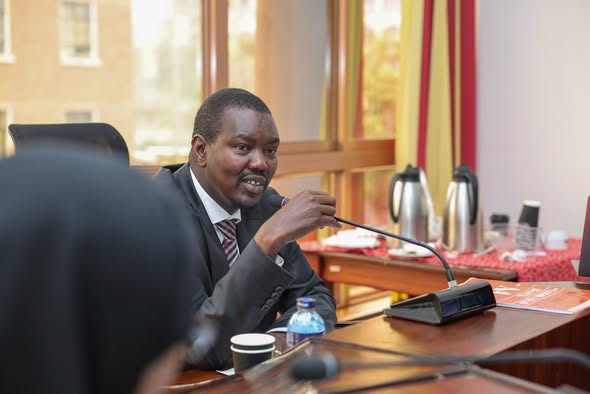
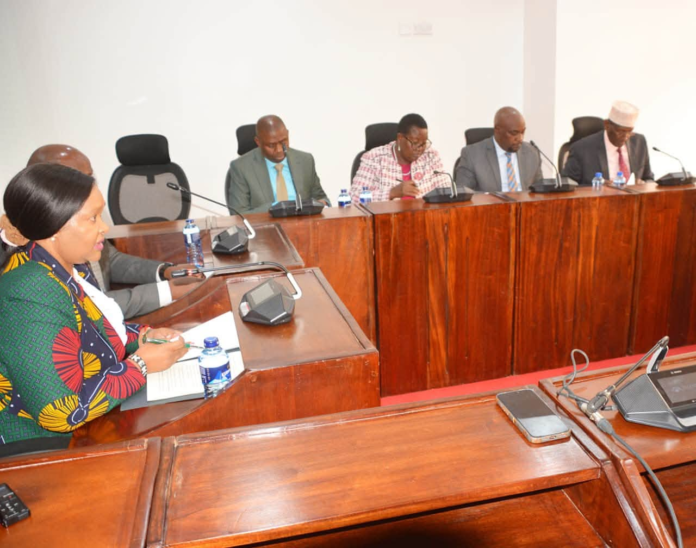
National Assembly Public Investments Committee on Governance and Education questioned the practice of charging parents extra money to provide learners with additional servings of bread, sausages, eggs, chapati and mandazi, instead of relying on the ordinary menus served in many other public schools, where meals such as githeri remain common.

The issue emerged during the committee’s examination of the Auditor-General’s reports covering the financial years 2020/2021 to 2024/2025 for several national schools, including Loreto High School Limuru, Alliance High School, Alliance Girls’ High School, Mang’u High School, Limuru Girls’ School and Kiambu High School on Wednesday, before turning to Kenya High School, Pangani Girls Senior School, Lenana School, Starehe Boys’ Centre and School, Starehe Girls’ Centre and Nairobi School on Thursday.

The committee, chaired by Luanda MP Hon. Dick Maungu, questioned school administrators, including Principals, Senior Principals and Chief Principals, over additional charges imposed through Parents Association support programmes and other arrangements, with the Auditor-General repeatedly noting that some of the charges had not been approved by the Ministry of Education through the County Education Board.

For instance, at Alliance High School, the Auditor-General found that the school charged Ksh68,554 against an approved fee of Ksh53,554 in the 2020/2021 financial year, resulting in an additional Ksh15,000 per student.

For 2021/2022, the school charged Ksh68,554 against the Ministry-approved Ksh45,000, resulting in a variance of Ksh23,554 per student.

The audit report said the charges were contrary to Ministry guidelines, which provide that parents should only meet specified costs, including school uniforms, boarding-related costs reflected in the approved boarding fee structure and lunch for day scholars.

In 2024/2025, the Auditor-General further flagged Ksh42.25 million collected under Alliance High School’s Parents Association support programme.

The report said parents had agreed to contribute Ksh30,792 in 2024 and Ksh26,000 in 2025 to support the school budget, but the additional charges had not been approved by the Ministry through the County Education Board.

Alliance High School Principal Mr David Kamau attributed the charges to rising costs and the desire by parents to maintain the school’s established standards.

“The school has been incurring huge deficits due to market price increase for goods and services consumed in the school,” Mr Kamau said.

He added that the school had “a culture/standards and a lifestyle established over the years” and that parents had insisted on maintaining those standards by financially supporting the institution.

According to Mr Kamau, parents approached the Board of Management through the Parents Association and agreed to establish a kitty to support the school budget. He said the school subsequently wrote to the Ministry of Education over the arrangement.

The Auditor-General, however, maintained that parental or Board of Management approval could not substitute the required authorisation from the Ministry of Education.

The same issue arose at Limuru Girls’ School, where the Auditor-General found that the school charged Ksh73,580 per student against an approved rate of Ksh53,580.

The school had not obtained authorisation from the Ministry before imposing the additional charge, contrary to Regulations 44 and 45 of the Basic Education Regulations, 2015.

Chief Principal Mrs Susan Kariuki explained that the additional funds had been approved during an Annual General Meeting by the Parents Teachers Association and endorsed by the Board of Management.

“The decision to collect additional funds was made during an Annual General Meeting by the Parents Teachers Association and endorsed by the Board of Management,” Ms Kariuki said.

She said the additional funds were intended to address rising food costs, electricity bills and water expenses that could not be covered by the standard fees because of delays in capitation and budget deficits.

Ms Kariuki, however, acknowledged the procedural omission.

“Management acknowledges the procedural omission in failing to obtain written authority from the Cabinet Secretary before implementation,” she said.

She told the committee that the school had subsequently submitted an application to the Ministry of Education seeking approval of the additional levy.

At Kiambu High School, the Auditor-General identified unexplained fee variances for Forms One to Four, with the school’s approved fee standing at Ksh53,554 per student.

The variances ranged from Ksh717 to Ksh7,946 per student.

Principal Mr Joshua Maina Nderitu attributed the additional charges to a development programme involving the construction of two classrooms and a 120-capacity dormitory following the increase in enrolment occasioned by the 100 per cent transition from primary to secondary education.

“The fees variance was due to a development project of two classrooms and a 120-capacity dormitory that were being constructed due to inadequate school infrastructure caused by the 100 per cent transition from primary to secondary school,” Mr Nderitu said.

He said the project had been approved by parents and that the school had obtained approval to impose the additional levy.

“The project played a major role in decongesting the dorms and classrooms,” he said.

But it was Mang’u High School that came under particular scrutiny over charges directly linked to an enhanced diet.

The Auditor-General found that the school charged Ksh46,082 per student under a Parents Association Support Programme in the 2024/2025 financial year without approval from the Ministry of Education through the County Education Board.

The report said the charge was contrary to Government Circular No. MOE.HQS/3/13/3 of June 16, 2021, which sets out what parents are required to pay under the Free Day Secondary Education programme.

Mang’u High School Principal Dr Bernard Mwangi King’ah defended the additional charges, saying the school’s annual budget was presented to parents and the Board of Management for approval before the institution sought authority to raise additional money.

He said the funds were necessary to maintain an “enriched diet” as well as cater for security, technical workshops, co-curricular activities and laboratory requirements.

“The school offers an enriched diet over the year and changing may not go well with the student,” Dr King’ah said.

He said the school’s partially fenced compound required additional security personnel because it was surrounded by a bush and the Witeithie slums.

He also cited the cost of technical workshops and equipment, extensive co-curricular activities and the fact that all students take three science subjects, increasing expenditure on laboratory chemicals and equipment.

However, the Auditor-General said no evidence of the required Ministry approval had been provided.

“Approval by the parents and BOM does not constitute approval by the Ministry of Education,” the audit response states.

The Auditor-General further noted that there was no Ministry or County Education Board approval for the Ksh46,082 charge per student.

The audit reports showed that the practice had persisted at Mang’u over several years.

In 2021, the school charged Ksh18,452 per student under the Parents Association Support Programme; in 2022, it charged Ksh27,006 for Form Ones and Ksh27,054 for students in Forms Two to Four; while in 2023, the charge rose to Ksh33,452 per student.

In each case, the Auditor-General said evidence of approval from the Ministry of Education through the County Education Board had not been provided.

Dr King’ah maintained that the charges supported an enriched menu alongside other school needs.

“The school always prepares an annual budget which is presented to the parents and Board of Management for approval and later always seek to be granted authority to charge some extra money,” he said.

But the Auditor-General said the school had not provided evidence of the required approval.

The committee questioned why schools continued imposing the charges when the Ministry approval required by law had not been demonstrated.

Hon. Maungu said the committee was concerned that additional charges could place an unnecessary financial burden on parents, particularly those struggling to educate their children.

“Schools cannot wake up and introduce additional charges and expect parents to simply comply. There are established procedures that must be followed before any new programme involving parents’ money is introduced,” Mr Maungu said.

He said improving learners’ diets could be a legitimate objective but insisted that such programmes must operate within the law.

“If a school wants to improve the diet of learners, that is a good objective, but it must be done within the law and approved structures,” he said.

“Parents should not be subjected to charges for programmes they have not agreed to or which have not been approved.”

Narok Women Representative Hon. Rebecca Tonkei said better nutrition should not create disparities between learners in public schools.

“We support efforts to improve the nutrition of our children, but we cannot have a situation where students in one school are asked to pay extra for food that other learners receive as part of the normal school programme,” Ms Tonkei said.

She said any decision to introduce additional eggs, bread, sausages, chapati or mandazi should be guided by national standards and approved by the Ministry.

“If there is a need to introduce more eggs, bread, sausages, chapati or mandazi, then the Ministry should determine how such a programme will be funded and implemented. It should not be left to individual schools to decide how much parents should pay,” she said.

Lungalunga MP Chiforomondo Mangale said the committee was concerned about the emergence of different feeding standards within the public education system.

“It is not acceptable to create a situation where students in some schools are eating enhanced meals because their parents can afford additional charges, while learners elsewhere continue with the ordinary school menu,” Hon. Mangale said.

He questioned whether parents should be required to pay extra simply because a school had opted for a more elaborate menu.

“If a school has decided that students should have more bread, sausages, eggs, chapati and mandazi, we need to know who authorised that decision and under what framework. The answer cannot simply be that parents were told to pay,” he said.

Kiminini MP Hon. Maurice Kakai Bissau said MPs were not opposed to better nutrition but wanted schools to observe the law and ensure accountability in the use of parents’ money.

“No one is opposed to giving our children better nutrition. In fact, we all want our learners to eat healthy and balanced meals. The concern is how these programmes are introduced and financed,” Hon. Bissau said.

He added: “A national school cannot become a law unto itself. If there is an additional programme that requires parents to contribute money, there must be a clear approval process and accountability mechanism.”

Alarm over expired medicines worth Sh1 billion

0

By Reporter

Senators have expressed concern over the reported expired medicines valued at Sh1 billion, as indicated in a Kenya Medical Supplies Authority (KEMSA) report.

The Senate Standing Committee on Health, chaired by Sen. Jackson Mandago, raised the alarm and urged the PPB to strengthen oversight and ensure that medicines do not expire in public health facilities.

The Committee said wastage of essential medicines has implications for access to healthcare and public resources.

The Committee directed that all health facilities handling expired medicines must have the necessary licences and comply with established procedures for their safe disposal.

The Senate, in a meeting with the Chief Executive Officer of the Pharmacy and Poisons Board (PPB), Dr Ahmed Mohamed, deliberated on the implementation of Senate resolutions arising from the Committee’s County Oversight and Networking Engagements.

Dr Ahmed informed the Committee that the PPB appreciates the Senate’s oversight role and is implementing recommendations aimed at strengthening regulation of pharmaceutical services and health products.

He said the Board was undertaking measures including strengthened regulatory frameworks, risk-based inspections, improved pharmaceutical waste management, digital transformation, enhanced licensing systems and mandatory Continuing Professional Development for pharmacy professionals.

The CEO noted that the interventions are intended to strengthen accountability across the pharmaceutical supply chain while improving the quality, safety and accessibility of pharmaceutical services in support of Universal Health Coverage.

During deliberations,

𝐒𝐄𝐍𝐀𝐓𝐄 𝐒𝐄𝐄𝐊𝐒 𝐁𝐈𝐂𝐂 𝐂𝐎𝐍𝐓𝐑𝐀𝐂𝐓, 𝐅𝐈𝐍𝐀𝐍𝐂𝐈𝐀𝐋 𝐑𝐄𝐂𝐎𝐑𝐃𝐒 𝐅𝐑𝐎𝐌 𝐃𝐄𝐅𝐄𝐍𝐂𝐄, 𝐓𝐑𝐄𝐀𝐒𝐔𝐑𝐘

0

By Reporter

The Senate Standing Committee on Roads, Transportation and Housing has directed the Ministry of Defence and the National Treasury to furnish it with the contract, procurement and financial records relating to the multi-billion-shilling Bomas International Conference Centre (BICC) project.

The committee, chaired by Nominated Senator Hamida Kibwana, wants the Ministry of Defence to submit the project contract, procurement records, financing agreements, progress reports and other documents after the committee was informed that the ministry had been entrusted with procurement and contracting, while the Ministry of Tourism retained responsibility for ownership, marketing and positioning of the facility as a major international conference destination.

Appearing before the committee, Tourism and Wildlife Cabinet Secretary Rebecca Miano said the Ministry of Tourism would assume ownership of the completed facility, but the contract was held by the Ministry of Defence.

“The contracting function had been delegated to the Ministry of Defence and we believe they will handle the documentation,” CS Miano told the committee.

The disclosure prompted senators to question the division of responsibilities between the two ministries, particularly because funding for the project is being channelled through the Tourism Fund.

Senator Kibwana said the committee required access to the contracts and procurement records, financing agreements, project budgets, financial statements, invoices, payment and expenditure records and other implementation documents.

The committee also wants the project work plan, progress reports and timelines, feasibility studies, technical reports, bills of quantities, approved designs and correspondence relating to the planning, procurement, financing and implementation of the project, including any contract variations.

Kitui Senator Enoch Wambua questioned why a ministry responsible for financing and eventual ownership of the project did not have custody of key contractual and procurement documents.

“It cannot be that one ministry has signed a contract with a contractor, somebody undertaking construction, and another ministry is the one that is tracking progress. I mean, that becomes funny,” Senator Wambua said.

CS Miano explained that the project was approved by Cabinet in 2023, when Bomas was under the then Ministry of Culture and Gender, before procurement and execution responsibilities were delegated to the Ministry of Defence following changes in the Government structure.

She said Bomas was subsequently transferred to the Ministry of Tourism, which has since been monitoring the project’s progress.

“This project was approved by Cabinet in 2023. At that time, Bomas was under the Ministry of Culture and Gender. The procurement process was then delegated to Ministry of Defence in review of the arrangement of government. Bomas was then taken to the Ministry of Tourism, and since that time, we have been there to track the progress,” she said.

CS Miano said the Ministry of Tourism could obtain a copy of the contract from the Ministry of Defence and submit it to the committee.

However, Senator Wambua questioned why the ministry could not immediately provide the contract if it was already using it to monitor the project.

“The CS has just gone on record and said that she has a contract to guide our ministry in tracking progress. What is the difficulty in making that contract available to us?” Senator Wambua asked.

CS Miano clarified that the Ministry of Defence remained responsible for project management and technical supervision, while the Ministry of Tourism was responsible for tourism development, eventual ownership and marketing of the facility.

She said the Ministry of Tourism’s role included ensuring the project was implemented and integrating the facility into international tourism calendars.

“It’s a national flagship initiative designed to position Kenya as a premier meetings, incentives, and conferences destination, and therefore looking at even the international tourism protocols and calendars, our ministry has to have a role,” she said.

“So, it’s not the actual technical supervision that is still with the Ministry of Defence, and therefore there is no contradiction in that,” she added.

Nominated Senator Peris Tobiko said the committee should invite the Ministry of Defence, which is handling the project, to provide all the relevant documentation.

Laikipia Senator John Kinyua also questioned the Ministry of Tourism’s handling of the project’s finances, arguing that the ministry should have access to the contract since funds for the project pass through its docket.

Senator Kinyua said the delegation of procurement to the Ministry of Defence did not remove the Ministry of Tourism’s responsibility to account for the expenditure.

“It is your money. Somebody is doing your project,” Senator Kinyua said, arguing that the ministry could not effectively oversee the project without access to the contract documents.

Committee Vice Chairperson and Samburu Senator Steve Lelegwe said that since the Cabinet Secretary could not provide all the requested documents, the committee should direct its inquiry to the Ministry of Defence.

Marsabit Senator Mohamed Chute proposed that Defence Cabinet Secretary Soipan Tuya be invited to appear before the committee and provide the contract, procurement documents, project progress reports and other relevant records.

The committee also sought clarification on the Ministry of Defence’s role after completion of the project, given that the Ministry of Tourism is expected to assume ownership and oversee the facility’s marketing.

The BICC is intended to expand Kenya’s capacity to host large international conferences and complement existing facilities, including the Kenyatta International Convention Centre.

The committee was informed that the facility will have a main capacity of approximately 11,000 people, alongside additional spaces including auditoriums and ballrooms.

We Must Prioritise Standardisation!

0

By Billy Mijungu

Standardisation must become one of the most important principles guiding how we build and run Kenya. Unfortunately, our national standards institution often appears to sleep while consumers navigate a marketplace where the same product can be sold at dramatically different prices depending on location, seller, or circumstance. That is not simply a market problem. It can be a sign of weak systems, poor enforcement and inadequate consumer protection.

But standardisation is not about controlling everything. It is about establishing clear and predictable minimum standards so that citizens receive reasonable value wherever they are.

Look at the fuel sector. It is one of the clearest examples of what standardisation and regulation can achieve. You can buy fuel at virtually any corner of the country and expect the price to fall within a relatively predictable range.

The product is standardised, the measurements are regulated, quality is monitored and pricing follows an established framework. A motorist does not need to investigate whether one litre at one station is actually equivalent to one litre somewhere else.

That is what I am talking about.

We can do much better by applying the same thinking to public services.

Imagine a Kenya where public schools are built and equipped according to clear national standards, regardless of whether they are located in Nairobi, Migori, Turkana or Garissa. Imagine hospitals where essential infrastructure, staffing, equipment and basic services meet defined standards across the country. Imagine public offices where procedures, timelines, documentation and service expectations are predictable.

Counties and institutions can still compete on efficiency, innovation and excellence, but the basic standard should be guaranteed.

Standardisation can also reduce opportunities for corruption. When specifications, prices, procedures and service requirements are clearly defined, it becomes harder to manipulate procurement, inflate costs or provide one community with inferior services simply because it has less political or economic influence.

It also makes life more predictable. Businesses can plan. Families can plan. Investors can plan. Government itself can measure performance against something concrete.

Most importantly, standardisation harnesses economies of scale. Government can procure more intelligently, negotiate better prices, reduce unnecessary duplication and ensure that public resources translate into comparable outcomes across the country.

A modern Kenya should therefore move from a culture of improvisation to a culture of standards.

The people we elect and appoint to public service should understand this principle. Leadership is not merely about making promises. It is about building systems that work consistently, fairly and sustainably.

Standardisation is ultimately about fairness. It is about ensuring that where a Kenyan lives does not determine the quality of service they receive.

That should be a national priority.

Will Linda Mwananchi go the Ford way?

0

By Anderson Ojwang

Twenty-four years later, Kenyans are witnessing the events, political rivalry, bloated egos and betrayal that clouded the original Ford, which could have returned to haunt Linda Mwananchi.

The Ford, which was a political movement that brought constitutional change and the repeal of Section 2A, was primed to easily defeat the ruling party and then President Daniel Moi at the ballot.

But ahead of the 1992 first multi-party election, wrangles broke out between the acting chairman, the late Jaramogi Oginga Odinga, and the acting secretary-general, the late Martin Shikuku.

Oginga, who had been viewed as the undisputed presidential candidate, soon found himself fighting to stabilise the ship, and Shikuku joined hands with the returning opposition leader, the late Kenneth Matiba.

Matiba, who had been abroad for medical treatment after his release from prison and, upon his return to Kenya, was buoyed by the huge reception he got at the airport, changed his mind on the earlier political arrangements.

Matiba, when asked at the airport on arrival about the Ford Kenya presidency, replied that the people would decide.

That was the genesis of a fallout and eventual split of Ford into Ford-K of Jaramogi and Ford-Asili of Matiba and Shikuku.

Moi went ahead to win the elections, while Matiba came second and Odinga fourth.

The ghost

Linda Mwananchi, a political rebellion from the ODM, has grown to be one of the biggest political movements in the country.

The group is a creation of former ODM Secretary-General Edwin Sifuna, Embakasi East MP Babu Owino and Siaya Governor James Orengo, among others.

The outfit, which has been riding high, now faces the Ford moment, with a supremacy battle, bloated egos and power games threatening to derail its presidential journey.

Who is the party leader and which?

The quest for the seat of the party leader position and a political vehicle is turning into a nightmare for the outfit.

Orengo once declared himself as the party leader, while Babu and Sifuna both have claimed a similar stake.

Babu, at a press conference, said in their earlier consultation, they agreed to form a coalition, with him having his party and Sifuna too.

“We agreed that Sifuna to be the party leader of his party and I too to lead my party so that we form a coalition.

I have declared that I support Sifuna presidential bid as Linda Mwananchi,” he said.

But a section of leaders from Western Kenya want Sifuna to be the party leader of one party and the presidential candidate, and this is not sitting well with a section of principals who have registered and own parties.

Already, Sifuna has been offered the slot of party leader for Ukombozi Party of Trans Nzoia Governor George Natembeya, while Babu is the party leader of his political party.

Natembeya, the making of the problem

Natembeya, after his Tawe movement flopped, revived his political journey by joining Linda Mwananchi and became the lead and chief adviser of Sifuna.

He wants his Ukombozi Party of Kenya to be the main vehicle for Sifuna and Linda Mwananchi, which is not auguring well with a section of the group.

Natembeya, at a recent rally in Western, tried to overshadow Babu by grabbing the microphone from him over what he termed as protocol.

But Babu dismissed the action as consequential, saying Natembeya was, for the first time, attending a Linda Mwananchi rally in Trans Nzoia and did not understand the group.

“Linda Mwananchi knows how it does it things. May be he thought he was to be the one in charge but we told him he was welcomed to introduce the people and few other leaders. I was to introduce the senators and MPs. That is how ewe do things. I cannot allow anyone to come with his protocol from outside,” he said.

Speaking during a press briefing on Tuesday, September 15, 2026, Babu explained that he had secured a political party before Linda Mwananchi was formed and that discussions within the movement had initially identified his outfit as one of the possible vehicles for the 2027 contest.

“I called Sifuna; we met in his office and asked him about the Ukombozi political party. After that, there has been a little push and pull,” Babu said, explaining how the disagreement over the political vehicle emerged.

Natembeya has taken a different position, openly backing the Ukombozi People’s Party to be registered as the vehicle for Sifuna’s presidential bid.

The Trans Nzoia Governor responded to Babu’s remarks by insisting that Ukombozi would remain central to the movement’s plans.

“Ukombozi People’s Party and Sifuna will be the ones saving this country,” Natembeya said shortly after Babu addressed journalists.

The Ukombozi People’s Party is the rebranded United Democratic Party, which was initially associated with former Lugari MP Cyrus Jirongo. The Star reported that Sifuna had settled on Ukombozi as the political vehicle for his presidential ambitions.

Natembeya’s position marks a significant shift from his earlier caution against Linda Mwananchi forming a new political party. In March 2026, he warned that establishing another opposition party could weaken efforts to consolidate the opposition.

Same forest, different players

The Linda Mwananchi war is similar to the Ford moment. During the Ford era, it was the battle over who would become the president. Currently, it is the political party at stake.

During the Ford era, former President, the late Daniel Moi, was the main chess player, and currently, his mentee, President William Samoei Ruto, is the king.

Ruto recently predicted a fallout in the opposition, and Linda Mwananchi is already witnessing the storm.

Will Linda Mwananchi go the Ford way?

Moi Teaching and Referral Hospital honours and celebrates Housekeepers During World Housekeeping Week

0

By Sandra Blessings

In all the health institutions, many people often ignore the role of the housekeepers in making the service of health provision complete.

But they form the most important ingredient in the chain of health service in all the medical facilities.

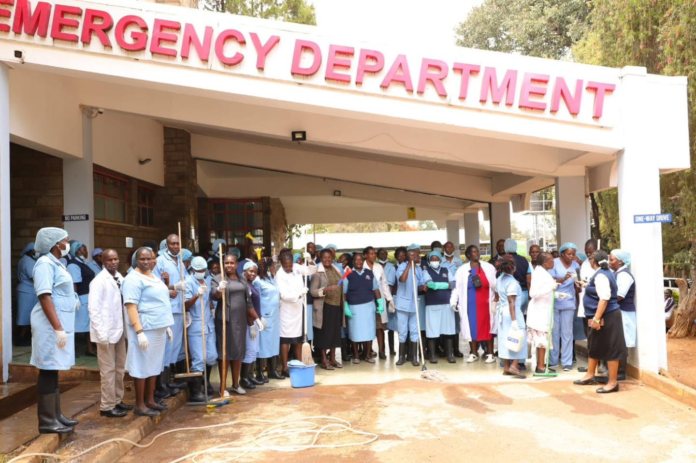
Without the housekeepers, the medical service could easily come to a standstill, and that is why Moi Teaching and Referral Hospital (MTRH) joined institutions around the world in commemorating World Housekeeping Week.

MTRH recognised the vital contribution of its housekeeping team in maintaining a clean, safe and welcoming environment for patients, visitors and staff.

During the event, MTRH marked the occasion with a luncheon and sensitisation session that brought together members of the Housekeeping Department and Hospital Management.

MTRH Chief Executive Officer, Dr Philip Kirwa, said the event provided them with the opportunity to appreciate the team’s dedication and highlight its important role in hospital operations and the patient experience.

He commended the housekeeping team for its commitment and dedication, noting its role in maintaining a positive and welcoming environment for patients, visitors and staff.

Kirwa said the team’s contribution cannot be ignored and must be appreciated by all.

He expressed appreciation for the Department’s role in shaping the patient experience, particularly as housekeeping staff were among the first points of interaction for patients and visitors within the hospital environment.

“As part of the celebrations, the Hospital also honoured two retired members of the housekeeping team who had completed their years of service at MTRH,” he said.

The commemoration highlighted the importance of looking beyond clinical services in the delivery of quality healthcare.

“A clean, safe and welcoming environment, supported by a valued and well-supported workforce, is an integral part of patient-centred care. MTRH continues to recognise the contribution of every member of its workforce in advancing its mandate to provide quality healthcare services to patients and communities,” he said.

Meanwhile, recently, Pfizer CEO Dr Albert Bourla visited Moi Teaching and Referral Hospital.

Dr Albert Bourla, Chairman and Chief Executive Officer of pharmaceutical company Pfizer, paid a courtesy visit to Moi Teaching and Referral Hospital (MTRH) as part of Pfizer’s continued engagement with Kenya’s healthcare sector.

During the visit, the Pfizer leadership team met with MTRH management and healthcare professionals to learn more about the Hospital’s specialised services in Oncology and Pathology and explore potential areas of collaboration aimed at strengthening access to quality healthcare.

While receiving Dr Bourla, MTRH Chief Executive Officer, Dr Philip Kirwa, welcomed the engagement, noting that partnerships with global pharmaceutical companies are important in supporting the Hospital’s efforts to improve patient care, particularly in specialised areas such as cancer treatment.

The CEO also highlighted the potential for collaboration in medical research, innovation, capacity building and improving access to essential medicines and advanced healthcare technologies.

The engagement underscored the importance of partnerships between the public health sector and global pharmaceutical companies in advancing cancer care, medical innovation, research and access to essential medicines.

Sharon Family Pleads Mercy for Obado as ODDP Wants Death Sentence

0

By Valentine Omondi

A dramatic turn in the sentencing of former Migori Governor Zachary Okoth Obado and his two co-convicts emerged on Wednesday after the parents of murdered university student Sharon Otieno asked the High Court to spare Obado a prison term, while prosecutors urged the court to consider the death sentence for all three.

Sharon’s father, Douglas Otieno, and mother, Melinda Auma, told the High Court in Nairobi that they had forgiven Obado and appealed for a non-custodial sentence.

Their plea, however, was strongly opposed by the Office of the Director of Public Prosecutions, which asked Justice Cecilia Githua to impose the maximum sentence provided under Section 204 of the Penal Code.

The prosecution argued that the circumstances surrounding Sharon’s murder were sufficiently grave to warrant the death sentence for Obado, his former Personal Assistant, Michael Juma Oyamo, and Caspal Obiero.

Parents Ask Court to Spare Obado

The parents were allowed to address the court during Wednesday’s sentencing proceedings, where they made a personal appeal for leniency towards the former governor.

Both told the court that they had forgiven Obado and asked that he be spared a custodial sentence.

Their intervention introduced a striking contrast into the sentencing proceedings, coming after the court had already convicted Obado and his two co-accused over Sharon’s murder and that of her unborn child.

Sharon’s father went further by distinguishing Obado from the two co-convicts, maintaining that his forgiveness of the former governor did not amount to extending the same position to Oyamo and Obiero.

Sharon’s mother, meanwhile, made an emotional appeal to the court, asking Justice Githua to consider the consequences of sending Obado to prison.

The parents’ position placed the court in the unusual position of considering a plea for leniency from the family of the victim as the prosecution pressed for the harshest sentence available in law.

Prosecution Seeks Death Sentence

Senior Assistant Director of Public Prosecutions Gikui Gichuhi told the court that the prosecution respected the parents’ decision to forgive Obado and their plea for leniency, but argued that their wishes could not determine the sentence.

“Reconciliation may bring peace to a family; it cannot erase the aggravating circumstances in which a life was unlawfully and deliberately taken,” Gichuhi submitted.

The prosecution opposed a non-custodial sentence for all three convicts, arguing that such a punishment would not adequately reflect the gravity of the offence or fulfil the purposes of punishment, denunciation and general deterrence.

Gichuhi asked the court to consider the maximum sentence under Section 204 of the Penal Code based on the circumstances of the murder and the individual culpability of each of the three men.

The prosecution maintained that its request for the death sentence was not based merely on the existence of the statutory penalty, but on an assessment of the offence, the circumstances surrounding it and the respective culpability of the convicted persons.

It also argued that Sharon’s murder was not a private dispute but a public offence against the State and society.

The prosecution said the sentence should therefore address accountability, proportionality, deterrence, denunciation and public confidence in the administration of justice.

Gichuhi told the court that the prosecution had presented relevant law, aggravating and mitigating circumstances, victim impact material, probation reports and public interest considerations for consideration before sentencing.

“The Court must impose a lawful and proportionate sentence after independently weighing the totality of the material,” the prosecution submitted.

Sharon’s 2018 Murder

Sharon’s murder dates back to September 2018, when the university student and mother of three was abducted alongside Nation Media Group journalist Barrack Oduor in Migori County.

Sharon, who was pregnant at the time, was later found dead in the Kodera Forest area of Homa Bay County.

Her death triggered a high-profile criminal investigation and a lengthy court case in which the prosecution sought to establish the circumstances surrounding her abduction and murder and the roles played by the three accused persons.

The case remained before the courts for several years as prosecutors presented evidence linking Obado, Oyamo and Obiero to the killing.

On July 23, 2026, the High Court convicted the three men after finding that the prosecution had proved its case beyond reasonable doubt.

The conviction brought to an end the trial phase of a case that had remained in the public spotlight since Sharon’s death eight years earlier.

The court found the three guilty of Sharon’s murder and that of her unborn child, paving the way for the current sentencing proceedings.

Court to Decide Sentence

Wednesday’s proceedings therefore brought two sharply different positions before Justice Githua.

On one side were Sharon’s parents, who told the court they had forgiven Obado and wanted him spared a custodial sentence.

On the other was the prosecution, which maintained that none of the three convicts deserved a non-custodial sentence and asked the court to consider the death penalty.

The parents’ views will form part of the material before the court, but the prosecution maintained that sentencing remains a judicial decision requiring the court to independently weigh the aggravating and mitigating circumstances alongside the law and other material presented before it.

The High Court is expected to sentence Obado, Oyamo and Obiero on November 27, 2026.

Until then, the court will have to weigh the competing submissions from the prosecution, the defence and Sharon’s family before determining the appropriate sentence for the three men convicted over the 2018 killing.