Home Blog Page 7

When Luos and Kikuyu push together, Kenya grows, peace returns

0

By Billy Mijungu

Why do we continue imagining that Luos and Kikuyus cannot work together? This idea is an elite-crafted emotional play that keeps both Nyanza and Mount Kenya trapped in suspicion, even though there are no deep ideological differences to justify such a divide. It is a very unnecessary and, frankly, very stupid narrative that has been repeated for too long without any honest examination of facts.

It is true that Kikuyus have disappointed Luos before. Many point to three political moments: under Jomo Kenyatta, under Mwai Kibaki, and again when a large part of the community refused to follow Uhuru’s call to support Raila Odinga. Those moments created wounds, but they do not define the entire relationship. In 2022, more than one million Kikuyus supported Raila openly and boldly in a political climate that made it costly to do so. That reality shows that the two communities are not enemies. They simply need clarity and leadership.

Under President Moi, the relationship between the two communities was fairly stable. They operated within one centre of power. Moi often placed leaders from the two groups in deputy roles. He did not do this out of hostility but because his political base was in Rift Valley and he needed strong balancing pillars to stabilise the country. That is a political explanation, not an ethnic one.

If Kenya is to move forward, the gap between Nyanza and Mount Kenya must be deliberately bridged. That requires political gestures as well as honest conversation. Two important steps can help reset the emotional climate. First, Gachagua should follow the example of Uhuru by visiting Bondo and mourning with the Odinga family. That simple act would send a powerful symbolic message that politics does not need to poison national unity. Second, both Kikuyus and Luos respect and admire Kalonzo Musyoka. They can close ranks around him either by supporting him for the presidency with a deputy from Western, or by presenting him as a national figure willing to work with President Ruto as deputy in a broader power arrangement.

As the relationship grows, the two communities can occupy strong horizontal roles such as Deputy Premier positions, working behind a Premier like Hassan Joho or any other agreed national figure. Kenya is large enough to accommodate creative power-sharing that respects all regions.

Bringing the country together is not only possible but necessary. We must ignore emotional claims that Gachagua hates Luos or that Luos dislike him. These are cheap political narratives. No one is dragging anyone anywhere. We must live together and negotiate daily, just as Raila Odinga consistently taught through his political life.
Why Gor Mahia must deliver free Tusker to Owalo on his assumption of office and avoid premium tears on Saturday, at Kasarani

0

By Anderson Ojwang

This Saturday is a special day for the Deputy Chief of Staff in charge of Delivery and Government Efficiency in the Executive Office of the President, Mr. Eliud Owalo. This is the first game as the substantive chairman of Gor Mahia after the demise of the immediate former patron, Raila Amolo Odinga.

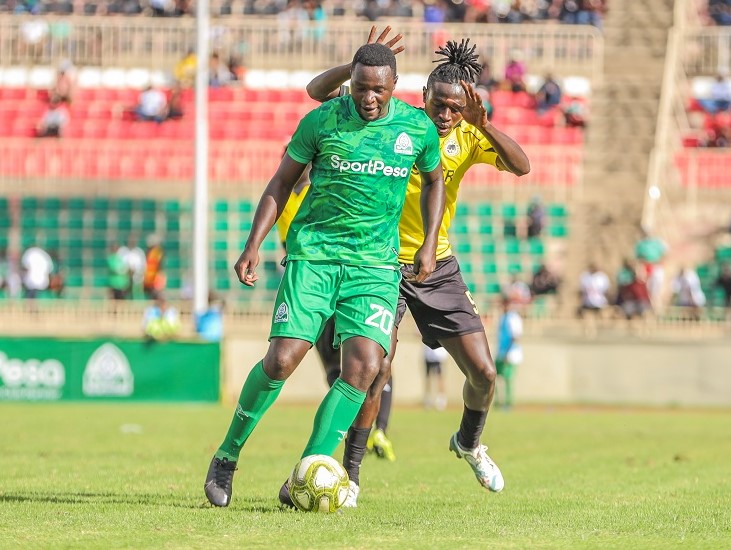
So, when the two of Kenya’s most successful teams, Gor Mahia and Tusker FC, meet, it’s either free flow of alcohol, premium tears or a deadlock.

For the mighty K’Ogalo, sipping Kenya’s favourite brand Tusker has always been the moment of joy, laughter and catching up after 90 minutes of successful work at the stadium.

And for Tusker, the revenge and witnessing premium tears flow from their bitter rival, Mighty K’Ogalo, is a cherished moment, for “Bia Yangu. Nchi Yangu (My Beer, My Country)”.

Gor Mahia and the Brewers have met 45 times with the Mighty K’Ogalo winning 19 matches while Tusker have won 11, and they have drawn 15. In all the games, goals have been flowing on average; in direct matches, both teams scored 1.56 goals per match.

In the last six matches Gor have played against Tusker, they have won three, drawn two and lost one, and that is why this Saturday, at Moi Sports Centre, Kasarani, they go in as favourites while Tusker are the underdogs.

Currently, Gor Mahia are at the top of the log with 16 points from seven games, while Tusker lie seventh with 12 points from nine matches.

Gor Mahia have won 21 Kenya Premier League champion titles while Tusker follow them with 13 league champion titles.

For Gor Mahia, this match is a test to the newly appointed patron Mr. Eliud Owalo. This is the first game after the club’s chairman announced the official confirmation of Owalo as the patron.

Rachier, in a recent press release, said Owalo had been appointed as the substantive Gor Mahia patron.

He wrote: “Further to the press release dated 16th October 2015 by the club executive regarding the notification of assumption by the then club deputy patron, Eliud Owalo, as acting club patron.
This is to formally notify the general public, the football fraternity in general and the Gor Mahia Football Club members in particular and the Gor Mahia fans at large, that the club has confirmed the appointment of Mr. Eliud Owalo as the substantive club patron with effect from the first day of November 2025,”
.

In November 2023, Owalo, then ICT Cabinet Secretary, bought Gor Mahia Football Club a state-of-the-art bus valued at Sh 20M.

“We would like to express our gratitude to Honourable Eliud Owalo and his associates for purchasing the club bus possible. The bus has been customised and has already been registered,” Rachier said then.

Gor Mahia wrote on the X handle: “This weekend’s clash against Tusker marks the 100th league meeting, the most-played fixture in Kenya’s top-flight league. Grab your ticket for Saturday’s tie.
A quiet weekend, but the view from the top is still ours. We face Tusker on Saturday at Kasarani Stadium,”

Tusker also hit back on their X handle: “Back to work at Ruaraka. Focus on Saturday’s assignment against Gor Mahia,”

The weekend game will be an appetizer for the Mashemeji Derby.

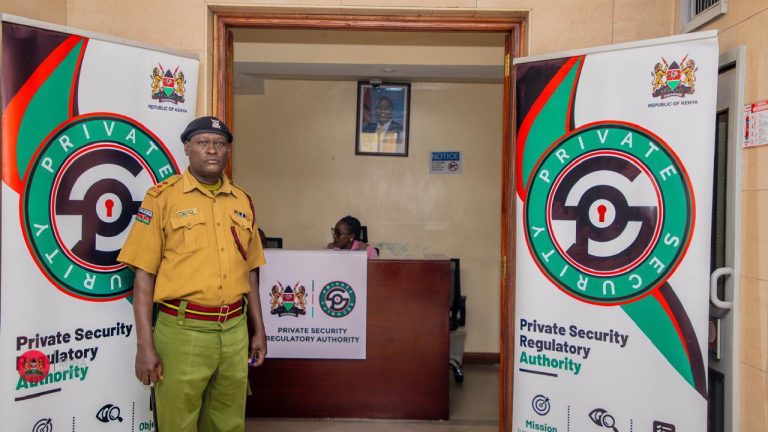
Private Security Regulatory Authority in a countrywide public participation on the Private Security Draft Regulations 2025, scheduled for this Friday

0

By Sandra Blessing

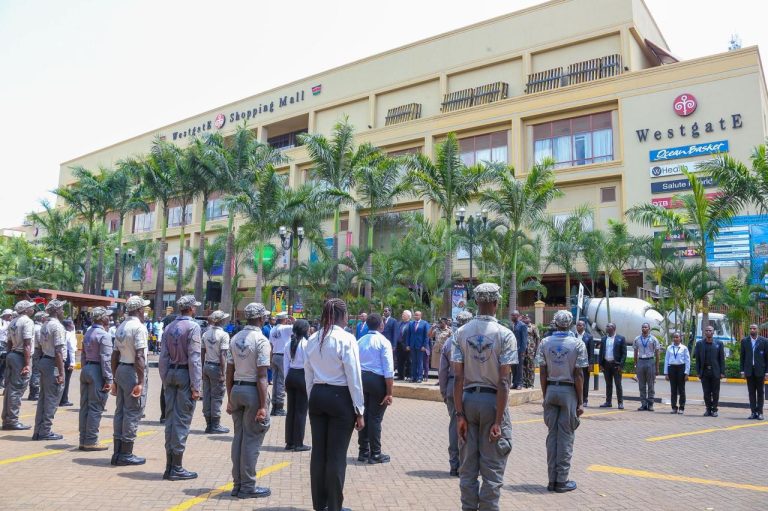
The Private Security Regulatory Authority will on this Friday 21st November 2025 engage the public in a countrywide public participation on the Private Security Draft Regulations 2025.

The countrywide meetings have been zoned into eight, with North Eastern forum to be held at Garissa, Government Guest House, while Lower Eastern will be at Machakos Social and Central will be held at Nyeri Cultural Centre.

For the Coastal region, the meeting venue will be at Tononoka Social Hall, while for North Rift, the venue is at Eldoret Multipurpose Hall, and for Nyanza it will be at Le Savannah Hotel in Kisumu, and for Western Kenya it will be at Kakamega Social Hall.

“In Nairobi, the public participation forum will be held on 24th November 2025 at the Kenyatta International Convention Centre (KICC).
We invite all stakeholders and members of the public to attend and share their views. Your voice matters in shaping the future of the private security in Kenya,”
read the statement.

The Kenyan government has enacted the Private Security (General) Regulations, 2025, under the Private Security Regulation Act, Cap. 207, to strengthen oversight, accountability and professionalism within the private security sector. The regulations, issued by the Cabinet Secretary for Interior and National Administration, set out detailed requirements for registration, licensing, employment, training and operations of private security service providers.

Under the new regulations, individual and corporate private security providers must register with the Private Security Regulatory Authority (PSRA) and obtain valid licences. Applications require proof of identity, compliance with tax obligations, insurance coverage including WIBA and public liability, police clearance certificates, audited financial accounts and a full inventory of uniforms, equipment and vehicles. Registrants are required to pay prescribed registration and annual fees, with penalties for late renewal.

Employment and training standards are rigorously defined. Private security firms must vet employees, verify their training and employment history, and ensure all personnel undergo mandatory annual security training. Officers are required to wear legibly marked nameplates and uniforms, which must comply with specifications including distinctive badges, headgear and heavy-duty belts. Firms must also provide necessary safety gear such as reflective vests, torches and defence equipment.

The regulations prescribe approved tools and equipment, including CCTV systems, alarms, patrol vehicles, armoured cash transit vehicles and specialised devices for locks and keys, with mandatory annual calibration and inspection by the Authority. Branding of vehicles, equipment and premises is strictly controlled to prevent misuse of law enforcement identifiers.

By establishing these standards, the government aims to professionalise the private security industry, enhance public safety and ensure accountability. The regulations also provide for community safeguards, including vetting prospective employees and ensuring separate resources for firms engaged in other businesses.

The Private Security (General) Regulations, 2025, mark a significant step towards regulating a sector that plays a critical role in national security, balancing operational flexibility with legal and ethical oversight.

IEBC blames Boyd Were and Philip Aroko for violence, fines them Sh 1m each, condemns Homa Bay county government over involvement in the campaigns, threaten to disqualify the candidates

0

By Anderson Ojwang

Independent Electoral and Boundaries Commission (IEBC) has put the county government of Homa Bay County on the spot over interference in political activities in Kasipul Constituency and subsequent use of public resources and involvement of public officers in political campaigns.

And IEBC also blamed the escalating political violence in the constituency on ODM candidate Boyd Were and Philip Aroko, an independent candidate, and fined them Sh 1M each.

“Upon keenly listening to the parties and considering all the facts and law, it is the Committee’s finding that the two candidates in this matter are responsible for the violence witnessed in Kasipul Constituency.
In the context of both oral and written submission of the parties, the Committee finds that both candidates are in violation of paragraphs 6 (a) (b) (c) (e) (i) (k) (m) and (n) of the Electoral Code of Conduct,”
read the statement.

Similarly, IEBC warned should any re-occurrence of violence in the constituency during the campaigns, the candidates risk disqualification.

“A most stern warning be and is hereby issued to both Candidates that should any violation of the Electoral Code be repeated by any of them, this Committee will consider all penalties under the law, including their DISQUALIFICATION from participating in the November 27th by-elections altogether,” read the statement.

The Committee also said investigations had revealed engagement of the county government, civil servants and use of public resources in the campaigns.

“This Committee is seized of intelligence reports corroborating the allegations of interference by the Homa Bay County Government in political activities within Kasipul Constituency.
The Committee condemns the use of public resources and involvement of public officers in political campaigns as this is in contravention of section 14 of the Election Offences Act, Cap 66,”
read the press statement signed by all the commissioners.

The Committee also fined the two candidates Sh 1M each which must be paid within 48 hours.

“Mr. Philip Aroko, for the violation, is hereby condemned to pay a fine of Sh.1,000,000 to the Independent Electoral and Boundaries Commission within 48hrs of these Orders.
Mr. Boyd Were Ong’ondo is condemned, similarly, for the violation, to pay a fine of Kenya Shillings One Million (Ksh.1,000,000,) to the Independent Electoral and Boundaries Commission within 48hrs of these Orders,”
read the statement.

The Committee was also appalled by the gravity of violence, deaths and damage to property caused by campaign-related activities within Kasipul Constituency.

“Astonishingly, when police officers attempted to arrest suspects in relation to the violence witnessed on 6th November 2025, the officers were attacked and the suspects freed by persons associated with one of the candidates,” read the statement.

The Committee said the candidates must ensure peaceful campaigns to allow the electoral process to remain a democratic space where all individuals can freely express their views and support candidates of their choice without fear of violence, harm, or loss of property.

“Respect for the sanctity of life demands that every leader takes responsibility in guiding their supporters to uphold peace and protect the rights of others.”

The candidates were expected to sign the Political Decency Charter publicly and declare, publicly before media, to uphold peace and tolerance in their campaigns, with a clear undertaking that reneging from it would amount to a violation of the Electoral Code of Conduct.

“A stern and a formal warning be and is hereby issued to Mr. Philip Aroko who is an independent candidate and Boyd Were in the upcoming by-elections for Kasipul Constituency to respect and obey IEBC’s harmonised campaign schedule as agreed upon by all candidates on 10th October, 2025 without any deviation whatsoever,” read the statement.

Calls Grow for Safer Sporting Spaces and Accountability in Sports

0

By James Okoth

A staggering 57% of Kenyan athletes have experienced sexual, physical, or emotional abuse, with many reporting repeated incidents, according to a 2021 study by the Ministerial Committee on Gender Welfare in Sports. Alarmingly, 43% of these incidents occurred during team trips, social gatherings and changing rooms, spaces that should be safe for athletes.

While sports are often celebrated for discipline, teamwork and empowerment, these figures reveal a sector where Gender-Based Violence (GBV) thrives, fuelled by power imbalances, isolation and institutional neglect.

In Kenya, sports operate under strict hierarchies. Coaches control selection, exposure and success, while athletes, particularly young girls and women, are taught to obey and “tough it out.” This dynamic fosters environments in which abuse is normalised and victims remain silent.

The Smart Ladies Youth Initiative (SLYI), working in Kisumu and Migori counties, has documented how structural and cultural weaknesses leave survivors without the knowledge or support to identify or report abuse.

Common patterns include:

▪︎ Power Imbalance: Authority of coaches over vulnerable athletes.
▪︎ Culture of Silence: Fear of reprisal discourages reporting.
▪︎ Isolation: Training camps and travel remove athletes from family support.
▪︎ Institutional Neglect: Federations prioritise medals and reputation over safety.
▪︎ Gender Gaps: Male-dominated leadership silences female voices in decision-making.

A recent fact-finding assessment in Kisumu and Migori revealed that almost all federation officials acknowledged the existence of GBV and agreed it is a problem requiring urgent attention. Many requested more sensitisation, noting they were unaware of existing policies and safeguarding guidelines.

SLYI’s findings, corroborated by local sports officials, indicate that certain sports present higher risks for abuse, largely due to prolonged travel, close contact and limited oversight. The most vulnerable include:

● Hockey – Limited resources and smaller federations make athletes highly dependent on coaches.
● Athletics / Track and Field – Frequent travel for competitions creates isolation.
● Football (Soccer) – High visibility yet weak safeguarding measures for female teams.
● Basketball – Intense training camps and close coach–athlete relationships increase vulnerability.
● Volleyball and Rugby – Mixed-gender or male-dominated environments expose female athletes to harassment.

Across these sports, female athletes are disproportionately affected, facing physical, sexual and financial abuse more frequently than their male counterparts.

Elizabeth Obong’o is the Hockey and Development Coach in Kisumu.

“Resources are limited or, at times, non-existent. There is limited support from relevant authorities. Fear of victimisation among affected persons means that many cases go unreported,” she says, “Female athletes are more vulnerable and constitute the majority of those who suffer GBV, which can be physical, sexual, or financial.”

She emphasises that community-wide sensitisation is critical, not just within sports.

“Educating the entire community on GBV will go a long way. Bringing cases forward allows justice to prevail and empowering all members of the community creates a safer environment for everyone, not just female athletes.”

Following the tragic death of elite runner Agnes Tirop in 2022, Kenya adopted the Agnes Tirop Post-Conference Resolutions, designed to eliminate GBV and promote gender inclusivity in sports. Yet, implementation remains uneven. Many federation officials acknowledge GBV exists but lack clarity on how to detect, document or respond. Safeguarding policies are often absent or non-operational, leaving athletes exposed.

The message is clear: the sports sector must prioritise safety, accountability and gender equity as seriously as medals and performance.

SLYI’s interventions in Kisumu and Migori aim to create systemic change:

● Training and sensitisation of federation officials on GBV prevention and response.
● Establishment of County Sports Safeguarding Committees to institutionalise safety mechanisms.
● Documentation of survivor stories to support advocacy and policy reform.
● Community-wide forums promoting gender equality and empowering women to lead.

These measures aim to cultivate a sports culture where athlete safety is foundational to performance and pride.

GBV in sports is a systemic failure requiring collective action. Government institutions, federations, sponsors, parents and athletes must collaborate to create safe, inclusive sporting spaces.

As Eunice Dollar, Executive Director of Smart Ladies Youth Initiative in Kisumu and Smart Youth Initiative in Migori County, notes:

“Protecting athletes is not a favour but a duty. We can no longer celebrate victories while ignoring the violence behind them. Every federation, coach and leader must take responsibility for creating a culture where safety, respect and equality come before medals.”

The time to act is now. Sporting institutions in Kenya must strengthen governance, enforce safeguarding structures and empower survivors to speak without fear.

Kenya Enacts Comprehensive Regulations for Private Security Sector

0

By James Okoth

The Kenyan government has enacted the Private Security (General) Regulations, 2025, under the Private Security Regulation Act, Cap. 207, to strengthen oversight, accountability and professionalism within the private security sector. The regulations, issued by the Cabinet Secretary for Interior and National Administration, set out detailed requirements for registration, licensing, employment, training and operations of private security service providers.

Under the new regulations, individual and corporate private security providers must register with the Private Security Regulatory Authority (PSRA) and obtain valid licences. Applications require proof of identity, compliance with tax obligations, insurance coverage including WIBA and public liability, police clearance certificates, audited financial accounts and a full inventory of uniforms, equipment and vehicles. Registrants are required to pay prescribed registration and annual fees, with penalties for late renewal.

Employment and training standards are rigorously defined. Private security firms must vet employees, verify their training and employment history and ensure all personnel undergo mandatory annual security training. Officers are required to wear legibly marked nameplates and uniforms, which must comply with specifications including distinctive badges, headgear and heavy-duty belts. Firms must also provide necessary safety gear such as reflective vests, flashlights and defence equipment.

The regulations prescribe approved tools and equipment, including CCTV systems, alarms, patrol vehicles, armoured cash transit vehicles and specialised devices for locks and keys, with mandatory annual calibration and inspection by the Authority. Branding of vehicles, equipment and premises is strictly controlled to prevent misuse of law enforcement identifiers.

By establishing these standards, the government aims to professionalise the private security industry, enhance public safety and ensure accountability. The regulations also provide for community safeguards, including vetting prospective employees and ensuring separate resources for firms engaged in other businesses.

The Private Security (General) Regulations, 2025, mark a significant step towards regulating a sector that plays a critical role in national security, balancing operational flexibility with legal and ethical oversight.

Transitioning from Baba to Dada!

0

By Billy Mijungu

Winnie Odinga has stirred the hornets’ nest in ODM. Her bold remark that “the ODM–UDA relationship is complicated, and ODM should hold a National Delegates Conference to elect the party leader” has generated intense debate both inside and outside the party. If her comment was a strategic political move to energise the base, then it is timely and effective. But if it was a genuine call for an elective NDC, then it introduces unnecessary risks that ODM has previously avoided. Historically, even ODM itself has preferred NDCs that ratify proposals from the National Governing Council rather than open elections with unpredictable outcomes. That caution has always been rooted in the need to preserve stability.

Yet, counterintuitively, the current leadership jostling could become the catalyst that unites ODM. From the outside, the party appears desperate or troubled, but in reality, ODM remains one of the most organised and admired political machines in the country. What ODM has failed to fully appreciate is how much respect it commands even from its competitors. Many see ODM as a disciplined, deeply rooted and well-structured party with leaders who are prepared, articulate and ready to govern. It is therefore perplexing that the party is so fixated on coalition-building when, on its own, it remains capable of running and winning outright in 2027. Raila Odinga may have leaned on coalitions due to political fatigue accumulated over decades, but the younger, energetic and ambitious generation within ODM does not carry that burden.

The wider political dance also reveals an interesting and often overlooked alignment. ODM does not like the Deputy Chief Prime Minister or Gachagua, but it does like Kalonzo. Gachagua, on his part, does not like ODM, yet he quietly admires the party’s structure and also likes Kalonzo. This creates a rare political convergence. Both ODM and the DCP camp could support Kalonzo unconditionally, simply because both sides already trust him and see him as a stabilising figure. Surprisingly, Kalonzo’s own strategists have not fully realised that he is the most acceptable compromise candidate for both formations. Instead of seizing this natural advantage, they have allowed fear, hesitation and political overthinking to cloud their path.

A Kalonzo candidacy, paired with a strong deputy like Natembeya, could fundamentally reshape the national political equation and create a bridge between rival blocs. The opportunity is clear, and the alignment is already there. It only requires courage to take it.

Uganda’s Lamogi Chiefs Lead Cultural Pilgrimage to Honour Raila, The Luo Son of Africa

0

By James Okoth

They came not as politicians, not as diplomats, but as brothers.
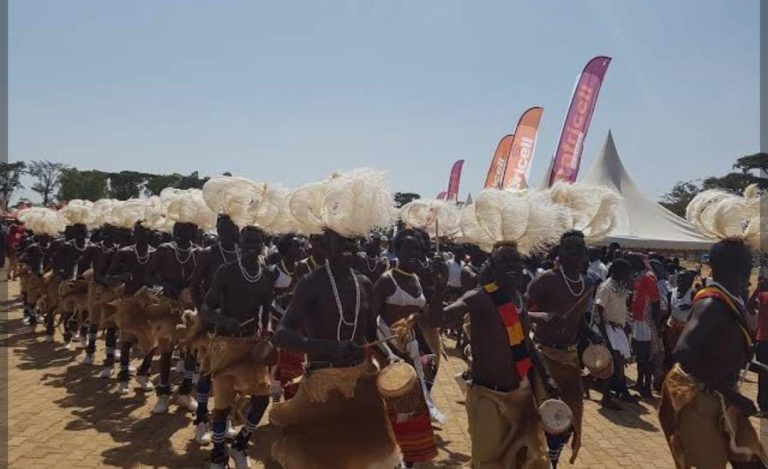
Sixteen elders from the Lamogi Chiefdom of northern Uganda crossed into Kenya this November, carrying with them ancient symbols of unity: a royal spear, a whip of truth, a gourd of blessing and a winnowing tray as gifts not of gold, but of kinship.

Their mission was sacred, to pay homage to Raila Amolo Odinga, the son of East Africa whose life, like the River Nile that binds their lands, flowed beyond political boundaries into the deep waters of shared ancestry and cultural unity.

The Journey of the Lamogi

Led by Rwot Otinga Atuka Ottoyai II, the Lamogi delegation travelled from Amuru District in northern Uganda to Bondo, Siaya County, where the Odinga family was observing the post-burial cultural rites for the departed statesman.
In their tradition, chiefs do not attend immediate funerals; the spirit must first rest. Their visit, a month after Raila’s passing, was therefore a gesture steeped in custom, reverence and historical continuity.

At Kang’o ka Jaramogi, they were received with dance and tears, not of mourning, but of reunion. The elders spoke of bloodlines that predate borders, of migrations that birthed both the Luo of Kenya and the Lamogi of Uganda, and of a shared identity that Raila had long championed through his Pan-African ideals and his unwavering call for unity beyond tribe and territory.

The Man Who Dreamed Beyond Nations

Raila Odinga’s politics were often read in the language of power, but his philosophy was always one of peoplehood.
He spoke of a continent that must remember itself — that Africa’s strength lay not in the flags that divided it, but in the cultures that connected it.

For the Luo, the Lamogi, the Acholi and many other Nilotic communities scattered across the East African plain, Raila embodied the spirit of a cultural custodian, a modern-day elder who understood that identity is both political and spiritual.

When the Lamogi delegation laid their gifts before his resting place, they were not only honouring a leader; they were affirming the oneness of a people fractured by colonial lines but bound by language, rhythm and memory.

Symbols That Speak Across Time

Each item the Lamogi elders brought carried meaning older than nations:

The Spear (Tong) represents defence, courage and continuity of lineage.

The Whip (Odo Wino) reminds that truth must always lead power.

The Gourd (Abiya) is the vessel of life and blessing, signifying abundance and renewal.

The Winnowing Tray (Ayang) symbolises the wisdom to separate good from evil, integrity from corruption.

In offering these to the Odinga family, the elders were, in essence, returning what Raila himself had stood for: justice, truth, resilience and the renewal of a people’s dignity.

A Legacy Beyond Borders

The Lamogi visit is not merely ceremonial but cultural diplomacy in its purest form and a conversation between the living and the departed, between Uganda and Kenya, between the past and the future.

It reminds East Africa that before there was a border, there was belonging. Before there were nations, there were narratives of families that fished from the same river, danced to the same drums and mourned their dead under the same moon.

Raila Odinga, through his vision of integration and unity, lived out this truth. He saw the East African Community not as a bureaucratic bloc, but as a return to an older wholeness where shared heritage became the foundation of shared progress.

The Spirit of Return

As the Lamogi delegation departed Bondo, the air was thick with a sense of closure and renewal.
One elder was heard saying, “We came to mourn, but we found our own reflection.”

In that statement lies the profound cultural significance of the visit: it was not just about Raila’s death, but about the reawakening of East Africa’s ancestral conscience.

The Lamogi visit stands as a timeless reminder that borders may divide land, but they can never divide lineage and in that truth, Raila’s spirit, and the spirit of the Lamogi, continues to live on.

Sea-saw battle in Mbeere North, with the scorched earth policy in play as deputies clash in a must-win brawl

0

By Anderson Ojwang

Mbeere North constituency offers Kenya a taste and a glimpse of the battle of the deputies and a possible battle for the vote-rich Mt Kenya region in the 2027 general elections.

For five years, the two senior leaders from Mt Kenya have been sparring and finally, Mbeere North has provided the ring for the leaders to sort out their age-long difference.

In what was billed as the first contest between the two leaders, it ended prematurely when the referee William Ruto called off the match and instead annulled the initial results.

Ruto, then Deputy President and UDA presidential candidate for the 2022 presidential election, had invited then Mathira MP Rigathi Gachagua and Tharaka Nithi Senator Prof Abraham Kindiki Kithure to a duel for his deputy.

In this contest, a stalemate that lasted over 17 hours was characterised by failed consensus-building, with the opinion polls that favoured Kindiki.
Ruto and his team resorted to opinion polls conducted internally to unlock the stalemate. The first poll, conducted internally by a strategy and research team headed by Cabinet Secretary Davis Chirchir, involved 10,000 respondents drawn from 10 Mt Kenya counties. In that poll, Kindiki trounced Gachagua, with Governor Anne Waiguru coming in third.
In the second survey, conducted nationwide in the 47 counties, and involving 25,000 respondents, Kindiki yet again emerged top, with Waiguru and Gachagua second and third respectively.

The final vote involved the Central Kenya UDA MPs, who were called in for a vote. Senator Kindiki once again trounced Gachagua.

Out of the 31 Mt Kenya UDA MPs present, 22 voted in favour of Kindiki, 5 voted for Gachagua, two backed Waiguru, while Muturi obtained one vote, with one rejected vote.

The referee was left with no alternative but to annul the results and instead awarded the mantle to Gachagua, who was later impeached by Parliament and Senate.

And now the Mbeere North by-election is the battleground. On one corner of the ring is Gachagua, the second Deputy President, representing the United Opposition, and the self-declared leader of Mt Kenya.

On the other side of the ring is the successor, the soft-spoken Kindiki, the third and the sitting Deputy President and the captain of the UDA team in the by-election.

And Kenya, for the first time, is witnessing the battle of deputies — bitter rivals with no love lost between them — who have a date with the IEBC.

Over the weekend, Rigathi stormed Mbeere North in a military-fashioned strategy of scorched earth policy, a door-to-door campaign and visiting every home.

In his morning walks, Gachagua is deploying the strategy of scorched earth policy, which is often handy in disabling the enemy and gaining advantage over opponents.

It is a military strategy of destroying or devastating anything of value in a territory before retreating to deny its use to an advancing enemy.

In business, the term, the strategy, is also used in business to describe actions taken to make a company unattractive to a potential hostile takeover, though this can be self-damaging.

But the Professor is also not taking Gachagua’s tactic lying low and he is also employing the same strategy, making the battle fierce and stormy.

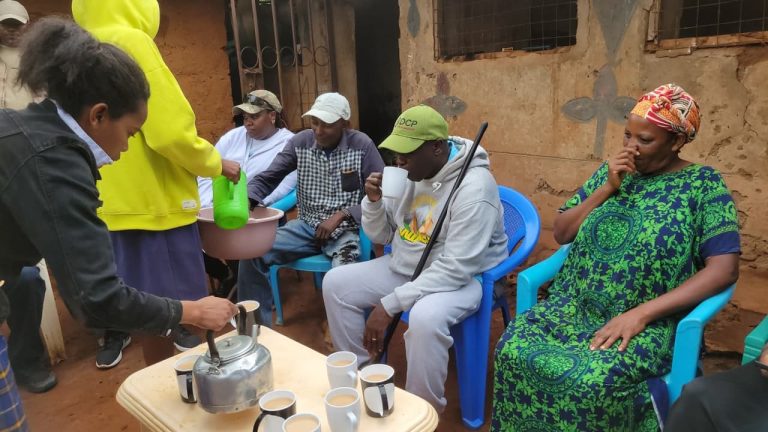
Kindiki, while on a campaign trail for UDA candidate Leonard Wamuthende, enjoys moments taking tea with the residents, catching up and sharing experience as he woos them to vote for the UDA candidate.

In his X handle, Kindiki wrote “Karambari, Mbeere North Constituency. The people of Mbeere North constituency want unity, development and progress, not chaos, empty political rhetoric and disrespect.
Interacted with residents of Karambari, updated them on status of implementation of ongoing development projects in the constituency and urged them to vote Leo Wamuthende on November 27th.”

Gachagua has pitched tent in Mbeere in a revenge battle and is supporting the DP candidate Newton Karish.

He wrote in his X handle “The villagers in Mbeere North are awake and hardworking. They are hardworking and are looking forward to the 27th November vote for Newton Karish. I am with the villagers every step of the way, one by one, home by home, village by village in a motif to liberate one nation, Kenya.
I had interactive experience in my morning walk on a vote drive for my favourite candidate Newton Karish who is a people-centred candidate. Change is in Mbeere North.”

Interestingly, the two candidates are former colleagues at the County Assembly of Embu and have been dominant figures in their respective wards.

Karish is a respected Benga artist in the community whose music is loved by the residents and is credited for nurturing the talent of several upcoming artists from the region.

Kindiki is not leaving anything to chance and he must deny Gachagua the last laugh to avoid undermining President Ruto’s prominence in the region in the 2027 elections.

While Gachagua must prove himself as the leader of the mountain and avenge the initial humiliation by the Professor.

Whichever way the election goes, it will not be without premium tears and major political setbacks ahead of the 2027 general elections.

MIGORI COUNTY EXPECTED TO HAVE A MODERN STADIUM COURTESY OF NATIONAL GOVERNMENT

0

By Erick Otieno

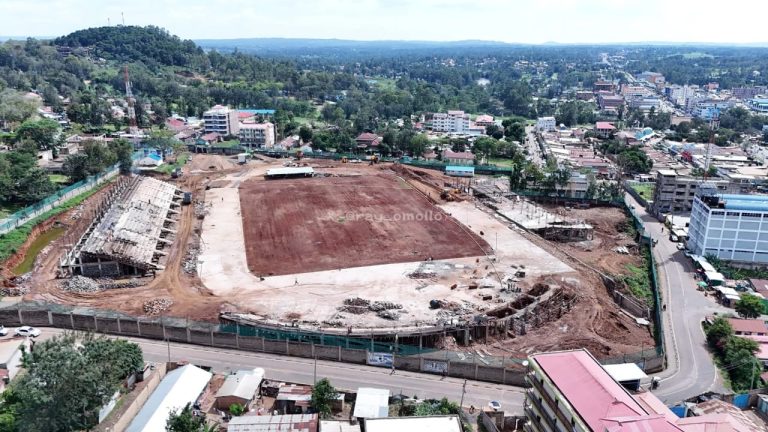
A major transformation in sports infrastructure is underway across the Nyanza Region, where the national government has launched an ambitious drive to modernize sporting facilities. The construction of the new Migori Stadium, which began in July 2025, marks a significant step toward resolving the long-standing shortage of standard arenas for a region widely known for its abundant talent.

According to progress updates shared on his official social media pages by Dr. Raymond Omollo, Principal Secretary for Internal Security, the 10,000-seater Migori Stadium is steadily taking shape. Construction teams are currently advancing work on the northern, eastern, and VIP wing structures, while terraces are being developed and red soil has been laid on the football pitch in preparation for turfing. Once complete, the facility will feature a standard football pitch, athletics track, and VIP pavilion, making it suitable for both local and national sporting events.

In his update, Dr. Omollo underscored the broader government effort to uplift sports infrastructure across Nyanza.
“For years, Nyanza’s rich sporting talent has lacked proper facilities. This project is part of President William Samoei Ruto’s deliberate plan to change that by investing in modern infrastructure that supports our youth and promotes regional growth,” he stated.

Dr. Omollo also highlighted that similar developments are underway in neighbouring counties, with modern stadiums already constructed in Homa Bay and Siaya, further strengthening the region’s sports revival and ensuring athletes across Nyanza have access to quality training and competition venues.

The progress of the Migori Stadium has also been made possible through the close working relationship between Migori County Governor Dr. George Mbogo Ochilo Ayacko and the national government. This cordial partnership has eased and facilitated various developments currently being witnessed within the county. In the case of the stadium, the County Government of Migori provided the land, enabling the national government to commence construction seamlessly. The collaboration stands as a clear demonstration of how intergovernmental cooperation can accelerate development for the benefit of citizens.

Beyond infrastructure, the Migori project has become an important economic driver for the local community. More than 207 workers, the majority being youth and women, have been engaged at the site, earning income and gaining valuable construction skills.

As progress continues, the Migori Stadium stands out as a strong symbol of the government’s commitment and strengthened county–national cooperation to nurturing talent and fostering inclusive regional growth.