Home Blog Page 85

Sibling rivalry, SG Akelo blocked from election venue as KUPPET Homa Bay branch elections abort

0

By Anderson Ojwang’

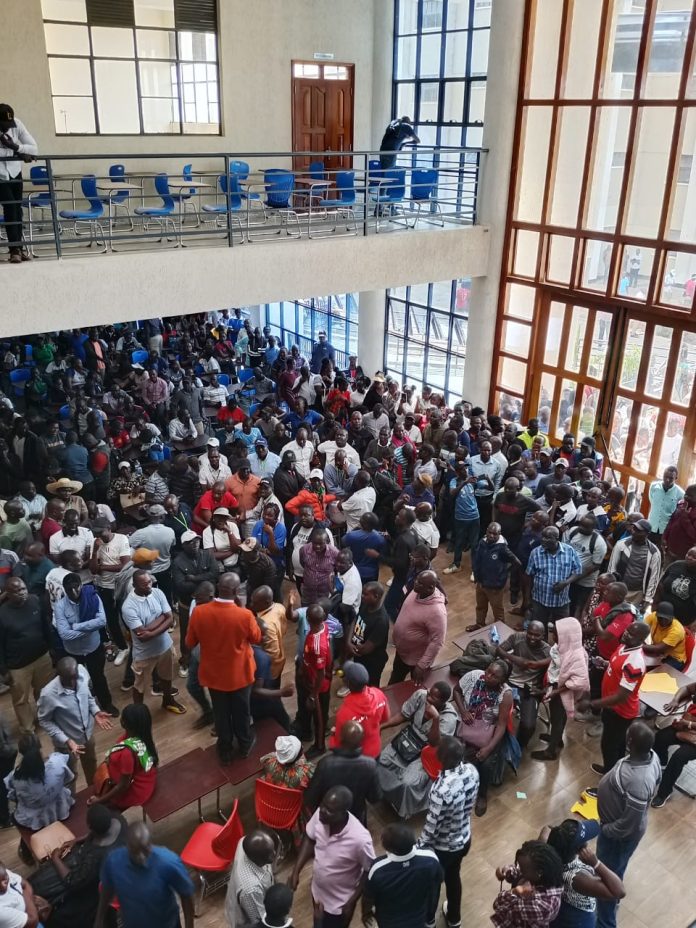
Crowd trouble forced the Homa Bay KUPPET branch elections to abort after a rowdy crowd gained entry into the hall, subsequently compromising the exercise.

Earlier, some agents and candidates blocked the Secretary General, Akelo Misori, from accessing the venue to oversee the elections.

Similarly, sibling rivalry between the incumbent secretary, Stephen Odhiambo Yogo, and his maternal nephew, Thomas Odhiambo Okoth, who is also the Nyanza Sports Secretary, was to blame for the chaos witnessed during the elections.

County Labour Officer David Kirui said the voting exercise was peaceful but was compromised at the tail end when a surging crowd of over 1,000 gained entry into the hall, making the exercise untenable.

“The turnout was huge and crowd management was poor as teachers struggled to vote. So when a huge crowd gained entrance to the hall, we could not continue with the exercise because it became compromised,” he said.

Kirui said the agents were able to secure the ballots and voting materials, but they were later destroyed when his team left the venue after the exercise was aborted.

Kirui denied any presence of goons at the elections and blamed the aborted exercise on crowd trouble, which they failed to manage to ensure a smooth election.

“The exercise was so peaceful, but we had not anticipated the huge turnout. We cannot blame any of the candidates for the trouble. I will give my report,” he said.

After the returning officer left the venue, enraged voters burnt the ballot papers and voting materials.

Thomas, who was leading Team Change against Yogo’s team, has been engaged in bitter competition for the various branch seats, and the rivalry could have led to the Sunday crowd trouble at the hall.

Misori condemned the violence that was witnessed at the election, terming it retrogressive and archaic.

“It is unfortunate that goons stopped me from accessing the venue and even threatened to torch my vehicle. On Saturday, I was in Migori and the elections were peaceful. The national office is mandated to oversee the elections,” he said.

Akelo said the elections have been peaceful countrywide and wondered why Homa Bay resorted to violence and hiring goons instead of allowing the democratic process to take its course.

He said the union was waiting for the report from the labour office, which was the returning officer and the regulator, to advise them on the next course of action.

“It is upon Homa Bay to determine whether they want to attend the National Delegates Conference or not. We will have the quorum, and it is up to them to make the choice,” he said.

Misori criticised those who hired goons to disrupt the elections, saying it demeans the image of teachers and the union and must be condemned at all costs.

On Sunday, goons denied voters and officials access to the voting hall and took over the management of voter records and materials.

Yogo said there were incidences of double voting and blamed his opponents for allegedly trying to manipulate the elections in their favour.

“Thomas, who was leading Team Change, is my maternal nephew. The campaigns have been peaceful, and we wondered why my opponents resorted to using goons,” he said.

Yogo absolved Team Sanity, led by Bernard Obop, who was vying for the chairman seat, from the violence, saying they watched helplessly as goons burnt the voting materials.

“Team Sanity of Obop behaved themselves. We sat together and watched as goons destroyed voting materials and disrupted the elections. This was unfortunate,” he said.

Obop wrote, “Too unfortunate. Thanks, colleagues, for heeding the call. Aluta continua.”

Attempts to contact Thomas were unsuccessful as his phone was switched off.
The Imperative for Establishing the Luo Council for Social-Economic Development (LCSED)

0

By Marton Ogindo

The Luo community stands at a pivotal juncture in late 2025, following the profound loss of former Prime Minister Raila Amolo Odinga, which has prompted a strategic reorganisation within the community.

The co-option of nine eminent figures into the Luo Council of Elders represents a deliberate effort to infuse professional expertise into a traditionally cultural institution, with the aim of addressing socio-economic challenges, promoting unity, and shielding the community from political interference.

However, while the Luo Council of Elders—led by Ker Nyandiko Ongadi and Odungi Randa—has excelled in preserving culture, traditions, cohesion, and harmony, the community’s pressing needs such as economic empowerment, infrastructure development, access to education, agricultural innovation, and international partnerships demand a more specialised entity.

The formation of the Luo Council for Social-Economic Development (LCSED) would channel the collective prowess of these co-opted leaders into targeted initiatives, transforming past efforts on economic mainstreaming into a permanent, action-oriented body.

LCSED is essential because the Luo region, despite its rich human capital, current national political goodwill, and strategic location at the confluence of East African nations, continues to grapple with persistent challenges such as poverty, unemployment, and underutilised resources.

A dedicated council would prioritise commerce, entrepreneurship, ICT, artisanship, sports, and asset leveraging—such as properties like Ofafa Memorial Hall—moving beyond seminars to implement practical steps that promote financial security and dignity.

By constituting these nine individuals as LCSED members, the community would harness their diverse, high-calibre expertise to drive measurable progress, ensuring that the Luo people thrive in a post-Raila era without over-reliance on politics. This professionalised structure would attract investment, foster self-reliance, and position the community as a model for ethnic-based development in Kenya.

What makes these individuals uniquely suited to this role is the breadth of their backgrounds, which span academia, diplomacy, engineering, business, politics, law, and activism—offering a multifaceted toolkit for socio-economic advancement. Below is an outline of their distinctive attributes and how they align with LCSED’s potential mandate.

Prof. George Outa is a multidisciplinary scholar and policy expert with unparalleled insights into environmental sustainability, governance, and climate adaptation—critical for addressing Luo Nyanza’s vulnerability to flooding and resource mismanagement. His accolades, including the St Andrews Prize for the Environment (2001) and the Governance in East Africa Research Award, underscore his ability to craft evidence-based strategies for economic resilience. As Chairman of the Nyanza Professionals and Business Caucus, he is well placed to mobilise networks that bridge academia and enterprise, making him ideal for leading LCSED’s policy and innovation pillars.

Ambassador Lazarus Amayo, a seasoned career diplomat, has served as Kenya’s High Commissioner to the United Kingdom, Ambassador to the United States, and Permanent Representative to the United Nations and the International Maritime Organization. His experience in Zambia, Malawi, and as Special Envoy on African Union reforms demonstrates exceptional skill in trade negotiations and diaspora engagement, earning him the Diaspora Lifetime Achievement Award. Within LCSED, his diplomatic acumen could secure foreign investment, open export markets for Luo agricultural products, and enhance diaspora remittances.

Eng. Phillip Okundi, who holds a Bachelor’s degree in Electronics and Telecommunication Engineering and a Master’s degree in Telecommunication Systems, combines technical expertise with public leadership. A former Managing Director of Kenya Posts and Telecommunications and Chairman of Worldspace International, he has also served as a Commissioner at the National Cohesion and Integration Commission and as MP for Rangwe. His advocacy for cohesion, peace, and institutional trust positions him well to spearhead LCSED’s infrastructure and digital economy agenda.

Prof. Edward Oyugi Akong’o is a veteran scholar and human rights crusader whose detention during the Moi regime for advocating multi-party democracy reflects his unwavering commitment to justice and governance reform. As a former commissioner at the Commission on Revenue Allocation, he brings valuable experience in fiscal policy and equitable resource distribution. His expertise makes him ideal for leading LCSED’s social equity initiatives aimed at empowering marginalised groups.

Hon. John Pesa, a former MP for Migori, has a strong record in development, having spearheaded initiatives such as the Nyatike–Oyani water project and supported education through the Constituency Development Fund. Holding a diploma in education from the University of Nairobi, he blends political experience with business acumen, making him well suited to drive LCSED’s grassroots programmes in health, water, and skills development.

Hon. Sam Wakiaga, an astute businessman, has built wealth through ventures in media, intelligence, and other enterprises in Homa Bay. His political ambitions, including gubernatorial bids, reflect a broader vision for regional development. Within LCSED, his financial expertise could catalyse investment in SMEs, tourism, and real estate, turning community assets into engines of wealth creation.

Eng. Erick Opon Nyamunga, a respected engineer and former MP for Nyando, utilised his role on the National CDF Committee to support education, infrastructure, and scholarships. As a community elder with strong grassroots connections, he would excel in LCSED’s engineering and community mobilisation efforts, particularly in flood control, road development, and youth employment through agro-processing.

Retired Justice Onyango Otieno, with 48 years of service in the judiciary culminating in his tenure as a Court of Appeal judge, brings unparalleled legal expertise. Author of From Village to Village: A Journey Through the Corridors of Justice, he offers critical insights into dispute resolution and policy enforcement. His role in LCSED would be to safeguard initiatives through ethical governance, transparent contracts, and sound land reforms.

Prof. Julius Omondi Nyabundi, Vice-Chancellor of Maseno University since 2016 and a Professor of Horticulture with a PhD in Ecology, is a leading plant scientist with 39 published research works on agronomy and varietal evaluation. Author of Conventional and Contemporary Practices of Plant Breeding, he is well positioned to revolutionise Luo agriculture through innovation, sustainability, and export-oriented farming.

Forming LCSED with these leaders would not only honour their co-option but also amplify their impact, creating a lasting legacy of prosperity for the Luo people. This is not merely an organisational adjustment—it is a strategic imperative for sustainable development in a changing Kenya.

The author is a former Rangwe MP.

Attention Economy, when You Know It’s Not Your generation, This Is IShowSpeed!

0

By Billy Mijungu

So, a 20-year-old American doing what many in my generation would casually dismiss as “stupid stuff” on YouTube has managed to attract a massive global following. Not just global Africa-level global. And with an even steeper climb in subscribers right here in Kenya.

I didn’t know who he was. Not even a little.

I only learned of him when my son casually told me he wanted to go see him. He was watching him eat nyama choma at Kenyatta Market. I blurted out, “What? Who is that?” and dismissed it instantly. But my son was glued to the screen the entire time. I ignored it, or so I thought.

Then came the official welcome message from President William Ruto. Then Kenya Wildlife. Then the full tourism frenzy carefully choreographed to shape a narrative and project Magical Kenya to millions of screens across the world. And suddenly, this “kid” was bigger than my indifference.

Rebecca Miano introducing herself as a Cabinet Minister to someone who clearly didn’t care who she was, because he was too busy counting subscribers as they ticked upward in real time. That was the moment it hit me.

The hell?

My generation is gone. The world is new. And we no longer control the attention economy.

So what do I do now? Start paying attention to overgrown cartoons on YouTube? Or quietly accept that my role is to see my generation through to the end while Gen Z takes over the steering wheel?

It was Gen Z frenzy, no doubt. But here’s the twist: Ruto understood it. He leaned into it. He became part of it. And whether we like it or not, that move forced many of us to pay attention. Funnily enough, the opposition were mere outfitters in this moment. They couldn’t pick the bonga points. Life is like that.

I don’t know IShowSpeed. I’m not interested in the antics. I don’t consume that content.

Yet here I am, writing about him.

That alone tells you everything you need to know about how power, influence, and relevance have shifted. Attention is no longer earned through titles, age, or tradition. It is captured, often chaotically, by those who understand the moment they live in.

Whether we approve or not is irrelevant. The world has moved.

And it didn’t ask for permission.

Follow on Facebook, X, Instagram, TikTok, and LinkedIn
@BillyMijungu

The scream of joy that brought Mukuru Kwa Njenga to a standstill as Tuju’s girl shines in KCSE

0

By Anderson Ojwang

Last Friday at midday, Mukuru Kwa Njenga slums were brought to a standstill by a piercing scream that instantly paralysed business in the bustling settlement.

Residents are accustomed to Mama Lilian Atieno Akeyo—fondly known as Mama Omena—as an ever-smiling, calm, and warm-hearted woman who avoids trouble at all costs. So when frantic screams erupted from her mabati house, neighbours rushed in, fearing the worst.

Akeyo, a widow, was found overwhelmed with tears and sweat, screaming uncontrollably while calling on God and thanking the Almighty for a miracle. When she finally calmed down enough to speak, she could only utter one name repeatedly: “Femi, Femi, Femi…”

The crowd was momentarily confused—Femi was right there, seated in front of her.

“Femi… yes, it is A–,” Akeyo finally muttered.

That was all it took. The crowd erupted into spontaneous song and dance. Residents lifted Femi shoulder-high as the entire slum burst into celebration. Her success became the pride of Mukuru Kwa Njenga.

Femi Atieno Otung had scored an A– in the just-released Kenya Certificate of Secondary Education (KCSE) examinations. She was a student at St Theresa Mbooni Girls Secondary School.

Orphaned in Class Three following the death of her father, Femi never looked back in her pursuit of education. She consistently excelled academically, scoring 411 marks out of 500 in the Kenya Certificate of Primary Education (KCPE).

“I didn’t know whether I would join secondary school. My mother could not afford the fees, and I kept praying for God to intervene,” Femi recalled. “I was optimistic that a way would open. I dedicated myself to prayer and fasting because I had a dream I could not afford to let die.”

Her prayers were answered through Mr Eric Ambuche, founder of the Slums Outreach Programme, who linked her to former Cabinet Minister Raphael Tuju.

“Tuju was very fatherly. I had not felt a father’s love for a long time. He gave me reassurance and comfort I had longed for over the years,” Femi said. “I knew God had answered my prayers. There was no turning back.”

She describes Tuju as humble, simple, and deeply caring. “Despite his status, he treated me with dignity. I realised my future was in my hands, and I had to make the opportunity count,” she said.

Tuju agreed to sponsor her secondary education, and Femi did not disappoint. Instead, she became a role model to girls in the slums.

“We should not only help our relatives,” Tuju said. “God commands us to help anyone whenever we can. Often, the prayers and gratitude of those we help from the heart reach God more than those of relatives who feel entitled.”

On Sunday, Femi and her family caught a glimpse of the life ahead when Tuju hosted them for lunch at his Karen residence. From the slums to leafy Karen, Femi was introduced to a future she is steadily conquering.

“Some parents have flown their children to Dubai and bought them expensive gifts,” Tuju said. “Today, I am hosting Femi and her family to recognise her achievement and to remind her that anything is possible. Commitment and dedication determine one’s future.”

Femi, the third-born in her family, is however pained by her elder sister’s situation. Despite scoring a B– in the 2022 KCSE examinations, her sister, Sophy Adhiambo, has been unable to join Moi University after her former school detained her result slip over fees arrears.

Her elder brother, who scored a C, works as a casual labourer in town, but his meagre earnings cannot offset the accumulated fees.

Tuju reaffirmed his commitment to supporting Femi through her education, noting that education is the most powerful tool to uplift a family.

“I am deeply grateful to Mr Tuju,” Femi said. “He is the father I never had. Through him, my future has taken shape, and I am determined to give back to society. This is the greatest lesson he has taught me.”

Guiding Career Choices After KCSE: A Call for Balance, Patience, and Informed Guidance 

0

By Nixon Bugo

Greetings and new year  compliments for 2026! I have been dedicating a lot of effort and professional investments to support youth development through youth mentorship and incubation support. 

First, allow me to take this opportunity to sincerely congratulate all the candidates who sat the just concluded KCSE examinations. Again, I deliberately say those who “sat” and not those who “passed”, because success at this stage is relative. 

Each candidate has taken an important step in their academic journey, and for that alone, they deserve recognition. I wish them all the very best in their next phase of education and eventual professional careers.

As the dust settles after the examinations, conversations in many homes will be quickly shifting from results to careers. 

Some students may have already identified their preferred career choices and, by extension, their career paths.

While this clarity is commendable, it is important to caution both students—and more importantly parents—that this stage is extremely delicate and must be handled with care, balance, and foresight.

The professional, employment and business market today is dynamic, competitive, and increasingly complex. It does not always reward what appears attractive or prestigious from a distance. Careers (whether employment or business) evolve, some become saturated, others are disrupted by technology, and entirely new fields emerge with time.

Decisions made hastily, driven by excitement, peer pressure, or societal expectations, may not always serve the long-term interests of the student.

At this point, some parents and students may already be celebrating prematurely—referring to their children, say, as “doctor,” “engineer,” “lawyer,” or other professional titles. 

While this can be motivating and well-intentioned, it can also create unnecessary pressure and unrealistic expectations. A professional title is not achieved by a name alone; it is earned through years of discipline, resilience, aptitude, and consistent performance. There is a significant journey between KCSE and professional qualification or business success, and not every student who starts the journey necessarily finishes it in the same path.

Parents must therefore be careful not to project their own unfulfilled dreams, social aspirations, or status considerations onto their children.

Career guidance should not be about prestige alone, but about alignment—alignment between the student’s abilities, interests, personality, values, and the realities of the job or business market. 

A student who excels academically may still struggle in a profession that does not match their temperament or passion. Many of us are not in the profession we studied.

One of the most important roles parents can play at this stage is that of informed guides rather than decision-makers. 

This involves listening to the student, encouraging honest self-assessment, and exposing them to accurate information about various careers.

Parents should encourage career research, engagement with mentors, professionals, career counselors, and even short-term exposure or internships where possible. These interactions often provide a more realistic picture than assumptions based on societal narratives.

Additionally, parents must recognize that career paths are no longer linear. The idea that one chooses a course, graduates, and practices the same profession for life is increasingly outdated. Many professionals today change careers multiple times, pursue further specialization, or blend skills across disciplines. Therefore, flexibility and transferable skills such as critical thinking, communication, adaptability, and digital literacy are just as important as the specific course chosen.

It is also critical to manage expectations around failure and change. A student may start a course and later realize it is not the right fit. This should not be viewed as a failure but as part of growth and self-discovery. Parents who create safe spaces for such conversations empower their children to make better long-term decisions rather than forcing persistence in unsuitable paths.

In conclusion, the period immediately after KCSE is not just a transition—it is a foundation-laying phase. Excitement is natural, optimism is healthy, but wisdom lies in restraint and informed decision-making. Parents should guide with patience, humility, and openness, remembering that the ultimate goal is not just a professional title, but a fulfilled, productive, and resilient individual. When career choices are guided thoughtfully and collaboratively, students are better positioned not just to succeed, but to thrive in an ever-changing world.

The author   supports “Enable Youth program” in Africa.

How a Church Came to the Aid of a Total Orphan Who Scored Straight A’s in KCSE

0

By Habil Onyango
Parents, teachers, and students are celebrating the recently released Kenya Certificate of Secondary Education (KCSE) 2025 results.

Many parents whose children performed exceptionally well have showered them with expensive gifts, and some are even treating their families to vacations at luxurious hotels across the country.

However, for Derrick Otieno Oyugi, these results only bring back memories of his late parents, making him wish that he had someone to celebrate his success with.

Oyugi, who sat for his KCSE at Maseno School, scored straight A’s in all eight subjects, including English, Kiswahili, Mathematics, Biology, Physics, Chemistry, Geography, and Business Studies.

Oyugi lost his mother and a sister in a road accident a year before he lost his father while he was in class five at a primary school in Ndhiwa Sub County, Homa Bay County.

“We faced a lot of frustrations after becoming orphans at such an early age, and at one point, I was forced to drop out of school to provide for the family,” he recalled.

“We struggled to access basic needs like school uniforms and food since there was no one to support us.”

As his hopes of continuing his education dwindled, Oyugi was identified by a kind neighbor who connected him with Bishop Daniel Ochieng of the Ebenezer Christian Church Assembly.

Recognizing Oyugi’s potential and need, the bishop offered support for his education.

According to the bishop, the church has supported Oyugi since he was in standard five at Ebenezer Christian School, located in Rongo Sub County, where he consistently excelled throughout his schooling.

He ultimately topped his class with 411 marks, earning a place at Maseno School, where he was one of the top students for all four years.

“In his final year, he topped a class of over 800 students,” revealed Bishop Ochieng, who oversees the church.
Bishop Ochieng shared that Oyugi comes from a low-income family and is the only boy.

He currently lives with his elder sister, who is also struggling to make ends meet through small businesses.
The bishop also mentioned that the church is paying for Oyugi’s younger sister, who is in form three at Ogande Girls School.

“The boy has excelled remarkably despite coming from a challenging background marked by the loss of both parents,” he added.
The church sponsors over 100 needy students across the country by covering their school fees and addressing other basic needs.

However, the bishop lamented the limited resources available to them and appealed for support from the national government and political leaders to help assist these needy students, most of whom are total orphans.

“We are receiving overwhelming requests for support, but we are unable to fulfill them due to a lack of sufficient resources,” he explained.

“The resources we have come solely from contributions by kind-hearted church members, and they are not enough to meet the demand.”

Oyugi’s mission is to become a neurosurgeon in his university education.

“My main goal is to become a neurosurgeon in the future, and I also wish to support other needy students who are unable to access quality education due to various challenges,” he stated.

The Kilfi meeting: Make or break for ODM as lobbying intensifies to avert fallout

0

By Team

The Orange Democratic Movement (ODM) Central Committee will tomorrow converge in Kilifi in what insiders describe as a make-or-break moment for the party, as intense lobbying intensifies to avert any fallout.

Sources told Western Insight that the meeting’s main agenda is to discuss coalition arrangements with President William Ruto’s UDA ahead of the 2027 general elections.

However, attempts to prevail upon ODM party leader Dr Oburu Odinga to postpone the meeting flopped after he was enraged by last week’s meeting between James Orengo, Secretary General Edwin Sifuna, Babu Owino, Kisumu Woman Representative Ruth Odinga, and former Busia Governor Amos Wako on possible ways to end the fallout in the party.

Sources intimated that Suba North MP Millie Odhiambo, who is also the Minority Whip in the National Assembly, unsuccessfully tried to prevail upon Oburu.

“Millie Odhiambo approached Dr Oburu to postpone the Central Committee meeting and allow members to develop common ground for the party and contain any fallout. But an unhappy and enraged Oburu did not heed the peace call,” sources told Western Insight.

In a significant move, ODM National Chairperson Gladys Wanga on Saturday met Mama Ida Odinga in what is viewed as a calculated move to heal the party.

Sources revealed that because of the sensitive nature of the discussion, Wanga and Mama Ida took over two hours walking around the compound and only returned to the house after concluding the meeting.

“Yes, it is true Governor Wanga phoned Mama Ida and Mama asked her to come home. They did not sit in the house but decided to walk around the compound. At one point, they were engrossed in the meeting and later embarked on chatting, laughing, and plucking flowers and leaves,” our sources revealed.

On Friday in Alego, Oburu said the party would soon establish a committee to spearhead coalition negotiations with President Ruto’s UDA party.

Dr Oburu said ODM would form a team to negotiate with President Ruto on the terms of a new coalition alliance, adding that first preference would be given to President Ruto.

“Now, as we approach 2027, we are not going to get into government through the back door. We are going to have a negotiated arrangement, which will be headed by me.

It will not be easy but a tough negotiation. We will get our share. 2026 is the year of negotiations for any arrangements.

Either we go into partnership with UDA or any other party.

We will soon establish a negotiation team. We will start negotiating with others because it is difficult for a party to go it alone without seeking the support of other parties.

The negotiations will start with our current partners in the broad-based arrangement. We shall only go to others if we do not agree,”he said.

Energy Cabinet Secretary Opiyo Wandayi asked Oburu to invoke the party constitution to call a meeting to elect a team to spearhead the coalition talks.

“As the duly elected ODM party leader with all the powers conferred on you under the ODM Constitution, I want you, Dr Oburu, to invoke Article 16, Sub-Article 1(f) of the ODM Constitution and embark on serious negotiations on behalf of ODM with President William Ruto and the UDA for purposes of developing a pre-election coalition agreement.

We cannot afford to wait until 2027 to start planning for the 2027 elections. Those negotiations must commence now, and the person mandated by the party constitution is Dr Oburu.

That mandate is not shared with anybody else under the Act, and we expect Dr Oburu and the leadership, as you proceed with those engagements, to take into consideration the time factor,”he said.

Key Functions and Responsibilities

The functions and responsibilities of the ODM Central Committee include:

Strategic Planning and Policy: The committee meets regularly to deliberate on key party matters, national policy positions, and overall strategy. This includes shaping the party’s vision and ensuring policies align with its core values of social justice and democracy.

Internal Governance and Unity: A major responsibility is fostering unity among party organs and members, handling internal disputes, and ensuring discipline and proper order within the party in accordance with the ODM Constitution.

Elections and Nominations Oversight: The committee oversees the party’s election processes, including ratifying the reconstitution of bodies such as the National Elections Board (NEB) and the National Elections Coordinating Committee (NECC). This includes:

Reviewing reports on appeals and results of grassroots elections.

Devolving election management to the county level for efficiency and credibility.

Setting timelines for major events such as the National Delegates Convention (NDC).

Political Engagements and Alliances: The committee discusses and determines the party’s position on national political matters, including forming coalitions or working relationships with other parties, such as the recent cooperation with the UDA administration on a 10-point agenda. It also forms technical teams to implement inter-party agreements.

Public and Member Engagement: The committee is involved in planning activities such as grassroots mobilisation, member recruitment drives, and anniversary celebrations to strengthen party structures and connect with the electorate. It also communicates the party’s official stance on national issues through press briefings.

Oversight and Accountability: It supports the strengthening of parliamentary and county assembly committees and advocates for good governance, accountability, and the proper implementation of devolved functions and resource allocation.

Risk Management (via a sub-committee): It authorises a Risk Management Committee, chaired by the party treasurer, to identify, assess, and mitigate risks, reporting back to the National Executive Committee (NEC).

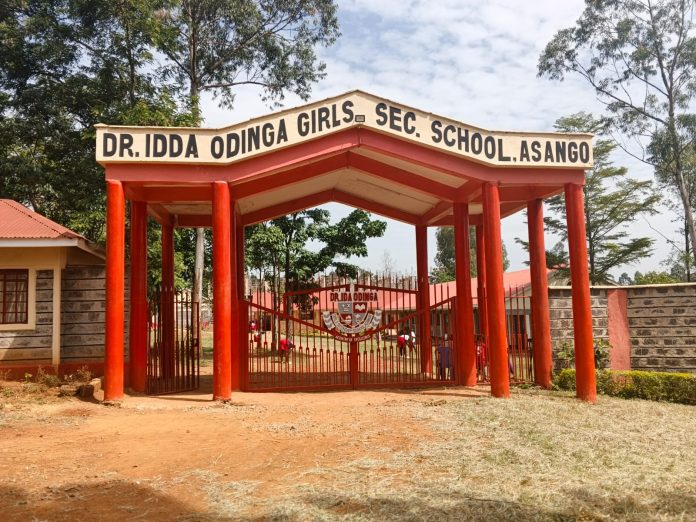
Dr. Idda Odinga Girls’ Secondary School Stuns in First KCSE Showing with a Mean Score of 7.096

0

By James Okoth

In a debut that has left educators, parents and stakeholders in awe, Dr. Idda Odinga Girls’ Secondary School, Asango, has secured a remarkable mean score of 7.096 in the 2025 KCSE. For a school making its first appearance in national exams, this achievement signals the rise of a new academic powerhouse in Ugunja.

According to Principal Nelly M. Otieno, the success is a product of careful planning, teamwork, and student commitment.

“We were only two TSC teachers in 2023. By early 2024, we had five, which greatly boosted the school. Together with the BoM teachers, we started on the form one syllabus from scratch because the foundation was shaky. The girls were extremely cooperative and worked closely with the teachers, who were dedicated beyond measure,” she said.

The results are even more impressive given the context. Starting with just two TSC teachers, the school faced gaps in teaching experience and academic foundations. Yet through strong leadership and collaboration between TSC and BoM teachers, students were guided to perform exceptionally well.

Infrastructure has also played a key role. The Ugunja CDF has already supported the school with 21 classrooms, a dormitory, a dining hall and teachers’ quarters, creating an environment that allows students to focus on learning and growth.

Looking ahead, Principal Otieno has outlined a clear wishlist for the school’s next phase of growth. Her top priorities include more dormitories to accommodate the growing student population, a fully equipped library to enhance learning resources and additional teachers’ quarters to attract and retain dedicated staff. She emphasized that these developments are crucial and hopes the CDF’s office will act quickly to make them a reality.

The 2025 performance also highlights that a new school, with strong leadership, committed staff and supportive infrastructure, can compete with established institutions. Collaboration between teachers and students proved critical in achieving this milestone.

Principal Otieno remains ambitious.

“We have a bigger candidature this year and we are working to achieve a mean of 7.5, which is realistic,” she said. This demonstrates a culture of continuous improvement, where success is a stepping stone to even higher standards.

The girls of Asango were central to the achievement. Their dedication and cooperation with teachers ensured that the school’s first KCSE cohort not only performed well but also set a solid foundation for future success.

Dr. Idda Odinga Girls’ Secondary School has shown that vision, teamwork and strategic investment in human and physical capital can turn a fledgling institution into a beacon of excellence. The 2025 results are a message to the education sector: with the right systems and leadership, new schools can achieve outstanding results.

If 2025 dazzled, 2026 promises to be extraordinary. With a larger student body, more refined systems and the implementation of critical infrastructure projects like additional dormitories, a library and more teachers’ quarters, the school is poised to raise the bar even higher, inspiring other institutions across the county and the country.

Cheers For Ruto Stir Storm In Siaya As Talk Of Rebellion Swells

0

By James Okoth

When a group of Siaya County MCAs met President William Ruto, they broke into a spontaneous “tutam” song, a vibrant chorus pledging support and affirming Ruto’s re-election bid in 2027. The moment was cheerful, symbolic and politically charged.

In a county long regarded as the political sanctuary of the late Raila Odinga, the scene was startling. Siaya has for decades stood as the stronghold of the Orange Democratic Movement with Governor James Orengo serving as one of the most loyal custodians of Odinga’s legacy. The MCAs’ open admiration for Ruto instantly ignited speculation that the meeting was more than a courtesy call and perhaps a move to weaken Orengo’s administration from within.

West Gem Ward Representative Susan Okwiry quickly moved to calm the storm. “There is nothing like the impeachment of Governor James Orengo,” she stated firmly. Okwiry, who has expressed interest in the Siaya County Woman Representative seat, maintained that the visit was purely about development and collaboration, not political betrayal.

Her remarks, however, did little to silence the talk. In Siaya’s charged political atmosphere, even symbolism carries the power of disruption. The songs, the smiles and the pledges of loyalty have already triggered waves of interpretation across the county’s political circles.

If the meeting was part of an impeachment scheme, it would represent an audacious challenge to the structures the late Odinga built. Unseating Orengo would be tantamount to striking at the heart of ODM’s ideological command. It would also signal a daring shift within Siaya, where loyalty to the Odinga name has long defined political survival.

Such a move would hand Ruto a significant symbolic victory in the very territory that has historically resisted him. For the MCAs, the decision to align with Ruto would be both risky and strategic. Risky because of possible backlash from ODM loyalists, yet strategic because access to the presidency often translates into access to resources.

If, on the other hand, the meeting had no connection to impeachment, it still holds deep political meaning. County leaders increasingly view engagement with the presidency as a path to unlocking stalled projects and securing development funding. Pragmatism, not rebellion, could have driven the visit.

From that perspective, the gathering may represent a quiet shift in political thinking. The age of strict party loyalty is giving way to an era where development interests override partisan divides. Siaya’s leaders might simply be reading the new political script of survival in modern Kenya.

Yet the optics linger. The tutam song, the cheers for Ruto and Okwiry’s swift denial have combined to mark a new chapter in Siaya’s political story. Whether it was a test of loyalty or a quest for partnership, the visit has unsettled the traditional order.

Governor Orengo remains calm for now. But the meeting has introduced a silent contest of allegiance and ambition. Beneath the surface, the legacy of the late Raila Odinga still looms large, even as a new generation of leaders begins to dance to a different rhythm.

Why Oriwo Secondary School record of highest number of 935 students admitted to university in 2024 is unlikely to be broken as the 8-4-4 system comes to the final stretch

0

By Anderson Ojwang

When the chapter of Kenya’s 8-4-4 education system comes to a close with the 2026 class and the final history of the system is written, one school in the sleepy and rocky hills of Rachuonyo West will occupy a permanent space in the annals of Kenya’s academic history.

Oriwo Boys Secondary School (Oriwo BSS) in Kibiri Ward of Karachuonyo Constituency wrote history in the 8-4-4 system as the only school in the history of KCSE to qualify the largest number of students—935—with a C+ and above for admission to university.

This was a milestone that has never been achieved by any school in the country. Oriwo BSS will therefore join the list of other top schools that left permanent records in the KCSE system.

Chairman of the School Board of Managers (BoM), Prof. Kitche Magak, said the record of Oriwo BSS is likely to remain permanent now that the system is coming to an end with the introduction of the Competency-Based Education (CBE) system.

“As the Chairman of the Board of Managers, I am absolutely gratified that we have left an indelible national record that may never be erased. This is a milestone in the history of the school and the country. It is no mean achievement for an extra-county school that still lacks most basic infrastructure. Most importantly, I am proud to assure you these are genuine results. Against all odds, the Oriwo BSS community, especially the students and teachers, worked extraordinarily hard to achieve that feat,” he said.

Prof. Magak added that the school, under the leadership of the outgoing Senior Principal, Mr. Henry Airo, underwent a major infrastructural facelift and rebranding to make it one of the best institutions in the region.

He said the school has also emerged as one of the top performers in Homa Bay County, Nyanza, and nationally, and that is why it has continued to record steady improvement in national examinations.

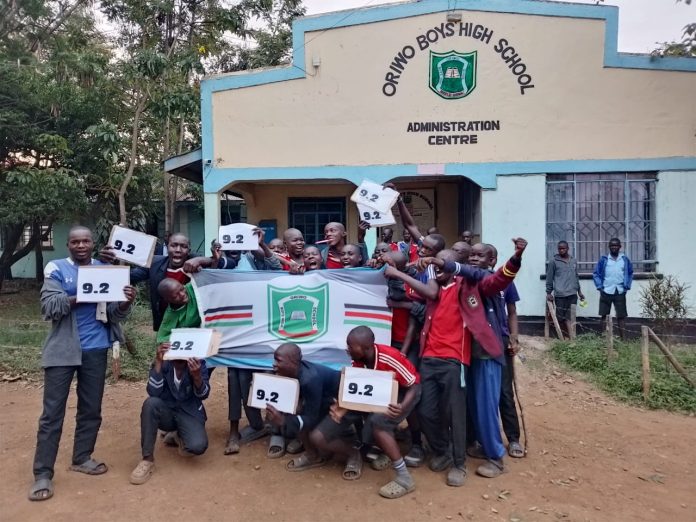
In last year’s Kenya Certificate of Secondary Education (KCSE), the school managed an improvement from 9.1 in 2024 to 9.2 in 2025.

The new Senior Principal, Mr. Tom Amadi, said the performance was exemplary, with a pass rate of 98.83 per cent. A total of 592 out of 594 candidates who sat the examinations gained direct entry to university.

“We have developed a positive attitude towards learning, and this is one of the reasons that has contributed to exemplary performance. We only had two candidates who did not manage to qualify to join university but secured grade C,” he said.

He said Oriwo Secondary School continues to take a high percentage of students to university, and this has had an immense impact on the local community, where the majority of the students come from.

“I am proud that the Karachuonyo community has steadily gained in acquiring high-quality human resources, and Oriwo Secondary School has been one of the main contributors,” he said.

“We have built nine ultra-modern classrooms, a three-bedroom principal’s house, and constructed modern toilets.

We have a project to construct a hostel with a student capacity of 1,500. We have completed one floor, and already 500 students are using the facility. We require an additional Sh40 million to complete the project,”he said.

Mr. Amadi said that due to the large student population, there was a need to construct an additional library, laboratories, more ICT rooms, and an additional hall.

“The school requires an alternative source of lighting, and we appeal to well-wishers to support this initiative, as the area suffers constant blackouts,” he said.

Karachuonyo has for decades suffered from water insecurity, and the school has only one borehole, which cannot adequately serve the institution during dry seasons.

One of the most urgent needs of the school is the availability of adequate clean and safe water. The school plans to drill a second borehole to meet the high demand caused by the large student population of over 2,200 currently. This population is expected to surpass 3,000 with the admission of the Grade 10 class.

The school also received a donation of over 40 desktop computers and a bus from President William Ruto when he presided over the homecoming thanksgiving prayer of Dr. Raymond Omollo, the Principal Secretary for Internal Security.