Home Blog Page 9

Winnie playing Raila’s secret card: Let the people decide — who will blink first, leftist or rightist?

0

By Anderson Ojwang’

ODM party leader Dr. Oburu Odinga finds himself in unfamiliar territory — from the shadows of his younger brother, the late Raila Amolo Odinga, to the focal point and center of attraction.

Oburu is caught between a rock and a hard place, in a complex and delicate balancing act that may soon sweep him back to the shadows with the emergence of his niece Winnie Odinga.

Winnie, who holds Raila’s secrets and card, having witnessed her father slip away in India while undergoing treatment, has thrown the gauntlet to her uncle and the right wing of the party.

And Winnie is leading a constituency that is preparing to take over the management of the party from the current leadership and wants new faces to spearhead negotiations with President William Ruto’s broad-based government or any other formation.

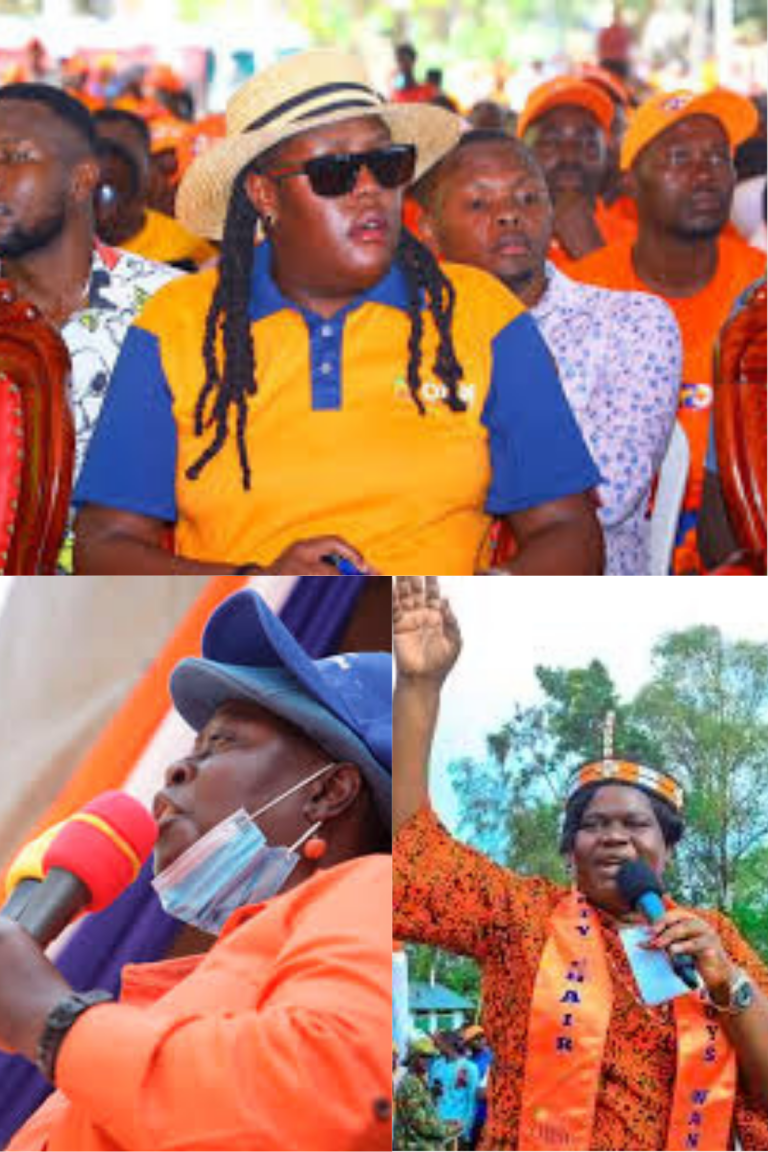
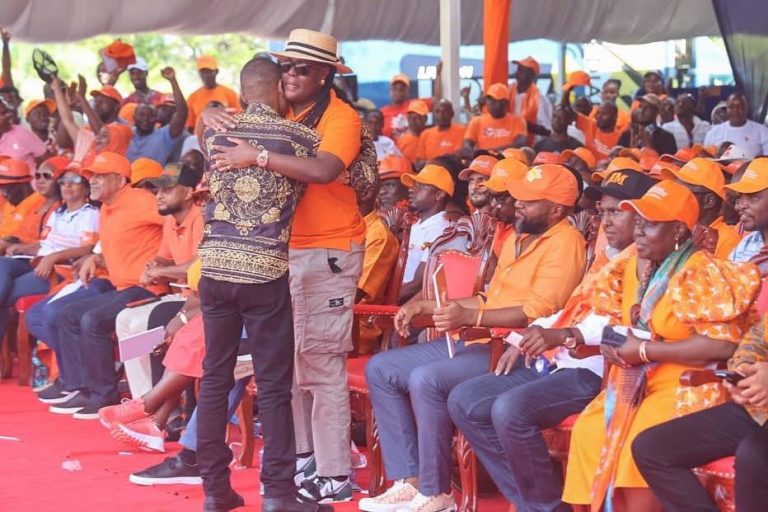
To reinforce and send a coded message to the public, Winnie rose and embraced Embakasi East MP Babu Owino after his speech — a brotherly and sisterly embrace with a coded message to opponents: we are one and we are ready to battle it out with you.

Similarly, during the function, party secretary general Edwin Sifuna took charge and dictated the terms. The right wing, stung by the move, took charge of the Founders’ Dinner Party with the parliamentary minority leader Junet Mohammed taking the lead, while Sifuna was relegated.

When Winnie rose to speak, she said:
“There is something I wanted to tell you. When it came to the matter of the broad-based government, the people of ODM entrusted one person with the management of that relationship. That person was Baba Raila Amolo Odinga.
That relationship is complicated, and therefore we are looking and wondering: those who are taking it upon themselves to manage it now — are they capable of managing that relationship?
I don’t think that is the question for me to answer. That is the question for the people of ODM to answer. That is why, party leader, I am requesting that we need to go back to the people and have an NDC to see who the people want to pick to manage that same relationship,”
she said.

But tactical Oburu, an old and shrewd politician, did not swallow the bait but offered to use a different path to resolve the emerging contention.

“When my child Winnie said Raila was at the center of the management of the broad-based relationship… somebody should come to help manage the broad-based government. That is my child; I will speak to her and resolve the matter internally as the Odingas.
But the seat you have given me as the party leader of ODM, I will hold it the way Raila did and ran the party.
I have taken the responsibility and do not be scared. I will do all that appertains to the office and what my brother Raila wanted done and accomplished. We will remain in the broad-based government,”
he said.

Winnie understands her father’s political script — the power is with the people — and that is why she wants ODM members consulted. Her secret card is not only about the management of the broad-based arrangement but also the composition of the party leadership.

Winnie understands her father’s script with Siaya Governor James Orengo and his Kisumu counterpart Prof. Anyang’ Nyong’o when they fought over the control of Ford-K and Nyanza. When Raila realized he couldn’t defeat Orengo in a boardroom battle, he went to the people and won. It is a similar route Winnie wants to take — not with Oburu, but with the right wing led by party national chairperson Gladys Wanga.

In Winnie’s game plan, the current ODM representatives in the broad-based government could be gullible and may be disadvantaged at the negotiation table, with the majority having already declared support for President William Ruto’s second term.

Treasury Cabinet Secretary John Mbadi, a member of the rightist wing, called for the need to respect leaders and avoid street protests, instead adopting boardroom negotiations.

“I want to say there is one thing I learnt from Raila: that as you apply one strategy, you must blend it with another. We have the strategy of going to the streets when things are bad, and Raila also taught us the virtue of having discussions and dialogue in boardrooms.
I want to speak to the people of ODM that you must respect your leaders, but we must also accept that Raila told us to go to the streets when necessary and to the boardroom when necessary,”
he said.

A reconciliatory Wanga, speaking at the Founders’ Dinner, said the lesson she had learnt was that:
“At this time of transition, the biggest lesson I pick is that we must hold together because everyone has a role to play if we are going to move the party into the next 20 years.
Another lesson was that it was never devoid of disagreement, and people did not have the same views all the time. Despite that, people sat at a table and embraced hard discussions to come up with a single place.
ODM has been built on a foundation of partnership, and as we move into the future, we must build partnerships with people of like mind,”
she said.

In this battle, Winnie has inherited her father’s networks and has a huge financial war chest to sustain the fight, unlike her opponents. Who will blink first? That is the question — and it is just a matter of when.

Sifuna in “bloodless coup”, Babu last laugh at ODM anniversary, beats drums of war

0

By Anderson Ojwang’

At the ODM anniversary in Mombasa, Secretary General Edwin Sifuna pulled a fast one on the new leadership and conducted what could be termed a “bloodless coup.”

It was a sweet last laugh for Embakasi East MP Babu Owino, who had lately become a passenger in the party and relegated to whining and mourning. And yesterday, facing the Indian Ocean, Babu beat the drums of war, inviting his opponents to a duel.

Sifuna, on the microphone, caught the rightist wing led by the new party leader Dr. Oburu Oginga and the national chairperson and Homa Bay Governor Gladys Wanga napping, nervy, and deflated.

Sifuna, as the SG, pulled the rug from under the feet of the right wing to invite Embakasi East MP Babu Owino to address the gathering, even though he was not listed as one of the speakers and had not been in Mombasa on Thursday and Friday.

“Mheshimiwa Babu Owino, kuja bwana. Yesterday, Honorable Babu Owino, we had the youth league conference here in Mombasa. They were not happy because they did not see you there. I rang you and instructed that you be in Mombasa this morning. I promised the youths that you would be here today. To show you I have done the work you tasked me to do, let Babu greet you for a minute and be respectful,” he said. And the bloodless coup saw Babu in his majestic nature walk to the podium.

Babu didn’t mince his disgust at the failure to be appointed to any of the party positions that were filled on Friday and wondered why he was not considered.

He equally beat the drums of war, saying that he too was qualified to be party leader and that without him ODM could run into trouble.

“Yesterday, I saw our leaders from ODM appointed to various positions. Congratulations. But allow me to ask, my leaders: you looked at Babu Owino and saw him not worth any seat? You people need to think about that. Youth leader Dr. Oburu Odinga, I respect you, but in the near future, even Babu Owino is fit to be the party leader. We say it is Babu because he has solutions. Bila Babu ni tabu,” he said.

Oburu recently met with Babu to calm the storm after he claimed the party would not give him the ODM ticket and preferred the incumbent Johnson Sakaja.

Sifuna and Babu, the leftists in the party and viewed as the chief opposition to the broad-based government, are seen as antagonists and have been under pressure from the rightists.

Babu, even before the demise of Raila Odinga, had declared support for Wiper leader Kalonzo Musyoka for the presidency.

Sifuna, at the burial of Raila in Bondo last month, had warned that there should be no misinformation over Raila’s future political preference in the coalition.

Sifuna had questioned the legitimacy of the Memorandum of Understanding (MoU) underpinning the deal, raising concerns over its implementation and transparency.

Homa Bay Town MP Peter Kaluma has demanded the resignation or removal of Nairobi Senator and ODM Secretary General Edwin Sifuna for what he claims is fueling confusion within the party.

“He must resign or be thrown out of the ODM party. The faster this happens, the better,” Kaluma said in a statement posted on his X account in a previous post.

Suna East MP Junet Mohamed, a close ally of Raila Odinga, dismissed Sifuna’s sentiments, insisting the senator does not speak on behalf of the party.

The newly appointed coordinator of the Protest Victims Compensation Plan, Makau Mutua, had called on Sifuna to resign from his position as ODM Secretary General, describing his current position as untenable within the party structure.

In a statement posted on his X account on Wednesday, August 20, 2025, Mutua suggested that resignation would be the principled course of action for Sifuna given his current circumstances.

“My good learned friend and Senator Edwin Sifuna appears to be in an untenable position as SG of the ODM party,” Mutua stated.

Former ODM Deputy Party Leader and Cabinet Secretary Hassan Joho did not take Babu’s sentiments lying low and gave a harsh rebuttal.

“Do not be threatened and scared by people who don’t speak on behalf of the party. Not everybody should be a spokesman. We have leaders. If you look at Gladys Wanga, is she a person to be threatened and scared? What about Dr. Oburu? Who are you to speak if these leaders have not spoken? You must also understand that Baba loved all of us, from the Coast to the Lake. He accommodated us and listened to our views, and that is why we loved him. You cannot force us to love someone. We only love the lovable,” he said.

Siaya Governor James Orengo said there is nowhere ODM can plead with Ruto because the President needs ODM most.

Ruto, at the funeral, had pledged that he would not allow ODM to die or be taken away by some people for selfish gain.

As the celebration came to a close, with the war drums on, the rightist wing must go back to the drawing board to contain the leftists, who seem to be ahead in the game.

How a KSh150,000 Transfer Triggered the Arrest of Anti-Counterfeit Authority Board Chair

0

By James Okoth

What began as a disputed KSh150,000 mobile money transfer has spiralled into the arrest of Hon. Josphat Gichunge Kabeabea, the Chairperson of the Anti-Counterfeit Authority (ACA) Board, exposing what investigators believe is a wider extortion racket targeting investors.

According to the Ethics and Anti-Corruption Commission (EACC), the seemingly modest payment was the final piece of evidence needed to link Mr. Kabeabea to an alleged bribery demand made to a Chinese investor operating under Hongda Automotive Limited. The investor reported that the ACA board chair had initially demanded KSh5 million to halt purported enforcement actions over alleged counterfeit dealings. The amount was later negotiated down to KSh150,000, which was allegedly sent to a mobile number traced to Mr. Kabeabea’s personal driver.

Investigators say that this transfer, though far below the initial demand, provided a direct financial trail that strengthened the case. Armed with the transaction details, EACC moved swiftly to secure search warrants, leading to coordinated raids at Mr. Kabeabea’s home and offices on Friday morning.

The Commission now believes the alleged extortion attempt was not an isolated incident. Preliminary evidence gathered during the expanded probe points to similar complaints from other local and foreign investors who claim they were pressured into paying bribes under threat of arrest or raids.

Mr. Kabeabea was arrested during the operation and is currently detained at Integrity Centre Police Station for further questioning and statement recording as the investigation widens.

EACC says the arrest underscores how even a single suspicious payment, in this case, KSh150,000, can unravel a much larger web of alleged corruption within a key regulatory body.

The Public Finance Management Act Provision That Loses Kenya Money, The Theft Clause.

0

By Billy Mijungu

There is a small paragraph in the Public Finance Management Act that most Kenyans have never heard of, yet it has silently caused some of the biggest financial mysteries in our country. Hidden in Section 50 subsection 7 paragraph (d) is a rule that allows part of any loan Kenya borrows from abroad to be deducted at the source to pay things like fees, commissions, arrangers, book runners, lawyers and rating agencies. These charges are removed abroad long before the money reaches Kenya.

At first this sounds normal. But it is one of the largest loopholes in our financial laws because the deductions happen outside the country and never pass through the Consolidated Fund. That means Parliament, the Auditor General and the public cannot see them. Kenyans hear that a certain amount has been borrowed, but what finally arrives at home is far less. Yet the country must repay the full amount plus interest. This is how corruption hides in plain sight. Money disappears before it even touches Kenyan soil, and because the deals are negotiated quietly and abroad, no one truly knows who agreed to what or whether the charges were reasonable.

This loophole is the reason the first Eurobond became a national riddle. The government proudly told Kenyans how much had been raised. But when Kenyans asked to see the money or understand where it had gone, the answers never lined up. The figures kept shifting because some of the money had already been taken at the source under this same provision. Since the deductions were made abroad, giving a clear and simple account of the funds became almost impossible. That confusion fuelled mistrust. Kenyans asked honest questions: which account received the money, who took what, why the numbers kept changing and why no clean paperwork was produced. The truth is that the problem began long before the money reached Nairobi. It began with a law that allows a loan to shrink quietly on foreign soil.

This is why the Ethics and Anti Corruption Commission must step in. Modern corruption is no longer carried in brown envelopes; it hides in contracts, legal phrases and financial structures that look harmless. EACC must investigate how much Kenya has lost through these external deductions and who benefits from them. Most importantly, it must push for an amendment to ensure every coin of every loan first enters the Consolidated Fund so that all fees are publicly declared and approved before signing.

Kenya cannot keep repaying money that never fully reaches its people. Closing this loophole is not just a legal fix it is a step toward restoring trust, accountability and honesty in public finance.

Members of Parliament should wake up and Amend.

Court Issues Arrest Warrant for Kisumu City Manager Over Forgery Allegations

0

By James Okoth

The Milimani Anti-Corruption Court has issued a warrant of arrest against Kisumu County City Manager Michael Abala Wanga after he failed to appear for plea-taking on charges of forgery, uttering false documents and fraudulent acquisition of public funds.

According to the Office of the Director of Public Prosecutions, Mr. Wanga is accused of altering the contents of a letter dated June 10, 2024, purportedly inviting him to the CLEAN Air Forum in Lagos, Nigeria, between July 8 and 12, 2024. The prosecution told the court that the altered document was used to justify excess facilitation payments from the Kisumu County Government.

The court heard that on June 19, 2024, at the county offices, the official allegedly uttered the forged invitation letter, claiming it had been issued by the University of Lagos. As a result, he is said to have fraudulently received KSh283,402.50 in excess allowances.

The DPP has also preferred additional charges against Mr. Wanga, including fraudulent acquisition of public property worth KSh8,701,091 and forging a Kenya Certificate of Secondary Education (KCSE) certificate indicating a mean grade of C+, purportedly issued by the Kenya National Examinations Council.

Senior Principal Magistrate Gichana issued the arrest warrant following the accused’s failure to attend court. The matter will be mentioned on November 25, 2025.

From a Movement to a Mosaic: ODM at 20 and the Emerging Fault Lines

0

By Anderson Ojwang

Today, ODM marks two important events: the celebration of its 20th anniversary and the end of the 30-day period of mourning for the party leader, the late Raila Amolo Odinga.

But as party members and leaders gather in Mombasa today—where founder members including President William Ruto, Najib Balala, among others, will converge—the party is witnessing the emergence of leftist and rightist wings.

A Nigerian proverb aptly captures the moment: “When the mad man starts dancing in the market, those who know him watch the drums.”

ODM turns 20 at a moment when the drums inside the movement are beating in different directions.

The party that once marched as a single, defiant force behind Raila Odinga is today a mosaic of competing visions, rival power blocs, and ideological realignments redefining its future.

What unfolded in Mombasa during the anniversary celebrations was not mere celebration; it was a revealing X-ray of a party in transition.

The Leftists: Reclaiming the Opposition Mantle

A bold, youthful, and outspoken bloc—anchored by Winnie Odinga, Babu Owino, Edwin Sifuna and backed by Siaya Governor James Orengo and Kisumu Governor Prof. Anyang’ Nyong’o—has moved to redefine ODM’s identity.

Their argument is simple and uncompromising:
ODM must field a presidential candidate in 2027, and the campaign must begin now!

“I hear that there are those who walk with us during the day and at night they want to sell the party. This cannot happen. ODM was not born in a boardroom, it was not made in a bedroom. So its future will not be discussed as pillow talk. ODM was born from protest. We are sorry because we do not know how to get it right. ODM belongs to the people,” Winnie Odinga said.

This faction believes the party risks fading into irrelevance if it abandons its traditional oppositional posture. They accuse party leaders collaborating with the government of diluting ODM’s legacy, weakening its structures, and confusing its constituents. Their tone is radical, their messaging confrontational, and their intent unmistakable: they want to ignite the Orange flame once more—the people-driven flame.

Orengo capped it when he said: “ODM party is a party for the people. A movement rising with renewed strength, unity, and purpose, more powerful than ever before. Rooted in the struggles and hopes of the ordinary citizens, ODM is stepping into a new era where the people’s voice drives every decision, shapes every reform, and fuels unstoppable momentum for real change.”

The Rightists: Cooperation Over Confrontation

On the opposite flank is a contrasting school of thought. Led by Gladys Wanga and other state-aligned leaders, and buoyed by the newly confirmed party chair Dr. Oburu Odinga, the Rightists see political stability—not agitation—as the path to relevance.

In Wanga’s camp are CS John Mbadi and his counterpart Opiyo Wandayi; others are Sam Atandi, Junet Mohammed, Opondo Kaluma, among others.

To them, cooperating with President William Ruto is not betrayal; it is strategic survival.

This faction believes:

  • Ruto’s re-election in 2027 is already taking shape
  • ODM must secure development space and negotiation leverage
  • Hostility will only isolate the party further

Their motto is pragmatic: stay close to power today to remain viable tomorrow.

Junet wrote on his X handle: “We remain united, steadfast, and committed to the partnership between the ODM party and UDA, and will continue to support the broad-based government under President William Ruto.”

The Centre: A Quiet Middle Holding the Dam Together

Between these rival poles sits a quieter, emerging bloc—figures like Adhiambo Odinga and several moderate MPs who neither want to burn bridges nor rush succession battles. They fear that a premature contest for Raila’s mantle could fracture ODM beyond repair.

Their proposal is measured:
A structured, orderly transition, guided by Raila’s guiding angel vox dei vox populi—the people’s voice as the voice of God—not by panic or political hunger.

Whether this centrist force can withstand pressure from both left and right remains to be seen, but their stabilizing posture may be the only glue preventing the Orange house from splitting entirely.


A Party in Search of Its Compass

ODM’s current fragmentation is not merely ideological—it is existential.
The unanswered question of leadership after Raila hangs over every conversation, every mobilization, and every public statement. For two decades, his authority was the ODM’s anchor. Today, that anchor is a seed yet to germinate, whose true fruits will take shape in season—yes, not out of it—the source of both reassurance and anxiety.

Leftists want a successor now.
Rightists want to delay that conversation indefinitely.
Centrists want the voice of the people to be their radar and want Raila to supervise the transition himself.

ODM at 20, therefore, is not just a celebration; it is an inflection point.

The Road Ahead: Renewal or Rupture?

The party’s future will depend on:

  1. How the emerging ODM political rifts navigate its future compass, whether strategic or reluctant.
  2. Whether internal elections bring clarity or deepen divisions.
  3. Whether ODM can redefine itself without mimicking either UDA or being trapped by nostalgia.

A movement that once defined opposition politics is slowly becoming a mosaic—beautiful, complex, but fragile. The question is whether ODM’s leadership will treat this mosaic as art to be preserved or as broken glass to be swept aside.

ODM at 20 is a reminder of both its historic triumphs and its looming crossroads.

And as the Nigerian proverb warns, when a familiar dancer moves to unfamiliar drums, it is the watchers—not the dancer—who must decide what the future rhythm will be.

How Ranguma’s Entry into Kisumu’s Gubernatorial Race Complicates the Matrix

0

By Sandra Blessings

Kisumu’s first governor Jack Ranguma has rattled the political waters and thrown gubernatorial aspirants back to the drawing board.

The return of Ranguma to the race has elicited excitement in all the seven sub-counties namely Seme, Kisumu West, Kisumu East, Kisumu Central, Nyando, Nyakach, and Muhoroni.

Similarly, religious leaders and elders from the six rural sub-counties have welcomed the decision, saying Ranguma left an indelible development mark that placed Kisumu on the right footing.

Importantly, a move to install one of the aspirants from the Kano clan as their candidate has now stalled with the return of Ranguma.

Residents and elders from Kano are of the opinion that Ranguma should be allowed to complete his term.

Similarly, Kisumu County Government staff have welcomed Ranguma’s candidature, saying that during his term, the welfare of staff was put first into consideration and the working environment was conducive. A number of workers interviewed said there was no nepotism and clannism as is being witnessed in the current regime.

Before his declaration, the playing ground was crowded by new entrants, among them first-term elected MPs and the senator. In contention are Kisumu Central MP Joshua Oron, Kisumu West MP Rosa Buyu, Nyakach MP Aduma Owuor, Deputy Governor Dr. Mathews Owili, Senator Tom Ojienda, and former MP Ken Obura.

In the last general election, Ranguma braved the hostile political and ODM climate to secure 100,600 votes against Prof. Anyang’ Nyong’o’s 319,357 votes.

In the 2017 ODM nominations, Ranguma was winning the ODM primaries when the party leadership directed that Nyong’o be declared the winner at Thurdibuoro Secondary School, some 60 kilometers away from the gazetted party tallying centre at Aga Khan Hall.

At the Aga Khan Hall in Kisumu town, Ranguma was declared the winner by Deputy Returning Officer Richard Kiyondi with 118,934 votes against Nyong’o’s 32,028.

But in Thurdibuoro, Nyong’o was declared winner by County Returning Officer Tom Okong’o after he allegedly secured 164,110 votes against Ranguma’s 91,480.

The party gave the ticket to Nyong’o, who eventually won the election by commanding a decisive lead with 259,493 votes, translating to 63.38 percent of the votes cast, trailed by Ranguma with 145,790 votes, translating to 35.61 percent.

Ranguma comes from the larger Kano clan, where Oron and Obura also hail from, but he enjoys more support than the rest.

Aduma, Owili, and Ojienda come from the minority Nyakach clan, which has 77,934 voters, while Nyando boasts 80,757 voters and Muhoroni has 79,859. Both Muhoroni and Nyando are dominated by the Kano clan.

Analysts contend that Ranguma comes with over 100,000 voters as a starting bloc and all he needs is to pick a candidate from the diaspora who commands the Kisumu Central vote.

The close working relationship between President William Ruto and Ranguma is likely to translate into massive development projects in the lake city, with Ruto as the president.

Ranguma enjoys massive support in the rural sub-counties where he undertook various development projects, and he only needs to rope in the diaspora votes to be ahead of his competitors.

For the flood-prone people of Kano, during the five years Ranguma was in office, flooding and annual displacement of families and households were tackled and they never suffered from the menace.

“For the five years I was the governor, the people of Kano never suffered from floods. We ensured that we cleared and cleaned the River Nyando basin and dredged it to ensure there was no flooding,” he said.

After his ouster, floods returned to Nyando and last year November, several families were displaced and the common cry Sirkal saidia sisi (government help us) returned to haunt the community.

Ranguma is credited with creating Kisumu millionaires and inspiring the local community to engage in business both small and large scale.

Ranguma’s election marked a new dawn for Kisumu County, which once a sleepy region, woke up to a vibrant economy.

He created youths, women, and adults millionaires who within a short time revolutionized the city economy from the Asian community–driven to the native centered.

But after the 2017 elections, when he lost, Kisumu has witnessed a dwindling number of Ranguma millionaires, while several business persons have been auctioned over failure to repay loans.

Ranguma presided over the rollout of devolution to the ward level and initiated the Ward Development Fund by giving each ward Sh10 million.

“I was concerned by the state of our roads in Kisumu County. My priority was to open and murram new roads. During my time, we opened and murramed 1,197 kilometers of road in the county. Most of these roads have today collapsed due to non-maintenance,” he said.

Similarly, Ranguma constructed 74 Early Childhood Development Education (ECDE) centres and gave scholarships to 640 students, while 2,800 others benefited from bursaries.

“I was so passionate about the health of our people. We employed 249 village health workers, and we constructed 172 dispensaries. Some we left to be completed by the new regime. This was a milestone in realizing improved health service delivery to our people,” he said.

Ranguma purchased eight ambulances, which were distributed to all the eight sub-counties for medical emergency response.

To ensure Kisumu was a 24-hour economy, Ranguma constructed floodlights in all the 72 large markets in Kisumu County which he built.

Similarly, he constructed floodlights from Kisumu Boys roundabout to Nyamasaria and another one from the same point to Kondele.

“I was able to sign a memorandum with a private investor that witnessed construction of floodlights from Obote Road to Kisumu International Airport,” he said.

Ranguma also presided over the construction of 82 social centres, built 72 large markets and 140 small ones.

“I was able to supply 72 teams with sports uniforms and kits. I am passionate about talent development and that is why we had massive investment in sports,” he said.

During his term, the French government constructed four ultra-modern schools in Kisumu County and also signed the Kenya Urban Project (KUP) contracts that witnessed the modernization of Jomo Kenyatta Sports Ground, construction of the modern Kisumu Fire Station, rehabilitation of Oile Park, and the laying of cabros in Kisumu Central Business District (CBD).

“I was able to donate dairy cows to 32 groups in a bid to spur agriculture and food security in the region,” he said.

Former Chief Officer for Economic Planning Mr. George Akongo said the administration ensured prompt payment of suppliers and contractors, and this made the economy stable and brisk.

“Ranguma allowed tenders to be given out to all suppliers and through this, new millionaires emerged. Kisumu’s economy was on an upward trend but currently it is fading out,” he said.

Equity Group Foundation, UNDP Sign Pact to Drive Youth Innovation and Inclusive Growth in Africa

0

By James Okoth

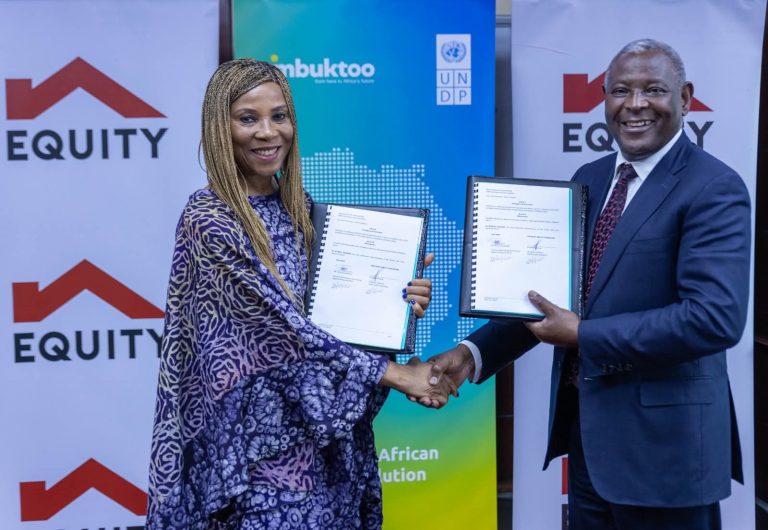
The Equity Group Foundation (EGF) and the United Nations Development Programme (UNDP) have signed a strategic partnership aimed at accelerating innovation, strengthening value chains, and empowering African youth and Micro, Small and Medium Enterprises (MSMEs) across the continent.

The Memorandum of Understanding (MoU), announced in Nairobi, seeks to boost entrepreneurship, enhance access to finance and advance climate-resilient and inclusive economic growth. The collaboration will anchor new centers of excellence under UNDP’s flagship timbuktoo initiative, offering training, mentorship and support for the development of high-potential, climate-neutral businesses.

Speaking during the signing ceremony, Equity Group Foundation Executive Chairman Dr. James Mwangi described the partnership as a transformative step that will unlock opportunities for African youth.

“Equity Bank was built on the principle of inclusion,” Dr. Mwangi said. “The issue of inclusion, particularly in the digital, AI, and cloud computing spaces, resonates deeply with us. This partnership will empower young innovators with the tools, resources and networks they need to succeed and ensure that innovation addresses some of the world’s most pressing challenges.”

He added that the Group’s footprint across seven African countries, serving a combined population of more than 350 million people, provides a large marketplace for emerging entrepreneurs.

“Through the African Continental Free Trade Area, we want young innovators to view the region as a single market and we are ready to support them with the brand strength and capabilities of the Equity Group,” Mwangi said.

The collaboration will focus on identifying high-impact sectors and value chains that can unlock growth for MSMEs and local communities. Priority areas include climate action, financial inclusion, gender equality and education.

According to EGF, the partnership is designed to reduce poverty and drive equitable development by improving business capacity and expanding access to markets and finance.

UNDP Assistant Administrator and Director of the Regional Bureau for Africa, Ms. Ahunna Eziakonwa, hailed the partnership as a cornerstone for Africa’s next phase of economic transformation.

“This partnership with Equity Group Foundation marks a significant step toward building an innovation-driven and sustainable future for Africa,” Eziakonwa said. “Through UNDP’s timbuktoo initiative, we are nurturing entrepreneurs, reinforcing value chains and advancing socio-economic empowerment. This is how we move from potential to prosperity.”

She emphasized that the initiative aims to provide a platform where youth-led businesses can scale, innovate and create lasting impact across the African continent.

The collaboration aligns with the Sustainable Development Goals (SDGs) and supports Equity Group’s Africa Recovery and Resilience Plan (ARRP), which prioritizes innovation, inclusion, and sustainable growth.

Both organizations underscored their shared commitment to leveraging expertise and resources to drive Africa’s transformation by equipping youth with the capabilities needed to compete in an increasingly digital and climate-conscious global economy.

From Grace to Grass: The Fall of Kisumu’s Once-Powerful City Manager, Michael Abala Wanga

0

By Team

For years, Michael Abala Wanga was one of the most powerful and feared figures in Kisumu. Rising from relative obscurity, his appointment as City Manager positioned him at the heart of urban management, political power and public controversy.

A Heavy-Handed Reign at City Hall

Upon taking office, Abala launched an aggressive clean-up of Kisumu’s CBD, demolishing temporary structures and displacing hundreds of small traders in an attempt to brand Kisumu “the cleanest city in Kenya.” Critics argued that the operations devastated livelihoods and disproportionately targeted the vulnerable.

His confrontational style extended beyond the streets. Demolitions became routine, clashes with business owners common and his hostility eventually reached the Judiciary, where he is now battling a defamation suit filed by a Kisumu-based Judge.

Political theatrics further fuelled his notoriety. During the 2024 Christmas festivities, he stunned the country by proposing an alcohol-drinking competition, allegedly supervised by the Kisumu Liquor Board. In Gem, a bitter feud with area MP Elisha Odhiambo frequently spilled into public insults and political brinkmanship.

Yet despite the controversies, Abala enjoyed strong protection from senior ODM leadership. As a close ally of Raila Odinga and a trusted operative of Governor Anyang’ Nyong’o, he remained largely untouchable.

But behind the public bravado lay a simmering question that refused to disappear:
Were his academic certificates genuine?

THE CERTIFICATE SCANDAL: HOW THE INVESTIGATION UNRAVELLED

The Petition That Triggered the Fall

The controversy formally entered the legal arena through ELRC Petition No. E007 of 2020 – Benard Ouko Omondi v. Kisumu County Public Service Board & Others, where Abala, listed as the 3rd Respondent, was accused of using forged certificates to secure his City Manager post.

EACC Launches a Forensic Review

An affidavit sworn by EACC Investigator Kevin Lagat details how the probe began.

November 16, 2021 — EACC Writes to KNEC

Lagat forwarded two certificates allegedly belonging to Abala for authentication:

KCPE 1986, Serial No. 2803983

KCSE 1990, Serial No. 268532

January 27, 2022 — KNEC’s Damning Verdict

KNEC confirmed both certificates had been altered:

  1. KCPE 1986 — sat at Ndori Primary School

The original name Michael A. Wanga had been changed to Michael Abala Wanga.

  1. KCSE 1990 — sat at Kambare Secondary School

Grades had been massively inflated, including:

English: C → B+

Kiswahili: D → B-

Math: D → C

CRE: C- → B

Mean Grade altered from D+ to C+

KNEC concluded the certificates were forgeries.

With these findings, EACC further noted that all higher academic and professional documents Abala relied upon were automatically compromised, disqualifying him under Section 30 of the Urban Areas and Cities Act.

A DARKER PICTURE EMERGES

December 16, 2021 — DCI Confirms More Irregularities

Responding to EACC, the Directorate of Criminal Investigations revealed that:

  1. The Police Clearance Certificate Abala submitted during recruitment was a fake — no fingerprints or application matched his ID.
  2. Criminal records showed:

CR 141/326/14 — Stealing by servant (pending)

CR 121/27/2016 — Conspiracy to defraud (pending)

The 2016 case resulted in a conviction in Kiambu Criminal Case No. 201 of 2016, later appealed as Kiambu HCCA No. 64 of 2019.

The DCI’s findings reinforced the narrative of a public officer who had concealed his criminal history while occupying high office.

THE COLLAPSE OF A CAREER

The combined findings — forged certificates, a fake PCC and active/past criminal cases — shattered the legitimacy of Abala’s tenure.

EACC concluded that his actions violated integrity standards, rendering him unfit for public service.

EACC MOVES IN FOR PROSECUTION

November 13, 2025 — The Turning Point

In a formal letter dated 13th November 2025, the Ethics and Anti-Corruption Commission (EACC) announced it had obtained a green light from the Director of Public Prosecutions (DPP) to charge Abala.

The Commission directed him to present himself immediately at the DCI Headquarters, Nairobi, for processing and arraignment.

The charges outlined include:

Forgery and uttering false documents — for allegedly presenting a fake KCSE certificate.

Fraudulent acquisition of a public office — by using falsified academic papers to secure the City Manager position.

Abuse of office — for benefiting from a role illegally obtained.

Corruption-related offences — based on irregularities uncovered during multi-agency investigations.

“The suspect has been directed to immediately present himself at the EACC headquarters, Integrity Centre, Nairobi, for processing and arraignment,” stated the agency in its statement.

With the DPP’s clearance, the case now transitions from investigation to prosecution.

THE FINAL UNRAVELLING

Once a dominant force in Kisumu’s political and administrative circles, Abala now faces one of the most serious integrity cases in the county’s history. His journey, from a feared City Manager to a man fighting to defend forged certificates in court, marks one of the most dramatic falls from power in recent memory.

As the matter proceeds to court, the political protection that once insulated him has slipped away. What remains is a stern legal battle that will test the weight of evidence against years of political bravado.

Abala Wanga’s fall is complete, from grace to grass.

INVOLVE THE WORLDS GREATEST SACCO MOVEMENT IN NATIONAL HOUSING SCHEMES

0

By Billy Mijungu

In 2022, the Cooperative Movement proposed an innovative plan to use SACCO deposits and public land through Public Private Partnerships (PPP) to fund tenant purchase housing for civil servants, including the police. The idea was simple yet transformative, to leverage the unmatched strength of SACCO savings to close Kenya’s growing housing gap and make affordable housing a reality for millions.

A large segment of the Kenyan population depends on SACCOs for financial stability, small business capital, and long term savings. On a rent to own basis, with access to free public land and a credit guarantee backed by contributions from the housing levy, the progress we have made so far, about 162,000 housing units, could have easily surpassed one million homes within a year. That potential remains within reach if the Government and SACCOs align their strategies and financing models.

Once the Government defines clear parameters for SACCO participation, home ownership will become even more affordable than under the Boma Yangu initiative. Moreover, SACCO led investments could extend into commercial housing projects, helping stabilize rental prices, open up new business opportunities, and promote orderly urban development. Such an approach would also attract more private developers into the housing market under fair and predictable regulations.

The beauty of the cooperative model is that it is rooted in trust, shared growth, and mutual benefit. SACCO members are not just investors, they are participants in their own progress. By engaging them directly in the national housing strategy, the country would not only accelerate delivery of homes but also enhance accountability and ensure that every shilling invested has a visible impact.

Expanding our national housing strategy through SACCOs is not just feasible, it is smart economics. It aligns with Kenya’s cooperative spirit and builds on trusted community structures that have worked for decades. Housing can be the foundation, but nothing stops us from leveraging SACCO strength to transform other critical sectors, from health to education to agriculture. The SACCO movement has already proven its resilience and innovation; it now deserves a central role in shaping the future of national development.