Home Blog Page 92

Former Isiolo CEC of health speaks about his ordeal

0

By Reporter

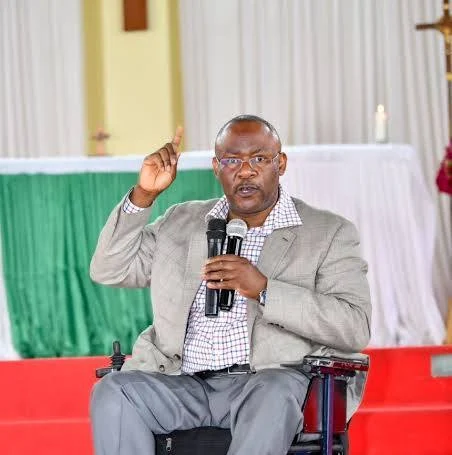
Former Isiolo County officer for Health, Abdirahman Mohamed, the man at the center of woes facing Governor Abdi Guyo has for the first time narrated the ordeal he allegedly went through under the hands of the county chief.

Mohamed who says he lost his licensed firearm, some amounts of money and suffered injuries inflicted on him by Guyo and his team, says there is overwhelming evidence implicating the governor to his abduction and torture on June 13, 2025.

Speaking to journalists two days after the Director of Public Prosecutions (DPP) Renson Ingonga ordered for the arrest and subsequent prosecution of Guyo over the abduction and torture, Mohamed narrated how the county chief had traced their entourage all the way from Nakuru to Machakos on the fateful day.

Ingonga while directing the Directorate of Criminal Investigations (DCI) to arrest Guyo, said CCTV evidence placed Guyo at the scene in Outbark Hotel in Maanzoni, Machakos County, where he allegedly instructed his men to abduct Abdirahman at the height of his impeachment in June.

In his statement released on Friday, Ingonga said that Guyo’s team, acting on his instructions, allegedly disarmed and assaulted Mohamed before forcing him into a vehicle. He was later blindfolded, beaten and abandoned in the Ruai Sewage area.

During the incident, Mohamed lost a licensed Glock pistol with 15 rounds, an iPhone 16, KSh70,000 in cash and other personal items.

“CCTV footage from the hotel placed the governor and the other suspects at the scene,” said the ODPP.

Other suspects facing charges of of kidnapping with intent to cause grievous harm and robbery with violence alongside Guyo include Abdullahi Jaldesa Banticah, Dade Boru, Abdirashid Ali Diba, Abdinur Dima Jillo, Ahmed Duale, Josephat Mwangi Komu and Yusuf Maina.

But Guyo has since denied the assertions by the DPP even as he sought a court injunction restraining barring anybody from arresting, harassing, charging, or otherwise interfering with the case pending the hearing and determination of his application on matters to do with the alleged offence of robbery with violence contrary to Section 296(2) of the Penal Code and the offence of kidnapping contrary to Section 259 of the Penal Code.

The governor has denied being at the scene of the crime and dared the DPP to produce the purported CCTv footage placing him at the center of the incident as he insisted that upon leaving Nakuru, he headed straight to his residence.

Guyo claims the incident is part of political schemes hatched by his enemies in a bid to kick him out of office.

But yesterday, Mohamed insisted that the governor had trailed their entourage comprising the County Assembly Speaker Mohamed Roba, County Assembly Clerk Salad Boru Gulacha and 16 MCAs from Nakuru where they had gone to strategise on Guyo’s impeachment.

Upon reaching Outbark Hotel in Maanzoni at around 2am, Mohamed says he was approached by four individuals known to him, among them the County Secretary, who informed him that the governor wanted to see him.

“Not aware of his intention, I followed the County Secretary to the corner of the hotel where the governor was sitting. But no sooner had I reached before him than he instructed his people to immediately disarm me. They also beat me up before handcuffing me,” Mohamed narrated.

The former county health officer who says he was one of Guyo’s chief campaigners in 2022 before falling out with him, claims he was immediately bundled into a station wagon car that raced towards Mombasa Road.

As he was being bundled into the car, his colleagues, led by Roba, called the Inspector General of Police Douglas Kanja and Deputy Inspector General of Police Eliud Lagat who immediately instructed local officers to launch investigations.

Mohamed says he was driven to an area near Ruai where he was beaten up before being dumped in the sewage.

“The whole ordeal lasted between 2am and 5am before I was rescued by some Maasai guard whom I then asked to call my family members. I was taken to a private hospital facility in Ruai where I was admitted for a full week,” he says.

He says the injuries left him with metal plates inserted in his body that to date impacts negatively on his lifestyle.

“All that I am interested in is seeing justice being meted on Guyo and his people. His claims that I abducted myself are baseless and utter nonsense. I was a victim of crime, and the law must take its course,” says Mohamed.

Asked why Guyo targeted him, Mohamed says he is yet to comprehend why his former boss, and political ally could turn against him with such brutality.

“They kidnapped and beat me in the full glare of several people outside the hotel who have collaborated with the DCI through their statements. We even have images and documents from the Expressway showing his vehicle going through the road on the fateful night,” Mohamed says.

Dalmas Otieno: The Kenya’s pioneer banker who braved the political hostility to make a mark

0

By Sandra Blessing

In Kenya’s history, the late Dalmas Otieno Anyango will be remembered for his business innovation, independent thinking, and bravery.

Dalmas, one of the country’s independent thinkers, investors, and former Cabinet Minister, died today at the age of 80.

Dalmas is credited as one of the pioneer investors in the banking sector after he founded Thabiti Finance and Thabiti Insurance Company in the 1980s.

He first formed the Thabiti Insurance Company in 1978 and later founded Thabiti Finance in 1983 with headquarters in Nairobi, and branches in Kisumu, Nairobi, Eldoret, and Kisumu.

Dalmas, who studied economics, was a shrewd investor and had a deep knowledge of the money market. Thabiti Finance became active in 1983. In 1988, he joined politics and left the management of the bank under the management of a white expatriate.

In the early 1990s, the government came up with a policy that government money could only be deposited and saved in government-run banks.

Following that policy, the government withdrew Sh 600M from Thabiti Finance, which crippled the operations of the institution.

According to Dalmas, that move was more of a witch-hunt and driven by fear that those who were in government feared that their colleagues in the government who had banks were likely to be more powerful than them.

Dalmas founded the bank with then Rift Valley PC, Hezekiah Oyugi, and he was the majority shareholder and the Managing Director of the bank.

‘Thabiti couldn’t operate. We had loaned money to our clients and they had not repaid. So the bank collapsed and we had no alternative,’ he said in a previous interview.

Dalmas was a close friend and confidant of Oyugi, who advised him to contest for the Rongo Parliamentary seat in 1988. He was elected and subsequently appointed to the Cabinet.

‘Oyugi and I were good friends and I would visit him every weekend in Nakuru. I would accompany him to State House Nakuru and various functions by the President Daniel Moi. Moi knew me and we became good friends.
Oyugi told me, he couldn’t resign from PC to contest for a parliamentary seat because that position was more powerful. So he asked me to contest and I won. After that, he ensured I was appointed to the cabinet.
When he became PS Internal Security, he could not forgo the seat to become an MP. That is how I landed in the Parliament and Cabinet,’
he said in a previous interview.

Dalmas was elected unopposed and appointed Minister for Industry and became the youngest Cabinet Minister at the age of 42, before Musalia Mudavadi was appointed to the Cabinet at the age of 29 after the death of his father.

He served six years as Minister of Transport and Communication and was elected Chair of Africa’s Ministers of Communication.

Dalmas lost the 1992 first multiparty election but was nominated and appointed to the Cabinet. In 2007, he joined Raila Odinga’s party ODM and was elected Rongo MP and appointed to the Cabinet. In 2014, he lost the seat after he unsuccessfully tried to create his own political outfit named Kalausi to rival ODM dominance in Nyanza and as a quest to emancipate the freedom of the people of Southern Nyanza.

In 2017, he unsuccessfully vied for the Rongo seat as an independent candidate but lost to the current MP Paul Abuor.

‘My challenge in politics came as a result in Luoland that you had to be a Raila person to be elected. My capacity and standard—I didn’t have these skills to be somebody’s person.
The problem was learning to be somebody’s person while I was brought up in a sphere of a visionary target to be able to bring up people together.
Following another person, the way I was required to do, became difficult. So there was a campaign that I should not be elected because I was going to advocate independence. I failed to be an Odingaist.
I didn’t know how to say yes sir, all my life I was a top student up to graduate level. I was brought up as a person to chart the way, to look at the way forward. Not to develop followers to me. I didn’t have the skills of a follower.
Between me and Raila, we had no conflict but people created the conflict,’
he previously said in an interview.

Dalmas was one of the team of negotiators who represented Raila in 2007, during the Kofi Annan-led peace negotiation that birthed the coalition government between President Mwai Kibaki and Prime Minister Raila.

A Watchful Eye for the Victims of State Violence

0
Junior Secondary Schools

By Billy Mijungu

When the smoke cleared after the elections of 2017, many Kenyans were left with scars that will never fade. Families buried their children, widows stared into an uncertain future, and young men carried wounds that would never heal. Yet, as political leaders shook hands, traded insults, or embraced in new alliances, the victims of violence were forgotten.

It is against this backdrop that Faith Mony Odhiambo, the President of the Law Society of Kenya, now stands. She carries with her not just the title of the second woman to ever lead the society, but also the heavy burden of being a custodian of justice in a nation where the State has too often turned its weapons against its own people.

Faith’s decision to sit on the compensation panel for victims of police, government, and political violence has stirred mixed emotions. Critics shout betrayal. They say she is walking too close to power. On social media, hashtags question her loyalty. But beyond the noise, a deeper truth emerges: Faith is serving Kenyans, not William Ruto and not Raila Odinga. She is choosing the path of uncomfortable service because justice, when delayed or denied, is never neutral, it is an open wound.

Her story is one of constant vigilance. At odd hours of the night, her phone buzzes with calls from desperate families reporting abductions and harassment. At dawn, she is mobilizing advocates to document abuses. When word spread that youths in Isiolo were being picked up after heckling the President, it was Faith who urged Kenyans to record, share, and demand accountability. In the eyes of ordinary people, she is not a distant leader but a sister, a colleague, a guardian.

And yet, the backlash is real. Some insist that by working with government structures, she has surrendered independence. But her response has been firm: “My loyalty is to the people of Kenya.” She has promised to resign if the process is frustrated or turned into a political spectacle. That promise, repeated in her own words, has kept faith alive in the hearts of many who still wait for justice.

On Twitter, young Kenyans praise her for standing tall when others bend. On Facebook, victims’ families share stories of hope that maybe, this time, someone in power is listening. On Socials, Kenyans remark that her decision to remain firm reflects an integrity rarely seen in leadership. These digital echoes are not mere chatter, they are testimonies of a society hungry for justice.

The task ahead is enormous. The panel she helps to lead has only 120 days to listen to countless stories, to verify losses, to measure pain in numbers that can never truly capture it. But the presence of Faith Odhiambo offers assurance that the exercise will not be another government ritual. She is a lawyer, an advocate, and above all, a Kenyan mother and sister who knows that behind every case file is a human life.

This is why she must stay. For the child whose father never came home. For the widow who still waits for recognition. For the young man whose limp tells the story of a protest gone wrong. Faith Odhiambo must keep a watchful eye, not for the government, not for the opposition, but for the ordinary Kenyan who has no other defender.

In a country where politics shifts like sand, she reminds us that justice must remain firm, impartial, and human. And that is the Kenya we all deserve.

Aspirants apathy rocks ODM for the Kasipul by-election after leading candidates seek alternative vehicles

0

By Hope Barbra

For the first time in history, the excitement and scramble for Orange Democratic Movement (ODM) ticket in Nyanza has thawed, with leading aspirants for the Kasipul parliamentary by-election seeking alternative vehicles.

ODM Secretary-General Edwin Sifuna had warned three months ago of the aspirants’ apathy over the party certificate, and sources within say only two aspirants have expressed interest in the party ticket by paying the nomination fees.

Sifuna had, during a live TV interview with Citizen TV, revealed that the excitement over the ODM ticket was waning and that aspirants were opting for other parties as part of the concern the party has to contend with.

Interestingly, only two aspirants have so far sought the party ticket. They include Mr Boyd Were, the son of the slain area MP Charles Ongondo Were, who is enjoying the support of ODM national chairperson, also Homa Bay Governor Gladys Wanga, and a section of MPs from the region.

Wanga has directed county government employees from the area to campaign for Boyd and even prevailed upon her CEC Dr Joash Aloo to forgo his ambition and instead support her candidate.

The other is Kepha Ogada, who enjoys the support of Siaya Senator Dr Oburu Odinga and his sister Dr Wenwa Akinyi Oginga.

The decision by Wanga to declare support for Boyd has divided the party right in the middle and forced most of the aspirants to seek alternative vehicles for the by-election.

Equally, Kasipul professional group led by Eng Tom Awino Okoko wrote to the ODM party leader Raila Odinga to express their concern over interference in the nomination by the party’s officials.

The professionals had threatened to stop any form of “opposition of a candidate on them” and want to be allowed to independently elect a candidate of their choice.

Ogada said it was sad that only three aspirants had sought the ODM ticket and registered to participate in the party’s nomination scheduled for this.

“The interference in the ODM nomination by the national chairperson is eroding the party’s national outlook and may undermine its performance in the by-election. Let the people be given a free hand to elect a candidate of their choice,” he said.

Previously, over 14 aspirants had declared interest in fighting over the ODM ticket, but the excitement has faded out and left ODM as a shell.

ODM is reputed for nomination anomalies, with the party leadership known to interfere with the exercise or, on occasion, award direct tickets to their preferred candidates.

The seat has attracted Ogada, Victor Mbaka, Sam Otiende, Boyd, Philip Aroko, Okindo Majiwa, Okeyo Ouko, Robert Ajwang Mabior, Omondi Swaleh, Collins Okeyo, and George Otieno, among others.

Wanga and her deputy, and a former area MP Oyugi Magwanga, have differed over the nomination, with Magwanga demanding that the electorate be allowed to elect a candidate of their choice.

And now the battle is shaping up to a war ground between Wanga and Magwanga, who are likely to face off in the 2027 general election.

The by-election is so crucial and strategic for both Wanga and Magwanga ahead of the 2027 general elections, where they may face each other at the ballot box for the county seat.

For Wanga, Ongondo’s demise left a vacuum and void that she must fill with her preferred candidate to checkmate Magwanga.

Ongondo was the checkmate to Magwanga, and the two were bitter rivals and rarely shared a podium. Ongondo was used by Wanga to checkmate, tame her deputy, and control his political influence in the constituency.

For Magwanga, he wants to have a say in the constituency that he once represented for two terms before he decided to have a stab at the gubernatorial seat in the 2017 and 2022 elections.

Kasipul remains his fulcrum if he intends to pursue his ambition and wants a new MP allied to him to take over from Ongondo.

This explains the recent meeting of some aspirants from the area who converged in Nairobi to champion a united front in the party nominations.

The differing political stand between Wanga and Magwanga was observed after the former visited the latter at his home with a view to seeking his support for Boyd Were.

Wanga and her team tried to prevail upon Magwanga to support Ongondo’s son, Boyd, but the latter was reluctant and did not commit to the proposal.

On the table, sources told Western Insight, was that Wanga asked Magwanga to support Boyd, and in return, she would support his candidature for Orange Democratic Movement (ODM) Homa Bay County chairman seat.

Magwanga confirmed the visit, saying they discussed various issues and neither denied nor confirmed whether he was approached to support the son of his political nemesis and would, in return, get the county ODM chair seat.

“The Governor visited me last night and we discussed several issues. You are free to speculate whatever we discussed. I have been having several visitors to my home and everyone is welcome,” he said.

A Random Digital Support Units Posting System Will Eliminate Corruption in Posting Orders for Government

0

By Billy Mijungu

Have you ever heard of an accountant who works in a government ministry for decades without ever being transferred? This is not an accident. It is the outcome of a system that has long been manipulated through bribery, canvassing, and influence. Some officers remain in one position for an entire career while others are constantly shuffled and inconvenienced. The lack of fairness in postings and transfers has eroded trust in the public service and created an environment where corruption thrives.

This problem runs deeper than one profession. It cuts across the entire spectrum of government human resource management. The way postings and transfers are handled has created pockets of privilege where those with connections or money enjoy stability, while others are at the mercy of arbitrary reshuffles. Officers who are willing to bribe are assured of comfort, while those who refuse suffer endless uncertainty. The net effect is a system that undermines efficiency and breeds resentment among public servants.

The time has come to address this challenge with a bold solution. That solution is the creation of a Random Digital Support Units Posting System. The idea is simple but powerful. Instead of leaving transfers and postings in the hands of individuals who can be influenced, the process would be automated and digitized. Officers would be posted through a random system that follows preset criteria. These criteria would include qualifications, years of service, regional balance, and institutional needs. Once these factors are entered into the system, the allocation of officers would be done automatically.

This approach has clear advantages. First, it removes predictability. When no one can anticipate how and where postings will be done, the opportunities for manipulation disappear. Second, it restores fairness. Every officer, whether junior or senior, connected or unconnected, would be subject to the same transparent framework. Third, it boosts morale. Officers would know that their transfers or retentions are not based on favoritism but on a neutral and credible system.

There are many lessons to be borrowed from other institutions. In the military, for instance, postings are guided by structured systems that rotate officers regularly to prevent entrenchment and to maintain discipline. The judiciary has also embraced structured transfers to ensure fairness and reduce the likelihood of corruption in courts. If such critical institutions can thrive on clear transfer policies, then the public service at large can adopt a digital system that applies the same principles at scale.

Randomness might sound chaotic, but in reality it brings clarity. When the rules are known and the system is automated, there is no room for second guessing or backdoor deals. Officers cannot bribe a computer, nor can they lobby an algorithm. Instead they focus on their work, knowing that their career path is managed in an impartial manner. Over time this strengthens the culture of accountability and professionalism within government institutions.

The need for this reform grows even more urgent as the public service expands. With an ever growing workforce, the current manual system of handling postings is unsustainable. It is vulnerable to corruption, it wastes time, and it undermines efficiency. A digitized and randomized system would save money, reduce human interference, and most importantly, rebuild public trust in government.

We are in an era where the strength of a nation is measured by the strength of its systems. Kenya must move away from personalized decision making that is prone to abuse. We cannot continue to rely on patronage and favoritism if we want a productive public service. What we need are strong institutions that are respected because they are transparent and incorruptible.

A Random Digital Posting System is more than a technical reform. It is a signal of intent, a commitment to fairness, and a demonstration that the government is willing to embrace change. By removing the human hand from the transfer process, we remove the temptation of corruption. By creating equal chances for all officers, we encourage merit and discourage manipulation.

If we are serious about reform, then this is the moment to act. Randomness guided by clear criteria will deliver clarity, credibility, and fairness. Patronage has already failed us. It is time for systems to lead the way.

How Sh 10.5B French government fund will make Kisumu city water and sanitation secure in the next 30 years

0

By Sandra Blessing

Development of water and sanitation infrastructure in Kisumu City through the partnership of both the French and Kenyan governments will meet the city’s demand in the next 20–30 years.

Cabinet Secretary for Water and Irrigation, Eric Mugaa, said the French government, through its development partners, was injecting approximately Sh10.5 billion into improving water systems and expanding last-mile connectivity in Kisumu City.

“The ongoing project, once completed, will be worth several billions of shillings. Phase one is nearing completion. The second phase, which is ready for groundbreaking, will focus on intensifying last-mile water connectivity not only within Kisumu but also in surrounding satellite towns.
The next phase will also include the construction of storage tanks, as well as sewerage and water supply systems,”
he said.

The LVWATSAN Programme is being implemented in Kisumu by the Lake Victoria South Water Works Development Agency (LVSWWDA), a parastatal under the Ministry of Water, Sanitation and Irrigation.

The objective of Works Package 2 Lot 1 is to extend and enhance water supply coverage in Kisumu City and the satellite town of Maseno.

On completion, the project will connect an additional 25,000 households, benefiting approximately 150,000 people.

This will also increase water coverage in Kisumu City from the current 78 per cent to 91 per cent.

Key components of the package include laying of approximately 156 km of new water pipeline within Kisumu City and construction of about 25 km of pipeline in Maseno Township.

Construction of new water storage infrastructure totalling 1.45 million litres, distributed to Obwolo reservoir, Bukna, Maseno Town and Maseno Market.

Rehabilitation of one existing borehole and construction of one new borehole in Maseno Township.

This infrastructure development is expected to significantly improve access to clean and reliable water, thereby enhancing the quality of life and supporting socio-economic growth in the region.

Eng Mugaa, together with the AFD Director for Africa, Ms Sandra Kassab, and the Ambassador of France to Kenya, H.E. Arnaud Suquet, Kisumu Governor Prof Anyang’ Nyong’o and Chief Executive Officer of LVSWWDA, Ms Jackline Kemunto, officially launched the second works package (Works Package 2 Lot 1) under the Lake Victoria Water and Sanitation (LVWATSAN) Programme.

The CS thanked the French government for its continued support in enhancing water supply and sanitation infrastructure in Kisumu City.

“The ultimate goal is to ensure that every household in Kisumu has access to a reliable and safe water supply.
As we look ahead, we will be launching new water projects in Kisumu to strengthen this long-standing cooperation,”
he said.

He also announced ongoing plans to design and conceptualise the expansion of the Dunga Water Treatment Plant, aiming to boost its capacity significantly.

In addition, the Nyalenda Sewerage Treatment Plant is set for rehabilitation under the same partnership.

He also noted that the partnership includes training programmes for water sector personnel to improve service delivery.

Ambassador Suquet said the partnership has already enabled over 2.5 million households to access clean water across the country.

’Nyong’o, said there was an urgent need for increased water connections in peri-urban areas, which were witnessing rapid population and infrastructural growth.
“Our vision goes beyond solving today’s issues. We are focused on building a sustainable Kisumu for future generations,”
Nyong’o stated.

The governor also credited the successful implementation of the first Kisumu Urban Project (KUP) to the partnership with the French government, expressing optimism for continued collaboration.

“Provision of clean water to wananchi coupled with good sanitation systems remain our Administration’s delivery priority.

Today, I had the honour of hosting H.E. Arnaud Suquet, the French Ambassador to Kenya and Somalia, Eng. Eric Mugaa, Cabinet Secretary for Water, Sanitation and Irrigation and Ms Sandra Kassab, Africa Director of the French Development Agency (AFD), on service delivery to great people of Kisumu.

We held productive discussions on strengthening investments in water and sanitation with a focus on the Lake Victoria Water and Sanitation (LVWATSAN) Programme and the Kenya Towns Sustainable Water Supply and Sanitation Programme (KTSWSSP).

These flagship projects, implemented by the Lake Victoria South Water Works Development Agency and jointly financed by the Government of Kenya, the African Development Bank, and AFD. The 3 entities are mobilising nearly Ksh. 15 billion to transform Kisumu’s water sanitation and infrastructure.

We ground broke for LVWATSAN phase 2 of Lot 1 of the project, the new Obwolo reservoir where more than 650,000 residents are assured of access to clean safe water by the year 2031,” he wrote on his Facebook page.

Celestin wins the sportsBiz golf championship

0

By Phillip Orwa

Home golfer, Rwanda’s Celestin Nsanzuwera, delivered a masterful final round to claim the SportsBiz Africa Golf Championship at the Kigali Golf Resort & Villas, the fifth leg of the Sunshine Development Tour – East Africa Swing.

Fresh from winning the SUNDEV EAST AFRICA SWING JOHNNIE WALKER CLASSIC that was held in Diani, whereby he pocketed Sh400,000 and 210 Order of World Golf Ranking (OWGR) points for his victory.

Nsanzuwera again took home USD5,000 (Sh647,250) of the USD25,000 prize purse for winning the SportsBiz Africa Golf Championship.

The Rwandan golfer, Nsanzuwera, showcased composure and class as he enjoyed home advantage to close his final round on 2-under-par 70, bringing his tournament total to 15-under-par 201 and sealing victory by a commanding five strokes.

His round included birdies on the 1st, 2nd, 8th, 16th, and 18th holes, offset by bogeys on the 2nd, 11th, and 13th.

Speaking after his triumph, Celestin said: “This win means a lot to me, especially here at home in Kigali. There was pressure, but I stayed focused on my game plan and trusted the preparation I’ve put in. The birdie on 18 was a special moment, in front of the fans, and it gave me a lot of pride to deliver this win for Rwanda. Having competed in every leg of this Tour so far, I feel my game is growing stronger with each event, and this victory gives me confidence heading into the next legs.”

South Africa’s Adam Breen mounted the biggest charge of the day, producing a dazzling blemish-free round of 6-under-par 66 to finish second with a total of 10-under-par 206. Breen’s round featured birdies on the 1st, 6th, 8th, 13th, 17th, and 18th holes — a stretch of brilliance that confirmed him as one of the standout performers of the week, taking home USD2,675 (Sh346,279) for his runner-up finish.

“Today was one of those rounds where everything clicked. I gave myself a lot of chances and managed to convert on the back nine to put some pressure on the leader. He played great golf all week and fully deserves the win. For me, this finish gives me a lot of positives to build on for future events,” said Breen.

Compatriot Haydn Porteous, a two-time DP World Tour champion and the 2015 Kenya Open winner, finished third with a final tally of 8-under-par 208 after a composed 2-under-par 70.

Porteous recorded birdies on the 4th, 7th, 12th, and 13th holes, but dropped shots on the 8th, 14th, and 15th, closing with steady pars across the remaining holes. His performance earned him USD1,810.

In fourth place, Uganda’s Gaita Rodell and South Africa’s Travis Procter tied at 7-under-par 209, both delivering consistent performances throughout the three days.

Kenya’s Eric Ooko finished as the highest-ranked Kenyan, taking 6th place on 6-under-par 210. Greg Snow and John Wangai also featured prominently, both finishing in the top ten with a tie for 8th at 4-under-par 212.

Among the elite amateurs, Kenya’s Michael Karanga and John Lejirma emerged as the highest finishers, tying in 12th place with tournament totals of 1-under-par 215.

The SportsBiz Africa Golf Championship attracted a high-quality field of 121 golfers from 16 countries across Africa, alongside participants from the UK and Canada. The event was sponsored by SportsBiz Africa, East African Breweries PLC through the Johnnie Walker brand, Kigali Golf Resort & Villas, and Pure Travel.

As the fifth leg of the Sunshine Development Tour – East Africa Swing, the tournament provided not only a USD25,000 prize purse but also crucial Sunshine Development Tour Order of Merit points, Official World Golf Ranking (OWGR) points, and World Amateur Golf Ranking (WAGR) points.

How national holidays are transforming the counties with Kitui, the next destination

0

By Hope Barbra

For eons, celebration of national holidays was centred in Nairobi city and the residents were often forced to listen to endless promises by the successive regimes.

The celebrations were monotonous and had nothing new to offer on the plate, and the move to decentralise the fete has given it a new dimension and impact on the community and regions.

For President William Ruto, the counties that have held the celebrations have things in terms of development to count, and their status is radically transformed in terms of development.

Kenya’s public holidays are gaining new significance, with regions now scrambling to host the event due to the basket full of development goodies that come with it.

For President William Ruto’s regime, it has been a trove of development projects to hosting counties, unlike in the past.

From Homa Bay County, after successfully hosting the 62nd Madaraka Day celebration, now it is the turn of Kitui to enjoy the development package.

In Kitui, what was once an open field used for agricultural shows is currently undergoing a transformation into a modern development in the making.

The 10,000-seater Ithookwe Stadium in Kitui County is rising rapidly since construction began in June 2025. Now, 60% complete, it is set to host this year’s Mashujaa Day National Celebration.

The construction of the Ithookwe Stadium in Kitui County, a modern 10,000-seater sports facility, commenced in June 2025 and is steadily progressing.

Internal Security and Administration Permanent Secretary Dr Raymond Omollo said the facility will have terraces, a VIP lounge, internal access roads, and pedestrian walkways.

“We have already completed VIP roofing, with grass weeding, grading and levelling currently underway. The roofing of the terraces remains the final major work before completion,” he said.

Omollo says the project reaffirms the government’s continued investment in sports infrastructure, coming on the heels of Kenya’s successful co-hosting of the CHAN 2024 finals and in line with preparations for the upcoming AFCON 2027, which Kenya will also co-host.

“The stadium has already been designated as the official venue for this year’s Mashujaa Day celebrations in October, cementing its place as a national landmark.

Beyond sports, Ithookwe Stadium is already creating jobs during its construction phase, while its completion will open new opportunities in sports tourism, hospitality and trade, thereby boosting the regional economy and revenue streams,” he said.

The government is implementing Sh2 billion in infrastructural overhaul, with several roads being repaired or upgraded, new markets being constructed, and the Umaa Dam being revived, while the Affordable Housing project is underway with completion expected by the time of the national celebrations.

During his visit to the Umaa Dam construction site, PS Mueke emphasised that the national government’s primary objective is to complete the dam to provide water for domestic and irrigation use. The project is expected to cost Sh1 billion upon completion.

“The national government is awaiting the e-procurement system to facilitate payment to the contractor within the next two weeks, ensuring the project’s smooth execution,” PS Mueke said.

“I will appeal to President William Ruto to allocate additional funds to complete the dam within the next two and a half years.”

The national government is also working on several other projects in Kitui County, including the construction of a sewer system and four major roads, such as the Chuluni-Zombe Road and the Kibwezi-Kitui-Kabati-Mbondoni Road in Mwingi West.

Furthermore, the government has allocated funds to compensate individuals whose land was acquired during the construction of the KeNHA roads.

These development projects underscore the national government’s commitment to enhancing infrastructure and improving the lives of Kitui County residents.

AFC Leopards inks sh 231m sponsorship deal with Betika Betting firm

0

By Philip Orwa

AFC Leopards club has all reasons not only to be happy but to reclaim the lost glory.

With a new financial war chest, AFC Leopards are now secured and prepared to battle it out with the opponents for the silverware.

This follows the renewal of the sponsorship by
Betika, the leading sports betting organisation.
The firm reaffirmed its commitment to Kenyan football with a three-year partnership, that will see the club receive a record-breaking Sh231 million, a significant boost from the Sh195 million package signed in 2022.

Under the new agreement, Ingwe will benefit from Sh65 million plus Sh7 million in bonuses in year one, Sh70 million plus Sh7 million in year two, and Sh75 million plus Sh7 million in year three.

Speaking during the announcement, Betika Group Chief Executive Officer Mutua Mutava said that as an organisation they were proud to continue nurturing homegrown talent.
“We are proud to continue this journey with AFC Leopards, a club that shares our vision of nurturing homegrown talent and building communities. This sponsorship is more than just funding, it’s about creating hope, structure, and opportunity for the next generation of footballers. Football is a lifeline for thousands of young Kenyans who dream of making it to the big leagues, and through this renewed partnership, we are reinforcing our belief in the power of sport to transform lives.” said Mutava.

The sponsorship comes at a crucial time, with the 2025/26 FKFPL season kicking off on September 20th, 2025.

Newly elected AFC Leopards Chairman, Boniface Ambani, welcomed the extension, noting that the renewal support came at a better time when the club was preparing for the new season.
“This renewed support could not have come at a better time as we prepare for the new season. We are deeply grateful to Betika for their continued faith in our club, especially at a time when Kenyan football urgently needs structured investment.
Many teams across the country are brimming with talent but often lack the resources to thrive. Sustainable partnerships like this one are not just about supporting the top tier, they are about building a pipeline of stars from the village pitch to the national stadium. We hope this sets the pace for more stakeholders to step up and support the game at every level.”

Betika’s renewed investment aligns with global best practices, recognising that local clubs are the backbone of national sports excellence. Kenya’s potential to dominate regional and international tournaments lies in empowering local clubs and academies with the tools they need to thrive.

KALENJIN DIGITAL BROTHERHOOD: INFLUENCERS RAISE OVER KSH 3M FOR AILING COLLEAGUES

0

By Remmy Butia
 
In a powerful display of digital-age camaraderie, a group of prominent Kalenjin social media influencers has shifted the narrative of online fame from personal gain to communal support, rallying their vast followings to save lives.
 
Over the past week, the collective efforts of influencers Arap Uria, MC MASIR, Gogo Small, and KAPKENO have culminated in a staggering fundraising drive, generating over 3 million Kenyan shillings for the medical treatment of two of their own: fellow content creators Tapnyolei and Naswa Melodies.
 
The initiative began when the tight-knit online community learned of the critical health challenges facing their colleagues. Rather than offering mere words of encouragement, the influencers, known for their comedy, music, and social commentary, quickly mobilised their platforms for a tangible cause.
 
Leveraging the power of Facebook Live sessions, WhatsApp groups, and passionate appeals on TikTok and Instagram, they transformed their digital spaces into hubs of philanthropy. Their calls to action resonated deeply with fans, who responded with an overwhelming influx of donations via M-Pesa paybill numbers and direct contributions.
 
“This is not just about being an influencer; it is about being human first,” said Arap Uria, whose humorous skits often carry underlying social messages. “When our brother and sister are in pain, we cannot just watch. Our platforms are a gift that allows us to unite our people for a good cause. We are a digital family.”
 
The funds, which surpassed the initial targets, are earmarked to cover substantial medical bills, specialised treatment, and ongoing care for both Tapnyolei and Naswa Melodies. The transparent handling of the contributions, with regular updates on the amount raised, has been cited as a key factor in the campaign’s success.
 
The beneficiaries and their families have expressed profound gratitude. In a heartfelt message relayed through the group, a family member of one of the ailing influencers stated, “We had hit a wall and the burden was heavy. What these young men have done, and what every single person who sent even ten shillings has done, is to give us hope. They have not just raised money; they have given a second chance at life.”
 
Commentators have noted that this event signifies a maturation of Kenya’s social media influencer culture, particularly within ethnic community-based circles. It demonstrates a move towards leveraging influence for social capital and communal welfare, challenging the often individualistic nature of online fame.
 
“The Kalenjin community, like many others, has a strong tradition of harambee – pulling together. What Arap Uria, MC MASIR, and their team have done is modernise this concept for the digital era,” observed a Kipsitet resident. “They are using their credibility and reach to activate a network of support instantly and effectively. This is a powerful model for other communities to emulate.”
 
As the funds are channelled towards the required treatments, the group has vowed to continue their mission. Their actions have set a new precedent, proving that in the hands of responsible leaders, social media can be a profound force for good, transforming likes, shares, and follows into a lifeline for those in need.