Home Blog Page 91

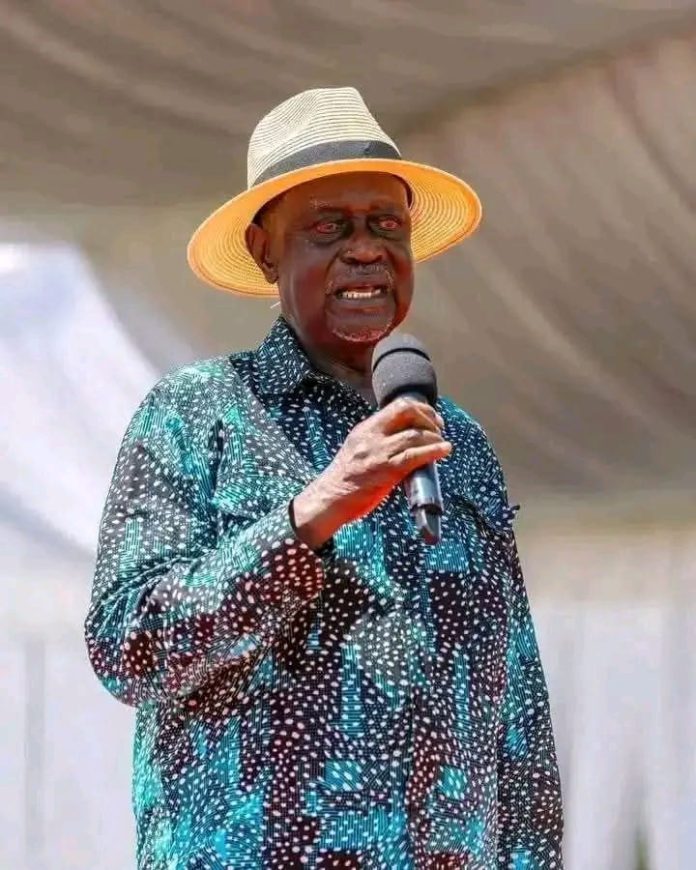
Tuju: I am happy, I create jobs, and I don’t want government appointments

0

By Anderson Ojwang

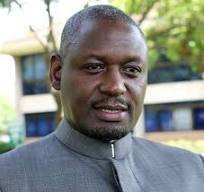
Former Cabinet Minister Raphael Tuju could be raising the bar and setting a precedent to his former colleagues in the Cabinet and Parliament over seeking government employment.

While former legislators, ministers and top government officials could be struggling to gain access to the President to get political appointments, Tuju, in his demeanour, has declared he is not interested in government jobs.

When he was asked during a TV interview whether he could accept an appointment from President William Ruto to work in his government, Tuju responded “Not really. I am very happy where I am at the moment. I am enjoying a private life and I am enjoying doing things I do like coming to TV station. I am able to talk without worry about the position of the government or what is the position of the opposition.
Right now, I don’t need a job. Let me tell you, I have over 100 employees in my companies and it is very difficult to pay somebody like me.
I create jobs and I only do things that I want to do. I am not looking for a job so that I get a salary. I am not looking for a job so I can get position to make deals,”

Tuju said he supports peaceful and constitutional change of government and not coups or military takeover as this would make Kenya a failed state.

‘I don’t need to be called on board but I need to be part of any solution that emerges. I am not anybody’s child that I can be called.’ he said.

Tuju said it was disheartening that 75 percent of the current youth population will not be able to access a payslip in their entire life due to lack of employment opportunities in the country.

He said the youth population bulge and stagnant economic growth have created an employment bomb in the country leading to unemployment.

Tuju said lack of economic planning by successive regimes was to blame for the current unemployment among youths witnessed in the country.

He said warnings by economists and other players on the need to put strict measures in place to avoid the youth bomb were ignored and it is now a challenge the country has to wrestle with and find a solution.

Tuju said with reference to an interview he conducted in 1986 with the then Minister for Economic Development, the late Dr Robert Ouko, that the “Genz” phenomenon had been boiling for the last 40 years.

He said Dr Ouko had warned that Kenya would run into problems if the emerging population bulge against economic growth was not addressed.

He said in the 1980s and 1990s Kenya had the highest population increase in the whole world at 4.2 per cent but the subsequent leaderships were not addressing how to tackle the economic growth to keep pace with increasing population.

Currently secondary schools churn out nearly 1 million students every year and in the last five years, the figure is in the region of 5 million while the government can only employ between 50,000‑100,000 annually.

The mismatch between job opportunities and the high number of students graduating is what has created the unemployment bomb in the country.

‘For example, in Kisii, Kiambu and Vihiga the population growth stood at 6 per cent then, which was unprecedented in the world’s history in terms of demographics. That was attributed to births and not migration.

‘Ouko told me that we are going to be in a very hot soup with the youth population bulge in subsequent decades but we never addressed the problems and that is why we are in the situation today.

Those countries that were able to address the problem have been able to get out of them.

In 1973, when President Kenyatta was launching KICC, the 28‑storey KICC building was the tallest in Africa and in the whole of China, their tallest building was 26 storeys tall.

They were marvelling at that time just how a young African country had actually surpassed them in some of the important indices. China’s GDP per capita was below Kenya until 1978.

We got it wrong at some point. Kenya, Singapore and Korea were at the same economic level of development at independence. Kenya got it wrong when anybody who had a mind was shot dead. They shot dead Tom Mboya, who was then Economic Planning—the very visionary leader.

Dr Ouko was killed and the only lucky person who survived during that generation of thinkers was Mwai Kibaki,” he said.

Tuju credited President Kibaki for trying to address the mismatch and gave credit that for the first time in 2007, Kenya reached its economic growth rate of over 7 per cent, which was the essential minimum they needed to address the “Genz” problem currently witnessed in the country.

Tuju recently resigned from Jubilee Party, saying he was no longer adding value to the party, and thanked former President Uhuru Kenyatta for the opportunity.

Tuju, in his usual mien, has kept everyone guessing about his next political move with others wanting him to be the heir‑apparent to Raila and be rewarded with a senior position in the Orange Democratic Movement (ODM) party.

Sources have revealed that Raila is comfortable with Tuju and in him he believes the community is in safe hands and that the Luo stand to gain on all fronts.

“So much is happening behind the scene and Tuju is the man to watch. He may just end up as the heir‑apparent. He is very unpredictable and that is what makes him the best candidate to lead the community forward. His honesty, truthfulness, simplicity are some of the virtues that have made Jakom to develop a soft spot for him. Watch the space. It is just a matter of when and not how.” said our sources.

From burning pan to fire: Orengo unending battles with Siaya leaders

0

By Anderson Ojwang

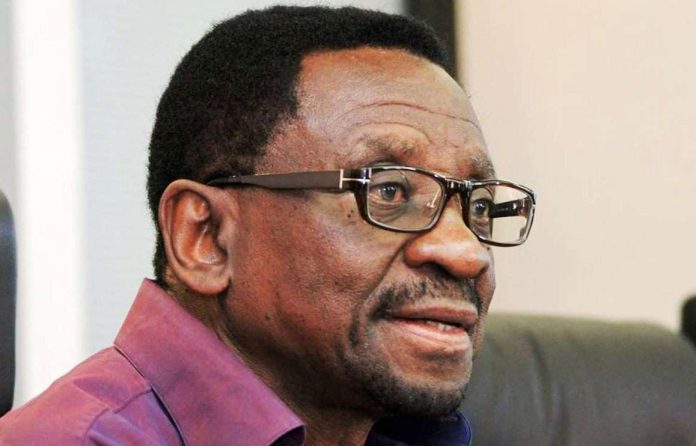
Siaya Governor James Orengo could be a besieged man. Orengo seems to be walking from burning pan to fire in Siaya politics, with a section of leaders keen on a plot to edge him out.

From a fierce battle with his deputy Dr William Oduol, whom he unsuccessfully tried to impeach, speculation over his health, earlier opposition to broad-based government and now the storm over the location of a new county headquarters, Orengo could be under siege.

A month ago, Orengo had to brave the storm over speculation about his health after a section of residents wanted to know his whereabouts after a month’s absence and why the Speaker George Okode was the one handling executive matters in his absence and not the deputy.

Orengo reappeared during the burial of matriarch Mama Phoebe Asiyo in Karachuonyo where he declared that he was still alive and handling his duties effectively.

“I, Orengo, son of the bull, am alive. I, Orengo, with the strength of a stone, am not going anywhere,” he said.

Infuriated, ODM leader Raila Odinga, at a recent function in Siaya, criticised individuals who spread malicious rumours and wished death upon the Siaya Governor and described them as primitive and witches.

He expressed dismay over the false claims that Orengo had resigned, labelling the propaganda as deeply irresponsible.

“I was in constant communication with Governor Orengo throughout his time abroad and I don’t understand the motives behind those who circulated such misinformation.
Orengo has returned to the country in good health and is more energised than ever.”
he said.

Even before the storm over his health could settle, Alego MP Sam Atandi has lit another battle front. This time, over the proposed construction of county headquarters at the Siaya Agricultural Training Centre (ATC), that had earlier been earmarked for the university.

Atandi wrote in his X space handle “Mr James Orengo, a university needs 50 acres not 25 acres. Hand over the whole title deed to Jaramogi Oginga Odinga University for development of a fully‑fledged university in Siaya. We do not need a new county headquarters.

I am calling upon Siaya residents to come out on 11th September, 10.00am to protest over the construction of a new county headquarters on FTC land at the expense of development of a fully‑fledged university. This will be the mother of all protests”.

However, the protest was cancelled after intervention from various stakeholders over the impact it may have on the Siaya International Investment Conference slated for next month.

But, in response, Siaya CEC in charge of Land, Maurice McOrege, said a joint committee had been formed consisting of county government and the university to guide the review and the renewal process of the memorandum of understanding between the two.

He said the county government signed the MOU with the university in 2019, and the MOU expired and is currently under review with intention of renewal subject to terms mutually agreed upon by the parties, and that there has never been any consideration of ejecting the university or the students from the facility.

“The county government of Siaya has taken note of allegations made to the public suggesting that JOOUST is being ejected from Agricultural Training Centre grounds in Siaya. These allegations are misleading and not based on fact.

The county government of Siaya reiterates its unwavering commitment to supporting JOOUST, safeguarding its presence, and collaborating with the National Government and other stakeholders to strengthen higher education in the region. The vision of establishing Obama University remains alive, and through joint effort, adequate planning and proper investment,” he said.

Orengo, known for his activism, was previously opposed to the broad‑based government and often drew the wrath of Siaya politicians including Senator Oburu Oginga, Energy Cabinet Secretary Opiyo Wandayi, Atandi among others.

During a burial in Uyoma that was attended by Ruto and Raila, Orengo said it was wrong for ODM to compromise its ideals for cheap gains, that it would be dangerous at the end of the game.

“On my part, I want my conscience to be clear. I want to say no to abduction. Again, I want to say there is too much sycophancy in the party at the moment.

I, James Orengo, the stone, Nyawawa, I fear nothing. I want to say the Luo as community must not lose their identity they are known for. We have identity that we are known for.

If we make compromises, they should be justified before God. We cannot suspend the constitution. We may be happy now but in future may regret.

I pray for ODM you can stand any storm. If you make compromises but it should be based on principle and not praise and worship. We must stand firm and live by constitution,” he said.

But Orengo has since had a change of heart and even predicted that the future of the country was bright with President Ruto.

Recently he said they follow the direction given by Raila and that is why he had ensured the President received a warm welcome in Siaya.

“Your Excellency the President, last night and this morning, Honourable Raila Odinga rang and asked me to make sure that people of Siaya receive you well.
I am glad that those instructions have been carried out. When Baba says right, we go right. When Baba says left, we go left. How many of you are in agreement that when Baba says right we go right?

Your Excellency the President, I want to allay fears of those who think you don’t Siaya in your heart. Last week, when we spoke and you said you will be coming to Siaya that October 16th will be in Siaya for the Siaya International Trade and Investment Conference and will be presided by the President,” he said.

The question will be: Orengo brave the storms to secure a second term?

A two-horse race for ODM ticket in Kasipul nomination pitting Wanga and Oburu

0

By Hope Barbra

The Orange Democratic Movement (ODM) nomination for the Kasipul by-election is turning out to be a two-horse race between two main blocs allied to the candidates.

The leading candidates are Boyd Were, the son of the slain immediate former area MP Charles Ongondo Were, and Newton Kepha Ogada.

Boyd has the support of ODM National Chairperson and Homa Bay Governor Gladys Wanga and a section of ODM MPs and officials, while Ogada has the support of Siaya Senator, Dr Oburu Oginga, his sister Wenwa Akinyi Odinga, and the Kasipul professional caucus.

Interestingly, only five aspirants applied for the ODM ticket, and they include Boyd, Ogada, Okindo Majiwa, George Mbuta, and Dr Adel Ottoman.

Another 12 aspirants who had shown interest in the party ticket either sought an alternative vehicle or shelved their ambitions over fear of manipulation of the exercise and interference by the party officials.

The aspirants who have sought different political vehicles include Philip Aroko, Robert Riaga, Collins Okeyo, Victor Mbaka, Samwel Owida, Joash Aloo, Omondi Swaleh, Sam Otiende, and Shadrack Oketch, who have yet to declare whether they are in the race or have opted out.

For the first time in history, the excitement and scramble for the Orange Democratic Movement (ODM) ticket in Nyanza has thawed, with leading aspirants for the Kasipul parliamentary by-election seeking alternative vehicles.

ODM Secretary General Edwin Sifuna had warned three months ago about aspirants’ apathy over the party certificate, and sources within say only two aspirants have expressed interest in the party ticket by paying the nomination fees.

Sifuna, during a live TV interview with Citizen TV, revealed that the excitement over the ODM ticket was waning and that aspirants were opting for other parties—something the party has to contend with.

Ogada is banking on his community support for widows, where he has constructed 6,000 houses in the county, while in Kasipul, he has built 2,000 for widows and the vulnerable.

Ogada also runs a hospital which he built in 2013 and also has an orphanage that supports 211 children, most of whom are schooling in his institution.

He has held several health outreaches in Kasipul and other parts of the county and country.

“I have undertaken several development projects not only in Kasipul but in Homa Bay County and other counties. One of the beneficiaries of my education programme and orphanage is currently studying medicine in the USA.
My work speaks for itself. I have a development record unmatched by any of my competitors, and that is why I want to be the MP—to escalate the development,”
he said.

Boyd is relying on his father’s achievements and that of the county government to win the ODM ticket and eventually the election.

He hopes that with Wanga and other ODM MPs’ support, he will win the ticket and the election to inherit his father’s seat.

Wanga has directed county government employees from the area to campaign for Boyd and even prevailed upon her CEC, Dr Joash Aloo, to forgo his ambition and instead back her candidate.

The decision by Wanga to declare support for Boyd has divided the party right in the middle and forced most of the aspirants to seek alternative vehicles for the by-election.

Equally, the Kasipul professional group, led by Eng. Tom Awino Okoko, wrote to the ODM Party Leader Raila Odinga to express their concern over interference in the nomination by party officials.

The professionals had threatened to oppose any form of imposition of a candidate on them and want to be allowed to independently elect a candidate of their choice.

“The interference in the ODM nomination by the national chairperson is eroding the party’s national outlook and may undermine its performance in the by-election. Let the people be given a free hand to elect a candidate of their choice,” Ogada said.

Previously, over 14 aspirants had declared interest to vie for the ODM ticket, but the excitement has faded, leaving ODM as a shell.

ODM is reputed for nomination anomalies, with the party leadership known to interfere with the exercise or, on occasion, award direct tickets to their preferred candidates.

Wanga and her deputy, and former area MP Oyugi Magwanga, have differed over the nomination, with Magwanga demanding that the electorate be allowed to elect a candidate of their choice.

And now the battle is shaping up to be a war ground between Wanga and Magwanga, who are likely to face off in the 2027 General Election.

The by-election is so crucial and strategic for both Wanga and Magwanga ahead of the 2027 General Election, where they may face each other at the ballot box for the county seat.

For Wanga, Ongondo’s demise left a vacuum and void that she must fill with her preferred candidate to checkmate Magwanga.

Ongondo was the checkmate to Magwanga, and the two were bitter rivals who rarely shared a podium. Ongondo was used by Wanga to checkmate and tame her deputy and control his political influence in the constituency.

For Magwanga, he wants to have a say in the constituency that he once represented for two terms before he decided to have a stab at the gubernatorial seat in the 2017 and 2022 elections.

Kasipul remains his fulcrum if he intends to pursue his ambition, and he wants a new MP allied to him to take over from Ongondo.

This explains the recent meeting of some aspirants from the area who converged in Nairobi to champion a united front in the party nominations.

The differing political stand between Wanga and Magwanga was observed after the former visited the latter at his home with a view to seek his support for Boyd Were.

Wanga and her team tried to prevail upon Magwanga to support Ongondo’s son, Boyd, but the latter was reluctant and did not commit to the proposal.

Storm as senior sister accused of physically insulting a junior colleague at the seminary

0

By Reporter

A senior Catholic sister is on the spot over alleged physical attack of her junior at St Joseph Seminary, Rakwaro in Migori county.

In a video clip that has since gone viral, the suspect is seen beating her junior.

The victim is seen complaining and requesting her tormentor to stop beating her in front of junior staff.

“Why are you beating me? Why are you insulting me in front of workers. This is wrong and what you are doing is bad,” she cried.

But the infuriated senior sister continued to physically assault her saying there is nothing she can do.

“Do you want me to continue beating you? You will know.” She said as she continued to assault her.

But in a statement from a senior sister Mary Gorrety Ochieng termed the incident as unfortunate and in bad taste.

She wrote ” The Francisican Sister s of St Joseph have become aware of a deep regrettable incident involving one of our members physically assaulting a younger sister, a clip which has circulated widely on social media.

This action is personal failing and does not represent the values of St Jospeh.

We deeply regret the harm caused to the sister involved, as well as the scandal and the pain this incident has caused to our congregation, the church and the public.

Our charism is joyful love, and compassion. Violence in any form is contrary to any form of our life.

We are addressing this matter according to the church and congregational. Procedures to ensure dignity and wellbeing of the members.

We ask for prayers for those affected and for congregation as whole as we seek healing and reconciliation. “She said.

Dala Sevens headed for Lake City, Kisumu

0

BY PHILLIP ORWA

Kisumu’s Jaramogi Oginga Odinga Stadium will this weekend play host to the 2025 National Sevens Circuit, Dala Sevens, the Lakeside City of Kisumu will have a busy Rugby outing this weekend from 13-14 September, with Kenya Breweries Limited’s flagship brand Tusker confirming a Sh3 million sponsorship for the tournament.

The highly anticipated tournament will offer the crowning moment with KCB RFC and Strathmore Leos the two sides battling for the championship heading to the last leg.

Hosted by Kisumu RFC, the Dala Sevens has earned a reputation as one of Kenya’s most thrilling and fiercely competitive rugby tournaments. Tusker’s sponsorship underscores the brand’s commitment to supporting the sport and celebrating Kenya’s sporting excellence.

Speaking at the sponsorship announcement, Tusker Brand Sports Manager, Keza Mpyisi, expressed pride in the partnership saying, “Rugby holds a special place in the hearts of Kenyans, and we are thrilled to be part of not just the Dala Sevens but the entire series this year. By supporting the growth of rugby in Kenya, we celebrate the incredible talent and passion of Kenyan athletes, and we love to do that. We are confident that our sponsorship will contribute significantly to the success of this tournament.”

While receiving the sponsorship, Kisumu RFC Chairman Gabriel Ouma expressed his gratitude to KBL for their generous sponsorship and support. “We are immensely grateful to Tusker for their valuable contribution to Dala Sevens and the continued support they have shown us over the years. This sponsorship will undoubtedly enhance the quality of the event and provide a great experience for both players and fans. We expect the fans to turn out in huge numbers,” said Ouma.

KCB Rugby led the standings after five legs with 104 points and will only need to make it to the quarterfinal to be crowned champions irrespective of whether Strathmore Leos, who are second with 95 points, win the Dala leg or not.

Governor Kangata raises the bar as Nyanza counties stagnate in ODM politics

0

By Anderson Ojwang

A common proverb “Action speaks louder than words” aptly captures the true situation in Muranga country when contrasted with Siaya, Kisumu, Homa Bay and Migori counties all together.

Muranga Governor Irungu Kangata is raising the bar in the country with development projects that have placed the county above its peers, especially in Nyanza.

Kangata is hardly on news on matters of politics save for only on developments and launching of projects that speak loudest while the converse is true to his Nyanza counterparts.

But his counterpart in Nyanza has for decades concentrated and heavily invested in Orange Democratic Movement (ODM) and broad-based government than fulfilling their manifesto.

The governors have been in the media propagating ODM and broad-based issues and hardly address the media on development programs and investment opportunities for the region.

Interestingly, Kisumu Governor Prof Peter Anyang Nyongo, Siaya and Migori counterparts James Orengo, and Ochilo Ayacko, were once cabinet ministers and have relatively huge networks and experience compared to Kangata.

It is only Homa Bay governor Gladys Wanga fairly younger but has globe trotted in the recent past and even attended UN Council that exposed her to huge networks of investors.

For Kangata, he got it right by bringing on board, the diaspora, professionals, business community and elders to form a council which has provided him with the necessary ammunition to transform the county.

Recently Kangata announced Nebraska State and Murang’a County will start joint programs on agriculture and export of labor.

The Secretary of State for Nebraska Robert Evnen, who recently visited the county, was impressed by the progress the county has made in Agriculture Subsidy program called Inua Mkulima and employment of youths under the Murang’a Youth Service.  

Mr. Evnen said the State has signed a cooperation deal with Kenya on labor mobility. 

“We have also explored how the two regions can also use maize to make animal feed in an Industrial scale as both and Murang’a and Nebraska are farming regions,” he said. 

Kangata said both Muranga and Nebraska share farming as an economic activity and there was a lot to learn from each other.

Nebraska is an agricultural powerhouse, renowned for its large-scale maize, soy, and beef production, as well as its advanced farming technologies.

These sectors directly align with Maranga’s strengths in agriculture—particularly in tea, coffee, avocado, and dairy farming. With his new status.

Chairman of the Council Dr. Peter Munga said it was possible to build strategic partnerships that allow for technology transfer, market linkages, and investment flows into Maranga’s agribusiness sector.

Muranga county has made great strides in agriculture and livestock farming and recently bought a yoghurt packaging machine  for farmers union to be placed at Maragwa milk factory branded  county fresh.

In the health sector, the county has made huge impressions with  introduced telemedicine and infrastructural developments.

Similarly, Smart City projects are ongoing in various wards across the County to facilitate the growth of urban areas and improve drainage & other facilities to ensure towns remain clean.

Murang’a County Government has launched the Inua Masomo Program, a transformative initiative designed to enhance access to education and promote academic excellence among students in Day Secondary Schools.

Kanga’ta said the initiative will benefit 8,000 students studying in the 256-day schools in the county.

Under the program, the county will fully cover Term 1 school fees for the top 10 students in Forms 2, 3, and 4 across all Day Secondary Schools within the county. Additionally, the program will sustain its support each term, ensuring that these top-performing students remain in school and are motivated to excel academically.

Back in Nyanza, most of the counties have held investment conferences with Siaya scheduling one for October this year.

The hallmark of these investments has climaxed with local artist performance and the departure of guest with no tangible investments on the ground.

The highly media hyped international investment conference have failed to yield to the billing and have indeed become a folklore story told the vulnerable residents.

The governors are active on politics particular on ODM and broad-based government and spend millions mobilizing the residents to attend such functions.

Orengo who was once opposed to the broad-based government made about turn and said they follow the direction given by Raila and that is why he had ensured the president received a warm welcome in Siaya.

“Your excellency the president, last night and this morning, Honorable Raila Odinga rang and asked me to make sure that people of Siaya receive you well.

I am glad that those instructions have been carried out. When baba says right, we go right. When baba says left, we go left. how many of you are in agreement that when baba says right, we go right?

Your excellency the president I want to allay fears of those who think you don’t Siaya in your heart. Last week, when we spoke and you said you will be coming to Siaya that October 16th October will be in Siaya for the Siaya International Trade and Investment Conference and will be presided by the president,” he said.

Currently, the governors instead of implementing their development budget have their eyes strained on the national government projects.

The national government through President William Ruto’s affirmative action, the region is witnessing a multi-billion projects being implemented.

In Homa Bay county, a tug of war over national government projects pits locals UDA leadership with Wanga, the latter claims ownership for having lobbied the projects while the former dismisses her claims.

The governors and residents have become frequent visitors to statehouse and are yet to explore and exploit the abundant opportunities locally and internationally to spur development in the region.

If anything, the skies have witnessed more development from Nyanza leaders as they are often on choppers traversing the region for birthday parties, weddings and attending funerals.

Currently, they are stuck on Kasipul and Ugunja by-elections where they flex their muscles and sell hope for hopeless while Muranga soars high in development.

Boda Boda Law: The Roads are Ours When You See Us Stop!

0

By Billy Mijungu

Boda Boda riders have laid down their own law. In their unwritten code, “We have a right to ride as we please. In case of an accident, whether caused by us or not, the driver will be assumed guilty and vehicles burnt.” That chilling reality is no longer an exaggeration but a fact of daily life on Kenyan roads.

For years, the boda boda sector has been celebrated as one of the most innovative and accessible means of transport, creating employment for millions of young people. In rural and urban settings alike, boda bodas have become the lifeline of the economy, moving goods, people, and even emergencies at lightning speed. Yet, beneath this convenience lies a lawless underbelly that threatens to overturn our social order.

Day after day, we witness chaos. Riders weaving through traffic with reckless abandon, ignoring traffic lights, overlapping at will, carrying excess passengers, and violating every known safety rule. When accidents occur, the response is not a calm appeal to law enforcement but mob justice. Vehicles are surrounded, drivers dragged out, cars stoned or burnt. The assumption is always that the boda boda rider is innocent, and the motorist guilty. Facts, evidence, and justice are cast aside.

What is even more disturbing is the state’s apparent helplessness. Our internal security apparatus looks defeated, powerless, and even tamed. Police officers who should enforce traffic discipline are often outnumbered or intimidated. At times, they are complicit, collecting daily bribes from riders instead of enforcing the law. This has created a culture where boda boda groups feel untouchable.

The comparative numbers paint the full picture. Kenya has well over one point five million registered boda bodas on the road, with thousands more unregistered. They form a voting bloc larger than most political parties can boast. With such raw numbers, they hold sway, and politicians know it. Every election cycle, we see leaders troop to boda boda stages to curry favor, promising heaven and earth, but never accountability. It is this appeasement politics that has emboldened the sector into a monster we now struggle to contain.

As we inch closer to another election year, this trend is bound to worsen. Leaders, desperate for votes, will bend backwards to please riders instead of confronting the menace. The result will be even more impunity, more road chaos, more accidents, and more innocent Kenyans forced to bear the brunt of unchecked lawlessness. One day, this raw power will consume us all.

It is time for honesty. The government must tell Kenyans how it intends to address this growing threat. Regulation cannot remain on paper. Riders must be registered, trained, licensed, and insured. Traffic rules must apply to everyone equally, and enforcement must be firm. The narrative that boda bodas are untouchable must end.

Kenyans deserve safe roads. Roads must serve everyone equally, not become battlefields where might makes right. We cannot continue to allow mob justice to replace the rule of law. If the state cannot tame the boda boda menace now, the cost in lives, property, and national stability will be far higher in the future.

The roads are not theirs. The roads are ours, all of us.

Faith Odhiambo, Raila Odinga, and the Persistence of Elite Gatekeeping

0

By Clifford Derrick – The Inside Story

Kenya’s politics has always been haunted by ghosts. Some are the literal ghosts of young men and women slain by the state during protests. Others are the ghosts of historical betrayals, secret oaths, and elite manipulations that stretch back to independence. The current controversy surrounding the appointment of Faith Odhiambo, the President of the Law Society of Kenya (LSK), to a panel on compensating victims of protest violence cannot be understood outside this longer arc.

The Historical Roots of Exclusion

In 1963, as the British prepared to exit, Jaramogi Raila Odinga was three times offered the position of Prime Minister. He refused. His condition was that Jomo Kenyatta, still in detention, must be released first. Jaramogi was not willing to be a colonial stooge.

The British were displeased, and soon allied with Kenyatta, Tom Mboya, and others to marginalize him. When Jaramogi resigned as Vice President in 1966, the systematic exclusion of the Luo community began in earnest.

By 1969, after the assassination of Tom Mboya, Kenyatta convened a secret oath-taking ceremony at Gatundu. The vow was simple and chilling: that no Luo, especially an Odinga, should ever rule Kenya. This oath—though rarely spoken of in public—set the tone for decades of elite manipulation. It explains why Raila Odinga has been alternately celebrated as a “statesman” when serving Kikuyu interests and vilified as “uncircumcised” and “dangerous” whenever he threatens their monopoly of power.

Faith Odhiambo and the New Battlefront

Enter Faith Odhiambo, A Luo, a lawyer, and the elected President of the LAW SOCIETY OF KENYA (LSK). Her acceptance of a vice-chair role on a presidential panel to compensate victims of police brutality has triggered outrage. Critics cry “betrayal,” claim the panel is unconstitutional, and demand her resignation. Yet the same critics are curiously silent about Irũngũ Houghton of Amnesty International, also appointed to the panel. Why the selective outrage?

The answer lies in continuity. In the minds of a segment of the Kikuyu elite—those shaped by the 1969 oath and decades of entitlement—Luos must not be allowed near the machinery of the state. They can die on the streets for democracy, but they cannot sit at the table to decide how victims are compensated. They can fuel protests that topple regimes, because they ‘unbwogable’ or unshakable, to quote Joe Gidi, but they must never oversee justice. Faith’s very presence unsettles this order because it disrupts the gatekeeping.

René Girard and the Politics of Envy

The French philosopher René Girard wrote of mimetic desire: the idea that human beings desire not objects for their own sake but because others desire them. Political power in Kenya has become precisely that. The Kikuyu elite’s fear of the Luo is not because the Luo have failed but because they recognise their intellectual energy, courage, and organisational potential. To keep them at bay, they must monopolise power while projecting negative stereotypes—poverty, HIV, uncircumcision—onto the Luo body politic.

Thomas Hobbes warned that sovereignty rests on a monopoly of violence. For decades, the monopoly of Kenya’s security apparatus has rested with those same elites. It explains why Raila’s supporters have borne the brunt of police brutality, from Baby Pendo in Kisumu to the bodies dumped in River Yala. And it explains why critics of Faith Odhiambo would rather delegitimize her appointment than confront the real violence at the heart of Kenya’s governance.

Raila, Mandela, and the Logic of Assimilation

Raila Odinga has been called a betrayer for working with Moi, Kibaki, Uhuru, and now Ruto. But history demands a subtler reading. In politics, sub-groups must often adopt strategies of aggressive assimilation—entering the dominant coalition not out of weakness but as a survival strategy. Nelson Mandela did the same in South Africa. He shook hands with the very architects of apartheid, not because he admired them, but because he sought to dismantle the system from within.

Raila’s doctrine of the unclenched fist has been consistent. He has endured prison, exile, bullets, and betrayal, yet he has chosen dialogue to avoid bloodshed. His decision to cooperate with William Samoei Ruto after the Gen-Z protests was not greed. It was an ethical calculation: to save lives while pushing for reforms, including compensation for victims of state violence. Faith Odhiambo’s appointment flows directly from this agreement.

The Gatekeepers of Civil Society

Much of the loudest criticism of Faith comes not from victims but from civil society elites who thrive on perpetual crisis. Donors funnel money through them, and unresolved cases are their lifeblood. If the state begins compensating victims directly, these NGOs lose both relevance and revenue. It is telling that the loudest lawyers attacking Faith—Munyeri, Wathuta, Wanjiku—hail from the same Kikuyu networks that dominate NGO and legal funding.

Their argument that the panel is “illegal” would be more convincing if they showed equal outrage at unconstitutional positions like CAS appointments or at the executive’s perennial defiance of court orders. Selectivity reveals motive.

Beyond Shadows: A Call to Discernment

Socrates once described prisoners in a cave mistaking shadows for reality. Many young Kenyans, including some Luos, are falling into the same trap—attacking Raila and Faith because they cannot discern the larger shadows of elite manipulation behind the outrage. They risk turning their backs on those trying, however imperfectly, to bring victims’ voices into the room.

This is not to sanctify Raila or Faith. They are human. They will make mistakes. But history demands that we ask: who has consistently borne the cost of state repression? Who has fought for reforms at personal expense? Who has compromised not for wealth but for inclusion and stability?

The answer is clear. And it is not Fred Matiang’i, nor the Kikuyu elite now trying to recycle him as a “neutral technocrat.” It is Raila Odinga, and now, Faith Odhiambo.

Kenya stands at a crossroads. We can either allow the ghosts of 1969 to keep haunting us, dictating who may serve and who must forever remain at the margins, or we can embrace a politics of inclusion. Faith Odhiambo’s appointment is not betrayal. It is a crack in the wall of gatekeeping. And like Mandela’s handshake, or Raila’s unclenched fist, it may yet prove to be an act of wisdom disguised as compromise.

Clifford Derrick is an investigative journalist, strategic communicator, and documentary filmmaker whose work examines truth, power, history, and justice. He writes at the intersection of politics, culture, decolonisation, and human right.

Will Kalonzo, the country’s last vice president, follow the precedence to become the 6th president?

0

By Anderson Ojwang

History could be beckoning in the 2027 presidential election with the country’s last vice president Kalonzo Musyoka facing off with the Kenya’s first deputy president and the current president William Ruto.

In the Kenya’s political history, most of the vice Presidents rose and succeeded to becoming president save for only the country’s first vice president the late Jaramogi Oginga Odinga.

Odinga after the fall out with founding president the late Mzee Jomo Kenyatta, was left to occupy the cold opposition seat and was never re-integrated into the government.

Kenyatta instead appointed Daniel Moi to succeed Odinga who eventually became the president and ruled the country for 24 years.

Moi’s first Vice President was Mwai Kibaki, who served in that role from 1978 until 1988. Kibaki became the first opposition leader to become the president after he defeated Kanu’s Uhuru Kenyatta in the 2002 general elections.

During the 2007, controversial Presidential election, Kalonzo entered into a political alliance and was subsequently appointed the Vice President and became the country’s last VP in the old constitution.

In the 2010 constitution, President Uhuru Kenyatta had Ruto as his deputy who eventually edged out his preferred candidate, former prime minister Raila Odinga at the presidential ballot.

Kalonzo who shares most of qualities like Kibaki, is currently the opposition leader after Raila opted to join the broad-based alliance and is viewed as the probable united opposition presidential candidate.

Currently, delegations have started streaming to Kalonzo’s Yatta home village, a significance of a possibility that he could be the united opposition presidential flag bearer.

In 2007, Kalonzo was able to pass in the middle of warring Kibaki and Raila to become the vice president and this time around 2027 present him with a moment face off with Ruto and set a precedent.

The recent opinion poll by Centre for Africa Progress (CAP) rates Kalonzo as the most preferred opposition candidate for the 2027 presidential elections.

In a report released on July 23, 2025, Kalonzo had 36 percent, followed by former Cabinet Secretary Fred Matiang’i (23%), former Deputy President Rigathi Gachagua (16%), Trans Nzoia Governor George Natembeya (14%), Martha Karua (7%), and others 4%.

Wiper Party leader Kalonzo Musyoka is the most preferred opposition candidate for the 2027 presidential elections, according to the Centre for Africa Progress (CAP) latest opinion poll.

In a report released on July 23, 2025, Kalonzo had 36 percent, followed by former Cabinet Secretary Fred Matiang’i (23%), former Deputy President Rigathi Gachagua (16%), Trans Nzoia Governor George Natembeya (14%), Martha Karua (7%), and others 4%.

This was after CAP conducted the survey across all 47 counties between 10th July – 13th July 2025. The sample comprised 5,000 registered voters.

The study adopted random, multi-stage stratified using PPS (proportionate to population size) selected from all the 47 counties.

Data was collected using telephone interviews and analyzed using SPSS and MS Excel with a margin error of 1.5 percent and a 95% confidence level.

The United Opposition alliance could possibly lock out President Ruto from Mt Kenya and Ukambani, Kisii where former internal security cabinet secretary Fred Matiangi enjoys massive support.

President Ruto will have in his basket the Rift Valley, Nyanza and Northeastern while Western, Nairobi, Coast regions would be the battle ground.

In the United opposition, Kalonzo will have in his camp the battle-hardened former deputy president Rigathi Gachagua, Trans Nzoia governor George Natembeya of Tawe Movement, Eugene Wamalwa, Matiangi , Martha Karua among other opposition leaders.

Raila who has been the fulcrum of the opposition is likely not to be at the ballot and could possibly support Ruto’s re-election after he recently declared that their union will go beyond 2027.

He challenged the opposition that the people will decide at the ballot and that each team will table their agenda to the electorates.

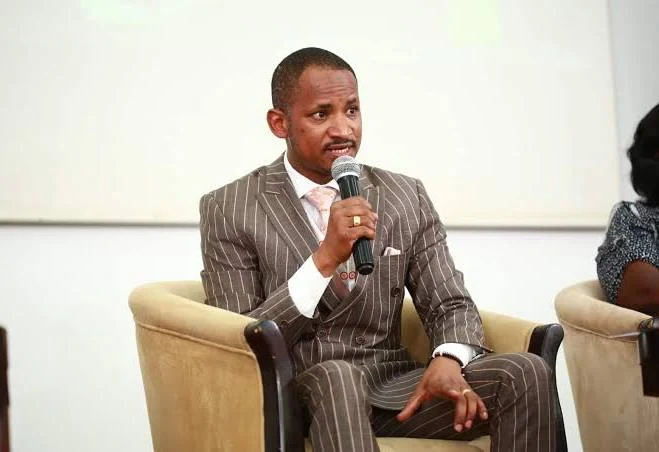
Kalonzo is enjoying the support of youthful leaders including Embakasi East MP Babu Owino among others that is likely to draw the youth votes to him.

Babu Owino has since joined hands with fellow young politicians under the banner Kenya Moja, led by Edwin Sifuna.

Babu said “To you, your excellency Kalonzo Musyoka, go ye and conquer the nation and during an interview on K24 on Wednesday, September 3, 2025, the two-term MP said he sees no problem working with Kalonzo.

Why is it that all over sudden Kalonzo has become a bad person? Kalonzo supported us for three terms. Martha Karua was our deputy, is it wrong to support them?  They were with us; they were part of us. The function of opposition is check and balances and ensuring the government delivers, that is the role of the opposition,” he said.

During the recent LSK conference in Coast, Kalonzo wrote “Had a productive chat with Nairobi Senator Edwin Sifuna in Kwale this afternoon. Exchanged numbers – I have a feeling this connection could lead to some exciting things.”

Machakos Governor Wavinya Ndeti said they were looking at Kalonzo to be the next president of Kenya.

“Kalonzo we are looking at you to be the next president of Kenya. We should not be people who use Kalonzo for their own gain. Our focus is one, Kalonzo’s presidency. You are not tainted and proven leader.” She spoke.

Will Kalonzo be a second time luckier to land presidency and follow the footsteps of the former vice presidents?

After eGP, the Next is Cost of Procurement and Cost of Settlement

0

By Billy Mijungu

The introduction of Electronic Government Procurement, popularly known as eGP, is one of the most significant reforms in the management of public resources. For years, the tendering process has been clouded by unscrupulous practices that drained public finances, discouraged genuine suppliers, and entrenched corruption. The arrival of eGP is set to change that reality.

Just as the Integrated Financial Management Information System once faced resistance, eGP is already encountering opposition. But this is expected. Every major reform that threatens entrenched interests is bound to face rejection. The truth, however, is that eGP is inevitable. If Kenya is serious about austerity measures and the prudent use of scarce resources, then there is no better time than now to fully implement the system.

The greatest advantage of eGP is transparency. It automates processes that were once shrouded in secrecy, making it easier to track procurement activities across ministries, departments, and agencies. No longer will tenders be issued in dark corners or awards made based on favoritism. Instead, every stage of procurement can be monitored and verified.

Still, as we implement eGP, we must also look ahead to the next frontier in public finance reform. That frontier is the cost of procurement and the cost of settlement. Procurement is not just about eliminating corruption; it is also about efficiency and value for money. The system must be designed to categorize what can be procured directly without exhaustive processes. Some items, like basic office supplies that can be purchased even at a kiosk, should not consume the same bureaucratic effort as major infrastructure contracts.

Equally important, there must be clarity on what should be procured at government to government level and on the thresholds that justify such arrangements. This will ensure that economies of scale are harnessed where possible and that strategic national interests are safeguarded.

Settlement of payments is another critical issue. Many suppliers have been driven to bankruptcy because of delayed payments for goods and services already delivered. This not only discourages investment but also inflates costs since suppliers build in risks and delays when quoting for tenders. By linking procurement directly with timely settlement mechanisms, eGP can help government reduce unnecessary costs, build trust with suppliers, and encourage competitive pricing.

Examples from other countries show what is possible. South Korea, which is often cited as a pioneer of electronic procurement, launched its KONEPS system two decades ago. Today it handles millions of transactions annually and has cut administrative costs significantly. Suppliers no longer wait endlessly for payments, and government enjoys real time tracking of every tender. Rwanda has also embraced an e procurement platform that is widely recognized for its openness. By placing all government tenders online, the country has improved participation by small and medium sized enterprises and strengthened its reputation for accountability. Kenya can borrow lessons from these experiences by ensuring eGP is not just a tool for digitization but a driver of cost reduction and fairness.

Transparency must not stop at internal processes. The system should provide a public interface, a website where citizens can track procurement activities. This should include graphical displays that make it easy to see what is being purchased, at what cost, and by which government unit. Such openness will foster accountability, discourage misuse of funds, and strengthen public confidence. When the public can see clearly how resources are being used, the pressure for accountability grows naturally.

The journey will not be easy. Resistance from within government institutions is real because many stand to lose from the new order. But just as IFMIS eventually became part of the financial system despite its early opposition, eGP too will prevail. Government must soldier on with determination and ensure that every unit is fully on boarded. Half measures will only perpetuate loopholes.

In the end, eGP is not just a technological shift; it is a cultural change. It is about creating a government that is efficient, open, and fair. Once corruption in procurement is curtailed, attention must move to reducing the actual costs of procurement and ensuring timely settlement. That is how the government will save money, encourage genuine suppliers, and strengthen public trust in how resources are managed.

The true test of eGP will not be in its adoption alone but in how it reshapes the culture of procurement and settlement. If fully embraced, it will stand as one of the strongest pillars in building a transparent and accountable government for the future.