By Nicanor Ndiege
Football is always more than just a game; it is a symphony of emotions, speed, instinct, and tactical genius from coaches and players on the pitch.
It’s about split-second decisions, the roar of the crowd, and the magic of spontaneity. Yet, at the 2025 FIFA Club World Cup, that familiar rhythm is being recalibrated by algorithms, sensors, and an expanding tech toolkit.
With the tournament’s historic expansion to 32 teams, FIFA has seized the moment to pilot a suite of innovations that not only reflect the sport’s changing face, but are also redefining the long-held traditions of the game.
From cinematic walk-ons to real-time offside alerts, the game is being repackaged for a generation raised on digital immediacy and immersive entertainment.
But in a sport so deeply rooted in its traditions and raw emotion, a question looms: are these innovations enriching the experience or eroding its soul?
Hollywood-style player walk-ons: Theatre vs. Tradition
The sight of every player entering the pitch individually has lent a dramatic sheen to pre-match routines. Think red carpet meets tunnel walkout—each footballer spotlighted like a rock star. It’s a presentation FIFA calls a “new dimension,” a bold visual shift aimed at maximising spectacle.
Some players, like Chelsea’s Romeo Lavia, have embraced it: “It’s showbiz. Why not bring it to the Premier League?” Yet critics argue it dilutes the collective philosophy of football, where a team—not an individual—is the central hero.
More practically, these walk-ons have added extra time to pre-match formalities and caused some delays, disrupting matchday rhythm that thrives on tension, tempo, and high-octane starts.
Ref Cam: Spotlight on Ref or Storytelling?
The referee bodycam—a striking visual addition—offers viewers a unique behind-the-scenes perspective. From tunnel moments to the coin toss, fans get a taste of the game from the official’s eyes.
FIFA believes that this innovation shows the game from a unique vantage point and “enhances the storytelling.”
Yet, its limited use during gameplay hints at FIFA’s cautious dance between storytelling and controversy.
Eight-second rule for goalkeepers: Order or Overkill?
Long considered a forgotten rule, the eight-second limit for goalkeepers has now returned with teeth. If the keeper holds the ball too long, it’s a corner for the opposition—a punishment already applied on Al Hilal and Mamelodi Sundowns.
In their 1-0 win against Ulsan Hyundai, Mamelodi Sundowns goalkeeper Ronwen Williams became the first to fall foul of the rule when he was penalised in the final 10 minutes.
Al Hilal goalkeeper Yassine Bounou became the second goalkeeper to face the penalty of the rule in the 96th minute of their game against Spanish giants Real Madrid.
On paper, it ensures tempo. In practice, it could punish caution and spark unnecessary chaos, especially in the tense final minutes. Pundits say that the rule blurs the line between enforcing flow and overregulating instinct.
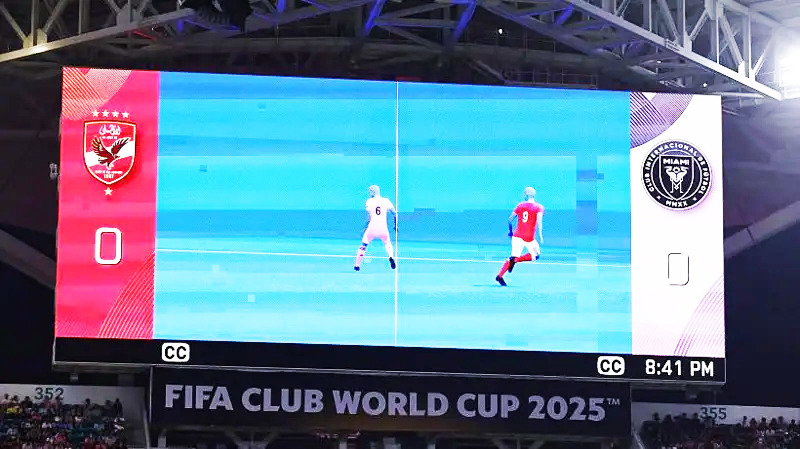
VAR replays for fans: Transparency or Drama?
Fans inside stadiums can now see what the VAR is seeing—an overdue development in the push for transparency. Yet, without accompanying audio of officials’ discussions, interpretation remains guesswork.
While this aligns football with modern sports like cricket and rugby, FIFA continues to walk a tightrope. Pundits argue that while it is a good innovation, steps must be taken to ensure that it does not affect the decision-making process.
Quicker offside: Technical precision vs Natural rhythm?
FIFA’s enhanced semi-automated offside (SAO) system now alerts referees instantly if a player more than 10cm offside touches the ball. The goal? It is aimed at reducing needless delays.
Pundits argue that while this promises faster, safer decisions, the clinical efficiency may clash with football’s natural rhythm. The artistry of an offside trap or the surprise of a last-minute run risks becoming the domain of pixels and algorithms.
Superior player of the match: Democratic or Diluted?
Replacing the traditional “Player of the Match,” the Superior Player Award is now fan-voted via FIFA+, with selections happening in real time during the final 30 minutes of the match. While empowering for fans, it leans heavily into marketing—its name stemming from beer sponsor Michelob.
The risk? Pundits warn of the risk of turning merit into marketing and popularity into performance. Fan votes can favour familiar names over unsung heroes doing the tactical heavy lifting.
The 2025 Club World Cup showcases football at a crossroads: one foot planted in its long-held traditions, and the other stepping boldly into a digital, spectacle-driven future. FIFA’s innovations, while thoughtful in intent—reveal a strong push and pull within the sport: between preserving its essence and keeping pace with technological change.
The question is not whether football should evolve. It’s how to do so without losing the elements that made it the world’s game—its unpredictability and its unfiltered emotion.
As fans, we’re not just watching goals anymore. We’re watching a redefinition of the game. Whether that future feels thrilling or theatrical depends on how these innovations settle into the soul of the sport.