
By Remmy Butia
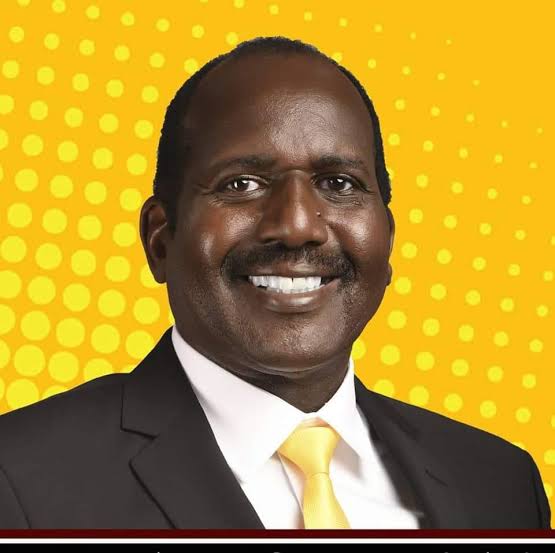
The political landscape of Nandi County has been jolted by a seismic announcement. The planned return of its first Governor, Dr Cleophas Lagat, alias Chematel, to the race for the county’s top seat in 2027 is sending palpable chills across political circles and forcing a frantic recalculation among declared aspirants. After his defeat in 2017 by the incumbent, Governor Stephen Sang, Lagat’s re-entry is not just a candidacy; it is a powerful narrative threatening to upend established succession plans.
Lagat, who steered the county from its inception in 2013, carries the complex legacy of a pioneer. While his tenure is often critiqued for tangible development shortfalls, it is concurrently viewed with a significant degree of nostalgic sympathy and understanding. Analysts and voters alike acknowledge that, as the first governor, his primary task was the herculean effort of establishing the devolved system from scratch—setting up structures, systems, and the very architecture of county governance. For many, this foundational role, coupled with his perceived personal humility and connection to the people, has cemented a reservoir of goodwill that transcends a mere scorecard of projects.
It is precisely this reservoir that now makes him a formidable threat, particularly in the vote-rich Mosop Sub-County. His declaration explodes an already crowded and competitive field from this expansive region. The race to succeed Sang had prominently featured two powerful women from Mosop: the current Nandi Woman Representative, Cynthia Muge (Kipkaren Ward), and the sitting Deputy Governor, Dr Yulita Cheruiyot (Ndalat Ward), who is serving her second term as Sang’s deputy. Both had been positioning themselves as natural heirs, with Yulita banking on executive experience and continuity, and Muge leveraging her national platform and legislative record.
Enter Cleophas Lagat, hailing from Kurgung/Surungai Ward, who now dramatically splits the Mosop vote three ways. His candidacy directly complicates the arithmetic for Cynthia and Yulita, as he is likely to siphon off a substantial portion of the sub-county’s support base, potentially creating a stalemate that could benefit a candidate from another region. The fear among his Mosop rivals is acute: the “son of the soil” factor is now dangerously diluted.
Beyond geography, Lagat’s return frames the 2027 election as a historic referendum: the Foundational Administrator versus the Development Inheritors. His campaign is expected to pivot on the narrative of a seasoned father figure returning to “complete the work” he started, with the promise that, free from the initial burdens of institution-building, he can now focus on delivery. This message could resonate with voters who feel the county’s potential remains untapped.
For other aspirants from sub-counties like Chesumei, Nandi Hills and Tinderet, Lagat’s entry is a double-edged sword. While it weakens the collective front from Mosop, it also introduces a wildcard with high name recognition and a proven, though dated, voter base. The 2017 defeat is being reframed by Lagat’s strategists not as a rejection, but as a temporary setback—a narrative they believe can galvanise a comeback.
As the dust settles on the announcement, the chill in Nandi politics is real. Strategies are being rewritten, alliances reconsidered, and attack lines redrawn. Dr Cleophas Lagat has not just entered the race; he has fundamentally altered its chemistry and dynamics. The 2027 gubernatorial contest is no longer a simple succession battle; it is shaping up to be an epic clash of legacies, regions, and political resurrection, with the county’s pioneer determined to reclaim his crown. The scramble for Nandi has just begun, and it is colder and more unpredictable than anyone anticipated.