By Paul Njenga
Kisumu, Kenya’s lakeside city, is undertaking an ambitious transformation that will redefine the city’s future socio-economic development.
The ambitious project, driven by climate concerns, tourism potential, and a push to realign the city with its largest natural asset — Lake Victoria — led to the formation of the Kisumu Lakefront Development Corporation (KLDC).
This is a central vehicle in redefining the city’s future. With new funding, partnerships, and bold plans, this is not just an urban renewal project — it is a statement of vision and identity.
Vision and Goals
KLDC’s mandate is to develop and manage the economic, environmental, and social potentials of Kisumu’s lakefront. The broad goals include:
- Urban Renewal and Aesthetics: Making Kisumu “face the lake” in a physical, cultural, and economic sense. Enhancing public access to the waterfront, beautification, walkways, parks, beaches, etc.
- Blue Economy and Fisheries: Formalizing and improving the fisheries sector through modern landing sites, safer boats, processing infrastructure, and value addition.
- Tourism and Recreation: Developing public beaches, promenades, parks, aquaparks, hotels and resorts, marinas, and waterbus stations.
- Economic Opportunity and Investment: Attracting private sector investment, unlocking climate-resilient infrastructure, enabling trade, hospitality, real estate, and maritime transport.
- Environmental Sustainability & Resilience: Climate-smart urban planning, ensuring projects are environmentally sound (e.g. managing lake ecology, handling effluent, etc.), incorporating planning safeguards.
Achievements
Some of the concrete achievements and ongoing actions under the lakefront development initiative include:
- Establishment of the KLDC
The Kisumu Lakefront Development Corporation was officially launched after the passing of enabling legislation as a special purpose agency to steer lakefront economic and social development. - Feasibility Study Funding
In mid-2025, the county secured Sh97.5 million (≈ US$750,000) from the African Development Bank (AfDB) via its Urban and Municipal Development Fund to finance a feasibility study. This will cover technical and financial viability of the proposed lakefront projects. - Fishery Sector Reforms
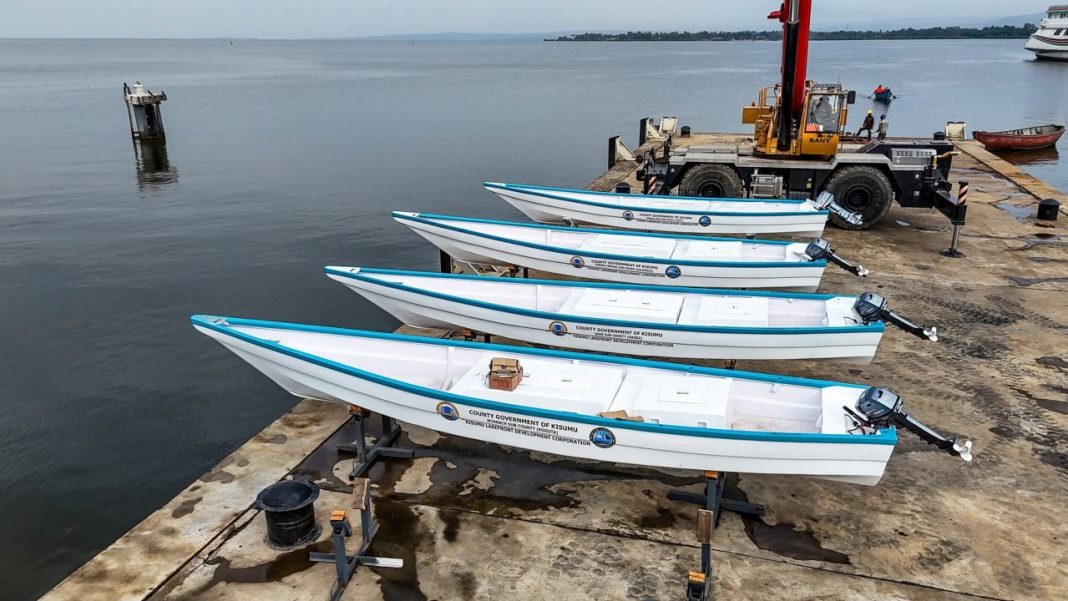
- The county is distributing modern fiberglass boats to fisherfolk (5 to fisherfolk, 1 to the Directorate of Fisheries for surveillance) to replace unsafe wooden boats. The boats have safety gear, engines, and cooler boxes.
- Five new fish landing sites are being constructed in various sub-counties to improve safety, reduce post-harvest losses, and enhance access.
- Promenade and Public Access Plans
- A plan for a 46-kilometre promenade along the lakefront from Dunga Beach to Ndere Island. This will include walkways, cycling tracks, and recreational/resort-type facilities.
- Public beaches, parks, an aquapark, marina, and waterbus stations are among the proposed amenities to increase public use and tourism appeal.
- Urban and Planning Integration
The lakefront plan is being integrated into Kisumu’s Local Physical and Land Use Development Plan and County Integrated Development Plan. This helps ensure coherence in land use, infrastructure layout, and legal compliance.
Challenges and Risks
While the vision is compelling, there are several challenges that could delay or undermine the project if not addressed properly:
- Land Ownership and Encroachment: Some plots along the lake are already grabbed, informally occupied, or under dispute. Repossession or legal regularization can be slow and contentious.
- Environmental Concerns: Lake Victoria is sensitive — pollution, water level fluctuations, ecosystem balance, and waste management pose risks, especially with increased activity. Ensuring resilience and environmental safeguards is crucial.
- Funding and Financial Sustainability: Feasibility studies, construction, maintenance, and amenities all need long-term funding. Relying only on grants or government budgets may be unsustainable; private investment will likely be needed.
- Implementation Capacity: Technical skills, project management, procurement, and regulatory approvals — these are all large, complex works. Any gaps can result in delays or substandard work.
- Community Involvement and Social Equity: Existing lakeshore communities (fishers, informal businesses, land-users) may be displaced or lose access if plans are not sensitive. Ensuring inclusive design is essential.
- Maintenance and Upkeep: Promenades, parks, public amenities, and marinas require regular maintenance. Without a plan or secured revenue stream, they can degrade.
Potentials
The lakefront holds enormous potential for Kisumu and the greater Western Kenya region:
- Tourism Boost: Enhanced public spaces, recreational areas, and marinas can draw more visitors, regionally and internationally.
- Livelihoods & Blue Economy Growth: Modern boats, fish landing sites, and processing plants help fishers fetch better value and reduce losses.
- Improved Urban Living: Better public spaces, walkability, and access to the lake can improve quality of life.
- Identity and Branding: Presenting Kisumu as a “Lake City,” aesthetic and functional, can change perceptions and attract investors.
- Climate Resilience: If planned well, lakefront improvements can include green infrastructure, flood protection, shoreline stabilization, etc.
What Needs to Be Done Next
To fully realize the vision, KLDC has prioritized the following:
- Complete the Feasibility Study and Publish Findings
Use the Sh97.5 million AfDB grant effectively — ensure transparency in findings, public forums, and alignment with climate, financial, and social criteria. This will enhance the bankability of the lakefront project for ease of funding implementation. - Mobilize Private Sector Partnerships
For hotels, waterfront real estate, and marinas, private investment and PPPs (public-private partnerships) will be essential. Offer incentives, clear land permissions, and a stable regulatory environment. - Ensure Inclusive Planning
Engage community stakeholders (fisherfolk, informal settlements, local businesses) in the design of promenades, beaches, and access points to ensure benefits are widely shared. - Environmental Safeguards
Integrate policies for pollution control, waste management, lakeshore restoration, flood control, and ecological buffer zones. - Sustainable Maintenance Model
Identify sources for ongoing revenue (leases, transit fees, parking, tourism fees) to maintain amenities so they don’t fall into disrepair. - Strong Governance & Oversight
Clear lines of responsibility, transparent procurement, oversight by audit bodies, and periodic reporting to the public.
Conclusion
The Kisumu lakefront redevelopment is one of the most ambitious urban renewal efforts in Kenya’s recent past. If executed well, it can be transformative — not just in beautifying the city, but in building resilient infrastructure, growing the blue economy, and reshaping Kisumu’s identity.
The lake has always been Kisumu’s lifeline; finally, the city seems poised to embrace its waters — not as a backdrop, but as its core.
The writer, Paul Njenga, is the current CEO of KLDC