Home Blog Page 10

Wetangula on the Cross Over Chwele–Kabuchai Ward By-election as He Faces Off with United Opposition and UDA

0

By Anderson Ojwang

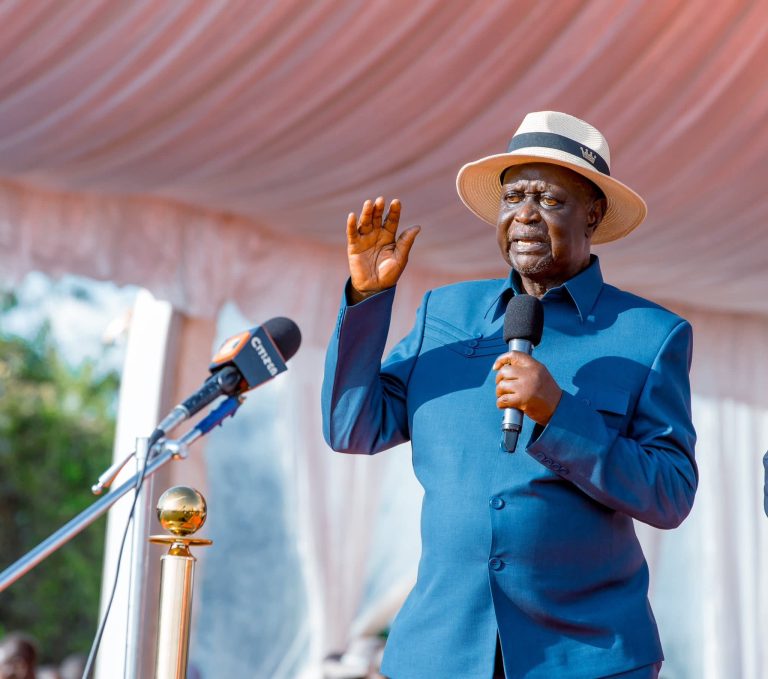
In Bungoma County, Speaker of the National Assembly Moses Wetangula is facing a battle of his life. This time, the battle for his political survival takes him to his own ward, Chwele–Kabuchai.

At his own backyard, Wetangula is facing a supremacy battle against his bitter opponents — Trans Nzoia Governor George Natembeya, former Bungoma Governor Wycliffe Wangamati, and Kabuchai MP Majimbo Kalasinga.

The by-election has drawn intense interest and is one of the main political test grounds ahead of the 2027 general elections.

Wangamati recently said, “This vote is very important; it will save the whole of Bungoma County. That’s why I want you to vote for Erick Wekesa.” Erick Wekesa is an independent candidate, one of two leading candidates.

It is a two-horse race between Wetangula’s Ford–K candidate Vincent Maunda, who the party nominated to replace the former MCA James Barasa Mukhongo, who died recently.

During the Ford–K nomination, Maunda got 20 votes against his closest opponent Ezekiel Khamusini, who received four votes, while two other aspirants did not get any votes.

The nominations were done through secret ballot and were presided over by the Ford Kenya Director of Elections, Khadija Mustafa.

On Thursday, Natembeya prevailed on the DAP–K candidate Phanice Waswa in favor of Erick.

Natembeya wrote on his X handle:
“DAP–K’s Phanice Waswa has today stepped down in favor of Erick Wekesa in the upcoming Chwele–Kabuchai Ward by-election, a powerful show of unity and maturity in leadership.
This outcome follows my mediation efforts to bring together our leaders under one vision: to strengthen the opposition and give the people a united voice.
We are proving that when leaders choose dialogue over division, the people win.
This is not just about a by-election; it’s about setting a new tone for our politics — one built on cooperation, strategy, and shared purpose. Together we are building a stronger front and shaping a future where unity delivers victory.”

Wetangula has also to contend with the fact that UDA, the leading partner in the Kenya Kwanza coalition, has also fielded a candidate, Elizabeth Murunga Situma.

While in other regions — Kasipul, Ugunja, and Magarini parliamentary by-elections — UDA and ODM have agreed to support the broad-based candidates on the ODM ticket, while in Malava constituency, ODM is supporting the UDA candidate.

This leaves Wetangula in a precarious situation in the emerging political realignment ahead of the 2027 general election.

UDA wrote on their Facebook page:
“UDA Chwele/Kabuchai MCA candidate Elizabeth Murunga Situma continued with her campaigns ahead of the upcoming November 27 by-elections. She sought the support of voters from Mukhweya and Chwele villages, urging the residents to support the government by voting her as their representative.”

Wetangula has been crisscrossing the ward in pursuit of votes and appealed to the electorate to support the Ford Kenya candidate.

He wrote on his Facebook page:
“This afternoon, in my capacity as the FORD–Kenya Party Leader, I joined the people of Chwele–Kabuchai Ward at Mukhweya Primary School Grounds for a campaign rally in support of our party’s candidate, Mr. Vincent Maunda, ahead of the upcoming November 27th by-elections.

I appealed for the support of our candidate while emphasizing the importance of electing a leader who understands the needs of the community and remains fully committed to driving development and strengthening effective representation.

Together with Bungoma Governor and Deputy Party Leader H.E. Kenneth Lusaka, Senator Wafula Wakoli, our Secretary-General Hon. John Chikati, and Members of the County Assembly led by Deputy Speaker Stephen Wamalwa, we called on the electorate to stay united and protect the political heritage of our great party.

We reminded the residents that the late Hon. Barasa Mukhongo served Kabuchai with loyalty, devotion, and distinction under the FORD–Kenya banner and therefore urged that it was only fitting that the party he represented continues to advance the progress and legacy he helped establish.

As we move closer to this crucial democratic exercise, I urge Kabuchai residents to uphold peace, respect diverse political views, and make informed decisions that prioritize our shared aspirations for growth and prosperity.

I reassured the residents that with collective support, Mr. Vincent Maunda will deliver better services, empower the community, and ensure Kabuchai remains firmly on the path of advancement.”

Wangamati has teamed up with Majimbo Kalasinga to challenge Wetangula’s political dominance in the county, and they are supporting Erick Wekesa.

Majimbo, currently at loggerheads with his party leader Wetang’ula, has teamed with Wangamati to ensure their candidate, Erick Wekesa, defeats Ford Kenya’s nominee in the ward elections.

Majimbo’s decision to support his own candidate in Chwele–Kabuchai Ward came after Wetangula openly attacked him for the first time.

The Speaker warned that anyone who goes against him risks losing his seat and gave examples of Wangamati, former Tongaren MP Eseli Simiyu, and former Kanduyi MP Wafula Wamunyinyi. He told Majimbo that his fate would be no different.

In response, the MP expressed deep disappointment with the Speaker, claiming he now fears for his life and a plot to attack him, pointing fingers at the National Assembly Speaker.

The ward has registered voters of 18,288 with a total of 37 polling stations. The polling station with the least registered voters is Khalaba with 109 voters, while Busakala polling station has 1,460.

For Wetangula, any slip in his village ward by-election could spell doom for his Ford–K and himself in Bungoma County politics, and that is why he must win the seat.

EACC ORDERS KISUMU CITY MANAGER TO SURRENDER OVER FAKE ACADEMIC PAPERS, FRAUD CHARGES

0

By James Okoth

The noose has tightened around Kisumu City Manager Michael Abala Wanga after the Ethics and Anti-Corruption Commission (EACC) ordered him to present himself immediately at the agency’s headquarters, Integrity Centre in Nairobi, for processing and arraignment over a string of corruption and forgery allegations.

In a letter dated November 13, 2025, the commission said it had received the green light from the Director of Public Prosecutions (DPP) to prefer multiple charges against Abala, who is accused of using forged academic certificates to fraudulently secure his position as City Manager.

According to EACC, the embattled city boss is also accused of abusing his office by using fake documents to facilitate the travel and payment of allowances for a female non-staff member, whom he allegedly passed off as a county employee during an official trip to Lagos, Nigeria between 8th and 12th July 2024. The trip, EACC says, was fully funded by the Kisumu County Government.

The anti-graft agency confirmed that Abala will face a raft of charges including:

  1. Forgery contrary to Section 345 as read with Section 349 of the Penal Code;
  2. Fraudulent acquisition of public property contrary to Section 45(1) as read with Section 48(1) of the Anti-Corruption and Economic Crimes Act, 2023;
  3. Uttering false documents contrary to Section 353 as read with Section 349 of the Penal Code; and
  4. Presentation of forged certificates contrary to Section 34(a) of the Kenya National Examination Council Act.

“The suspect has been directed to immediately present himself at EACC Headquarters, Integrity Centre, Nairobi, for processing and arraignment,” the Commission stated.

The unfolding scandal has sent shockwaves through the Kisumu County administration, coming at a time when the integrity of senior officers is under intense public scrutiny. Sources within City Hall say tension is high as EACC officers move in to seal evidence and prepare witness statements.

Abala, a long-serving political operative and one of the most visible faces of the Kisumu County administration, is now staring at career-shattering criminal charges that could end his public service run and trigger a leadership shake-up at the city’s top management.

As of press time, Abala had not issued any public statement regarding the allegations or confirmed whether he would honour the EACC summons.

Sunshine Development Tour Lauded for Creating Global Pathways for Kenyan Golf

0

By Philip Orwa

Kenya’s golf leadership has lauded the Sunshine Development Tour – East Africa Swing for its growing impact on professional golf in the region, terming it a “game changer” that is expanding opportunities for Kenyan and East African golfers to access global competition and exposure.

Speaking during the closing ceremony of the Betika Masters at Limuru Country Club, the President of Golf Kenya, Philip Ocholla, commended the Tour for creating a structured pathway that links junior, amateur, and professional golf, while also aligning with the Safari Tour and the Magical Kenya Open qualification system.

“This is a very opening space for Kenyan athletes, together with those visiting. It’s a clear indication that the pathway we’ve been working on — from junior to amateur to professional golf — is now taking shape.

Earlier in the year, we had discussions between PGK, the Safari Tour, and SDT to align efforts towards preparation for the Magical Kenya Open. I’m happy that the SDT made it possible that players earning points here also get an opportunity to play at the MKO,”said Ocholla.

Ocholla noted that while this was the inaugural season of the Sunshine Development Tour in the region, the progress already demonstrated great potential for sustainability and long-term development of professional golf in Kenya and across East Africa.

“This is the first year, so there may be teething problems, but they are lessons to help us build a sustainable future and prepare disciplined athletes ready to make the cut at the Magical Kenya Open,” he said.

On his part, Kenya Open Golf Limited (KOGL) Chairman, Patrick Obath, praised the SDT–EAS for raising the standard of competition among regional professionals and providing a much-needed bridge to international golf through its recognition by the Sunshine Tour.

“It’s really great to see how the SDT has grown. The level of competition has improved tremendously, and this bodes very well for the players who will qualify to play in the Magical Kenya Open.

Based on the amount of golf played in the last six months, we’re hopeful that we’ll have more Kenyan and regional players making the cut. I’d like to thank SDT for the work they’ve put in, and the players for sharpening their game. It’s building towards a stronger show next February,” Obath said.

The Sunshine Development Tour – East Africa Swing is a professional development circuit sanctioned by the Sunshine Tour of South Africa. It provides a competitive platform for East African golfers to earn Official World Golf Ranking (OWGR) and Safari Tour Order of Merit points that count towards qualification for the Magical Kenya Open, a DP World Tour event.

Now in its inaugural season, the Tour has staged eight events across Kenya and Rwanda, including tournaments at Thika Greens, Ruiru Sports Club, Nyali Golf Club, VetLab Sports Club, Kigali Golf Club, and most recently at Limuru Country Club.

The Tour will next head to Vipingo Ridge Golf Resort for its ninth leg before the Grand Finale scheduled for January 2026 at Karen Country Club, where the top 30 players from the East Africa Swing will compete against the top 30 from South Africa’s Big Easy Tour for Sunshine Tour playing cards.

Why Allegation of Political Violence May Haunt the ODM Candidate at the Ballot

0

By Team

The Orange Democratic Movement (ODM) faces a date with destiny over the Kasipul by-election. The tag of political violence is allegedly becoming synonymous with the party.

As the campaign peaks, political violence is turning out to be one of the key campaign agendas in the constituency, which has witnessed bloodbaths in the last decade.

Kasipul has been flagged as one of the violence hotspots in the country and has left several people killed, while others are nursing deep panga scars that have radically changed their lives.

Recently, two innocent lives were lost at Kawere Village after the supporters of ODM candidate Boyd Were allegedly hacked them to death.

On Wednesday, the police raided the home of the immediate former area MP, Charles Ongondo Were, the father of Boyd, the ODM candidate.

During the raid and the arrest, five murder suspects escaped, while three DCI officers were injured at the home of Ongondo.

The three officers, including the DCI Officer in Charge of Rachuonyo South Sub-County, Daniel Muhuhi, were injured by armed goons while arresting the suspects at the homestead of the late former Kasipul MP, Ongondo Were, in Kachien Village, Central Kasipul Ward.

Homa Bay County Police Commander Lawrence Koilem said the officers were attacked at the former MP’s homestead, where the suspects had been hiding.

Koilem explained that the operation was launched after police tracked the suspects to Kosele Trading Centre. The suspects fled and sought refuge in the late Were’s homestead.

The officers pursued them to the homestead, where they managed to arrest five suspects. However, before they could leave, a crowd of over 100 youths stormed the compound.

Koilem said the rowdy youths assaulted the police officers with crude weapons in an attempt to prevent the arrests.

During the ODM nomination, vehicles and a hospital belonging to one of the aspirants, Mr Kepha Newton Ogada, were destroyed by ODM goons belonging to one of the aspirants.

The attack paralysed medical services at the facility and left property worth millions destroyed.

Ogada, who was in the facility during the attack and hid in one of the rooms in the hospital, was rescued and evacuated by security details belonging to Deputy Governor Oyugi Magwanga to safety.

Ogada recently, in a cryptic post, shared photos of Philip Aroko, one of the leading candidates, with a caption “This time it will be no longer a walk in the park.”

Last Thursday, a confrontation ensued between the supporters of the two leading aspirants, Boyd Were and Philip Aroko, while on the campaign trail in Central Kasipul.

Aroko’s team claimed that two of his supporters were killed by Were’s team while they were passing nearby where their competitor was holding a meeting.

Were denied the allegations and instead claimed that Aroko was to blame for the confrontation for trying to disrupt his function at a home in the area.

“I was having a function at a home in Kawere Village when Aroko’s team came blaring loud music and making noise with an aim to disrupt our function. In the process, confrontation broke out,” he said.

Before Ongondo’s death, Kasipul had been a war zone pitting the slain MP and his political opponents, which left several people with various injuries and scars.

Ongondo, in April before his assassination, had alleged and issued a stern warning to a number of politicians and Government and County officials whom he claimed were ferrying the “goons” to cause violence in the constituency.

The MP claimed a number of political goons believed to have been terrorising the region were ferried from other regions.

But his opponents accused him of allegedly using enforcement officers from the County Government to terrorise residents.

Former area MP Magwanga condemned the recent incident and asked the police to investigate and arrest those involved.

“We cannot allow violence to return to Kasipul. We do not want to have any bloodbath in the area. Let the police restore order and peace,” he said.

Magwanga asked the candidates to engage in peaceful campaigns and adhere to their campaign schedules to avoid ugly incidents.

The seat has attracted ten candidates, namely: Boyd Were, Philip Aroko, Robert Riaga, Sam Otiende, Collins Okeyo, Omondi Koyoo, Linda Aoko Ouma, Isaack Kiche Abok, and Jesse Okello.

Okowa Elected to the International Law Commission by an Absolute Majority of the Votes in the Security Council

0

By Sandra Blessing

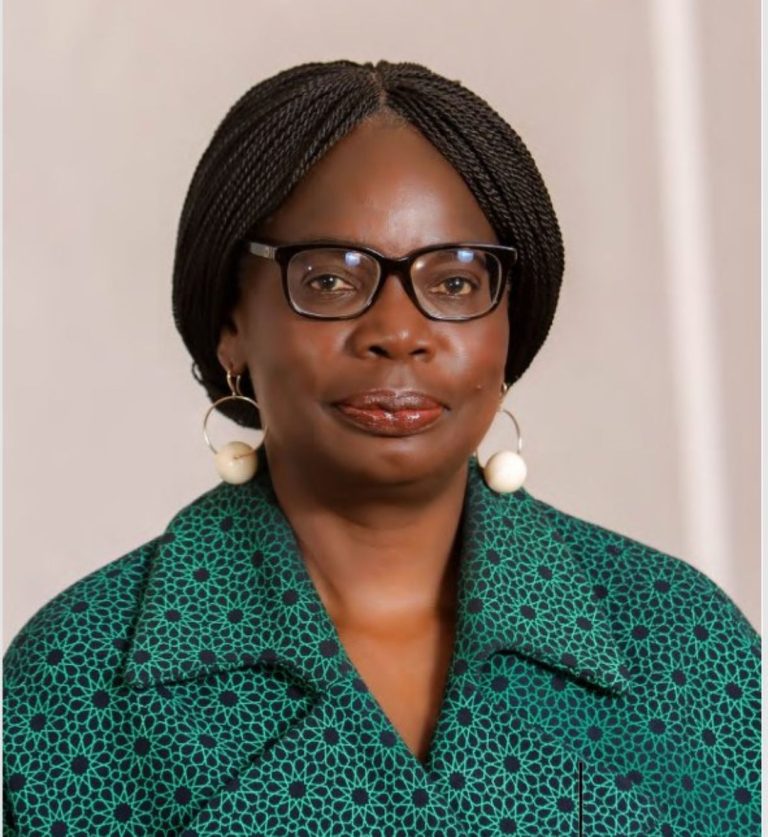
A respected and leading Kenyan lawyer, Prof. Phoebe Okowa, has been elected to the International Law Commission (ILC).

In a communiqué dated 12 November 2025, addressed to the President of the General Assembly, Ms. Annalena Baerbock, from the President of the Security Council, Michael Imran Khan, read “I have the honour to inform you that, at the 10,040th meeting of the International Court of Justice to fill the seat that became vacant on 30 September 2025, Ms. Phoebe Okowa (Kenya) obtained an absolute majority of votes in the Security Council. Accept, Excellency, the renewed assurance of my highest consideration.”

Okowa was elected after four rounds of voting and will serve as one of the ICJ’s 15 judges until February 2027.

She became the first African lady to possess a seat at the International Law Commission, where she will serve for a considerable length of time beginning in 2023.

Prof. Okowa graduated top of her group with a Bachelor of Laws (LLB) degree, First Class Honours, from the University of Nairobi.

She has taught public international law, constitutional law, and private international law at the University of Bristol in the United Kingdom.

The Commission was established in 1947 and is based in New York, USA. In its 72-year history, the Commission has had only seven women members out of a total membership of 229, with the first woman being elected in 2000.

Phoebe Okowa is Professor of Public International Law and was a Director of Graduate Studies at Queen Mary University of London. She previously taught Public International Law, Constitutional Law and Private International Law as a member of the Faculty of Law at the University of Bristol. She has held visiting appointments at the Universities of Lille, Helsinki, Stockholm and the WZB Berlin Social Science Centre for Global Constitutionalism and has lectured for the United Nations at its Regional Course on International Law for Africa.

In 2011 and 2015, she was Hauser Global Visiting Professor of Law at New York University, School of Law. An advocate of the High Court of Kenya, she has acted as counsel and consultant to governments and non-governmental organisations on questions of international law before domestic and international courts, including the International Court of Justice. In 2017, she was nominated as an arbiter to the Permanent Court of Arbitration at The Hague.

Okowa graduated at the top of her class with a Bachelor of Laws (LLB) with First Class Honours from the University of Nairobi, Kenya. She proceeded to the University of Oxford on a Foreign and Commonwealth Office Scholarship, obtaining the degree of Bachelor of Civil Law (BCL). She completed her doctoral thesis (D.Phil.) at Oxford under the supervision of the Chichele Professor of International Law, Ian Brownlie QC. Her monograph on State Responsibility for Transboundary Air Pollution, published by Oxford University Press, remains the definitive work on the legal challenges that environmental harm presents for traditional methods of accountability in international law. She has also co-edited Environmental Law and Justice in Context (with Jonas Ebbesson, CUP 2009).

Her work on the admissibility of claims in international adjudication has been cited with approval numerous times by domestic courts considering questions of international law. She is on the International Advisory Board of the Stockholm Centre for International Law and the Executive Committee of the International Society of Public Law (ICON-S).

Professor Okowa has generalist interests in international law. She has written on a wide range of contemporary international law topics, including the interface between state responsibility and individual accountability for international crimes, unilateral and collective responses to the protection of natural resources in conflict zones, and aspects of the protection of the environment.

She serves as Editor of the series Foundations of Public International Law (with Malcolm Evans, Oxford University Press) and is on the editorial board of the African Journal of International and Comparative Law, and was for ten years on the editorial board of the International Community Law Review.

Her articles have been published in the African Journal of International and Comparative Law, British Yearbook of International Law, International and Comparative Law Quarterly, and Current Legal Problems, among others.

Her current research explores the systemic problems of accountability involved in the use and exploitation of natural resources in conflict zones. It focuses on those conflicts where coherent and well-organised insurgencies present a credible challenge to governmental power and the state-centric structures of authority in international law. An offshoot of this project examines concession contracts in peace agreements and will be published in the Research Handbook on International Law and Environmental Peacebuilding (Edward Elgar, 2021).

The Commission’s job is to initiate studies and make suggestions to encourage the progressive development of international law and its codification.

Oburu Oginga’s Relentless Burden of Legacy at 81

0

By James Okoth

Since the passing of his brother, Raila Odinga, Dr Oburu Oginga has rarely slowed down. At 81 years old, when many would naturally seek reflection, he continues to move visibly and decisively across Kenya’s political landscape.

In October 2025, he attended the ODM National Executive Committee meeting in Nairobi, where he was appointed Acting Party Leader. Days later, he graced the delegates’ conference in Homa Bay, where leaders from Kisumu, Siaya, Homa Bay and Migori counties formally endorsed his leadership. By month’s end, he was again at Chungwa House, stepping into his late brother’s office, heavy with expectation and responsibility.

Yet, amid these public appearances, a quiet question lingers: has he had time to mourn? Raila’s passing marked a political shift and a personal loss for Oburu, whose career and life have long been intertwined with his brother’s journey.

At his age, the toll of constant movement is significant. Leadership demands presence and endurance, but grief deserves space. Oburu is now the symbolic bridge between the Odinga legacy and the region’s uncertain political future.

Amid the flurry of endorsements and engagements, one cannot ignore the role of the wider political class. In pursuing continuity and strategic advantage, there is a risk the human side of leadership is overlooked. Oburu is expected to embody stability and reassurance, yet the need for quiet reflection is rarely acknowledged.

He carries the dual responsibility of honouring a storied family legacy while navigating a region at a political crossroads. His appearances and endorsements reinforce that the Odinga legacy remains intact, yet the intensity of this visibility can overshadow the human need for pause.

Political observers note that while his stature offers reassurance to ODM supporters, it also highlights the absence of a fully prepared next generation. Young leaders are present, but respect for the Odinga lineage creates a delicate balance between continuity and generational renewal.

Oburu’s contributions are undeniable. He provides stability, continuity and a familiar face of authority. But leadership is not only about endurance; it is also about reflection, strategy and renewal.

The most profound tribute he can pay to his brother may not lie in ceaseless public appearances, but in moments of quiet. He needs time to mourn, to reflect and to guide the next generation without losing himself.

Dr Oburu Oginga’s journey reflects a larger tension in Kenyan politics: the pull between legacy and personal space, between duty and grief, between symbolic authority and practical leadership. Recognising both his stamina and his humanity reminds the nation of the very real cost of carrying forward a historic name.

Economic Saboteurs Should Follow the Example of Aliko Dangote Who Invests Only in Africa

0

By Billy Mijungu

Africa’s richest man, Aliko Dangote, is set to invest up to $1 billion in Zimbabwe, marking one of the largest private-sector investments in that country in recent years. The investment, spearheaded by the Dangote Group, will target three key sectors: cement manufacturing, coal mining, and power generation. It is expected to create thousands of jobs, stimulate infrastructure growth, and help Zimbabwe reduce its dependence on imports in critical sectors.

Dangote’s investments across Africa are deliberate and visionary. He continues to prove that Africa’s transformation must be led by Africans who believe in the continent’s potential. His business empire spans manufacturing, energy, agriculture, and tourism, with landmark projects such as the Dangote Refinery in Nigeria, one of the largest in the world, a major fertiliser plant in Ethiopia, numerous cement factories across the continent, and recent acquisitions in Kenya’s food and tourism sectors. With a presence in more than 17 African countries, his mission remains simple but powerful: to build industries, create jobs, and strengthen Africa’s economic independence.

In Kenya, Dangote’s proposal to provide cheap cement and establish a large manufacturing presence reportedly ran into challenges when he was asked to pay a bribe. Rather than compromise his integrity, he chose to walk away, remaining faithful to his principles and Pan-African ideals. His story serves as a reminder that corruption continues to choke African progress and discourage genuine investors who could transform economies.

If those who plunder African wealth must steal, let them at least invest their loot in Africa. If you steal from Uganda, invest in Kenya. If you loot Congo, build industries in Zambia, but not in Europe or Dubai. Better yet, do not steal at all. But if you must, at least let Africa benefit from Africa’s own wealth.

Aliko Dangote’s example is one of purpose, patience, and continental pride. His investments are transforming Africa from within. Cheap fertiliser, affordable oil, and low-cost cement form the foundation of industrial growth and economic stability. He has shown that Africa does not need foreign saviours, only African believers.

He is bound to change Africa economically.

Waiguru Turns Kirinyaga into Investment Hub, Lifts 52,000 Households Out of Poverty

0

By Hope Barbra

For eight years as Governor, Anne Waiguru is one of the few who have made devolution a reality, and Kirinyaga is a shining economic and investment hub.

While the country reels from the high poverty rate of 39.8 percent, Waiguru has presided over a drop from 23% to 21%, lifting over 52,000 households out of poverty.

In her 2025 State of the County address, Waiguru said hard work, planning, and partnerships have redefined Kirinyaga’s future.

“As I delivered the 2025 State of the County Address, I shared the remarkable progress that is turning our county into a thriving hub of opportunity and investment.”

Economic Transformation and Jobs

She said economic growth has consistently surpassed the national average, with Kirinyaga’s Gross County Product rising from KSh 114.9 billion in 2017 to KSh 190.79 billion in 2024, at an annual rate of 5.4 percent versus the national 4.9 percent.

“The Sagana Industrial City is attracting 60+ investors and will create 10,000 direct and 170,000 indirect jobs.

The upcoming CAIPS Special Economic Zone (SEZ) and Export Processing Zone (EPZ) will further position Kirinyaga as a regional industrial hub, unlocking thousands of new opportunities for our youth and entrepreneurs.

Coffee earnings in Kirinyaga reached a record KSh 7.6 billion in 2024, with factories paying between KSh 100 and KSh 148 per kilogram of cherry. Gakuyu-Ini led with KSh 148 per kilo, followed by Gacami at KSh 145.10, the highest in the country,” she said.

Agriculture & Food Security

Waiguru said over 100,000 farmers have been empowered through Wezesha Kirinyaga, while rice production has more than doubled from 90,000 to 210,000 metric tons, generating KSh 15 billion for farmers.

“Kirinyaga leads Kenya in tomato production — 116,000 tons worth KSh 6.9 billion annually. Milk output grew from 2.5 to 7 litres per cow daily, generating KSh 3.1 billion.

Avocado and fish production also rose, bringing new income to local farmers,” she said.

Infrastructure & Urban Development

The Governor said over 7,000 km of roads have been graded and maintained, improving farm-to-market access.

She said 118,550 m² of cabro paving has been laid, giving towns a modern, clean look, while 800 acres of grabbed public land have been recovered, opening space for schools, hospitals, and housing.

“We have completed urban development plans for Kutus, Kerugoya, and Kagio,” she said.

Water & Sanitation

She said the county government has undertaken 200 water projects and implemented 75 boreholes, increasing access from 62% to 78% of households.

Health & Education

Waiguru said health facilities have expanded from 65 to 85, while maternal deaths have dropped from 88 to 55 per 100,000 births; skilled birth attendance rose to 92 percent.

“We have 854 Community Health Promoters deployed across all wards, while the new Kerugoya Level 5 Hospital has revolutionized healthcare access, offering specialized services and reducing referrals outside the county,” she said.

The Governor said they have disbursed KSh 540.7 million in bursaries, with an additional KSh 100 million allocated in this year’s budget to support more needy students across the county.

“We have constructed over 40 ECDE classrooms and 12 vocational training centres or upgraded them, equipping youth with technical and entrepreneurial skills,” she said.

Environment & Clean Energy

Waiguru said her administration has presided over the planting of 8.2 million trees, raising tree cover from 18.5% to 30.4 percent, while 7,000 households have been equipped with LPG kits under FLLoCA, promoting clean energy.

Youth, Gender & Sports

Currently, Kaitheri Apparel Factory employs women and youth, creating opportunities locally, while the Minji Football Tournament now engages thousands across all wards.

Digital Transformation & Governance

She said all county operations have been digitized, improving health services, revenue collection, licensing, project monitoring, recruitment, and overall efficiency and transparency in service delivery.

“We have witnessed revenue increase from KSh 344 million in 2017 to KSh 852 million in 2024 through Kiripay, sealing leakages and improving accountability.

What we’ve achieved is more than progress — it’s a blueprint for rural transformation. Kirinyaga is now a county that attracts investment, supports enterprise, and inspires possibility for generations to come,” she said.

Greg Snow wins Inaugural Betika’s Sunshine Development Tour-East Africa Swing

0

By Philip Orwa

Muthaiga Golf Club’s Pro Greg Snow won his inaugural Sunshine Development Tour – East Africa Swing title after holding off a late charge from the chasing pack to win the Betika Masters at Limuru Country Club.

Snow, who had entered the final round with a commanding six-shot lead, endured a difficult day on the course, posting a 1-over-par round that significantly trimmed his advantage, with is opening nine featuring bogeys on the 1st, 4th, 6th and 7th, with birdies on the 2nd and 9th offering brief relief.

The pressure continued on the second nine, where he dropped shots on the 10th and 14th before steadying his round with a birdie on the 15th.

The decisive moment came at the par-5 18th, where Snow produced a crucial eagle to close out the tournament on a total of 10-under par 206, securing a hard-fought victory. Taking home earned Sh400,000 after the win.

Snow said, “I had a tough round, but I am glad to have pulled it off. It feels really great to have won my first title on the Tour. When I was tied with Celestin after the first nine, I was telling myself that surely you can’t let this go. I was asking my caddy how the situation was as we went on, and he guided me through the second nine. On the 18th I was lucky to hit the fairway after going to the rough, but I tried my best to commit to the shot and finish well.”

Windsor’s Njoroge Kibugu finished second after a spirited final round. Kibugu opened strongly with three quick birdies on the 2nd, 3rd and 4th, but a triple bogey on the 6th wiped out his early gains.

He recovered with a birdie on the 7th to make the turn at 1-under par. On the back nine, he added further birdies on the 11th, 15th and 18th to return a 3-under-par score and finish the tournament at 7-under par 209.

Kibugu took home Sh214,000, while Rwanda’s Celestin Nsanzuwera emerged third, after a steady and competitive final round. Playing in the same group as Snow, Nsanzuwera opened with a bogey on the 1st but immediately responded with a birdie on the 2nd. His eagle on the 9th briefly drew him level with Snow at the top.

The back nine brought a mix of birdies on the 10th and 18th and bogeys on the 11th, 14th and 15th, leaving him at 1-under par for the round and 6-under par 210 for the tournament.
He earned Sh144,700.

Nsanzuwera said “It’s not a bad position for me because I came with a plan of finishing top three at VetLab and Limuru, and I managed to do it. For today, I tried to attack and go for the win, but I couldn’t do it as my putter was off, and the pin positions were also tough. When I went tied for the top, I didn’t even know because I wasn’t checking the scores, so I had no pressure from that. If I could have played better on the back nine, I would have taken it today.”

The eighth leg of the SDT–EAS attracted 88 players from across Africa and beyond, all competing for a share of the Sh2 million prize purse, as well as Official World Golf Ranking (OWGR) points, World Amateur Golf Ranking (WAGR) points, and Safari Tour Order of Merit points, which are critical for qualification into the 2026 Magical Kenya Open on the DP World Tour.

The Sunshine Development Tour – East Africa Swing now moves to its ninth leg, scheduled for next month at the PGA-accredited Vipingo Ridge Golf Resort in Kilifi County

The season will then culminate in the Tour Finale in January 2026 at the Karen Country Club, where the top 30 players from the Tour will face off against the top 30 from South Africa’s Big Easy Tour. The finalists will compete for cards to earn promotion to the main Sunshine Tour.

Our High Wage Economy

0

By Billy Mijungu

Kenya spends approximately Sh80 billion every month on salaries for public servants. That adds up to about Sh960 billion a year, a level that cannot be sustained without reform. The wage bill continues to balloon even as productivity and service delivery stagnate, creating an imbalance that threatens the country’s fiscal stability.

The Public Service Commission (PSC) should take the lead in rationalising staff across ministries, departments, and agencies. This would help boost efficiency, align skills to needs, and address genuine staffing gaps without creating new, unnecessary positions. The same approach should apply to county governments. The Senate should establish a clear limit on how much of county revenue can go into salaries and allowances. County Public Service Boards, in turn, should begin a deliberate and transparent process of staff rationalisation.

A key step in this reform agenda is the elimination of ghost workers. Every governor should be given a compliance period to audit and clean up county payrolls. By setting strict budgetary limits on employment expenditure, both the national and county governments would automatically shrink the space for fraudulent salary payments. A biometric count of all public servants would be a strong start toward eliminating ghost workers and restoring confidence in the system.

If fully implemented, these measures would help bring down the wage bill and build stronger tools for accountability in human resource management. They would also create a more transparent and efficient public service that delivers value for every shilling spent.

Yet, there is a paradox we must face. Kenya remains a deeply corrupt economy where wages are often the only guaranteed means of financial distribution. For many households, a government salary is the most reliable source of income in a system where opportunities are uneven. In that sense, even the wage bill contributes to development. Salaries circulate back into the economy through consumption taxes, healthcare, education, and housing. Retirees also fuel the economy through their savings and pensions, which sustain demand and social stability.

The challenge, therefore, is not to demonise the wage bill but to manage it wisely, ensuring it remains both fair and affordable while freeing up more resources for development. That is how Kenya can build a sustainable, equitable, and productive economy.