Sugar farmers and industry stakeholders have raised concerns over the proposed Crops Laws Amendment Bill, 2026, particularly provisions on the management and financing of the sugar sector.
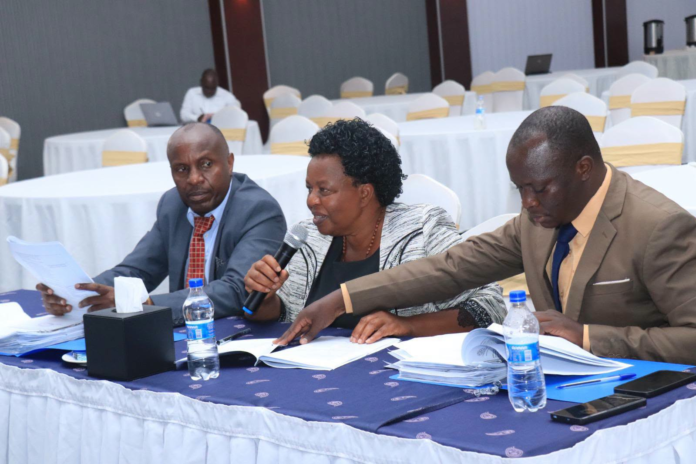
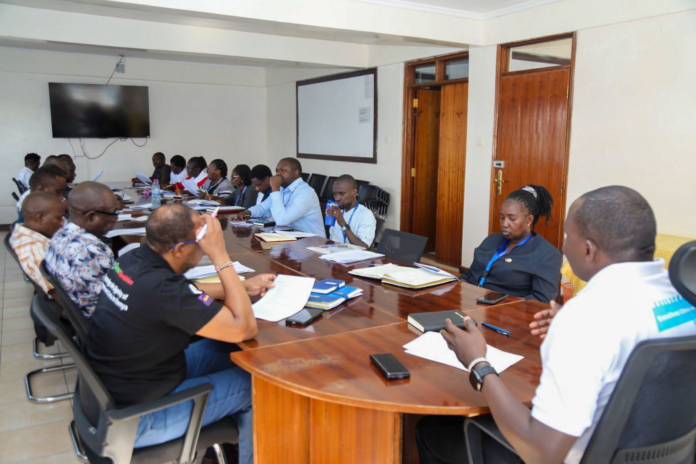
The stakeholders made the submissions when they appeared before the Departmental Committee on Agriculture and Livestock, chaired by Tigania West MP, Dr John Mutunga, to give their views on the proposed legislation.
Mr. Nick Oloo of the Kenya Sugar Manufacturers Association (KESMA) questioned whether the proposed changes would add value to existing institutions serving the sugar industry.
He expressed concern that transferring funds from the Sugar Development Levy to KADCO could affect accountability within the sector and alter arrangements established under the Sugar Act, 2024.
Mr. Oloo also cited concerns over the impact of previous legislative changes on the sugar industry, saying the sector had experienced challenges in financing, cane development, factory rehabilitation and farmer support following the enactment of the Crops Act, 2013.
Mr. Atiang Atyang of the Kenya Association of Sugarcane and Allied Products (KASAP) urged the Committee to safeguard the gains made under the Sugar Act, 2024.
“We must protect what was achieved by the Sugar Act 2024. Before its enactment, the sugar sector was receiving the least portion under AFA and the Commodities Fund despite being among the largest sectors,” he said.
Mr. Atyang also raised concerns about the proposed institutional framework, drawing comparisons with the Agricultural Development Corporation (ADC) and its role in the sugar industry.
Mr. William Kopi, Chairperson of the Butali Sugarcane Farmers Association, said the proposed financing model could affect the relationship between investors, Government and farmers, with possible implications for sugarcane production.
The Bill, sponsored by Leader of the Majority Party, Kimani Ichung’wah, proposes changes to the functions of sector-specific agricultural institutions and seeks to channel relevant funds to the Kenya Agribusiness Development Corporation Limited (KADCO).
Mutunga said the proposed establishment of KADCO was intended to address longstanding challenges in financing the agriculture sector.
The proposed corporation would bring together the Agricultural Finance Corporation (AFC) and the Commodities Fund under an institution anchored under the National Treasury.
“As a Committee, we are seeking to protect the agriculture sector, which we know is poorly funded, rather than take away from the sector by combining the strengths of these two agencies,” said Hon. Mutunga.
Mr. Michael Arum of the Sugar Campaign for Change supported the proposed amendments, saying the focus should be on developing an effective financing framework for smallholder farmers.
“The issue here is not simply which institution should manage the funds. It is simply proposing a financing architecture that will make smallholder farmers organized and finance-able,” said Mr. Arum.
He cited Malawi and South Africa as examples of countries that have adopted similar financing approaches, saying the models had supported the development of their sugar industries.
The Committee is expected to consider the views presented by the various stakeholders as it continues its scrutiny of the proposed amendments.
Kenyans can now have a possible glimpse of the opposition presidential candidate after the party leader of the Democracy for Citizens Party (DCP), Rigathi Gachagua, revealed at a meeting in the USA with Kenyans in the Diaspora.
Back at home, Prime Cabinet Secretary Musalia Mudavadi warned the Luhya community that a wave would not land their son, Nairobi Senator Edwin Sifuna, the presidency.
Gachagua said they will blend the opposition ticket to comprise youth and experience to deliver the presidency to the opposition.
“If we do our arithmetic and Sifuna is the person to take President William Ruto home, I am ready to support him,” he said.
Gachagua said he was ready to deputize Sifuna and even the Wiper leader, Kalonzo Musyoka, could deputize Linda Mwananchi presidential candidate.
He said the reverse of Sifuna deputizing him or Kalonzo was also a reality in the offing.
“There is no problem, even I, Riggy, I can deputize Sifuna. Is there any problem? I am saying even Sifuna can deputize me or even Kalonzo. Kalonzo can deputize Sifuna. You will like it. Even Sifuna can deputize Kalonzo. I see a solution where we can blend youthful energy and experience for our country,” he said.
Gachagua said they will announce the presidential flag bearer either in March or April and that there was no hurry.
“We have the best formula for identifying the candidate. Don’t be in a hurry. Former President, the late Mwai Kibaki, was agreed on as a single presidential candidate when it was only two months to the election,” he said.
He said they still have 11 months to the election and that the deadline for naming a presidential candidate is in May.
“There is no hurry. We have agreed to consolidate our backyard and then we will sit to agree on the candidate. That is the easiest part, and the most difficult is to stay alive,” he said.
No Wave to Presidency
Mudavadi said the much-talked-about political wave will not propel Sifuna to the presidency as he lacked the party structure.
“You people say that it will be a wave; it is not going to work. You go to a rally and marketplace on a market day and think you have the people,” he said.
He said it was 11 months to the next general election and Sifuna doesn’t even have a political party and expects to win the presidency.
“You have no political structure. How can we be swayed by that kind of a thing? Who have you left behind, and what structures have you left behind?
Who will go to the people? You are not clear which is your party, and it’s 10 months to go, and you cannot build a party with a national footprint. It is not easy, and you cannot build it in months,” he said.
He wondered whether Sifuna has time to cover the 47 counties to campaign and popularize his candidature.
“Let’s talk and say the truth. We have 47 counties. Will you visit them now, and how many weekends are left? So even if you were to do one county per weekend, it will not be possible. That is why we are saying you need a party with a footprint,” he said.
Meeting
He said the Luhya community must engage in a serious conversation on the future political realignment.
“We as Luhya, we must ask ourselves, if we were to move very fast, you need to be part of a party which has got a national footprint.
We are not going to be far but near it by aligning with a party with a national footprint,” he said.
Mudavadi said he will be attending the December 26th meeting spearheaded by COTU Secretary-General Francis Atwoli to chart the future of the community.
“On December 26th, Mzee Atwoli will speak to the Luhya, and I will be in attendance. Because as a community, we must say something about the coming election,” he said.
Atwoli had earlier claimed that he holds the key to the Luhya community and no leader from the region can emerge without his blessings.
He also warned that nobody can pretend to say they lead the Luhya community without him knowing and blessing.
“I want to tell you that someone cannot say he wants to be the leader of the Luhya community without me knowing. I want to be honest with you,” he said.
Atwoli said Bukhungu III will be a turning point in the Luhya community’s political dispensation.
“I want to warn and tell you there is Bukhungu III coming up on December 26th, 2026. If you want to traverse Western, you are free to do so, but after 26th, we will lock the region. We will lock it up,” he said.
The SG said President Ruto had initiated several development projects in Luhya land and that they could not afford to support the opposition.
“If you look at various development programs and the billions of shillings pumped into them by the government. Look at our Kakamega Stadium and the roads.
Do not join the group propagating the wave movement,” he said.
Mt Kenya Support
Gachagua said it would be the easiest decision for Mt Kenya to make to support Sifuna’s presidency rather than Ruto.
“It is easier to support Sifuna than Ruto. Sifuna is my cousin. It is a family affair. He has no baggage, and that is why the community will rally behind him,” he said.
Where did your political leader leave you? Were you left or you left?
This is the question gaining prominence ahead of the 2027 presidential election, with the main character being President William Samoei Ruto, the fifth President of the Republic of Kenya.
The 2027 presidential election will be settled on the altar of where the two Kenya’s prominent politicians, immediate former President Uhuru Kenyatta and the former Prime Minister, the late Raila Amolo Odinga, left their political flock.
In this script, the main character is Ruto, while Uhuru and Raila form the plot, the theme of the story, while ODM luminaries and Jubilee Alliance brigades are the minor characters.
“Left”
Take a moment and ask the difficult question: were you left or you left? This is the question which is causing political havoc in the country, with major political consequences.
So where were you left by your political leader in the emerging political formation and realignment ahead of the August 10th, 2027, General Election?
For instance, the Jubilee Alliance of former President Uhuru Kenyatta and his deputy William Ruto came up with a slogan of Kumi-Kumi in an alliance of convenience in the 2013 General Election.
“Yangu kumi na yako kumi” Uhuru said then as they campaigned and when the bromance lasted while it blossomed.
For Uhuru, he was to serve for 10 years and later hand over to his deputy Ruto to serve for another 10 years before any other leader would occupy the office.
In 2022, despite Uhuru reneging on his early promise for Ruto kumi, and instead supporting Azimio presidential candidate, the late Raila Amolo Odinga, he presided over a peaceful power transfer to Ruto after victory.
Interesting, Uhuru only openly said he supported Raila but didn’t go out to campaign for Raila in his backyard of Mt Kenya, which handed Ruto the presidency.
Instead, his former personal assistant, Rigathi Gachagua, became Ruto’s key man in Mt Kenya and delivered votes of victory to land the presidency.
Indeed, Uhuru has witnessed the first Tano of Ruto come to an end on August 10th, 2027, and Ruto will seek his balance of Tano to make it Kumi.
That is why Kirinyaga Governor Anne Waiguru said they have remained where Uhuru left them, Kumi Yangu na Kumi Yake.
“I respect Uhuru, and Uhuru himself said, ‘Yangu kumi, ya Ruto kumi,’ and that’s where he left me,” she said.
Waiguru has broken her silence on the country’s shifting opposition politics, declaring that she will not align herself with Democracy for the Citizens (DCP) leader Rigathi Gachagua, popularly known as Wamunyoro.
Waiguru said she had deliberately kept a low profile for six weeks and would not join camps that “chase and deny people microphones.”
“I have talked less. You have been telling me to go where people are being chased and denied microphones. I will not join Wamunyoro, I have been keeping quiet for six weeks. I will not join there,” she said.
Tano
Ruto has in recent times accused Uhuru of scheming with the opposition against him in the presidential elections.
President Uhuru Kenyatta, accusing his predecessor of financing the Opposition in an attempt to undermine his administration.
**“Mkipima wale watu, ule sponsor wao, alishindwa na maneno ya Affordable Housing? Alishindwa na mambo ya Universal Health Coverage? Alishindwa na maneno ya kusomesha watoto wetu.
Sasa ameenda kupanga vibaraka wake, anatuma hapa watu kuja kushindana na mimi. Hawa watu nitawaosha asubuhi na mapema. Wale watu, umeskia maono ama sera zao? Wale majamaa hawana mpango, sera, agenda na hata akili,”** he said.
Broad based
The ODM wing of the broad-based alliance have maintained that Raila left them in broad-based and that they will not go against Raila’s last will.
ODM party leader Dr Oburu Oginga maintained that the party would – in the meantime – continue to be part of the broad-based government, as the late Raila Odinga had directed before his death.
“Kiti ambacho mmenipa, nitaendelea vile Raila alikuwa anataka na sitakuwa na uoga wowote. Raila ndio alituacha kwa broad-based government. Sisi tumesema ikifika 2027 tutaangalia ni nani tutaongea na yeye ama tutaenda peke yetu. We don’t cross the bridge until we reach the bridge.” He said.
ODM National Chairperson Gladys Wanga said Raila left ODM in Broad Based and that they have embarked on a pre-election coalition with President Ruto.
“We are marching forward building pre-election coalition with UDA and President Ruto. We will not leave the government to join the opposition. We will remain in the broad-based,” she said.
Who told you
The Who Told You wing, now the Linda Mwananchi, have left the broad-based and have emerged as a potential challenger to President Ruto.
The sacked ODM Secretary-General Edwin Sifuna, Embakasi East MP Babu Owino and Siaya Governor James Orengo have hyped the slogan of Who Told You and parted ways with Baba, who left us in the broad-based government.
With the election looming, the left will face off with Who Told You at the presidential ballot, and the electorate will referee the game.
Kenya Secondary School Heads Association (KSSHA) to explain to a House Committee how millions of shillings contributed by public secondary schools were spent.
The National Assembly’s Public Investments Committee on Governance and Education will summon officials of the Association.
The committee, chaired by Luanda MP Dick Maungu, wants the association to account for funds received from schools after auditors flagged direct payments to KSSHA as irregular.
The inquiry could widen into a nationwide examination of money flowing from public schools to the association, with the committee warning that contributions could run into billions of shillings if aggregated across the country.
The issue emerged during the committee’s retreat at the Royal Swiss Hotel in Kisumu, where it is examining Auditor-General’s reports for selected high schools for the 2020/21 to 2024/25 financial years.
An audit of Asumbi Girls High School provides an example of the payments under scrutiny. According to the Auditor-General’s report for the year ended June 2024, the school transferred Sh1.247 million to KSSHA.
The Auditor-General questioned the payment, noting that KSSHA is a welfare organisation whose membership comprises school principals and which is not defined within the Government funding system.
The audit found no assurance that KSSHA had effective, efficient and transparent financial management and internal control systems for managing funds transferred by schools.
The payment was found to contravene Regulation 23(2)(c) of the Public Finance Management (National Government) Regulations, 2015, which requires an accounting officer to obtain written assurance from an entity before transferring funds to it.
“Management was in breach of the law, and the value for money realised from the expenditure of Sh1,247,220 could not be confirmed,” the Auditor-General said.
Asumbi Girls Chief Principal Linet Pino Sati told MPs that the money was used to finance co-curricular activities.
“The funds transferred to KESSHA are for conducting co-curricular activities. Each year KESSHA sends requests to schools for funding the budget for co-curricular activities and Asumbi Girls High School is not exempted,” Ms Sati said.
Maseno School Principal Peter Owino Otieno similarly defended the payments, saying they supported student welfare and participation in sports, drama, music and other competitions.
“The payments were purely for student welfare and co-curricular activities,” Mr Owino said, adding that failure to pay could lock students out of regional and national competitions.
Nyabururu Girls High School Principal Joyce Orioki said KSSHA also coordinates activities at grassroots and zonal levels, with contributions generally calculated according to student enrolment.
She acknowledged, however, that the association’s accounts were not audited, an issue she said needed to be addressed.
But Hon. Maungu said the explanations raised more questions because KSSHA is a private members’ organisation receiving money from public institutions.
“What is coming out clearly is that most of these schools contribute money to an organisation known as KSSHA,” he said.
One school examined by the committee had paid about Sh6 million to KSSHA over five years, while another had paid approximately Sh5 million.
“These are billions if you convert them into all the schools in the country,” Mr Maungu said.
“We want to find out whether KSSHA is a recipient of public money and whether the activities they are undertaking are audited by the Auditor-General.”
Kiminini MP Hon. Maurice Kakai Bisau described KSSHA as a private club and questioned why public schools should transfer funds to an organisation outside the formal government structure.
“KSSHA remains a private club managed by members of the teaching fraternity,” Mr Bisau said.
Lungalunga MP Hon. Chiforomodo Mangale said the committee must establish the legal basis for the payments.
“We must start from the point of understanding how these funds are transferred. KSSHA is an association for teachers and school heads, but it has no direct relationship with government,” he said.
Hon. Maungu said the committee was not questioning the importance of co-curricular activities but the legality and accountability of the funding mechanism.
“The education activities may be good and necessary, but that does not mean public funds can be transferred outside the framework of the law,” he said.
The committee will summon KSSHA officials to explain the association’s legal status, its relationship with the Ministry of Education, the amount of money received from public schools and how the funds are accounted for.
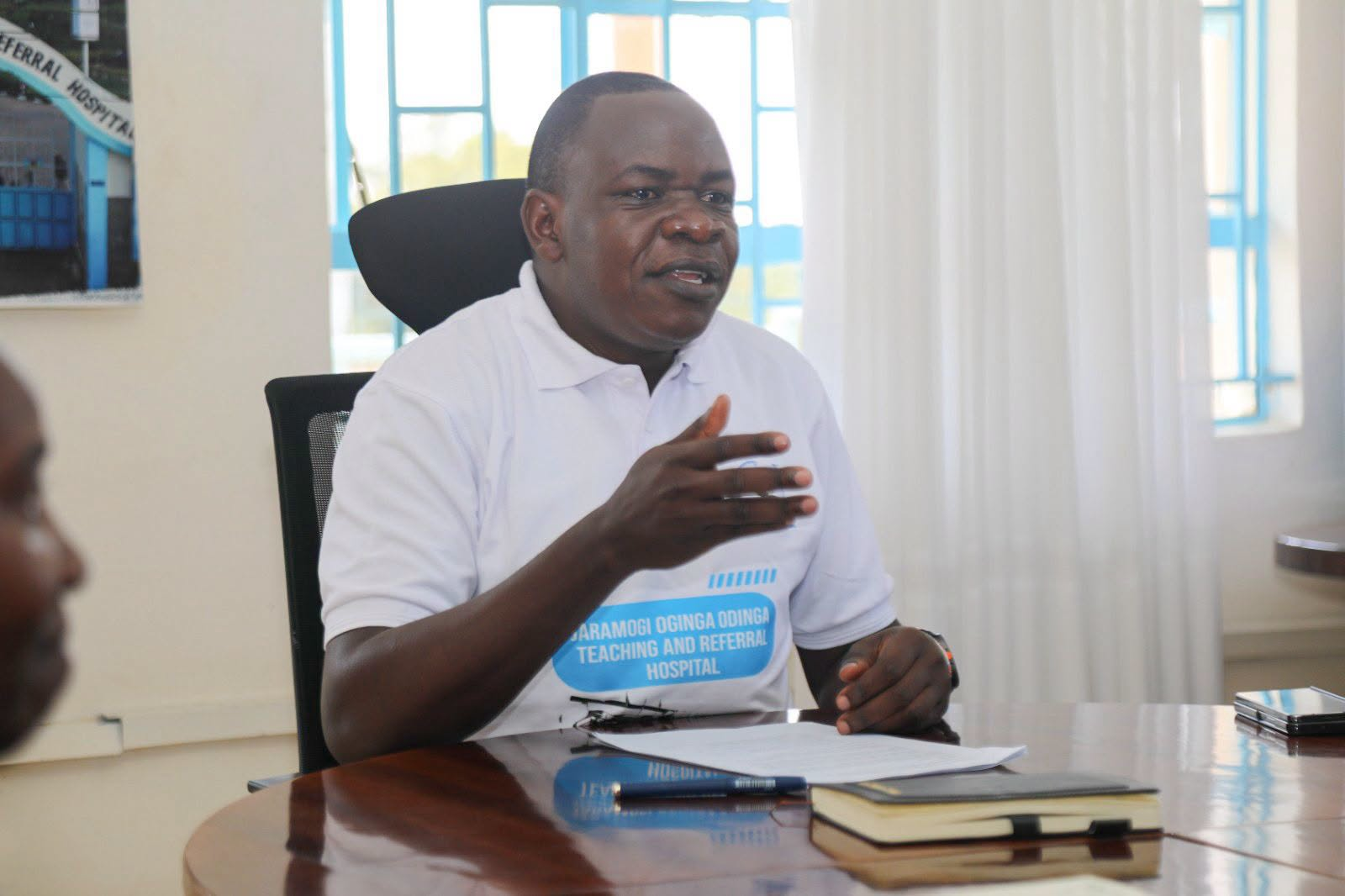
In a move aimed at strengthening coordination, accountability and efficiency in service delivery, Jaramogi Oginga Odinga Teaching and Referral Hospital (JOOTRH) commissioned its Hospital Management Committees for this financial year.
This was aimed at strengthening coordination, accountability, and efficiency in the delivery of specialised healthcare services.
The committees, which include technical and professional experts from across the hospital, will support the Executive Management in implementing the hospital’s strategic priorities, policies, and annual work plans.
Speaking during an inaugural meeting with the newly appointed chairpersons of the various committees, the Acting Chief Executive Officer of JOOTRH, Dr Joshua Clinton Okise, told of the importance of the committees in driving institutional performance and ensuring that management decisions translate into tangible improvements in patient care.
“The chairpersons should take full responsibility for their respective mandates and ensure that their committees become effective platforms for identifying challenges, providing technical advice and proposing practical solutions,” he said.
He particularly emphasised the need for the committees to understand and adhere to their Terms of Reference (TORs) and objectives, noting that their work should be aligned with the hospital’s strategic plan, approved annual work plans, applicable laws and regulations, Ministry of Health policies and professional standards.
The committees are expected to provide technical and professional advice to management, monitor performance within their respective mandates and identify institutional, operational, clinical and financial risks, together with appropriate mitigation measures.
They will also play a critical role in promoting quality, efficiency, accountability and value for money while ensuring compliance with relevant policies, standards and regulatory requirements.
According to the approved Terms of Reference, the committees will further monitor the implementation of management decisions and committee resolutions, promote evidence-based decision-making and strengthen coordination between departments and directorates.
“The committees must move beyond meetings to measurable action, with their deliberations contributing directly to improved service delivery, patient safety, institutional performance and achievement of JOOTRH’s strategic objectives.
The committees will also be expected to identify gaps in service delivery and recommend corrective action, while supporting continuous quality improvement and innovation across the hospital,” he said.
He directed the chairpersons to ensure effective reporting, with the committees expected to prepare periodic reports for consideration by the CEO and Executive Management Committee.
The establishment and commissioning of the committees comes at a critical period for JOOTRH as the hospital continues to expand its role as a national teaching and referral facility and strengthen its capacity to provide specialised healthcare services.
The committees are therefore expected to serve as an important link between technical teams and executive management, providing structured mechanisms for problem-solving, performance monitoring, risk management and implementation of institutional priorities.
The move reinforces JOOTRH’s commitment to good governance, accountability, transparency, effective internal controls and improved clinical and operational outcomes as the hospital implements its 2026/2027 work plan.
When a nation loses a figure of Late Former Premier Rt. Raila Odinga’s magnitude, it faces a choice that reveals more about its character than any election ever could.
It can grieve, celebrate, then gradually allow the ideas that defined that life to dissolve into the comfortable amnesia that has swallowed too many African legacies before this one.
Or it can build something.
The University of Nairobi has chosen to build something.
The Raila Odinga Center for Democracy, set for official launch in the second week of October, is not a monument.
Monuments are for people who want to remember without being inconvenienced by the thing they are remembering.
This is an institution, and the distinction matters enormously.
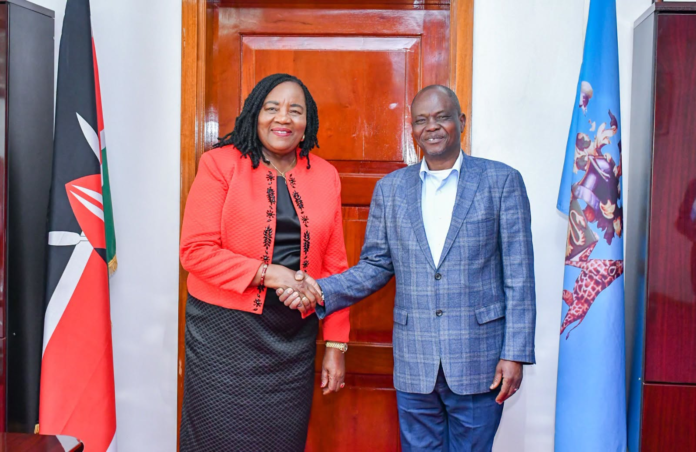
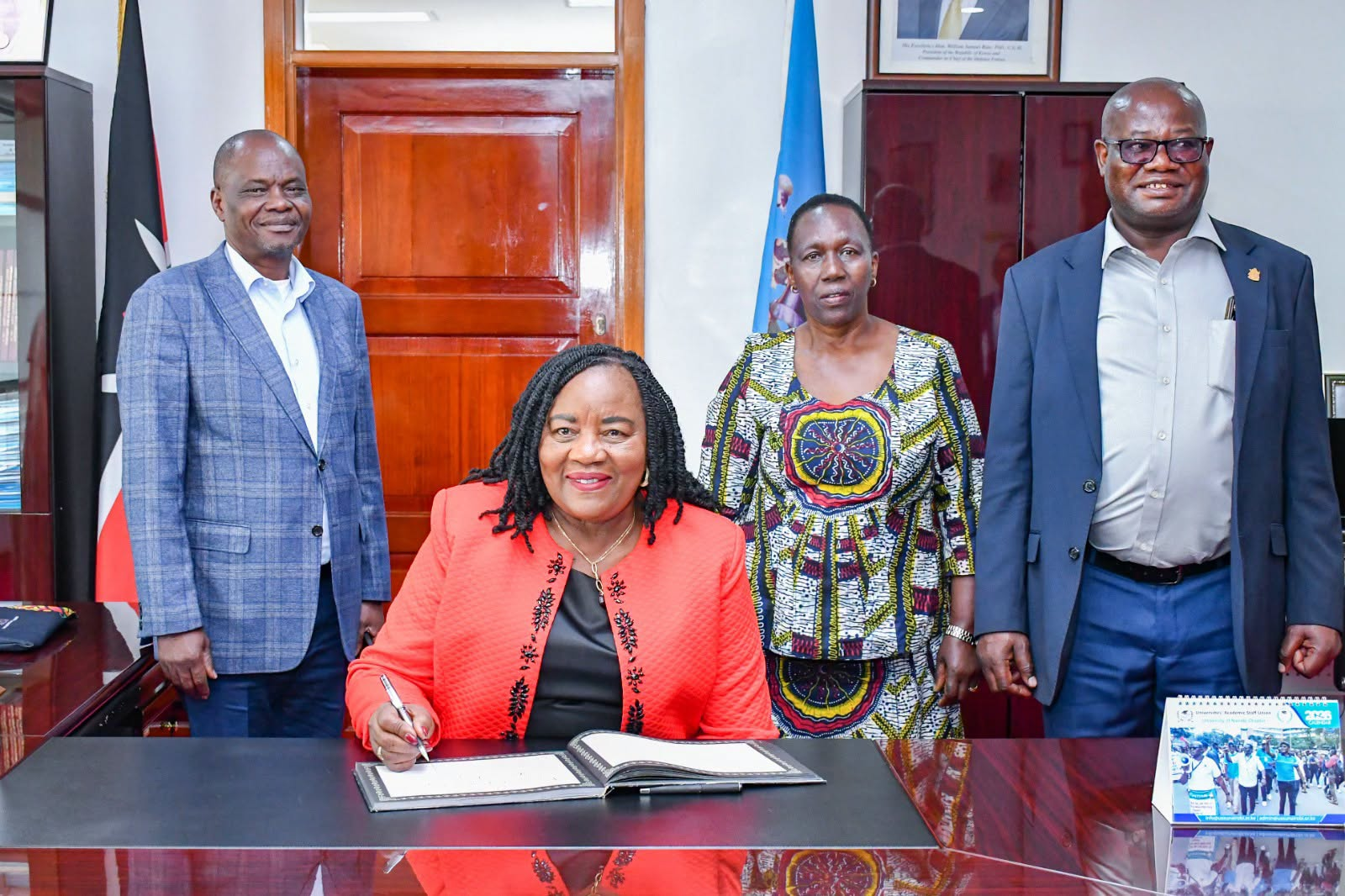
Today, Ambassador Dr Ida Odinga E.G.H. paid a courtesy call to the office of Vice Chancellor Prof. Eng. Ayub Gitau, and what unfolded in that meeting deserves far wider attention than it will receive from those still preoccupied with the politics of the moment. She did not arrive to be consoled or commemorated.
She arrived as a principal, carrying a specific and urgent agenda, which is to ensure that the hardest questions her husband spent a lifetime asking are not buried alongside him.
Her invitation to the public lecture that will accompany the centre’s launch was not a formality.
It was a direct challenge issued to scholars, policymakers, citizens, and the full breadth of African intellectual and civic life.
She asked them to come not to applaud, not to mourn again in public, but to think, to argue, and to produce something worthy of the democratic tradition this centre is being erected to advance.
What she said beyond that invitation is the part of this story that demands to travel.
Mama Ida told scholars, plainly and without restraint, to disagree with Raila Odinga. Openly. Rigorously. On record. She said the centre must be the ground on which a generation learns the difficult and essential art of political disagreement without mutual destruction.
She called for assumptions to be challenged and for stereotypes to be broken, not as exercises in rhetoric but as prerequisites for the clarity that genuine democratic work demands.
She was unambiguous that, above all else, the centre must belong to young people, to those who did not live the struggle but who will inherit its unresolved business.
There is something rare and quietly extraordinary about a woman entrusted with a man’s legacy who responds by inviting the world to interrogate it.
That is not grief performing itself in public. That is intellectual honesty of the kind that democratic institutions are supposed to model and almost never do.
Vice Chancellor Prof. Ayub Gitau provided the structural counterpart to that moral vision.
The centre will offer non-degree executive programmes designed for leaders and public policy developers from across the African continent.
It will establish formal partnerships with African institutions and global organisations committed to democratic governance.
It will award scholarships and inaugurate Democracy Awards recognising leaders whose impact has extended beyond their own borders and their own political lifetimes.
Over a carefully planned three-year period, it will undertake the full institutionalisation of Raila’s democratic papers, pursue multilateral grant funding, and pilot the executive programmes that will serve the next generation of those shaping public life on this continent.
The infrastructure is in its final phase.
The operational framework is in place. What remains is the human question of whether those this centre is designed to serve will arrive at its doors with the intellectual seriousness the moment requires.
That question is not rhetorical. Africa has an uncomfortable pattern of celebrating its democratic champions in death more lavishly than it championed their ideas in life, then watching those same ideas return as problems a generation later because no institution was ever built to process them properly.
The Raila Odinga Center for Democracy is a deliberate and concrete argument against that pattern. It is a wager, placed in infrastructure and curriculum and award, that ideas outlast the individuals who gave them their first and loudest voice, provided someone builds a proper house for them.
October, and the public lecture that opens this institution to the world, will offer an early indication of whether Kenya and the broader African intellectual community are prepared to accept the terms of that wager.
The centre is ready. The question now is whether the continent is.
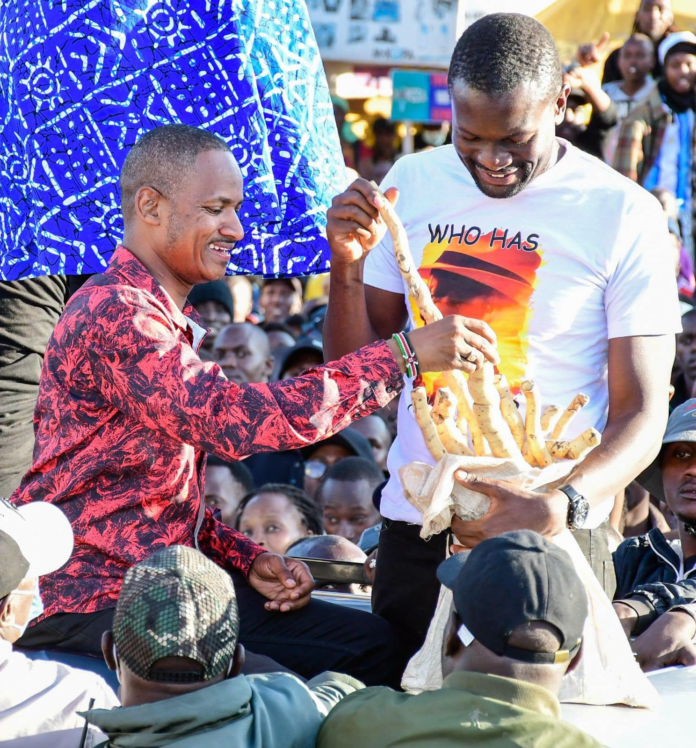
Edwin Watenya Sifuna can easily relate to the biblical verse of the stone that was rejected but has now begun to reign. Rejected at his home, Kanduyi, and by the party, thrown to the vultures, Sifuna’s spirits refused to fade but came back stronger and brighter.
Apart from Kisumu Governor Prof Peter Anyang Nyong’o, who identified, believed and trusted in Sifuna, and later the former Prime Minister and the immediate former Orange Democratic Movement (ODM) party leader, the late Raila Amolo Odinga, the majority, including his villagers in Kanduyi, never saw any potential in him.
In Nyong’o, he has a simple prophecy that Sifuna was made for the future when he first identified him, and a decade later, his prophecy has come to pass with his emergence as a potential presidential candidate.
Nyong’o headhunted Sifuna to be the ODM Secretary-General and predicted that he was built for the future.
“I think none of you knows how Edwin Sifuna came into ODM. The guy is built for the future. If you don’t know what I am saying, go home and think,” he predicted then.
No honours for a king at home
They say a king is not honoured at his home. While he may draw respect in other regions, back at home, he is belittled and frowned upon until that time his prominence becomes so significant that they cannot ignore him.
That will be the time they turn around not to recognise but to woo him because of the trappings.
In the 2017 ODM primaries in Kanduyi, Sifuna, as the ODM Secretary-General, failed to win the nomination, and instead, the constituency went for the alternative. Sifuna came second with 3,111 votes to John Makali, who won with 6,473 votes, while Gilbert Wangila came last with 234 votes.
No letting up
Raila and Nyong’o did not give up on Sifuna and gave him a direct ticket for the Nairobi senatorial election.
In the 2017 elections, Sifuna lost to then-Jubilee candidate Johnson Sakaja after garnering 691,414 votes against the winner’s 832,841.
In 2022, Sifuna easily rode to victory, defeating United Democratic Alliance candidate Bishop Margaret Wanjiru after he garnered 716,651 votes, while she came second with 524,091 votes.
The loss did not thaw Sifuna’s quest for elective office, and he became very visible in ODM, becoming part and parcel of the then-party leader Raila Odinga’s political activities.
Sifuna found himself in the blanket of teargas fumes and protests, endearing himself to the electorate.
Rejected by ODM
After the death of Raila, Sifuna found himself on the wrong side of the story and became a victim of emerging political circumstances: the ODM-UDA pre-election coalition pact.
ODM sacked Sifuna from the post of Secretary-General over his opposition to the alliance.
In a statement, ODM said: “Party National Executive Committee meeting in Mombasa today has resolved to relieve Secretary-General Edwin Sifuna of his responsibilities with immediate effect. Effectively, Catherine Omanyo, who is one of the deputy secretaries-general, will act in this position until a substantive holder of the office is elected.”
ODM Party leader Dr Oburu Oginga had invited NEC members for a meeting meant to crack the whip on Sifuna, Deputy Party Leader Geoffrey Osotsi and his younger sister Ruth Odinga.
“The minority will have their say but the majority will have their way, and so those with dissenting voices must respect the wishes of the majority. Democracy must be guided,” he said.
But the decision by the Office of the Registrar of Political Parties to effect the sacking of Sifuna came too little, too late in the battle.
In a letter dated 9th July 2026, signed by J.C. Lorionokou, effecting the removal of Sifuna as Secretary-General to have been in line with the Political Parties Act and the ODM constitution, the Sifuna political train had already left the station.
“Upon the review of the documents submitted by the party and lack of response from Sifuna, we note that the removal of the Secretary-General was in line with the Political Parties Act and the ODM constitution. This office has effected the change and updated the party records,” it read in parts.
The rise
The sacking of Sifuna was a blessing in disguise. It marked his rise and significance in Kenya’s political terrain in the 2027 contest.
Even fellow Luhya leaders who had ignored and dismissed him woke up to the wave and quickly identified with him.
Embakasi East MP Babu Owino aptly captured it, saying: “Sifuna, we will walk with you. We have gone to 16 counties, and we must go to all 47. We will have to go to the 290 constituencies. From Western, let’s go to Nyanza and ask for votes; they love you.”
Kakamega Senator Bonny Khalwale was more categorical and said Sifuna was a wave they never anticipated and that it was a force they could not ignore.
“I have a message for you, the Luhya community. This respect, honour and love you have shown today in Bungoma to us is humbling. There is a greater responsibility. On 10th August 2027, go and vote for Edwin Sifuna to become the President.
My work today is to speak for the 8 million Luhya people in Kenya. Why must the only two men from our community eat on our behalf? I want to beseech you, Mudavadi and Wetang’ula, go and think on and about Sifuna’s presidency,”he said.
Trans Nzoia Governor George Natembeya dropped his presidential ambition to support Sifuna, saying: “We have come to unveil our son Sifuna for the presidency. Now it is time to reject Mudavadi, Wetang’ula and Oparanya. We must also reject UDA and ODM parties.”
But Mudavadi dismissed them, saying: “Sifuna’s Linda Mwananchi does not have what it takes to vie for the presidency. I was the first person in the Mulembe Nation to contest for the presidency, so I know the stakes. They do not have the muscles to run for something close to the President.”
Polling
The recent opinion poll by TIFA placed Sifuna ahead of all his opposition colleagues and left him sprinting behind Ruto ahead of the 2027 presidential elections.
The poll by TIFA revealed that support for Ruto stagnated in the months of May and June, remaining at 24 per cent, while Sifuna had a significant rise from 0 to 15 per cent.
Wiper leader Kalonzo Musyoka, who had peaked at 25 per cent, witnessed a significant drop to 13 per cent in June.
Jubilee Party leader Fred Matiang’i, who was touted as a frontrunner earlier at 32 per cent, has currently declined to 14 per cent in the May-June polls.
Former Deputy President Rigathi Gachagua peaked at 9 per cent and has declined to 7 per cent.
Embakasi East MP Babu Owino, at the beginning, showed a steady rise, peaking at 8 per cent in 2025, but expressed his interest in the Nairobi governor seat. Thus, he has become dormant in the race but was still polled at 2 per cent.
Other presidential aspirants peaked at 8 per cent in 2025 but have now slumped to 2 per cent.
The people
Sifuna believes in the power of the people and told ODM leadership that they were free to take whatever Raila gave to him.
“Everything that they will take that I was given by Baba and the people, the people will give it back to me. I believe that is the truth,” he said.
The foundation Nyong’o and Raila built on a rock is becoming a nightmare in the current political climate.
Kisumu Deputy Governor Dr Mathew Owili has unveiled a 10-point development agenda dubbed “The Kisumu Promise”, setting out his vision for the county as he positions himself to succeed Governor Prof Anyang’ Nyong’o in 2027.
Owili launched the blueprint during a media breakfast in Kisumu, framing it around “Building on the Foundations, Safeguarding Kisumu’s Future.”
At the centre of the agenda is a pledge to create a government that listens, delivers and remains accountable to residents.
Government from the centre to the village: Owili proposes Village Councils and Village Administrators in every village to bring services closer to residents and give communities a direct role in planning, budgeting and monitoring projects.
Quality healthcare: He promises to upgrade health facilities, improve staffing and equipment, ensure reliable medicines and strengthen maternal, child, emergency and community healthcare. Kisumu County Referral Hospital would be elevated into a premier facility.
Roads and clean energy: The plan prioritises rural access roads, drainage in flood-prone areas and better links between farms, beaches, schools and markets. Solar lighting and floodlights would also be expanded across market centres.
Agriculture and fisheries: Farmers would receive stronger extension services, subsidised inputs and support for mechanisation, while the fisheries sector would benefit from completed landing sites, cold storage, processing and value addition.
Youth jobs and opportunities: Owili proposes expanding vocational and digital skills training, establishing digital hubs, supporting youth enterprises and creating apprenticeship and internship opportunities, alongside investment in sports and the creative economy.
Women and SME empowerment: The agenda proposes revolving funds, better access to finance, insurance and markets, as well as One-Stop SME Support Centres to help businesses navigate registration, licensing and financing.
Water, sanitation and better towns: Owili promises faster pipeline and sewer extensions, improved drainage, stronger waste collection and better urban planning, particularly in informal settlements.
Education and VTC development: The blueprint targets improved ECDE facilities, upgraded Vocational Training Centres, timely bursaries and scholarships, and stronger links between education, technology, innovation and employment.
Transparent and accountable governance: Owili pledges to publish county projects, budgets and implementation timelines, audit stalled projects, reduce wastage and link public spending to measurable results.
Safeguarding the gains: The final pillar focuses on major strategic projects, including the revitalisation of Kisumu Port, completion of the Lakeside Promenade, establishment of Special Economic Zones, urban renewal programmes, fish landing sites, a comprehensive cancer centre and pharmaceutical manufacturing.
Owili also commits to lobbying for the Kisumu-Malaba Standard Gauge Railway, strengthening specialised healthcare and supporting major housing and investment projects.
The blueprint presents Owili’s candidacy as one of continuity rather than disruption, with the Deputy Governor emphasising his nine years working alongside Nyong’o.
He says the experience has given him an understanding of the county’s achievements and challenges and positioned him to guide Kisumu into its next phase.
The political test now is whether voters will accept his argument that the county needs to build on the Nyong’o foundations while correcting what remains unfinished, rather than taking a completely different direction.
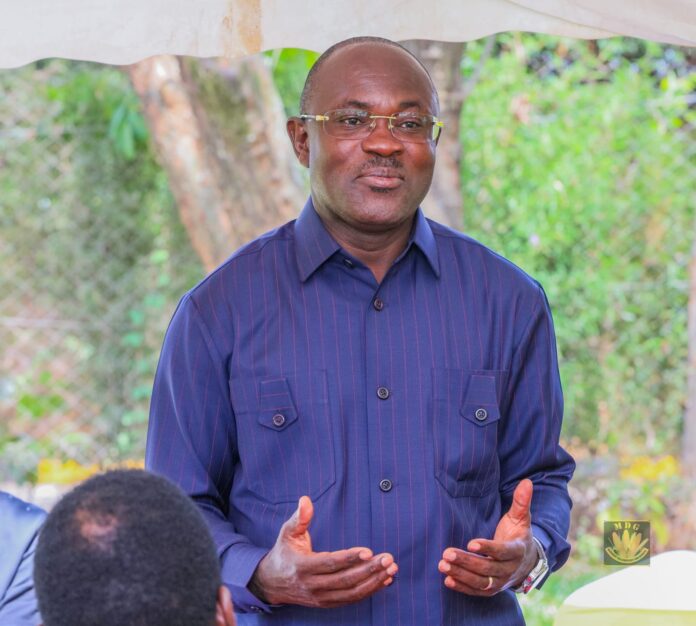
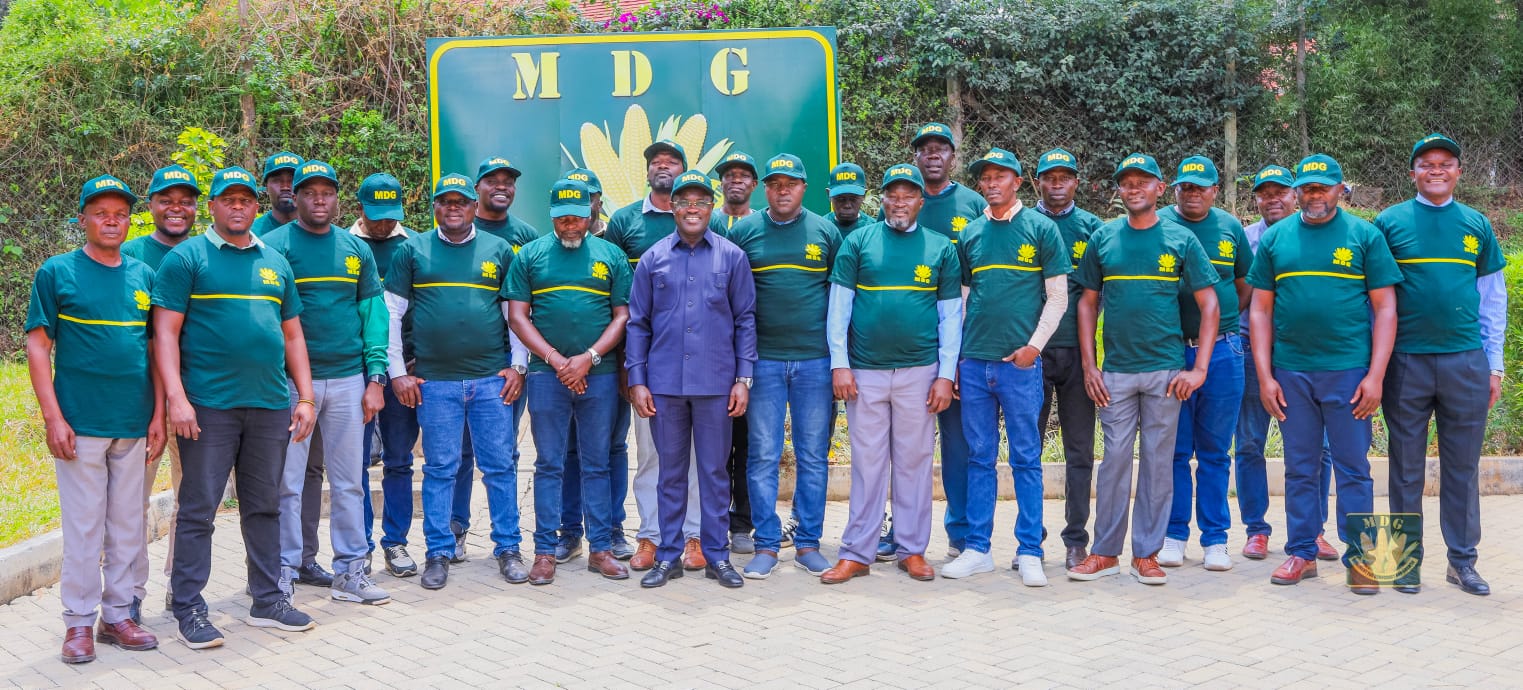
MDG Party leader David Ochieng has opened another front in the increasingly competitive race for the Siaya governorship, positioning himself as an alternative to the county’s established political order.
The Ugenya MP has made corruption, accountability and quality leadership the centrepiece of his emerging campaign.
Speaking at the MDG headquarters in Upper Hill, Nairobi, Ochieng accused leaders in Nyanza and Western Kenya of putting personal interests ahead of public service.
“We have a big problem in the majority of our counties in Nyanza and Western regions where leaders have abdicated the responsibility of serving the people and are instead serving personal interests,” he said.
His message could resonate with voters frustrated by the performance of devolved governments.
But whether it can translate into votes is a different question.
The Ochieng factor
Ochieng enters the race with an established political base in Ugenya and experience in national politics.
His ability to retain Ugenya against strong political currents has given him a reputation as an independent-minded politician.
He also has an advantage that many aspirants lack: a political party through which he can organise his campaign.
MDG says it is preparing to field candidates across the country in 2027, giving Ochieng an opportunity to build a broader political network.
The ODM challenge
The major obstacle remains ODM’s longstanding influence in Siaya.
The party has traditionally maintained strong support across the county, making any attempt to capture the governor’s seat outside its fold a difficult proposition.
Ochieng’s challenge is therefore to demonstrate that his support in Ugenya can be replicated in Alego Usonga, Ugunja, Gem, Bondo and Rarieda.
That requires more than a strong personal profile.
It requires a functioning countywide organisation.
The zoning question
The emerging debate over political zoning could significantly shape the contest.
Ochieng has opposed attempts to determine political positions through negotiated arrangements, arguing that voters should have the final say.
The position could strengthen his appeal among voters who want competitive elections.
However, it could work against him if major political parties eventually agree on a broad coalition and consolidate their support behind a single candidate.
The post-Raila era
Siaya politics is also entering unfamiliar territory following the death of Raila Odinga.
For decades, Raila’s influence helped anchor the political direction of Siaya and much of Nyanza.
The emerging succession politics could create both opportunities and risks for Ochieng.
A fragmented political landscape would improve his prospects.
A highly consolidated opposition to his candidature would make the race considerably harder.
How prepared is he?
Ochieng appears to have started early.
His leadership of MDG gives him a vehicle outside the traditional parties, while his parliamentary experience gives him visibility beyond Ugenya.
But the real test will be at the grassroots.
A gubernatorial campaign requires structures in every ward, polling-station agents, resources and alliances with candidates seeking parliamentary and ward positions.
Whether MDG has the capacity to build such a machine in Siaya will be critical.
Ochieng should be viewed as a serious contender, but not yet as the favourite.
His strengths are clear: an established electoral base, political experience, an independent party and a governance message that could appeal to voters demanding greater accountability.
His weaknesses are equally evident: limited party reach compared with ODM and the challenge of translating constituency-level support into a countywide coalition.
His best route to victory could therefore lie in a divided field.
“If ODM and other major political forces fail to agree on a single candidate, Ochieng could benefit from a fragmented vote,” says a city-based political analyst.
“If they consolidate early, his task becomes significantly harder,” he adds.
The 2027 Siaya contest may ultimately be decided not by who has the loudest campaign, but by who can assemble the broadest political coalition.
Can Ochieng turn the Ugenya advantage into a Siaya-wide movement?
Kisumu County could be approaching its own Barabas moment in the 2027 gubernatorial election, a defining choice between political spectacle and leadership that puts the interests of ordinary citizens first.
The choice facing voters may not simply be about who can command the loudest crowds, deliver the most electrifying speeches or generate the biggest political hullabaloo.
It could ultimately come down to a more consequential question: Who can be trusted with the county’s resources, institutions and future?
For Kisumu, the cost of getting that decision wrong could be enormous.
A governor is not merely a political mobiliser. The office is the engine room of county government, responsible for translating public resources into functioning health facilities, better roads, reliable water systems, support for agriculture, jobs and opportunities for young people, and services that reach the most vulnerable.
When voters elevate political interests above these priorities, the consequences are felt long after the campaign rallies have disappeared.
That is where Deputy Governor Dr Mathew Owili presents himself as a markedly different proposition.
Owili’s political pitch is less about political theatre and more about administration, institutional experience and continuity in government.
His argument is straightforward.
“Kisumu needs a governor who understands how government works, how policies are developed, how budgets are implemented, how departments are coordinated and, most importantly, how public programmes ultimately affect the ordinary resident.” Owili says.
His experience inside the county administration gives him an understanding of both the opportunities and weaknesses within the devolved system.
That experience could prove particularly important as Kisumu enters another election cycle in which competing political narratives are likely to dominate public discourse.
The danger for voters is that personality could once again overshadow performance.
A candidate may possess political popularity but lack the administrative capacity required to manage a county whose budget runs into billions of shillings. Another may promise dramatic transformation without demonstrating how such transformation will be financed, implemented and sustained.
For Kisumu residents, therefore, the 2027 election presents a test of political maturity.
The county cannot afford to choose leadership simply because of slogans, ethnic arithmetic, political alliances or the excitement generated by campaign rallies.
The real test should be competence, integrity, accountability and the ability to put people ahead of personal political ambition.
This is where the Barabas analogy becomes particularly relevant.
In the biblical account, the crowd was confronted with a choice between two very different figures. The metaphor has endured because it speaks to the consequences of collective choices and the possibility of choosing what is politically attractive in the moment over what may ultimately serve the greater good.
“Kisumu’s choice in 2027 should therefore not be reduced to personalities. It should be about what kind of county residents want to build.” Owili emphasises.
Do they want leadership consumed by political contests, endless positioning and the pursuit of individual power?
Or do they want an administration focused on hospitals that work, roads that are maintained, water that reaches households, schools that receive proper support, farmers who can earn from their work and young people who can see a future within their own county?
Owili’s advantage is that he enters this contest with an administrator’s understanding of government.
He has operated within the county’s executive structure and understands the machinery through which political promises become programmes or fail to become programmes.
That distinction matters.
Kisumu does not necessarily need another leader whose greatest qualification is the ability to generate political noise.
It needs someone capable of sitting behind the machinery of government, asking difficult questions, demanding results from departments and ensuring that public money delivers public value.
That is the space Owili is seeking to occupy.
His challenge, however, will be to convince voters that administrative experience can translate into a stronger, more accountable and people-centred government.
For the electorate, the responsibility is equally heavy.
The 2027 gubernatorial election should be treated not as a popularity contest but as a five-year contract between citizens and the person entrusted with their county.
The question should be simple: Who will put Kisumu first?
If voters make that the central question, the political noise will matter less.
And in that quieter contest of competence versus spectacle, Dr Mathew Owili has an opportunity to present himself as the experienced administrator Kisumu needs, not merely another politician seeking power, but a leader seeking to make devolution work for the people.
We use cookies to ensure that we give you the best experience on our website. If you continue to use this site we will assume that you are happy with it.