Home Blog Page 102

Will the Indefatigable History Maker Wanga Defy the Odds to Be the Heir Apparent of Nyanza Politics?

0
Wanga

By Anderson Ojwang

From obscurity, Homa Bay Governor Gladys Atieno Nyasuna Wanga has continued to defy the odds and to write her story.

In the 2013 general election, the shy and little-known Wanga wrote her story by slaying the giant, the respected educationist and the favourite candidate Mrs Roselyn Onyuka.

Onyuka, then immediate former Provincial Director of Education in Nyanza, gained respect and recognition for her contribution to education reforms in Nyanza.

Onyuka’s support and contribution towards the education of the girl child in Nyanza and the remarkable improvement in the performance of schools from the region in the national examination gave her the brand that the majority of people from Nyanza and Homa Bay identified with.

But Wanga, who had not made a name for herself in the region, relied on the brand and the camp of former Managing Director of Marie Stopes, Mr Cyprian Awiti, who had expressed interest in the gubernatorial seat for Homa Bay.

In Awiti’s camp were respected politicians — former Mbita MP the late Otieno Kajwang’ and his Kasipul counterpart Oyugi Magwanga, among others.

In the other camp were former Rangwe MP Eng Philip Okundi and Onyuka, among others. The botched Orange Democratic Movement (ODM) primaries and the intense lobbying finally saw Awiti’s camp emerge victorious, and in the arrangement, Wanga rode to victory to become the first Woman Representative for Homa Bay.

For Wanga, the election to Parliament was the launching pad for her ambitious and upward political ascension to top offices.

After her election to Parliament, her star steadily began to rise and she was elected as a member of the Parliamentary Service Commission. In Parliament, Wanga also became visible in her contributions and this endeared her to the masses.

In 2020, Wanga achieved another milestone by becoming the first woman Chair of the Finance and National Planning Committee in Kenya’s National Assembly. Her exemplary leadership in this role underscored her commitment to national development and sound financial planning.

Outside Parliament, she became a die-hard supporter of ODM leader Raila Odinga and soon became one of the key pillars of the former Prime Minister.

That is why when Kajwang’ died in 2014, Wanga defeated Homa Bay MP to become the first woman County ODM Chairperson in a fierce battle.

Kaluma had the support of the county government led by Awiti, but Wanga, with the support of Magwanga and other legislators, braved the storm to write another history.

Wanga has been an integral figure within the ODM Party, serving as Secretary to the ODM Central Management Committee since 2018.

The county chairperson seat was a temporary ground for Wanga to soar higher as last year, during the party’s restructuring, she became the first woman to be the Chairperson of ODM.

Raila wrote: “We joined the ODM faithful in celebrating Gov. Gladys Wanga, the National Party Chairperson and Governor of Homa Bay County, as she hosted us for prayer and thanksgiving.”

At the function Raila said: “Some say women cannot lead, those are fools. We should give women leadership opportunities in the country. We should respect them so that we can prosper as a country.”

In the 2022 general election, Wanga made history again to become the first woman governor from Western Kenya.

Wanga, who had faced a battery of male-dominated aspirants for the ODM ticket, defeated former Nairobi Governor Dr Evans Kidero at the general election.

Raila, when he gave the direct party ticket to Wanga, said:

“There are those aspirants who have been running for the governorship position in Homa Bay County. They have been having a meeting and invited us as party officials to come and have consultations with them. They’ve had very extensive consultations, at the end of which an agreement has been reached by way of consensus,” said Odinga.

“Out of the seven contestants who were here, they’ve all agreed to step down and back Gladys Wanga as the party candidate in the Homa Bay County gubernatorial race. In the same spirit, they’ve also nominated her running mate as Oyugi Magwanga.”

“The party has taken note and has agreed and issued a certificate to Gladys Wanga as the ODM party candidate in the gubernatorial race for Homa Bay County,” he said.

“This is a voluntary exercise; our rules provide for consensus-building, nomination by delegates and members, or direct nomination by the party. This is not a direct nomination; this has come about as a result of consensus.”

Wanga was also a founding member of the Embrace Kenya movement, which promoted the Building Bridges Initiative and the Handshake between President Uhuru Kenyatta and Rt Hon Raila Odinga.

In 2017, she led the Nyanza presidential campaign team for Hon Raila Odinga and was a lead campaigner for the Azimio la Umoja coalition in 2022.

Wanga, as the governor of Homa Bay, has rewritten the story of the county into the national limelight. Currently, the county has witnessed development both from the national government and her administration.

Wanga is a close ally of both Raila and President William Ruto, and her support for the broad-based government has endeared her to the President.

Wanga is currently being viewed as one of the possible women who can be chosen as a probable presidential running mate in the 2027 elections.

Will Wanga wriggle her way once again through the male-dominated battle for the mantle to make another history?

Tussle over three senior positions advertised by Nairobi Water and Sewerage Company, splitting the board

0

By Reporter

Division has emerged at the Nairobi Water and Sewerage Company board of directors over the recently advertised senior positions.

The recruitment process was conducted by a reputable firm, Wise Lead Consultants Limited, went through a duly competitive process and met the requirements before the award.

A section of board members wants the report by the consultant, which conducted recruitment, adopted while another group wants the positions re-advertised.

The Water and Sewerage Company had advertised the position of Director, Company Secretary and Legal Services, Director, Internal Audit and Risk Management and Commercial Director.

The consultant recently conducted the interviews and submitted the names of the successful candidates for appointment, but some directors were allegedly enraged when their candidates failed to make it to the final list.

Sources also revealed that some powerful people around Governor Johnson Sakaja were also rattled by the list and want the governor to nullify the list and have the positions re-advertised.

It is alleged that the team around the governor had usurped their power and presented a list to the governor with names in favour of their preferred candidates, and the list was not from the consultant.

When the consultant presented his report to the board, the names of the candidates who had qualified and declined attempts to have him change the list.

Sources revealed that he declined because he didn’t want to be an accomplice to the unethical and unprofessional conduct.

From our reliable source, some of the internal staff were also given opportunities to attend the interview, but they did not meet the threshold.

Already, the board is split right in the middle, and interested parties have also ganged up to have the positions re-advertised.

This board is being forced to re-advertise these positions just because some members and the people around the governor were allegedly compromised but have not delivered just because they were unable to arm-twist the consultant.

From our reliable source, other members of the board are not for the idea of re-advertising the positions because it will come with complications and damages if the matter is not handled in a “Solomonic wisdom” way.

Lusaka adopts technology for cattle identification, rolls out Sh 29M livestock vaccination programme

0

By Sandra Blessing
Governor Press Unit

Adoption of technology in cattle identification by the County Government of Bungoma will reduce the high incidence of livestock theft in the region.

The technology will give real-time notification to the farmer on the specific location of the livestock and seek his consent to confirm if he has authorised its sale.

The cow identity card is unique and is linked to the farmer to help reduce livestock theft.

Bungoma Governor Kenneth Lusaka announced the rollout of a cattle identification system using the Mifugo 360 Super App, which will digitally link each cow to its owner.

He said the innovation was expected to improve disease monitoring, curb livestock theft, and open structured markets for farmers.

The Governor recently unveiled a Sh 29.2M countywide cattle vaccination and identification programme, promising to shield farmers from devastating livestock losses while boosting productivity.

He said 266,000 cattle will be vaccinated against Foot and Mouth Disease (FMD) in the county.

During the launch at Wabukhonyi in Ndivisi Ward, the Governor said the initiative was anchored on an E-Voucher subsidy system.

“The programme is aimed at protecting our farmers from losses and improving market access. Every cow will be registered, identified, and monitored through modern technology to enhance traceability and animal health,” he said.

He said under the scheme, farmers will pay Sh 50 per animal, while the County Government will subsidise with Sh 110.

The Governor said for successful implementation of the programme, the county has engaged 58 private animal health practitioners to work alongside government veterinarians in door-to-door vaccination, a departure from the old mass vaccination model.

Alongside the vaccination drive, the Governor also highlighted wider agricultural reforms, including the establishment of ward-based SACCOs to improve farmers’ access to credit, support for Farmer Producer Organisations (FPOs), and the multiplication of high-quality Jun Cao fodder in every ward.

“We are not only vaccinating cattle, but also laying the foundation for sustainable livestock farming and better incomes for our people,” he said.

Lusaka appealed to the farmers to fully embrace the programme, warning that failing to vaccinate or register animals could expose them to unnecessary losses.

The launch marks a milestone in Bungoma’s efforts to modernise agriculture and secure livelihoods in a county where livestock rearing remains the backbone of the rural economy.

Why the battle of the Deputies will be determinant in 2027 elections

0

By Billy Mijungu

It is emerging that the presidential race could be about three main contenders, Kalonzo Musyoka, William Ruto and Fred Matiang’i.

But the next and perhaps more intricate battle will not be at the top.

It will be the battle of deputies, premiers and their deputies, the four strategic positions that could define the next power structure of Kenya’s executive.

With the proposed structure allowing for a President, Deputy President, Prime Minister and two Deputy Premiers, the field is wide but equally complicated.

Each camp will have to carefully balance political, regional and generational interests to survive the next phase of negotiations and alliances.

For President Ruto’s team, the challenge is not about available positions but the lack of freshness. His government is already bloated and the loyalty lines are drawn. The Deputy President slot and the two Deputy Premier positions are already heavily contested within his circles. There is not much left to persuade new entrants. Ruto’s political style is consistent, he rarely changes his inner circle. Even when he dismisses an ally, he often replaces them with someone recommended by that same ally. It is a closed loop built on trust but also stagnation.

Pressure is mounting on Ruto from the ODM wing that joined his coalition. They are demanding a fair share of executive power including the Deputy President position, which could spark internal friction. Beyond that, the only remaining political rewards are Chief Administrative Secretary positions, which Gen Zs have openly rejected as wasteful.

On the other hand, both Kalonzo Musyoka and Fred Matiang’i have space and flexibility to shape their executive teams. They have room to experiment, negotiate and inspire. Kalonzo’s middle ground approach makes him a bridge between regions, while Matiang’i’s appeal to technocrats and reform minded leaders gives him a unique advantage. Both must now identify who will deputize them, balancing competence, loyalty and regional arithmetic.

The number one slot may be sealed, but the battle for number two and the emerging Premier roles could well determine who wins the 2027 race. The game is no longer about who runs, it is about who runs with who.

Governor Kang’ata Raises the Bar for Food Security in Murang’a County with Transformative Agriculture

0

By Hope Barbra

Transformative agriculture in Murang’a County is likely to make the region food secure and boost farmers’ incomes.

The radical programs in the agricultural sector by Governor Irungu Kang’ata have raised the bar. Through his slogan, “Service to people is service to God,” he is revolutionizing the sector.

Recently, Governor Kang’ata presided over the distribution of certified maize seeds and fertilizer to 135,000 farmers in Murang’a County.

Data from the Kenya National Bureau of Statistics’ 2019 Agricultural Census identified a total of 317,459 farming households in Murang’a County. As of February 2025, the county’s Inua Mkulima Support Program had registered 57,975 individual farmers engaged in various agricultural value chains such as milk and mangoes.

Kang’ata wrote on his social media platforms:

“Murang’a County Government made a promise for decentralization of maize and fertilizer distribution to the primary school level.

We thank CEC Paul Mugo, Chief Officer Dr. Apolo, Director Mwangi, Githambo Head of Transportation, County Drivers, and the rest of your team for working extra and odd hours (at night) to ensure every primary school gets its share.

Service to the people is service to God.

The program has enabled food security, with maize productivity tripling.”

Similarly, Kang’ata has ensured that after harvesting, farmers are not exploited by selling cheaply to middlemen. The county has partnered with a miller who purchases directly from farmers.

He said the initiative was part of a broader effort to empower farmers, enhance food security, and transform maize into a viable commercial crop within the region.

He wrote:

“Murang’a County Government, in partnership with Paleah Ltd, has started buying maize from farmers in Murang’a. Under the program, the county is buying maize from farmers at Ksh 3,700 per bag, with payments made on a cash-on-delivery basis.

On the first day of the exercise, maize was bought at Kambirwa in Kiharu Sub-County and Maragua Ridge in Maragua Sub-County.”

On dairy farming, the county government recently purchased a yoghurt-packing machine for the Milk Farmers Union (MCCU) to be installed at the Maragua Milk Factory.

The milk brand, “County Fresh,” is available in all local shops in the county, and the purchase of the new machine will triple production.

In a bid to boost dairy farming, the county government has also been taking farmers on field studies and tours to acquire new best practices in dairy farming.

The governor wrote:

“Took Murang’a milk farmers on a familiarization tour of Meru Dairy, which has an annual turnover of Ksh 18 billion. Thanks so much, Meru Union, for hosting us in Meru Town.”

Will Omollo be the new enigma of Nyanza politics

0

By Anderson Ojwang

Before the 2022 presidential election, Dr. Raymond Ojwang Omollo did not feature prominently in Nyanza’s political space. He was only known within the circles of then Deputy President William Ruto.

For Ruto, Omollo was a dependable ally in Nyanza — a resourceful personality he could count on during the 2022 presidential election. But for the region, Omollo was not part of the political equation until President Ruto elevated him to the national stage.

Indeed, President Ruto’s judgment proved right. Omollo has turned out to be a reliable, dependable, and resourceful figure — not only in Nyanza but also nationally. The President rewarded him with a strategic appointment as the Principal Secretary for Internal Security and National Administration, a position in which he has performed remarkably well.

Soon after the election, President Ruto visited Homa Bay for a fundraising and prayer service, and since then, he has made the region his second home.

Omollo’s star rose with his appointment. He has succeeded where many politicians have failed — managing to balance allegiance to the President while avoiding antagonism with the political establishment in Nyanza.

Former nominated Senator Gloria Orwoba, in a recent interview, revealed that during the 2022 elections, Ruto (then Deputy President) and Kenya Kwanza presidential candidate asked her to contact Omollo to organize logistics and the campaign program for Nyanza.

“Omollo did a good job. Ray and his team went around collecting Form 34As at gunpoint — it was a daring moment, but they braved it. Even when ODM went to court to challenge the results, they had to rely on our forms from Nyanza because we did a proper job. ODM was disorganized and didn’t have the forms,” she said.

“People who don’t know him wondered how he got into that space — he worked for it. The President trusted him, and whenever Ruto called to ask how things were going, I told him Ray was doing a good job. He made coordination smooth and achievable.”

Omollo’s first step in entrenching himself within the community was through his Ray of Hope Foundation, which supports widows and orphans. The foundation has endeared him to the masses across Nyanza through its impactful initiatives — constructing houses, empowering groups economically, educating orphans, and offering training for employment.

Omollo has also been a strong supporter of sports development in the region, donating sports gear to clubs and sponsoring tournaments.

According to Sam Okombo Nyarombo, the Director of the Widowers Empowerment Program, the main goal is to offer healthcare, empowerment, and support services to a neglected group in society.

“For quite some time, we have focused on the girl child and widows but forgotten about widowers who have been living desperate lives after losing their spouses,” said Nyarombo.

“After realizing what our elderly single fathers go through, together with PS Omollo, we decided to start a program to offer them mental support, healthcare, and basic needs. We want to restore hope and make them feel valued again,” he added.

The formation of a broad-based government arrangement between President Ruto and ODM leader Raila Odinga has also strengthened Omollo’s political standing. He now interacts freely with both leaders.

Omollo enjoys cordial relations with ODM legislators who have become his defenders against critics. Nyanza MPs, including Sam Atandi, Opondo Kaluma, Jared Okello, and Phelix Odiwuor (Jalang’o), have publicly supported him.

His successful delivery of national government projects in Homa Bay, as delegated by President Ruto, has also boosted his rating among local leaders.

Dr. Omollo has consistently emphasized that President Ruto’s development initiatives in Homa Bay are genuine and meant to spur economic growth.

“President Ruto means well for Homa Bay County. Several projects have been rolled out by the national government, and they are already having significant impact both regionally and nationally,” he said.

Despite being a key member of President Ruto’s administration, Omollo has never antagonized Raila Odinga. Instead, he has emerged as one of the unifying figures in the broad-based government arrangement.

Today, Omollo is widely accepted within the Odinga family and the broader ODM fraternity, where leaders and supporters identify with his initiatives.

In a recent post, Jalang’o wrote:

“Salute to a True Public Servant – PS Raymond Omollo.

Just had the pleasure of catching a moment with PS Raymond Omollo — a leader whose impact speaks louder than any title.

From strengthening national security to empowering communities, his commitment to service is unmatched. What stands out most is his humility, clarity of purpose, and unwavering dedication to making Kenya safer and stronger.

This selfie may be simple, but the respect I have for his work runs deep. Thank you, PS Omollo, for leading with integrity and vision.”

Will Omollo live up to the billing and become the next enigma in Nyanza politics?

Why Kenya Should Emulate Brazil’s Use of Sugarcane Waste to Tarmac Roads

0

By Hope Barbra

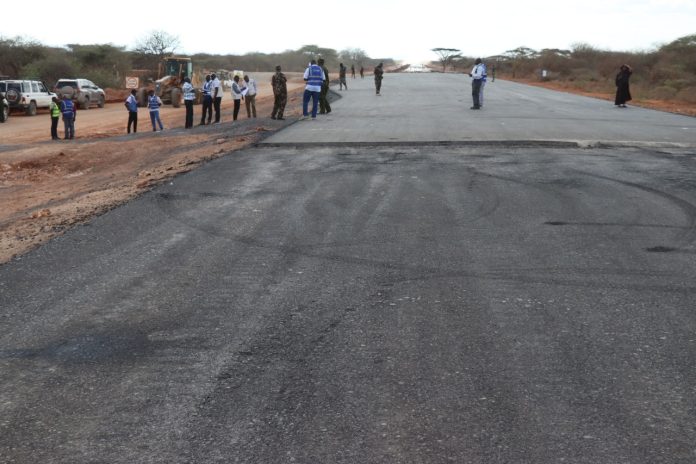
Brazil is setting a precedent by using and turning sugarcane waste into durable, eco-friendly roads — and the results are impressive.

As one of the world’s largest sugarcane producers, Brazil has found an innovative way to manage sugarcane bagasse (the fibrous residue left after juice extraction). Instead of dumping it, researchers are mixing its ash into asphalt.

This new technology — a waste-turned-wonder — not only reduces landfill use but also increases road strength, cuts maintenance costs, and extends road life, all while reducing the carbon footprint of construction.

Lab tests have shown improved durability, rut resistance, and flexibility under heat and traffic. There is also no need for virgin materials like traditional mineral fillers, which lowers extraction and transport impacts.

This supports circular economy goals by giving new life to biomass byproducts.

In Kenya, the main sugar factories are in the Western and Coastal regions. If the country adopts this new technology, it could help ensure that roads in these areas are tarmacked more sustainably.

Engineer Benedict Omollo, in a post on WhatsApp’s “Lakeland Development” group, said the technology is achievable.

Omollo outlined the key steps as follows:

  1. Soil Preparation: Collect and prepare the subgrade soil by removing vegetation, debris, and other organic matter.
  2. SBA and Lime/Cement Mixing: Mix Sugarcane Bagasse Ash (SBA) with lime or cement in varying proportions, typically 2.5% SBA with 5% lime, to achieve the desired stabilization effect.
  3. Compaction: Compact the treated soil mixture to achieve maximum dry density and optimal moisture content.
  4. Curing: Allow the compacted mixture to cure, enabling chemical reactions between SBA, lime/cement, and soil particles to take place.

Benefits:

  • Improved Soil Strength: The SBA and lime/cement mixture increases the soil’s bearing capacity and reduces its plasticity.
  • Increased Durability: The stabilized subgrade layer can withstand heavy traffic loads and moisture changes.
  • Cost-Effective: Using SBA as a stabilizer can reduce construction costs and provide a sustainable alternative to traditional materials.
  • Environmental Benefits: Utilizing SBA reduces waste and promotes sustainable construction practices.

Challenges and Future Directions:

  • Further Research: Additional studies are needed to optimize SBA and lime/cement mixtures for specific soil types and environmental conditions.
  • Field Implementation: Large-scale field trials are necessary to validate the effectiveness of SBA stabilization in real-world applications.

Could it be Babu for Baba in Nyanza Succession Politics?

0

By Anderson Ojwang

After decades of Nyanza’s political mantle and power resting with the Jaramogi Oginga Odinga family at Kango Ka Jaramogi, and later with his son Raila Amolo Odinga at Opoda Farm, a new political shift in community leadership is in the offing.

With the emerging new political dispensation in Nyanza, the mantle is now up for grabs as it seeks a new dominion. The flying and dancing mantle is attracting several ambitious, upcoming, and prominent leaders in the community who have been scheming and plotting on how to seize the opportunity.

The time is now or never for the suitors.

A new political wave is gripping the region, with the “Babu moment” unfolding in Nyanza, where he is creating a storm and a wave similar to that of Raila. Among the suitors of the mantle is Babu Owino Ongili, an alumnus of Kisumu Boys, a school reputed for honing and churning out successful human resources for the country.

Babu’s political wave is not only unsettling his competitors but also creating excitement among his support base in the region.

Walking in Raila’s footsteps and applying similar tactics used during Raila’s political duel with Siaya Governor James Orengo over the mantle after the demise of Jaramogi, Babu is stirring a political storm.

Early this year, when Homa Bay Governor Gladys Wanga became ODM national chairperson and subsequently organized a thanksgiving prayer service, Babu stormed the event and carried the day. The public demanded that Babu address them, and the crowd temporarily paralyzed the function as they insisted he be given the opportunity to speak.

The event, which was graced by ODM leader Raila Odinga, interim party leader Prof. Anyang’ Nyong’o, Cabinet Secretaries John Mbadi and Hassan Joho, and various senators, governors, and members of parliament, witnessed what was described as Babu’s “bloodless coup.”

Rarieda MP Otiende Amollo’s efforts to pacify the crowd were drowned by chants of “Babu! Babu!” before Suba East MP Millie Odhiambo intervened, saying, “Let Babu speak to the people,” sending the crowd into wild cheers before settling down.

In his speech, Babu expressed support for Raila’s bid for the African Union chairperson position, saying he was the best candidate.

An enraged Suna East MP, Junet Mohammed, who also spoke at the function, termed those eyeing Raila’s position as committing an act of “treason.”

“Those people bringing irrelevant and useless discussions about Raila’s succession and inheriting his seat—I want to deliver a warning here in Homa Bay—that is an act of treason. If you talk of inheriting Raila’s seat, you will be beaten like nobody’s business,” he said.

Junet maintained that Raila would remain their leader whether he is in Addis Ababa as the AU Chair or in Kenya.

“Our father is one. If you want small positions like that of Gladys Wanga or mine, which is Director of Elections, you can go for that. But if you want to take Raila’s seat, we will pound you like a potato,” Junet said.

At the recent burial of former Cabinet Minister Dalmas Otieno Anyango in Rongo, a similar uproar was witnessed when mourners demanded that Babu speak.

Babu benefitted from the crowd that had been mobilized by various political blocs in Migori seeking elective posts in 2027, once again dominating his competitors for the mantle.

Various speakers castigated Babu for disrupting the peaceful burial process and for trying to hijack the platform for his own political gain.

Chairman of the Luo Council of Elders, Mzee Odungo Ranfa, at a recent function in Siaya County, compared Babu to a hunting lion and urged him to continue with his political maneuvers.

Ranfa told the gathering:

“I am happy to see this young boy. Babu Owino, be upstanding. Come and stand right here in the middle where people can see you. Thank you very much, Baba.

For those who don’t know Babu well, he was born in the sprawling slums of Nyalenda in Kisumu. They were my immediate neighbors. I saw him as a toddler.

He studied at Kisumu Central Primary School and Kisumu Boys before proceeding to the University of Nairobi. He is the son of Ogot Matar. Jo Siaya, are you happy? You see this brown boy? He is a lion—the hunter. Go back and sit down. I request Babu to continue with your journey and remain steadfast.”

In a recent interview, Babu claimed that he was the last born in Raila’s political family and, as tradition dictates, is bound to inherit his mantle.

“I love and respect Baba. I cannot go against him. I know that I am the last born in this family and will subsequently inherit the throne. So, I am not scared of those who may be against me,” he said.

Babu recently declared his support for Wiper leader Kalonzo Musyoka to become the sixth president of Kenya. Kalonzo, in turn, offered him a political overture by requesting that he become one of the party’s deputy party leaders in the new leadership structure.

Earlier, Babu had claimed that during his pursuit of the Nairobi gubernatorial seat, he was convinced he would not secure the ODM ticket, as the party preferred the current Governor Johnson Sakaja over him.

With the clock ticking, will Babu upstage his competitors in the race for the mantle?

The series on Nyanza succession politics continues throughout the week.

It is Officially a Three Horse Race, Matiang’i, Kalonzo and William Ruto

0

By Billy Mijungu

The politics of endless speculation, shifting loyalties and small players circling around the grand stage has reached its natural conclusion. The field has narrowed and the contest has taken a definite shape. It is no longer a question of who might or who could, it is now a question of which among the three men standing tall will command the loyalty of the people and eventually take the crown. Fred Matiang’i has been unveiled by Uhuru Kenyatta at the Jubilee National Delegates Convention, Kalonzo Musyoka is quietly but firmly anchored by Rigathi Gachagua who is emerging as his strongest pillar in Mount Kenya, and William Ruto carries the backing of Raila Odinga with the formidable orange base behind him. Every other contender, no matter how loud, no matter how ambitious, will eventually find themselves aligning behind one of these three pillars. That is why this moment can be declared without hesitation. It is officially a three horse race.

Uhuru Kenyatta did not just whisper his choice, he announced it boldly in front of the delegates of his party. He named Fred Okeng’o Matiang’i as the man he is backing, drawing a line and signaling that he is not retreating from politics as many had thought. Uhuru is a former president who still commands respect, structures, and loyalty in parts of the country, especially in Central Kenya and across some strong Jubilee networks. His choice of Matiang’i may have surprised some, but for close watchers it was only a matter of time. Matiang’i has long been seen as Uhuru’s trusted technocrat, the bulldog who delivered on tough assignments in government. He has now been handed the political crown to carry forward the legacy.

Matiang’i’s strength does not lie only in Uhuru’s endorsement. It lies in the wave of youthful energy that is sweeping across the country. The Gen Z and millennial population, who have defined themselves as restless, questioning, demanding, and unwilling to be taken for granted, see in Matiang’i a candidate who can align with their aspirations. They do not want old rhetoric, they do not want the same tired promises. They want a leader who is seen to deliver results, who is bold enough to confront cartels, and who has the courage to make unpopular but necessary decisions. Matiang’i’s history in the ministries of Education and Interior has positioned him as such a figure. His campaign therefore is naturally vibrant, easy to market, and attractive to young people who form the backbone of voting blocs in the coming years. Every politician desires the youth because they are not only voters but also campaigners, influencers, and mobilizers in the age of social media. In Matiang’i, they have found someone they can rally behind.

Yet Matiang’i faces a delicate problem. The older class of politicians who have made careers out of deal making are not sure he is one of them. To them he is still a technocrat, a doer who follows instructions but not one to bend or cut bargains in smoky backrooms. They suspect he is too hardline, too close to Uhuru, too rigid to compromise. They ask themselves if he will ever cut a deal that allows them space to benefit. In Kenyan politics, perception is as powerful as reality. If the class of perennial deal makers sees him as inflexible, then they hesitate. They look at Kalonzo Musyoka instead.

Kalonzo’s story is the opposite of Matiang’i’s. He is not a newcomer to politics. He is not a technocrat thrust into the limelight. He is a seasoned hand, a man who has been in the game for decades, a vice president, a long time ally of major players, and a survivor of storms. His greatest asset is trust. Many politicians see him as loyal, predictable, and easy to go along with. They know what to expect with him, and in politics that counts for much. You can gamble with a new name, but you feel safe with Kalonzo. Rigathi Gachagua, who many thought would chart his own path, has quietly aligned himself with Kalonzo. In doing so he has offered him a pillar in Mount Kenya. Gachagua brings with him a network of influence and the ability to sway opinion in the region. Together, Kalonzo and Gachagua form an unlikely but potent partnership, one that creates ripples across central and eastern Kenya.

For Kalonzo, this is the most strategic moment of his long career. He has always been seen as a dependable deputy, a number two who never fully broke into the number one position. This race gives him the best shot at presidency. With Gachagua, he consolidates Mount Kenya. With his own Kamba base, he commands Eastern. With seasoned politicians flocking to his corner, he grows a coalition of loyalty and trust. His appeal is not youthful energy like Matiang’i’s, it is not bold promises like Ruto’s, it is steady compromise, unity, and predictability. He offers himself as the compromise president, the man who can hold the country together when tempers rise and ambitions collide.

William Ruto’s position is complicated and yet powerful. He is already the sitting president. Kenyans therefore do not look at him with the eyes of hope or theory. They look at him with the eyes of expectation. They expect delivery. They expect results. They expect him to show that his presidency can work for the people. Ruto knows that his record is now under daily scrutiny. He must deliver development, he must create jobs, he must fight the cost of living. If he fails to deliver, he cannot hide behind promises. The electorate will turn away from him.

What makes Ruto formidable is the backing of Raila Odinga. Raila is not just an individual. He is a movement. He is an institution. His orange base is deep, loyal, and widespread. By standing behind Ruto, Raila has given him an anchor, a voice, and a legitimacy that stretches across communities. But that support is not guaranteed forever. The orange base can swing. If they sense that Ruto is not meeting expectations, if they feel betrayed or sidelined, they can easily drift towards either Matiang’i or Kalonzo. This makes Raila’s endorsement both a strength and a burden. It strengthens Ruto’s reach but also puts him under immense pressure to keep Raila’s fraternity satisfied.

And so here we are. Three men stand at the front. Behind them, three powerful pillars hold the fort. Uhuru behind Matiang’i, Gachagua behind Kalonzo, Raila behind Ruto. Every other politician must now choose where to align. Pollsters should stop wasting time on distractions. The formations are set. The contest is defined. The people must now watch and weigh who among the three can capture the spirit of the nation.

Kenya has often witnessed crowded races, filled with noise and endless speculation. But rarely has the race been as clear as it is today. This time it is a triangle of power. It is officially a three horse race.

Could ODM Be Limping to the Shadows in the New Political Matrix?

0

By Anderson Ojwang

Could Kenya’s once most popular political party, the Orange Democratic Movement (ODM), be limping to the shadows in the current political dispensation?

Previously, ODM was touted as the most popular and significant party in the country and enjoyed support in most parts of Kenya.

In its first electoral attempt in 2007, ODM emerged victorious in the National Assembly, winning 96 of the 208 seats. President Mwai Kibaki’s party came second with a meagre 43 seats.

The presidential election that pitted ODM’s Raila Odinga against President Kibaki was controversial, with allegations of rigging that culminated in post-election violence and eventually the formation of a grand coalition government.

In the 2013 general election, ODM suffered a major setback after the fallout among the Pentagon members and the defection of William Ruto and Musalia Mudavadi, who went on to form new political parties.

Ruto formed the United Republican Party (URP), which won 62 seats. ODM dropped by 21 seats, securing only 78. Uhuru Kenyatta, who eventually became president with his newly formed vehicle, The National Alliance (TNA), got 72 seats. Both Uhuru and Ruto contested on the same ticket as president and deputy president, garnering a combined 134 seats in Parliament.

In 2017, ODM’s star continued to fade, securing only 62 seats against President Uhuru’s Jubilee Party, which won 140 seats. ODM lost a significant 16 seats that year.

In the 2022 general election, ODM realized an improvement, rising to 78 seats, similar to its 2013 performance. President Ruto’s UDA Party received 138 seats, reversing the table on his former party and leader.

This month, ODM was expected to celebrate its 20th anniversary but postponed the event to November in what they termed “fair consideration.”

Raila wrote on his timeline:

“After careful consideration, we have today decided to postpone @TheODMparty @20 celebrations to ensure inclusivity by engaging with more counties before converging in Mombasa. Consequently, the main event in Mombasa has been rescheduled to 14th to 16th November 2025. Between now and then, the following counties and activities will form part of the ODM@20 calendar.”

As Kenyans head toward the 2027 general election, all is not well in ODM, the party of constitutional liberation, with founder members and analysts agreeing that it could be walking into the shadows.

ODM Secretary-General Edwin Sifuna opened the lid on the party’s decline when he said ODM is no longer attracting candidates for various elective posts.

Sifuna said aspirants were no longer interested in ODM tickets and were seeking other political vehicles to contest the November by-elections.

Indeed, Sifuna was vindicated in Kasipul and Ugunja, where the least number of aspirants sought party tickets at the primaries. In Ugunja, only three went for primaries, while in Kasipul, where 17 aspirants had shown interest, only five sought nomination.

The situation worsened this week when a candidate for the Kisa East Ward seat returned the certificate, saying it was issued without finalizing consultations and that he had moved to DAP-K, where he is now the candidate.

In Kakamega County, where the party once dominated, ODM has witnessed dwindling fortunes.

To cap it all, ODM failed to field a candidate for the Malava Constituency seat and instead opted to support a UDA candidate.

Thomas Omurunga Oyolo declined the offer, saying he had moved to DAP-K and that the award of the ticket was done without consultations.

He wrote:

“I, Thomas Omurunga Oyolo, on 12th September, was awarded a nomination certificate to contest for Kisa East Ward in the coming by-election slated for 27th November 2025. It is regrettable that the nomination certificate was drawn and issued in my name before consultations could reach their logical conclusion. By the time ODM was reaching out to me, my name had already been forwarded to DAP-K, where I am duly registered as a life member.”

Embakasi East MP Babu Owino recently declared his support for Kalonzo Musyoka for president, who in turn offered him the position of deputy party leader in the new restructuring of the party.

Founder member Caroli Omondi, in a recent interview, said ODM is a shadow of its former self.

“ODM is not what it was 20 years ago. We have three by-elections in Kisii—ward by-elections—and nobody picked the ODM ticket. If you go to Kakamega, which was our stronghold, nobody picked the ODM ticket. In Malava Constituency, let’s not pretend—nobody picked it.

In Parliament, we are not the strength we once were 20 years ago. The idea of a broad-based government has brought two schools of thought in the party.

We cannot lie to people. Our supporters are not children. Let’s be honest with them. There is a group that doesn’t support the broad-based government and one that does.

In Kisii, during the recent ODM event, there was not a single MP from Nyamira or Kisii County elected on an ODM ticket who attended the function. That should tell you something. At Raila’s recent meeting in Kakamega, only three of the 12 MPs attended—and these are ODM-elected MPs. There is a problem somewhere. We must do introspection,” he said.

However, ODM Director of Elections has maintained that ODM remains the biggest party and will not die.

“I want to tell those who think ODM is dying—we are getting stronger and stronger,” he said.