By OPCS PRESS SERVICE
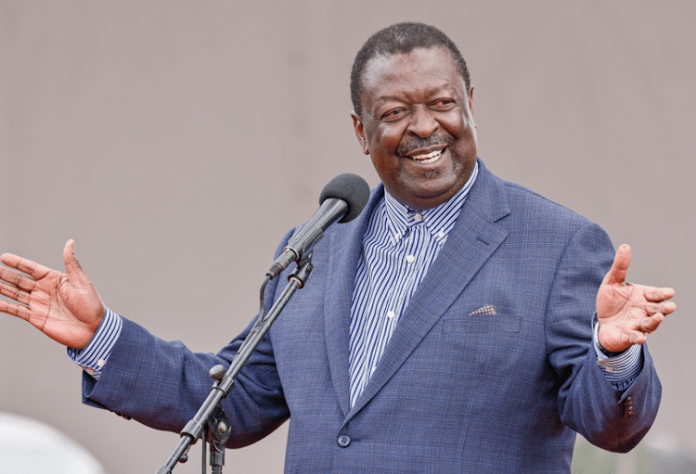
Prime Cabinet Secretary Musalia Mudavadi has urged Western Kenya leaders to rise beyond petty politics and unite the region.
Mudavadi told the leaders to emulate their peers in other regions and extend a hand of friendship that will also help unify the country.
He regretted that regional politics have far too long been marred by mere rhetoric instead of focusing on service delivery and development for the people.
“Leadership is not a joke; it is a calling. When given a chance, please respect the people who gave you that opportunity and work. We must change our attitude and be mature leaders who work together.” noted the Prime CS.
“We must move away from petty politics. How is it that everybody else is always wrong and you assume that you are always right? It is not possible. Only Jesus or perhaps God is impeccable, but there is no human being who is perfect and who is always right.” warned Mudavadi.
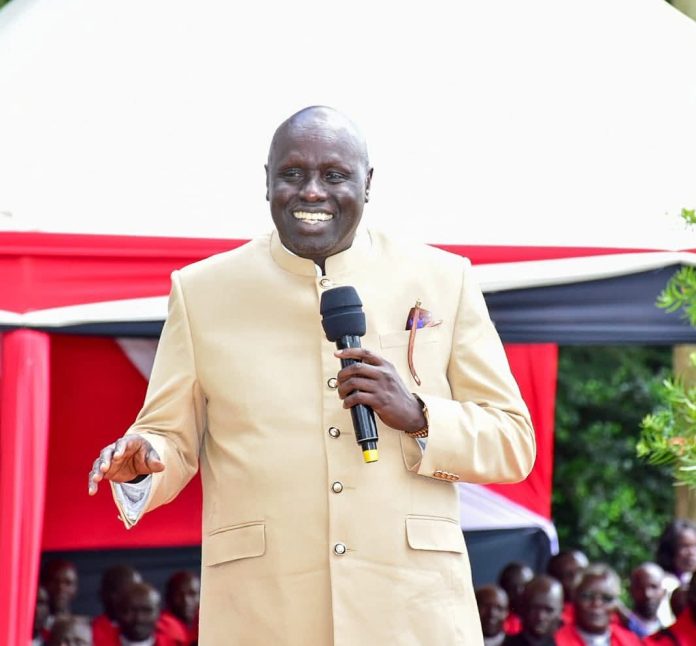
He spoke during a Sunday service at the African Church of the Holy Spirit in Tumbeni, Malava constituency in Kakamega County.
The Prime CS took a swipe at a section of political leaders in the larger Western Kenya who continue to engage in retrogressive political configurations and engagements anchored on mere regional, tribal and ethnic discourse.
“Kuna wengine wanazungumza wakisema Mudavadi na Wetangula wametuzuia, kwani nimezuia nani. Mimi nikiingia bunge, viongozi kama Joshua Angatia were senior to me. Mzee Burudi Nabwera was there, Mwangale was there, I did not waste my time blaming those senior politicians. I went in and started doing my part and concentrated on my job progressively, knowing those are my elders. I respected them and worked with them, they did not stop me from performing my duties as an MP.” he regretted
“If you are an MP and you are unable to do your job don’t blame me. If you are a governor and you are unable to perform, don’t ask me, do your job. It is not me who is going to vote you out, it is the people who put you there who will decide if you go on or not. Stop wasting your time talking about Mudavadi, as if I am your obstacle, fanya kazi yako mimi nifanye kazi yangu.” added Mudavadi.
He cautioned the residents of Western Kenya against political distractions from leaders with no agenda and urged them to continue supporting the government under President Ruto’s leadership.
He said the President means well for the country.
Adding that President Ruto is a visionary leader who wants to unite the country for all regions to benefit from progressive economic and infrastructure development.
“We have seen President Ruto and Gideon Moi unite for the sake of the country. This gesture should inspire our region to unite and especially the leadership from western Kenya. We have to work and create jobs for our youth. That is my agenda and should be our agenda. We must set aside divisions for the sake of development and unity for our people.” he explained.
Mudavadi has been categorical that President Ruto will win his second term and he has called on the people of Western Kenya not to be left behind in the new formation, for the region to benefit more post 2027.
He cautioned against sibling rivalry within the political leadership of the region saying it is portraying a bad image nationwide, demeaning the level of respect that seasoned politicians from the region have earned over years.
“Don’t waste your time as a leader discussing Mudavadi and other leaders like the President. Look for what you want and it is the voters who will decide through God’s blessings, not through insults. There are some people who are advanced in age but seem not to have grown up. This has a big problem in our politics and I am telling my fellow leaders, let us be mature in our politics.” Mudavadi cautioned.
“As a leader let people know what you really stand for and what you want to do for them. Mudavadi is not planning to be governor of Kakamega, Mudavadi is not planning to be a Member of Parliament, a Senator or even a Governor of Kakamega or any other county. My target is different and it is national. I am aiming at the top, I have served as an MP, a Minister, a Vice President, a Deputy Prime Minister and now I am the equivalent of the Prime Minister under my capacity as Prime Cabinet Secretary. What is remaining is only one seat and that is the top most seat in the land.” Mudavadi said.
Mudavadi had been accompanied by MPs Fred Ikana (Shinyalu), Tindi Mwale (Butere), Emmanuel Wangwe (Navakholo), Benard Shinali (Ikolomani), Nabii Nabwera (Lugari) and Titus Khamala (Lurambi).
Also at the Sunday service was President Ruto’s aide Farouk Kibet, Higher Education and Research PS, Beatrice Inyangala and the UDA candidate for the Malava by election David Ndakwa.
The leaders present vowed to campaign for the UDA candidate in the mini polls.
The Malava parliamentary seat fell vacant following the death of the area MP earlier Malulu Injendi early this year.
Mudavadi said the government was committed to completing ongoing projects in Kakamega and Malava, including road upgrades, market centres, and youth empowerment initiatives.
He said continued political cooperation would ensure Western Kenya benefits from the national development agenda moving forward.