Home Blog Page 79

Raila’s family: Mama Ida’s nomination is a deserved and merited achievement

0

By Anderson Ojwang

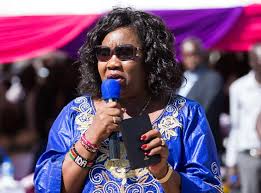
Raila Amolo Odinga’s family has welcomed the nomination of Mama Ida Odinga by President William Ruto as Kenya’s Envoy to UNEP, terming it a deserved and merited achievement.

The family’s last-born daughter, Winnie Odinga, said they were excited about the appointment and dismissed those asking her mother to decline the nomination.

“I absolutely believe my mother merited the appointment. She is qualified, educated, and has experience in governance and management at a high level of society. I believe she has earned respect in her position in society. The nature of Kenya is that when someone gets something, people feel they are the ones who deserve it. I believe she is going to do the right thing, and she deserves it,” she said.

Ida, at the weekend, said she was very happy with the appointment and thanked all those who had sent her congratulatory messages.

Canon Ida, speaking at a church service, said, “Thank you very much to those who have congratulated me on this new appointment. To me, it is an honor, and I am happy about it. But of late, I have been going through some challenges. I lost my husband about three months ago. Before that, every time I stood here, I would be introduced as the wife of… but these days, I have been given another baptism — that is, the widow of — and I still carry that name with pride.”

Canon Ida becomes the second high-profile Luo widow, after former President Daniel Arap Moi appointed Pamela Mboya to the post in the 1980s. She was the widow of freedom fighter and former KANU Secretary General, the late Tom Mboya.

The late Ambassador Dr. Joseph Odero Jowi played a critical role in bringing the UNEP headquarters to Africa, specifically Nairobi, Kenya, during his tenure as Kenya’s ambassador to New York.

Last Friday, President William Ruto nominated Ida as the country’s envoy to UNEP and transmitted her name to Parliament for vetting.

The Friday nomination of Mama Ida by President Ruto, coming after the demise of Raila Amolo Odinga and amid high-octane politics in the Orange Democratic Movement (ODM) over the pre-election pact with the United Democratic Alliance (UDA), has left tongues wagging.

The Head of Public Service, Felix Koskei, issued a communiqué stating that the President had formally transmitted the nomination of Mama Ida Odinga to the National Assembly for consideration and approval, in line with constitutional requirements governing appointments to the Foreign Service.

He described Mama Ida as a distinguished educationist, civic leader, and advocate for social justice and gender equity.

Koskei, in the communiqué, noted that she began her career as a graduate teacher at Highway Secondary School in Nairobi before later teaching at Kenya High School, where she spent more than a decade in the classroom.

The communiqué notes that Mama Ida’s life’s work has been marked by a commitment to advancing women’s education and empowerment, as well as standing against authoritarianism and injustice, promoting freedom of expression, and championing gender equity.

“In the early 1990s, amid the national clamor to transition from a single-party state to a multiparty democracy, she played a key role in advancing calls for change and democratic reform as the founding Chairperson of the League of Kenya Women Voters. Since then, she has consistently championed initiatives that improve the lives of women, children, the youth, and vulnerable communities.”

Her appointment to this role, subject to the requisite parliamentary approval, is expected to amplify Kenya’s voice on environmental issues and further reinforce the country’s longstanding leadership in environmental diplomacy, as well as its pivotal role as host of the UN’s principal environmental authority, he said.

Retirement in public interest

In the mid-1980s, during Kenya’s one-party rule under KANU, Ida Odinga was retired under what was termed “in the public interest” from her teaching position at Kenya High School. Her only crime was being the wife of a man who refused to bow to dictatorship.

At the time, Raila Odinga, son of Kenya’s first Vice President Jaramogi Oginga Odinga, had been detained without trial for his alleged role in the 1982 coup attempt.

Barely weeks after his arrest, his wife was shown the door by the Teachers Service Commission (TSC), her dismissal delivered coldly through an official letter dated September 12. The letter instructed her to vacate the school premises immediately and surrender all property belonging to the institution.

By the time of her retirement, Ida Odinga had served diligently as a teacher for 15 years but did not despair at the new challenge brought to her doorstep by the Moi administration.

“I had lost a husband, a job, and a home. What should one do? They will chase me away, and I will have no home,” she told reporters as her household goods were loaded onto two lorries.

At the time of her retirement, Ida Odinga did not receive any warning or explanation, only a curt message that she would receive her final dues after handing over the clearance form.
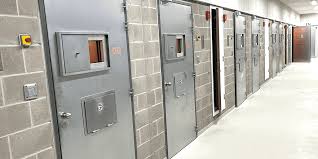
Neglected Aspect of Human Rights in Cells and Jails

0

By Billy Mijungu

The discourse on criminal justice often centers on punishment while overlooking the conditions under which people are detained. Beyond the routine jailing of petty offenders whose lives are frequently reduced to rubble there exists a neglected human rights concern within cells and jails.

The constitutional principle of innocent until proven guilty must extend beyond the courtroom and into places of detention. Once a person is arrested the State assumes full control over their life dignity and safety and must therefore act as a responsible custodian rather than a silent violator.

Detention should never expose suspects to harm neglect or degrading treatment. At the point of arrest the State has a duty to protect individuals from unsafe conditions disease violence and moral decay.

Access to clean water adequate food proper sleeping areas sufficient lighting and sanitary facilities is not a privilege but a basic requirement of human dignity.

These standards are recognized in modern correctional systems and international human rights instruments and should guide the management of all detention facilities.

Even those serving long prison sentences retain their humanity and deserve humane treatment. Lawful restrictions do not justify cruelty neglect or exposure to inhuman living conditions.

A properly organized prison should provide order cleanliness personal hygiene and mental stability. Correctional facilities are meant to rehabilitate and reintegrate not to destroy the human spirit or worsen social harm.

When prisons become places of suffering rather than correction society ultimately pays the price.

The current state of many cells and jails is deeply troubling. Overcrowding poor ventilation lack of proper bedding bedbugs mosquitoes inadequate lighting and unsanitary conditions have become normalized. These conditions punish beyond what the law prescribes and undermine justice itself. Decent clean and humane incarceration is a constitutional duty and a moral obligation of government.

Prison reform must be treated as a national priority because a society is judged by how it treats those in its custody. It is time to restore dignity humanity and justice to incarceration.

President Ruto orders repeat UDA elections in a bid to consolidate 540,000 votes to jumpstart his re-election

0

By Anderson Ojwang

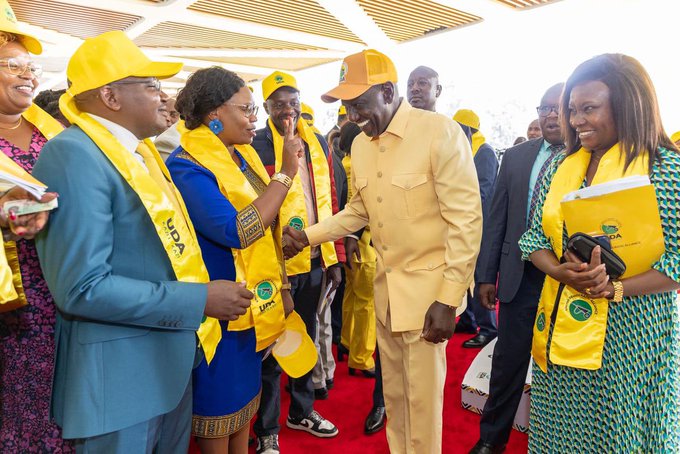
President William Ruto has embarked on his 2027 presidential re-election campaign by ordering a repeat of the United Democratic Alliance (UDA) grassroots elections.

The move is aimed at securing 584,000 votes countrywide for Ruto from party officials, from the grassroots to the national level.

Taking a cue from the former ruling party KANU and the opposition Orange Democratic Movement (ODM), the President understands where his secret votes lie in his pursuit of a second term.

In the 2022 general elections, UDA did not have offices and party officials across the country except in its strongholds of Mt Kenya and the Rift Valley regions.

Currently, only UDA and ODM have countrywide grassroots party officials, while other political parties enjoy support mainly from their regions.

Politics of polling centers

The polling station is the political aorta of any political party, where it is made or unmade, and that is why Ruto has moved decisively to reposition UDA nationally.

“Successful democratic countries are built on a solid foundation of political parties. It is important for us to understand that the political party is not the political leader, the National Executive Council, or the National Governing Council. The political party is the grassroots.

The polling station is where the political party is made or unmade. That polling station. So I want to encourage you: if you go to any successful political party, its success is in the grassroots.”

The numbers and what they mean for Ruto’s re-election

President Ruto is concerned about leadership at the grassroots to jumpstart his re-election campaign, and that is why figures and numbers matter most to him.

“We have positions for 540,000 officials in the party—20 people per polling center. We carried out the elections the other day, and many of the senior leaders here, MCAs and MPs, did not even bother to participate.

Very few participated. I give credit to Kirinyaga and Bomet counties; at least in those two counties, we saw many members come out to participate.

But in other counties, participation was very low. You find only 50 people or even 20 people came to vote in a polling center.

Tell me, if 30 people came to vote in a polling center, do we say that election went well?

So we have instructed the National Election Board that any polling center where less than 50 people voted, we repeat the exercise. And please, I want to ask you, the grassroots are very important,” he said.

UDA ward leadership to change

President Ruto has embarked on a move that will ensure senior members of the party hold leadership positions at the ward and branch levels.

“The grassroots are very important. I want to encourage those of us here to go and become ward chairpersons in your counties. Those are the people who are going to decide the direction of the party going forward.

Nominations will be decided by the party, whether for MPs or MCAs. They will be decided by the party, and the party must have legitimacy.

The legitimacy of the party comes from members voting for party officials. We are going to redo the exercise where we did not do well.”

KANU and ODM grassroots equation

Currently, President Ruto has embarked on a move to enter into a pre-election coalition pact with ODM and has also brought KANU National Chairman Gideon Moi into the broad-based arrangement.

Gideon Moi dropped his Baringo senatorial by-election candidature to join President Ruto in the broad-based government.

ODM party leader Dr. Oburu Oginga was recently mandated by the party’s Central Committee to engage with UDA on a pre-election coalition arrangement.

“I want to tell you, the reason why KANU succeeded for many years was because people lined up at polling stations to elect grassroots leaders of the party.

The reason why ODM is where it is today is because they carry out elections at polling centers. So there is no other way—we must have elected officials at the polling stations.”

Friends or no friends, party first

President Ruto said party members at polling stations will have the mandate to choose their leaders and that elections will not be determined by friendship.

“I know you have friends. I also have friends. Even if your preferred person at the polling station is someone you think is good and loyal, the people at the polling station may not share the same view.

So tell your person to go and compete at the polling station. We must accept whoever is elected. All of us have our people.”

Let the people decide

President Ruto said there are officials who were appointed and that they must now go to the ballot to seek legitimacy.

“We have people in the party list as officials whose names we wrote. It is time now to take them to the ballot.

Once somebody has been voted for, they get the feeling of being elected. Let us give a chance for others to be elected at the polling station. Through this, you create loyal members of the party.

When someone has been elected, it is not easy for them to walk away because they value the mandate they have been given,” he said.

Re-awakening the Nyanza’s Economic Renaissance

0

By Anderson Ojwang

Nyanza is not poor but has for decades failed to utilise the vast economic potential to jumpstart its economy.

Similarly, for decades of marginalisation by successive governments, Nyanza has remained a sleeping giant whose economic potential is yet to be reawakened.

Nyanza has over 350,000 acres of irrigation infrastructure potential, yet only about 17,000 acres are currently utilised. This is not a land or climate problem; it is a coordination, policy, and execution challenge that the region must solve together.

Within this vast potential lies the opportunity to transform livelihoods through strategic, scalable value chains — rice, sunflower, soya beans, and cotton — crops that can anchor agro-industrial growth, create jobs, and generate sustainable wealth.

Financial expert, Mr Martin Ogindo, argued that Nyanza is witnessing a momentous moment and that it is the right time to reshape the region’s economy.

Ogindo, former Rangwe MP, said currently the Luo community is walking out from the shadow of the late Raila Odinga, providing the region with the opportunity for the community to strategically redefine itself and the economic agenda for prosperity.

“The community must now define its strategic interests that need to be addressed by both county governments, which include individual and collective interests, and those to be addressed by the national government.

Until we define and document those economic strategies, that is when we will have realised our economic infrastructure,” he said.

Clear framework

Ogindo said for the community to jumpstart its economy, there was a need to develop a clear framework for engagement, both within the community and with other stakeholders.

He said for decades the region has faced structural challenges that have undermined its economic progression and must be tackled for the region to develop and grow economically.

Nyanza must now move to secure its equitable share of national resources after being marginalised for over six decades.

“The Luo community accounts for 12 per cent of the country’s population. The community must demand its 12 per cent share of national resources in terms of employment, business opportunities, and budgetary allocation for development,” he said.

He said the community was yet to set up strategic economic interests but instead has been pursuing political agendas that have often undermined economic growth.

Opposition politics

For the last six decades, the community’s brand of politics has been opposition, and this has denied it the opportunity to participate in the politics of running and managing the country.

“We have been removed from the table of the national government where economic and development policies are discussed. This is where discussions on national resources take place, and our absence is to blame for the marginalisation,” he said.

Population enabler to economic growth

The Luo community has failed to understand the economic strength in its population, both in Nyanza and the diaspora, which could account for over seven million people.

The huge population is an economic enabler capable of providing a market for everything ranging from labour to capital.

“We have not exploited the huge community population to redesign and strategically align our economy.

Nyanza is strategically located within the counties along the Lake Victoria basin and East Africa, which provide a huge market for intra- and cross-border trade,” Ogindo said.

The blue economy, agriculture

Ogindo said the failure to explore and exploit the blue economy potential in Lake Victoria to be a true pillar of the region’s economy has undermined growth and development in the region.

Similarly, former Alego MP Sammy Weya said that in addition, Nyanza and the wider Lake Victoria basin have strong potential for cocoa and palm oil, particularly where rainfall patterns, soils, and aggregation models allow.

These long-term, high-value crops can support agro-processing, exports, and intergenerational wealth creation.

Coffee farming

Weya said the region also has the ecological capacity to produce premium Arabica coffee, especially SL28 and Ruiru 11 varieties, which command high prices globally. With proper aggregation, processing, and market access, coffee can once again become a pillar of rural prosperity.

“As we expand irrigation and agriculture, we must also commit to protecting our rivers that flow into Lake Victoria. Protecting riverbanks, stopping encroachment, and reafforesting our river catchments is not an environmental slogan; it is an economic necessity.

Without our rivers, we lose irrigation, fisheries, and future production.

We cannot transform agriculture without financial sovereignty. That is why the establishment of a community-owned bank and a community-owned insurance company, spearheaded jointly by our four counties, is critical,” he argued.

Governance

The 2010 Constitution provided Nyanza with an opportunity to showcase its potential in governance and administration of regional resources, but greed and corruption have undermined the objective.

Ogindo said the leadership has excelled in plundering resources meant for service delivery and development.

“The monolithic political system in the region encouraged corruption instead of development. It incubated and bred corruption and is to blame for low economic growth,” he said.

Quarterly Parliamentary Approval of Infrastructure Fund Plans Is Essential

0

By Billy Mijungu 

The Infrastructure Fund Board must not operate in isolation. Quarterly plans and expenditures under the Fund should be subjected to approval by Parliament. Without this safeguard, the country risks placing an entire development budget in the hands of a few individuals, effectively bypassing the constitutional budgeting and oversight role of Parliament.

Such an arrangement would dangerously circumnavigate parliamentary control over public finances. Parliament exists precisely to prevent the concentration of power and resources, and to ensure accountability, transparency, and fairness in the use of public funds. To protect the integrity of the budgeting process, parliamentary involvement must be mandatory every quarter.

There is also a real risk of inequality and inequity. Kenya’s long-standing problem of disproportionate distribution of resources cannot be ignored. We have repeatedly demonstrated poor discipline in equitable allocation, often guided by political convenience rather than objective national need lest we replicate these failures.

A clear parallel can be drawn from recent public debates on recruitment and appointments. Claims of “correcting historical injustices” are sometimes made, while simultaneously insisting that the same processes are purely merit-based. These contradictions undermine public confidence.
Such pitfalls must be avoided in the management of the Infrastructure Fund if it is to serve the nation and endure beyond political cycles.

Infrastructure must be built for posterity. That requires clearly defined roles, strong institutions, and firm oversight to safeguard against abuse, exclusion, and waste.

Nothing prevents the country from applying similar structured budgeting to other essential sectors. An Education Fund that guarantees completely free education is achievable. We already have funds for health and housing, despite their weak institutional structures.

Daily and continuous parliamentary scrutiny is therefore critical, especially when we are effectively placing a two-year national development budget into the hands of a small board. Oversight must be firm, consistent, and non-negotiable.

This is also why devolved instruments such as the Constituency Development Fund (CDF) should be strengthened and aligned with national oversight mechanisms.

Kenya’s challenge has never been ambition. It has been discipline, accountability, and respect for institutions. If we are serious about sustainable development, Parliament must remain at the centre of oversight every quarter.

Mama Ida Odinga: It Is an Honour

0

By Anderson Ojwang

Mama Ida Odinga has termed her nomination by President William Ruto to be Kenya’s Envoy to the United Nations Environment Programme (UNEP) as an honour.

Ida said she was very happy with the appointment and thanked all those who had sent her congratulatory messages.

Canon Ida, speaking at a church service, said:
“Thank you very much to all those who have congratulated me on this new appointment. To me, it is an honour and I am happy about it. But of late, I have been going through some challenges. I lost my husband about three months ago.

Before that, every time I stood here, people would introduce me and say she is the wife of… but these days I have been given another baptism — that of a widow. I still carry that name with pride.”

Canon Ida becomes the second high-profile Luo widow to be appointed to such a position, after former President Daniel arap Moi appointed Pamela Mboya in the 1980s. Pamela Mboya was the widow of freedom fighter and former KANU Secretary General, the late Tom Mboya.

The late Ambassador Dr Joseph Odero Jowi played a critical role in bringing the UNEP headquarters to Africa, and specifically to Nairobi, Kenya, during his tenure as Kenya’s Ambassador to the United Nations in New York.

Last Friday, President William Ruto nominated Ida Odinga as the country’s Envoy to UNEP and transmitted her name to Parliament for vetting.

The Friday nomination of Mama Ida by President Ruto, coming after the demise of Raila Amolo Odinga and amid the high-octane politics in the Orange Democratic Movement (ODM) over a pre-election pact with the United Democratic Alliance (UDA), has left tongues wagging.

The Head of Public Service, Felix Koskei, issued a communiqué stating that the President had formally transmitted the nomination of Mama Ida Odinga to the National Assembly for consideration and approval, in line with constitutional requirements governing appointments to the Foreign Service.

He described Mama Ida as a distinguished educationist, civic leader, and advocate for social justice and gender equity.

Koskei noted in the communiqué that she began her career as a graduate teacher at Highway Secondary School in Nairobi before later teaching at Kenya High School, where she spent more than a decade in the classroom.

The communiqué further stated that Mama Ida’s life’s work has been marked by a commitment to advancing women’s education and empowerment, standing against authoritarianism and injustice, promoting freedom of expression, and championing gender equity.

“In the early 1990s, amid the national clamour to transition from a single-party State to a multiparty democracy, she played a key role in advancing calls for change and democratic reform as the founding Chairperson of the League of Kenya Women Voters. Since then, she has consistently championed initiatives that improve the lives of women, children, the youth, and vulnerable communities.”

Her appointment to the role, subject to parliamentary approval, is expected to amplify Kenya’s voice on environmental issues and further reinforce the country’s longstanding leadership in environmental diplomacy, as well as its pivotal role as host of the UN’s principal environmental authority.

Retirement in the Public Interest

In the mid-1980s, during Kenya’s one-party rule under KANU, Ida Odinga was retired from her teaching position at Kenya High School under what was termed “public interest.” Her only crime was being the wife of a man who refused to bow to dictatorship.

At the time, Raila Odinga, son of Kenya’s first Vice President Jaramogi Oginga Odinga, had been detained without trial for his alleged role in the 1982 coup attempt.

Barely weeks after his arrest, his wife was dismissed by the Teachers Service Commission (TSC), her termination delivered coldly through an official letter dated September 12. The letter instructed her to vacate the school premises immediately and surrender all property belonging to the institution.

By the time of her retirement, Ida Odinga had served diligently as a teacher for 15 years. However, she did not despair in the face of the new challenge brought to her doorstep by the Moi administration.

“I had lost a husband, a job, and a home. What should one do? They will chase me away, and I will have no home,” she told reporters as her household goods were loaded onto two lorries.

At the time of her retirement, Ida Odinga received no warning and no explanation — only a curt message informing her that she would receive her final dues after handing over her clearance forms.

Dr Oburu in a Fix as Calls Peak over His Lead Role in ODM–UDA Negotiations

0

By Anderson Ojwang

Kisumu, for the first time, hosted the new Orange Democratic Movement (ODM) party leader, Dr Oburu Oginga, three months after it received the body of the enigma, Raila Amolo Odinga.

Then Kisumu bled, and tears freely flowed as residents bade farewell to the party leader with a promise that his party and legacy would be protected.

And on Saturday, Kisumu welcomed Dr Oburu, and indeed he had a date with destiny — a rough road and drive to Ciala Resort, the venue of the meeting.

The first reality check Dr Oburu received was the absence of the host governor, Prof Peter Anyang’ Nyong’o, with whom he had spent hours in consultative engagement on the eve of the meeting.

Dr Oburu wrote on his X handle: “We held a productive and in-depth discussion on the future of our great party, ODM, with the Kisumu Governor, Peter Anyang’ Nyong’o, ahead of the Kisumu ODM delegates’ meeting and the Linda Grounds engagement. Gavana amesema ako tayari kulinda ground ya Kisumu. Je, wewe uko tayari?”

At the venue, the master of ceremonies repeatedly told the crowd that Governor Nyong’o would arrive at any time — but that never happened.

Kisumu Woman Representative Ruth Odinga, the younger sister of Dr Oburu, also skipped the function, as did Siaya Governor James Orengo.

If anything, the absence was just the tip of the iceberg of what awaited Dr Oburu, and as the meeting progressed, ODM Deputy Vice-Chairman Dr Otiende Amollo took the bull by the horns and, without an iota of fear, summed up the delegates’ expectations.

Dr Otiende told Dr Oburu that as the party leader of ODM, he could not double up as the lead negotiator in the ODM–President William Ruto United Democratic Alliance (UDA) pre-election coalition pact.

“Mokuongo amor. Chieng’ kacha an ema ne awacho ni structured negotiations. Sani, Daktari, ka itelonwa, joma obiro ka oyie ni nyaka wadhi e structured negotiations. To nyaka wadhiye.
Ka iwacho ni structured negotiations, ok ochuno ni ipingo. Matiende ni wa gin lemo moko. Wadwaro ni wan bende omedwa lemo.
Daktari, saa ma wadhi e structured negotiations, in kik ibed mbele. In ja telo. Thuonwa ok bed mbele. Wasigu nyalo nege.
Ibed ki ji ma Kisungu luongo ni the first right of acceptance and the first right of refusal.
Ka dhi maber to iwacho ni ayie. Ka dhi marach to iwacho ni adagi. Wan ema itiyo kodwa. Wan e foot soldiers. Kata onegwa onge rach tek ni thuonwa to pod ngima,”
he said.

Dr Oburu recently announced that he would lead the ODM negotiations with President Ruto and that a team would soon be established to undertake the agenda.

“Now, as we approach 2027, we are not going to get into government through the back door. We are going to have a negotiated arrangement, which will be headed by me.
It will not be easy, but it will be a tough negotiation. We will get our share. 2026 is the year of negotiations for any arrangements.
Either we go into partnership with UDA or any other party.
We will soon establish a negotiation team and start negotiating with others because it is difficult for a party to go it alone without seeking the support of other parties.
The negotiations will start with our current partners in the broad-based arrangement. We shall only go to others if we do not agree,”
he said.

Winnie Odinga, during the ODM 20th anniversary, had called for a new team to manage the broad-based arrangement, terming it delicate.

“There is something I wanted to tell you. When it came to the matter of the broad-based government, the people of ODM entrusted one person with the management of that relationship. That person was Baba Raila Amolo Odinga.
That relationship is complicated, and therefore we are looking and wondering whether those who are taking it upon themselves to manage it now are capable of managing that relationship.
I do not think that is a question for me to answer. That is a question for the people of ODM to answer. That is why, party leader, I am requesting that we go back to the people and hold an NDC to see who the people want to pick to manage that same relationship,”
she said.

Dr Oburu, speaking in Kisumu, said he would not betray the community by leading them into deep waters.

“An kaka jatelo maru ok anyal terou e nam. Ok anyal terou kama rach. Angeyo ni Raila ne owewa e broad-based ne owewa kod ten-point agenda.
Thuolo ma nyachae oMiya ka nyachae wan Kilifi ni mondo wach negotiations. Joma wachago godo goyo mbaka en UDA. Jomoko osechako dierowa ni wadhi matek. Wadhi matek nade. We have only said there is intention. Wabiro checko date kod dwe maber mar chako wuoyo,”
he said.

Will Dr Oburu, currently enjoying the trappings of power, delegate the negotiations to his foot soldiers?

Nyanza is Not Poor but Underutilised

0

By Sammy Weya

Distinguished guests, leaders, professionals, farmers, development partners, and friends from across our four countries,

Allow me to begin by thanking the organisers of this important symposium for convening us at such a critical moment in our region’s journey.

Before I proceed, I wish, on my own behalf and on behalf of the people of Nyanza, to extend our deepest condolences to the family and loved ones of our departed leader, the late Raila.

We stand in solidarity with the people of Nyanza and the wider community as we mourn this great loss. May his soul rest in eternal peace.

Today, more than ever, unity must be our anchor — unity as a community, unity politically, and unity economically. History teaches us that when we walk divided, we stagnate; but when we walk together, we advance.

Nyanza is not poor. Nyanza is underutilised.

Our region has over 350,000 acres of irrigation infrastructure potential, yet only about
17,000 acres are currently utilised. This is not a land or climate problem; it is a coordination, policy, and execution challenge that we must solve together.

Within this vast potential lies the opportunity to transform livelihoods through strategic, scalable value chains — rice, sunflower, soya beans, and cotton — crops that can anchor
agro-industrial growth, create jobs, and generate sustainable wealth.

In addition, Nyanza and the wider Lake Victoria Basin have strong potential for cocoa and palm oil, particularly where rainfall patterns, soils, and aggregation models allow. These
long-term, high-value crops can support agro-processing, exports, and intergenerational wealth creation.

Coffee Farming

Our region also has the ecological capacity to produce premium Arabica coffee, especially SL28 and Ruiru 11 varieties, which command high prices globally. With proper aggregation, processing, and market access, coffee can once again become a pillar of rural prosperity.

As we expand irrigation and agriculture, we must also commit to protecting our rivers that flow into Lake Victoria. Protecting riverbanks, stopping encroachment, and reafforesting
our river catchments is not an environmental slogan; it is an economic necessity.

Without our rivers, we lose irrigation, fisheries, and future production.

We cannot transform agriculture without financial sovereignty. That is why the establishment of a community-owned bank and a community-owned insurance company, spearheaded jointly by our four counties, is critical.

These institutions would finance farmers and agribusinesses, insure crops and assets against climate risks, retain capital within the region, and reduce dependency on external financing.

Equally important is connectivity.

An airstrip in Siaya is no longer a luxury — it is an
economic enabler.

It will open Nyanza to investors, accelerate trade, support high-value agriculture, and integrate our region into national and regional markets.

If we are serious about wealth creation, then we must also be serious about policy and legislation.

We must collectively lobby our governments to reduce and ultimately stop unnecessary imports of sugar and rice — commodities we have the capacity to produce
competitively within our own countries.

At the same time, we must push for harmonised policies and supportive legislation across our four countries that protect local producers, encourage value addition, and promote regional trade.

Government- and donor-supported projects must be judged by one simple measure: do they create lasting wealth for our people?

Not reports or workshops, but income, assets, dignity, and intergenerational prosperity.

Finally, progress is built on trust. We must continue to walk with the communities that trusted us and stood with us in the past.

Development that excludes people is temporary; development built with communities is sustainable.

If we remain united — politically, socially, economically, environmentally, and regionally — there is no doubt about our future.

May God bless Nyanza. May God bless the Luo community. And in unity — in politics and in business — we shall prosper.

The Author,
Former Member of Parliament, Alego Usonga
Farmer and Businessman

Mama Ida and Winnie Deserve Respect, Declares Millie Odhiambo

0

By Anderson Ojwang

In what appeared to be taking the battle to the doorsteps of political opponents, Orange Democratic Movement (ODM) Assembly Chief Whip Millie Mabona Odhiambo demanded respect for the family of the late Raila Amolo Odinga.

Speaking in Kisumu before Nyanza ODM delegates led by party leader Dr Oburu Oginga and the party’s National Chairperson, Gladys Wanga, Millie said Mama Ida Odinga and her daughter deserve respect from the party leadership.

Millie, without mincing her words, shut down a section of the crowd that was booing, insisting that Ida and Winnie must be respected and that nobody would intimidate her.

The Suba North MP said she respects Dr Oburu by virtue of the fact that he is Raila’s brother and that he is the party leader.

“Respect ma amiyo party leader Oburu amiye nikech en ngʼama angeye kendo amiye nikech Jakom Raila Amolo Odinga. (The respect I give to the party leader Oburu is because I know him and also because of Jakom Raila Amolo Odinga).
Respect amiyo Oburu Odinga nikech en owadgi Jakom. (I respect Oburu because he is the brother of Raila).
Jo thurwa, by the same vein, amiyo respect ne Ida Odinga, amiyo respect ne Winnie Odinga. (My people, by the same vein, I give respect to Mama Ida Odinga and Winnie Odinga).
Ok abiro tamora miye respect, kata ikwera kata ok ikwera. Adwa wacho. Ok an ngʼoro. Ma inyalo kwera. Awacho gi thuon. Amiyo respect ne Jakom mar party, amiyo respect ne Ida, kendo achiwo respect ne Winnie. (I will not stop giving them the respect they deserve, whether you like it or not. I am not a coward. You can shout, but I will speak without fear. I give respect to the party leader, Ida, and Winnie),”
she said.

Millie said it was wrong to subject Winnie to public condemnation instead of mentoring and correcting her privately where she may have erred.

“Winnie nyathi matin ma ka uneno ka odhi marach to imako bade to inyise yoo ok dhawne. Ok dhawne e mbele ji. Imako bade imiye respect. Inyise ni, Winnie, in nyathi matin luo ka. (Winnie is a young person, and when you see she has erred, you do not condemn her publicly. You call her aside with respect and guide her in the right direction),” she said.

Winnie and her uncle, Dr Oburu, have engaged in what can be termed as a public spat over the broad-based arrangement and the leadership of ODM.

Oburu–Winnie Tiff

At the ODM 20th anniversary, the fallout between Winnie and Oburu became apparent. It was only a matter of time before it escalated, and recently Oburu responded to Winnie by saying he was the brain behind the broad-based government and that he chaired all the meetings.

“There is something I wanted to tell you. When it came to the matter of the broad-based government, the people of ODM entrusted one person with the management of that relationship. That person was Baba Raila Amolo Odinga.
That relationship is complicated, and therefore we are looking and wondering whether those who are taking it upon themselves to manage it now are capable of doing so.
I do not think that is a question for me to answer. That is a question for the people of ODM to answer. That is why, as party leader, I am requesting that we go back to the people and hold an NDC to see who they want to pick to manage that same relationship,”
she said.

Oburu’s Response

Recently, Oburu responded by declaring that he has been the one chairing all the broad-based meetings between Raila and Ruto, which, in his view, makes him the brainchild and chief negotiator of the arrangement.

“Those who are saying that Oburu is not validly elected, I challenge them. If they say it is the NDC, let us go to the NDC, and I will call it very soon,” he said.

Oburu said he is the one who has been chairing all the broad-based arrangements between Ruto and the late Raila.

“Those who are saying Oburu does not talk are talking nonsense. In this broad-based arrangement, I want to assure those who are saying that it was only Raila who could handle it and that Oburu does not know anything about it.
I want to tell them that all the meetings of the broad-based arrangement with Ruto were chaired by Oburu Odinga, before you here today,”
he said.

Winnie in Kibra

Winnie and her brother, Raila Junior, recently made a triumphant entry into Kibera’s Kamukunji grounds to a heroic welcome.

When Winnie Odinga rose to speak, she did not hold back, and in her, her father’s rebellious DNA was evident.

“Leo tumerudi nyumbani. Nilisikia kuna watu walisema eti hatuwezi kuja hapa. (Today, we have returned home. I heard some people said we cannot come here).
Hawa ni wakina nani? Waelezeni nimerudi nyumbani. Nimepitia kwa bedroom na hata sasa natoa viatu. (Who are these people? Tell them I have returned home. I have even passed through the bedroom and I am now removing my shoes),”
she said.

“Kwenye hii safari sisi tulikuwa abiria na baba alikuwa dereva wa basi hili. Nakuna siku moja tuli amka na tukashtuka dereva amekufa. (On this journey, we were passengers and Baba was the driver of the bus. One day we woke up to the shocking news that the driver had died).
Aliaga dunia. Kidogo wale waliokuwa wanakaa mbele walikimbilia steering wheel, kila mtu akivuta upande wake. (The driver died, and almost immediately those who were seated in front rushed to the steering wheel, each pulling in a different direction).
Wametutupa sisi kama magunia. Wamesahau. Tunasema ngojeni, Baba alikufa juzi tu. Haraka ya nini? Wacha tuzungumze kwanza. Simamisheni mazungumzo. Tuongee kwanza, kisha tusonge mbele pamoja. (They threw us aside like sacks. They forgot us. We are saying, wait, Baba only died the other day. What is the hurry? Let us talk first. Stop the negotiations. Let us talk, then we move forward together),”
she said.

Jaoko Oburu recently said the party does not belong to any individual but to Kenyans.

He wrote on his X handle: “The party does not belong to an individual or a certain community; it belongs to the Kenyan people. We will remain united while being guided by the party constitution and the principles set by our founding members.”

Time to Choose Your ODM Wing

0

By Billy Mijungu

The divisions within ODM have outgrown disagreement. What is unfolding is a generational confrontation over power, relevance, and the future direction of the party. One camp is associated with Oburu Odinga. The other is driven by Winnie Odinga.

Between these two poles sit Gen Z-aligned actors and several competing interests, making the internal contest both crowded and unpredictable. What is clear, however, is that loyalty alone no longer guarantees victory on the ODM ticket.

ODM remains one of the most formidable political parties in Kenya. Its grassroots model is so effective that UDA is openly replicating it nationwide, promising hundreds of thousands of grassroots leaders. In the long term, parties such as Jubilee, DCP, ODM, UDA, and Wiper are likely to survive. Yet survival does not translate into universal opportunity. Each party will ultimately produce only one presidential flag bearer.

The current ODM struggle forces the party to confront the meaning of its own name. The D in ODM must now be applied in its true registered sense, Democratic. For years, critics have dismissed it as standing for dictatorship. That narrative may have survived in the past, but it cannot survive in today’s political environment.

Oburu Odinga has limited options. Accommodation is no longer a courtesy but a necessity. Figures such as Nyabungu, Chogo, the Queenpin, and Winnie Odinga must be factored into the party’s future. Winnie Odinga in particular represents a new political energy. She will be tireless, persistent, and unapologetically confrontational where required.

The Odingas of 2026 are not the Odingas of 1994. Their financial resources are stronger, their political networks wider, and their operational capacity better suited to an open and competitive political space.

If ODM is to remain relevant, it must deliberately open up and manage its internal contradictions. Before negotiating with President Ruto or any external political force, ODM must first negotiate with itself. Without internal consensus, external alliances will remain fragile and transactional.