Home Blog Page 95

Siaya divorces politics for development as Ruto earmarks Sh 24billion for the county’s infrastructure

0

By Anderson Ojwang

Despite Siaya county being the home to Kenya’s first vice President the late Jaramogi Oginga Odinga and also to the father of devolution, former Prime Minister Raila Odinga, the county has remained sleepy in terms of development.

Siaya County’s Gross County Product (GCP) was Sh 136,809 million in 2022, making up about 1% of Kenya’s national GDP.

 Agriculture remains a key driver of the local economy, contributing roughly 60% of its output, with significant opportunities also present in the blue economy sector, particularly in fisheries and aquaculture.

Any visitor to Siaya would be welcomed by the site of rusty and delipidated buildings, poor road networks, limping economy and hot politics, which are the common menu served in the county.

For Siaya, they had resigned to fate after the fall out between Oginga and president Mzee Jomo Kenyatta and signed divorce deed with development.

This explains why the people of Rarieda constituency voted out former cabinet minister Raphael Tuju, who initiated several projects in education, roads and health for supporting then president Mwai Kibaki.

Equally, because of the hot politics, a US investor Calvin Burges, of the Dominion Farms at Yala swamp had to relocate and subsequently Siaya returned to its ghost status with no meaningful investment in agribusiness and other trade.

In the early 2000s, Burges, reclaimed 7,200 hectares, build canals, dykes, spillways and revived the dying Kanyaboli and namboya lakes and turned the swamp into a jewel.

Dominion farm became the innovation hub by producing high quality aromatic rice, fish farming, with a hatchery producing 2.3 million fingerlings a month, stirred the local economy and employed over 1,500.

Despite all these achievements, the former Siaya county assembly vowed to kick out the American investor and Dominion farms CEO Calvin Burgess from Yala swamp, accusing him of belittling the community by peddling falsehoods.  

Before he relocated Burges claimed senior politicians from the region were frustrating his business by extorting money from him and issuing threats.

Currently, Siaya government who was opposed to broad based government and leaders from Siaya witnessing transformative developments in Homa Bay county by the national government are set to benefit from Sh 24 billion projects.

President Ruto yesterday said while in Siaya that the government will spend a total of Sh24 billion this financial year to build 8,000 affordable housing units, 18 new markets, and 11,000-bed student hostels in the county.

He said the National Government has also increased funding for roads in Siaya County from KSh500 million in 2024 to KSh2.5 billion this year, adding that this would be enhanced with another KSh1.5 billion in the course of this financial year.

“In the next one year, you will see a noticeable difference in the road network not only in Siaya, but also across the country,” he said.

On electricity, he said KSh1.8 billion has been set aside to connect 14,000 households to power in the county.

Meanwhile, another KSh550 million has been allocated for the modernization of the local stadium and KSh500 million for a hospital, both in Siaya town.

Furthermore, President Ruto announced that the Kenya Ports Authority (KPA) will soon commence the construction of a pier in Usenge, which will be accompanied by a new market.

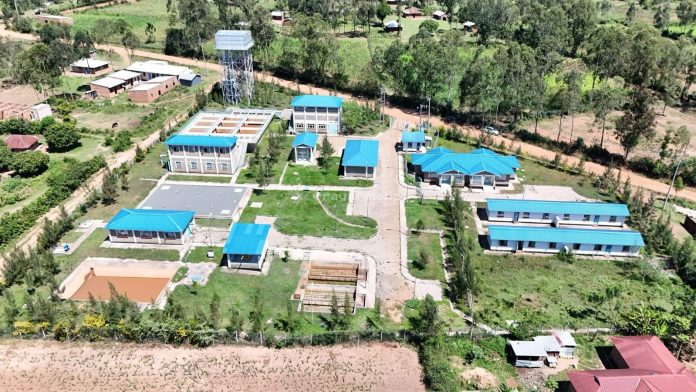
President Rito also commissioned the KSh1 billion Ugunja-Sega-Ukwala Water Supply and Sanitation Project, which will provide more than 10 million liters of water every day to 20,000 households in the area.

He also laid the foundation stone for a modern KSh70 million market at Sidindi centre, Ugunja Constituency.

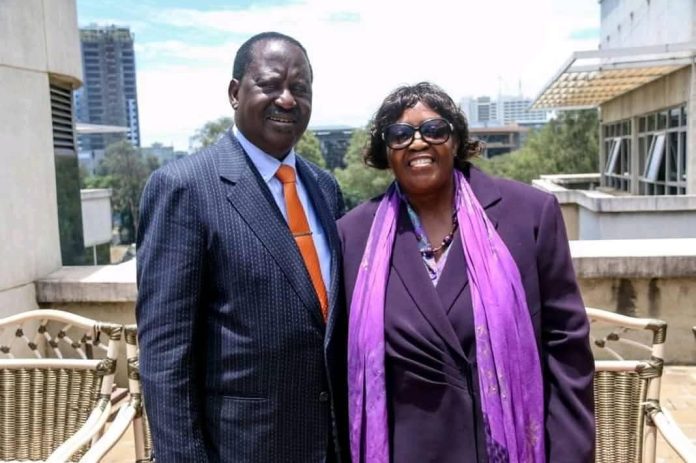
The President thanked former Prime Minister Raila Odinga for agreeing to work with him in the broad-based government, saying Kenyans will achieve a lot when united.

“I stand here in Siaya and say thank you to Raila for agreeing to work with me in the broad-based government to accelerate Kenya’s development,” he said.

He added that Kenya is a country of immense potential and requires bold leadership to take the country to the league of developed nations.

“There is no shortage of resources or plans. What stands between Kenya and greatness is lack of focused, patriotic, courageous and visionary leadership,” he said.

He pointed out that in just three years since he assumed office, savings at the National Social Security Fund have doubled from KSh320 billion to KSh640 billion.

James Orengo has changed tune and now says the future is bright for President William Ruto and the people of Kenya.

Speaking in Siaya, Orengo said provided that Ruto continue to work for Kenyans and the people of Siaya, his future and that of the country is bright.

A departure from activism and criticism, Orengo acknowledged that “So far, the work is going on and we are happy with the ongoing programs. How many of you agree to the broad-based government to gain development? Siaya, Ugenya, Gem, Alega, Bondo, Rarieda, do you agree to support the broad-based government?”

Previously, Orengo was one of the key Raila’s allies who were opposed to the broad-based government and ran into trouble with his colleagues from Nyanza and the ODM party.

Orengo has been in the recent past frequenting government offices for development projects with some of the projects already rolled out in the county.

Governor Orengo: The future is bright for President Ruto and Kenya

0

By Anderson Ojwang            

The once ardent critic of broad-based government, Siaya Governor James Orengo has changed tune and now says the future is bright for President William Ruto and the people of Kenya.

Speaking in Siaya, Orengo said provided that Ruto continue to work for Kenyans and the people of Siaya, his future and that of the country is bright.

A departure from activism and criticism, Orengo acknowledged that “So far, the work is going on and we are happy with the ongoing programs. How many of you agree to the broad-based government to gain development? Siaya, Ugenya, Gem, Alega, Bondo, Rarieda, do you agree to support the broad-based government?”

Previously, Orengo was one of the key Raila’s allies who were opposed to the broad-based government and ran into trouble with his colleagues from Nyanza and the ODM party.

During a recent burial in Uyoma that was attended hy Ruto and Raila, Orengo said it was wrong for ODM to compromise its ideals for cheap gains that it would be dangerous at the end of the game.

“On my part, I want my conscience to be clear. I want to say no to abduction. Again, I want to say there is too much sycophancy in the party at the moment.

I James Orengo, the stone, Nyawawa.I fear nothing. I want to say the luo as community must not lose their identity they are known for. We have identity that we are known for.

If we make compromises, they should be justified before God. We cannot suspend the constitution. We may be happy now but in future may regret.

I pray for ODM you can stand any storm. If you make compromises but it should be based on principle and not praise and worship. We must stand firm and leave by constitution,” he said.

But yesterday, Orengo said they follow the direction given by Raila and that is why he had ensured the president received a warm welcome in Siaya.

“Your excellency the president, last night and this morning, Honorable Raila Odinga rang and asked me to make sure that people of Siaya receive you well.

I am glad that those instructions have been carried out. When baba says right, we go right. When baba says left, we go left. How many of you are in agreement that when baba says right, we go right?

Your excellency the president I want to allay fears of those who think you don’t Siaya in your heart. Last week, when we spoke and you said you will be coming to Siaya that October 16th October will be in Siaya for the Siaya International Trade and Investment Conference and will be presided by the president.

I want to say to the people of Siaya, particularly from the bishop’s sermon of the brothers staying together. A people united would always succeed.

We want Siaya to be united, but we also want Kenya to be united. I am glad, the president you are on the road of putting Kenya together.

And this is exemplified by the fact that when you were forming your government you included the people of Siaya,” he said.

Raila at the recent burial of Mama Phoebe Asiyo in Karachuonyo said he doesn’t regret joining President Ruto and the subsequent formation of the broad-based government as it was for the good of the country to avoid it from sliding into a failed state.

He said the people will judge them when that time comes and expressed confidence that they will prevail and carry the Kenyans trust with them at that moment.

“We sacrificed so that there could be peace in this country. And that is the reason we are here today. I don’t regret what we did. We did it in the best interest of our country and Kenya must move forward.

We must continue to must improve our governance structure, and issue of human rights must be respected.

We have sat together and reviewed the memorandum of understanding (MOU) we signed this year and now we have put together a framework to ensure the MOU is implemented to the letter.

This is going to happen, those who have been maimed, injured and died will be compensated from 2017 to date.

We have a structure to ensure that the Mou is implemented and that is why next week, we are going to have a joint parliamentary group meeting so that we can be able to implement what we have agreed on.

I want to say to the naysayers give us space and room. Judge us in 2027. And we have said this is going to remain in place up to 2027 and after that we see where we go to.

You are saying wantam (one term). So what? It is the Kenyans who will decide the terms, and we will see where we want to go. I am confident when that time comes, we will face Kenyans squarely and tell Kenyans why we did what we had to do and where we want to go.

You will tell your agenda and we will tell Kenyans our agenda and we will see who the Kenyans will trust. I am not worried about those making noise.  It like a frog croaking that doesn’t scare the cows from drinking water. They will actually drink the water,

We will be able to move beyond 2027. I am confident we will move beyond 2027. Nobody should try to threaten us. We are Kenyans. Don’t go and says that Kenya is sectionalized. We are from the Coast, we are from the Lake, we are from the Mountain, we are from the Valley. This is unacceptable. We are Kenyans. Every Kenyan matter. “He said.

Orengo change of heart now leaves ODM secretary general Edwin Sifuna and MP Babu Owino as the only few remaining faces of dissident to the broad-based government.

RUTO: E-PROCUREMENT TO STAY

0

The government will not relent in its push to take the procurement of the goods and services it buys on a digital platform, President William Ruto has said.

The President said government officials resisting the new e-procurement system are beneficiaries of the old system, but they will not succeed.

“Procurement and accounting officers do not want this programme because they have been benefiting from the old system,” he said.

He added: “No amount of blackmail and intimidation will force us to go back on the electronic procurement. Any government official who is not willing to use it can resign and go pursue other interests.”

He made the remarks during a church service at Saint Peter’s ACK Cathedral in Alego Usonga Constituency, Siaya County, on Sunday.

Siaya Governor James Orengo, Cabinet Secretaries Opiyo Wandayi (Energy) and John Mbadi (Treasury), Principal Secretaries, MPs, MCAs, among other leaders, were present.

The e-procurement system was launched in July 2025 and will be the sole platform for all public procurement processes.

President Ruto said digitisation of government services promotes efficiency, transparency and accountability.

“We have said we are putting this e-procurement in place so that everybody can know how much an item was bought for and who sold it to the government,” he said.

He also pointed out that the Social Health Authority’s digital systems were able to identify fraudsters trying to unjustly benefit from the new health system.

“The defunct National Hospital Insurance Fund accumulated a staggering KSh30 billion debt because its systems were weak and opaque. We have eliminated all that in SHA,” he said.

The President maintained that the government will not honor pending NHIF claims without first verifying them to weed out the fake ones from the genuine ones.

On development projects in Siaya, the President said the government is spending a total of KSh24 billion this financial year to build 8,000 affordable housing units, 18 new markets, and 11,000-bed student hostels in the county.

He said the National Government has increased funding for roads in Siaya County from KSh500 million in 2024 to KSh2.5 billion this year, adding that this would be enhanced with another KSh1.5 billion in the course of this financial year.

“In the next one year, you will see a noticeable difference in the road network not only in Siaya, but also across the country,” he said.

The President said the government is spending KSh300 billions of locally raised funds to complete stalled roads and start new ones.

On electricity, he said KSh1.8 billion has been set aside to connect 14,000 households to power in the county.

Meanwhile, another KSh550 million has been allocated for the modernization of the local stadium and KSh500 million for a hospital, both in Siaya town.

Furthermore, President Ruto announced that the Kenya Ports Authority (KPA) will soon commence the construction of a pier in Usenge, which will be accompanied by a new market.

The President thanked former Prime Minister Raila Odinga for agreeing to work with him in the broad-based government, saying Kenyans will achieve a lot when united.

“I stand here in Siaya and say thank you to Raila for agreeing to work with me in the broad-based government to accelerate Kenya’s development,” he said.

He added that Kenya is a country of immense potential and requires bold leadership to take the country to the league of developed nations.

“There is no shortage of resources or plans. What stands between Kenya and greatness is lack of focused, patriotic, courageous and visionary leadership,” he said.

He pointed out that in just three years since he assumed office, savings at the National Social Security Fund have doubled from KSh320 billion to KSh640 billion.

Further, President Ruto cited reforms in the agriculture, education, and health sectors, which he said are now starting to deliver for ordinary Kenyans.

After the Sunday service, the President commissioned the KSh1 billion Ugunja-Sega-Ukwala Water Supply and Sanitation Project, which will provide more than 10 million liters of water every day to 20,000 households in the area.

He also laid the foundation stone for a modern KSh70 million market at Sidindi centre, Ugunja Constituency.

Tender fights: Treasury corners Governors and MPs with the new E-Procurement system

0

By Anderson Ojwang

The new procurement system will finally bring an end to the manipulation of procurement process and tackle corruption in tendering.

For eons, cartels have manipulated the tendering process and denied other players fair competition in contract awards.

This explains the opposition to the recent new e-procurement system introduced by Treasury and Economic Planning Cabinet Secretary John Mbadi.

The National Treasury last year issued the circular directing all public institutions, including ministries, state corporations, and county governments, to exclusively use the e-GP system for procurement activities by the end of the 2024/2025 financial year.

Recently, the Council of Governors demanded that Treasury revert to the previous procurement system, or they will defy and seek legal redress.

The governors claim that the new system has been implemented haphazardly leading to confusion and paralysis in delivery of services in counties.

Council of Governors Chairperson Ahmed Abdullahi said: “We have a crisis regarding e-procurement. Something operationally is not adding up, and we might end up not absorbing any funding.”

Similarly, in the National Assembly, the MPs unanimously endorsed a report by the Delegated Legislation Committee to annul a circular requiring all government agencies to procure goods and services exclusively through the new electronic government procurement system (e-GP).

MPs sitting on the National Assembly’s Finance and National Planning Committee questioned the readiness of public entities to adopt the digital platform as well as its transparency and accessibility.

But Mbadi has stood his ground that all the procurement process must go through the new system and dismissed Parliament’s move to annul a circular mandating all public institutions to use the electronic system, insisting that only the Cabinet can overturn such a government directive.

He explained that the circular, like other Treasury-issued directives on zero-based budgeting and the Treasury Single Account, remains legally binding and forms part of the government’s reforms to enhance transparency and efficiency in public financial management.

“I issued a circular for the adoption of e-procurement and that is still the position until Cabinet revokes it. I did not present anything to Parliament for revocation.

There has been contention that e-procurement was revoked. Let me be clear: Parliament has not revoked anything. If any government officer is going to use that as an excuse, I will not accept it

Those opposing the transition are individuals keen on manipulating the procurement system for selfish interests.

I was hired to bring change. Parliament vetted me, and I told them I would implement e-procurement, and they applauded me for it. So how can Parliament now turn around and say the move violates the Constitution? They should show me where,” he said

Mbadi has maintained that the e-procurement directive remains intact, and Parliament has no power to revoke it.

He warned against attempts to undermine the system by some individuals with vested interests in manual tendering processes, noting that opposition to the new system is rooted in efforts to preserve corruption loopholes.

“They want us to go back to manual so they can manipulate tenders by plucking papers.

Once the POs are prepared, we lock the budget. That means when you make payments, they align with the purchase orders. This eliminates cases where you procure but can’t pay because the budget was used elsewhere, “he said.

Mbadi had said the government projected that the e-GP system could save Kenya up to Sh50 billion annually by curbing procurement-related corruption and inefficiencies.

But the MPs raised several concerns about the mandatory adoption of the e-GP system, arguing that it could disadvantage small and medium enterprises (SMEs) and businesses in remote areas with limited internet access. 

Mbadi said already 31 counties have submitted budgets and received clearance from the Controller of Budget, four counties are ready to upload on the e-GP system, while 27 counties are finalizing their submissions.

Deputy President Kithure Kindiki acknowledged challenges facing some county governments and national government agencies, including his own office, but emphasized that the issues must be resolved, not used as an excuse to return to manual procurement.

Kindiki : “We agree that counties and even my office are experiencing challenges on e-procurement. But we must resolve them, because we will never accept going back to the manual system.”

The Council of Governors (CoG) caucus, have accused  Mbadi of ignoring a recent decision by the National Assembly to annul the mandatory use of e-GPS by all public procuring entities effective July 1, 2025.

Several legislators said the digital infrastructure required to support the system is not yet uniformly available across the country, particularly in rural regions. 

They cited the risk of excluding businesses that lack the technological capacity or resources to engage with the online platform, potentially stifling economic participation.

The committee, chaired by Molo MP Kuria Kimani, also pointed out that the Treasury had failed to conduct adequate stakeholder consultations before issuing the circular. 

They further said that the directive was implemented hastily, without sufficient training or sensitization for public institutions and suppliers.

Several legislators called for a phased approach to the e-GP system’s rollout, suggesting that the government address infrastructure gaps and provide capacity-building programs before enforcing mandatory use.

.

Political Party’s Fund Should be Abolished. It Has Entrenched Bad Manner in Politics

0

By Billy Mijungu

Political Party’s in Kenya have never grown into true institutions. They are personality driven outfits that live and die with their figureheads. Without a strong personality at the helm, most parties quickly collapse or remain as briefcase entities with no national presence or vision. ODM exists because of Raila Odinga, UDA exists because of William Ruto, Wiper is sustained by Kalonzo Musyoka, DAP K is tied to Eugene Wamalwa, DCP belongs to Rigathi Gachagua, Jubilee is associated with Uhuru Kenyatta and Ford Kenya has always been the political vehicle of Moses Wetangula.

The list goes on, and in every case, the party has an owner. This is the reality of our politics. Which then raises the question, why should the taxpayer fund individuals rather than institutions?

The Political Party’s Fund was created to strengthen democracy and institutionalize politics, but what it has done in practice is entrench bad habits. It has allowed leaders to run private clubs with public money.

The fund has encouraged tokenism and patronage because the larger parties receive the lion’s share of the allocations, leaving smaller players to wither.

If we must fund party’s at all, then every registered political party should be treated as an equal player and given an equal share. That is the only fair way to approach political financing. Anything else simply reinforces monopoly and breeds arrogance.

But funding alone cannot fix the rot. What political parties lack most is discipline, competence and professionalism. Party officials, from the county to the national level, should be required to undergo continuous Public Service and Governance Training Programs offered by the Kenya School of Government.

This should be a prerequisite for anyone who wishes to hold an official position in a political party. At the moment, we often see incompetent individuals elevated into politics and then recycled into public service without preparation.

The civil service then becomes the casualty, carrying the burden of poor leadership and lack of governance skills. If instead we took our brightest minds into politics and trained them in governance and public service, the quality of leadership in the country would improve drastically.

Another key reform would be the creation of an annual weeklong Party Leaders Forum where every political party leader and their top four officials must attend. This forum would help shape a common agenda on how political parties can manage public affairs responsibly.

It would allow party’s to build consensus, create shared values, and adopt national priorities rather than simply chasing personal or tribal ambitions. Such a forum would also serve as a platform to measure commitment to democratic growth and to hold leaders accountable for the promises they make.

Kenya cannot continue feeding political fiefdoms with taxpayer resources. The Political Party’s Fund as it exists today has failed its mission. It has entrenched a culture of dependency, selfishness and impunity in our politics.

If party’s are unwilling to reform into genuine institutions that serve the people, then the fund should be abolished altogether. Our democracy will only mature when political parties are forced to stand on their own strength, guided by ideology, leadership training and accountability.

The country deserves better than party’s that are nothing more than private enterprises bankrolled by public money.

If we are serious about changing Kenya, then we must begin here. Political party’s must professionalize, institutionalize and commit to serving the public. Without this, they will remain the weakest link in our democracy. Ending the Political Party’s Fund would be the first bold step in forcing that change.

Why Ruto and Raila are to blame for poor quality of leadership in the County Assemblies 

0

By Anderson Ojwang

Two Kenya’s leading political parties UDA and ODM stand accused of stifling the effective and efficient performance of the county assemblies through the quality of Members of County Assemblies (MCAs) elected and nominated to the assembly.

The previous and the recent impeachment motions in the Senate have exposed the wanting quality of MCAS in the assemblies and explains why most of the assemblies are dysfunctional and have miserably failed in the oversight roles in the counties.

The impeachment motions of the Governors at the Senate have revealed the horrifying truth about the quality of members of county assemblies elected and nominated to the assemblies.

If anything, Kenyans have not only been treated to humor but the bitter truth how the leading political parties of former Prime minister Raila Odinga and President William Ruto among other political parties have taken the country for a ride in the county assembly leadership.

And recently, Raila raised more storm when he criticized the senators for summoning governors to appear before them in Nairobi, arguing that the oversight of county executives is the mandate of county assemblies, not the Senate.

When Raila recently spoke during Devolution Conference in Homa Bay, Raila said such summons undermine devolution by stripping county assemblies of their constitutional role.

“I believe in strong county executives oversighted by equally strong county assemblies. County governments are supposed to be oversighted by county assemblies, not the Senate. It is unnecessary for the Senate to be summoning Governors to appear before Senators in Nairobi.

I believe in devolution; I believe in more, not less devolution. I believe in a balance of power between Nairobi and the counties; neither should stand in the way of the other,” he said,” adding that both levels of government must work effectively without one dominating the other.”

But during the recent impeachment of Kericho Governor Erick Mutai, Kenyans and the Senate, were treated to humor and disappointing and embarrassing moments when some of the MCAs couldn’t articulate in English.

These embarrassing scenes brought the hard question of their competence and suitability of the members in their roles of legislation and oversight as expected of them in the assembly.

For instance, a sample one of the members delivery before the Senate said “There is a member who ask me. Was your vote, your PA vote for you? It was not vote for me, because if he was vote for me, this thing, yes, he has no title assembly. The message of assembly is there, and it is existing up to now.

How can my PA, how can my PA have a stamp, which show Kericho county assembly ? The message is there. If my PA vote for me, you could send me a message which say PA vote for you, but the title is Kericho county Assembly, which my PA he has no that stamp for Kericho county assembly.”

UDA, ODM and most political parties use the MCAS seat to reward their cronies who will pledge allegiance to the party and the governors, as it is currently.

Senate speaker Amason Kingi the senate cannot cede their constitutional mandate of oversighting the governors as it is anchored in the law.

He said the law was clear on the role of the senate which goes beyond resource allocation to the oversighting.

Gospel artist and Presidential hopeful Rueben Kagame criticized Raila Odinga, for abandoning the fight for accountability and shielding county bosses from scrutiny.

He wrote in X handle “I am deeply disappointed by the opposition leader’s position on the oversight of governors.

I am so disappointed in Raila. I regret voting for him in the past and viewing him as a people-centered leader.

He and his team are not just dining with the government. He does not want governors questioned for looting from citizens or for non-performance?”

According to Kigame, governors must be held accountable for every shilling allocated to counties, especially in light of persistent corruption allegations, stalled projects, and poor service delivery in several devolved units.

“Accountability is not a favor to the people; it is a duty. If leaders at the top are telling us not to question governors, then who will protect wananchi from theft and incompetence?” he asked.

Former cabinet secretary Moses Kuria claimed some people were out misuse Raila.

He singled out county governors, accusing some of them of invoking Raila’s name to shield themselves from scrutiny. Kuria said certain governors are misusing Raila’s opinions to resist accountability measures such as Senate oversight.

“Some other people called governors, stop using Baba as an influencer for all those policy changes. Even from his views of saying the Senate should not summon governors, tangu lini? That’s very clear,” Kuria said.

Kenyan Catholic priest, Rev. Fr. Charles Orero IMC based in South Africa composes a gospel song to unite kenya

0

By Hope Barbra

Apart from evangelism, a Kenyan Catholic priest based in South Africa is also using music in a quest to unite Kenyans.

Rev. Fr. Charles Orero Ochieng, a priest and music composer has learnt the art of delicate balancing his spiritual calling with composing music both for the church and agitating for the country’s unity and peace.

Rev Orero, a Consolata Missionary priest from Kenya, who works in the Archdiocese of Johannesburg in South Africa, composes for his local Kenya’s Church, St Joseph Mission Kendu Bay, in Karachuonyo, of Homa Bay County.

“I first came to South Africa in 2013 for my theological studies, having completed my philosophical studies in Kenya. 

I got ordained as a deacon in South Africa in the year 2018, after which I went back to Kenya for priestly ordination.

I was ordained a priest in the year 2019. I was then sent to Rome, Italy, for further studies in the year 2020. 

I did a masters in Christian spirituality at Pontifical Gregorian University. In the year 2022, I was sent back to South Africa to serve as a priest,” he says.

Rev Ochieng says the rich experience in Kenya and South Africa, is what motivated him to compose a song’ Kenya Kipenzi Changu (Kenya My Love).

“My experience is that both Kenya and South Africa are blessed with diverse and very rich cultural heritage. My experience has taught me that, without unity, no country can stand firm. In addition, my experience in Kenya and South Africa has taught me that, regardless of language or tribe, we are all children of God, “he explains.

As a Consolata Missionary priest, he has been, for a long time, overwhelmed by the quest for a united Kenya. 

“My prayer and greatest wish is always that Kenya becomes one family. A family of rich diverse culture, a family of justice, a family of love, a family of forgiveness, a family of peace, a family of prayer, a family of support and encouragement, a family of honesty and unity,” he says. 

Rev Orero says his quest for a united Kenya led to composing a song with the title “Kenya Kipenzi Changu.’’ 

“The song reminds us that Kenya is indeed our Mother and if is dear to us, then  we won’t burn her, if Kenya is indeed dear to us then we won’t destroy her properties, if Kenya is indeed dear to us, then we won’t bring division, if Kenya is indeed dear to us, then we  will pray for her, if Kenya is indeed dear to us, then we shall live in peace as brothers and sisters, if Kenya is indeed dear to us , then we will create development and if Kenya is indeed dear to us , then we will promote nationalism. These are the messages contained in my song “Kenya Kipenzi Changu.” he says.

He argues that diversity in language or even tribe is a richness and a great gift from God that, rather than creating division, should indeed be an instrument for complementing one another.

“I find this very evident in the community of the Twelve Apostles, who Jesus called to be with him in serving humanity (Mathew 10:1-4). 

Though they were all Jewish and descended from the twelve tribes of Israel, the group likely contained a mix of people with various regional differences.

Despite this, they had a common goal, and that was to teach the World the virtues taught by Jesus through preaching the Gospel. 

One of their greatest missions was theologically called , “the missionary mandate’’ where Jesus charged them to go to the whole world and make disciples of all nations, baptizing them in the Name of the Father and of the Son and of the Holy Spirit and teaching them to observe all the commands that I gave you ( Mathew 28:19-20)”, he says.

Rev Orero just like the mandate given to the 12 disciples Kenyans too have a mission to build and unite the nation.

“The mission of these twelve Apostles is the mission for every Kenyan. 

To begin with, every Kenyan has a duty to make our Country not only a nation but one family, a family where each individual has a right of expression, a right to religion, a right to equitable distribution of national resources. 

Each Kenyan must bear in mind that, by virtue of birth, we are a people of identity. We cannot help it, but I identify wholly with our Country. 

It is this identity that creates a bond of communion among us. In addition, this identity enables us to appreciate one another and to encourage one another, leading to a source of mutual help and stability for our Nation,” he says

Rev Orero is a music composer for a period of 13 years and has recorded four albums with Saint Joseph’s Kendu Bay Choir. 

“Among my songs is the famous song ” HUYU NI NANI ANAYEITA MITUME.” As a Consolata Missionary priest, I use songs to evangelize people because I believe that a song has the highest power to convey a message that provides solace, comfort, healing, and a deeper connection with God, with one another, and with the whole universe. God bless Kenya,” he says. 

We have Nothing in Excess to Doll Out, Tokenism Undermines Development

0

By Billy Mijungu

Cynicism and tokenism are some of the greatest threats to governance and economic growth. They cheapen our national discourse and weaken the moral authority of leaders to stand firmly for what is right.

These so-called empowerment drives that parade as generosity are in fact our weakest policies. They raise an important question, where is the money coming from. Are we whittling down our already strained development budgets just to promote political tokenism.

When over one million dollars is pulled from the treasury to fund quick handouts that create no sustainable industry, it leaves the nation poorer and jobless. For a country that needs jobs, industries, and genuine growth, these experiments are costly distractions that rob us of our future.

We cannot continue to trade away real development for applause that lasts only a day. The country requires serious investments in production and infrastructure that can open up opportunities for millions. The state has embarked on privatisation programs, but the question remains, who is buying these strategic companies and where will the proceeds go.

It cannot be that such proceeds are swallowed into the Consolidated Fund where accountability gets blurred. It must be made law and practice that every shilling raised from the sale of a strategic national asset goes directly back to the sector that generated that wealth. Only then can privatisation fuel growth rather than weaken sovereignty.

If you sell part of Kenya Pipeline, the proceeds should build a new pipeline all the way to Southern Sudan and Ethiopia. That is how to open markets, grow exports and secure strategic energy advantage. If shares in Kenya Railways are sold, that money must not disappear into recurrent spending but instead finance the new Railway City, expand commuter lines and extend the Standard Gauge Railway alongside the new pipeline.

These are not difficult economic choices, they are simple and obvious, yet they require integrity and courage to pursue. Such decisions would not only anchor growth but could lift our gross domestic product by three to five percent within a few years.

Kenya must embrace clarity in development. Our policies must be long term and grounded in reality. Tokenism offers nothing but a false sense of progress, and in truth it is another face of corruption. It denies the youth genuine opportunities, it strips the country of momentum, and it makes governance look like theatre.

The future of this nation cannot rest on handouts and public relations drives. It must rest on the heavy work of building infrastructure, supporting industries, empowering farmers, and creating a strong manufacturing base.

We must fight tokenism in the same way we fight corruption because it is in fact corruption in disguise. A modern economy does not survive on staged generosity.

It thrives on planning, strategy, discipline, and honesty in leadership. For Kenya to rise, every coin must go into projects that create jobs, generate wealth, and secure our position in the region as a strong and self-reliant economy. The time for tokenism is over. The time for real development is now.

Governors to defy new electronic government procurement system and to seek legal redress

0

By Reporter

Governors have vowed not to revert to the recently introduced electronic government procurement system (e-GPS) as they threatened to institute legal proceedings against the National Treasury for allegedly forcing them to use the new system.

Through the Council of Governors (CoG) caucus, the county chiefs accuse National Treasury Cabinet Secretary John Mbadi of ignoring a recent decision by the National Assembly to annul the mandatory use of e-GPS by all public procuring entities effective July 1, 2025.

The governors claim that the new system has been implemented haphazardly leading to confusion and paralysis in delivery of services in counties.

Last week, the National Assembly overturned a circular issued by Mbadi making it mandatory for all government procurement entities to use the Electronic Government Procurement (e-GP) system.

MPs sitting on the National Assembly’s Finance and National Planning Committee questioned the readiness of public entities to adopt the digital platform as well as its transparency and accessibility.

The National Treasury had last year issued the circular directing all public institutions, including ministries, state corporations, and county governments, to exclusively use the e-GP system for procurement activities by the end of the 2024/2025 financial year.

The government says the system, launched last July, was aimed at automating and streamlining procurement processes, enhancing transparency, efficiency, and accountability while reducing opportunities for graft.

Mbadi had said the government projected that the e-GP system could save Kenya up to Sh50 billion annually by curbing procurement-related corruption and inefficiencies.

But the MPs raised several concerns about the mandatory adoption of the e-GP system, arguing that it could disadvantage small and medium enterprises (SMEs) and businesses in remote areas with limited internet access.

Several legislators said the digital infrastructure required to support the system is not yet uniformly available across the country, particularly in rural regions.

They cited the risk of excluding businesses that lack the technological capacity or resources to engage with the online platform, potentially stifling economic participation.

The committee, chaired by Molo MP Kuria Kimani, also pointed out that the Treasury had failed to conduct adequate stakeholder consultations before issuing the circular.

They further said that the directive was implemented hastily, without sufficient training or sensitization for public institutions and suppliers.

Several legislators called for a phased approach to the e-GP system’s rollout, suggesting that the government address infrastructure gaps and provide capacity-building programs before enforcing mandatory use.

But Mbadi dismissed the MPs decision, claiming that they lacked powers to overturn his circular which he said only a Cabinet decision can revoke it.

Speaking during the Development Partnership Forum on Thursday, Mbadi insisted that government officers have no legal or procedural excuse to ignore his circular and that the country will not return to the manual procurement system.

“There has been contention that e-procurement was revoked. Let me be clear: Parliament has not revoked anything. If any government officer is going to use that as an excuse, I will not accept it,” Mbadi stated.

He explained that the circular, like other Treasury-issued directives on zero-based budgeting and the Treasury Single Account, remains legally binding and forms part of the government’s reforms to enhance transparency and efficiency in public financial management.

But governors are now accusing Mbadi of contravening a decision made by the National Assembly which they say is legally binding.

The county chiefs claim that the rollout of e-GPS has been hasty, incomprehensive and marred with inconsistencies that have caused confusion and paralysis of service delivery in various procuring entities.

“Legally, with the annulment of the circular, it is expected that all procuring entities will revert to the public procurement framework s before which is also provided for in existing laws and regulations,” CoG chairperson Ahmed Abdullahi says in a protest letter to Mbadi dated August 23, 2025.

Abdullahi says the implementation of the circular has been devoid of legal regulatory basis and has not considered the distinctiveness of county governments.

“In this regard, the council asks the National Treasury to lift any administrative blocks related to the implementation of e-GP, failure to which we shall be constrained to seek legal redress on the underlying issues as this borders on provision of services across all counties,” Abdullahi says.

Top Amateurs to Battle for NCBA Railway Title from Today Friday

0

By PHILLIP ORWA

The 2025 edition of the Railway Invitation is set to tee-off from today, Friday 29th through to Sunday 31st August at the historic Kenya Railway Golf Club, bringing together a strong field of 72 elite amateur golfers from Kenya and across the region, including entrants from Burundi and Zambia.

Defending champion Michael Karanga, who secured last year’s title with a score of 2-under par, returns to try and retain his crown. Karanga heads into the event with the lowest handicap in the field at -2.2, setting a high bar for the competition. He will be joined by Kenya’s top-ranked amateur, John Lejirma, as well as Elvis Muigua and other top amateurs expected to mount a serious challenge for the title. The Railway Invitation has set a handicap limit of 10.0 to ensure a highly competitive field.

The tournament will feature a prize purse of Sh400,000, with the winner walking away with Sh92,500.

The Kenya Amateur Golf Championship Series continues to play a key role in nurturing and showcasing emerging golf talent. This year, six juniors will be in action, including Mwathi Gicheru, who recently posted a commendable T6 finish at the Karen Challenge with a score of +8 over three rounds.

Also notable is the participation of Kellie Gachaga, who will be the only lady in the field.

Speaking ahead of the tournament, Kenya Golf Union Tournament Director Brian Akun said “We are delighted to host yet another important leg of the Kenya Amateur Golf Championship series here at the Kenya Railway Golf Club. The Railway Invitation has a proud history and continues to attract top talent from across the region. We extend our gratitude to NCBA Bank for their unwavering support and continued partnership in growing the amateur game in Kenya.”

Elsewhere, more golfers will have the chance to book their slots for the much-anticipated 2025 NCBA Golf Series Grand Finale on Saturday during the Mombasa Golf Club Monthly Mug.

More than 100 golfers are expected to grace the course in Mombasa for the event that will see the coastal-based club host their sister-club Royal Nairobi Golf Club for their annual joint mug.

Last weekend, the series continued its regional presence as three golfers from Tanzania earned the honour of representing their country at the Grand Finale in Nairobi, Kenya, next month after triumphing over 140 golfers who showed up at the TPDF Lugalo Golf Club in Dar es Salaam.

Nsajigwa Mwansasu emerged as the men’s gross winner after carding 77 strokes with Vicky Elias being crowned the Lady gross winner after an impressive 74 strokes. Khalid Shemndolwa was the winner in Division A winner with 71 nett to wrap the list of quealifiers for the event.