By James Okoth
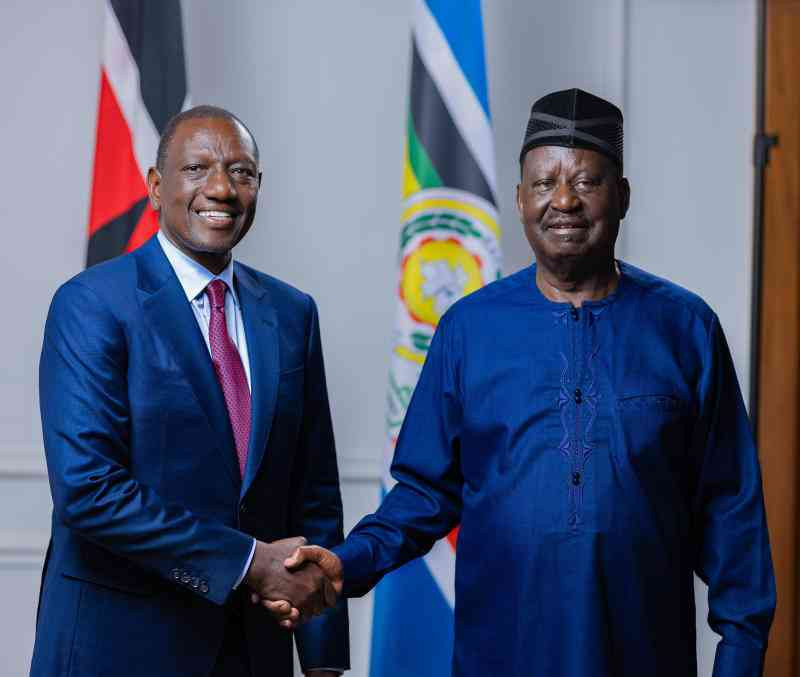
When the dust settled after the bruising 2022 general election, Kenya was a nation divided — tense, wounded, and uncertain. The electoral battlefield had drawn sharp lines between loyalty and loss, jubilation and disbelief. But amid the charged silence that followed, President William Samoei Ruto did something few expected from a victor: he reached out to Raila Amolo Odinga, the man he had just defeated, not as a foe — but as a brother.
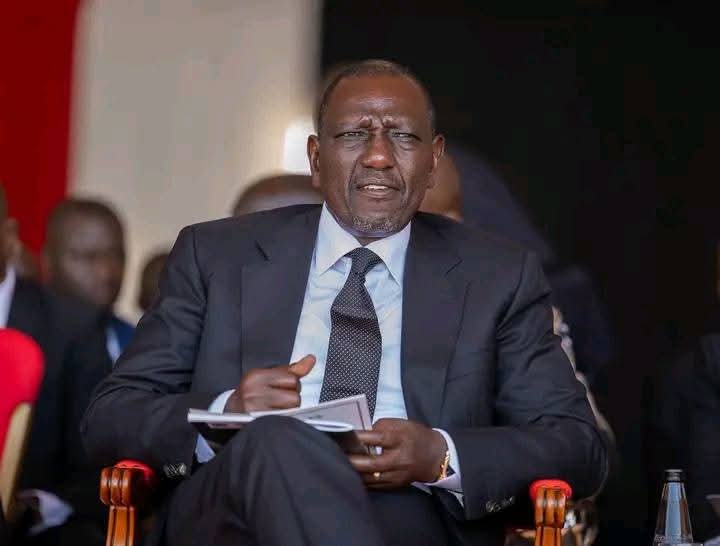
“I reached out,” Ruto confessed during Raila Odinga’s state funeral.
“I waited, not for a truce, not for conditions — but for an understanding. I wanted to heal this nation through the man who had fought for its freedom.”
Those words, spoken slowly and deliberately, sank deep into the hearts of the mourners gathered in Bondo — and perhaps, deeper still, into Kenya’s collective conscience.
Ruto’s revelation peeled back the veil on one of the most defining, yet little-known chapters of Kenya’s recent political history. He spoke of nights when he wrestled with the thought of reconciliation, when Kenya’s fragile peace hung in the balance, and when leadership demanded not vengeance, but vision.
He reached out, he said, “because I knew Kenya could not afford another cold war between its sons.”
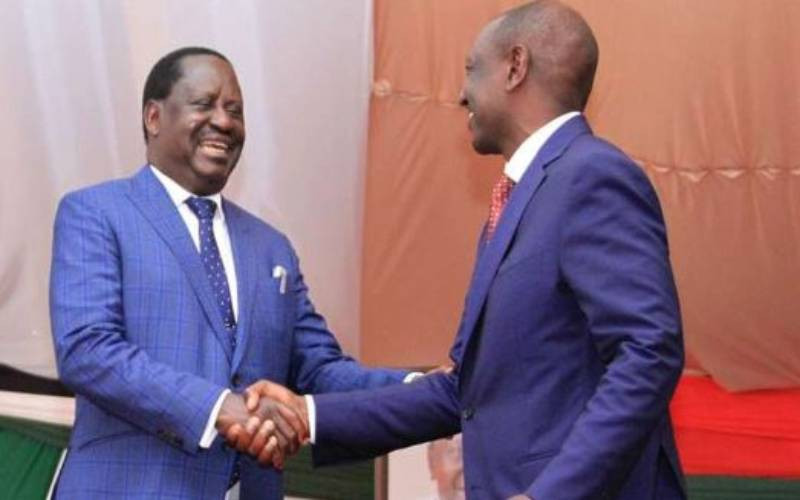
What followed was not a negotiation, nor a trade-off. Raila did not ask for power. Ruto did not demand allegiance. What existed was something rarer in Kenya’s politics — a mutual recognition of responsibility.
“He never gave me conditions,” Ruto said, his tone softening.
“It was I who made the offer — that the values Raila stood for, the ideals he fought for, would not die outside government. I wanted his people, his legacy, to live within the system — not against it.”
That was the seed that would later germinate into the unspoken merger of ODM into government — a gradual, symbolic reconciliation of history’s fiercest rivals.
In the months that followed, Ruto’s government quietly opened its doors to ODM figures — not as defectors, but as collaborators in national renewal. Key Odinga allies began working within state structures, subtly eroding the old lines between opposition and government.
To the casual observer, it looked political. To those who understood the undercurrents, it was deeply personal — Ruto fulfilling a silent covenant made to Raila Odinga: that Kenya would never again be torn apart by tribal fault lines or partisan vengeance.
This was not surrender. It was strategy, clothed in empathy.
By embracing Raila’s ideals of inclusion and fairness, Ruto positioned himself as the healer-in-chief, a leader mature enough to honor his opponent’s legacy while expanding his own. It was the making of a statesman — one willing to absorb his rival’s mission rather than erase it.
Historians will one day record that Raila Odinga’s final political chapter did not close in defeat — it evolved in transformation. And at the center of that transformation stood William Ruto, the unlikely architect of Kenya’s post-Raila political order.
Ruto’s “unconditional promise” — to protect, preserve, and mainstream Raila’s political ideals — has redefined power itself. It has blurred the once-iron line between government and opposition, birthing a new political hybrid built not on animosity, but on accommodation.
“We will not gamble with Raila’s legacy,” Ruto declared.
“His struggle was not for a party — it was for a country. And that country is now ours to protect, together,” he affirmed.
Those words drew applause at the graveside, but they also drew meaning far beyond the funeral tents of Bondo. They were not merely eulogies. They were Ruto’s political creed, laid bare for the nation to witness.
In the end, history may not remember Ruto for how fiercely he fought Raila — but for how gracefully he embraced him in death.
His was not a gesture of convenience, but of conviction. It takes courage to defeat an opponent; it takes greatness to carry his dream forward.
Ruto’s unconditional promise to Raila Odinga, made in the aftermath of division and fulfilled in the hour of mourning, will forever stand as one of the most unifying acts in Kenya’s democratic journey — a moment when leadership transcended politics, and power bowed to humanity.