
By Al Musasia
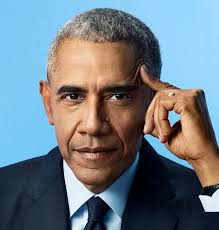
Every transformative movement begins with doubt. Not certainty. Not momentum. Not even belief; but doubt. And if there is one enduring lesson from Barack Obama’s 2008 campaign, it is that skepticism is not a sign of failure. It is often the clearest indication that something new, disruptive, and historic is taking shape.
In 2008, Obama was not the obvious choice. He was, by every traditional measure, a long shot. A Black man in a country that had never elected a Black president. Even within his own base, there were quiet questions: Was America ready? Could this barrier truly be broken? Among Black voters, there was hesitation; uncertainty about whether white Americans would cross entrenched racial lines to support him.
Beyond race, the political class dismissed the very coalition Obama was building. Young people, millennials, were written off as unreliable and disengaged. Pundits argued they lacked the patience to stand in long voting lines, the discipline to sustain political participation, and the seriousness required to influence a national election. In short, the very people Obama was counting on were considered his greatest weakness.
But history would prove otherwise.
What Obama understood; what many analysts failed to see; was that beneath that doubt lay something far more powerful: untapped belief waiting for direction. He did not waste time trying to argue with skeptics. Instead, he built a movement that made participation irresistible. He turned observers into organizers, supporters into stakeholders, and doubt into determination.
The same young people who were dismissed as apathetic became the backbone of his campaign. They organized, mobilized, voted; and yes, they stood in long lines. What critics interpreted as disengagement was, in truth, a lack of invitation, not a lack of interest. Once given ownership, they did not just show up; they showed out.
This is the exact moment Sifuna and the Linda Mwananchi movement now find themselves in.
If the signup portal has not yet translated into the numbers expected, it should not be mistaken for rejection. It is, more accurately, a reflection of growing pains. Every first of its kind movement must navigate uncertainty, resistance, and structural inefficiencies. And make no mistake; what is being attempted here is unprecedented. A people; driven, youth; powered political movement of this scale is new not just in Kenya, but across much of Africa.
And with anything new comes friction.
The lesson, therefore, is not to retreat; but to refine. Not to question the support; but to channel it better. Because just like in 2008, what may appear as low engagement is often latent energy that has not yet been fully activated.
Movements are not built in a straight line. They are shaped through iteration, learning, and adaptation. Every challenge: whether it is low signups, weak initial engagement, or structural gaps; is not a verdict. It is feedback. It is data. It is direction.
Sifuna must recognize that this phase is not a setback; it is a setup.
A setup to:
Rethink how young people are engaged
Redesign how participation is structured
Reimagine how ownership is shared
Because ultimately, people do not join movements because they are asked to. They join because they feel they belong.
Obama’s breakthrough did not happen because doubt disappeared. It happened because doubt was outpaced by belief; belief that was built, nurtured, and shared. And that belief did not come from speeches alone. It came from giving people a role in shaping the outcome.
That same opportunity exists now.
If nurtured correctly, today’s hesitation can become tomorrow’s momentum. Today’s low numbers can become tomorrow’s surge. And today’s questions can become tomorrow’s conviction.
This is the nature of pioneering change.
So, the message is clear:
Do not fear the doubt. Do not misread the slow start. Do not underestimate the youth.
What is being built is bigger than a campaign. It is the foundation of a new political culture; one where power is not centralized, but shared. One where young people are not spectators, but architects.
And like every great movement in history, it will grow; not in spite of its challenges, but because of how it responds to them.
From doubt, a movement is born. From challenge, it is refined. And from persistence, it becomes unstoppable.
Sisi ndio Sifuna.