Home Blog Page 108

To Entrench Affirmative Action Funds in the Constitution, Change the Role of MP First

0

By Billy Mijungu

Today I want to help Members of Parliament achieve the funds they so desperately desire. But like climbing a ladder, you cannot begin from the middle. To defend something, you must start at the very foundation.

Our legislators are pushing laws from the middle and that is why it will not work. Recently the High Court stopped Parliament from forwarding the Constitution of Kenya Amendment Bill 2025 to President William Ruto for assent. The ruling confirmed what many already know.

This circus will not end until the Constituency Development Fund, and its cousins in the form of affirmative funds, are removed from the current constitutional order.

The Bill was ambitious. It sought to entrench three funds into the Constitution. These were the National Government Constituencies Development Fund, the Senate Oversight Fund, and the National Government Affirmative Action Fund.

On paper the proposal looked neat and tidy. But in reality it completely missed the starting point. The right place to begin is not with money. It is with the role of Parliament itself.

Parliament was created to legislate, represent, and oversee. Those three roles are well known and have guided the institution since independence and more clearly under the 2010 Constitution. But nowhere in those roles does the Constitution provide for Parliament to implement projects or manage funds.

That is why every attempt to entrench the CDF or similar funds has run into legal headwinds. The courts are not inventing obstacles. They are simply applying the law as it stands.

If MPs truly want these funds protected, then they must be bold enough to change their own job description. They must propose the addition of a fourth role of Parliament that explicitly caters for affirmative action and development related funds.

Only then will there be a legitimate constitutional hook to hang these funds. Without that foundation, all efforts to sneak funds into the Constitution will collapse under judicial scrutiny.

This is a hard truth. It means MPs must make a choice. They must ask themselves whether they want to remain lawmakers or whether they want to transform into project implementers. They cannot be both. In a functioning democracy, those roles are separated for good reason. Lawmakers make the rules.

The Executive implements. The Judiciary interprets. When MPs cross into the Executive space, they upset the balance and weaken the very system they swore to protect.

It is also time for the Constitution to be applied in full. The Controller of Budget must now be firm and decline to release money to affirmative funds that have no proper constitutional anchor. The Auditor General knows what must be done and should not look the other way. If Parliament wants to expand its mandate, it should do so openly through constitutional amendment and not through shortcuts.

This conversation is bigger than just money. It is about institutional discipline and the future of our governance system. If we allow Parliament to continue grabbing roles that do not belong to it, we shall have a legislature that is neither effective in lawmaking nor efficient in project delivery. We will continue to see duplication, wastage, and endless battles in the courts.

Kenyans must also reflect on their own choices. For years, voters have judged MPs not by the quality of laws they make but by the projects they bring to the constituency. This mentality has trapped Parliament in a cycle where legislators campaign as development contractors rather than lawmakers. Until we as citizens decide that our MPs are primarily law and policy makers, we will remain caught in this tug of war between Parliament and the Constitution.

In conclusion, the fight to entrench affirmative action funds in the Constitution cannot be won by pushing amendments from the middle. It must start with redefining the role of MPs. Once that foundation is laid, the rest will follow logically and lawfully.

Until then, every attempt will collapse in court and every effort will remain a political circus.

MPs must let go of functions that belong to the Executive. Whoever wants to expand into development and project implementation should choose a career within the Executive where that mandate truly belongs.

Leaders differ over the proposed multibillion Nuclear Energy Plant in Siaya county

0

By Anderson Ojwang

The proposal to construct a nuclear energy power plant in Siaya county has sharply divided leaders and the residents.

While former Prime Minister Raila Odinga is drumming support for the plant, the son of freedom fighter the late Jaramogi Ochieng Oneko, Nam Achieng Oneko, has rejected the proposal and wants the government to invest in renewable energy such as solar energy.

In his letter to County Commissioner Siaya and Chief Executive Officer Nuclear Power and Energy Agency (NUPEA) captioned “RE: Stakeholders engagement to establish a Nuclear power plant in Siaya,” he expressed fear of dangers of installing a nuclear plant in Siaya.

“I lived through the Chernobyl nuclear disaster while as a student in Ukraine. I believe I was directly impacted by the radiation. It saddens me that Siaya has been earmarked for such a project.

The dangers of installing a nuclear plant in Siaya today and in future include: nuclear reactor accidents and radioactive material release, radioactive waste management challenges, health risks from radiation exposure, environmental impact from water usage and uranium mining or use, terrorism and sabotage risks, seismic risks due to Siaya’s location, security concerns related to flooding and water contamination, and financial sustainability challenges.

Germany, a highly developed country with fewer natural energy resources, has completely decommissioned its nuclear power plants and is focused on renewable sources of electricity. The final three reactors were shut down in April 2023, marking the completion of the country’s long-planned nuclear phase-out,” he wrote.

He said the initiative was not only a dangerous, complex and expensive project to undertake but also to decommission.

“Many western nations are now distancing themselves from such nuclear projects. They are clear why. USA historically built nuclear power plants as a technology leader after 2nd World War – Security concerns. China is building nuclear power plants to reduce its air pollution from overuse of coal. In Kenya or specifically in Siaya what is our WHY? We still have a chance to focus on renewable energy,” he asked.

He said installing nuclear power reactors, especially with the stringent measures required for safety and security, is one of the most complex undertakings for Siaya county or Kenya as a nation. It demands a multi-layered approach involving technical, regulatory, human, and financial expertise.

Oneko said this was a long-term investment; Siaya and Kenya cannot import all the expertise forever.

“With the same funding – why not install renewable energy like solar and wind??” he quipped.

Raila has described the nuclear power plant as a massive game-changer.

Recently Raila asked the residents and leaders to support the project, saying if successfully implemented, nuclear power will be a game changer in the socio-economic development of the counties and the country at large.

Raila, who spoke in Bondo, during a nuclear stakeholder engagement, said the project represented a monumental step towards energy security, industrialisation, and sustainable growth.

“Site selection for a nuclear power plant is critical. The identification of the Lake Victoria Region as a candidate host for the nuclear power plant is a recognition of its unique strategic advantages. It is important that there be a genuine and detailed engagement with the people, the leaders, and all stakeholders, and have all concerns raised and addressed,” he said.

Energy CS Opiyo Wandayi said the successful implementation of the nuclear power programme will provide numerous benefits to various sectors of Kenya’s economy.

Leaders and residents of Kilifi county had earlier rejected the project and this led the government to identify Siaya as the probable destination.

The multibillion Uyombo Nuclear power plant in Kilifi county was rejected by the leaders due to what they termed as harmful effect on the community and environment.

Kilifi governor Gideon Mung’aro faulted the NUPEA officials for failing to inform the public and local community before broaching the project to them.

He said the community received extensive civic education on the risks associated with the nuclear power plant.

“The residents of Uyombo have been informed well on the negative effects of the projects than the government and that is why as leaders we have told the CS there is no room for this project,” he said.

Kilifi North MP Owen Baya said the county did not have any available site for nuclear plant.

“The government is welcomed to consult with us and even the locals on the way forward, but our position as of now is very clear, we are not ready to host a such plant,” he said.

NuPEA has commenced the process of identifying the site for Kenya’s first nuclear power plant in Siaya county.

NuPEA Director of Nuclear Energy Infrastructure Development, Eng. Erick Ohaga, said the exercise marks the beginning of a nine-year journey that will see Kenya switch on its first nuclear plant in 2034.

Eng. Ohaga revealed that eight locations have been earmarked in Siaya: Ugambe, Sirongo, Liunda, Manywanda, Osindo, Nyangoye, Kanyawayaga and Dagamoyo.

Over the next two weeks, NuPEA teams will collect seismological, population, electrical grid, infrastructure, meteorological, and hydrological data. The information will guide the ranking of the sites to narrow them down to two, the most preferred and an alternative, by the end of October.

“These two sites will undergo further engineering studies for two years, alongside environmental impact assessments to determine the project’s sensitivity to marine life,” Ohaga said. He added that construction will begin once feasibility studies are complete and the final site selected.

The planned nuclear power plant, to be built at a cost of Sh500 billion, is expected to generate 20,000 MW of electricity for the national grid by 2040.

An aspirant exposes an alleged plot to rig the ODM primaries in Ugunja constituency

0

By Anderson Ojwang

An elaborate plan designed to manipulate and rig the Orange Democratic Movement (ODM) nomination in favour of one of the aspirants for Ugunja constituency has been exposed.

On Monday, an aspirant, Eng Fredrick ZB Owino, presented a petition during the ODM nomination and aspirants’ meeting where he claimed and detailed the deliberate plot to manipulate and rig the election in favour of one candidate.

Owino also alleged that Energy Cabinet Secretary Opiyo Wandayi was trying to interfere with the nomination in favour of Moses Okoth Omondi, his immediate CDF Manager.

Owino rejected the list of polling centres on the basis that the designated polling centres were not a true representation of voting number spread in the constituency, saying gazetted polling stations with higher numbers had been assigned lower polling centres, hence disfranchising voters in those areas.

He claimed gazetted polling centres with lower vote numbers but were perceived to be strongholds of an aspirant had been assigned more polling centres, hence giving him an undue advantage over his competitors.

“Ligega sub location where one of the aspirants comes from with 2,987 registered voters have three designated polling centers while Rangala sub location where I come from with 3,825 registered voters have one designated polling centre. Yiro West sub location where the former MP with 4,736 registered voters has three polling centres while Ugunja sub location where one of the aspirants comes from with 7,696 registered voters has only two polling centres,” he wrote.

He also claimed bias in the identification of the polling centres, which was designed to be used to manipulate the elections.

Owino also expressed concern over the party’s failure to disclose the names of the returning officer and polling officials and demanded the publication of the names be made public to avoid manipulation.

“There is no clarity on whether the party intends to conduct the nominations through electronic gadgets, through official ballot boxes and ballot papers or through exercise books as has been witnessed before,” he wrote.

In a quick response, Chairperson of the Board Emily Awinja published a new list of polling centres.

“Pursuant to the notice dated 12th September 2025, the National Elections Coordinating Committee wishes to notify all party members and stakeholders of the following correction,” she wrote.

The primaries are slated for 27th September 2025 and it has split the party leadership in the middle.

Wandayi supports Omondi, while Siaya Governor James Orengo is also said to support another candidate.

Orengo and Wandayi have become bitter political rivals, with the latter scheming to dethrone the former from the gubernatorial seat in the 2027 elections.

The ODM nomination only attracted three aspirants: Owino, Omondi, and Otieno Aluru. Other strong aspirants opted to contest in other parties. KANU will be presenting a candidate in the by-election.

The seat fell vacant after Wandayi was appointed to the Cabinet as one of the ODM experts, and he has become an ardent supporter of President William Ruto.

UDA is not presenting a candidate in Ugunja and will be supporting the ODM candidate in solidarity with the broad-based government arrangement.

All three aspirants are strong and either of them can win the nomination, which is billed as a pre-match between Wandayi and Orengo ahead of the 2027 elections.

Interestingly, both Orengo and Wandayi in the last Parliament failed to deliver to ODM the Ugenya seat after the court nullified the election of David Ochieng of MDG. Ochieng rode back to victory.

The ghost of nominations in the ODM has remained a constant in the party, and this continues to undermine the party, which is currently fighting to stem a brewing rebellion.

Wandayi recently flew to a birthday party of one of the party comedians where they declared support for Omondi.

Justice Fredrick Ochieng Andago: The Judge Who Brought Dignity to the Bench and Hope to the Forgotten

0

By Edris Omondi Esq.

(Former County Attorney Kisumu, Founder and CEO Crime Prevention Initiative Trust (CPIT))

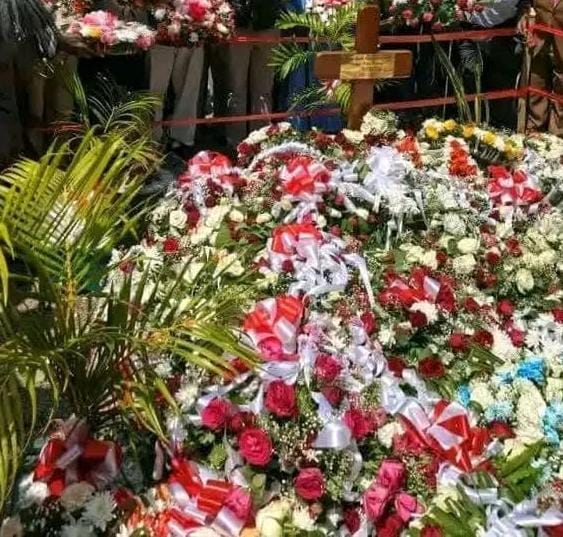
Kenya mourns the passing of Hon. Justice Fredrick Ochieng, Judge of the Court of Appeal, a jurist whose vision extended far beyond the courtroom, touching the lives of judicial officers, inmates, and ordinary citizens with equal measure.

A Reformist Spirit in Judicial Welfare

Justice Ochieng believed that judicial independence was not only a matter of law but also of dignity. He often reminded colleagues of an incident where a judicial officer, newly posted to a station, was warmly welcomed by a resident of the town and even offered a house to live in. Grateful at first, the officer later discovered that the generous host had an active case before him.

This,” Justice Ochieng would say, “is how subtle compromise begins.

Determined to safeguard the integrity of the bench, he championed judicial housing as a matter of priority. In Kisumu, we worked side by side with him, initiated an MOU between the Judiciary and the County Government of Kisumu, with the impetus of securing housing for judicial officers, a step towards promoting judicial integrity. This still stands as a priority area, considering that judicial officers rotate to different stations around the country.

Leadership in Crisis: The COVID Protocol Rules

When the pandemic struck, Justice Ochieng, as Chair of the Kisumu Court Users Committee and Head of Station, steered the Judiciary in western Kenya through uncharted waters. He championed the Judicial COVID Protocol Rules, enabling hearings to proceed safely and ensuring that justice remained accessible. His rallying cry was clear: “Justice must never be suspended by crisis.”

A Friend to the Forgotten: Inspiring Prison Reform

Justice Ochieng’s compassion reached the most marginalized, inmates. Troubled by their inability to attend court during COVID restrictions, he personally approached me, then serving as County Attorney, with a bold idea: equip prisons with computers for virtual hearings.

This single step changed the course of prison justice in Kisumu and later on inspired me to establishment of the Crime Prevention Initiative Trust (CPIT) prison programs. Today, CPIT has held two major graduations at Kibos Prisons, graduating over 130 inmates in psycho-social and para-legal program, out of prison programs, including biblical and pastoral teachings. These programs have empowered inmates with skills, dignity, and hope for reintegration as against recidivism. That flame of transformation burns directly from his vision of which I proudly aspire to inspire hundreds across this beautiful nation.

A Human Judge, A Human Message

Justice Ochieng was not only a jurist; he was a teacher, mentor, and conscience-keeper. His last message sent on my inbox remain etched in my heart:

“Remember this: the world around you is beautiful when the world around you is peaceful.”

His concern over mental health was impeccable. In response to an article, I wrote on the said subject matter, this was what he had to say ‘mental health issues are now a matter of grave concern in Kenya!’.

An Enduring Legacy

Those who observed him in court recall a man of keen intellect, uncompromising integrity, and deep humanity. He took his work with the seriousness of jurists such as India’s Justice V.R. Krishna Iyer, judges who saw the law as a living force for social transformation.

Through his leadership, compassion, and reformist spirit, Justice Ochieng leaves behind more than judgments in law reports. He leaves a living legacy of justice made real for ordinary people, inmates, and future generations.

Kenya has lost a towering jurist, diplomat and a towering figure in Alternative Dispute Resolution (ADR). Kisumu has lost a friend of its people and one of its sons. The family has lost a great father of whom no vacuum can fill. And Crime Prevention Initiative Trust (CPIT) has lost one of its earliest inspirations. Yet, his legacy lives on in every inmate rehabilitated, every judicial officer dignified, and every citizen who believes justice must be accessible to all.

Rest in eternal peace, my friend until we meet again- nind gi kwe.

Public Schools Menace: We Need to Get the Base Right

0
Junior Secondary Schools

By Billy Mijungu

It is unimaginable sixty years after Kenya attained internal self-rule, the education sector is still weighed down by the same old problems. Education remains the surest path out of poverty, yet successive governments have treated it casually, tinkering around the edges while ignoring the structural weaknesses at the very foundation.

The Kenyan schooling ecosystem is broad, complex, and layered, but it all begins at the base. Pre-primary, primary, and now junior secondary levels are where the future of the country is forged. Yet these are the very spaces that remain grossly underfunded, starved of resources, and left behind. Teachers are demotivated, infrastructure is in a state of neglect, and children are forced to learn in environments that neither inspire nor support learning. The disconnect between government pronouncements and the reality on the ground has never been starker.

Take pre-primary education, for instance. The importance of early childhood learning is universally recognized. It is the stage where curiosity is nurtured, literacy and numeracy skills are built, and confidence begins to take root. In Kenya, however, early childhood learning is often left to counties with limited budgets, political interference, and little accountability. Many classrooms are in makeshift buildings, learning materials are inadequate, and teachers are poorly paid. This neglect becomes the first crack in the foundation of a child’s education.

Primary schools, which should be the great equalizer in society, continue to highlight the inequalities that define Kenya. In urban centers, schools benefit from better facilities and parental support, while in rural and marginalized areas, pupils still sit on stones or under trees. Textbooks and learning aids are shared among several children, and the teacher-to-pupil ratio remains unmanageable. The introduction of free primary education was a noble idea, but the funding was never sufficient, and oversight was weak. What we have today is universal enrollment without universal quality.

The recent transition to the Competency Based Curriculum was meant to cure some of these ills. But even here, the government failed to align resources with ambition. Parents complain of the heavy financial burden, schools complain of poor preparation, and teachers feel abandoned in the training process. Junior secondary schools have become an experiment in improvisation, with facilities stretched beyond their limit and teachers struggling to keep pace with the demands of the new system.

The Kenyan education system has become a story of wasted potential. This is an economy that should be competing with the best in the world, yet our children are struggling to read, write, and count at levels far below their global peers. Rwanda, often cited as a smaller and less endowed neighbor, is proving that deliberate investment and seriousness in education can transform a nation. Kenya, on the other hand, continues to produce graduates who are less prepared for the job market and less confident in innovation.

What is the way forward? we must accept that throwing money at education without structural reform will not work. Government must prioritize funding at the base, ensuring that every child has access to proper classrooms, desks, textbooks, and motivated teachers. Teacher welfare must be improved, not only in terms of pay but also in training, support, and recognition. Accountability mechanisms must ensure that money allocated to schools is used for schools and not lost to corruption.

Above all, there must be a cultural shift in how we value public education. For too long, public schools have been left to the children of the poor, while the middle class and elite rush to private schools. This abandonment is why public schools remain neglected. If policymakers and leaders had their own children in these schools, reforms would be immediate and urgent.

But fixing public education is not a state affair alone. Parents must be actively engaged in their children’s learning, supporting teachers and demanding accountability from administrators. Teachers must continue to give their best despite the challenges, holding on to the noble duty of shaping the next generation. Civil society, religious institutions, and the private sector must also play their part in supplementing resources, mentoring learners, and ensuring that no child is left behind. Leaders must be reminded every day that the quality of schools are true measure of its development.

Kenya’s destiny will not be determined in boardrooms or political rallies, but in the classrooms where minds are molded. If we truly believe in a prosperous and equal future, then we must get the base right. The time for excuses is over. Parents, teachers, leaders, and citizens must unite around one mission to restore dignity, quality, and seriousness to public education. The future of our children and the survival of the nation depend on it.

President Ruto to commission Mombasa Rail Service and Mombasa Railway station today

0

By Sandra Blessings

Kenya Railways Corporation has made a milestone with the construction of Mombasa Railway station and introduction of Mombasa Commuter Rail Service.

The rail service will connect the Central Business District (CBD) to Mombasa terminus through Miritini station and will help decongest the city and reduce delays occasioned by rampant traffic jams.

Cabinet Secretary for Roads and Transport Mr. Davies Chirchir in an invite said President William Ruto is expected to commission it on Wednesday, September 17, 2025.

The invite read: “The official commissioning of the Mombasa Commuter Rail Service and the Mombasa Railway station on September 17, 2025. The ceremony will be presided over by President William Ruto.”

Kenya Railways posted on their X handle: “On April 29, 2017, the passenger service train to Mombasa on the Lunatic Line made its last trip, bringing to an end an affair that many had become so attached to.

Today, something exciting is happening in Mombasa County. President Ruto will commission the Mombasa Commuter Rail. We witness the rebirth of the passenger train service to CBD from Mombasa terminus.

Mombasa Commuter Rail Service is designed to transport residents of areas along the metre gauge railway corridor, tourists and visitors to Mombasa CBD.

Linking the Mombasa mainland via the Makupa Causeway Railway Bridge, the service is designed to offer an affordable, reliable and efficient service.”

Parties scramble for candidates for Kasipul and Ugunja parliamentary by-elections ushering in a new dispensation in Nyanza

0

By Anderson Ojwang

The parliamentary by-elections in Kasipul and Ugunja constituencies have opened a new chapter in Nyanza political dispensation with political parties scrambling for candidates.

Various political parties have in the recent past embarked on a hunt drive to woo top candidates to fly their parties’ colors in the November by-elections.

The move has opened the region as a new battle ground in 2027 general elections for the presidential votes and other elective posts.

Previously ODM has been the predominant party in the region which forced other parties to give Nyanza a wide berth in the past general elections.

ODM nomination certificate guaranteed the candidates election to various seats and aspirants jostled and fought over the ticket. Losing aspirants were left punctured and majority have never recovered from the shock.

The party ticket has been the hottest market commodity in the party’s history and is often auctioned to the highest bidder while losers have been left to lick their wounds.

Currently, the party of independence Kanu of Gedion Moi, Wiper party of former Vice President Kalonzo Musyoka, United Progressive Alliance associated with former Internal Security Cabinet Secretary Fred Matiangi and other fringe parties have been on candidate hunt.

Kanu was the first to embark on candidate hunt two months ago and was able to secure the signatures of some of the top candidates in Ugunja and Kasipul.

Wiper has already secured a candidate for Kasipul but was still hunting for a candidate for Ugunja while UPA had also secured a candidate for Kasipul and last evening was in consultation with a candidate to fly the party ticket in Ugunja.

Some of the top aspirants for Kasipul have opted to contest as independent candidates and they include Robert Riaga and Philip Aroko.

In both Kasipul  and Ugunja  respectively, the ODM party leadership has been split in the middle with each faction supporting their candidate.

In Kasipul, the battle is seen to be between Governor Gladys Wanga, who supports the son of the slain immediate former MP Charles Ongondo Were, Boyd Were against Siaya senator Dr Oburu Oginga and his Sister Dr Wenwa Odinga who support Newton Kepha Ogada.

In Siaya, the battle is between Cabinet secretary for Energy Opiyo Wandayi, who wants his immediate former CDF manager Moses Omondi to inherit his seat against a candidate supported by Siaya Governor James Orengo.

Orengo and Wandayi have fallen out with the latter being viewed to nursing an ambition to challenge Orengo for the gubernatorial seat.

In a post on his X account on Tuesday, September 16, 2025, Kalonzo said his party will present a candidate in Kasipul and emphasized that leadership was about service, integrity, and standing with the people in every corner of the country.

“@TheWiperParty is ready for the upcoming by-elections. We believe leadership is about service, integrity, and standing with the people in every corner of our country,” the leader posted.

“The party now has a new face – Wiper is going national. The new name will be Wiper Patriotic Front (WPF) so that our Gen Z are fully included,” Musyoka said during a tour of Ukambani.

Political Analysts argued that the successful UDA recruitment and party elections in Nyanza ushered in a new political dispensation in the region.

The successful UDA party elections and opening of party offices up to ward level opened the region to other parties and this explains the current scramble.

Similarly, the emerging possibility of former Prime Minister Raila Odinga not contesting for presidency in 2027 has opened up the region for grabs.

Equally, the declaration by top ODM leaders that they will support President William Ruto second term bid and Raila’s recent statement that the broad-based government will go beyond 2027 elections has bolstered the opposition parties to create their presence in Nyanza.

Political analyst Mr. Michael Agwanda said Nyanza is witnessing a new political era which will open it to competitive politics and allow electorates to choose the right candidates.

Agwanda said for the first time, ODM will now be forced to use the political party funds to sponsor their candidates as the burden was previously left on the candidates to shoulder.

“We are witnessing a special moment in Nyanza. The people will now have the opportunity to make a choice. This is going to open the political space in Nyanza and to nurture democracy,” he said.

Agwanda said even if ODM wins all the by-election, a statement shall have been made and it will never be the same in Nyanza’s political landscape.

“Beaten journalist” cry foul over charge sheet as colleagues protest to commandant 

0

By Anderson Ojwang

The kidnapped and assaulted journalist Habil Onyango has cried foul over the charge sheet presented at Homa Bay court today terming it as defective and denying him justice.

Onyango wondered how he became a witness in the charge sheet in a case in which he was assaulted, secured OB number and wrote a statement.

He also wanted to know who the new complainant listed as William Agunga Oracha was and how he became part of the case.

“I cannot understand how I was removed from a complainant to a witness in a case where I was allegedly kidnaped and assaulted. I recorded statement with the police, and I would want to know the new complainant is, who listed and the reason behind it,” he said.

Onyango expressed concern that he may fail to get justice as he may lose the case on technicality because he doesn’t even know the listed complainant.

“It is easy for the listed complainant who is not even known to me and is not part of my witness to be disappear. This is a dangerous precedent being set by the police and prosecution,” he claimed.

In an assault case in Kenya, the complainant is the person who has directly suffered the assault and has lodged the complaint to the police or other authority. Alternatively, a representative or advocate can act on behalf of the complainant, either with their written consent or a power of attorney, to file the complaint or apply for an order of protection. 

Who can be a complainant? 

  • The direct victim: The person who was assaulted is the primary complainant.
  • A representative: A third party can act on behalf of the complainant if they have the complainant’s written consent or a power of attorney authorizing them to do so.
  • An advocate: A lawyer can file a complaint or apply for an order of protection on behalf of the complainant.

How to initiate a complaint: 

  1. Report to an authority: 

A person who suspects that an act of domestic violence (which can include assault) is being committed or has been committed can complain to a police officer or another person in authority.

  1. Provide information: 

The complainant should provide the relevant information about the assault to the authority figure.

  1. Assist with forms: 

The police officer or authority figure will assist the complainant in filling out the necessary forms.

The suspect Beatrice mercy Akugo  was today charged in court with assault causing actual bodily harm.

Homa Bay based journalists also protested to the county commandment of police Mr. Lawrence Koilem over what they termed as presentation of defective charge sheet.

The journalists who held a discussion with the commandant during Internal Security Cabinet Secretary Kipchumba Murkomen Jukwa meeting in the city agreed to have a meeting with the officer in the morning.

Akugo was a interdicted by the county government over what they termed as serious gross allegations.

In a press statement by Chief officer of Public Communication and Governance Atieno Otieno said that Beatrice Mercy Akugo has been interdicted with immediate effect.

“The government took decisive action following serious allegations of misconduct against a county officer.

Media council of Kenya (MCK) also condemned the attack and demanded legal action over assaults of Onyango.

MCK also demanded swift, transparent investigation by directorate of criminal investigations, independent policing oversight authority and office of the directorate of public prosecution.

Kenya Union of Journalist (KUJ) also joined in condemning attack of the journalist and demanded immolate arrest of the suspect.

“We further call for investigation into the alleged employment scam in the county, which is the subject of the attack to enable the victims get justice.

The unchecked impunity among county officials who are afraid of scrutiny of their actions and corruption must come to an end,” wrote secretary general Mr. Erick Oduor.

A top ODM county youth leader and enforcement officers at Homa Bay county are the alleged suspects behind the abduction and assault of journalist 

0

By Reporter

A top Orange Democratic Movement (ODM) youth leader who is also reinforcement officer at the county and his colleague were the suspects behind the attack of journalist Habil Onyango on Sunday.

The ODM top youth leader name withheld, and another suspect are also employees of the county government department of enforcement.

The suspects were in company of the interdicted Beatrice Akugo, a human resource officer at the county who on Sunday kidnapped and assaulted Habil Onyango over an investigative story on fraudulent employment racket at the county.

Akugo was arrested last evening and was expected to be arraigned in Homa Bay court today.

Homa Bay reinforcement officers have been in the recent past been blamed for alleged spate of violence in Kasipul and Ndhiwa and were claimed to be allied the slain former area MP Charles Ongondo Were.

Leaders from Kasipul led by the vocal political activist Odoyo Owidi had blamed the county government for employing and using enforcement officers to terrorize the residents.

But the county government denied the claims and with the recent kidnap and assault of Onyango, the government is back on the spotlight.

Akugo was a interdicted by the county government over what they termed as serious gross allegations.

In a press statement by Chief officer of Public Communication and Governance Atieno Otieno said that Beatrice Mercy Akugo has been interdicted with immediate effect.

“The government took decisive action following serious allegations of misconduct against a county officer.

Effective immediately, the human resource officer in the department of Roads, Transport and Public works, has been interdicted from her duties.

This decision follows grave accusations that MS Akugo is facing allegations of involvement in the abduction, assault and intimidation of a journalist. The alleged details of the incident are abhorrent, and include the journalist being abducted, held against his will, physically assaulted, and threatened.

The interdiction is a standard procedural measure to allow for a thorough impartial, and unimpeded investigation into these allegations. The county government is fully cooperating with the national police service and other relevant investigative agencies to ensure a comprehensive probe is conducted,” she wrote.

Media council of Kenya (MCK) also condemned the attack and demanded legal action over assaults of journalist Habil Onyango.

“The Media council of Kenya is appalled by the brutal assault, abduction, and intimidation of journalist Habil Onyango in homa Bay on 14ths September 2025. This is heinous act, allegedly orchestrated by a senior human resource officer at homa bay county government, targeted Mr.  Onyangos for his investigative reporting on a fraudulent employment scandal. This attack is not only attacking an individual but a grave threat to press freedom, journalistic integrity, and the rule of law in Kenya,” read the statement by MCK.

MCK also demanded swift, transparent investigation by directorate of criminal investigations, independent policing oversight authority and office of the directorate of public prosecution.

Kenya Union of Journalist (KUJ) also joined in condemning attack of the journalist and demanded immolate arrest of the suspect.

“Arrest County Government of Homa Bay employee who attacked a journalist.

We condemn the abduction and torture of Homa Bay-based journalist Habil Onyango by a human resource officer and her accomplices. Such heinous acts of violence against journalists shall not be tolerated. We demand immediate arrest of the officer and arraignment in court.

Mr. Onyango was abducted and tortured on Sunday by Beatrice Akugo and hired goons in Homa Bay town due to a story he wrote over the alleged employment scam in the county.

We further call for investigation into the alleged employment scam in the county, which is the subject of the attack to enable the victims get justice.

The unchecked impunity among county officials who are afraid of scrutiny of their actions and corruption must come to an end,” wrote secretary general Mr. Erick Oduor.

Akugo, told Western Insight that she lured Onyango, through a friend to a hotel in the town, where she assaulted him.

“I slapped him severally and I can tell you he had a swollen face. I called one of the doctors based at Homa Bay hospital who came and viewed him where we were. The doctor, said he sustained soft tissues injuries, and he left and brough him medication, but Habil declined to take,” she said.

Habil reported the incident with Homa bay police, and it was entered on OB number 25/14/25 as assault.

Four Governors summoned to State House over rising cases of high prevalence of HIV/aids in the counties

0

By Hope Barbra 

Four Governors from Uasin Gishu, Samburu, Homa Bay and West Pokot were recently summoned to State House to give an explanation over rising cases HIV/Aids prevalence in their regions.

Uasin Gishu Governor Jonathin Bii recently revealed at a function that they were summoned by First Lady Mama Rachel Ruto to give an explanation on the matter and how they intend to tackle it.

“There is bad news. Yesterday, we were in State House with Mama Rachel, she summoned four counties that have a serious problem of rising cases of high HIV/aids prevalence.

The prevalence is increasing in these regions. First suspect was Uasin Gishu, I was summoned to go State House, to respond to why people have HIV/aids in my county.

Second suspect was West Pokot, third suspect was Homa Bay, and fourth was Samburu.

My people, it is so embarrassing when you are summoned to State House and sked to respond to question like why is it that in your county, HIV/Aids prevalence was on the increase, and you are the governor. What are you doing about it?” he said.

He explained that the increasing prevalence could be as a result of a new phenomenon of emerging night life in the city.

He said emerging night life in Eldoret town was a major contributor to the increasing HIV/aids prevalence in Uasin Gishu especially in Eldoret.

“We have several tertiary institutions in the area with a huge population of young people. When I walk at night in the Eldoret Central Business District at night. I normally get shocked.  If you pass by the clubs, you will find over 1000 vehicles parked outside and you wonder if the owners are residents of Eldoret.

When you look at the vehicles, they don’t belong to the farmers and residents of Eldoret.

There are people who frequent the city as far as from Kakamega, Nairobi, Nakuru they visit the city on Friday for entertainment.

They frequent the clubs because of the high presence of students in the city, and I want to declare, we will not allow our students to engage in nonacademic activities in the city,” he said. 

Bii said moving forward he will be inspecting the town and whip students engaged in nonacademic activities in the night.

He said parents have invested in their children education and it was prudent for the learners to understand the importance of the investment.

Uasin Gishu County’s adult HIV prevalence was reported as 3.7% in late 2023, lower than the national average, but the county is experiencing a rise in new HIV infections and is now ranked among the top counties for these new infections according to the 2024 Modes of Transmission study. In 2018, the county had an adult HIV prevalence of 3.9%. 

HIV prevalence in West Pokot County is 1.6%, according to 2017 estimates, which is lower than the national average of 4.8% at that time. Recent information indicates the county continues to make progress in the HIV response, with its prevalence dropping from 3.2% to 2.8% over a five-year period. The county is still considered to be in the medium HIV incidence cluster nationally and faces challenges with stigma, inadequate access to HIV services, and a shortage of healthcare workers. 

HIV prevalence in Samburu County was 2.2% in 2015, which was lower than the national prevalence of 5.9% at that time, according to the National Syndemit Disease Control Council (NSDCC).

Homa Bay County’s HIV prevalence was estimated at 15.2% in 2023, a significant reduction from over 23% a decade prior. While still high compared to the national average, the county has seen considerable progress, with new HIV infections and HIV-related deaths declining substantially, alongside improvements in treatment adherence.