Home Blog Page 161

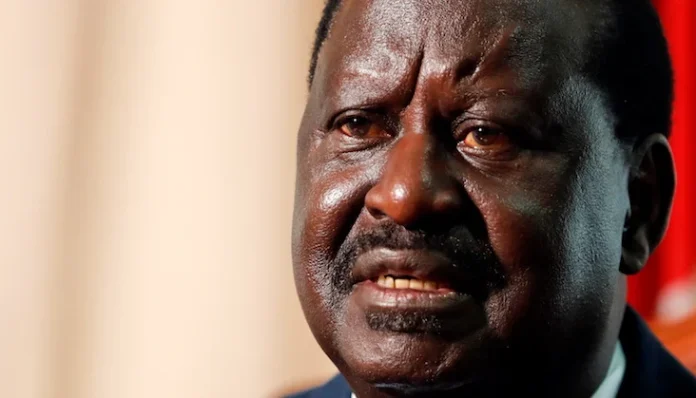
A poisoned chalice, the carrot, which Rigathi dangles to Raila

0

By Anderson Ojwang                  

The self-declared truthful man and Former Deputy President Rigathi Gachagua could be out on a mission. Rigathi wants to turn the mission impossible into a mission possible.

And already he is dangling a “presidential carrot” to former Prime Minister Raila Odinga. Rigathi is extending overtures to Raila with a view to forestall and rock any would be political alliance with his former boss, President William Ruto.

Just after the African Union Commission Chairman election in which Raila lost, Rigathi asked the former Langata MP to join them and help remove Ruto from power.

But as he attempts to woo the former PM to their wing, Rigathi has been giving contradicting and double speak on the person of Raila, accusing him of betraying wiper leader Kalonzo Musyoka and at the same time, that he is ready to support him for presidency.

Once declared an ardent and fierce critic of Raila during the 2022 presidential election and after assumption of office, Rigathi is changing the tune and is sending a mixed signal.

Ahead of last year’s election and during the campaign, Rigathi said “ We want to tell Raila and those supporting him that they should respect the Kikuyu community.

You people like Francis Atwoli, Cotu Secretary General,  and David Murathe, former MP, stop cheating Raila Odinga. Raila Odinga is unacceptable to the people of Mt Kenya. Come rain and sunshine. We support President Uhuru Kenyatta on his development projects for Mt Kenya but in Raila Odinga, we say No. We have been defeated. We have tried to support Raila and it’s difficult,

Ahead of the last general election, Raila’s running mate, Martha Karua revealed an oath that was meant to stop the first vice President the late Jaramogi Oginga Odinga and the Luo community from acceding to the presidency.

Karua revealed “ I am in Kerugoya, a standard six pupil and suddenly there is oathing. The 1969 Oath, where, all the people of Mt Kenya are trooping to Gatundu to Jomo Kenyatta’s home to take oath.

 And where even school-going children are being asked to take the oath I come home for holidays, I am being told that my younger brother, walked to go take an oath. The oath was being administered at Kabare, so people walked for eight kilometres to receive the oath.

The oath was, as I heard it then, that those from the Mt Kenya side were to retain the presidency and would allow it to go not beyond Mt Kenya and specifically, the Luo nation,

During a recent KTN interview, Rigathi hinted at the possibility of supporting and working with Raila. He said “ I am open to working with anybody who means well for this country.

I want to take this opportunity to tell supporters of Raila Odinga from Nyanza, that they should not fight the Mountain people. Because we are not their enemies at all.

 We have a problem with President William Ruto, We have no problem with Raila Odinga and ODM. I saw after Raila lost the AUC election, some people from Rift Valley, the supporters of the president and some supporters of Raila trying to blame murima for the loss, just because some women celebrated the loss.

We have no problem with Raila and I have had several consultations. infect has done 400 meetings, people have asked me to look for friends.

For the record, for many years we have had a problem with Raila because he had been demonized as someone who is against the mountain people.

In 2020, Uhuru convinced us that Raila is a good man but Ruto, then deputy president convinced us that Raila is a bad man.

He is a witch doctor, lord of poverty and means bad for this country. Ruto was more persuasive than Kenyatta.

Raila has been cleaned by everybody. Uhuru said he is a good man, Ruto is today singing praises for Raila as the best leader not only for Kenya but Africa.

We refused to vote for Raila not because he was a very bad man but because Ruto convinced us, that Raila was a victim of our community’s deceit for betrayal.

Because we hate betrayal we decided to punish Uhuru and Raila at the same time.

Raila has never betrayed us. He has not done anything so grave that in our view makes it impossible for us to work together. If he wants to be president, he can talk to us and we don’t have a problem.

We are ready to work with Raila. If Raila decides, to join the rest of Kenyans to liberate our country, and gets on his right footings and calls on us for a discussion on the possibility of working together, we are open to that discussion. We are not selfish people, we are ready to support another person, be it Raila, or anybody,” he said.

I want to tell Raila and his supporters, I know, I am not qualified to advise him but from my working with Ruto, he should be very careful.

Political analyst Mwalimu Odoyo Owidi said Rigathi’s offer was meant to pacify Raila and his support base to be used to do the dirty and donkey work.

Odoyo said “In 2007 when Raila contested or the presidency, Mt Kenya said they would rather vote for anything than vote for a kihii.

In 2013 they promised to vote for anyone but not a Mungoroki and in  2017 they said Taila should retire and go to Opoda.

 In 2018, after convincing Raila to support Uhuru and bring peace as Uhuru pleaded with them to vote for Raila. They said Uhuru and Raila are dynasties which must end.

After losing in 2022 Raila went to the streets to oppose to demand justice. They called him Mtuu ya maandamano who loves blood.

When Ruto included Luos in government, they said Luo did not have shares in government and they plotted to remove Ruto.

Finally,  when Raila sided with Ruto, they called him a traitor and currently they are luring Raila to abandon Ruto to follow them. Let the clear the oath first before asking to support Raila,”.

Will Raila finally abandon the broad-based government to join his tormentor?

We must strengthen devolution to help our people-Raila.

0

By Habil Onyango.

Former Prime Minister Raila Odinga has said that there is a need to strengthen devolution to benefit Kenyans.

Raila said that devolution which was brought against all odds where many people were opposed to it and many died for the course has not helped Kenyans.

Devolution was brought against all odds, there are many people who were opposed to it, many people died as we fought to bring devolution to our country yet it has not worked or helped the people of Kenya,” said Raila.

There is nothing wrong with the constitutional structure but only a few adjustments to make the devolution work,” said Raila.

We want to see more resources being devolved to the Counties so that we can be able to deal with issues such as healthcare, infrastructural development which should be devolved,” he said.

By doing this we will be able to see the resources going to the Counties rise to over 30 per cent to help our people,” he added.

Raila was speaking at the Governor’s Office after a consultative meeting with the ODM County delegates where he was hosted by Governor Glafys Wanga.

Raila at the same time revealed that the Country has been in a situation of conflict and there is an urgent need to find a solution to issues that are facing the country.

Raila said there is an urgent need to tackle the scourge of corruption and the emerging attitude of intolerance where people are being denied rights to engage, assemble and demonstrate.

Raila said that many have been abducted, confined for many days and some have even been murdered issues which are very worrying and must come to an end.

Raila also said that there is a need for equity in resource allocations to all counties within the nation.

There is a need to deal with the scourge of ethnic discrimination and tribalism in the Country,” he said.

We want to see men and women being given equal opportunities in every sector within the Country,” said Raila.

Raila said that there is a need to empower and give requisite knowledge and skills to the youths so that they can be productive.

We must be in a position to enable our youths to access the Internet so that they can use it to create wealth through use of the Artificial Intelligence,” he said.

Raila called on Kenyans to remain united and speak in one voice as they tackle the challenges facing them.

We have seen a lot of complaints in terms of service provision in health care, many patients are suffering beaches of the introduction of SHA, this is something that needs to be resolved so that our people can get proper medical attention,” said Raila.

We have seen our Doctors, nurses, lecturers and students crying for various reasons, all these problems are solvable and we need to find a lasting solution to them,” said Raila.

The Homa Bay delegates however gave Raila a go-ahead with his mission to find a better formation for the party.

President Ruto inspects Sh. 3.9 billion Ketraco’s Mariakani sub-station in Kilifi County

0

By Reporter

Kenya: President William Ruto conducted an inspection tour of the KETRACO 400kV/220kV Mariakani Substation in Kilifi County, which is a key component of the 400 kV Mombasa-Nairobi Transmission Line.

Mariakani Substation is financed through a partnership between the Government of Kenya and the African Development Bank, with a total cost of Shs. 3.9 billion. Out of this amount, the AfDB contributed USD 29,030,400.94, while the Government of Kenya provided Shs. 143,534,873.02. 

The 400 kV Mariakani-Isinya link will be completed in June 2025, marking a significant milestone in Kenya’s energy infrastructure development. 

The Transmission line begins at Mariakani in Kilifi County and extends to the 400 kV Isinya Substation in Kajiado County near Nairobi. 

The project aims to enhance transmission capacity between Mombasa and Nairobi, strengthening power supply, improving system reliability, and supporting industrial growth while expanding electricity access in the coastal region. 

 The initiative includes a 400/220kV substation equipped with four 200 MVA transformers at Isinya Substation and a 220/66kV 90MVA transformer at the existing Nairobi North Substation, financed by the World Bank (WB). 

The System Reinforcement Project is linked to the broader 220kV Nairobi Metropolitan Ring, further bolstering grid stability. 

The project also facilitates the activation of the 400 kV Mombasa-Nairobi Transmission Line, alongside the proposed 220/400 kV Mariakani Substation. 

This substation is financed through a supplementary loan under the Ethiopia-Kenya Electricity Highway Project by the African Development Bank (AfDB), aimed at enhancing system reliability in the coastal region. Expected Benefits,” said the Managing Director Dr. Eng. John Mativo.

He said the energization of the 400 kV Mariakani-Isinya Transmission Line will significantly reduce dependence on costly diesel-powered generation in the coastal region. 

“The double-circuit line will efficiently transfer power between the Mombasa and Nairobi load centers, minimizing power losses and improving efficiency.

 Moreover, the project will enhance the quality and reliability of power supply in the Coast region and provide stable electricity to the Special Economic Zone in Dongo Kundu.

 Additionally, the importation of power from Ethiopia, combined with electricity from the Olkaria geothermal complex, is expected to lower the reliance on local generation in the Coast region, impacting bus voltages at key locations,” he said.

He said the 400 kV link’s charging capacity will address the challenge while ensuring the safe operation of the HVDC link. 

The MD said the 400 kV transmission line from Rabai to Nairobi via Mariakani was completed in 2017 and currently operates at a 220kV voltage level.

Omollo : Homa Bay county to host this year’s Madaraka Celebration

0

By Habil Onyango

Homa Bay County will now host this year’s 62nd Madaraka day celebrations at Raila Odinga Stadium in  Homa Bay Town Constituency and will be presided over by President William Ruto.

Initially, the County was set to host Mashujaa day after President  Ruto heeded to the County Governor Gladys Wanga’s plea to host the event during the County International Investment Conference which was held on February 27,2024.

This will be the first National celebration to be held in the County since the independence.

According to the Interior and  National Administration Permanent Secretary Dr. Raymond Omollo, the decision was reached after a wider consultation between the National and County Governments.

“We had initially planned to host Mashujaa day in Homa Bay this year, but now it has become necessary that we host Madaraka day  in the town.

It has been a tradition under the administration of President Ruto  National celebrations be rotational across the Country,” said the PS.

“You all remember that under President William Ruto’s tenure, the first Madaraka day was held in Embu,  then Kericho, Bungoma, Kwale and finally this year’s it will be held in Homa Bay and next it supposed to take place in Kitui County,” added Omollo.

According to the PS, the  norm is to make sure that every part of the Country feels appreciated and also involved in the National celebrations.

He said this year’s celebration is themed around Blue economy and maritime.

According to Omollo, Homa Bay is best suited to host the celebration since it has 80 per cent Kenyan side of Lake Victoria.

The Ps was accompanied by Governor Wanga, Homa Bay Town MP Opondo Kaluma, Government spokesperson Isaac Mwaura and County Commissioner Moses Lilan

Omollo however appealed to the Homa Bay residents particularly business community to take advantage of the opportunity to enhance their businesses and also to look at the potentials that the celebration will bring.

There will be visitors from all parts of the Country and others from overseas and our people must take advantage of this to enhance their livelihoods,” he said.

During the inspection tour, the team visited the Kabunde Airstrip which is currently under renovation, the proposed Homa Bay County Headquarters at Kabunde which is expected to be officially commissioned by the President during the celebrations.

Wanga said it was a joy for the county to host the national event and urged the residents to explore and exploit the emerging business opportunities brought about by such events.

Wanga revealed that a number of big ships are expected to dock at the Homa Bay Pier which was under renovation at a cost of Sh600million to mark the day.

We will have ships docking at the main pier which will showcase the vast potential and opportunities in the region,” she said.

The Kenya Ports Authority Managing Director William Ruto had announced the authority’s plans to launch a ferry service in the County.

The pier is currently under construction nearing completion and will feature a jetty access road, a ferry ramp, drainage systems and walkways.

Rebuilding a Nation: Addressing the Alarming Decline of Our Collective Mental Health

0

Dr. Edris N. Omondi (Advocate)

attorneyedris@ywcg.org

In recent times, the state of our collective mental health has become of serious concern. A once close-knit society that cherished values as enshrined in our constitution and delved around the societal three magic words- I am Sorry-Forgive me and I love you, seems to be a distant mirage and lost before our very eyes. We have transitioned from giving our public transport seats to the elderly persons and physically challenged to ignoring or arguing expectant mothers out of a queue. The rise in online bullying and insults, political hatred, both physical and emotional mob justice has further amplified our deepening social malfunction. Even the recent death of the former IEBC chair has sparked more anger and jubilation than sympathy, reflecting a complex blend of emotions that highlight the mental health challenges we are currently facing as a nation.

We were a nation that was united through our football, celebrated our heroes and athletes, shared love in small gatherings like birthday parties, participated in ‘harambees’ to take our children to university, celebrated baby showers and new-borns’, and mourned in equal measure whether the departed soul was a friend or a villain.

The question we must ask ourselves is: how did we lose our sense of empathy, and how can we begin to restore the dignity, empathy, and respect that once defined us?

The Growing Crisis: What Are We Facing?

In the past, our communities thrived on respect, kindness, and unity. The loss of these core values is evident in the troubling rise of hate speech, political tribalism, and acts of violence, both on the streets and in the digital sphere. From the tragic instances of physical and emotional mob justice to the violent political disputes that have plagued our past, these challenges suggest that our societal fabric is fraying.

Social media, once hailed as a platform for connecting people, now often serves as a breeding ground for insults and destructive rhetoric, unfortunately we quietly celebrate this! The tendency to politicize even moments of national grief, such as the death of a prominent leader, shows how polarized our emotions have become. Instead of unity in mourning, we see an outpouring of anger and bitterness, in-dignifying our vey social fabric.

Best practices

While the current situation may seem bleak, there are tested best practices we can follow as a nation to restore our social fabric as we knew it, unity, and mental well-being in our society. Countries around the world have implemented strategies that have proven successful in fostering healthier, more empathetic communities. Here are some key practices we can adopt to improve our collective mental health:

1. Promote Mental Health Awareness

Countries like Canada and the UK have integrated mental health into their national health policies, recognizing the importance of emotional well-being. A similar approach here would help reduce the stigma surrounding mental health and encourage people to seek help when needed. Mental health education in schools, workplaces, and through media campaigns would go a long way in fostering a culture of well-being.

2. Strengthen Community Ties

A lack of strong community support structures has left many individuals feeling isolated and disconnected. Drawing inspiration from places like Japan and Scandinavia, where community-based programs thrive, we can start rebuilding local networks. Initiatives such as volunteer work, youth mentorship, and community activities can help foster connection and a sense of belonging, especially among the younger generation.

3. Tackle Hate Speech and Tribalism

The destructive impact of hate speech and tribalism is undeniable. We must look to nations like Germany, where laws regulating hate speech and promoting tolerance have been successful. In our context, implementing policies that promote media literacy and digital citizenship can help reduce harmful narratives in the public sphere. Furthermore, engaging political leaders to reduce political toxicity and promote unity over division can help reduce political violence and encourage cross-cultural understanding.

4. Empathy in Political Discourse

One of the key drivers of division in our society is the lack of empathy in political discourse. By following the example of countries like New Zealand, where political leaders consistently advocate for unity and respect, adhere to constitutionalism and the rule of law, can foster to a more empathetic political environment. Political leaders must model respectful dialogue and discourage hatred and divisiveness, especially during times of national crisis.

5. Adopt Alternative Justice Models and Empower Faith-Based Organizations.

Both physical and emotional mob justice is a stark indication of the breakdown of trust in law enforcement. Rather than focusing on punitive measures, models like restorative justice, used in countries like South Africa, could be explored within the context. Restorative justice emphasizes healing and reconciliation, focusing on repairing harm and restoring relationships between offenders and victims. Faith-based organizations can be roped in through this process and by empowering communities to engage in restorative practices, we can reduce violence and build stronger, more resilient communities.

6. Empowerment Through Education

Education is a powerful tool for societal transformation. Countries like Finland have integrated emotional intelligence, conflict resolution, and non-violence training into their educational systems with great success. By teaching these values from an early age, we can instil a sense of empathy and respect in the next generation, paving the way for a more compassionate society.

7. Collaborative National Efforts

A national conversation about our shared values and the future we want to build is essential. Countries like South Africa have used truth and reconciliation processes to heal national wounds. A similar initiative could be introduced here, bringing together citizens from diverse communities to discuss issues of trust, unity, and healing.

Pathways to Healing: A National Unity & Mental Health Initiative

The solution to healing our nation lies in a comprehensive national initiative that combines mental health awareness, unity-building programs, stronger regulatory frameworks, and the active involvement of all sectors of society. We need a National Unity and Mental Health Initiative (NUMHI), spearheaded by a coalition of government bodies, civil society organizations, and key institutions like the National Cohesion and Integration Commission (NCIC), Ministry of Health, and Ministry of Education.

This initiative would focus on:

1. Mental health education and support at all levels, from schools to workplaces, ensuring that emotional well-being is prioritized.

2. Community-driven programs that revive traditional values of respect, empathy, and care.

3. Stronger legal frameworks for social media platforms to prevent the spread of hate speech while protecting free expression.

4. National dialogues and inter-community initiatives, fostering unity, understanding, and reconciliation among different groups.

With a united effort and focused collaboration, this initiative could provide the foundation for a healthier, more connected, and harmonious society. We are all called to do good, and by embracing these solutions, we can restore the moral and mental well-being of our nation.

Together, we can build a society where kindness, empathy, and peace are the norms, ensuring a prosperous future for all.

A Call to Action: We Must Choose the Path of Good It is time for us to heal as a society, to restore the values that once held us together, and to build a future where mental well-being, kindness, and unity are at the forefront of our national identity. The journey will be long, but if we work together, we can transform our country into a place where every individual feels valued, respected, and supported, not only transitioned generation like the Gen-Z, but, from Baby boomers to Gen-Alpha.

We can Manage Kenya’s Debt Burden by sustaining the reduction of the cost of buying the dollar.

0
Junior Secondary Schools

By Billy Mijungu

Kenya is drowning in debt with dollar-denominated external debt well over Ksh 5 trillion and domestic debt exceeding Ksh 6 trillion the economy faces an unsustainable financial burden.

The consequences are dire limited access to affordable credit for ordinary citizens stagnation in private sector growth and a government increasingly reliant on high-interest borrowing from local banks.

The current debt trajectory must change and change fast. The basics of any thriving economy demand lower interest rates and the availability of local resources to facilitate wealth creation.

However with Ksh 6 trillion borrowed by the government domestically commercial banks have little incentive to lend to individuals and businesses.

Why would they take on the risk of lending to struggling enterprises when they can provide secure loans to the government at lucrative interest rates This situation creates a credit crunch choking off opportunities for economic expansion at the grassroots level.

The government must actively shift away from relying on local banks for financing. Instead it should seek alternative revenue sources such as infrastructure bonds diaspora bonds and well structured public private partnerships. Furthermore privatization remains a viable strategy.

Selling off underperforming state owned enterprises could inject much needed liquidity into the economy while reducing the government’s debt appetite.

A surprising yet effective development has been the recent appreciation of the Kenya shilling against the US dollar. Just months ago the exchange rate stood at Ksh 165 to the dollar today it has strengthened to Ksh 129. This shift alone has slashed nearly Ksh 1 trillion from external debt obligations.

If such an appreciation can yield such massive relief why stop at Ksh 129 to the dollar The government should aim for an even stronger shilling perhaps below Ksh 50 to the dollar. While this might sound simplistic currency appreciation directly reduces the shilling equivalent of external debt and eases the repayment burden.

To sustain and enhance this strategy the government must adopt policies that boost forex reserves encourage exports and limit unnecessary imports. Additionally ensuring a stable business environment that attracts foreign direct investment FDI will further strengthen the shilling.

The forex market plays a crucial role in economic stability. Addressing inefficiencies curbing speculative trading that weakens the shilling and ensuring a predictable exchange rate policy will provide a much-needed economic boost.

A stable exchange rate enhances investor confidence stabilizes inflation and ensures that Kenya’s debt burden remains manageable. Kenya’s current debt burden is unsustainable but it is not irreversible.

The government must take decisive action to reduce reliance on expensive domestic borrowing leverage forex market efficiencies and pursue strategic debt management policies.

Without urgent reform the country risks deeper economic turmoil. Now is the time for bold and pragmatic economic leadership

Regional Economic Blocs in Kenya: Policy and Legal Challenges

0

Dr.Edris N.Omondi.(Advocate)

attorneyedris@ywcg

Overview of Sessional Paper Number 10 of 1965: “African Socialism and its Application to Planning in Kenya”

Kenya’s journey toward regional economic integration can be traced back to the early years of its independence, particularly with the publication of Sessional Paper Number 10 of 1965, titled “African Socialism and its Application to Planning in Kenya.” This pivotal policy document laid the groundwork for Kenya’s economic planning, focusing on the principles of African Socialism. The paper sought to steer Kenya towards a development model that would be rooted in self-reliance, with emphasis on public sector-driven industrialization, rural development, and social equity. It marked an era where economic planning was seen as key to overcoming colonial legacies and fostering national unity.

However, the vision outlined in Sessional Paper Number 10 faced several obstacles, particularly the lack of infrastructure, political instability, and uneven regional development. The challenges inherent in a country with diverse ethnic groups, varying economic capacities, and differing regional needs were evident. While the idea of regional planning was mooted, it was not fully realized, and the early years post-independence saw uneven development across the country, with urban areas like Nairobi and Mombasa receiving disproportionate resources and attention.

Historical Challenges Leading to the 2010 Constitution:

The historical challenges of economic inequality and regional imbalances eventually contributed to a broader constitutional review process, which culminated in the promulgation of the 2010 Constitution of Kenya. The previous constitutional framework, which lacked a clear mechanism for equitable distribution of resources, deepened disparities between regions. The centralization of power in Nairobi further exacerbated the neglect of marginalized areas, leaving regions like Northeastern, Coast, and parts of Rift Valley with inadequate access to education, healthcare, and infrastructure.

The inequities caused by this centralized system led to demands for a more inclusive and participatory form of governance, with a focus on regional autonomy and decentralized economic planning. This gave rise to the idea of regional economic blocs, which would empower local governments to take control of their own development agendas while promoting regional cooperation for mutual benefit.

The Need for Regional Economic Blocs:

As Kenya’s population grew and urbanization continued to expand, it became clear that regional economic planning was necessary to address the growing inequality and imbalance in the distribution of resources. The establishment of regional economic blocs was viewed as an important step toward fostering economic growth, improving infrastructure, and promoting social development in different parts of the country.

The devolution framework established by the 2010 Constitution provided a legal foundation for the formation of regional economic blocs. The Constitution introduced a devolved system of government, with 47 counties given the authority to manage local resources, provide services, and promote development in their respective areas. However, it also recognized the need for regional cooperation and collaboration to address common challenges and enhance economic growth. Regional economic blocs, such as the Lake Region Economic Bloc (LREB) and the Coast Development Authority (CDA), became critical instruments to drive localized economic strategies and foster intra-regional trade.

Regional economic blocs allowed counties with similar interests or geographical proximity to pool resources, share knowledge, and collaborate on initiatives that would benefit all members. These initiatives ranged from improving transport infrastructure to creating joint industrial parks and agricultural initiatives, thus enhancing regional economic integration.

Current Legal Challenges:

Despite the promise of regional economic blocs in Kenya, the legal framework to support these initiatives remains insufficient. There are several key challenges hindering the smooth functioning and potential of regional economic cooperation:

1. Lack of Comprehensive Legislation: While the 2010 Constitution provided for devolution and the establishment of county governments, it did not provide a clear legal framework specifically for regional economic blocs. As a result, the formation and operation of these blocs are often done on an ad hoc basis, lacking a uniform, legal foundation.

2. Confusion Over Roles and Mandates: There is a lack of clarity regarding the roles of national government institutions versus county governments in managing regional economic initiatives. Some economic blocs have faced legal challenges in implementing projects, as the national government often seeks to assert its authority over projects within devolved regions, causing delays and conflicts.

3. Lack of Funding: Regional economic blocs often face challenges in securing sustainable funding. Counties within a bloc may lack the financial capacity to support joint initiatives, and without clear legal frameworks that guarantee funding or partnerships with the national government or private sector, many initiatives stagnate.

4. Institutional and Political Challenges: The political landscape in Kenya is often fragmented, with shifting alliances between counties. These political dynamics sometimes hinder the effectiveness of regional economic blocs, as politicians may focus more on local gains rather than collective regional interests, undermining collaboration.

5. Limited Coordination with National Development Plans: Many regional economic blocs operate independently of national development plans. This lack of coordination can lead to duplication of efforts, inefficiencies, and missed opportunities for synergies between the national and regional governments.

Legislative Attempts and Future Prospects:

In response to these challenges, there have been several attempts to address the legal gaps surrounding regional economic blocs. In 2020, Parliament introduced a Bill aimed at formalizing the operations of regional economic blocs in Kenya. The bill sought to provide a legal structure for the establishment, governance, and funding of these blocs, addressing the need for proper coordination between national and county governments. It also aimed to ensure that regional economic blocs could access funding, forge public-private partnerships, and establish legally binding agreements.

However, progress on this front has been slow, with debates over the powers of regional blocs versus those of the national government and concerns about resource allocation still impeding smooth passage through Parliament.

Way Forward:

The way forward lies in creating a more robust legal and institutional framework for regional economic cooperation. The Kenyan government must move toward passing the necessary legislation that would clearly define the roles of both national and county governments in the establishment and management of regional economic blocs.

Additionally, regional blocs should focus on promoting sector-specific initiatives, such as agriculture, tourism, and manufacturing, while leveraging private sector investments to drive economic development. More emphasis should be placed on public-private partnerships (PPPs) to fund critical infrastructure projects within these blocs.

At the same time, fostering inter-county cooperation through economic diplomacy and policy coordination is crucial. Regional economic blocs should be seen not as competition to national economic strategies but as complementary forces that drive inclusive and sustainable growth. Finally, a comprehensive monitoring and evaluation system is necessary to ensure that regional initiatives are effectively implemented and yield tangible results.

Conclusion:

Regional economic blocs in Kenya hold the potential to drive economic growth, enhance regional cooperation, and reduce inequalities. However, the current policy and legal challenges, especially the lack of clear legislation, hinder the full realization of their potential. The passage of comprehensive legislation, better coordination between national and county governments, and enhanced public-private partnerships will be key to ensuring that regional economic blocs become a transformative tool for Kenya’s economic development in the future.

History Repeating Itself as Pre-2027 Elections Negotiations Mirror Pre-2002

0
Billy Mijungu

By Billy Mijungu

The air is thick with political realignments. The echoes of 2002 ring so vividly in 2024, like a script being dusted off from an old political library, re-written with a modern font but maintaining the same plot. As Kenya inches closer to 2027, the grandmasters are once again at the chessboard, moving pieces with a tactical precision reminiscent of that historic year when an old order was toppled and a new dawn ushered in.

The National Alliance of Kenya (NAK), the prelude to the National Rainbow Coalition (NARC), was an unlikely pact. Charity Ngilu, Mwai Kibaki, and Wamalwa Kijana came together to form a formidable force against the iron grip of KANU. Meanwhile, Raila Odinga, ever the master strategist, was still within Daniel arap Moi’s grip, calculating his moves. At the periphery, the indomitable Simeon Nyachae charted his lone course, refusing to be caught up in the grand alliances but still wielding considerable influence.

And here we are today, staring at a mirror image of history. The NAK of yesteryears finds its reflection in the trio of Rigathi Gachagua, Eugene Wamalwa, and Kalonzo Musyoka. They stand as the emerging force against the Ruto establishment, just as Kibaki and his allies stood against Moi two decades ago. Meanwhile, Raila Odinga finds himself again within the ruling fold, this time cooperating with William Ruto under the guise of the Broad-Based Government, much like his dalliance with Moi before the 2002 fallout. Musalia Mudavadi, ever the constant, remains in the same ambiguous position, playing both sides with the kind of loyalty that seems more like a curse than a virtue.

But the real question is, how does this end? If history is indeed repeating itself, then Raila is faced with the same dilemma he faced in 2002: does he stick with the ruling party, or does he, in a moment of political epiphany, bolt to join the opposition? In 2002, he famously walked out on Moi and delivered the now-iconic “Kibaki Tosha” endorsement, sealing KANU’s fate. Will he once again shift gears and side with Kalonzo and company, or will he remain with Ruto to cement his legacy as a statesman beyond opposition politics?

And what of the new Nyachae, Fred Matiang’i? Just like the former Ford-People leader, he stands outside the mainstream coalitions, possibly waiting for his moment to strike. A man with a formidable track record, he possesses the clout and the defiance that could shake up the delicate formations being crafted in Nairobi’s smoky backrooms.

Kenyan politics has always been cyclical, and the players, no matter how they attempt to rewrite the narrative, always find themselves walking a path their predecessors trod. The characters may be different, but the storyline remains eerily familiar. The only question left is: who will play the final card?

As the country inches toward 2027, the suspense thickens, the stakes rise, and the political stage awaits its grand performance. Will this be a perfect repeat of 2002, or will history, for once, deviate from its familiar rhythm? One thing is however too constant. Raila Odinga Remains the King Maker

Rigathi deploys Jaramogi and Raila’s scripts in his new political dispensation

0

By Anderson Ojwang       

 Former Deputy President Rigathi Gachagua can aptly be said to be walking in the footsteps of Kenya’s first vice President the late Jaramogi Oginga Odinga.

Just like Jaramogi, who served under Kenyatta for two years before he resigned as Vice President, Kanu and a member of Parliament cited frustrations.

 Rigathi was also impeached two years in the office following allegations of propagating tribalism and alleged abuse of office.

Jaramogi founded Kenya’s People Union (KPU) that he had hoped to force a mini election  after he had anticipated majority of his supporters would resign from the parliament.

Jaramogi’s Nyanza became his solid political block and  locked the founding President Mzee Jomo Kenyatta from Nyanza, intense ethnic rivalry ,tension and mistrust became part and parcel of the Lake and the Murima.

Currently, the same template is being replayed in the country with two different characters, President William Ruto and Rigathi.

Rigathi has gone to fence off the Mountain from President Ruto and presently, he has managed to lock the president from Murima and his vast political fortunes in the region have continued to dwindle.

The old pattern, between Kenyatta and Odinga is replaying itself, with the Valley and the Murima developing rivalry and mistrust. Rigathi has also announced that in May this year, he will unveil a new party for Murima and that UDA party was a shell and dead in the region.

Just like Odinga built his dynasty in Nyanza, Rigathi is out to build his own power base in Murima and currently is seen as the king.

The entire Mountain left with me and followed me to Wamunyoro. I am their leader and Ruto cannot take that away, We will be king or king maker and there is nothing wrong about that,” he said.

The Murima has remained a constant in all the two major unfolding political scenario which continues to shape the country’s political landscape.

In a KTN television Interview, Rigathi said “ When I left the office, the people of my region felt that we needed to consult on the way forward because as a community we felt very bad.

The community felt totally misused by president Ruto, they felt deceived and we needed to consult extensively. As their leader they asked me to do that consultation,” he said.

Rigathi is mastering Raila’s scheme and now is preparing his supporters in the parliament, senate and county assembly to resign and seek re-election to elevate the party and himself ahead of the 2027 elections.

Our political party is ready and for some strategic reasons, we did not want to unveil it until May. One of the reasons was, we wanted the Independent  Election and Boundary Commission (IEBC) to be constituted.

This was because quite a number of our senators and members of parliament want to resign from UDA and join our new party and go for by-elections.

My people thought for us to get the right momentum , it is better for us to launch the party when IEBC is in place. I have got quite a number of people who are through with UDA.

They do not want anything to do with UDA especially from the Mountain, because the whole Mountain has moved from UDA. By the way, UDA now is a shell. Without Riggy, there is no UDA in the mountain, There is no party there.

You realize even MPs who move around with the President, they do not even talk about UDA and even the president they don’t mention him on the ground.

We decided to wait for IEBC to be constituted and we will have several by-elections. As of today, we have 139 members of the county Assembly  (MCAS) who want to resign from UDA and go for by-elections.

 We are going to force a little mini-general election after IEBC is constituted. Because our people do not want to live a lie. The mountain, people are honest, and people of integrity. When they are through with something, they are through.

They will repeat what Raila Odinga did in 1994, and I admire Raila Odinga, he left Ford Kenya and went  NDP, resigned and was elected and since that time, his career has been rosy.

I am encouraging my MCAs, MPs and senators the ones who make that very brave decision, I want to assure them that the way I am listening to our people, any leader who makes that decision will be re-elected without a doubt, they will be heroes of our people and their politics will be rosy for the period to come. The party will be the home for the Murima. Politics is local.

I am the leader of the Mountain and President Ruto did not understand this.  The entire Mountain left with me and followed with me to Wamunyoro.

 That is why you find the place is a beehive of activities. The meetings you see on social media are the few ones we report.

There are several other meetings we don’t report. We are secretive. serious decisions have been made by the community on how we proceed going forward.

One of the reasons, is that we are through with President William Ruto for betraying and deceiving the Mountain.

Political analyst Mr. Odoyo Owidi said Rigathi is borrowing heavily from Jaramogi and Raila’s school of politics to deconstruct president Ruto.

“If you keen watch Rigathi brand of politics, you will realize and understand that is replaying Raila’s and Jaramogi scripts and soon he may be the main kingmaker in this country,” he said.

Odoyo said Rigathi is selling hope to the people of the mountain and turned President Ruto into a tool of hate to the Murima and this is gaining traction in the region.

Reviving Muhuru Bay: A Step Towards Economic Growth

0

By Erick Otieno

Muhuru Bay in Muhuru Ward, Nyatike Sub-County, is set for a major transformation as plans to restore its historical significance as a key maritime hub gain momentum. Once a bustling landing point for ships, the port’s revival is expected to boost trade, transport, and economic activities in the region.

A high-profile delegation recently conducted a public participation exercise to engage the local community on the project. The team included officials from the National Land Commission, the Ministry of Lands, and the Migori County Government. The delegation from the National Land Commission was led by Mr. Msongo Ndege, while the Migori County Government team was headed by County Executive Committee Members (CECMs) John Oring’o (Lands & Transport) and Mercy Okwanyo (Land & Housing), alongside Chief Officers Prof. Rose Ogwang Odhiambo (Gender & Inclusivity) and Andrew Mwera (Lands & Urban Development).

During the engagement, it was affirmed that the land designated for the Muhuru Port project originally belonged to the Kenya Railways Authority and is now under the Kenya Ports Authority. However, it was noted that some individuals had illegally acquired titles to sections of the land. The community, in a show of unity, expressed full support for the project and called for the immediate revocation of these illegal titles to pave the way for the port’s construction.

The plan to revamp the port comes just weeks after Migori Governor Dr. George Mbogo Ochilo met with Housing Principal Secretary Charles Hinga in Nairobi. Their discussions focused on the actualization of several development projects, including the establishment of Economic Stimulus Programme (ESP) markets within the county.

The revival of Muhuru Pier is expected to unlock economic opportunities for Nyatike, positioning it as a strategic trade hub and enhancing connectivity with neighbouring regions. The government has assured residents that the project will be implemented transparently, ensuring maximum benefits for the people of Nyatike.

With renewed commitment from national and county leadership, Muhuru Bay is on the path to reclaiming its status as a vital economic gateway, promising prosperity for local businesses, traders, and fishermen.