Home Blog Page 36

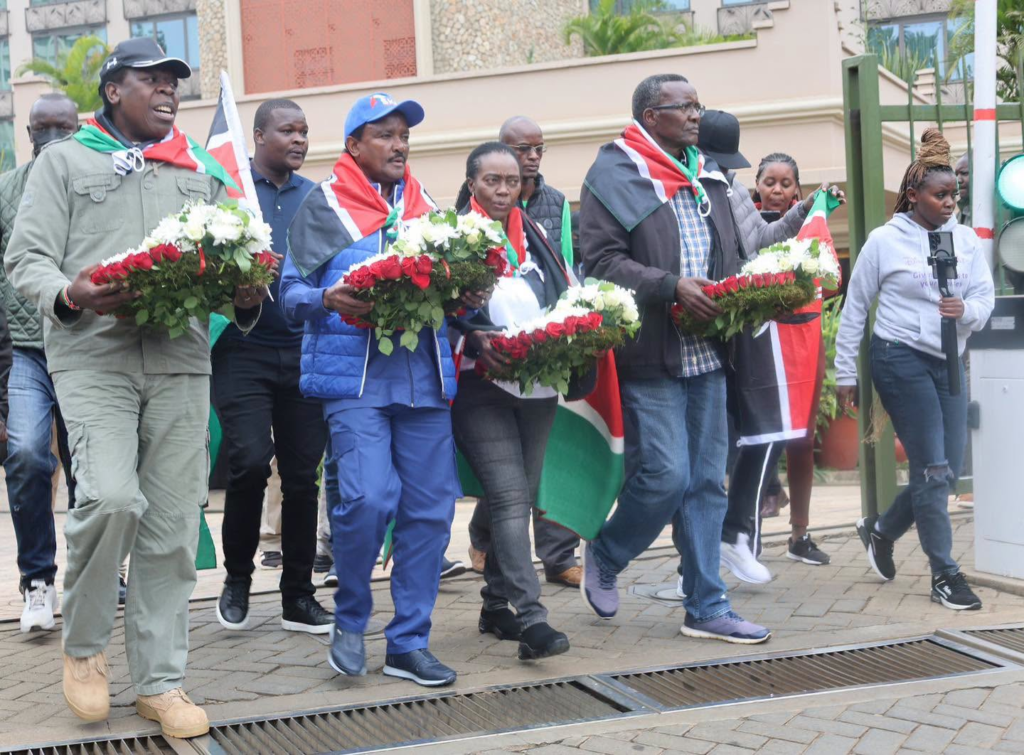
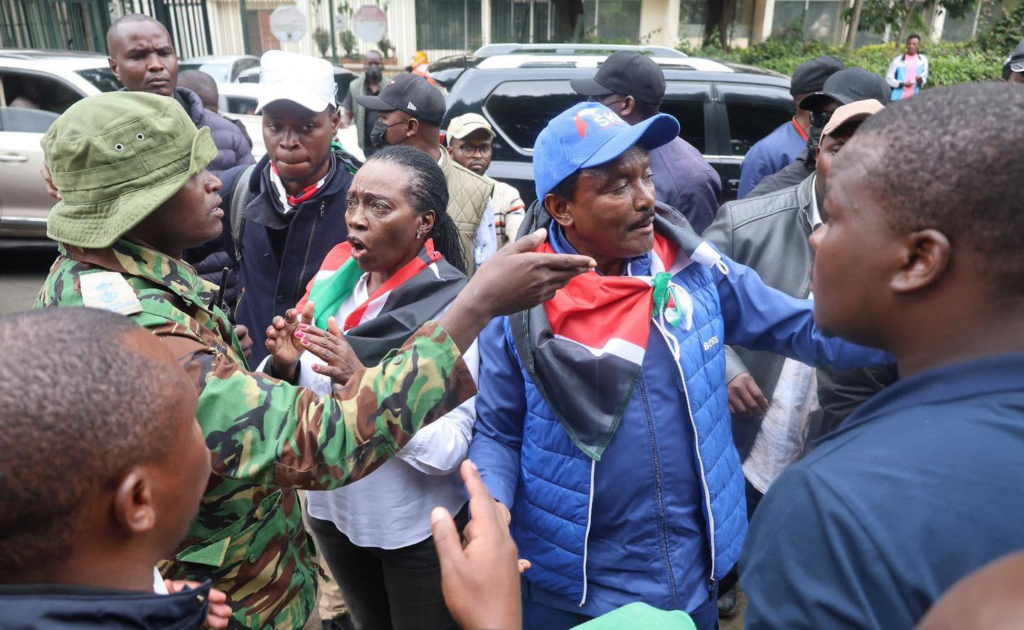
Uhuru Must Urgently Convene Azimio and Appoint Sifuna and Babu as Deputy Party Leaders

0

Uhuru Must Urgently Convene Azimio and Appoint Sifuna and Babu as Deputy Party Leaders
By Billy Mijungu

In moments of persecution the persecuted need a firm pole to lean on. Politics is not kind to the uncertain or the disorganized. When pressure mounts leadership must not retreat into silence. It must consolidate, project strength and offer direction. That is where Azimio, Sifuna and Babu abd others find itself today.

The Azimio coalition was built around one central candidacy. Raila Odinga was the flag bearer and the unifying force. When that presidential bid did not succeed the coalition inevitably weakened especially without visible leaders on its ticket, That is not an indictment. It is a structural reality. Movements formed around a single election cycle must deliberately reinvent themselves or risk gradual erosion. While party’s can be on a destructive path, others can be on a constructive one.

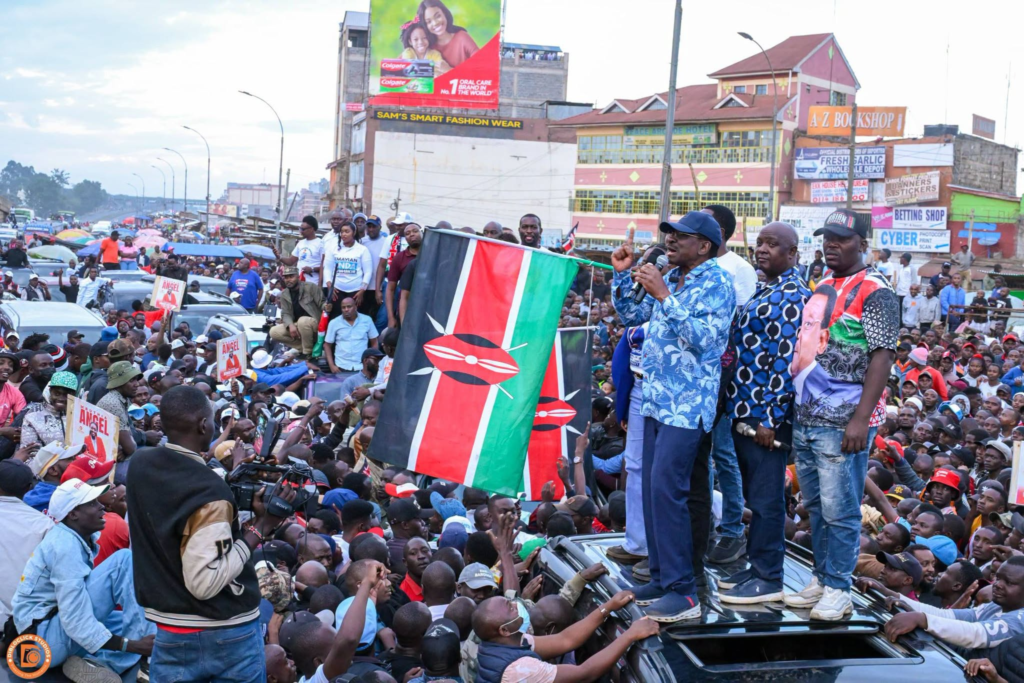
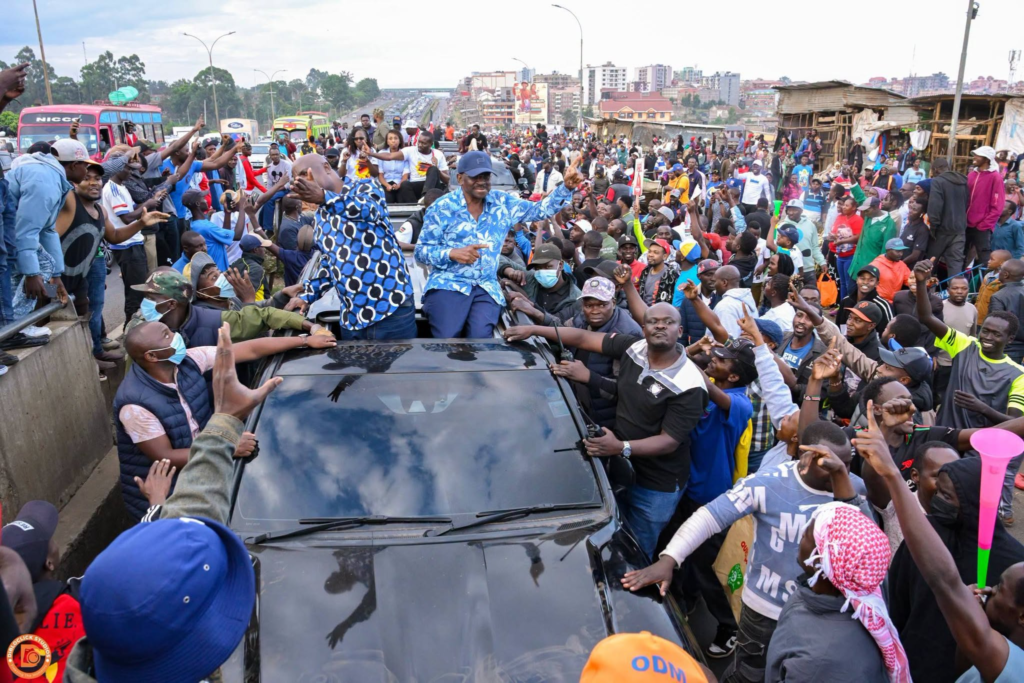
This is the moment for reinvention and Uhuru Kenyatta should urgently convene Azimio and restructure its leadership by appointing Edwin Sifuna and Babu Owino as Deputy Party Leaders. This is to strengthen the coalition and also It is about strategic positioning. It will strengthen the spine of the coalition at a time when perception, messaging and firmness matter most.

Sifuna represents articulate defiance. He understands party structures, legal frameworks and national messaging. He is consistent and unapologetic. Babu Owino represents grassroots energy, youth mobilization and fearless confrontation. He commands attention in both Parliament and public discourse. Together they embody clarity and courage.

Azimio needs visible pillars. It needs leaders who can absorb pressure and convert it into momentum.

Political realignments do not happen overnight. Exiting a coalition or dissolving arrangements takes months. In that period narratives are shaped, alliances are tested and the public mood is influenced. Even three months of deliberate positioning can reassert dominance in national conversation. That window should not be surrendered.

ODM remains the largest partner within Azimio. But numbers alone do not guarantee influence. If the party machinery appears uncertain then the people must become the anchor. There is a growing perception that ODM has lost its negotiating edge with UDA. Whether real or perceived that narrative weakens the opposition space and creates room for speculation about eventual merger or quiet dissolution.

If that path continues Azimio risks fading into irrelevance.

The solution is reinforcement not retreat. Elevating bold and nationally visible leaders sends a clear signal that the coalition is reorganizing not surrendering. It reassures supporters. It unsettles opponents. It restores bargaining power.

Coalitions survive when they evolve. They collapse when they hesitate.

Azimio must choose evolution. It must choose clarity. It must choose strength.

The time to act is now.

Follow on Facebook X Instagram TikTok and LinkedIn @BillyMijungu

Forward #TusongeMbele

Oburu sacks Sifuna as SG over pre-election coalition pact with President Ruto

0

By Anderson Ojwang

The Orange Democratic Movement (ODM) National Executive Council (NEC) has sacked Nairobi Senator Edwin Sifuna as the Secretary General and party spokesperson with immediate effect.

The move follows a protracted battle between the faction allied to party leader Dr. Oburu Oginga and Sifuna over the pre-election coalition pact with President William Ruto’s United Democratic Alliance (UDA).

In a statement, ODM said: “Party National Executive Committee meeting in Mombasa today has resolved to relieve Secretary General Edwin Sifuna of his responsibilities with immediate effect. Effectively, Catherine Omanyo, who is one of the deputy secretary generals, will act in this position until a substantive holder of the office is elected.”

A besieged Oburu, in an earlier statement, said ODM was a members’ club and those in it must abide by the rules of membership.

Oburu had invited NEC members for a meeting meant to crack the whip on Sifuna, Deputy Party Leader Geoffrey Osotsi and his younger sister Ruth Odinga.

“The minority will have their say but the majority will have their way and so those with dissenting voices must respect the wishes of the majority. Democracy must be guided,” he said.

The move is likely to further divide the party, with Sifuna, Siaya Governor James Orengo and MP Babu Owino likely to walk away with a section of supporters following the recent Linda Mwananchi rally in Busia.

Oburu and his faction, including National Chairperson Gladys Wanga and Deputy Party Leaders Abdulswammad Nassir and Simba Arati, among others, may retain control of the party but with fewer followers.

Treasury Cabinet Secretary John Mbadi at the weekend demanded that Sifuna be sacked from ODM to pave the way for the coalition alliance with President Ruto.

Mama Ida Odinga recently appealed to the party leadership not to destroy the party and urged them to prioritize dialogue over wrangles to prevent it from disintegrating and to preserve Raila’s legacy.

“It is my wish that we can preserve the party in his honor as a matter of service to our country. I want to appeal to those Baba left in the leadership of the party to reflect deeply and sincerely on his dreams for the party and for our country,” she said.

Ida challenged the current leaders to give dialogue a chance and follow Raila’s footsteps in resolving disputes within the party.

“Let us solve the problems of the party by always asking ourselves, what would Baba do under these circumstances? I am sure Baba would tell us let us sit down and talk. That is my wish, to sit down and talk through our differences,” she said.

Earlier, Migori Senator Eddy Oketch had petitioned party organs to take disciplinary action against Sifuna over his stand on the broad-based alliance.

In a previous meeting, Oburu had described Sifuna as espousing the party’s democratic ideals.

“I met with my friend, Senator Edwin Sifuna, the Secretary General of the ODM Party, this morning. He remains a sober and principled voice, embodying the democratic ideals we believe in as a party,” he wrote on his X handle.

Oburu then said the party was united and encouraged everyone to speak their mind, saying that was the foundation upon which ODM was formed.

“We are one. We are united as the ODM Party. As a leader, I believe we must encourage everyone to speak their mind. Differences of opinion do not mean division. Great parties—like ODM—grow through robust debate and unique challenges,” he said at the time.

Recently, a section of ODM legislators alarmed by what they termed self-cannibalization in the party requested Oburu to convene an urgent meeting to contain the self-destruct situation.

The MPs, led by ODM Vice National Chairman Dr. Otiende Amolo, said the wrangles were worrying and a betrayal of the party’s founder, the late Raila Odinga.

“It is testament to how much we miss the wisdom and iconic leadership of our departed Rt Hon Raila Odinga, that divisive rhetoric has taken over our politics, without restraint,” read the statement.

Sifuna dismissed attempts to kick him out of the party, saying those pushing for his removal had no capacity to eject him.

He said the plot to remove him was a result of his opposition to efforts by a section of party officials and members to support President Ruto’s second term.

The fallout was worsened by a recent TV interview where Sifuna claimed ODM was receiving parallel funding for the Linda Ground engagements.

In another interview, Sifuna said the Kilifi Central Management Committee had ratified that the party engages in coalition talks with various political formations.

“The resolution of the Kilifi meeting is clear and specific. It said the party should embark on coalition formation with other political formations in the country. There is nowhere it talked about UDA as the only formation. We expect to engage all political formations in the country with a view to a possible alliance,” he said.

Sifuna added that ODM, as one of the oldest parties in the country, was prepared to present a presidential candidate and quoted the late Raila Odinga saying, “Who told you ODM will not have a presidential candidate in 2027?”

He also maintained that Dr. Oburu and his team were serving on an interim basis and would need ratification by the National Delegates Conference.

In a press statement, Oburu said they were substantively in office and dismissed Sifuna’s claims that they were interim officials.

Oburu wrote: “We want to state categorically that all party officials are serving substantively and are supported by party organ resolutions. ODM has, since its inception, demonstrated fidelity to its constitution and to the rule of law. The same principle has put every individual in their rightful positions, including that of Senator Sifuna.”

Sifuna also revealed that the funds and resources being used in the ongoing Linda Ground engagements did not come from the party headquarters.

“The money and the resources you see being spent on the ODM rallies called Linda Ground do not come from ODM headquarters. I can only account for the monies because I am a signatory to the bank accounts, together with Timothy Bosire. The last money we expended officially as ODM was for the celebration in Mombasa, and it was a fraction of what you saw there,” he said.

Gachagua urges the government to declare drought in Northern Kenya a National Disaster

0

By Anderson Ojwang

Former Deputy President Rigathi Gachagua has urged the government to declare the drought in Northern Kenya a national disaster.

Over 2 million Kenyans in the Northern region are facing severe drought and starvation after three failed seasons of rainfall.

The DCP party leader said President William Ruto should move with speed to declare the crisis a national disaster to allow for national and international response.

“President William Ruto must declare the drought in Northern Kenya a national disaster. Such a declaration will unlock the national and international response required to save lives, protect livelihoods and restore the dignity of the Kenyan people,” he said.

He blamed the government for lack of preparedness to tackle the drought situation in the region despite earlier warnings.

“Before a drought reaches its emergency phase, responsible leadership does preparedness. With three failed rain seasons, what was expected? Building of water pans, dams and allocation of emergency funds in time to those in need,” he said.

Gachagua said in a recent meeting the government allocated Sh4 billion to the 23 ASAL counties, which he termed low.

“This allocation translates to Sh123 million per county with 3.3 million Kenyans who are affected. This translates to Sh1,200 per person, which is way below the minimum food basket recommended by the United Nations of approximately Sh2,700 per person in rural areas,” he said.

Kenya’s National Drought Management Authority reported drought conditions in 10 counties. Mandera County, near the Somalia border, has reached “alarm” status, with severe water shortages leading to livestock deaths and child malnutrition.

Deputy President Kithure Kindiki on Monday said up to 23 counties currently require drought response measures.

“We also need food to reach schools to ensure that learning is not interrupted. The ongoing interventions have been reviewed to ensure food supplies address the needs of sensitive and special sections of society,” he said.

Kindiki said the county drought steering committees will be fully activated to improve coordination and address delays in aid delivery.

“Food is taking too long to reach the population. We have directed that the committees be activated to deal with last-mile delivery. The water interventions are also being scaled up and procurement processes expedited,” he said.

Battle for the North: Gachagua lists President Ruto unfulfilled promises to the region ahead of the president’s visit

0

By Anderson Ojwang

The Northern Kenya is turning out to be a crucial battle front for President William Ruto and the United Opposition, with former deputy President Rigathi Gachagua leading the onslaught on Ruto and the regional leaders.

For the second time in two months, Gachagua has come out gun blazing at the region’s governors and members of parliament for allegedly mismanaging billions of shillings earmarked for the region development.

He has accused the leaders for allegedly diverting the public funds to invest in Nairobi while the region wallow in abject poverty with no development to show for the billions disbursed to the area.

Yesterday, Gachagua trained his gun on President Ruto ahead of his visit to the region reminding him of the unfulfilled promises he pledged to the area and challenged him to them a reality.

Gachagua claimed the leaders from Northern region cannot account for Sh 1 trillion since the inception of devolution in 2013 and NGCDF and enjoy luxury in Nairobi while the residents continue to suffer from hunger and drought.

“The people of northern Kenya are Kenyans. Their hopes, struggles and shared aspirations are part of our shared destiny. A Kenya oppressed and neglected today is a warning to us all. We are one for all and all for one,” he said.

He said as President Ruto tours the Northern region he should address the emerging food and drought insecurities.

“We expect the president to address the water insecurity and food stress in the North, and from tomorrow disburse the Nyota cash in Wajir, Mandera and Garissa. This he should know, life is important and people are on the verge of hunger and death. In any case, the tour is to sensitise the corrupt leaders who have failed the people of northern Kenya,” he said.

Gachagua criticised President Ruto for turning the Nyota World Bank Project into a pre-election campaign tool.

The Northern woes

“Do not forget to tell the people of the North why only less than 35 percent have access to clean, safe drinking water compared to the national average of about 68 percent. In the North, over 850,000 school-going children did not attend school last year and the same this year. The schools in the North have no classrooms, no laboratories and no teachers,” he said.

Gachagua said the health situation in the North was worrying, with Mandera County recording that half of women give birth at home without a nurse or a doctor.

“Only six percent of children aged between 19 to 23 months are fully vaccinated. Garissa records the highest maternal deaths in the country, with 247 women per every 1,000 dying during childbirth,” he said.

He said in Wajir County, 90 percent of residents live in extreme poverty — the highest in the country — while Marsabit records 85 percent, and Isiolo and Garissa over 77 percent poverty levels.

The promises

Gachagua claimed that after President Ruto was elected, he made several promises to the region but never moved to make them a reality.

“On 25th November 2023 at Ngongalani Cultural Centre in Marsabit County while attending the Marsabit–Turkana Cultural Festival, you promised to connect the region to the electricity grid through the Lake Turkana Wind Power by the year 2024. We are now in 2026 and the status quo remains,” he claimed.

Gachagua said President Ruto also promised to construct power mains in the towns of Moyale, Marsabit and North Horr, but nothing has been done so far.

“As Ramadhan nears, give these people power. They do not need to cross to Somalia and Ethiopia for ice cubes,” he said.

He said the president promised that the Ministry of Mining, Blue Economy and Maritime Affairs would immediately construct fish landing and processing zones in Turkana County, but three years down the line nothing has been done.

Gachagua said the president promised that Turkana University would be granted a charter by 2024 to become a fully fledged public university.

“Between 4th and 7th February 2025, you toured Mandera, Wajir, Isiolo and Marsabit counties and delivered a cocktail of promises once again. You promised to put Mandera on the national grid through Ethiopia, but today Mandera gets electricity on a ration basis once every 24 hours,” he said.

He said the president also promised to put 1.2 million acres of land in the Mandera Triangle along River Daua under irrigation, but to date no progress has been reported.

“While at Mandera Teachers College, you promised to support improvement of educational infrastructure and recruitment of teachers in Mandera and the North Eastern region. Which single school has been built since then?” he asked.

Gachagua said the president promised improvement of Mandera water and sanitation supply at a cost of Sh3.5 billion to benefit households, but the project remains a white elephant.

“While in Wajir town on February 5, 2025, you promised that your government would connect 20,000 households to electricity and rural electrification at a cost of Sh3.6 billion, and to date not a single home has been connected,” he claimed.

He accused President Ruto of promising the region several projects running into billions of shillings that have never been implemented, blaming them for the high poverty levels and water insecurity in the region.

North Eastern is turning out to be one of the key political battlegrounds ahead of the 2027 General Election, with Gachagua appearing keen on entrenching himself in the region.

Will President Ruto allow his impeached deputy to entrench himself in the region?

Removal of Edwin Sifuna Lowers Negotiation Prowess of ODM

0

By Billy Mijungu

That rebellious streak people complain about is actually the art of negotiation. It is the ultimate definition of value. A negotiator who cannot push back has no leverage. Edwin Sifuna embodies that leverage. There is no copy and paste version of him, just as there is no copy and paste version of Raila Odinga.

Sifuna today is the closest political reflection of Raila Odinga within ODM. The difference between Sifuna and others who were removed before is clear. Others were shown the door because they were not loyal enough to ODM. Sifuna faces removal because of absolute loyalty to ODM. He has refused to dilute the party’s values simply to secure comfort or temporary political convenience. He has insisted that ODM must remain ODM.

Identity is everything in politics. Tribe matters. Creed matters. Party matters. Associations matter. When identity collapses, negotiation collapses. Sifuna has consistently defended the ideological and political identity of ODM. He has reminded supporters and opponents alike what the party stands for. That clarity is power.

When you remove strong internal voices, you do not create unity. You create conformity. And conformity is political weakness. ODM’s strength has always been its ability to negotiate from a position of conviction, not submission.

When Raila exited the local political battlefield, ODM became politically unwell. If Sifuna is removed, ODM risks losing its spine altogether. A party that cannot defend its own identity cannot negotiate alliances, cannot inspire its base, and cannot command respect. It simply blends in and fades away.

If Sifuna goes, ODM’s bargaining power shrinks. And in politics, once your negotiation power dwindles, your relevance follows.

The Eight Coffins That Broke Kisumu’s Heart

0

What began as a family’s painful loss became a contest of compassion as rival politicians turned grief into a stage

By James Okoth

The afternoon sun hung low over Kanyakwar village on Sunday, casting a golden shimmer on the still water pooled inside an abandoned quarry. The site, long deserted by miners, had become a familiar playground for children from the neighbourhood, especially the four brothers of the Otieno family.

That day, like many others, the boys, aged between eight and fifteen, left their home after lunch carrying plastic containers. According to their father, they had gone to fetch water and play nearby before returning for evening chores. As twilight approached and the boys did not return, worry crept into the homestead.

Moments later, screams tore through the calm. Villagers who went searching discovered the children’s clothes and slippers scattered at the quarry’s edge. Beneath the murky water, tragedy had struck. All four brothers had drowned.

News of the deaths spread quickly across Kanyakwar and beyond. Neighbours gathered in disbelief as rescuers pulled the bodies out one by one. The father, inconsolable, watched as his children, his only sons, lay lifeless, victims of a danger that had silently existed in their midst for years.

“It is a pain no parent should ever know,” said a relative. “They were full of life, always together.”

The quarry, like many others across Kisumu County, was once active with trucks and stonecutters. When operations ceased, it was left unprotected and filled with rainwater, turning into a deep, deceptive pond.

As the family struggled to come to terms with the tragedy, politics came calling. Two Kisumu gubernatorial hopefuls, through their representatives, separately arrived at the home, each eager to demonstrate sympathy.

Kisumu Central MP Dr Joshua Oron and Kisumu Senator Professor Tom Ojienda each ordered the purchase of four coffins for the deceased boys, complete with camera crews and supporters documenting the gesture.

Within hours, social media was flooded with photos and videos of the donations, each camp presenting its act as compassion and leadership.

“In support, my team handed over receipts for the purchase of four coffins and provided foodstuffs to assist the family as they prepare for the burial. My thoughts and prayers are with the family during this painful time,” read part of a statement shared by Dr Oron on social media.

“In a heartfelt show of compassion, the Professor provided foodstuffs to support the family as they received mourners during this painful period. He also took responsibility for the burial arrangements by providing four coffins,” said an official from Senator Ojienda’s team.

The grieving family now faces an unusual and painful dilemma: eight coffins bought in their name before any formal burial arrangements were agreed upon.

“What are we supposed to do with eight coffins?” a family elder asked quietly. “This has gone beyond mourning and has become a show.”

The incident has reignited debate about political tokenism, where tragedy becomes a stage and grief is used to score points. Instead of comfort, the family finds itself caught in a cultural and moral dilemma.

Following the tragedy, Governor Prof Anyang’ Nyong’o ordered an immediate suspension of all mining and quarry activities across Kisumu County. He directed the Department of Environment, together with NEMA, to audit all excavation sites for safety compliance.

“These sites have become death traps,” Nyong’o said. “We must act to protect our children and communities.”

As night falls once again over Kanyakwar, the Otieno homestead remains silent. The laughter that once filled the compound is gone, replaced by stacked coffins and mourners divided by political ambition.

The quarry stands as a reminder of neglect, but the events that followed have exposed another loss: the erosion of compassion, where even death becomes an opportunity for political display.

Kenya Power Foundation Channels Sh3 Million to Support Youth Talent at HSBC SVNS 2 Nairobi

0

By Phillip Orwa

The Kenya Power Foundation, under its social investment and community well-being pillar, has stepped onto the global rugby stage with a sponsorship of Sh3 million for the highly anticipated HSBC SVNS 2 Nairobi tournament.

The funds will be utilised by the Kenya Rugby Union (KRU) to support its regional Under-16 rugby series during the landmark tournament scheduled to take place between 14th and 15th February 2026 at Nyayo Stadium. The initiative will give at least 96 young players from across the country an opportunity to showcase their talent on the same platform as some of the world’s best rugby players.

Speaking ahead of the tournament, Kenya Power Foundation Patron Logan Hambrick underscored the Foundation’s commitment to sports development, describing it as a critical contributor to youth empowerment, social inclusion, and community well-being.

“Kenya Power Foundation aims to support and promote sports development as a strategic investment in nurturing future professional athletes and sports leaders. By investing in youth rugby, we are not only nurturing future professional players but also empowering communities and promoting inclusion through sport,” Hambrick said.

HSBC SVNS 2 forms part of World Rugby’s newly introduced three-tier Global Sevens Framework, which was created to provide clearer pathways to the elite level of international rugby while guaranteeing full gender parity across all events.

Through hosting the event, Kenya joins South Africa as the only African nations to have staged a World Rugby Sevens international tournament, where elite men and women showcase their talent on a global stage.

Since its launch in September 2024, the Kenya Power Foundation has continued to roll out social impact programmes across various regions aimed at empowering communities. These initiatives include rehabilitation of school infrastructure, provision of school uniforms to underprivileged learners, support for water and sanitation projects, and promotion of sports development.

Pwani Oil FC Suffers 7–0 Loss to Premier League Side Kariobangi Sharks but Draws Positives from the Game

0

By Phillip Orwa

Pwani Oil FC gained valuable exposure to top-tier competition after featuring in a Mozzart Campaign FKF Cup Round of 64 fixture against Premier League side Kariobangi Sharks at KPA Mbaraki Stadium, where they suffered a 7–0 defeat.

The match formed part of Pwani Oil FC’s broader participation in the FKF National Football Tournament, a platform aimed at nurturing talent, promoting youth development, and fostering community engagement through sport.

Despite the heavy loss that ended their FKF Cup campaign at the Round of 64 stage, head coach Paul Terry Kwoba described the encounter as a valuable learning experience for both the players and the technical bench.

Kwoba said the opportunity to compete against an established top-flight side provided important insights, allowing the team to measure itself against higher-level opposition and better understand the standards required to progress.

“It was a nice experience for the boys. The technical team and players have learnt from the best,” he said. “Considering we were playing an experienced team that is very active in the leagues, my boys did well. They were worthy opponents.”

The fixture offered a rare chance for Pwani Oil FC to test their progress against elite opposition in a competitive environment. Facing a team with Premier League pedigree exposed the squad to the pace, physicality, and intensity that define top-tier football—lessons the coaching staff believes will be crucial in shaping the team’s development.

Kwoba noted that such encounters help players gain confidence and broaden their understanding of the game, particularly for younger athletes still adapting to competitive football.

As the team shifts focus back to its Regional League commitments, the coach expressed confidence that the lessons drawn from the match will contribute to stronger performances in future fixtures.

Meanwhile, Pwani Oil Products Limited, sponsors of Pwani Oil FC, praised the team’s determination and progress, noting that the squad remains in a developmental phase and continues to gain valuable experience at a competitive level.

“As a company, we are committed to transforming the lives of the communities in which we operate, with sports promotion being among our key focus areas for talent development,” said Pwani Oil Commercial Director Rajul Malde.

While the team exited the tournament earlier than expected, we remain proud of their resilience. Competing against top-flight opposition has provided an important learning opportunity for this young team to sharpen their skills and raise the overall quality of their game.

The Political Tragedy of Service:

0

By Alphonce Otieno

What Hon. Raphael Tuju’s Story Tells Us About Our Politics:

In Kenyan politics, development is often praised in speeches but punished at the ballot box. Few stories show this painful contradiction better than that of Hon. Raphael Tuju.

When Tuju entered active politics, he did not do so for fame or personal wealth. By his own account, his goal was straightforward: to help his community escape poverty and to put in place real foundations for development. For a brief moment, it seemed that this kind of politics—focused on results rather than slogans—might succeed.

In just three years, the impact of his leadership was visible. The Ndori–Luanda Kotieno Road was tarmacked, improving transport and opening the area to trade and investment. Health services were strengthened through the construction and upgrading of hospitals, and a mobile clinic was introduced in Rarieda to reach remote and vulnerable communities. Schools were built, students received sponsorships, and access to clean water expanded. These were not promises. They were completed projects that touched daily life.

Yet, in a bitter twist, these achievements did not translate into political support.

Instead of being rewarded, Tuju faced hostility. He was branded a traitor by sections of the community he sought to serve. Political tensions escalated to dangerous levels. There were threats to burn his home. His supporters were targeted. His cousin was left permanently disabled due to political violence. His late mother lived in fear and could not freely travel to Ndori Centre for more than a decade. At one point, protesters walked all the way from Uyoma to Ndori, a disturbing sign of how deeply political intolerance had taken root.

“This is the tragedy of our politics,” one observer remarked. “We punish results and reward slogans.”

Many political analysts argue that under genuinely free and fair conditions—without external political direction—Raphael Tuju would have won decisively. His development record, administrative ability, and strong national and international networks set him apart from his competitors. As one local opinion leader put it, “Tuju did not fail because of poor performance. He failed because he lacked political protection in a system where party loyalty matters more than service.”

This experience is not unique. It reflects a broader pattern, particularly within Luo politics, where party allegiance has often been placed above development outcomes. Time and again, leaders with the ability to cooperate across political lines, attract investment, and deliver tangible progress have been rejected for failing to conform to dominant political loyalties.

The cost of this approach has been high. Communities are left with poor infrastructure, limited economic opportunities, and broken public services—not because capable leaders were unavailable, but because they were politically unacceptable.

An elder once summed it up quietly but powerfully: “We chose the party over the road, the slogan over the hospital. And in doing so, we chose poverty over development.”

Tuju’s story is therefore larger than one man’s political loss. It is a mirror held up to society. It forces us to confront an uncomfortable truth: that progress can be rejected when it does not align with prevailing political expectations. It shows how service and sacrifice do not always earn acceptance, and how visionary leaders can be pushed aside even when they deliver real change.

This is not an argument against political parties. Parties are a vital part of democracy. But when party loyalty becomes more important than roads, schools, water, and healthcare, politics loses its moral purpose. It stops serving people and starts serving itself.

In the end, Raphael Tuju’s legacy leaves us with a simple but difficult question: when a leader delivers tangible development that improves lives, should party politics matter more than those results? Until voters are willing to reward performance over slogans, the tragedy of service will continue—and communities will keep paying the price.

In that sense, Tuju’s story is not just about the past. It is a warning about the future of our politics, and a challenge to choose leadership over loyalty, and people over politics.

Why We Love Mount Kenya Presidencies

0
Billy Mijungu

By Billy Mijungu

We all pretend otherwise, but deep down, Kenya has an obsession with the Mount Kenya presidency. Time and again, directly or inadvertently, our political maneuvering gravitates toward placing someone from Mount Kenya at the very top.

At independence, Oginga Odinga was effectively handed the presidency by the British. Yet he sensed a trap. He feared Tom Mboya would charm Parliament into electing him Prime Minister, a position that later morphed into the presidency when Kenya became a republic. Driven by suspicion, rivalry, and jealousy, Oginga and Mboya compromised not on principle, but on convenience, settling on Jomo Kenyatta. That moment set a pattern: distrust among reformists but comfort in Mount Kenya power.

Moi came next, an accidental president by most accounts. Yet even as he exited in 2002, he searched desperately for a Mount Kenya successor. He settled on Uhuru Kenyatta. On the other side, Raila Odinga and his allies went into overdrive and ultimately installed Mwai Kibaki. Once again, the Luo community invested political capital and once again, they watched dust rise behind them.

When Kibaki exited, the entire country conspired to retain power within Mount Kenya. Uhuru Kenyatta, burdened with cases at The Hague and armed with no clear national plan beyond self-preservation, was packaged and sold. An unholy alliance with William Ruto sealed the deal. The country suspended logic, morality, and accountability to protect the Mount Kenya presidency.

In 2022, Uhuru attempted to anoint Raila Odinga but never fully committed to the campaign. William Ruto, arguably the most surprised man on inauguration day, became president. Prepared or not, he wanted it the most and politics rewards hunger, not readiness.

But Ruto is not planning for 2027. He is planning for 2032. Win or lose, his eyes are on succession. Those negotiating with him today are stuck in 2027. The real game is positioning for a transition presidency in 2032. And this is where the tragedy deepens. Instead of positioning ODM and the Luo community strategically, Oburu Odinga is quietly aligning with Ruto to midwife a Kindiki presidency. Retain the deputy slot long enough and the presidency follows early in the morning.

So tell me, don’t we just love Mount Kenya presidencies?