Home Blog Page 37

Online banter: Compare Orengo and Wanga delivery on ECDE projects. Who is the champ?

0

By Anderson Ojwang

The online development banter between the ODM people’s party leader, James Orengo, and ODM National Chairperson Gladys Wanga gave the residents of both Siaya and Homa Bay counties a chance to compare and contrast the performance of the two governors.

In the online contest, Orengo took the battle to Wanga by sharing his administration’s education development projects he had initiated as a first-term governor and challenged Wanga to also showcase her projects.

And Wanga’s team also took the challenge to share her “Ondoa Nyasi” EYE projects in the county.

Orengo before the Senate

Orengo wrote: “I briefed the Senate Standing Committee on Education, chaired by Sen. Betty Batuli Montet, on the transformative strides we are making in Siaya County. We are incredibly proud to be the first county to employ our ECDE teachers on permanent and pensionable terms, ensuring job security and dignity for the foundation of our education system. This investment in our people is matched by our School Feeding Programme, which has successfully driven up enrollment and ensured our children stay in class, healthy and ready to learn. Our infrastructure is also reaching new heights. The completion of the Bar Kowino Model ECDE in Bondo will provide modern, decent classrooms to boost concentration and performance, while our operational libraries across sub-counties continue to foster a culture of reading. From our ECDEs to our TVETs, we are committed to equipping the next generation with the skills they need to thrive.”

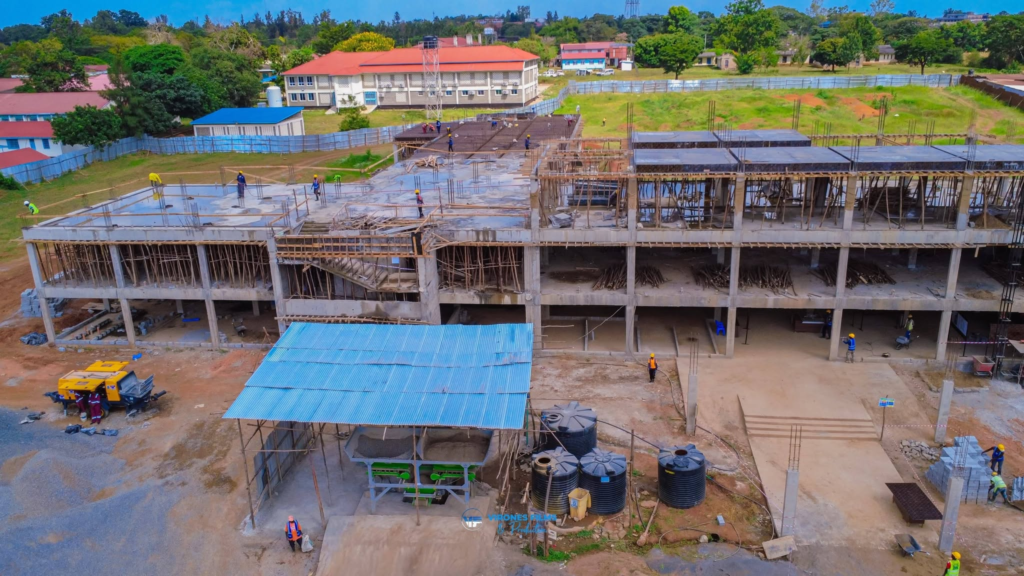
Orengo’s online team went ahead to share his post, which read: “In a few short months, we will open the gates to the Bar Kowino Model ECD Centre in Bondo Sub County. Fully funded by the county government of Siaya. This is far more than just a building; it is a sanctuary designed to give our children a dignified environment where they can thrive. By providing a safe and modern space, we are fostering the concentration necessary to drive better academic performance. This initiative proudly supplements our countywide school feeding programme, further delivering on the promises of our Nyalore Manifesto.”

Wanga’s team response

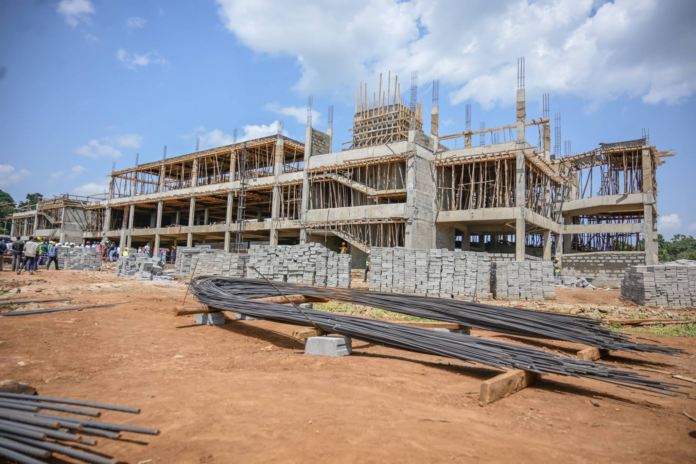
In the online battle, Wanga’s team responded by posting the Governor’s “Ondoa Nyasi” ECDE classroom.

One online team member wrote and shared a photo: “Back to service delivery, and I am here to inform you that this is Got Kochungo EYE Classroom in Arujo Ward courtesy of Governor Gladys Wanga. I challenge Orengo to post even a single completed project in his county. Yeye ni mwizi tu.”

Wanga in her recent post wrote: “In Kabuoch North, Ndhiwa Constituency, we inaugurated the Lwanda Kawuor ECD classroom, laid the foundation for the Aluor ECD classroom, and officially commissioned the Kongo Bridge over River Riana, a vital infrastructure that will strengthen the connection between the agriculturally rich areas of Karading and Kawere in Kabuoch and Migori County. The Ondoa Kaunda Classroom Initiative has already transformed early childhood education in Kabuoch North by delivering the following modern classrooms: Migera Primary School, Ogadi Primary School, Ojunju Primary School, Ogingo Primary School, Jabagre Primary School, Lwanda Kawuor Primary School, Wikoonje Primary School, Ongeng’ Primary School, Kamolo Primary School. Additionally, we are extending this progress in the next phase, which will include the construction of classrooms at Omoya Primary School, Wayaga Primary School, Arembe Primary School, Maranga Primary, and Wirakuom Primary School.”

For the people of Nyanza, this online development banter will help put the governors in check and ensure transparency and accountability in service delivery.

The question to the people of Siaya and Homa Bay: has your governor delivered according to the manifesto, or is it only politicking?

The two student union leaders, Okongo and Kangata, expelled over refusal to apologize to President Moi, now at heart of county governments leadership

0

By Anderson Ojwang

Most former University of Nairobi student leaders have never failed to rewrite their story despite whatever circumstances that have befallen them.

They have defied the odds to stand tall and have remained at the heart of Kenya’s socio-economic and political dispensation.

Between 1999 and 2000, some of the student union leaders at the University of Nairobi took the government to court over what they termed as the falling quality of education following the introduction of Module II in university education.

The lead applicants were George Omondi Okongo, then Secretary General of SONU, and Irungu Kangata, the Vice Chairman, among others.

Okongo is the current County Executive Committee member in charge of Finance at Kisumu County Government, while Kangata is the Murang’a Governor.

During that time, several university students were sent on suspension over strikes at the institutions, and the University of Nairobi was among them.

“People ask me, ‘George Omondi Okongo, when did you start politics?’ I started politics as a student leader at the University of Nairobi. In 1999, going into 2000, so many students were expelled from the university. I was one of them,” he said.

Okongo said the expelled students were asked to write an apology to the then Chancellor, who happened to be President Daniel Moi.

At the University of Nairobi, 63 students had been expelled and were asked to hand over a written apology to President Moi in order to be readmitted.

“We were all asked to apologize to the Chancellor. We were asked to apologize in writing to gain readmission. Sixty-one of our members wrote an apology to Chancellor Daniel Arap Moi. Two of us did not apologize, because we did not see our sin. That was me and Murang’a Governor, my friend Irungu Kangata,” he said.

Okongo said they did not see any mistake they had committed to apologize to the President in writing and decided against the offer.

“I was the Secretary General of the union and Kangata was the Vice Chair. We didn’t see the reason for apologizing. We were expelled for the struggle for education rights in Kenya. Everyone else was readmitted,” he said.

Okongo said the introduction of Module II was a welcome idea, but the government failed to address the quality of education, which they felt was being compromised by the open-door policies, even for restricted courses.

“That was the time the government introduced Module II. We were fighting for education rights in the country. The Module II programme was a good one; the problem was the government opened the door very widely to anybody, even to courses which were restricted. We felt the quality of education was being compromised. Our fight was about saying that there is nothing wrong with allowing more members of the public to access university education, but the quality must be maintained,” he said.

Okongo said they took the government to court and that he was the lead applicant while Irungu was helping him.

“We felt the quality of education at the university had gone down, and the government was not paying attention,” he said.

Okongo said the struggle cost them readmission, with Kangata going back to his rural village in Murang’a and becoming a councillor.

“Kangata went to the village and became a councillor. He was elected a councillor without a degree. He came back to complete his university degree programme later,” he said.

For Okongo, he crossed over to Tanzania, to the University of Dar es Salaam, where he gained admission in first year.

“I had done my first and second year at the University of Nairobi, but at the University of Dar, those two academic years accounted for Form 5 and 6 because in Kenya we didn’t have A levels. So I joined as a first-year student,” he said.

Okongo first worked in Tanzania with an organization before he returned to Kenya, and he has been the Finance CEC in Nyong’o’s administration for two terms.

Currently, Okongo is campaigning to unseat Seme MP Dr James Nyikal and has launched a high-profile campaign.

“I am optimistic that the people of Seme will grant me a chance to serve them as the Member of Parliament. I am committed to transforming the constituency,” he said.

Okongo has been engaged in various development programmes in the area, which are endearing him to the electorate.

Kangata is currently celebrated as one of the best-performing governors in the country and is credited for leading several development programmes in the county.

He recently declared that he would not defend his seat on President William Ruto’s party, the United Democratic Alliance, in the 2027 general elections.

“President Ruto has always told us that the people are supreme, and thank you for that statement. Therefore, my responsibility is to adhere to what the people have told me. And in light of that, and because I have tried my best to have these issues resolved internally, I have had a candid discussion with the President one on one, where we shared these ideas, but we did not reach what we call full convergence,” he said.

Kangata said he had conclusively decided to defend his seat on a different platform and not UDA.

“I have no doubt to say that after careful reflection, I wish to state that come 2027, I will not defend my seat on the current party ticket. I will later, at a certain stage, communicate the platform on which I will present myself to the electorate,” he said.

Kisumu County Government signs an agreement with Rotary Youth Training Centre to repair its vehicles as the institution’s fortune flourishes

0

By Hope Barbra

When the County Government of Kisumu entered into an agreement with Kisumu Rotary Youth Training Centre to repair and service all its vehicles, it was a powerful statement of trust and confidence in the institution.

From a collapsing institution with a student population of 156 in 2022, the centre is currently bursting with a student population growth of 2,700, major infrastructural development, and partnership agreements.

Under the current leadership of Ms Gladys Akinyi Sadia, the institution is emerging as one of the most sought-after training institutions in Western Kenya.

Sadia says the institution recently entered into an agreement with the county government to repair its vehicles at the new garage at the facility.

“We have a modern garage at the facility and well-trained human resources, and the agreement by the county government is a sign of trust and confidence in us. This is a milestone for us, and we are committed to growing the institution,” she says.

Students

The decision was made to rebrand the institution and introduce courses which are youth-friendly and market-oriented.

That is why, from a student population of 156, the institution has witnessed a steady population surge and demand from both Nyanza and Western Kenya.

The institution offers training from Level 3 to Level 5, where Level 3 is the lowest level of entry into TVET for students who either dropped out in Class Six or sat KCPE.

Level 4 comprises artisans, while Level 5 comprises crafts. Previously, it was only Kisumu National Polytechnic, and now Kisumu Rotary Youth Training Centre offers the same for students who scored D+ and below in KCSE.

“We have witnessed an upsurge in student registration at Level 5 and other levels. We have competent human resources capable of handling all the levels,” she says.

Funding and courses

The County Government of Kisumu gives funds to deserving students, with 1,700 students accessing the county government scholarship.

Sadia says the county government has been able to sustain the institution’s operations through its funding, and this has ensured no disruption of learning.

The institution offers various courses and has departments in food and beverages, plumbing, motor vehicle, fashion and design, ICT, masonry, welding and fabrication, electrical installation, and agribusiness technology, among others.

Partnership

Sadia says through strategic partnerships with colleges and other institutions abroad, Kisumu Rotary has been able to access funding and support.

“Through the Kenya Blue Economy, the institution was able to partner with colleges and institutes in Canada to partner in skills training programmes,” she says.

Sadia says the institution has modern tools for food and beverage and has been declared the best training institution in the region.

“We have been able to travel to Canada – three of us – for capacity building on the current educational curriculum. This was a milestone to align with the new education curriculum,” she says.

The institution has also been able to partner with the office of the Women Representative, which also sponsors some of the students.

She says the Kenya Commercial Bank Foundation also supports and educates physically challenged students to gain technical training.

“Shotza is a community organization that has also been paying school fees for needy and vulnerable children, and this is how we have realized an increased student population,” she says.

She says another partner, Next Step Foundation based in Nairobi, is also equipping youth with physical disabilities to acquire skill-based knowledge in the county at the institution.

Graduation

This year, the institution graduated 2,000 students in an event presided over by Kisumu Governor Prof Anyang’ Nyong’o at the third joint Kisumu County Vocational Training Centres (VTC) Graduation Ceremony held today at the Rotary Vocational Training Centre.

“This is a proud and defining moment not only for them and their families, but for Kisumu County and everyone who has supported this course. Today, we celebrate 3,165 trainees from 28 Vocational Training Centres who have successfully completed training across eleven market-relevant disciplines. Their nationally recognized certifications are a testament to their skill gained, discipline attained, and readiness to face the future with confidence,” he said.

He said the achievement reflects the steadfast commitment of the County Government of Kisumu to vocational training as a cornerstone of opportunity, dignity, and inclusive economic growth.

“Through continued investment, including KSh 25 million for modern equipment and KSh 125.5 million to expand access and strengthen trainer capacity this financial year alone, we are building institutions that deliver excellence and sustainability. The future of Kisumu County will not be shaped in boardrooms alone. It will rise from workshops, flourish in garages, evolve in studios, grow on farms, and thrive in enterprises powered by skilled and enterprising young people like these. Even in a challenging job market like exists now, the training equips them to solve real-world problems and create their own opportunities,” he said.

LOOP Safari Gravel Series Returns to Naivasha in Quest for UCI Gravel World Championships Berths

0

BY PHILLIP ORWA

The second leg of the 2026 LOOP Safari Gravel Series is set to take place on Saturday, 13th June, at the iconic Hell’s Gate National Park in Naivasha.

Belgium’s Lukas Mzweski, who won last year’s event, is expected to defend his title. Mzweski last year delivered a commanding performance to win the elite men’s 120-kilometre race, clocking an impressive time of 3:45:03.

He was closely followed by Uganda’s Charles Kagimu (3:45:04) and Germany’s Lukas Baum (3:45:05).

In the women’s elite category, Canada’s Haley Smith clinched the title with a time of 4:32:10, as Rwanda’s Claudette Nyirahabimana followed in 4:38:48, while Germany’s Svenja Betz secured third place in 4:44:37.

After an action-packed season opener at the Limuru Country Club in March, which saw a record entry of 822 competitors, registration is now open for the Naivasha leg, with over 700 cyclists expected to contest the 20KM, 60KM and 111KM routes.

The Naivasha event also doubles as a UCI Gravel World Series Qualifier – one of the four 2026 UCI Gravel World Series qualifier events in Africa, with two in South Africa and the other in Namibia.

To qualify for the 2026 UCI Gravel World Championships set to be held in Nannup, Western Australia, in October, riders must finish the race and place within the top 25% of their category. Additionally, the top three finishers in each official category will automatically earn direct qualification.

Winners, both male and female, over the 111km distance will take home Sh20,000, with second, third, fourth, and fifth places earning Sh15,000, Sh10,000, Sh7,000, and Sh5,000 respectively.

In the team category, the winning team will receive Sh125,000, while second and third place teams will be awarded Sh100,000 and Sh70,000 respectively.

Troy Barrie, Coordinator of The Amani Project, further highlighted the significance of UCI accreditation for this leg of the series.

“We are incredibly excited about what the 2026 season represents, particularly with the UCI accreditation for Naivasha. UCI accreditation transforms this race from a regional showpiece into an internationally recognised competition. This validates the hard work we’ve put into course quality, safety and athlete support, and it creates real pathways for African riders to earn UCI points and be seen on the global stage. That exposure not only raises the standard of racing here, but it also brings investment, development opportunities, and inspiration for the next generation of cyclists in Kenya and across the continent,” Barrie said.

Eric Muriuki, CEO of LOOP Digital Financial Services, said: “The UCI accreditation for our Naivasha edition is good for Kenya’s growing prominence in the global cycling arena. We are providing our athletes with a pathway to international recognition, while at the same time showcasing the unparalleled beauty of our country to the world. We are incredibly proud to bring an event of this calibre to Naivasha, and we invite cyclists from all corners of the globe to experience this unique blend of competition and adventure.”

The route includes a variety of surfaces, with 62% on gravel, including red clay, single track, and game trails, and will start at Sulmac Village on the southern edge of Lake Naivasha. Riders will first complete a 21 km loop that includes an initial climb and returns to the start. This is followed by a 36 km stretch of gently ascending gravel roads before descending into the final 40 km. The most demanding segment is between kilometres 60 and 90, which runs primarily on paved roads through the eastern side of Hell’s Gate National Park.

The LOOP Safari Gravel Series is organized by the Amani Project, an initiative focused on developing and supporting athletic talent across the region, with support from LOOP DFS as the title sponsor.

Global politics around energy is quietly shifting and very few people are paying attention

0

By Dickens Ochieng

For the better part of the last decade, the global conversation has centred around just transition – moving away from fossil fuels toward cleaner energy systems. Wind and solar became the symbols of that future, not only because they were cleaner, but increasingly because they were becoming cheaper and more scalable.

Governments, investors, development finance institutions, and corporations aligned around the same message – that the future would be green.

But something significant is changing beneath the surface. The emergence of AI – and more specifically the global race to build AI data centres – is beginning to reshape energy politics in ways many people have not fully grasped yet.

If you listened carefully during recent discussions at the World Economic Forum, one comment stood out. The CEO of Blackstone, itself a major investor in renewable energy and transition infrastructure, acknowledged a growing reality: that wind and solar alone are not reliable enough to support the uninterrupted power demands required by hyperscale AI data centres.

That statement matters. Because when major capital allocators begin questioning the reliability of renewables for next-generation infrastructure, it signals more than a technical concern – it signals a geopolitical and economic shift.

AI data centres consume enormous amounts of electricity. Not ordinary levels of power, but continuous, industrial-scale, 24/7 energy loads. Countries and companies are now scrambling to secure stable baseload power sources capable of supporting this new digital arms race. Some are even exploring ocean-based cooling systems and alternative energy configurations to reduce pressure on national grids.

And this is where the contradiction begins to emerge. For years, coal plants were being retired, oil and gas investments discouraged, and fossil fuel financing increasingly restricted. Yet now, in the race for AI dominance, we may witness a quiet return to energy sources once politically unpopular – including natural gas, coal-fired power in some jurisdictions, and a renewed global embrace of nuclear energy framed as “clean” and reliable.

Energy transition may no longer be driven primarily by climate politics. It may increasingly be driven by compute power and AI competitiveness.

That changes everything. It changes how governments think about energy security. It changes how investors allocate capital. It changes which countries become strategically important. And it changes the future of global climate commitments.

For Africa, this moment raises critical questions.

Will African countries once again be told to limit fossil fuel development while major economies quietly expand theirs to power AI infrastructure?

Will Africa’s vast reserves of gas, critical minerals, land, and renewable potential become strategic assets in the new AI-energy economy?

Or will the continent once again remain a supplier of raw inputs while others capture the value?

There is also a deeper community question.

What happens to communities that were promised a green transition economy if global priorities suddenly shift toward energy abundance at all costs? What happens to climate financing commitments? What happens to environmental justice conversations when technological supremacy becomes the dominant political objective?

And perhaps the biggest question of all: can the planet realistically sustain an AI revolution powered by exponentially growing energy consumption while still meeting global climate targets?

The AI race is not only reshaping technology. It is quietly rewriting the future of global energy politics.

In Kenya, we have not been exempted from the AI data centres gold rush. There have been ambitions to host a Microsoft AI data centre in Kenya.

We are witnessing a sudden and aggressive surge in energy demand driven by the global AI and data-centre race. With an overly ambitious president, Kenya has renewed its plan to put up a nuclear power plant at breakneck speed. We see the speed even when it means bypassing the people, whose views are actually critical to the project.

But this raises a deeper and more uncomfortable question: is the country truly prepared for such a leap, or are we chasing an illusion of technological prestige without fully understanding the economic, environmental, and institutional burden that comes with it?

Artificial intelligence is rapidly transforming the global economy. Kenya, positioning itself as East Africa’s digital and innovation hub, understandably wants to be part of this future. The promise sounds attractive – more investment, more jobs, stronger infrastructure, and global relevance in the digital economy. Nuclear energy is therefore presented as a symbol of modernity and energy security – a way to provide stable, large-scale power beyond what hydro, geothermal, and solar currently offer.

However, the conversation cannot end at ambition alone. Nuclear power is not merely a technology project – it is a test of national readiness. It demands decades of regulatory discipline, highly specialized human capital, political stability, emergency preparedness systems, long-term waste management, and enormous financial commitment. Even some developed nations continue to struggle with the true cost and risks associated with nuclear energy.

Kenya must therefore confront difficult realities. Can the national grid efficiently absorb and distribute nuclear-generated power? Do we possess the institutional strength to manage safety standards free from corruption, political interference, or procurement scandals? Are citizens adequately informed about the environmental and health implications? Most importantly, are we investing in nuclear power because it is genuinely the best solution for Kenya’s future energy needs, or because the global AI boom has created pressure to appear technologically competitive?

There is also the danger of confusing visibility with progress. In many developing economies, mega-projects often become symbols of ambition while underlying structural challenges remain unresolved. Kenya still faces electricity access inequalities, high power costs for manufacturers, transmission losses, and unreliable supply in some regions. If these foundational problems persist, then a nuclear plant risks becoming an expensive monument to aspiration rather than a practical solution for ordinary citizens.

This does not mean Kenya should reject nuclear energy outright. On the contrary, the discussion is necessary and timely. But the country must approach it with realism rather than excitement driven by the AI gold rush. True technological advancement is not measured by how quickly a nation adopts grand projects, but by whether those projects are sustainable, inclusive, economically sound, and beneficial to future generations.

The real question, therefore, is not whether Kenya can build a nuclear power plant. The real question is whether Kenya is building the institutional, economic, and ethical foundation required to manage one responsibly in an age where the hunger for energy is accelerating faster than our readiness to supply it.

The writer is an advocate of the High Court.

Open Letter to Governor James Orengo

0

By Governor Gladys Wanga

RE: REFLECTION, DIGNITY, AND THE PLACE OF WOMEN IN OUR PUBLIC LIFE

Dear Governor Orengo (My Father),

I write this letter in my personal capacity, not as Governor of Homa Bay County, nor as Chairperson of the ODM Party, but simply as Gladys: daughter, mother, wife, and a woman who, like many others, continues to navigate leadership in spaces that often demand strength while offering little grace.

For many years, these spaces were occupied by men, and only courageous women dared to break through.

I have reflected deeply on the remarks you recently made concerning me. I chose silence at first, because I have always believed that not every disagreement demands public contest, and not every hurt should invite a public response.

Yet some moments require reflection, not because of the individuals involved, but because of what they represent.

I have always held you in immense respect. To many of us who entered public life after your generation, you have represented courage, conviction, and the possibility of principled leadership. Many young politicians look up to you for motivation and inspiration. You have been around for a long time, and I have personally regarded you with the esteem one reserves for an elder and, in many ways, with the affection and deference one would extend to a father figure.

Indeed, listening to your remarks and the manner in which they were received left me wondering how I would have felt hearing the same words from my own late father – whom I saw for only a few years – and from respected men of his generation like you, to whom I had looked for guidance and direction.

That is perhaps why they hurt.

Not because political criticism is unfamiliar to me, nor because public office exempts one from scrutiny, but because certain expressions carry weight beyond politics. They say politics is a dirty game, but I did not expect it to become dirtier through your utterances.

Words spoken by respected leaders shape culture, reinforce attitudes, and determine what society permits. When remarks directed at a woman carry undertones that diminish, ridicule, or reduce her because of her gender, age, or place in public life, they travel far beyond their immediate target.

They become an echo familiar to millions of women and girls who have endured various forms of gender-based violence, exclusion, intimidation, and dismissal in workplaces, homes, and public spaces. They run through the vertebrae like lightning striking a tree.

Many women are told to speak more softly, lead smaller, occupy less space, or defer – not because they are wrong, but because they are women. Many endure insults that men in equivalent positions would never face. It is this reality that made your remarks painful – not merely as an affront to me, but because they inadvertently validated a burden many women continue to carry quietly.

I do not write this to seek an apology through public pressure, nor to invite sympathy for myself. I write in the hope that moments such as these can remind us all – especially those of us privileged to be in leadership, and particularly in spaces where, traditionally, women were only supposed to be seen and not heard – that strength and dignity are never diminished by kindness, and that authority need not come at the expense of another’s humanity.

Governor, despite the distress and untold discomfort this episode has caused me and those close to me, I do not wish to engage you in prolonged exchanges over this matter. I consider you my senior, a respected elder, and someone whose contributions to public life deserve honour and respect. I therefore choose forgiveness.

I was humbled just as I was humiliated. More importantly, I choose to leave the door open for engagement, dialogue, and collaboration on matters that uplift our people and propel our community forward. After all, God gave us the responsibility to make our community better and more respectable.

Our region deserves leadership that inspires hope, not needless turf wars with a girl the age of your daughter.

If my resolve to stand with Sen. (Dr.) Oburu Oginga as the Party Leader of our great party after the passing of our beloved leader, H.E. Raila Odinga (may he continue resting in peace), means I must endure more of these embarrassing insults and unnecessary tirades, so be it. Dr. Oburu was elected by thousands of party delegates in broad daylight.

Governor, may this moment become not a point of division, but an opportunity for reflection, healing, and a renewed commitment to building a public culture where women and men can disagree vigorously yet preserve each other’s dignity.

In the words of the young Pakistani female education activist Malala Yousafzai, “We realize the importance of our voices only when we are silenced.” Please, do not silence our voices through humiliation.

Simple Trading Rules to Help Navigate the Stock Market

0

By Billy Mijungu

There is a silent but significant shift happening within the financial investment environment. For decades, many investors preferred government securities because they were considered safe, predictable, and protected from the volatility associated with the stock market. Treasury bills and bonds became the comfort zone for many institutions and individual investors seeking guaranteed returns without the emotional pressure of market fluctuations. However, the investment climate is changing rapidly. The continuous outpouring of unabsorbed yet ring-fenced public funds has slowly redirected liquidity into the stock market, attracting investors searching for better returns, long-term capital growth, and sustainable wealth creation.

Today, more people are entering the stock market than ever before, but many are entering without emotional discipline or strategic direction. The stock market is not merely a place of numbers, charts, and speculation. It is a psychological battlefield where fear and greed determine the fate of investors more than intelligence alone. Many investors buy shares when prices are already rising sharply because excitement and public optimism dominate conversations. Unfortunately, when prices begin falling, panic quickly replaces confidence, forcing many to sell at losses and abandon their investments prematurely. Successful investing requires the opposite mindset. It demands calmness during decline and caution during rapid growth.

An investor must therefore develop simple internal rules that guide decision-making regardless of emotions. When a stock price falls slightly, patience becomes more important than panic. Small declines should not immediately trigger fear because markets naturally fluctuate. A disciplined investor understands that temporary declines are normal and often chooses to continue holding quality investments during such moments. When prices fall further and reach deeper corrections, this should not automatically be interpreted as disaster. Instead, gradual buying during weakness allows investors to accumulate valuable assets at discounted prices while reducing the emotional pressure associated with timing the market perfectly.

Similarly, when the market begins rising, discipline remains equally important. Small gains should not create unnecessary excitement because long-term wealth is not built from impatience. Investors who constantly rush to sell after every small increase often lose the opportunity to benefit from stronger long-term appreciation. However, when profits become substantial, gradual profit-taking becomes wise. Selling portions of holdings during major rallies protects gains while still allowing continued participation in future growth. This creates balance between optimism and caution.

The strongest investors are not those who predict markets perfectly. They are those who master emotional control. Markets move in cycles, and no stock rises forever. Likewise, no downturn lasts forever. Economic uncertainty, political tension, currency pressure, and temporary market corrections are all natural parts of investing. The investor who survives these cycles is usually the one who remains disciplined when others become emotional.

Many people confuse investing with gambling. Real investing is not driven by rumors, social media excitement, political propaganda, or fear of missing opportunities. Real investing is based on patience, consistency, and understanding that wealth creation is gradual. Short-term speculation may create excitement, but long-term investing creates stability. The greatest fortunes across global financial history were not created overnight. They were built slowly through disciplined accumulation and long-term holding of productive assets.

Time itself becomes one of the most powerful investment tools. A patient investor allows businesses to grow, dividends to compound, and market recoveries to strengthen portfolio value over years rather than days. This is why emotional stability matters as much as financial capital. Investors who panic during every downturn rarely experience the full benefits of market recovery. Those who remain calm during difficult periods often emerge stronger when conditions improve.

Financial literacy is therefore becoming increasingly important in modern society. Young people especially must begin understanding shares, dividends, capital appreciation, and compound growth because the future economy will reward ownership more than consumption. The stock market should not simply be viewed as a place to make quick profits. It should be seen as a platform where ordinary citizens participate in economic growth, innovation, and wealth creation.

Discipline plus patience remains the foundation of successful investing. The investor who learns to remain rational during market declines and cautious during rapid growth will always stand a stronger chance of achieving stable long-term success. Wealth is rarely created through emotional reactions. It is created through consistent decisions made over long periods of time.

Investments must always remain long-term.

When Politics Burns Humanity: A Nation Must Pause Before 2027

0

By Edris Omondi (Advocate)

edris@crimepreven

 Edris Omondi is a lawyer and a crime prevention practitioner and the Executive Director of the Crime Prevention Initiative Trust (CPIT), Kisumu. He works on behavioral approaches to crime prevention, governance, and social policy.

When Politics Burns Humanity: A Nation Must Pause Before 2027

History is full of painful reminders of what happens when politics stops being about ideas and begins defining who deserves dignity, safety, or even life itself. In the early 1990s, the genocide in Rwanda did not begin with machetes. It began with words, labels, hatred, political division, and the dangerous normalization of seeing fellow citizens as enemies instead of neighbors.

Closer home, Kenya’s own 2007–2008 post-election violence remains one of the darkest chapters in our national memory. Communities that had lived together for generations suddenly turned against each other. Churches became places of fear. Homes were torched. Thousands were displaced. Over a thousand lives were lost.

Many Kenyans swore then: Never again.

Yet today, as the country slowly inches toward the 2027 elections, worrying signs of political intolerance are re-emerging. Social media hostility is growing sharper. Public discourse is becoming more toxic. Political identity is increasingly being treated like tribal identity; something to fight over, defend aggressively, and sometimes punish.

The recent incident involving gospel singer Rachael Wandeto should disturb the conscience of the nation. Reports indicate that she allegedly became a victim of arson, possibly because she bore a tattoo associated with President William Ruto. Whether one supports or opposes the President is beside the point. No political disagreement should ever justify violence, intimidation, destruction of property, or threats to life.

And that is where Kenya must draw a firm line.

A tattoo is not a death sentence. Political support is not a crime. Opposition is not treason. Democracy demands that citizens be free to express themselves without fear of mob justice or politically charged retaliation.

Sadly, there are already voices saying, “She deserved it.” Those statements are perhaps even more dangerous than the act itself. They reveal how deeply hatred has penetrated public thinking. Once society begins rationalizing violence against people because of their political beliefs, it starts walking a very dangerous road. Today it is a tattoo. Tomorrow it may be a T-shirt, a social media post, a tribe, a surname, or simply being in the wrong place at the wrong time.

Political intolerance rarely arrives dramatically. It grows slowly; through jokes that normalize hatred, leaders who inflame emotions irresponsibly, online propaganda, selective outrage, and silence from good people.

Yes, silence from good people.

Kenya cannot afford to sleepwalk into another season of politically instigated violence.

The bitter truth is that ordinary citizens suffer together regardless of political affiliation.

When fuel prices rise, every Kenyan feels the pressure. When floods destroy homes, victims come from every political side. When unemployment rises, hunger does not ask who voted for who! National disasters do not discriminate between government supporters and opposition loyalists.

Lest we forget, we are one people-KENYA- before we are political camps.

Institutions tasked with protecting national unity therefore deserve stronger support. The National Cohesion and Integration Commission (NCIC) must be adequately funded and empowered to intensify civic education, peace campaigns, community dialogue, and early warning interventions ahead of 2027. Their work should not only emerge during crises or election periods. Cohesion must become a continuous national culture.

Religious leaders, musicians, civil society organizations, schools, and the media also carry a responsibility. In that responsibility they also need adequate support to broadcast national cohesion. Political disagreement should be taught as normal in a democracy, not as grounds for hostility. Young people especially must be protected from manipulation by leaders who weaponize anger for political gain.

Kenya was once proudly described as a God-fearing nation. That identity is tested not by how loudly we pray, but by how humanely we treat one another when we disagree. A society that burns homes because of politics cannot claim moral victory over those it condemns.

The approach to the 2027 elections must therefore become a season of maturity, not madness. Leaders across the political divide must speak responsibly, and any irresponsible utterances should be penalized. Supporters must reject provocation. Citizens must learn to separate political competition from personal hatred.

The lesson from 2007 is clear: it is far easier to ignite division than to heal it afterward.

No election is worth the blood of a Kenyan. No politician is worth destroying a neighbor over political indifference. No political symbol should ever become justification for violence.

Kenya must choose humanity before politics.

Because once hatred becomes normal, everybody eventually loses.

CALL FOR UNITY AND RESPECTFUL LEADERSHIP IN LUO NYANZA

0

By Hon.Sammy Weya

It is becoming increasingly disturbing to witness the reckless and divisive political rhetoric being promoted by some leaders within Luo Nyanza at a time when unity, sobriety, and mature leadership are most needed.

Governors Gladys Wanga and Ochilo Ayacko must remember that their political rise and electoral success were significantly anchored on the support, influence, and leadership of the late Rt. Hon. Raila Odinga and the ODM movement. It is therefore unfortunate that instead of providing calm and unifying leadership during this delicate transition period, they are increasingly engaging in careless political attacks and disrespectful commentary directed at fellow senior leaders from the region.

The manner in which some of these statements have been made against respected leaders such as Prof. Peter Anyang’ Nyong’o and Governor James Orengo lacks decorum, maturity, and political wisdom. These are nationally respected leaders who have served this country with distinction over many decades. Whether one agrees with them or not, they deserve respect because of their contribution to Kenya’s democratic struggle, governance, and public service.

What is even more disappointing is the growing perception that certain leaders are becoming overly excited by proximity to the current administration and possible political promises from the UDA government. This excitement should not blind them into undermining fellow ODM leaders or creating unnecessary divisions among our people.

At a moment when ODM supporters across the country are still trying to regain political direction and emotional stability following the loss of Raila Odinga’s active leadership presence, the last thing Luo Nyanza needs is internal hostility, chest-thumping, and public insults among leaders. Such behavior only weakens the unity that ODM has carefully built over many years.

Prof. Nyong’o and Governor Orengo have remained measured, restrained, and professional despite repeated provocations. Their conduct demonstrates political maturity and experience. Younger leaders should learn from that example instead of engaging in unnecessary political theatrics that risk damaging the cohesion of the region.

As a people, we have always been strongest when united under shared ideals of justice, equality, and collective progress as championed by ODM and Raila Odinga. Personal ambitions, political excitement, and short-term alignments should never come before the unity and dignity of our community.

If this careless politics continues unchecked, the consequences could be severe. We risk entering the next electoral dispensation divided, weakened, and directionless. History has shown that divided movements rarely succeed.

This is therefore a call for restraint, humility, mutual respect, and unity among all ODM leaders and supporters. The people expect leadership, not division. They expect wisdom, not recklessness. And above all, they expect leaders who can rise above personal interests for the greater good of the community and the nation.

Former M.P. Alego Usonga

Mbadi ignites storm over ODM ownership in fierce battle with Ruth Odinga in the post-Raila transition politics

0

By Anderson Ojwang’

A storm over the ‘ownership’ of the Orange Democratic Movement (ODM) is turning out to be the main debate in the country’s political landscape after the death of the founder, Raila Amolo Odinga.

The debate over the ownership of ODM is gaining momentum, with Cabinet Secretary for Treasury and Economic Planning declaring that the party does not belong to a particular family or community.

Similarly, Mbadi stated that the discussion on the party’s progress should not be tailored to what Raila said because he was no longer there to confirm or deny the attributes.

This is against the previous notion and belief that ODM was a ‘property’ of the Odinga family under the grip control of Raila.

“This is a national party. ODM does not belong to the Luo community. It does not belong to Siaya where the governor (James Orengo) is trying to fight with the senator, Dr Oburu Oginga. It does not belong to a family,” he said.

But Kisumu Women Representative, Ms Ruth Odinga, has accused Mbadi of being ungrateful and disrespectful to the Jaramogi Oginga Odinga family.

Ms Odinga claimed it was unfortunate for Mbadi to have made unsavory remarks about the family and that she will not allow the Cabinet Secretary to undermine the family.

“I was surprised that when Mbadi rose to speak, he chose to attack me, as an Odinga. He said ODM Party does not belong to the Odingas. That it is not a family property and therefore nobody should feel entitled because they carry the Odinga name,” she wrote.

“Mbadi now thinks that because my brother Raila Amolo Odinga is dead, he can now trample on our family. I am prepared and ready to face off with Mbadi,” she said in a telephone interview.

Transition

Mbadi said it was important for the party leadership and members to manage the post-Raila transition and to steer the party to greater heights.

Mbadi also took a swipe at Ruth Odinga, saying she cannot bully anyone in the party just because she is the sister of the party leader.

“We have a party where one thinks she is a sister of a party leader, she can order us around. You cannot. I know Baba has been a very solid leader. We must manage the transition,” he said.

Mbadi said Raila was no more and that members must chart the way forward without having to rely on what Raila said or did not say.

“Baba is no more. This is the post-Raila era. We must be candid and forthright and chart the way forward. You cannot keep telling us ‘Baba said this’ and ‘Baba did not say this.’ Where is that Baba now to give us evidence whether he said this or he did not say? He is not there anymore,” he said.

Ruth said Mbadi was a beneficiary of the Odingas’ struggle and has no locus standi to disrespect and disregard the family.

“Mbadi stated further that Raila Odinga was already dead and buried, and even if he was to be alive, he wouldn’t do much because he (Mbadi) and others have heavily invested in the ODM Party. I say this was a personal attack because I looked around and I was the only Odinga in the room. My brother, the Party Leader Dr Oburu Oginga, did not attend the three-day retreat,” she said.

She said Mbadi was a creation of the Odinga family and his statements were unfortunate and unpalatable.

“Who is Mbadi without the Odingas? We babied him, from MP to party chairman and now Cabinet Secretary. He should tread carefully. Mbadi must know and respect how he got to the top,” she said.

The Kisumu Women Rep said Mbadi has never been in the struggle and must respect the sacrifice the Odingas made for the country and the ODM party.

Respect

Mbadi demanded respect from Ruth Odinga for the ODM leadership and said she must stop fence-sitting over allegiance to either Linda Ground or Linda Mwananchi.

“It’s six months. He is not there anymore. Baba did a lot for us. If you are Baba’s sister, please respect us. If it was not for us, Baba would not be the person he was until his death. It is your brother who is the party leader. Gladys Wanga is the national chairman, and Simba Arati and Abdulsamad Nassir are the deputy party leaders. Hi maneno ya kumbelezana itaharibu hii chama. I am speaking to you with love. Without this party, we are weakened. It is difficult for a weaker party to win. I spoke with love. I am here. I am ready for any assignment you give me. I am the mtu wa mkono. We are the people supporting ODM,” he said.

She expressed concern over Mbadi’s move to demonize the Odinga family while for decades he relied on Raila for his election.

“But I was worried that if someone like John Mbadi can choose to demonize the Odinga name and what Odingas stood for and still do, what would anyone else think of us? I, as an Odinga by biology and also ideological Odinga, believing in what Jaramogi and Raila stood for, cannot sit pretty and allow this to pass without setting the records straight. It is evidently clear that there are some elements within the ODM Party who think that some of us ‘entitled people’ have been clinging to the Odinga name for political survival,” she said.

The battle between Mbadi and Ruth is just the tip of the iceberg of the wider battle in the party, and it is only a matter of time before the party finally witnesses a major breakaway within the Linda Ground faction.