Home Blog Page 38

Parallels between Barack Obama against Hillary Clinton and the emerging contest between Edwin Sifuna and Kalonzo Musyoka for United Opposition Ticket

0

By Al Musasia

The parallels between the rise of Barack Obama against Hillary Clinton and the emerging contest between Edwin Sifuna and Kalonzo Musyoka are politically significant, not because the contexts are identical, but because they expose the eternal struggle between establishment politics and popular political momentum.

In 2008, Hillary Clinton entered the Democratic primaries as the inevitable candidate. She had the name recognition, institutional backing, the donor networks, the political machinery, and the experience narrative. Much of the Democratic establishment viewed Barack Obama as charismatic but premature – talented, but “not yet ready.” Clinton allies repeatedly framed Obama as inexperienced and risky. Her famous “3 a.m. phone call” advertisement attempted to elevate experience above inspiration, portraying Obama’s youth and relative newness as liabilities in moments of crisis.

Yet politics is not only about résumés. It is about emotional connection, momentum, timing, and the ability to expand the electorate.

Obama’s candidacy created something rare in democratic politics: political excitement beyond traditional party structures. He energized first-time voters, young voters, independents, minorities, and disillusioned Americans who had previously checked out of politics. His appeal was not confined to one geographic region or demographic bloc. He became larger than the Democratic establishment itself.

That is precisely where the comparison with Edwin Sifuna begins to emerge.

Like Obama in 2008, Sifuna represents generational energy rather than institutional entitlement. His rise is not rooted in old political structures or succession agreements negotiated in boardrooms. It is rooted in public enthusiasm, communication ability, intellectual sharpness, and emotional resonance with younger voters – especially Gen Z and urban voters increasingly frustrated with traditional opposition politics.

Kalonzo Musyoka, much like Hillary Clinton at the time, represents experience, institutional memory, and establishment continuity. His supporters argue that his years in government, diplomatic exposure, and seniority make him the natural candidate to challenge William Ruto. The argument mirrors precisely what was said about Hillary Clinton: that leadership should flow through experience, age, and familiarity.

But the Obama-Clinton contest demonstrated a hard political truth: experience alone cannot manufacture enthusiasm.

The Democratic Party eventually realized that while Hillary Clinton had institutional strength, Obama had electoral momentum. There is a difference between a candidate people respect and a candidate people are inspired to vote for. Elections are not won merely through elite consensus; they are won through emotional mobilization.

This is the danger now facing the Kenyan opposition.

If the opposition mistakes elite negotiations for public excitement, it risks creating the same disconnect that many political establishments around the world have suffered in recent years. The assumption that Sifuna’s energy can simply be transferred to another candidate, particularly as a running mate, misunderstands the nature of political enthusiasm.

Obama’s popularity was never transferable to another Democratic candidate. It was personal, emotional, and symbolic. The same principle may apply to Sifuna.

Many of the young Kenyans excited by Sifuna are not merely supporting him because he belongs to the opposition coalition. They are responding to what he symbolizes: generational change, intellectual aggression against the status quo, confidence, urban political sophistication, and a break from recycled political arrangements.

That support cannot automatically be inherited by Kalonzo Musyoka through a coalition agreement.

In fact, one of the greatest political miscalculations parties make is assuming that enthusiastic voters are loyal to party structures rather than to the candidate inspiring them. Obama understood this. His campaign built a movement, not just a candidacy. The Democratic establishment eventually adapted to that reality instead of resisting it to the point of fracture.

The Kenyan opposition now faces a similar crossroads.

Kalonzo may bring experience and regional loyalty, particularly in Ukambani, but Sifuna appears to be building something broader: cross-regional urban appeal, youth enthusiasm, digital-era communication strength, and national political conversation dominance. In modern elections, enthusiasm matters because enthusiastic voters volunteer, campaign online, mobilize peers, donate small amounts, and most importantly, turn out to vote.

A politically respected candidate without voter excitement can struggle against an incumbent with a disciplined political machine.

This is where the Obama parallel becomes most important. The Democratic Party avoided a catastrophic split because Hillary Clinton eventually recognized the political reality: Obama had become the stronger electoral vehicle against the Republicans. The establishment adjusted to voter momentum instead of suppressing it.

The Kenyan opposition may face the same strategic decision.

If it imposes a “boardroom candidate” against visible public momentum, it risks creating voter apathy among young and undecided voters. And apathy is often more dangerous to opposition movements than outright opposition support for the incumbent. A disengaged youth electorate could unintentionally hand Ruto another term.

The central political question, therefore, is not simply who is more experienced.

It is: who can expand the electorate? Who can energize first-time voters? Who can dominate national political conversation? Who can inspire volunteers and get organic support? Who can transform opposition politics from protest into movement politics? That is the lesson of Obama versus Clinton.

The Democratic Party eventually recognized that excitement is not a cosmetic political advantage – it is electoral currency. Momentum matters. Inspiration matters. Political chemistry matters.

And history repeatedly shows that when political establishments ignore genuine public momentum, they often pay a heavy electoral price.

World Bank, Let’s Talk?

0

By Billy Mijungu

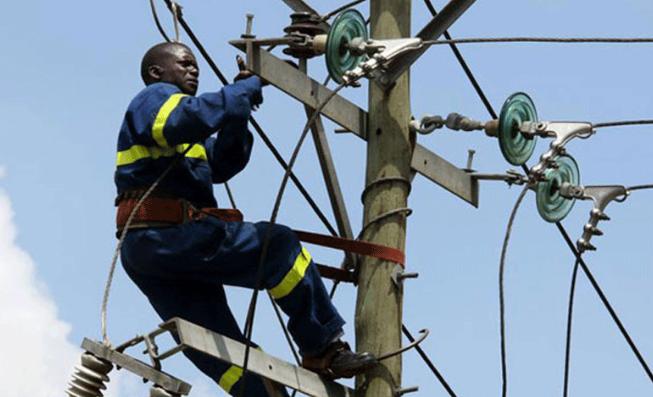
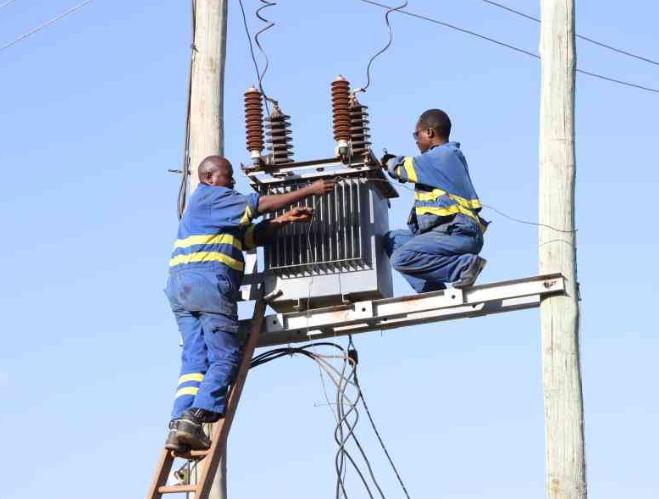
It is welcome news that the Energy and Petroleum Regulatory Authority (EPRA) has moved to end the monopoly of KPLC and others. The World Bank doesn’t like it.

Ironically, the very countries represented by the World Bank practise free market competition in their energy sectors. Competition in those economies has produced efficiency, innovation and excellence. Yet it is not good for Kenya.

The World Bank appears uncomfortable with alternatives to generate affordable electricity for the people. In places like Kenya, where development opportunities remain largely untapped, such positions can easily be interpreted as attempts to discourage local enterprise and maintain dependency instead of empowering communities.

Kenya has now cleared the path for independent power producers to directly sell electricity to large consumers, including industries, factories and commercial enterprises. Many industries left Kenya because of the high cost of electricity. Lower power costs will attract investment, create jobs and increase tax revenues that support development.

The State has published the Energy (Electricity Market, Bulk Supply and Access) Regulations, 2026, allowing producers without existing Power Purchase Agreements (PPAs) with Kenya Power to directly compete for large consumers. For the first time, businesses will be able to choose suppliers based on affordability, reliability and efficiency rather than being subjected to a single system without alternatives.

Power producers will still use the transmission infrastructure of KETRACO and Kenya Power through wheeling charges, meaning the existing utilities will continue earning revenue. However, EPRA must also allow alternative transmission mechanisms beyond State-owned systems if genuine market competition is to succeed.

The World Bank argues that competition could trigger higher electricity prices. That argument is difficult to understand because competition, in properly regulated markets, generally lowers prices, improves service delivery and forces efficiency.

For years, large consumers have paid disproportionately higher tariffs, effectively subsidising the broader electricity system while making Kenyan industries less competitive regionally and internationally. That model has hindered industrial growth and reduced Kenya’s manufacturing competitiveness.

Kenya Power recorded Ksh 219.26 billion in electricity revenue in 2025, figures expected to change once competition takes effect.

Kenya ignoring advice that would preserve inefficiency and high electricity costs deserves commendation. Affordable electricity should never be viewed as a threat. It is the foundation of industrialisation, employment creation, investment growth and economic freedom.

“Follow on Facebook, X, Instagram, TikTok and LinkedIn @BillyMijungu”
“#Forward #TusongeMbele #Change”

Why COP 30 Matters for COP 31

0

By Simon Okola

COP 30 may have closed in Belém, Brazil, but its real test will be in Antalya, Türkiye, where COP 31 will take place from 9 to 20 November 2026. The question for Kenya is not whether we attended another global climate conference. The sharper question is this: will Kenya arrive at COP 31 with bankable restoration portfolios, credible performance data, and climate finance-ready institutions, or will we arrive with another folder of aspirations? COP 30 took place in Belém from 10 to 21 November 2025, while COP 31 is officially scheduled for Antalya in November 2026.

For Kenya, COP 30 matters because it quietly clarified the rules of the next climate finance race. It was not only about speeches, pledges, and diplomatic theatre. It was about predictability of finance, direct access, adaptation funding, loss and damage, transparency, national systems, and the uncomfortable truth that countries without credible pipelines will struggle to attract serious climate money.

The COP 30 draft text on Article 9.5 of the Paris Agreement places strong emphasis on the predictability and clarity of financial support. It reiterates that developed countries are expected to communicate indicative quantitative and qualitative information, including projected public financial resources for developing countries. This is a major signal. The global system is moving from vague promises to forward-looking finance information. Kenya must respond by moving from project wish-lists to performance-backed investment pipelines.

The same draft text also points to issues that should matter deeply to Kenya: making finance flows consistent with low-emission and climate-resilient development, mobilizing private finance through blended finance and enabling regulatory frameworks, addressing the needs of developing countries, strengthening absorptive capacity, and learning from previous climate finance delivery failures. In plain language, COP 30 tells us that climate finance will increasingly follow countries that can prove readiness, not countries that merely prove vulnerability.

This is where Kenya’s opportunity lies.

Kenya has already placed itself in the climate leadership conversation. Its second Nationally Determined Contribution estimates that USD 56 billion will be required for mitigation and adaptation actions between 2031 and 2035. Of that amount, Kenya expects about 19 percent to be mobilized domestically, while about 81 percent, approximately USD 45.36 billion, will require international support. That figure should shake us awake. It is not a slogan. It is an invoice. And the world will not pay that invoice simply because Kenya has climate needs. The world will respond when Kenya has credible data, strong institutions, transparent tracking, investable projects, and a clear line between finance received and climate outcomes delivered.

This is why I argue that Kenya now needs a Restoration Performance Intelligence and Climate Finance Readiness Framework for nature-based solutions.

Nature-based solutions are no longer soft environmental language. They are becoming part of the hard architecture of climate finance. Kenya has launched a 10-year strategy to restore 10.6 million hectares of degraded land, aiming to increase tree cover from 12.13 percent to 30 percent by 2032, with community involvement as a central pillar. Kenya has also committed under AFR100 to restore 5.1 million hectares by 2030. These are powerful commitments, but commitments alone do not unlock finance. Performance does.

Restoration performance intelligence means Kenya must know, with evidence, what is being restored, where it is being restored, who is benefiting, what carbon and biodiversity outcomes are being generated, what water and soil benefits are emerging, and whether communities are genuinely better off. It means restoration must be monitored through credible MRV systems, satellite data, county-level reporting, community verification, safeguards, and finance-linked indicators. A tree planted for a camera is publicity. A restored landscape with measurable survival rates, livelihood gains, carbon integrity, and biodiversity value is an asset.

COP 30 also matters because of the Green Climate Fund. The COP 30 draft guidance notes that the GCF had approved USD 19.3 billion for 336 adaptation and mitigation projects across 134 developing countries. It also notes 158 accredited entities, including 106 direct access entities, and 144 readiness grants for national adaptation plans and adaptation planning processes. These numbers tell Kenya something important: access is possible, but access is competitive. The draft guidance also urges the GCF Board to simplify access modalities, reduce procedural burdens, improve timely delivery, and strengthen direct access, including support for direct access entities and non-governmental access.

Kenya should read that as a practical instruction. By COP 31, our national and county institutions, universities, conservation agencies, community-based institutions, and private-sector actors should not only be asking for climate finance. They should be prepared to receive, manage, report, and defend it. That means fiduciary systems, procurement systems, safeguards, gender and inclusion frameworks, grievance mechanisms, carbon accounting, restoration baselines, benefit-sharing rules, and project preparation facilities. Without these, climate finance remains a door we admire from outside.

The Fund for responding to Loss and Damage is another reason COP 30 matters. The draft text welcomes the operationalization of the Fund through the Barbados Implementation Modalities, which provide grant-based interventions for 2025 and 2026 using bottom-up, country-led, country-owned approaches to strengthen national responses to loss and damage. Even more importantly, the text notes that national governments of all developing countries may submit funding requests through direct access via direct budget support, subject to modalities to be decided by the Board.

For Kenya, this is not abstract. Droughts, floods, crop failure, livestock losses, coastal risks, water stress, and displacement are not climate projections. They are lived realities. If Kenya wants to benefit from loss and damage finance, we need more than disaster stories. We need loss and damage data systems. We need county-level damage assessment protocols. We need valuation tools for non-economic losses. We need local evidence on how climate shocks affect livelihoods, ecosystems, health, education, and cultural assets. The future of loss and damage finance will reward countries that can translate suffering into credible claims without reducing people’s pain to paperwork.

The Global Environment Facility draft guidance also carries a clear message. It welcomes efforts to simplify processes, strengthen collaboration with the GCF, Adaptation Fund and Climate Investment Funds, and improve timely access to resources. It emphasizes flexible and adaptable procedures for developing countries, continuity of national technical teams, country-driven programming, and stronger local capacity through national and regional institutions. For Kenya, this aligns directly with the need to build a permanent restoration intelligence architecture instead of temporary project units that disappear when donor funding ends.

Kenya has also taken a major step by launching the National Carbon Registry. NEMA says it is Kenya’s Designated National Authority for carbon markets and is hosting and administering the registry. The registry is expected to strengthen oversight, registration, measurable climate benefits, accountability, and protection against double counting. This is critical. Carbon markets without integrity are a fast road to scandal. Carbon markets with strong performance intelligence can become a serious climate finance channel for restoration, clean energy, agriculture, wetlands, rangelands, blue carbon, and community conservation.

But let us be honest. Kenya’s biggest risk is not lack of ambition. Kenya’s biggest risk is fragmented readiness. One ministry speaks finance. Another speaks forests. Counties speak local priorities. Communities speak survival. Investors speak risk. Donors speak safeguards. Carbon buyers speak verification. Scientists speak data. Unless these languages are translated into one coherent national readiness system, Kenya will keep losing time in the corridor between promise and payment.

That is why COP 30 matters for COP 31. It gives Kenya one year to prepare.

By COP 31, Kenya should have a national portfolio of climate finance-ready nature-based solutions. Not scattered proposals. A real portfolio. It should include county-level restoration pipelines, GCF-ready adaptation proposals, GEF-aligned biodiversity and land degradation programmes, loss and damage response packages, carbon market-eligible projects, and community-owned restoration models with transparent benefit sharing. Each project should show the problem, geography, cost, finance instrument, implementing entity, safeguards, expected climate impact, livelihood impact, biodiversity gain, gender and youth inclusion, MRV method, and repayment or grant justification.

The COP 30 Article 9.5 text asks future climate finance communications to improve information on access, projected finance, implementation needs, balance between mitigation and adaptation, geographical coverage, inclusion of vulnerable communities, methodologies, assumptions, and how finance responds to developing country priorities. Kenya should mirror this same logic in its own climate finance readiness work. If funders are being pushed to be clearer, Kenya must also be clearer about what it needs, where it needs it, how it will use it, and how results will be measured.

The politics of climate finance is shifting from sympathy to credibility. Countries that combine vulnerability with readiness will move faster. Countries that combine restoration ambition with performance intelligence will attract better finance. Countries that can show data, safeguards, local ownership, and investable pipelines will shape COP 31 outcomes instead of waiting for them.

Kenya has the landscapes. Kenya has the policy ambition. Kenya has counties on the frontline. Kenya has communities who understand land, water, livestock, forests, and survival better than any consultant flown in for a workshop. What Kenya must now build is the intelligence layer: the system that proves restoration is real, finance is traceable, carbon is credible, benefits are fair, and climate resilience is measurable.

COP 30 matters because it has shown the direction of travel. COP 31 will reward those who arrive prepared.

For Kenya, the message is simple: Antalya should not find us clapping for other countries’ finance breakthroughs. It should find us ready, organized, data-rich, locally grounded, and bold enough to say: here is our restoration portfolio, here is the evidence, here are the communities, here are the safeguards, here is the finance gap, and here is the return for people, nature, and climate.

Climate finance is no longer waiting for good intentions. It is looking for readiness. Kenya must meet it there.

About the Author

Simon Okola is an educator, project finance expert, UNFCCC negotiator and the Founder of Agenda Beyond Borders (ABB), a Kenyan-based policy and advisory organization focused on climate action, community development, and sustainable financing solutions.

Contact Agenda Beyond Borders:
Email: agendabeyondborders@gmail.com
Website: www.agendabeyondborders.org

What could be happening in Ruto’s backyard of Rift Valley as Kalonzo picks momentum

0

By Anderson Ojwang

President William Ruto’s backyard of Rift Valley may be turning out to be a weak link in his re-election game plan, with the emerging infiltration by the opposition in the region and low uptake of voter registration.

Surprisingly, the recent opinion poll by TIFA revealed an emerging gain by Wiper leader Kalonzo Musyoka, rating at 19 percent against President Ruto’s 24 percent.

Jubilee Party presidential candidate Dr Fred Matiang’i was at 14 percent, while the new entrant and ODM Secretary General Edwin Sifuna came in at 10 percent, and finally DCP leader Rigathi Gachagua stood at 9 percent.

Embakasi East MP Babu Owino, who has declared his interest for the Nairobi governorship, was rated at 2 percent, and 15 percent remained undecided.

Implications

For the opposition, a unity candidate with Kalonzo as the presidential flag bearer with either Sifuna or Matiang’i as the running mate would be a nightmare for President Ruto.

A Kalonzo-Matiang’i ticket would start them off at 33 percent, while a Kalonzo-Sifuna ticket would be at 29 percent. The Kalonzo-Sifuna rating is likely to pick up with the current Linda Mwananchi wave rocking the country.

For President Ruto, a constant of 24 percent against a united opposition at 54 percent is scary and frightening with only 16 months to the next general elections.

The 54 percent opposition rating provides it with a wide ray of choice for a presidential candidate and a running mate, and the President must work overnight to ensure the opposition does not remain united.

President Ruto’s allies in the ODM faction of Linda Ground are not ranked, and this injures the possible credibility of a running mate from the group.

By-election worry

The just-concluded by-elections in Rift Valley showed a sad reality on the ground, especially in Emurua Dikirr, Narok County, and Porro Ward in Samburu County. For Endo Ward in Elgeyo Marakwet, the confidence in the party and President Ruto is still very high.

In the parliamentary by-election, Mr David Kipsang Keter of the UDA Party won after getting 18,266 votes against Vincent Kibet Rotich of the DCP Party, who got 10,760 votes. DCP, which was recently formed, showed a strong performance with 36.4 percent of the votes cast against UDA’s 63.6 percent.

Total registered voters were 44,353, of which 29,538 votes were cast, giving a voter turnout of 66.6 percent.

Gachagua said his party was celebrating that one year after its formation, it stormed Mr William Ruto’s perceived stronghold in style, gave him a run for his money, and outperformed contemporaries.

Gachagua wrote: “Congratulations to Rotich for the splendid performance that has shaken south Rift politics, which for far too long – in fact for over 60 years – has been left behind in independent Kenya. A score of 10,760 votes is no mean feat.”

Gachagua said Kenya remains hopeful and greatly indebted to the people of Emurua Dikirr and hoped for a better future.

“I am so excited that you and your team worked tirelessly and made the DCP Party a key player in Rift Valley politics, reflecting Kenya’s focus for a united nation where political parties do not represent perceptions of regional and parochial representation, but a Kenya that is deprived of healthcare, education, security, and a bright future for its generations,” he said.

He said the DCP Party has made a heroic entry into Kenyan politics and is undoubtedly the most credible alternative vehicle for all aspirants who do not enjoy the favour of the ruling and corrupt elite, who cherish democracy and detest sycophancy.

“To the great people of Emurua Dikirr, you are the true heroes of our nation, Kenya, for showing independence of mind, rationality, exercising your democratic right, and refusing to be intimidated. I will, on my return from my overseas trip to the United Kingdom, personally visit you and thank those who campaigned for and supported Hon. Vincent Rotich. Watch this space: Vincent Rotich will be the candidate to beat on 10th August 2027,” he wrote.

UDA wrote on its social media platforms: “Thank you, Emurua Dikirr, Endo, and Porro for standing firm with UDA.”

In Samburu County, Daniel Lolngojine of the UDA Party was declared the winner with 2,328 votes. Josphat Jumani Leleur of the KANU Party finished second with 1,036 votes. Out of 6,358 registered voters, 4,194 votes were cast, giving a voter turnout of 65.96 percent.

The party posted: “Congratulations Daniel Lolngojine on your victory in the Porro Ward by-election in Samburu County. Your win is a clear reflection of the trust and confidence the people have placed in your leadership and vision.”

Voter registration

President Ruto could be facing apathy among his Kalenjin natives and decried the low uptake in voter registration and acquisition of national identity cards.

Ruto expressed disappointment over the low voter registration numbers from his Rift Valley stronghold and the Kalenjin community following the recently concluded Independent Electoral and Boundaries Commission (IEBC) exercise.

Ruto said it was a major setback, noting that he is crisscrossing the country seeking support while his base appears reluctant to register and turn out to vote.

“Over 1.8 million eligible voters with IDs have not registered, alongside another 500,000 youth who recently turned 18. We have 1.8 million Kalenjins here who have IDs but have not registered. Another 500,000 aged 18 have also not registered,” he said.

The President termed it a heavy political burden to seek support elsewhere while his own stronghold lags behind, urging residents to register in large numbers and secure his second-term bid in 2027.

“You’re giving me a tough job, struggling to seek support elsewhere while I have people back home. No, it shouldn’t be like this,” Ruto stated.

Goon politics: DG Owili emerges as the face of Kisumu, holder of Nyong’o and Ranguma peace legacy

0

By Anderson Ojwang

Kisumu Deputy Governor Dr Mathews Owili is emerging as the face of Kisumu and the holder of the peace legacy set by founding Governor Jack Ranguma and the incumbent Prof Anyang’ Nyong’o.

Dr Owili is currently seen as the image of a peaceful Kisumu, which is under threat from goon politics that have left the city on the brink of political violence and intolerance.

Dr Owili’s non-confrontational, peaceful mien and non-association with goons is fast endearing him to the electorate, who see him as the image of the Kisumu they want.

Three recent incidents have placed Kisumu as an emerging red violent zone in the country: the attack on Vihiga Senator Godfrey Osotsi, the failed attempts to disrupt the Linda Mwananchi rally in the city, and the violent incident at the burial of the father of Seme MP Dr James Nyikal, the late Mzee Okaka Nyikal.

Nyikal, the chairman of the Luo MP caucus popularly known as “Duol,” was not impressed at his father’s burial and called on Kisumu Senator Prof Tom Ojienda to rein in his goons.

At the burial, it was a show of goon might and a tip of the iceberg of the looming cancer in the community – the goon world and anarchy.

Siaya Governor James Orengo had to be escorted out of the funeral after youths chanting “two terms” moved closer to him, creating a security scare.

The chaos briefly disrupted the funeral programme and forced security officers to escort Orengo out of the venue to a safer exit.

Nyikal, the bereaved, lamented that the goons nearly killed his son at his father’s burial and was forced to ask Kisumu Senator Prof Tom Ojienda to go out and calm his goons.

“They nearly killed my son. I walked there to Senator Ojienda and asked him, ‘These people came with you. Can you tell them to stop?’ Senator, were you able to stop them?” he asked.

Nyikal said popularity is like love and cannot be bought with money, and wondered why fellow politicians walk to funerals in the company of goons.

“Let us be truly popular. Let us be able to walk to a funeral alone. I think popularity is like love. You cannot buy it with money. You may get it with money, but it will be lust,” he said.

Kisumu Women Representative Ruth Odinga said the intolerance – that Orengo was shouted at and had to be removed from the funeral – was unacceptable.

“What is this intolerance, that Orengo is shouted at and escorted out because he has a divergent view from those sitting there? What is the bigger picture?” she said.

Odinga wondered why the community was being divided and made to fight one another.

“As the Luo, why does it take another Luo leader to sponsor youths to remove another leader from a function?” she quipped.

Ahead of the Linda Mwananchi rally, threats of political violence were prominent, with Linda Ground lieutenants led by Alego MP Sam Atandi saying the group was not allowed in Kisumu.

Atandi wrote on his X handle: “No imposter will be allowed into Kisumu. Kisumu city must remain a peaceful city.”

He said Linda Mwananchi were not accepted in Kisumu and would not hold any rally in the lake city.

Interestingly, during the recent Linda Mwananchi rally in Kisumu, it was Dr Owili who came out to publicly state that all factions were allowed to conduct their political activities and that Kisumu was a democratic city.

In a statement, Dr Owili said: “The County Government of Kisumu takes note of recent events and public discourse and wishes to reaffirm its commitment to peace, unity, and orderly democratic engagement.”

He said political maturity was not merely the absence of conflict but the presence of dialogue, tolerance, and a shared vision for development.

“The conduct witnessed reflects a growing commitment to peaceful coexistence and constructive engagement, even in moments where opinions may differ. Kisumu County wishes to commend the people, leaders, and stakeholders who participated in yesterday’s engagements for demonstrating a high level of political maturity, restraint, and respect for one another,” he wrote.

Before the rally, Dr Owili said the County Government noted concerns raised regarding the alleged mobilization of goons and assured residents and investors that Kisumu remains firmly committed to upholding peace, law, and order.

“Any attempts to disrupt stability or incite disorder will not be tolerated, and relevant authorities will continue to remain vigilant,” he said.

Dr Owili said Kisumu continues to position itself as a key investment hub in the region, and maintaining a peaceful, stable, and predictable environment is critical to attracting investment, creating employment opportunities, and driving sustainable economic growth.

“We call upon all stakeholders to safeguard the county’s reputation and support initiatives that promote unity and development. The County Government remains dedicated to fostering an inclusive environment where dialogue prevails, institutions function effectively, and leadership is exercised with integrity and accountability. We urge all residents to continue embracing peace, unity, and mutual respect as we work together towards a prosperous future for Kisumu County,” he said.

Political analyst and resident Mr Obuya Gitembe said Dr Owili remains untainted and the perfect face of Kisumu to take over from Nyong’o.

“Kisumu cannot be left in the hands of goons to dictate terms. Some of those aspirants are hugely linked to the goons, and we cannot allow such a culture to germinate in the city. That is why Dr Owili is gaining in rating in the county,” he said.

Maseno South Bishop Rev Charles Onginjo accused politicians of encouraging the culture of handouts in the community and taking advantage of the poverty among the youths.

He said the politicians have formed a bad habit of transforming youths into political goons by exploiting their economic constraints for their own good.

“You are reducing our people to dogs and beggars. Stop cheating our people and riding on the ignorance of the people. It’s a very unfortunate culture we are developing,” he said.

Rev Onginjo challenged the politicians to develop the culture of truth and honesty to avoid sinking the community into beggary.

“If you walk around with goons, thinking you are popular, then you are cheated. That doesn’t make you popular. Empower the youths and make them economically independent,” he said.

300 stateless of Remba Island gain Kenyan citizenship

0

By Anderson Ojwang

For the last 24 years, one Jared Onyango Opollo, a resident of Remba Island in Lake Victoria, has made several unsuccessful trips to the provincial administration offices in search of one vital document: the national identity card.

Onyango, a 42-year-old fisherman, has for two decades contended with harassment from Uganda police who frequently patrolled the lake and the island.

Enthralled, Onyango thanked the government of President William Ruto for the initiative and for helping rewrite his story from stateless to Kenyan.

“It has not been easy for me. When you don’t have an identification, you are stateless and you cannot transact. I had to contend with frequent harassment over lack of a national identification card. This is a dream come true,” he said.

Onyango was one of the 300 beneficiaries of the national identity card issuance initiative programme by the Ministry of Internal Security and Administration, spearheaded by Permanent Secretary Dr Raymond Omollo.

The initiative also witnessed 56 residents of Remba Island register with the ongoing mass voter registration by the Independent Electoral and Boundaries Commission (IEBC).

From Remba Island, the initiative will now move to Migingo and Kiwa Islands, where for decades the residents have yearned for IDs.

Dr Omollo’s ambitious idea

In a move aimed at addressing the constant lack of vital documents such as the national identity card among Kenyans, and specifically in Nyanza, the government rolled out a programme to support acquisition.

This was one of President William Ruto’s initiatives to enable every Kenyan to acquire a national identity card and to register as a voter.

In Homa Bay County, Omollo opted for the services of Lavender Ojala, who has a huge network in the region, to coordinate and spearhead the programme.

“The initiative of the ID drive in Nyanza was PS Omollo’s brainchild, and I was assigned to help in the coordination because the exercise required a lot of effort and time commitment,” she says.

Ojala says her focus was mainly in Homa Bay County because she understood the terrain and also had solid networks in all the sub-counties, which became the backbone of the coordination.

Mapping

The first step involved visiting a few national identity registration and voter registration centres for fact-finding and understanding the problems that were contributing to low uptake of ID and voter registrations.

Ojala says she was passionate about the project because it was not only serving the country but also President Ruto, and being able to explain to the residents his projects and development agenda.

“I visited most of the stations to understand the challenges to help in policy formulation. I realized we have several people at the age of 40 and above who had not acquired the ID,” she says.

One of the main challenges was the lack of birth certificates, which is a mandatory requirement in the processing of the national identity card.

Ojala says most of the old people who had not acquired a national identity card were shying away because of the embarrassment and the tiring process involved in the acquisition of the ID.

“It became incumbent upon me to sensitize the community on the importance of the document, and the response was overwhelming. The queues grew day by day, and this explains why we have high uptake of ID and are nearly meeting the target in voter registration,” she says.

Ojala says lack of ID has largely undermined land transfers in the area among the residents, and this has delayed important transactions.

Her findings revealed that most of the women who had married before getting the ID shied away from acquiring the ID because of the laborious process of having to go back to their parents’ homes to get copies of their national identity cards.

“We were able to resolve some of the thorny issues, and we have had seamless registrations in the county. The process has been a success and a milestone,” she says.

She says they have already reached 60 percent of the target of residents acquiring the national identity card.

This week alone, as of 4th May, at least 3,000 national identity cards had been processed and dispatched to various sub-counties for collection.

Empowerment programmes

Ojala has engaged in women empowerment programmes, where she has formed groups in the county training them on table banking, savings, leadership, and business enterprises.

She has developed a platform where women can have their space to interact and share with one another.

Ojala has also been supporting sporting activities in the county by donating sports gear, uniforms, and financial support.

“I am happy that I have been able to empower the people in various forms. This is the commitment that pushes me every day,” she says.

Ojala says the initiative by Omollo has been a milestone and should be a continuous one.

Circus: The irony of Sh12 billion government’s debt to ODM, Mbadi’s silence a cause for worry

0

By Anderson Ojwang

Ironically, the demand by the Orange Democratic Movement (ODM) that the government pay the Sh12 billion debt is rather cynical.

On Monday, during the ODM strategic retreat press conference, where the Cabinet Secretary for Treasury and Economic Affairs, Mr John Mbadi, was in attendance, the thorny issue of the debt featured.

Interestingly and surprisingly, Mbadi, the immediate former party national chairman, once a loud voice in demanding that the government of President Ruto should pay ODM’s debt, remained mute and ignored the matter altogether.

Baffling indeed, that the ODM leadership, after the media raised the pertinent and thorny issue of the debt, opted to let it slide without any serious engagement and follow-up.

This is the circus and confusion that the party has found itself in after the death of its founder, the late Raila Amolo Odinga.

The payment of political party funds was one of the bases of the broad-based arrangement between President William Ruto and the late Raila.

Mbadi, upon assumption of office, has maintained studious silence on the matter and currently prefers to campaign for President Ruto’s second term.

Even after the media asked about the debt, it was Mbadi’s successor, Gladys Wanga, who only confirmed the amount owed to the party.

At the press conference, when Mbadi was asked to address the media, he veered off the matter but instead said ODM was a united party under the leadership of Dr Oburu Oginga as the party leader.

“Our being here is in recognition first that there is always a time to lead and a time to leave others to lead. We have this party. My two colleagues here have been deputy party leaders, while I have been the national party chairman for 10 years. But we were seconded to the government by this party, and so we could not hold the same positions. But there are people who have succeeded us. We must give them support, work with them, and work under them. Because when it comes to the party machineries, they are above us, and we are their subjects. We have come to demonstrate unity in ODM and that ODM is one under the leadership of Dr Oburu Oginga as the party leader,” he said.

Last Sunday, Deputy party leader Simba Arati demanded the payment before any pre-election coalition talks with President William Ruto’s United Democratic Alliance (UDA), insisting that the Sh12 billion debt owed to ODM must be paid before they could embark on pre-election coalition talks.

He said the payment of Sh12 billion in political funds owed to ODM was one of the irreducible minimum conditions before the talks.

“I want to say something here. The debts that the government owes us, kindly our brothers, pay us. We will not have any talks. The government owes ODM, and we want the government to pay us. The minimum irreducible number one item is the Cabinet Secretary for Treasury, John Mbadi, present here. Kindly pay our money first before we can engage in talks,” he said.

A new battle front in ODM over the Sh12 billion debt

A new battle front has erupted over the Sh12 billion debt, with Siaya Governor James Orengo criticising the Linda Ground faction for not recognizing his legal contribution.

Orengo wrote on his social media platforms: “It is a matter of public record that I personally initiated the legal proceedings on behalf of ODM to determine the funds owed to the party by the Government. The Ksh 12 billion figure exists today only because of the ruling in the case I filed. It is ironical to see the ‘Linda Tumbo’ group now demanding these funds from the President without acknowledging the legal groundwork I laid, choosing instead to target me with personal attacks.”

But in a hard-hitting response, a statement from the party accused Orengo of having reneged on his early promise to act for free on behalf of the party.

The statement said it was important to set the record straight regarding the Political Parties Fund case that the party successfully litigated.

“We have noted the claim by Gov. James Orengo that he personally initiated the matter. With respect, that position is not accurate. The true position, as borne out by the Party’s records, is that the National Executive Committee deliberated on the issue and formally resolved that the case be filed on behalf of the Party. At the material time, Gov. Orengo was brought on board as a senior-ranking member with legal expertise specifically to offer legal services on a pro bono basis,” read the statement.

The statement also accused Orengo of failing to institute the proceedings through his law firm but instead bringing in another law firm.

“That was the clear understanding. However, instead of instituting the proceedings through his own law firm, he conveniently introduced the firm of Ms. Julie Soweto, which ultimately filed the petition. From that point, the character of the engagement shifted from what had been understood as a pro bono undertaking into a contractual legal arrangement,” the statement read in parts.

It went further to state that the law firm was paid Sh40 million for the service.

“Following the Party’s success in the High Court in 2016 and subsequently in the Court of Appeal in 2018, demands for legal fees began to be made. Ms. Soweto’s law firm was paid Kes. 40 million by the party. The demand came as a surprise to everyone, including the Party Leader, the late Raila Odinga. There was nothing ‘PRO-BONO’. The documentary trail in this regard is clear and verifiable, and Hon. Orengo has personally received these payments. There is evidence to that effect,” the statement read.

Gachagua’s token taunt

Recently, former Deputy President Rigathi Gachagua challenged the ODM leadership to request President Ruto to disburse the Sh12 billion political fund owed to the party by the government.

Gachagua said it was unfortunate that the leadership was driven by tokenism from the President instead of seeking the disbursement of political funds owed to them.

“Instead of going for tokens, kindly ask the President to disburse even half of the amount owed to make the party financially sound. Former party national chairman John Mbadi is the current Cabinet Secretary for Finance. Why can’t he arrange to release funds to ODM? We need a stronger party with a sound financial standing. This is what the party leadership should prioritize,” Gachagua said.

Ruth Odinga accuses Mbadi of ungratefulness, disrespect to the Odinga family

0

By Anderson Ojwang’

Kisumu Women Representative, Ms Ruth Odinga, has accused Treasury Cabinet Secretary John Mbadi of being ungrateful and disrespectful to the Jaramogi Oginga Odinga family.

Ms Odinga claimed it was unfortunate for Mbadi to have made unsavory remarks about the family and that she will not allow the Cabinet Secretary to undermine the family.

“Mbadi now thinks that because my brother Raila Amolo Odinga is dead, he can now trample on our family. I am prepared and ready to face off with Mbadi,” she said in a telephone interview.

Ms Odinga did not limit the battle to only the telephone interview but went further to social media platforms and wrote: “Those who have rudishaad Raila are many. Today, I saw them in their true colors. I will respond very soon. Be sure sita nyamaza Mbadi!!! (I will not keep quiet, Mbadi!)”

Ms Odinga said there was a spat between her and Mbadi during the retreat and she even wondered about his role at the meeting by virtue that he was a public officer and should not be politically inclined.

However, attempts to get comment from Mbadi were unsuccessful after he failed to pick up our calls and respond to our text messages.

Ms Odinga said the ODM retreat in Mombasa was a venue to humiliate the Odingas and that she will not take it lying down any longer.

She said Mbadi was a beneficiary of the Odingas’ struggle and has no locus standi to disrespect and disregard the family.

“Who is Mbadi without the Odingas? We babied him, from MP to party chairman and now Cabinet Secretary. He should tread carefully. Mbadi must know and respect how he got to the top,” she said.

Ms Odinga said Mbadi has never been in the struggle and must respect the sacrifice the Odingas made for the country and the ODM party.

Ms Odinga was the only member of the family at the retreat after the party leader Dr Oburu Oginga sent his apologies due to unavoidable circumstances beyond his control.

The Kisumu legislator has been advocating for the reconciliation of the Linda Ground and Linda Mwananchi factions in the ODM party.

She has maintained it is prudent to unite the two factions of the party and voted against the sacking of Edwin Sifuna, ODM Secretary General.

But Mbadi had demanded the sacking of Sifuna, saying it was long overdue to allow the party to move into a pre-election coalition with President William Ruto’s UDA.

Political Goonism Must Stop: Time to Restore Dignity in Leadership

0

By Edris Omondi (Advocate)
edris@crimeprevention.net

There comes a time in every society when silence becomes complicity. That time is now.

The increasing normalization of political goonism in our governance structures is not only dangerous; it is a direct assault on democracy, dignity, and the moral fabric of our communities. We are witnessing a disturbing trend where elected leaders, instead of engaging in issue-based politics, resort to intimidation, hired chaos, and the weaponization of unemployed youth for political expediency.

This must stop.

It is in this context that I salute Governor Anyang’ Nyong’o. One may differ with him politically, but one cannot ignore his political discipline, intellectual uprightness, and refusal to submit to mediocrity disguised as populism. Leadership must not be reduced to theatre directed by goons and applause engineered by fear.

Politics must retain dignity.

Equally, Dr. James Nyikal deserves better. He is an honorable man. A legislator of substance, a village son, and a leader whose contribution to public service over the years commands and deserves respect. At a deeply personal moment, as he mourned and laid to rest his centenarian father – a man who lived to the remarkable age of 104, perhaps among the last of such centurions in our Kobita community and Seme at large, if not Kisumu County – basic decency should have prevailed.

Instead, politics intruded where humanity should have spoken.

What greater disrespect can one politician inflict upon another than to dishonor mourning? What kind of leadership celebrates humiliation over empathy? Funerals are sacred spaces in African society. They are not campaign grounds, nor should they be converted into battlegrounds for political score-settling.

This was not merely an insult to Dr. Nyikal’s family; it was an insult to the community itself.

The tragedy is larger than one funeral. Across the country, political actors increasingly believe it is fashionable to misuse young people as instruments of disruption. Idle youth are mobilized not for innovation, not for enterprise, not for civic engagement, but for heckling, violence, and intimidation. Their energy is rented cheaply for political survival.

This is not empowerment. It is exploitation.

A generation is being trained to believe that leadership is earned through noise rather than ideas, disruption rather than discipline, and violence rather than vision. Tomorrow, the same youth discarded after elections become the insecurity statistics we lament.

We cannot continue like this.

This is why voices from the Church and civil society matter now more than ever. Bishop Onginjo, in his recent sermon, courageously saw through the deception of political theatrics and reminded the congregation that truth must not bow to power. When the Church rises to speak truth to power, it becomes more than a place of worship – it becomes the conscience of society.

That prophetic role is urgently needed.

As we approach the 2027 General Election, civil society organizations, faith-based institutions, and community leadership structures must move beyond ceremonial election observation. Democracy cannot be defended only by sending observers on polling day while ignoring civic education for five years.

What exactly are we observing if we failed to prepare the people to make informed choices?

Election observation without sustained civic education is like arriving at a funeral with flowers after refusing to provide medicine. It is too little, too late.

The real work of democracy happens long before ballot papers are printed. It lies in educating citizens on constitutional values, ethical leadership, accountability, and issue-based politics. It lies in helping communities distinguish between leaders and opportunists, between service and spectacle.

We must teach people that leadership is not generosity at funerals, handouts at rallies, or sponsored chaos online.

Leadership is integrity.
Leadership is competence.
Leadership is restraint.
Leadership is character.

The 2027 elections must be a referendum on political maturity. Communities must reject leaders who thrive on division, intimidation, and manipulation. We must refuse to reward political hooliganism with public office.

Let us put our money where our minds are.

Let donors fund civic education with the same energy they fund election observation missions. Let religious institutions preach ethical citizenship with the same passion they preach prosperity. Let civil society return to the grassroots where democratic culture is built.

And let the youth be reclaimed – not as political weapons, but as architects of a better republic.

Political goonism is not strength. It is leadership failure.

Kenya deserves better.

And the time to demand better is now.

Ngatiari and Njeri Shine at NCBA Golf Series Migaa Leg

0

BY PHILLIP ORWA

Anthony Ngatiari and Teresia Njeri emerged as the winners at the 10th leg of the 2026 NCBA Golf Series held at Migaa Golf Club over the weekend, as the race for qualification to the Grand Finale gathered pace.

In the Overall Men’s category, Anthony Ngatiari delivered a composed performance to clinch the top prize, setting the pace in a competitive field of over 100 golfers.

Teresia Njeri, playing off handicap 28, won the ladies’ category after carding 75 nett to emerge as Overall Ladies Winner. She was followed by Agnes Wairimu (handicap 31), who carded 81 nett to finish as runner-up.

In Division Two Men, Timothy Murio (handicap 21) returned an excellent 71 nett to claim the winner’s title, while John Kimani (handicap 24) followed closely with 72 nett to secure the runner-up position.

The Division Two Ladies category saw Suzanna Wanja (handicap 31) take top honours with 81 nett, ahead of Ruth Wangombe (handicap 28), who returned 85 nett to finish second.

Ruth Wangombe continued her strong showing in Division Three, where she emerged as winner with 85 nett, while Wanjiru Ngariani (handicap 50) finished as runner-up after returning 95 nett.

In the Guest category, Jessy Ndegwa (handicap 12) posted an impressive 72 nett to claim the top prize.

Speaking after the event, Julius Mburu, NCBA Kiambu Branch Manager, noted that the series continues to play an important role in bringing golfers together while supporting growth across communities.

“We are pleased to be here at Migaa Golf Club for another successful leg of the NCBA Golf Series. This tournament continues to bring together golfers from different backgrounds, creating a strong sense of community and healthy competition. As NCBA, we remain committed to supporting platforms like this that not only grow the sport but also allow us to engage with our customers and partners,” he said.

The Migaa leg marks an important stage in the 2026 series, with more golfers securing qualification spots as the journey towards the Grand Finale at Karen Country Club continues.