Home Blog Page 39

Ruto declares confidence in Kindiki, closing door to DP slot suitors

0
Deputy President Kithure Kindiki taking oath

By Anderson Ojwang

After the recent declaration by the Orange Democratic Movement (ODM) party leader, Dr Oburu Oginga, that his party was not eyeing the deputy president slot in the pre-election pact, President William Ruto has moved to declare his confidence in his deputy, Prof Kithure Kindiki.

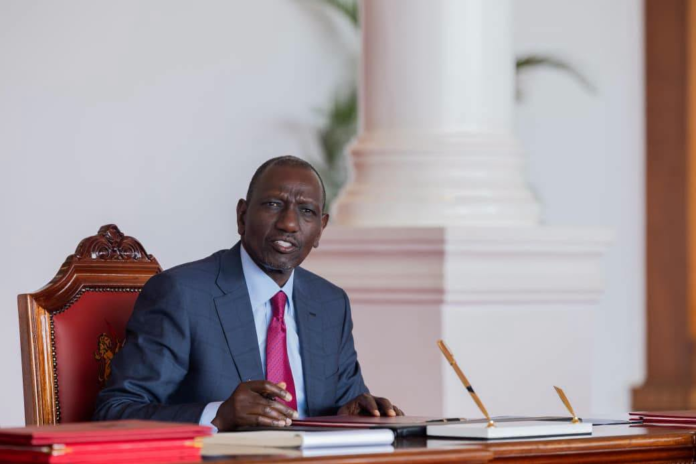
Speaking at the UDA Aspirant Forum, President Ruto declared that Kindiki was an able assistant and that he has confidence in his leadership and fits the bill.

“Huyu Naibu wa Rais, Abraham Kithure Kindiki, anatosha ama hatoshi? Ni fire si fire? You know, at one time, I was Uhuru Kenyatta’s deputy.
The work this gentleman is doing is what I did when I was the deputy to President Uhuru Kenyatta. That is the truth. I am happy that currently, I have a principal assistant who knows his duties and role.
Allow me to ask, if it was that other former deputy, could he have the brains to understand his role like Kindiki does? Now you know, my work has been lessened. I have an assistant who understands the government,”
he said.

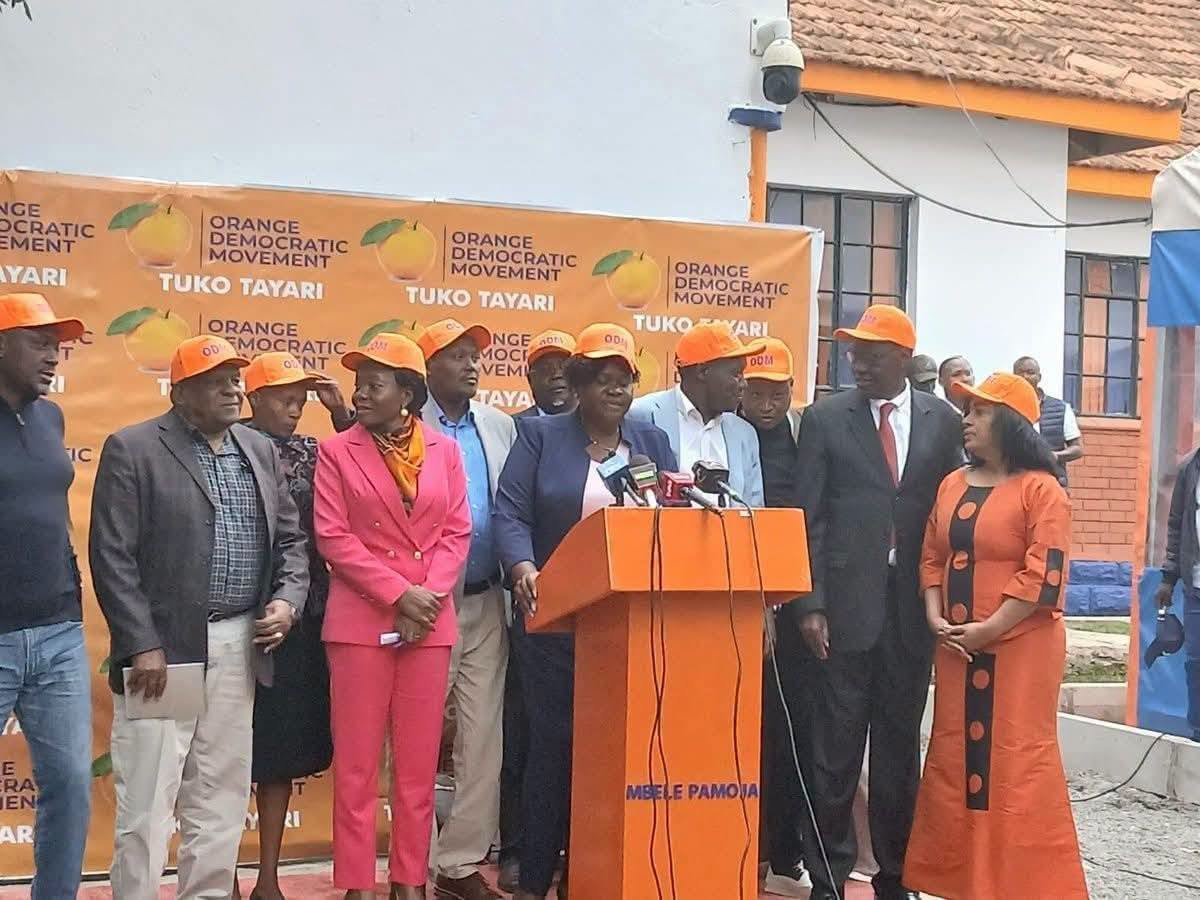
On Monday, in Kisumu, Oburu said before President Ruto and his deputy, Prof Abraham Kithure Kindiki, that ODM was not eyeing the deputy president slot.

Oburu said, “Deputy President, do not think we want your seat and that we want to chase you away. No. Please, you are our friend, but as we negotiate, we are going to negotiate what our people deserve and what our party deserves.
ODM is not a Luo party, but it is a national party. We will negotiate fairly. We are not going to take anybody’s share. Everybody will get their fair share,”
he said.

Last year, in a TV interview, Oburu had declared that ODM would demand the deputy presidency in the coalition arrangement.

Oburu said then that ODM would not accept any position lower than that of Deputy President in any pre-election coalition ahead of the 2027 General Election.

He maintained that the party would only negotiate for top positions from a position of strength and not desperation.

“If we have to go for a lower position, it must not be lower than number two (Deputy President) in any formation. That is my take. We should not take less than that,” he said.

Oginga said ODM’s priority is to rebuild and unite its grassroots base to retain influence in national politics.

“I want my people of ODM to strengthen ODM as a party. If we are going to start talking about the position we will occupy there, we will get nothing,” he said.

“Nobody will respect you or negotiate with you if you are a weak party. Our emphasis is on strengthening ODM so that we can negotiate for the top position in the land.”

Oburu, on Monday, said he would be leading ODM during the negotiations and promised to lead the party to Canaan through Singapore.

“I am leading ODM. When you follow flies, it will take you to the pit latrine, and when you follow bees, you will get to the honey.
We are in talks with UDA. We are going to make sure that we have more than what we have currently.
We will start talking. With UDA, some people are saying we are in a hurry. We are not in a hurry. The election is next year. We must prepare in advance. I want to tell you that I will take you to Canaan through Singapore.”

A section of ODM leaders from the Coastal region, during Raila Odinga’s posthumous birthday, declared that their irreducible minimum was the slot of Deputy President in 2027 in exchange for supporting President Ruto.

The leaders proposed Cabinet Secretary Hassan Joho for the Deputy President post.

During a recent ODM Linda Ground meeting in Kisumu, Rarieda MP Otiende Amollo told Oburu that, as the party leader of ODM, he could not double up as the lead negotiator in the ODM–President William Ruto’s United Democratic Alliance (UDA) pre-election coalition pact.

“Mokuongo amor. Chieng kacha an ema ne awacho ni structured negotiations. Sani Daktari ka itelonwa, joma obiro ka, oyie ni nyaka wadhi e structured negotiations. To nyaka wadhiye
(At the beginning, it was me who spoke about structured dialogue. Currently, Dr Oburu, you are our leader. Everyone in attendance agrees that we must have structured negotiations).

Ka iwacho ni structured negotiation, ok ochuno ni ipingo. Matiende ni wa gin lemo moko. Wadwaro ni wan bende omedwa lemo
(If we talk about structured negotiations, it does not mean we are against the talks. We are demanding more slots).

Daktari saa ma wadhi e structured negotiations, in kik ibed mbele bed chien. In ja telo. Thuonu ok bed mbele. Wasigu nyalo nege
(Dr Oburu, now we are heading into structured negotiations. You should not lead the talks. You are our leader and you cannot be at the front. You could be killed and we would remain without a leader).

Ibed ki ji ma kisungu luongo ni the first right of acceptance and the first right of refusal
(You must have what they call the first right of acceptance and the first right of refusal).

Ka dhi maber to iwacho ni ayie. Ka dhi marach to iwacho ni adagi. Wan ema itiyo kodwa. Wan e foot soldiers. Jowa mantie gi are foot soldiers. Kata onegwa onge rach tek ni thuonwa to pod ngima
(If it is right, you accept, and if it is wrong, you refuse. Use your foot soldiers. Even if the foot soldiers are killed, that is normal, provided the leader remains safe)
,” he said.

Reviving Azimio Is a Breath of Fresh air for Babu and Sifuna

0

Reviving Azimio Is a Breath of Fresh air for Babu and Sifuna

The revival of the Azimio Coalition Party is not a matter of nostalgia. It is a political necessity, especially for Edwin Sifuna, Babu Owino and a growing list of ODM rebels including Kibagendi, Osotsi and others whose political relevance is increasingly under threat within a drifting ODM.

Without Azimio, these leaders remain trapped in an internal party rebellion with no national ladder to climb. With Azimio, they immediately regain altitude, visibility and bargaining power at the highest level of national politics. That is the brutal reality.

There is nothing preventing the Azimio Chairman from formally elevating Sifuna, Winnie Odinga and Babu Owino as Deputy Party Leaders under Kalonzo Musyoka. ODM is the largest shareholder in Azimio and must stop behaving like a tenant in a house it helped build. Power within coalitions is never begged for, it is asserted.

Azimio remains the only opposition vehicle with true national appeal. It sells across regions without apology or ethnic confinement. More importantly, it is the only legitimate platform through which the Raila Odinga political inheritance can be claimed. The Azimio symbol, the iconic “R”, is inseparable from Raila Odinga’s final presidential run. That brand equity did not vanish with his retirement from active contestation.

For the first time, Azimio can mount a serious six piece assault countrywide. This coalition of over twenty political parties is not a ceremonial outfit. Properly retooled, it has the numbers, structures and history to redraw the political map in ways deeply uncomfortable for William Ruto.

Azimio inherits nationwide structures that Ruto’s regime has failed to neutralise. These networks only require minimal oiling to roar back to life. Anyone dismissing this advantage misunderstands the long game of Kenyan politics. Uhuru Kenyatta’s strategic genius in constructing this political architecture remains one of the most consequential interventions in recent history.

The direction forward is also becoming clearer. With Kalonzo Musyoka as Coalition Leader, the path to him becoming the 2027 presidential candidate is almost inevitable. A ticket anchored by Kalonzo and reinforced by figures such as Wycliffe Oparanya or George Natembeya would be a hard, disciplined and nationally balanced force.

The choice before ODM rebels is simple. Continue fighting internal battles with diminishing returns, or seize Azimio and reposition themselves at the centre of national power. Politics rewards the bold, not the loyal.

Kalonzo wins the IEBC battle after CEO is booted out

0

By Anderson Ojwang

Twelve hours after his appointment as the leader of the Azimio Umoja Coalition, Kalonzo Musyoka is basking in another victory. This time, it is the sacking of Independent Electoral and Boundaries Commission (IEBC) Chief Executive Officer Hussein Marjan.

The sacking of the Commission’s Secretary is a victory for the united opposition in their quest to defeat President William Ruto in the 2027 presidential elections.

With only 18 months to the 2027 General Election, the sacking of the CEO opens the Commission to new blood to run and manage the next general election and weeds out top leadership at the Secretariat that presided over the 2022 General Election.

Recently, Kalonzo demanded the immediate sacking of the CEO, accusing him of mishandling the last General Election and renewing contracts even before the Commission was reconstituted.

In a press statement, the IEBC said, “The IEBC today announces the formal exit of its Chief Executive Officer and Commission Secretary, Mr Hussein Marjan, after reaching an agreement to terminate his services by mutual consent. This, in effect, brings to an end his tenure at the IEBC and marks the beginning of the process of recruiting a new CEO and Secretary to the Commission.”

The Commission assured Kenyans that any changes would be designed to ensure effective institutional preparedness, strengthen internal accountability and results-oriented systems, and enhance leadership.

“The IEBC Secretariat is very crucial in service delivery on electoral management and related matters, and it is the intention of the Commission that it reflects the level of preparedness, passion, and commitment to delivering credible, free, and fair elections in Kenya,” read the statement in part.

The sacked CEO wrote, “As you may be aware, the Commission and I have mutually agreed on a structured transition in the Office of the Commission Secretary/Chief Executive Officer. I write to you today to express my sincere appreciation to each one of you for the privilege of serving alongside you over the years.”

Kalonzo demanded the immediate sacking of the CEO and had threatened to lead a protest to the IEBC offices.

“We are saying Marjan cannot preside over the elections as the CEO because he has only one year to the end of his contract. Let the Commission prepare his package and pay him off. He is the problem. We cannot have him; let him pack and go. We tell the new commissioners that they have a destiny with Kenyans,” he said.

Kalonzo accused Marjan of extending the contracts of service providers when the Commission had not been reconstituted and termed the move illegal.

“We agreed that the CEO of IEBC, when there was no Commission, moved with a lot of speed and renewed those contracts. He signed everything, and when the new commissioners came in, they found he had renewed the contracts. This was an illegal thing. He was not supposed to do it,” he said.

Kalonzo said that as one of the chairpersons in the NADCO team, they had recommended in the report that the CEO, Marjan, be sacked and should not be allowed to preside over the 2027 General Election.

“I was in the NADCO team. We recommended that Marjan be sacked. He undertook direct procurement and extended the contracts up to 2026,” he said.

Former Attorney General Justin Muturi had claimed that in July last year, Marjan met officials of Smartmatic in what he believed to be a conspiracy to rig the 2027 elections.

President William Ruto’s allies, led by his aide Faruk Kibet, told off the opposition over the attack on the IEBC.

“We have seen the opposition camping at the IEBC headquarters and the police. They have sensed defeat,” Faruk said.

Faruk also took a swipe at former Deputy President Rigathi Gachagua, suggesting he should apply to become the Chairperson of the Independent Electoral and Boundaries Commission (IEBC) so that he could declare Ruto the winner of the 2027 election.

Speaking at a recent empowerment forum at Kisuluni Chief’s Camp, Kikumbulyu North Ward, Kibwezi West, Makueni County, Faruk mocked Gachagua’s concerns about the credibility of the electoral commission.

“And this issue of IEBC, I see, is troubling this tribalist. I don’t want to, I’m asking Mutuse, let this person (Gachagua) apply to IEBC to be given the position of chairman. We will just defeat him there, even when he is the chairman. He himself will announce that William Ruto has won the election,” Kibet said.

With the changes, the IEBC has blown the first whistle, and the battle for the coveted seat is now open and is likely to be muddy and gruelling.

The exit of the CEO now opens the Commission to another battlefront in the appointment of a new Secretary. Who will have their say and way?

Owili’s Moment: How ODM Is Recalibrating Kisumu Politics

0

By James Okoth

President William Ruto’s recent visit to Kisumu may turn out to be more than a symbolic olive branch extended to an opposition stronghold. The optics of that visit, particularly the visible warmth between Kisumu Deputy Governor Dr Mathew Owili, President Ruto, and ODM elder Dr Oburu Odinga, have reignited debate about the future of Kisumu’s gubernatorial race and the evolving dynamics within the Orange Democratic Movement.

For years, Kisumu has stood as the ideological heartland of ODM, a county defined by loyalty to Raila Odinga, a fierce defence of opposition politics, and resistance to the Kenya Kwanza administration’s political narrative. But politics in Kenya, much like a river, changes course when the terrain shifts. What is now unfolding in Kisumu suggests that the old boundaries between government and opposition are quietly dissolving.

Dr Owili’s political positioning is especially significant. As the Deputy Governor and now a leading contender to succeed Governor Anyang’ Nyong’o, his growing proximity to both State House and the Odinga family hints at an emerging consensus among political elites. “In Kisumu, alignment of this nature is never accidental,” observed a senior ODM figure familiar with the county’s internal dynamics. “It often signals where the wind is blowing within the party.”

Owili has long enjoyed goodwill within ODM’s top circles. Many insiders view him as a steady and acceptable continuity candidate within the Raila Odinga political orbit, a leader who can balance loyalty to the party with pragmatism in dealing with the national government. His public gestures of cooperation with national leaders, combined with his consistent deference to ODM’s core leadership, suggest a carefully managed political recalibration.

This shift mirrors what is happening at the national level. ODM’s increasing engagement with the Kenya Kwanza administration under the cooperation framework has begun to influence county-level politics. Kisumu, once considered unthinkable terrain for such political collaboration, is now emerging as a test case for ODM’s post-opposition identity.

If the party intends to maintain influence and political stability within a cooperative national arrangement, zoning the Kisumu gubernatorial seat in favour of a figure like Dr Owili could appear both strategic and inevitable. His candidacy represents continuity for ODM loyalists, comfort for national actors seeking stability, and a possible bridge across the old political divide.

However, this pragmatic shift also exposes deep tensions within ODM’s base. Aspirants such as Dr Joshua Oron, Aduma Owuor, and Senator Tom Ojienda, who have each cultivated their own followings, may view such a move as premature or exclusionary. Whether they will rally behind a single candidate endorsed by the party hierarchy remains uncertain.

“The danger for ODM is not necessarily losing the seat,” said a Kisumu-based political analyst. “It is the confusion within its ranks. People are asking, what does ODM stand for now — opposition or cooperation?”

Yet in modern Kenyan politics, proximity to power is often the currency of survival. Development projects, government appointments, and political relevance increasingly depend on constructive engagement rather than perpetual confrontation. If Dr Owili eventually emerges as ODM’s consensus candidate, it will signify not just his personal breakthrough but a broader political evolution: the moment Kisumu’s politics formally entered a post-opposition era.

Whether voters embrace this change or resist it will define Kisumu’s next political chapter. What remains certain is that ODM, once defined by protest and defiance, is quietly rewriting its playbook, replacing ideological rigidity with strategic pragmatism. In that unfolding story, Dr Mathew Owili stands at the centre of a delicate and defining transition.

Gunmen Strike in Macalder: Residents Decry Rising Insecurity in Gold Mining Hub

0

By Erick Otieno

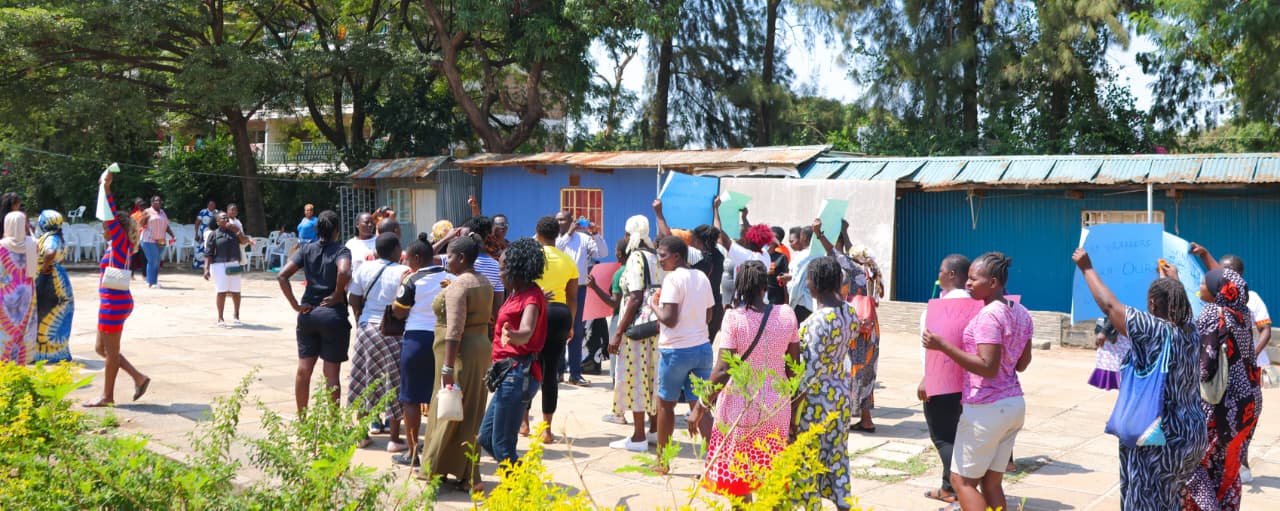
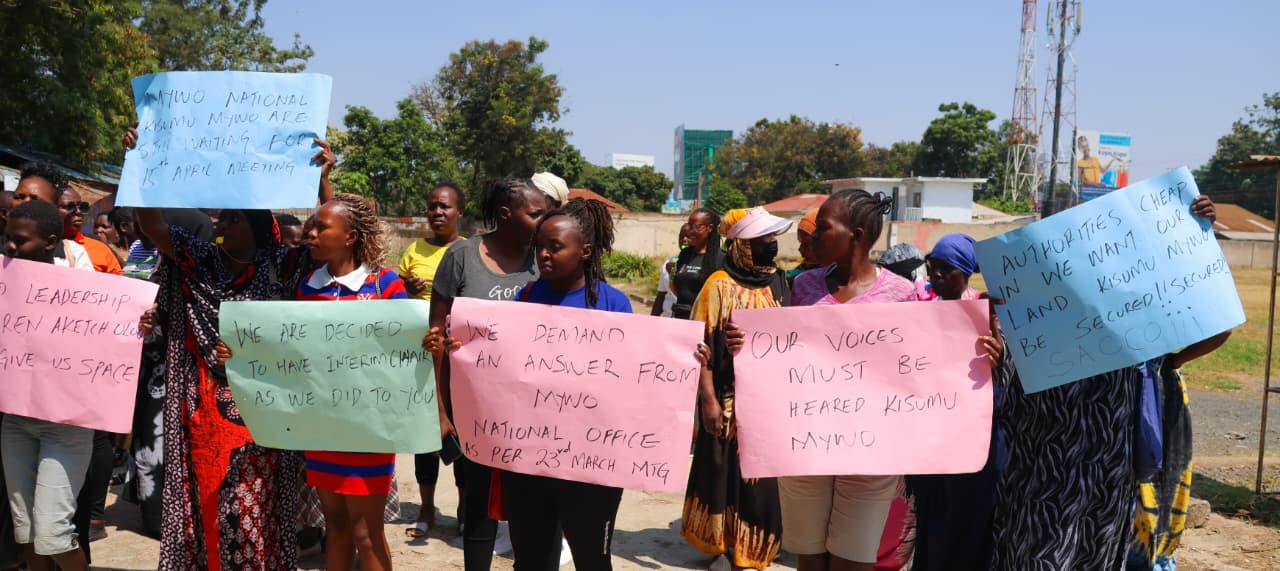
Residents of Macalder Town in Nyatike Sub-County have raised alarm over worsening insecurity following a deadly robbery incident in which a couple was shot at close range by armed attackers.

The victims, Mr Francis Juma and his wife, Madam Jedida Otieno, were ambushed on Monday evening shortly after leaving their M-Pesa shop within Macalder Town. The attack occurred near the Macalder Police residential area, where the assailants reportedly opened fire before fleeing with an undisclosed amount of money.

Mr Juma and his wife sustained serious gunshot wounds and are currently fighting for their lives in separate hospitals in Migori and Kisumu.

Speaking to journalists, Mr Vincent Aketch, the father of Mr Juma, condemned the persistent insecurity in the area.

“We are living in fear. Two weeks ago, another shooting happened near the same place, and up to now, nothing has been communicated to the public. We want justice and protection,” said Mr Aketch.

Residents noted that the latest incident is part of a worrying trend of violent crime in the gold-rich region, which had remained largely peaceful for decades.

Macalder Kanyarwanda Member of County Assembly (MCA) Hon. Felix Okwanyo, while addressing residents at the Nyatike North Deputy County Commissioner’s office, expressed disappointment with the security agencies for what he termed as laxity.

“It is unfortunate that insecurity is rising in an area that has been peaceful for many years. The security team must take responsibility for this failure,” said Okwanyo.

He urged residents to remain vigilant and report suspicious individuals, noting that the mining site has attracted many foreigners from neighbouring countries.

“We have many strangers in the mining area, some from the Democratic Republic of Congo, Rwanda, Burundi, Tanzania and other regions. People must be alert and report anything unusual,” he added.

The MCA called for collective action from all stakeholders to address the insecurity, warning that it poses a serious threat to Nyatike’s fast-growing economy. He further appealed to the Principal Secretary for Internal Security, Dr Raymond Omollo, to intervene and consider transferring officers who have overstayed in the area.

Nyatike North Deputy County Commissioner Mr Daniel Omukoko confirmed the incident and assured the public that investigations are under way.

“We have launched investigations, and we are confident that the perpetrators will be arrested and brought to book,” said Omukoko.

He also warned illegal foreign nationals operating in the area that they would be dealt with in accordance with Kenyan law.

Mr Omukoko revealed that a spent cartridge was recovered at the scene and would be forwarded to the Directorate of Criminal Investigations (DCI) headquarters in Nairobi for forensic analysis.

“The recovered cartridge will help us establish the firearm used in the attack,” he stated.

Several residents, led by Mr Jack Okeyo and Ms Emily Akoth, lamented the growing insecurity, saying it has created fear and uncertainty among hardworking community members.

“We have struggled for years to build our livelihoods here. Now we live in fear because of criminals,” said Ms Akoth.

They called on the government to enhance security patrols, increase police presence, and fast-track investigations to restore peace in the busy mining town.

As Macalder continues to attract investors and miners due to its rich gold deposits, residents are urging authorities to act decisively before insecurity cripples the region’s economic potential.

All Ordinary Level School Leavers Should Join Technical Training

0
Billy Mijungu

By Billy Mijungu

Kenya Vision 2030 seeks to transform the country into a newly industrialising middle income nation driven by a skilled productive and globally competitive workforce. At the centre of this ambition is human capital development that aligns education training and labour market needs. It is within this framework that all ordinary level school leavers should be required to undergo technical training before joining university.

The Technical and Vocational Education and Training reforms already recognise skills development as a core pillar of national growth. Through technical training institutes vocational colleges and centres of excellence government policy has increasingly shifted towards competence based education practical skills acquisition and industry relevance. Making technical training a prerequisite for university admission would therefore be a a consolidation of existing reforms.

Vision 2030 identifies manufacturing infrastructure development housing and value addition as key drivers of economic growth. These sectors depend heavily on artisans technicians and technologists rather than degree holders alone. Kenya however continues to face a serious shortage of plumbers electricians welders bricklayers tailors mechanics and other skilled workers. Requiring all school leavers to pass through technical institutions would directly address this gap and support national development priorities.

This policy would also correct the social bias that places university education above technical skills. TVET reforms seek to elevate technical training to equal status with academic pathways by promoting dignity of labour employability and entrepreneurship. A mandatory skills phase would ensure that every young person exits the education system with a marketable competency thereby reducing youth unemployment and underemployment.

Recognition of Prior Learning as provided for under the TVET legal and policy framework must be fully institutionalised. Individuals who are self taught or who have acquired skills through apprenticeships or on the job experience should be assessed recognised and certified. Such certification should allow progression to higher training or university education in line with the principles of inclusivity lifelong learning and productivity embedded in Vision 2030.

Ultimately this policy would create a technically empowered population capable of driving industrialisation innovation and sustainable economic growth. By anchoring university education on prior skills training Kenya would be investing in an education system that responds to economic realities. This is a forward looking industrial capacity driven policy that fully reflects the spirit and intent of Vision 2030 and the ongoing TVET reforms.

Uhuru in control: Reshaping the opposition politics to face President Ruto

0

By Anderson Ojwang

Former President Uhuru Kenyatta is not done with his mission. He is back to the drawing board and strategically calculating the 2027 presidential contest.

For the second term, Uhuru will face off with his former deputy and ally-turned bitter political rival, President William Ruto.

Despite the defeat of Azimio la Umoja in the 2022 presidential election, Uhuru is back in the ring, this time more battle-hardened and strategic.

Uhuru, having learnt a hard lesson after his preferred presidential candidate, the enigma Raila Amolo Odinga, lost to Kenya Kwanza candidate President William Ruto by 200,000 votes, is not leaving anything to chance.

This time, Uhuru has his eyes firmly set on the presidency, and that is why he has crafted a raft of strategies and changes within the coalition.

First, Uhuru has moved to revitalise his Jubilee Party and made significant changes and appointments in the leadership.

Uhuru appointed former Cabinet Secretary Dr Fred Matiang’i as his deputy in the party and a probable presidential candidate.

He equally moved Jeremiah Kioni from the position of Secretary-General and replaced him with Mr Richard Moitalel ole Kenta.

“The Jubilee Party National Executive Committee, under the leadership of Uhuru Kenyatta, is pleased to announce the appointment of former Narok North MP Mr Richard Moitalel ole Kenta as the party Secretary-General.”

In November last year, Uhuru had admonished Kioni for what he termed as “insults” against Rigathi Gachagua.

“And you, Kioni. This habit of routinely seeing you online insulting other leaders — this or that, sometimes Gachagua — what for? I don’t want that kind of rubbish,” he said.

“Anyone using my party to insult others will have to go. I will ensure you are kicked out, and you will have to go and get yourself another party to propagate that kind of rubbish.”

Kioni was seen as a critic of DCP leader Rigathi Gachagua and an antagonist in Mt Kenya politics.

Uhuru has equally agreed to a political truce with his former personal assistant, Rigathi. The two have united and are likely to lock President Ruto’s UDA out of the Mt Kenya region.

Gachagua, in a recent TV interview, downplayed his past political attacks on Uhuru, saying his criticism during the 2022 campaigns was purely part of the rough-and-tumble of politics and not driven by personal animosity.

“Campaigning was campaigning; when you are campaigning, there are no rules. It’s rough and nothing personal, really. We were just looking for leadership,” he said. “The things that were said then dropped immediately when the election was over. You don’t bother about them.”

Gachagua, who has since fallen out with Ruto, been impeached, and is now eyeing the country’s top seat in 2027, said politics should not be taken personally, describing election campaigns as “not a church affair or a wedding.”

“When you’re looking for votes, you come up with all sorts of issues against your opponents. And really, there is nothing personal. Once the elections are over, you move on,” he said.

Recently, Kalonzo negotiated a handshake between Uhuru and Gachagua, which is a force likely to lock out President Ruto in Mt Kenya.

Yesterday, Uhuru made changes in Azimio la Umoja by appointing Wiper leader Kalonzo Musyoka as the leader of the coalition.

He also sacked immediate former Secretary-General Junet Mohamed and replaced him with Suba South MP Caroli Omondi.

The appointment of Kalonzo is likely to trigger political excitement within the united opposition and give a clear signal of a possible presidential line-up to face off with Ruto.

“I graciously accept my appointment as Party Leader of Azimio La Umoja One Kenya Coalition. I thank our chairman, President Uhuru Kenyatta, the coalition leadership, and all constituent parties for this trust. I congratulate my colleagues entrusted with various leadership positions.

Azimio continues to represent the hopes of millions who believe in justice, inclusivity, and a Kenya that works for everyone. We welcome other like-minded individuals and parties to join us as the government in waiting.

This is bigger than any individual; it is about Kenya. I urge my fellow countrymen and women not to despair. Together, we will offer principled leadership focused on national renewal,” he wrote on his social media handles.

The removal of Junet, who was recently accused of undermining Raila’s presidential bid, and his replacement with Caroli is seen as a powerful statement.

Recently, ODM Secretary-General Edwin Sifuna accused Junet of misappropriating agents’ funds and bungling Raila’s campaigns.

Sifuna also accused the party’s Director of Elections, Junet Mohamed, of allegedly failing to pay presidential agents.

Sifuna blamed Junet for undermining Raila’s chances of forming the government in the 2022 general election.

“We are now mourning. If it was not for you, we could have formed the government,” Sifuna said.

Sifuna, who spoke at a funeral in Mt Kenya, demanded a thorough audit of the 2022 presidential campaigns.

“The day we will start the audit of the 2022 elections, it is good you have started the debate. Let everyone say their contributions in the 2022 general elections,” he said.

Junet denied the accusations and instead blamed former President Uhuru Kenyatta, whom he accused of appointing his blood brother, Muhoho Kenyatta, to manage the agents’ funds.

“The answer is simple, clear and verifiable: Former President Uhuru Kenyatta released the funds meant for election agents to his blood brother, Muhoho Kenyatta,” he said.

Similarly, former United Democratic Alliance (UDA) Secretary-General Cleophas Malala claimed that Junet was Ruto’s “agent” in Raila’s team and leaked ODM agents’ data.

“Junet Mohammed has been Raila’s right-hand man for a very long epoch. He was the one managing and ensuring Baba took his medicine on time. He was closer to Baba than even his children.

I want to confirm here, in this interview today, I was William Ruto’s right-hand man. We were in UDA; at night, Junet used to come and see William Ruto.

Brief him on everything. We even had the list of agents for ODM across the country. We knew who was going to be an ODM agent in which place courtesy of Junet,” he claimed.

Similarly, the Azimio La Umoja Volunteer Board, through one of its members, Ronny Raburu, accused Junet of shedding crocodile tears when he failed to address the Central Kenya agents’ issue.

Ronny Raburu said that despite addressing the agents’ issue with Raila at a breakfast meeting and detailing Junet to urgently handle the matter, the latter went mute.

Raila’s chief agent during the August 9 elections, Saitabao Kanchory, claimed that Raila only listened to one person — Suna East MP Junet Mohamed.

“We could not have lost this election if it weren’t for three people. The first one is Junet Mohamed, the second is Joe Mucheru, and the third is Makau Mutua. These are people I have worked with and respect, but in terms of responsibility, they take the highest responsibility,” he said on NTV.

IEBC CEO resigns

0

By Sandra Blessing

The Secretary of the Independent Electoral and Boundaries Commission (IEBC), Hussein Marjan, has resigned.

In a memo this evening, Marjan said he was exiting on a mutual agreement with the Commission.

“Message to the Members of Commission and Staff on My Transition from the Commission

Dear Colleagues,

As you may be aware, the Commission and I have mutually agreed on a structured transition in the Office of the Commission Secretary/Chief Executive Officer. I write to you today to express my sincere appreciation to each one of you for the privilege of serving alongside you over the years.

Since joining the Commission in April 2015, first as Deputy Commission Secretary/Chief Executive Officer and later as Commission Secretary/Chief Executive Officer, it has been an honour to work with a professional, dedicated, and resilient team committed to the constitutional mandate of the IEBC. Together, we have navigated complex operational demands, institutional transitions, and defining moments in our democratic journey.

I am particularly grateful for the commitment and professionalism demonstrated by staff during the 2022 General Election and in the period that followed, when the Secretariat was called upon to ensure continuity, stability, and institutional readiness during a time of transition. Your dedication, often under intense public scrutiny, upheld the values of public service and strengthened public confidence in the Commission.

As I move on, I do so wiser, enriched, and deeply grateful for over a decade of invaluable experience in elections management. The lessons, relationships, and shared purpose will remain with me always.

Allow me, in closing, to offer this heartfelt encouragement: stand firm in adhering to the rule of law, uphold integrity in the execution of your duties, and always remain guided by the supreme obligation to protect the democratic rights and interests of the citizens of our beloved Republic.

I wish to thank the Commissioners, Senior Management, and all Members of Staff for the cooperation, support, and collegiality extended to me throughout my tenure. I also thank those officers who are supporting the handover process to ensure an orderly and seamless transition.

Thank you for your immense support, your trust, and your unwavering commitment to service. It has been the greatest honour of my professional life to walk this journey with you. I am confident that the Secretariat will continue to uphold its mandate with integrity, professionalism, and excellence.

With sincere appreciation” he wrote.

Mr. Marjan Hussein Marjan, CBS, MBS

Commission Secretary / Chief Executive Officer

Independent Electoral and Boundaries Commission

Regards,

Office of the CEO

Independent Electoral & Boundaries Commission
Anniversary Towers, Off University Way
P.O. Box 45371-00100
Nairobi, Kenya
Telephone: +254 (0) 20 276 9000
Website: https://www.iebc.or.ke

Reuben Mbuu
SEO, Masinga

Independent Electoral & Boundaries Commission
Anniversary Towers, Off University Way
P.O. Box 45371-00100
Nairobi, Kenya
Telephone: +254 (0) 20 276 9000
Website: https://www.iebc.or.ke

signature image

Information in this email and any attachments is confidential and intended solely for the use of the individual(s) to whom it is addressed or otherwise directed. Please note that any views or opinions presented in this email are solely those of the author and do not necessarily represent those of the Commission. Finally, the recipient shall check this email and any attachments for the presence of viruses. The Commission accepts no liability for any damage caused by any virus that may be transmitted by this email. ALL IEBC services are rendered in accordance with the applicable conditions of service available on request and accessible at iebc.or.ke/terms_and_conditions/

Magwanga sues Wanga over closed office and withdrawn vehicles

0

By Team

Homa Bay Deputy Governor Joseph Oyugi Magwanga has moved to the Homa Bay Labour Court to sue Governor Gladys Wanga over denial of access to his office and the withdrawal of his official vehicles.

In his petition, Magwanga said he was duly elected and serving as the Deputy Governor of Homa Bay County, elected under Article 179 of the Constitution of Kenya, 2010.

Magwanga sued the County Government of Homa Bay as the first respondent, established under Article 176 of the Constitution and Section 6 of the County Governments Act.

Gladys Wanga is the second respondent and the Governor of Homa Bay County, the Chief Executive Officer of the County Government, sued in her official capacity.

He said the petition was brought pursuant to Articles 22, 23 and 258 of the Constitution for enforcement of fundamental rights and freedoms and to protect the Constitution from violation.

He argued that the court has jurisdiction under Articles 22, 23 and 165 of the Constitution to hear and determine questions relating to the violation of fundamental rights and interpretation of the Constitution.

In his sworn affidavit, he wrote: “Sometime in December 2025, without notice, justification or due process, the Petitioner was locked out of his official office at the County Headquarters.”

“The Petitioner was forced to proceed on leave, not voluntarily, but as a result of the physical denial of access to his office and the hostile administrative environment orchestrated by the Respondents.”

“Upon expiry of the said leave and return to duty in January 2026, the Petitioner found that:
a. The office door locks had been changed;
He remained denied access to his office;
He could not resume or perform any official functions;
He had no access to staff, documentation or official facilities.”

He avers that Wanga has deliberately blackballed him, refused to engage him, and rendered his office inoperable.

Magwanga said he is entitled to two official motor vehicles as Deputy Governor.

These vehicles were withdrawn without correspondence or lawful justification.

The only vehicle occasionally availed was perpetually grounded for servicing and has since been withdrawn entirely.

The County Government has failed and refused to fuel any vehicle for the Petitioner, effectively immobilising him and frustrating the discharge of his constitutional duties.

No impeachment proceedings under Article 181 of the Constitution or Section 33 of the County Governments Act have been commenced against him.

“The cumulative effect of the Respondents’ actions amounts to constructive removal from office, which is unconstitutional, illegal, and null and void.”

He said her action was a violation of Article 179 — the office of Deputy Governor is a constitutional office whose existence cannot be undermined through administrative actions.

Violation of Article 47 — the actions complained of were arbitrary, unreasonable, procedurally unfair, and taken without notice or hearing.

Violation of Article 28 — the deliberate humiliation, isolation, and exclusion of the Petitioner violates his right to dignity.

Violation of Article 41 — the Petitioner has been denied fair labour practices by being locked out of work without lawful cause.

Violation of Articles 73 and 232 — the Respondents failed to uphold principles of leadership, integrity, accountability, and good governance.

Violation of Article 10 — the Respondents disregarded national values including the rule of law, transparency, and accountability, “he said.

  1. Magwanga said he is entitled to two official motor vehicles as Deputy Governor.

These vehicles were withdrawn without correspondence or lawful justification.

The only vehicle occasionally availed was perpetually grounded for servicing and has since been withdrawn entirely.

The County Government has failed and refused to fuel any vehicle for the Petitioner, effectively immobilising him and frustrating the discharge of his constitutional duties.

No impeachment proceedings under Article 181 of the Constitution or Section 33 of the County Governments Act have been commenced against him.

“The cumulative effect of the Respondents’ actions amounts to constructive removal from office, which is unconstitutional, illegal, and null and void.”

He said her action was a violation of Article 179 — the office of Deputy Governor is a constitutional office whose existence cannot be undermined through administrative actions.

Violation of Article 47 — the actions complained of were arbitrary, unreasonable, procedurally unfair, and taken without notice or hearing.

Violation of Article 28 — the deliberate humiliation, isolation, and exclusion of the Petitioner violates his right to dignity.

Violation of Article 41 — the Petitioner has been denied fair labour practices by being locked out of work without lawful cause.

Violation of Articles 73 and 232 — the Respondents failed to uphold principles of leadership, integrity, accountability, and good governance.

Violation of Article 10 — the Respondents disregarded national values including the rule of law, transparency, and accountability, he said.

Odm and Oburu in Ultimate Surrender

0

By Billy Mijungu

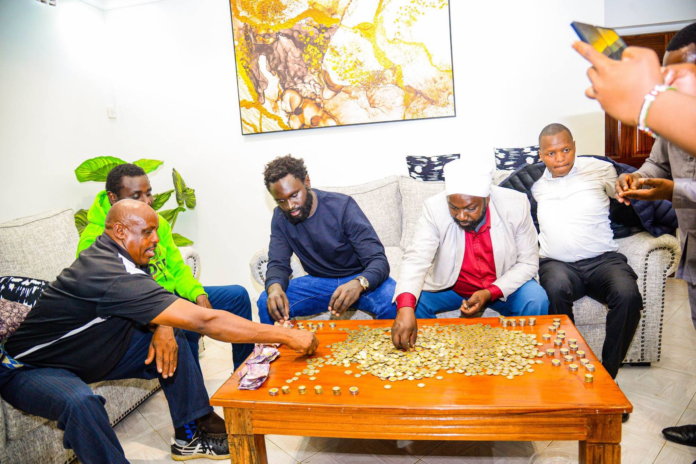
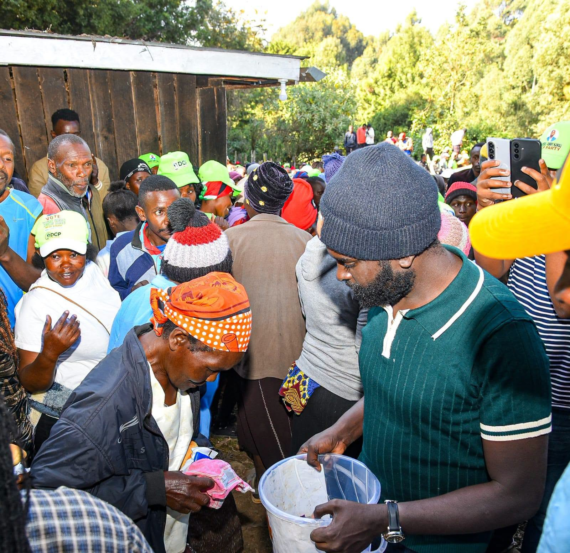
What unfolded in Kisumu during the distribution of the Nyota Funds was politically revealing and, frankly, troubling for ODM. Fresh from the morning engagements, Oburu Odinga appeared to concede far too early by stating that the only position with genuine security of tenure would not be demanded by ODM.

The implication was stark: ODM would not contest the executive safeguard that H.E. William Ruto himself used as a pathway to power. Treating that issue as non-urgent is a strategic failure of the highest order.

History matters here. At the height of the UhuRuto fallout, the Deputy President’s office was the single most critical shield for William Ruto. Without that constitutional security of tenure, Ruto would never have survived politically, let alone ascended to the presidency. Even during the tense moments of the 2022 election results announcement, it was Ruto’s own security detail that reinforced arrangements at Bomas to ensure the process was concluded. Power is never accidental; it is always protected.

For ODM to casually forgo contestation over the Deputy President’s position signals either a grave misreading of power dynamics or a worrying lack of interest in the 2032 succession. You cannot forgive the very office that guarantees continuity, leverage, and visibility, then claim to be serious about future state power.

The contestation over the Deputy President’s position is more likely to split ODM than the much-discussed Orengo–Sifuna–Babu factional dynamics. This is because it strikes at the core of ambition, succession, and regional balance. Yet paradoxically, that same position could be ODM’s strongest bargaining chip. Properly negotiated, it could be used to entice Kalonzo Musyoka into a genuinely structured broad-based arrangement, rather than symbolic inclusion.

Negotiations are not acts of goodwill; they are contests of leverage. Giving up before real negotiations begin is not compromise, it is surrender.

Follow on Facebook X Instagram TikTok and LinkedIn @BillyMijungu #Forward #TusongeMbele