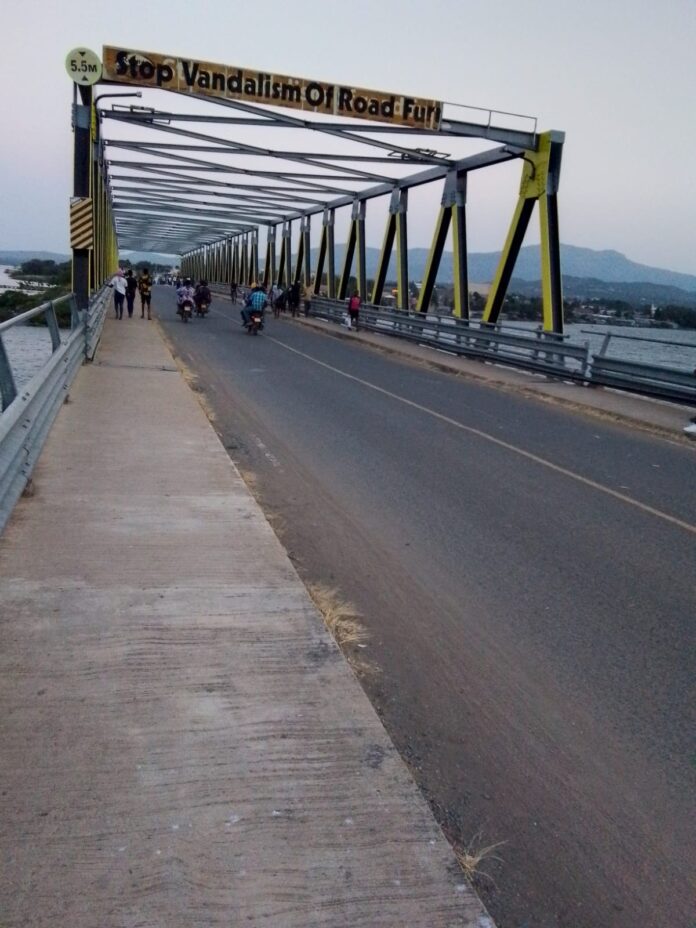
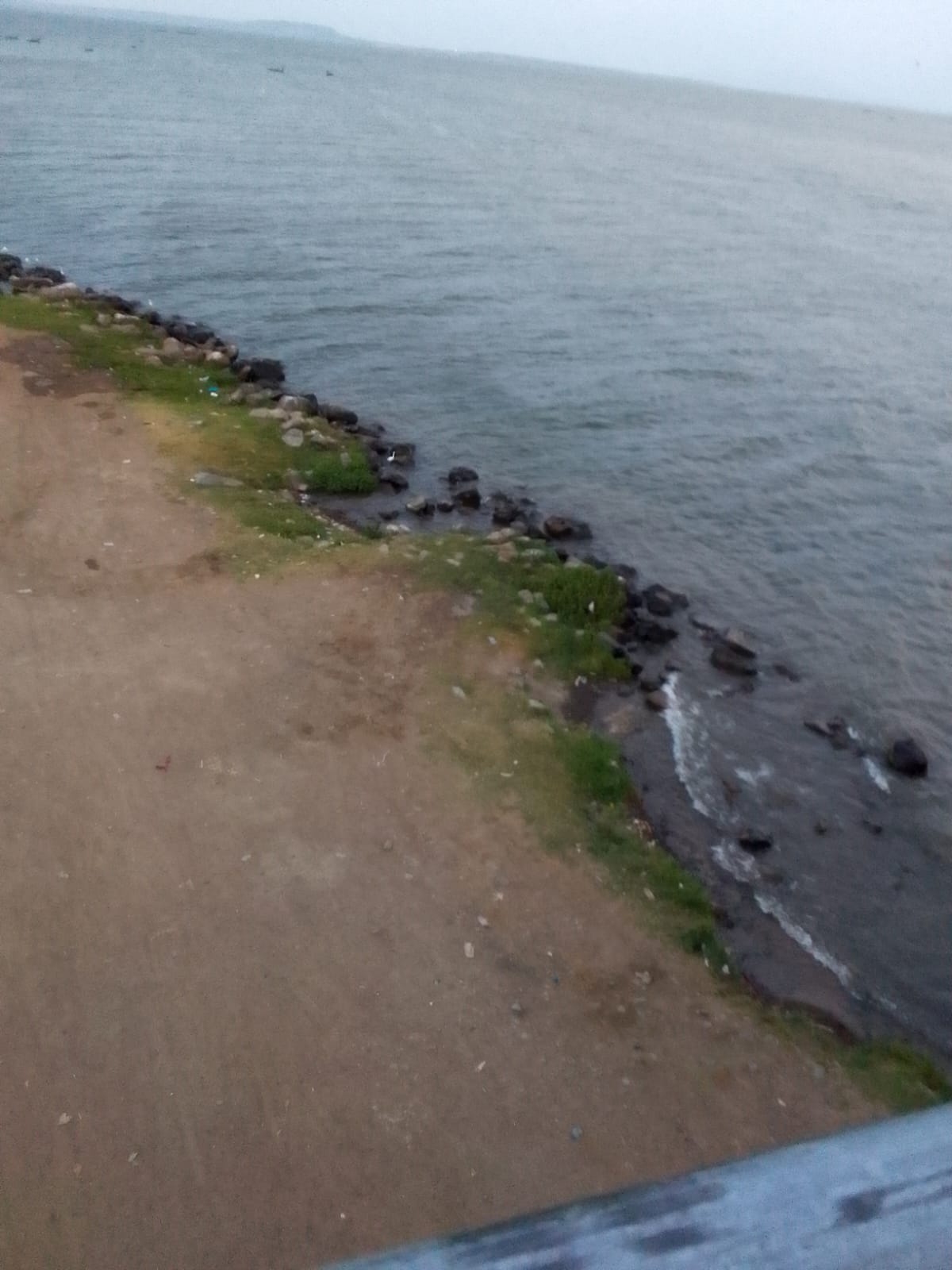
A Form Four candidate at a secondary school in Rachuonyo South Sub-county, who was attending the music festival competition, has drowned in Lake Victoria after he was swept away by a strong wave where he was bathing.
The victim drowned near the Mbita causeway after a strong wave swept him away.
Police and members of the public recovered the body after a one-hour search.
A resident, Okoth Onyango, told “Western Insight” that the deceased had gone to bathe after performing during the music competition at Mbita Secondary School during the music festivals.
Okoth said the police took the body to Mbita Sub-county Hospital.
At Mbita Secondary School, the event was thrown into mourning after the news of the drowning was announced.
It is apparently becoming clearer day by day that the James Orengo, Edwin Sifuna and Babu Owino-led faction of the Orange Democratic Movement (ODM) is already implementing its exit strategy.
Similarly, the Dr Oburu Oginga-led faction of Linda Ground is left chasing the fantasies of “Pawa” (tunataka pawa) and losing ground and support base, sadly missing in recent opinion poll rankings on popularity.
After months of court battles at the Political Parties Tribunal Court, which recently gave its verdict on ODM’s sacking of Secretary General Sifuna, Linda Mwananchi is now prepared to exit and begin life in a new home.
How the plot began
The trio of Orengo, Sifuna and Babu became the militant and rebellious wing of the party leader, the late Raila Amolo Odinga, in his exit plan should the broad-based alliance between ODM and the United Democratic Alliance (UDA) of President William Ruto fail to work ahead of the 2027 general elections.
According to Raila’s legal advisor, Mr Paul Mwangi, Raila’s exit strategy from the union was the militant wing of Sifuna, and that is why he never castigated his divergent views on the broad-based government.
Eventually, in Raila’s plot, in his absence, the seed he planted has germinated and is causing political tremors in the country.
Siaya precedent-setting plot
Linda Mwananchi used the cabinet changes in Siaya not only to stamp authority and make a fresh start but also to birth a new vehicle.
For many, Orengo’s cabinet changes were normal administrative duties, but in reality, they were cutting off the umbilical cord which tied his faction to ODM for a fresh beginning.
Siaya set a new precedent and a new political dispensation in the post-Raila Amolo Odinga era, with Governor James Orengo’s people’s cabinet getting a nod from the county assembly.
Orengo buried the old political order and power arrangement, leaving him the sole wielder of power in Siaya County Government.
The appointment excludes allies of the Linda Ground faction and gives a fresh start to the Linda Mwananchi wing, which now calls the shots in the county.
Ending the Oburu–Raila dominance plot
For decades, Siaya has been the political heartland of the Odinga family, a region where loyalty to Raila Odinga and Dr Oburu Oginga defined both politics and power. County appointments, contracts, and alignments flowed through that network.
But Orengo’s recent moves have disrupted that tradition. The governor is now perceived as building his own power base, one that no longer depends on approval from the Odinga inner circle.
Reconnect with Raila’s spirit plot
Ahead of the Kisumu rally, the team made an emotional return and reconnection with the spirit of Raila at Kango Ka Jaramogi in Bondo.
Six months after his burial, Raila’s militant wing of ODM paid homage at his graveside to draw inspiration for their new political dispensation.
The teary and emotional moment saw some of the Linda Mwananchi brigades break down while others looked sad and disoriented by the reality of coming back to the graveside of Raila.
The historic move by Linda Mwananchi caught their opponents, Linda Ground, napping and could be a turning point in their power struggle.
Linda Ground is yet to pay homage to Raila’s graveside, and the move by their opponents caught them napping and left them punctured.
Sifuna said it was the first time in six months after Raila’s burial that he had made a return to Kango Ka Jaramogi to reconnect with his mentor.
“It is my first time coming back here since we buried my boss six months ago. It has been a difficult six months for all of us. I do not know what to say. I honestly miss my boss,” he said.
Orengo said they paid homage to Raila to reconnect and for spiritual inspiration.
“Today, I led the Linda Mwananchi Movement to Kang’o Ka Jaramogi to honour the giants who paved the way. I returned to the roots of the struggle to pay homage to my mentor, Jaramogi Oginga Odinga, and my comrade, Rt. Hon. Raila Odinga,” he said.
Orengo said the visit was meant to seek blessings from Raila and the doyen of opposition politics, the late Jaramogi Oginga Odinga.
“Before we take the stage, we seek the blessings of our elders and the spirit of the revolution. The foundation is solid. The mission is clear. Kisumu, we are ready. See you tomorrow!” he wrote on his social media platforms.
The Tribunal Court plot
The move by the Oburu wing to allegedly sack Sifuna provided the faction with the opportunity to implement the exit strategy and win the masses to their side.
When Oburu sacked Sifuna, the wing immediately announced a rally for that weekend in Kitengela, and they unveiled the name Linda Mwananchi.
The rally, which was well attended, marked the birth of a new political outfit which has been traversing the country holding successful and organic rallies.
The Tribunal Court ruled that ODM did not follow procedure in sacking Sifuna as Secretary General. The ruling was the campaign and exit strategy machine they needed as they prepare for life without ODM.
For Oburu, even if ODM moves to sack Sifuna again, it will be an exercise in futility.
Defacto party leader plot
The declaration by Orengo as the de facto leader was a strategic move as he recreated the late Jaramogi Oginga Odinga’s young Turks. In Orengo’s move, he is removing Babu, Sifuna, and others from the political storm and mentoring them for new leadership positions in the 2027 elections.
Implementation
Linda Mwananchi has successfully drawn up its plot and is now in the execution stage, having successfully implemented its strategies.
Receive new members and strategic engagement
Orengo has been meeting and receiving aspirants, members, and other political formations.
From Nairobi, Orengo met with Faith Odhiambo: “Faith Odhiambo is a proven defender of justice whose fearless stand for Gen Z and peaceful protestors showed the true meaning of leadership. Her decision to join the Linda Mwananchi movement is a monumental win for women’s leadership and our collective struggle for the ordinary citizen. Her bid for Nairobi Woman Representative comes at the perfect time. Nairobians deserve an incorruptible voice, and Faith is exactly that. Welcome to the movement, Faith. Together, we are going to deliver a just and accountable capital city,” he wrote.
To Kisii County, it was former MP Omingo Magara: “It is always strategic to have seasoned political figures like Hon. Omingo Magara in the room. As a founding member of ODM, PDP Party Leader, and a veteran of both Kisii and national politics, he brings a deep wealth of institutional knowledge and grassroots experience to the table. Building and strengthening a movement requires exactly this kind of continuous engagement, bridging established political networks with forward-looking strategies,” he wrote.
To Kilifi, Orengo netted: “Kilifi is a county of incredible wealth and potential, waiting for the perfect reset. Under the right leadership, the resilient people of Kilifi will rise and make their voices heard. A huge welcome to Karisa Fagio as you launch your bid for Governor; your technical expertise is a massive asset to our team. A warm welcome also to Mama Juliet Riziki Baya (Kachachawa), Women Rep aspirant; your presence is a major win for all Kilifi women. Kulinda Mwananchi ni Kulinda Kenya,” he wrote.
And to the Maa community in Narok, he rocked ODM and wrote: “Welcome, Torome Nalengoyo (‘Kaza Roho’), the Chairman of the Orange Democratic Movement (ODM) for Narok County.”
Actualising
Now Linda Mwananchi is actualising its political game plan by meeting local outfit leaders and aspirants in Mombasa.
In a post, Orengo will today hold a consultative meeting with county Mwananchi officials and aspirants.
In an advert, Linda Mwananchi made a call for aspirants, which read: “All aspirants aligned with Linda Mwananchi in Mombasa County are invited to submit their details.”
“Honoured to welcome Samir Shahbal to our team. He brings unmatched technical expertise and deep roots as a major stakeholder in Mombasa and the Coast. Building on the incredible legacy of his father, Suleiman Shahbal, Samir’s entry locks in a winning formula for our team. The tide is turning. It is time for change, and we are ready to deliver it.”
The next phase
It is only a matter of time before Linda Mwananchi unveils the new political kid on the bloc.
Jubilee Group and the Grand Nairobi Bike Race (GNBR) have officially launched the sixth edition of the Jubilee Live Free Race, reaffirming their commitment to promoting wellness, inclusion, sustainable mobility, and community impact through one of East Africa’s fastest-growing cycling events.
The 2026 edition, scheduled for Sunday, September 27, at Uhuru Gardens, is expected to attract over 5,500 participants, up from 3,387 last year, highlighting a significant surge in interest from cycling clubs, corporate teams, recreational riders, and first-time participants.
This year’s race will introduce a redesigned race route along the Southern Bypass and a new race format for the main 72km category, reducing the number of loops to a two-lap course. The change is expected to deliver a more seamless and competitive riding experience compared to previous editions, where multiple loops were required to complete the distance.
Backed by a Sh25 million sponsorship from Jubilee Group, up from Sh20 million last year, the event continues to grow in scale while reinforcing its focus on wellness, inclusion, and sustainable mobility.
“We have witnessed the evolution of the Jubilee Live Free Race into a powerful movement that promotes cycling and community engagement across East Africa,” said Caroline Ndungu, Group Head of Marketing and Corporate Communications at Jubilee Insurance.
“As a brand committed to promoting inclusivity, wellness, and financial security, this partnership allows us to bring that purpose to life in a very tangible way. This year’s edition will be even more exciting, deepening cycling camaraderie while creating meaningful conversations around investment, healthy living, and overall wellbeing,” she added.
The race will feature multiple categories, including a 72km Main Race and Team Race, a 36km Para-Cycling and Black Mamba category, a 20km Family Fun Ride, and a 2km Kiddies Race, allowing participation across different genders, age groups, and ability levels.
In addition to the inclusive race categories, participants will enjoy enhanced rider safety and end-to-end on-course support, including medical response teams, mobile bike repair units, hydration points, and full-route marshalling, complemented by coordinated traffic management throughout the event.
Each registered participant will also receive outpatient medical cover for race-related injuries as part of the entry package, funded through a Sh50 allocation from the registration fee, with dedicated medical support available throughout the event.
A total prize pool of Sh4 million will be awarded to winners across competitive categories, reinforcing the event’s position as one of the most anticipated fixtures on the cycling calendar for both elite and recreational cyclists.
“The future of cycling in Kenya is incredibly exciting. What we are seeing today is the foundation of a movement that can transform how people think about sport, wellness and mobility,” said Grand Nairobi Bike Race Director Desmond Momanyi. “Cycling is becoming part of how people live, commute and connect. The Jubilee Live Free Race continues to provide a platform that reflects that evolution.”
Beyond race day, the platform continues to promote physical mobility through the provision of prosthetic limbs for children with amputations, environmental stewardship through food tower initiatives in community schools, and physical and financial wellness through accessible health and investment solutions that support healthier, more secure communities.
Registration is now open, with expected strong early uptake as anticipation builds towards what is set to be the largest edition of the race to date.
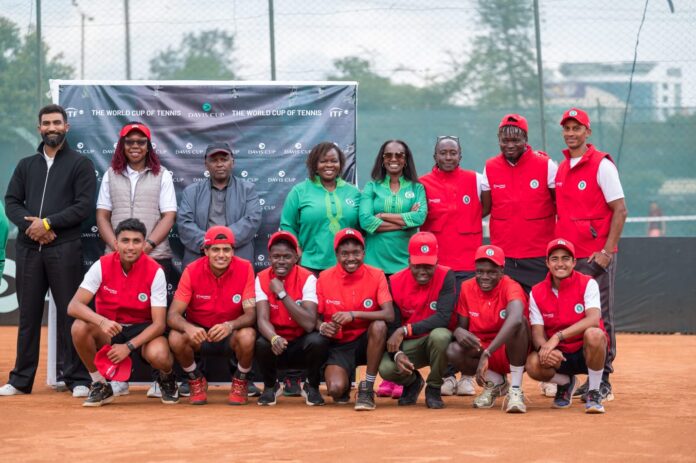
Team Kenya concluded their Davis Cup Africa Group IV campaign by sweeping Mozambique 3-0.
Liberty Kibue won the opening singles match 6-0, 6-1 against Rui Costa Tembe. Kael Shah then defeated Luca Santiago De Sousa Figueiredo 6-2, 6-2 before Liberty Kibue partnered with Zayyan Virani to secure a 6-4, 7-6 doubles victory over Luca Santiago De Sousa Figueiredo and Eric Patrick Sigauque.
The result means Kenya will remain in Group IV, with the players highly motivated ahead of next year’s Davis Cup campaign.
Having had the honour of representing Kenya, the players say they have gained valuable lessons from the tournament.
Kenya had earlier endured a difficult day after suffering a 2-1 defeat to Ghana in the Davis Cup Africa Group IV event. Kael Shah won his singles match with a 6-2, 3-6, 6-3 victory over Ghana’s Abraham Asaba, while Ismael Changawa fell to Samuel Agbesi Osei 7-6, 6-1.
In the doubles match, the Kenyan pair of Kael Shah and Zayyan Virani lost to Abraham Asaba and Samuel Agbesi Osei in straight sets, 6-4, 7-6.
Despite the defeat, Team Kenya captain Rosemary Owino praised the players for their effort and commitment. Owino noted that although Kenya is in a rebuilding phase, the team has shown it can compete with any opponent.
Meanwhile, Algeria and Ghana earned promotion to Davis Cup Africa Group III, while Mozambique and DR Congo were relegated to Group V.
For several decades, the Western Kenya tourist circuit remained idle, dormant, and attracting minimal domestic and international tourists. The worst-affected region in the circuit has been Migori County, which despite hosting several tourist destinations, has failed to excite tourists to the region. This has been primarily due to bad and impassable roads, a lack of recreational facilities, and hotels of international standards.
Tourist destinations
For instance, Migori shares with Homa Bay, Ruma National Park. It also houses Thimlich Ohinga, which is a unique architectural stone structure. The site lies on a gently sloping hill some 46 km northwest of Migori town near Macalder Mines. Thimlich Ohinga Archaeological Site is on the UNESCO World Heritage List. The stone structure enclosure has walls ranging from 1.0 to 4.2 metres in height, which were built of loose stones and blocks without any dressing or mortar. The archaeological record of materials found within the site goes beyond 500 years ago. Thimlich’s strategic location forms a perfect stopover for those on their way to or from the nearby Ruma National Game Park, Gogo Falls, or the Macalder gold mines. Apart from Thimlich Ohinga and Ruma National Park, the county is a gateway to Maasai Mara National Park and Tanzania.
Other destinations in Migori County include Muhuru Bay and Sori, scenic coastal towns on Lake Victoria where visitors can take boat rides, watch birds, and experience lively local island life.
Mugabo Beach & Rocks: Known for crystal-clear waters and magnificent boulders that emerge into Lake Victoria. It is an ideal spot for leisurely boat rides and photography.
Gogo Falls: An important archaeological and natural site featuring a significant hydroelectric power station alongside both natural waterfalls and historical artefacts.
But lately, the Western Tourist economic potentials are being opened up by the emergence of hotels of international standards, improved road networks, and recreational facilities.
The New economic frontier
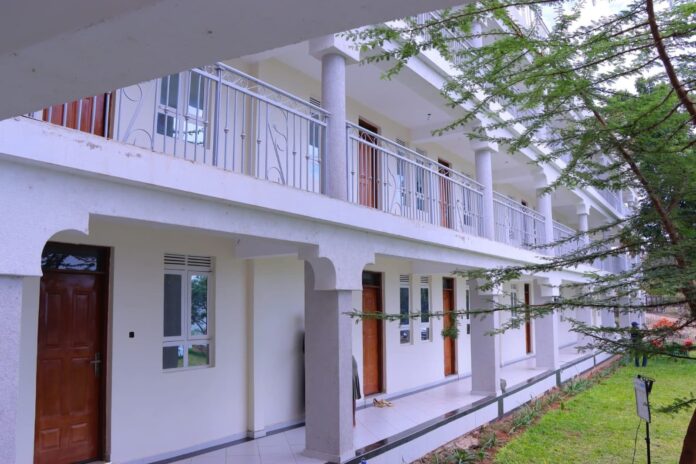
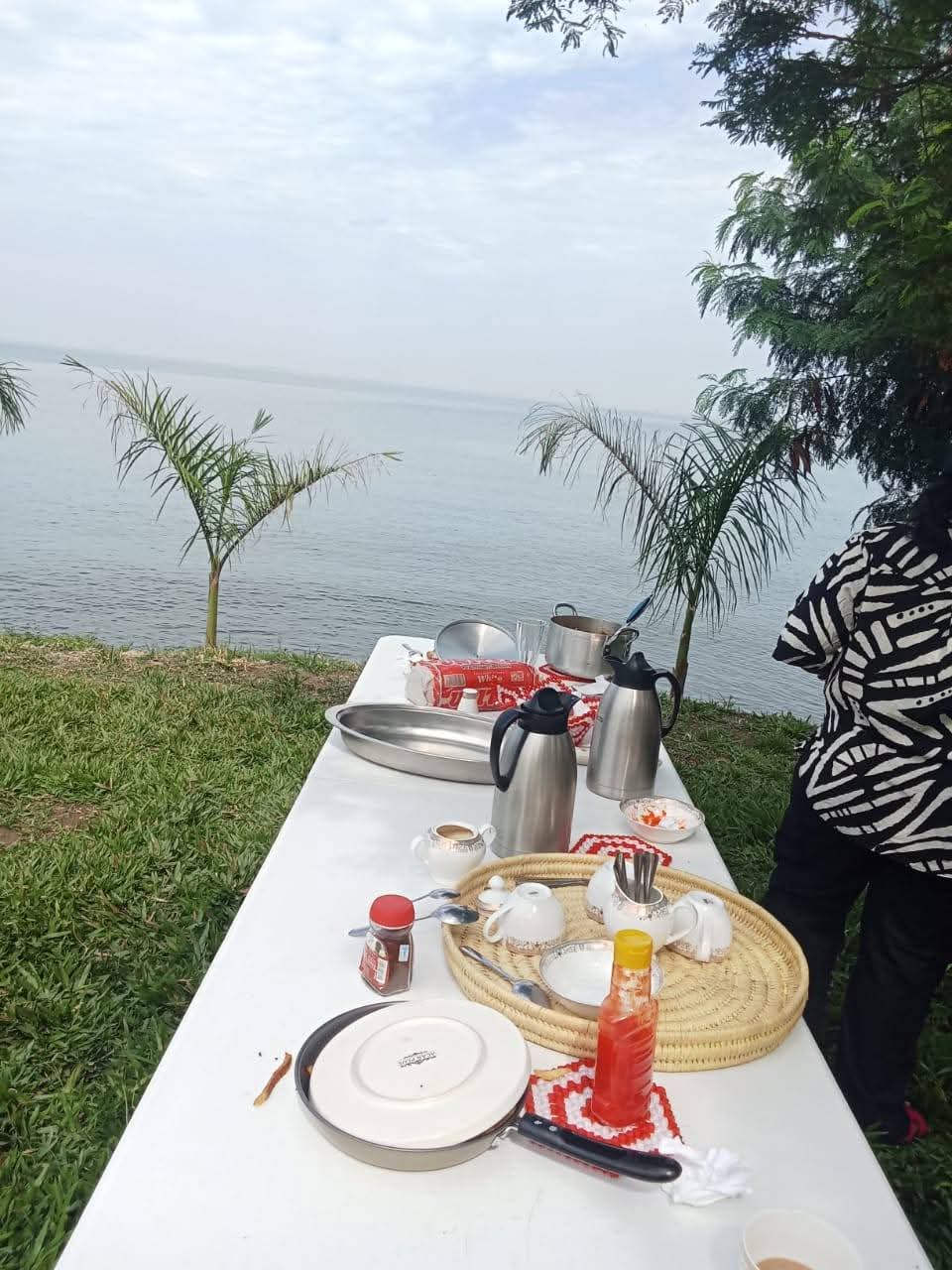
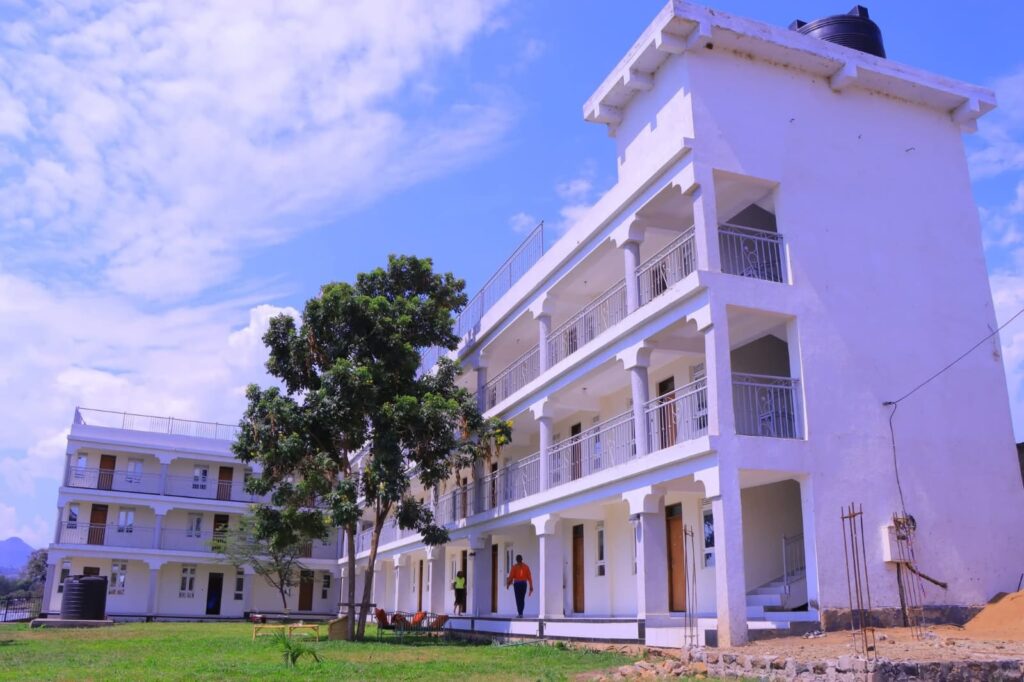
The construction and opening-up of Sori Lake View Resort has become a focal point in the opening of Migori Tourist destinations. The facility is lying on the beach of Lake Victoria, a 30-minute ride to the famous Migingo Island and other islands on Lake Victoria, and offers ambience and serenity to both domestic and international tourists. Sori Lake View Resort is a hidden and peaceful resort situated on the Western side of Sori town, hidden and tucked away from the busy Sori Market. The facility offers lush, green lawns and a tranquil, breezy atmosphere which makes you forget that you are in the usually dry area around the lake region. It is an ideal getaway for couples, families, and offers an ideal working environment for corporate entities and CSOs that intend to deliver on their yearly targets.
Chief Executive Officer Hon. Jackie Paul said the facility aimed at opening up tourist potential in the region.
“We aim to popularize the town and tourist destinations in the region by providing high end accommodation and exploring and exploiting economic opportunities along the lake front,” she said.
Risks
Hon. Jackie Paul said the economic risk to construct an international hotel was intentional to inspire other local investors to venture and help create economic opportunities in the region.
“We took a risk and the positive response we have received from both domestic and international tourists show the huge economic opportunities in the tourism sector in the region,” she said.
Opening the Lakefront
Sori-Lake View Resort is a gateway to all the tourist destinations in the county and the neighbouring counties of Tanzania and Uganda. The presence of Lichota Airstrip provides another opportunity to open up the regional tourist destination.
In the menu
Sori-Lake View Resort is a home away from home, with a high security presence, strategically located on the lakefront of Lake Victoria. At the resort, visitors have the opportunity to fish from the lake, and roast or cook the fish fresh from the lake. The facility specialises in all types of traditional African dishes and foods that include obambla, aliya, mor alenya, kuom cham, omena, dek, atipa, mamba, seu, and apoth. The facility has a fishing boat and speedboats that the tourists use to venture into the lake to various destinations.
The unique Hippo sighting
Hippos come out; mama hippo walks on the beach and grazes by the waters.
Schools—Sori National School recently and Bl. Tezza Secondary Schools are in the neighbourhood.
Landing point for aeroplane.
Right.
Tight security—police station in the neighbourhood, including the office of the DCC for Nyatike West.
Tour the lake, which follows the rules. We have the lake guide.
International tourists
Denmark, Italy, Tanzania, USA, and France have stayed in the hotel and visited Gwasi Hills, Sori and Tigra Hills, and Gorome for flora and fauna.
Facilities
Gym, recreational facilities, and fitness facility. Rooftop.
Sauna services.
Included
Recreational and fitness facilities:
1; Modern gym
Team-building facilities, trainers.
Packages
Bouncing castle…
Slides, fun games, educational facilities for the kids.
Free gifts for the kids.
Wi-Fi.
Strong internet.
Planted trees to give a green environment.
Community Service
We support widows and orphans twice a month and engage in town cleaning and tree planting.
Rooms
Sori Lake View Resort boasts 36 rooms, with a capacity to host 50 guests. The rooms are equipped with comfortable beds, air conditioning, modern bathrooms, flat-screen TVs, and access to free Wi-Fi. The facility offers single and double rooms. Prices are affordable. Security is tight with 24-hour CCTV surveillance and trained personnel to do the housekeeping. We have an air-conditioning system.
The Kisumu High Court has issued a conservatory order stopping Chemelil Sugar Company, its Head of Corporates, Deputy General Manager, and others from disrupting learning at Chemelil Sugar Academy.
Justice Joe M. Omido, on June 16, 2026, ordered that the application be certified as urgent and that prayers 2 and 3 of the application be granted on an interim basis.
The Chemelil Sugar Academy Parents Association and the Chemelil Sugar Academy Registered Trustees had moved to court seeking a conservatory order restraining the respondents, whether by themselves, their agents, servants, employees, or any person acting under their authority, from denying, restricting, interfering with, or in any manner obstructing students enrolled at the 1st Interested Party from accessing and attending school on account of the alleged fee arrears on June 17, 2026, or any subsequent date.
They also sought orders restraining the respondents, whether by themselves, their agents, servants, or employees, from interfering with the administration, management, operation, and service delivery of the 1st Interested Party.
The applicants further prayed for a conservatory order restraining the respondents, whether by themselves, their agents, servants, or employees, from locking, closing, disrupting, disconnecting utilities to, intimidating staff of, or otherwise interfering with the operations of the 1st Interested Party.
“That the application, the petition, and all other court processes be served upon all the other parties by close of business on June 17, 2026,” Justice Omido directed.
Goons Attack
However, as the parents and trustees received the court order, goons attacked the school, causing injuries to teachers on Thursday.
According to a police report, officers have arrested three individuals linked to a brazen act of violence in which a gang stormed Chemelil Academy, leaving a trail of chaos and destruction.
“The terrifying incident unfolded on June 18, 2026, when officers received a distress call about an ongoing attack at the school.
Responding with urgency, officers rushed to the scene. To their shock, they spotted around 20 men armed with crude weapons fleeing in different directions, some heading towards Achego while others vanished into the nearby sugarcane fields,” the report read in part.
The report stated that officers were confronted with a scene of devastation.
“The gang had wreaked havoc, smashing their way into the administration block and vandalizing the offices of the Principal and Deputy Principal.
The assailants not only terrorized the staff but also assaulted them, making off with 10 smartphones, cash, and other valuables.
In the aftermath of the chaos, injured staff members were swiftly taken to Nyang’oma Sub-County Hospital, where they are currently receiving treatment and are in stable condition.”
The report further stated that a police manhunt for the suspects led to the arrest of three individuals at various locations within Chemelil.
The three suspects are now in custody and are undergoing processing pending arraignment.
Prayers
The applicants prayed that an order be issued directing the Officer Commanding Station (OCS), Chemelil Police Station, to supervise and ensure compliance with the orders of the court.
Justice Omido directed that the matter be mentioned on June 25, 2026, for directions.
“Take notice that any disobedience or non-observance of the order of the court served herewith will result in penal consequences to you and any other person(s) disobeying and not observing the same,” he said.
Basis
The applicants argued that most parents of students enrolled at the 1st Interested Party had paid school fees to the designated account of the 2nd Petitioner/Applicant.
“That the respondents had threatened to deny students access to the school upon resumption from the half-term break scheduled for June 17–19, 2026, on allegations of fee arrears.
That the respondents have on numerous previous occasions disrupted the operations and service delivery of the school to the detriment of learners, teaching staff, and non-teaching staff, which unfortunately contributed significantly to the school’s worst-ever KCSE performance in 2025,” they argued.
They further stated that the respondents’ reign at the school is highly unpopular among parents, teachers, and support staff of the 1st Interested Party.
“This is evidenced by the fact that in or about February 2026, the respondents denied volunteer staff at the institution entry, forcing students to come to their aid and chase the respondents away,” read the petition.
The applicants stated that a parents’ meeting held on June 11, 2026, culminated in parents voting overwhelmingly, by 100 percent, in favor of reverting the management of the school to the Chemelil Sugar Academy Registered Trustees.
They further argued that clarification had been given that the 30-year lease of the Chemelil Sugar Factory granted to the 3rd Respondent does not extend to the school.
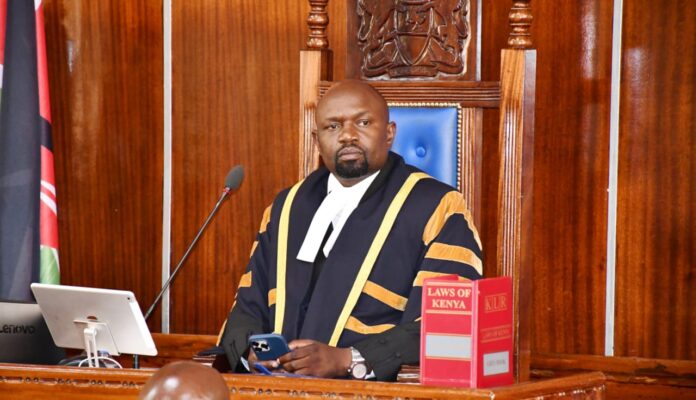
Speaker George Okode is a history maker. The soft-spoken but tough and hands-on leader, Okode is the only speaker in the country serving his third term as the Speaker of the Siaya County Assembly.
While several speakers have run into problems with members of county assemblies, Okode has remained the darling of the Siaya Members of the County Assembly (MCAs).
“I have mastered the art of working with the MCAs. We are able to understand each other. I know it is through the assembly and their delivery that they get re-election. To that end, I have delivered,” he said.
Acting Governor Okode became the first and only speaker in the country to have acted as governor. In 2013, after a successful challenge by Dr. William Oduol Denge over the election of Governor Amoth Rasanga at the Kisumu High Court, which subsequently nullified the election, Okode was sworn in to act until a new governor was elected. After Rasanga won the fresh election, he resumed office.
“It was one of my best experiences to have acted as governor. I told myself, I will be the substantive governor of Siaya, and the time is now,” he said.
Mastered the Winning Strategy
Speaker Okode is a political fox in county assembly politics. His election as speaker has never been dependent on the party but on his hold over the MCAs.
“I have never relied on the party to be elected to the office of speaker. I know how to win a speaker’s election. I have a solid bond with the MCAs which goes above political inclinations,” he said.
Delicate Balancing Act
Okode has mastered the art of a delicate balancing act in the stormy and unpredictable political waters. He has successfully worked with two governors, Rasanga and now the incumbent, James Orengo.
Orengo is one of the leaders of the Linda Mwananchi faction in the Orange Democratic Movement (ODM). The other faction, Linda Ground, is aligned with party leader Dr. Oburu Oginga, to which Okode ascribes.
“I have been able to successfully work with the two governors. I was able to sit down with the governors and come to an agreement on the deliverables. Our work is to deliver services to the residents. We cannot be fighting to the detriment of the electorate,” he said.
Impeaching Orengo
The speaker controls the majority of the MCAs and has the support of 99 percent of the members, leaving Orengo with only one MCA.
Several quarters have, on many occasions, tried to persuade Okode to initiate the impeachment of Orengo, but the level-headed and independent speaker has declined to give in to the pressure.
“What is the bigger picture? Service to the electorate or infighting? Our simple role is to offer services, and that is our main preoccupation,” he said.
Alego Usonga MP Sam Atandi and Energy Cabinet Secretary Opiyo Wandayi have on several occasions lobbied for the impeachment of Orengo, who is opposed to the broad-based government and the re-election of President William Ruto.
Broad-Based Government
Siaya County Government is a unique environment where the governor is an avowed opponent of the broad-based government and one of the harshest critics and challengers of ODM party leader Oburu, while the speaker is an ally of the party leader and a supporter of the broad-based government.
This explains why Okode recently invited Dr. Oburu to address the assembly, where they expressed their support for the broad-based government and President Ruto.
The speaker also recently led the MCAs to President Ruto’s Sugoi home in Eldoret, where the president engaged with the leaders.
“We must draw a demarcation between politics and development. I respect Orengo’s political position, and he too respects ours. Our common agenda is service to the community,” he said.
Why Okode is the Compromise Candidate
In the Siaya gubernatorial race, Speaker Okode is emerging as the compromise and strongest candidate in the Dr. Oburu-led wing.
The return of former Rarieda MP Nicholas Gumbo to the fold has not endeared him to elected leaders and professionals. Most MPs and elected leaders are uncomfortable with Gumbo and view him as a UDA mole within the ODM outfit.
Both Okode and Gumbo come from the same ward, while Oduol is viewed as a “traitor” who only returned to ODM during the 2022 elections to mop up votes for Orengo.
Oduol was impeached by the assembly but was rescued by the courts. Currently, he is a stranger in the Siaya County Government.
Both Oduol and Gumbo are viewed as UDA moles, which makes them less appealing and unlikeable. This is why Okode is viewed as a more viable candidate for the party.
With Orengo out of the Oburu lineup, the field has been left to Okode, Oduol, and Gumbo.
For Ugenya MP David Ochieng, who is also eyeing the seat on his MDG Party ticket, he faces hard questions from the electorate after once revealing that his lineage is in Busia County.
As the clock ticks and political realignments occur, Okode’s star keeps rising day by day.
Leading gaming firm SportPesa has announced a record Sh34.14 million sponsorship package for the 2026 SportPesa National 7s Circuit, reaffirming its long-term commitment to strengthening Kenya’s rugby ecosystem and developing the next generation of talent for the national teams.
The enhanced investment, more than double the previous sponsorship kitty of Sh16.5 million, marks the fourth consecutive year that SportPesa has held title sponsorship of the circuit, which has become the principal development competition in Kenyan club rugby.
Of the total sponsorship package, Sh16.14 million will flow directly into the competitive infrastructure of the game, supporting host clubs, Kenya Rugby Union operations, and prize money across all six legs, while the balance will be invested in enhancing fan engagement through improved broadcast production, livestreaming, and matchday experiences.
The six-legged circuit will run from 25 July to 13 September 2026, traversing the country and bringing together Kenya’s finest rugby talent alongside its passionate fan bases.
Speaking during the announcement, SportPesa Public Relations & Advertising Manager Willis Ojwang said: “The National Sevens Circuit is the heartbeat of Kenyan rugby and the foundation upon which future national stars are built. We have watched this competition produce players who went on to become Africa 7s champions, represent Kenya at the Olympic Games, and elevate our standing on the global stage. That is the proof of concept, and we welcome other like-minded partners to join us in supporting this platform.”
Sponsorship Breakdown
The sponsorship package will be allocated as follows:
Sh6 million will be distributed to the host clubs, with each host club receiving Sh1 million.
Sh6 million will be allocated to the Kenya Rugby Union (KRU) Secretariat to support tournament organisation and administration.
Sh9 million will be dedicated to content production and live streaming.
Sh2 million will be allocated towards circuit fan merchandise.
Sh9 million will be invested in fan engagement and experiential activities.
Prize Money Breakdown
Division 1 – Men
Winners: Sh150,000
1st Runners-up: Sh75,000
2nd Runners-up: Sh40,000
Division 1 – Women
Winners: Sh100,000
1st Runners-up: Sh50,000
2nd Runners-up: Sh25,000
Division 2 (Men)
Winners: Sh70,000
1st Runners-up: Sh30,000
Overall Circuit Winners
Men:
Winners: Sh300,000
1st Runners-up: Sh150,000
2nd Runners-up: Sh100,000
Women:
Winners: Sh200,000
1st Runners-up: Sh100,000
2nd Runners-up: Sh50,000
Over the years, the Kenya Rugby Union has increasingly positioned the circuit as a key feeder system into the national teams, with many players from the event going on to represent Kenya in the iconic red or white jersey through Shujaa, the Kenya Lionesses, and the national 15s programmes.
Harriet Okatch, Chairperson of the Kenya Rugby Union, said: “Year after year, our partnership with SportPesa has given clubs the resources to organise this circuit, given players a stage to perform, and given our national selectors a bottomless talent pool to draw from. The increased investment this season gives us even greater confidence as we continue building sustainable pathways for both Shujaa and the Lionesses.”
The road to the season finale at Christie 7s begins in Nakuru on July 25-26 with the iconic Prinsloo 7s. Defending overall champions KCB Rugby will begin their quest for a sixth circuit crown after a dominant 2025 campaign that saw them amass a record 126 points and win four of the six legs. However, they are expected to face stiff competition from a resurgent chasing pack led by Strathmore Leos, who denied KCB victory at both Prinsloo 7s and Embu 7s last season, alongside traditional powerhouses Kabras Sugar, Menengai Oilers, and Kenya Harlequin.
Around 200 golfers are expected to grace the ongoing 2026 NCBA Golf Series, which continues this weekend with the sixteenth qualifying leg set for Karen Country Club.
The golfers from across the region are expected to tee off on Saturday in what promises to be another competitive outing on the NCBA Golf Series calendar.
The players will be competing for top honours and qualification slots to the Series Grand Finale, which will be held at the same venue in November.
The Series has continued to attract strong participation across the country, with golfers competing for a chance to qualify for the season-ending event that brings together winners and top performers from qualifying legs staged throughout the year.
Meanwhile, attention on the Kenya Amateur Golf Championship (KAGC) circuit shifts to Kakamega Sports Club, which will host the NCBA Goldfields Trophy from Friday to Sunday.
The tournament has attracted a field of 66 golfers from four countries, including Kenya, Rwanda, Uganda and Burundi, who will battle for the title, valuable KAGC Order of Merit points, and a share of the Sh500,000 prize purse.
The Kenyan challenge will be led by top contenders, including Kiambu Open winner John Kamaisi, NCBA Ronald Marshall & Toby Gibson Matchplay champion Elvis Muigua, Golf Park’s Josphat Rono, Amos Odongo, Ken Serem, and home player Cedric Konzolo.
Regional competition is expected from a strong Rwandan contingent led by Hitayezu Jean D’Amour, Felix Dusabe, Alain Niyonkuru and Jacques Byiringiro, alongside Uganda’s Abraham Olupot, Robert Masaba, Ben Okanya and Lawrence Okwii, while Burundi will be represented by Salum Nkurunziza.
The tournament is guaranteed to produce a new champion following the transition of two-time winner John Lejirma to the professional ranks earlier this year. Lejirma claimed both the 2024 and 2025 editions before joining the paid ranks.
The event follows last week’s NCBA Ruiru Open, where Muthaiga Golf Club’s Eugene Wafula secured his maiden KAGC title after carding a tournament total of two-under-par 217 to edge out John Kamaisi by a single stroke.
Speaking ahead of the weekend’s events, NCBA Group Managing Director John Gachora said the bank remains committed to supporting the growth of golf across all levels.
“This weekend highlights the diversity of golf development in Kenya. While the NCBA Golf Series continues to provide club golfers with opportunities to compete and qualify for the Grand Finale, the NCBA Goldfields Trophy offers some of the region’s leading amateur golfers a platform to compete for ranking points and further their development. We are encouraged by the continued growth in participation across both circuits and remain committed to supporting the game across all levels.”
The two events form part of NCBA’s broader golf sponsorship programme, which spans junior, amateur, professional and club golf, reflecting the bank’s long-term commitment to growing the sport across Kenya and the wider region.
Kenya’s political space has been rattled by the declaration of a possible presidential ambition sacrifice in the 2027 general election by Mt Kenya.
Former Deputy President Rigathi Gachagua has hinted that Mt Kenya must be ready to sacrifice its presidential pursuit in the 2027 general elections for another opposition candidate.
Gachagua, on the fourth day of the conclave, said for President William Ruto to be defeated in the 2027 general elections, the region must be ready to sacrifice its ambition.
“We people must agree, if we will be called upon to make sacrifices. If it will be that Rigathi Gachagua must exit the presidential contest for President Ruto to go home, I am ready to leave the space for that so we take him home,” he said.
Earlier he had declared: “If any of my colleagues is agreed upon, I give a firm commitment to Kenyans. I will lead the campaign and make Ruto a one-term president. Gachagua will lead the presidential campaigns and will do whatever it takes to take President Ruto home,” he said.
The declaration is likely to trigger a political earthquake and leave the space for Wiper Leader Kalonzo Musyoka, Jubilee Deputy Party Leader Fred Matiang’i, Eugene Wamalwa, and ODM Secretary General Edwin Sifuna.
Flashback
Gachagua went back to the archives and retrieved Ruto’s statement ahead of the 2013 General Elections when a political marriage between then TNA presidential candidate Uhuru Kenyatta and URP leader Ruto joined hands for a joint ticket.
There was a rebellion among Ruto’s Kalenjin community over his support for Kenyatta coming immediately after the 2007 post-election violence.
However, Ruto was able to calm the storm, with the Kalenjin community overwhelmingly voting for Uhuru against then Prime Minister, the late Raila Odinga, whom they had overwhelmingly voted for in the 2007 elections.
In the arrangement, Uhuru was supposed to serve his two terms of 10 years and Ruto the same. But after the 2017 elections, Uhuru and Ruto fell out, with the former supporting Raila in the 2022 presidential election, while Gachagua became Ruto’s running mate and a key person in Mt Kenya.
Gachagua said: “I want to paraphrase what he said. Nyinyi hamuna shida na wakikuyu kama sisi wakalenjin (You people do not have problems with Kikuyus like us Kalenjins). Inafika pahali unatofautisha maneno. Unatafuta serikali kwanza ndio ikusadie mbele (It reaches a time when you look at issues, you first look for leadership and others will follow).”
He said President Ruto had a big scheme against Mt Kenya and that most of the community members in the government were very uncomfortable with the administration but still needed the salary.
“They are advising and telling us what pitfalls to avoid. Of course we are all in agreement, and I think they will join at the right time,” he said.
War cry
Gachagua told the gathering that the Finance Bill was the litmus test for the MPs from the region, and those who would support or abstain from voting would be declared the enemies of the people.
“I have instructed MPs from Mt Kenya allied to us to go and vote against the Finance Bill. Those from Mt Kenya who will vote for it, or those who will abstain from voting, will be clumped as our enemy and must face the wrath of the electorate at the ballot,” he said.
Friends
Gachagua said Mt Kenya has already made friendships with various communities in Kenya, from Ukambani, Kisii, Luhya, among others, and that they have the potential to win the elections.
“They have asked me to move to Wamunyoro to meet stakeholders, opinion leaders, and other people who matter in our political formation to seek their mandate and authority to initiate negotiations with my co-principals with a view to producing a single presidential candidate,” he said.
He said they instructed him that having a single presidential candidate against President Ruto was non-negotiable and the only way to liberate the country.
“They have asked me to stick to that commitment, and I therefore want to commit that I, Gachagua, on the instructions of my nearly 10 million supporters, will lead from the front to identify a single presidential candidate to face Ruto. From our corners, we have two plans, A and B, that we shall discuss with our stakeholders for 45 days. This is critical,” he said.
The conclave
Last week, after the High Court ruling on his impeachment case, Gachagua declared a 45-day conclave in Wamunyoro to plot a new political dispensation and course.
Gachagua’s main agenda was on how to come up with a single presidential candidate to face off with President Ruto, and the game plan is emerging.
The game plan
It is becoming clearer that Mt Kenya may cede ground and not present a presidential candidate, instead seeking a running mate in the 2027 presidential election.
In the 2022 general election, Mt Kenya presented running mates in both political formations, with Martha Karua being the Azimio La Umoja deputy to Raila.
In Kenya Kwanza, Gachagua became Ruto’s deputy and rode to victory but was impeached after the formation of the broad-based government.
“My supporters have instructed me to urgently embark on the implementation of a strategic stand from my Wamunyoro residence for a period of 45 days. From Monday, I will camp in Wamunyoro village to start exhaustive and extensive consultation with my supporters and opinion leaders,” he said.
The agenda of the conclave was aimed at coming up with a formula for identifying a single presidential candidate to face President William Ruto in the 2027 elections.
The plot
Gachagua said through his 4 million supporters he was able to make Ruto president; he will mobilise his 10 million support block to make another person president.
“If Gachagua mobilised 4 million votes and made Ruto president, I will mobilise my 10 million supporters to take him out. I made Ruto president with my supporters. I and my supporters will make someone else the president. I will support another Kenyan,” he said.
Gachagua said there will be no division in the opposition ahead of next year’s elections.
“I will ensure that everybody moves along, in case it is not me, including President Uhuru Kenyatta, to ensure the opposition vote basket for the agreed candidate is full,” he said.
Mt Kenya block
The 45 days of the conclave were aimed at locking President Ruto out of the vote-rich basket of Mt Kenya and opening it up to the would-be opposition presidential candidate.
“When I was hounded out of office in 2024, I retreated to my village of Wamunyoro, engaging with Kenyans. And after exhaustive engagement, talking to over 15,000 people, I was instructed to form a political party to solidify Mt Kenya’s political base and look for friends across the country. This I have successfully done, and the mountain is united to a man, and we now have arguably the most popular party, DCP. We have consolidated our support in totality,” he said.
For President Ruto, it is becoming clearer that he will have to contend with a single main opposition candidate at the ballot, and the dice is now cast.
The restive Mt Kenya could be marching away, and now he must up his game to contain the opposition surge.
We use cookies to ensure that we give you the best experience on our website. If you continue to use this site we will assume that you are happy with it.