Home Blog Page 41

Madaraka Day Celebrations Gravy Train Heads to Vihiga County

0

By Hope Barbra

The Madaraka Day celebrations gravy train will this year head to Vihiga County, the home village of Prime Cabinet Secretary Dr. Musalia Mudavadi.

For Mudavadi, this marks a milestone in ensuring that long-awaited development projects finally land in Vihiga County.

Among the goodies is the construction of Kidundu Stadium in Vihiga County.

Mudavadi said the construction of the stadium has been a dream for decades and will soon become a reality.

He said the new 10,000-seater stadium will host Madaraka Day celebrations this year.

“From February, under the instructions of H.E. President William Ruto, the Kenya Defence Forces (KDF) will begin the construction, which is expected to take four months to complete,” said the PCS.

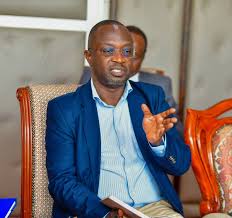
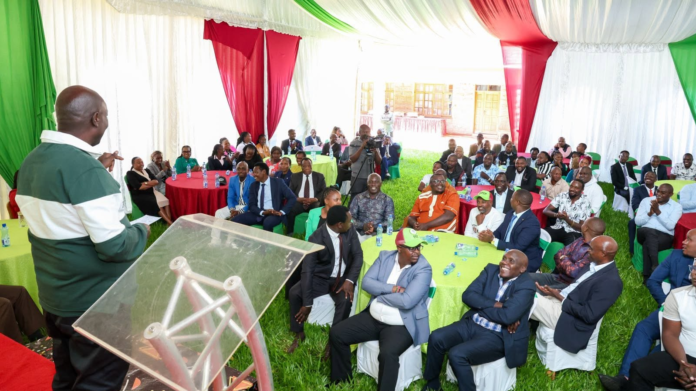
Mudavadi spoke at a press conference after meeting landowners around the earmarked Kidundu Stadium site. He said there was a breakthrough after an agreement was reached to relinquish over 20 acres of land to allow construction to begin in February.

“Kidundu Stadium is among several mega projects being implemented by the Kenya Kwanza government.

“Other projects include the Mudasa Affordable Housing Project, hostels, the Kenya School of Government, markets—including a major one in Mbale Town—and several kilometres of roads in Vihiga County,” he said.

Mudavadi said those who started the journey to have a stadium in Kidundu were no longer alive, but their hopes and aspirations were now becoming a reality.

“This will stop being a dream and become a reality. President William Ruto declared that during his term, he was keen to ensure Kidundu Stadium becomes a reality, and now we are here to see that dream come true,” said Mudavadi.

He added that stakeholders were working together to ensure everything was put in place to make the project a success.

Mudavadi said he assured landowners that due process would be followed to ensure all affected households are compensated.

“The intention of the government is to ensure that every landowner is left in a comfortable position after relinquishing land given to them by God and their parents,” said the PCS.

He said that as a way of honouring the landowners’ selflessness and sacrifice for the greater good, their names would be inscribed in the Hall of Honour at the stadium once completed.

Once completed, Mudavadi said Kidundu Stadium will be placed on the national map as a facility of its kind, offering the people of Vihiga an opportunity to showcase their sporting prowess and bringing pride to the county.

Mr. Duncan Kagesa, the chairman of the Kidundu landowners, thanked the government for ensuring consultations that have seen affected households settled.

“Mudavadi has settled our matters. In the next one month, construction will start. We welcome the project,” said Kagesa.

The Kidundu Stadium landowners said they agreed with the government on a willing buyer–willing seller basis.

“We were offered what we were comfortable with. What is important is not money,” they said.

Governor Wilber Ottichilo said the efforts by President Ruto and Mudavadi had borne fruit with the scheduled construction of Kidundu Stadium.

“We are now ready to welcome those coming to undertake the construction, which can start as early as next week,” said Governor Ottichilo.

Vihiga MP Ernest Ogesi said the future looked bright and the reality of the stadium was taking shape.

“We have had serious engagement with the landowners, and what they have done is a sacrifice,” said Ogesi.

Vihiga County Woman Representative Beatrice Adagala said the construction of Kidundu Stadium was part of the county’s broader development journey, which she likened to a “journey towards Singapore.”

Winnie to Wanga: Homa Bay People Will Decide

0

By Sandra Blessing

In what could be seen as a shift to the old political order and precedent, Winnie Odinga has told Homa Bay Governor Gladys Wanga that it is up to the people of Homa Bay to decide on her re-election.

During the 2022 Orange Democratic Movement (ODM) gubernatorial nominations, the late party leader Raila Amolo Odinga prevailed upon all aspirants to step down in favour of Wanga’s candidature.

Raila paired Wanga with Oyugi Magwanga as her deputy, while former Nairobi Governor Evans Kidero defied Raila and contested the seat as an independent candidate. Kidero lost the election to Wanga.

Speaking in a recent TV interview, Winnie said, “I believe the question will come to the people of Homa Bay, and they will decide if her best was good enough.”

Winnie termed Wanga’s election as governor as momentous in the region.

“She is the Governor of Homa Bay, a position I believe is momentous in that region, especially with the election of women to higher office. I believe she thinks she is right, and I believe she believes what she is doing is right for the party.

“I believe she is trying her best and manoeuvring so many things, including governing the county and still travelling throughout the country,” she said.

The “forced political marriage” between Wanga and her deputy, Magwanga, has irretrievably broken down, with the latter declaring his intent to unseat the governor.

Recently, Magwanga told Wanga that she was a one-term governor and had failed to manage the county.

Magwanga claimed the county was in shambles, incapable of paying contractors and securing basic necessities for daily office operations.

He further accused Wanga of being ungrateful to those who helped her become governor in the 2022 general elections, saying her time was up.

“Wanga is a one-term governor and her time is up. I sacrificed for you to be governor, but you are a very ungrateful person. Now it is time for payback,” he said.

Last year, however, Wanga cracked the whip by relieving Magwanga of his responsibilities as the CEC for Agriculture and also sacked CEC Dr Peter Ogola.

On her X handle, she wrote, “Official Announcement: We’ve made changes to the membership of the County Executive Committee, effective immediately. This restructuring initiates a new phase of focused administration for our county.”

Last year, Wanga admitted there was a split in her government and promised to crack the whip on those who did not want to work but spoke badly about her administration while still serving in it.

Speaking at a funeral in Homa Bay, Wanga said she was adequately prepared to face her opponents in the 2027 gubernatorial race, which she termed a “battle royal.”

Wanga asked those unhappy with her administration to pack and leave so that she could bring in new people.

“To chieng’ ma owinjo ni sirkal rach ma ok onyal tiye, to ogwe tawo oweyo mondo jakanyada machielo bedi. Mano ema gini timore. Koso jo Kanyada orumo ma nyalo tiyo,” she said.
(If they are not happy with the government, let them resign and leave so that we can bring in new people from Kanyada who can work with me.)

Wanga’s Memo to Magwanga

The fallout between Wanga and Magwanga began immediately after the elections, with the governor pushing her deputy to the periphery of management and allegedly refusing to honour the memorandum of understanding (MOU) they signed before Raila.

In 2023, Wanga served Magwanga with a show-cause memo on why disciplinary action should not be taken against him over a donor-funded project, for which the coordinator was responsible.

“The Governor knew very well about the NAGRIP-sponsored chicken breeding project, and I told her that we inherited it from the previous regime when it already had its own problems and procedures.

“She needed to ask the coordinator, but instead, being malicious, she issued me with a memo. That was very disrespectful and meant to demean my person, but she got the best reply,” he said.

Deputy Governor’s Office Remains Closed

Magwanga’s deputy governor’s office has remained closed since the fallout last year and after Wanga relieved him of his duties as CEC for Agriculture and Livestock Development.

“My office still remains closed, and my staff have no access to it. What kind of management is this? You cannot close a public office and deny the holder access. This is a violation of the Constitution.

“But it is just a matter of time before the people of Homa Bay lock you out through the ballot. Your time is up, and you are going home,” he said.

“This was a calculated political power play aimed directly at undermining my office and obstructing the functions of county governance. We must remember that no individual holds public office as personal property. These offices are held temporarily on behalf of the people,” he added.

Magwanga and Wanga have since embarked on campaigns for the Homa Bay gubernatorial race.

Thin Line Between Politics and Public Service: Isaac Ruto’s Walk

0

By Billy Mijungu

I am disturbed by how politics, which is the highest level of public service and a legitimate career, is often treated like leprosy. Yet politics is not only lawful but central to how modern states function.

First, political parties are public entities. They receive funding from the exchequer precisely because they serve the public good. They are not private clubs. They are constitutional instruments meant to organize political participation and governance.

Political parties are the vehicles through which state affairs are managed. A party manifesto is not mere campaign rhetoric. Once a party assumes power, its manifesto is translated into public policy, legislation, and government programs that affect every citizen.

In practice, the ruling party commands the majority. Consequently, when public representatives are appointed, especially to boards and constitutional commissions, they are often drawn from the ruling party. This is neither accidental nor illegal. It is how representative governance operates. Employer commissions offer a clear example of this reality.

Kenya is a unitary state. Constitutionally, there is no legally executing opposition government. What exists are the majority in government, the minority in government, and other entities from different political parties who together make decisions through Parliament, which is the second arm of government.

The key insight is that political party differences are ideological, not personal. Participation in politics should precipitate debate based on ideas, policies, and philosophies, not anger, hostility, or personal warfare. Politics is a contest of ideas, a battle of minds, not a vendetta.

Against this backdrop, the appointment of Isaac Ruto by the President from the ruling party UDA as a public representative is lawful and proper. The law allows every Kenyan to belong to a political party. Even where one does not publicly announce party affiliation, association can often be inferred from political history, ideology, or regional voting patterns. In Kenya’s context, this is not unusual. Pretending otherwise is intellectual dishonesty.

Expecting individuals in public service to participate silently or to appear neutral to the point of having no ideological position is a form of pretence. Kenya remains, first and foremost, an ethnic-centric society, a reality the Constitution itself acknowledges by requiring balance in the interest of national unity.

Deliberate compositions in boards, commissions, Cabinet, and Parliament are intentional mosaics of different political parties and communities. This is known, accepted, and constitutionally managed. Openly identifying with an ideology or political position does not make one partisan in a negative sense. It makes one honest.

Politics is the most important and most difficult job in any society. Anyone who joins it deserves recognition, not suspicion. It is a calling that determines whether a country grows, stagnates, or fails. A nation’s identity and trajectory are shaped through political leadership.

Maturity in democracy means openly standing for something and being known for an ideological position. In the United States, even local police chiefs are elected. Judges are appointed based on ideological leanings, and presidents appoint individuals not only on merit but also on ideological alignment. Let us not pretend we are different from who we are.

As Chair of the Council of Governors, Isaac Ruto defended devolution regardless of his political persuasion at the time. That record stands. Our differences are ideological, and those ideologies are articulated and sustained through political parties. That is not partisanship. That is politics.

Follow on Facebook, X, Instagram, TikTok, and LinkedIn: @BillyMijungu #Forward #TusongeMbele

Governor Kang’ata Signs MoU with Capwell Industries to Buy 90kg Bag of Maize at Sh3,500

0

By Hope Barbra

In one of the historic moves to cushion maize farmers and ensure adequate returns on investment, the County Government of Murang’a has entered into a Memorandum of Understanding (MoU) with Capwell Industries to purchase maize directly from farmers.

The MoU places the cost of maize at Sh3,500 per 90kg bag, a move envisaged to improve farmers’ earnings, as they previously sold their produce to brokers at Sh2,200 per bag.

Murang’a County has been aggressively boosting maize production through the Inua Mkulima initiative, targeting over 150,000 farmers with subsidised high-yield seeds and fertiliser to enhance food security and commercialisation.

Under the partnership, Capwell will purchase 3,500 metric tonnes of white maize per season at a minimum price of Sh3,500 per 90-kilogram bag, delivered directly to the factory by farmers from Murang’a County.

Governor Irungu Kang’ata, writing on his X handle, said: “Capwell Ltd, manufacturers of Soko brand unga, have signed an agreement to buy maize at Sh3,500 per 90kg bag. Kavagara and Paleah have signed similar deals. This has pushed farmers’ earnings up from brokers who previously purchased maize at Sh2,200.”

The Kenya Association of Manufacturers (KAM) said the partnership expands agro-processing and presents a major opportunity for market development and economic growth.

“Through agro-processing, farmers can earn higher and more stable incomes while reducing post-harvest losses. At the same time, we can cut down on imports of agro-based raw materials, save foreign exchange, increase the value of our exports, and ultimately reduce income inequalities across the region,” KAM said.

The Kenya Association of Manufacturers joined Capwell Industries and the Murang’a County Government as they entered into the MoU aimed at strengthening linkages between farmers and off-takers.

The partnership forms part of KAM’s Agriculture for Industry (A4I) initiative, which seeks to foster innovative partnerships and create an ecosystem where producers and off-takers can connect and transact seamlessly.

Governor Kang’ata called for the strengthening of linkages between the agricultural value chain and local industry.

“This approach will help farmers maximise returns from their produce and positively impact the growth and sustainability of the manufacturing sector,” Dr Kang’ata explained.

Immediate former KAM Board Chair and CEO of Capwell Industries, Rajan Shah, expressed optimism that the partnership will increase farmers’ incomes by strengthening their market access. “It will guarantee farmers a predictable and reliable supply chain,” he said.

KAM Chief Executive Tobias Alando called on all partners and development agencies to collaborate in unlocking the vast, untapped potential within Kenya’s agricultural sector for the benefit of all.

“Expanding agro-processing presents a major opportunity for market development and economic growth. Through agro-processing, farmers can earn higher and more stable incomes while reducing post-harvest losses. At the same time, we can cut down on imports of agro-based raw materials, save foreign exchange, increase the value of our exports, and ultimately reduce income inequalities across the region,” Mr Alando said.

Governor Kangata Moves to Cushion Murang’a Mango Farmers Over Glut

0

By Anderson Ojwang

In a move aimed at cushioning farmers from losses due to overproduction of mangoes, Murang’a Governor Dr Irungu Kang’ata has directed farmers not to harvest the produce until further notice.

Similarly, the governor has moved to sell the mangoes to Food for Education for Murang’a and Nairobi school meals programmes.

Kang’ata, in his social media handles, wrote: “An overproduction of mangoes has caused manufacturers (Murang’a County mangoes’ usual customers) to slow uptake. Murang’a County has now opened a second window by selling to Food for Education for Nairobi and Murang’a school meals programmes. Deliveries are being made today at the Food for Education depot in Ruiru.”

In an advert captioned “The Glut in the Mango Market – Advisory to Farmers,” it read in part: “Favourable weather conditions — heavy rains in August 2025 followed by reduced rains in October 2025 — have resulted in overproduction of mangoes across Murang’a County.”

The overproduction has led to a market glut and low uptake, which could eventually result in a drop in prices and huge losses.

“This has led to a temporary market glut, causing slower uptake of our Murang’a mangoes by our usual manufacturers.

The county government is aware that some of the mangoes already harvested are yet to be collected by Lower Murang’a Cooperative officials,” read the advert in part.

Farmers were advised not to harvest the fruits until they receive express authorisation from the Lower Murang’a Cooperative officials.

“Farmers are strongly advised not to harvest the fruits until they receive express authorisation from the Lower Murang’a Cooperative officials.

Care must be taken during harvesting to avoid immature fruits, which have led to rejection by manufacturers.

The county government is currently negotiating a new direct sales window with Food for Education, an organisation implementing the primary school meals pilot programme in Murang’a County.

If successful, the county government will mop up already harvested mangoes from various parts of Murang’a, providing immediate relief to farmers.

We appreciate your cooperation as we work to stabilise the market and protect farmer income,” read the advert.

Mango farming in Murang’a County, particularly in the lower zones, is undergoing a transformation through a county-supported, cooperative-led model that has boosted prices from KSh 3 to KSh 23 per kilogram as of early 2026. The initiative links farmers to processors, reducing post-harvest losses and guaranteeing market access.

Kisumu Police Officer Nabbed Receiving KSh15,000 Bribe at Winam Law Courts

0

By James Okoth

A police sergeant stationed at Mamboleo Police Post in Kisumu County was on Monday, 28th January 2026, arrested by officers from the Ethics and Anti-Corruption Commission (EACC) after he was caught red-handed receiving a KSh15,000 bribe.

Sergeant Gilbert Kiama Oduor was apprehended at the Winam Law Courts, where he allegedly received the bribe from a complainant he had earlier solicited money from, in exchange for ensuring that the complainant’s relative would not be taken to court over alleged possession of bhang.

According to the EACC, the incident followed investigations triggered by a report from the complainant, who claimed that the officer had demanded the bribe to “influence” the case of one John Oluoch, arrested on 23rd January 2026 after a police raid led by the area chief. Despite no contraband being found during the raid, Oluoch was detained at Mamboleo Police Post for several days as officers allegedly pressed his relatives to raise the demanded money.

EACC detectives laid a trap that culminated in Kiama’s arrest as he collected the money. He was booked at the Railways and Ports Police Station, processed, and released on bond pending further investigations.

The Commission has since warned public officers against engaging in corrupt practices, reaffirming its resolve to stamp out bribery in public service delivery points to promote integrity and accountability.

David Ochieng: Orengo student comes of age. Ready to face off with his mentor

0

By Alphonce Otieno

Power, Strategy, and the 2027 Siaya County –Ugenya constituency Calculus:

David Ochieng, the current Member of Parliament for Ugenya Constituency, entered frontline politics in 2013 with the backing of Siaya Governor James Orengo. This was during the reorganisation of the former Ugenya Constituency into Ugenya and Ugunja. In that political arrangement, Orengo settled on James Wandayi to take Ugunja, while Ochieng was positioned to occupy Ugenya—an arrangement that reflected both succession planning and internal party balancing within ODM.

That relationship, however, later collapsed. By 2017, Ochieng had fallen out with Orengo, the Siaya county political establishment centred in Rasanga, and the broader ODM party machinery. The fallout stemmed largely from competing political interests, control of local party structures, and Ochieng’s growing preference for political independence rather than strict party discipline. The disagreement culminated in Ochieng being politically isolated and removed from ODM’s support structures. He challenged the process in court, won on a technicality, and forced a by-election—one he went on to win with support drawn widely from across Luo Nyanza.

The 2022 general election further reinforced Ochieng’s political character. Contesting under his own party after a brief association with Azimio, he narrowly retained the Ugenya seat. His swift post-election alignment with President William Ruto—announced even before official presidential results—was not accidental. It reflected a consistent pattern in Ochieng’s politics: ideological flexibility, tactical alliances, and a strong instinct for political survival.

The Governor Question: Ambition or Strategy?

Ochieng has publicly stated that he intends to contest the Siaya gubernatorial seat in 2027. However, political observers question the likelihood of this move materialising. The skepticism is not rooted in doubt about ambition, but in electoral arithmetic and historical voting behaviour in Siaya.

First, the Siaya governor’s seat has traditionally favoured candidates deeply rooted in ODM and closely aligned with the Orengo political establishment. Ochieng’s strained relationship with Orengo and ODM significantly limits his access to this core support base. Second, his MDG party, while visible in Ugenya, has yet to demonstrate countywide penetration strong enough to sustain a successful gubernatorial campaign. Third, Ochieng’s national alignment with President Ruto—while tactically useful—offers limited electoral advantage in a county that remains overwhelmingly opposition-oriented.

For these reasons, analysts infer that the gubernatorial talk may function more as a strategic lever: keeping options open, shaping negotiations, and positioning Ochieng as a relevant actor across multiple political scenarios rather than committing to a high-risk countywide race.

What Makes Ochieng Tick?

At the core of Ochieng’s politics is adaptability. He is driven less by party loyalty and more by political control, timing, and leverage. He prefers platforms he can dominate rather than structures where he must defer. This explains both his fallout with ODM leadership and his sustained investment in building MDG as a personal political vehicle.

If Not Ugenya: Who Steps In?

Should Ochieng ultimately decide not to defend the Ugenya parliamentary seat, the race would open up significantly. Likely contenders would include candidates backed by ODM, with Sagana already emerging as a serious figure within the party’s local structures. In such a scenario, ODM would enjoy a structural advantage, given its historical dominance in the constituency.

However, Ochieng appears keen to avoid this outcome. This explains the prominence of Charles Oduor Sind, whom Ochieng has indicated could contest Ugenya on the MDG ticket. From an analytical standpoint, Sind’s role appears strategic: helping entrench MDG at the constituency level while preserving Ochieng’s influence over the ticket and the party’s direction.

Ochieng vs Orengo:
An Unresolved Rivalry:

The Ochieng–Orengo fallout was less personal and more structural. It reflected a clash between centralized party control and individual political autonomy. Orengo represents institutional authority within ODM and Siaya politics, while Ochieng represents a decentralised, personality-driven approach. That tension remains unresolved and continues to shape political alignments in the county.

Is MDG Making Inroads?

MDG has made modest but noticeable inroads in Ugenya, largely due to Ochieng’s incumbency and visibility. However, its growth outside the constituency remains limited. Without a broader county or regional footprint, its capacity to challenge ODM beyond Ugenya remains constrained.

Looking Ahead to 2027:

From a ground perspective, if Ochieng defends the Ugenya seat, the contest is likely to narrow into a two-horse race between him and the ODM candidate. If he shifts focus to the governor’s race, his chances would depend heavily on alliances, protest votes, and a fragmented ODM field—conditions that are far from guaranteed.

As political analysts often note, narratives may shift, alliances may change, and ambitions may be declared, but electoral outcomes are ultimately decided by structures, numbers, and timing. As 2027 approaches, those fundamentals—not rhetoric—will determine David Ochieng’s next political destination.

Social Media Ban for Children Under Sixteen

0

By Billy Mijungu

It is time to decisively enforce a ban on social media use for children under 16. Childhood and early adolescence are formative stages that require protection structure and discipline. At this age access to electronic devices should be limited to desktops or laptops and strictly for academic purposes. Unrestricted exposure to social media platforms has proven more harmful than beneficial to young minds that are still developing judgment emotional control and social awareness.

The dangers posed by social media to children are numerous and increasingly evident. Young users often lack the capacity to discern safe engagements exposing them to manipulation grooming cyber bullying and indecent content. Social media platforms are driven by profit and attention rather than safety. Algorithms promote harmful material without regard to age maturity or emotional readiness leaving children exposed.

Social media addiction is another growing concern. Children are increasingly trapped in cycles of constant scrolling digital validation and instant gratification. Addiction undermines discipline weakens attention span and negatively affects academic performance. More critically it erodes the development of a strong work ethic. For a focused productive and responsible citizens, early regulation of social media use is must.

Unregulated online spaces also promote dirty interactions and excessive time wasting. Even as online learning expands within basic education firm boundaries must be maintained. Without proper controls children drift from educational content into unsafe social media environments under the guise of learning. Digital access must therefore be accompanied by strong rules guidance and digital hygiene to safeguard values behaviour and healthy development.

Globally countries have already taken concrete steps in this direction. France has enacted laws requiring parental consent for children under fifteen to access social media platforms. Norway has proposed raising the minimum age for social media use to fifteen with strict enforcement mechanisms. The Netherlands has issued strong government guidance discouraging social media use among young children while promoting phone free school environments. Italy and Germany have reinforced age restrictions through data protection laws that limit how platforms engage with minors. These measures reflect a growing recognition that child protection must evolve alongside technology.

Protecting children from premature exposure to social media is not censorship. It is responsible governance informed parenting and a necessary investment in the moral social and intellectual future of society.

President Ruto Assembling UDA Arsenals for Re-election

0

By Anderson Ojwang

President William Ruto is not leaving anything to chance with 17 months to the 2027 General Elections.

The recent InfoTrack opinion poll, which placed him ahead at 28 percent, must have been a wake-up call to assemble his campaign arsenals for the presidential contest.

A single opposition coalition and candidate is a nightmare for President Ruto, which explains why he has embarked on building hidden and strategic vote blocs that could boost his re-election bid.

After ordering a repeat of UDA grassroots elections in over 80 percent of the country, Ruto is now looking to tap into the potential and opportunity cost of aspirants.

In a recent advert on UDA’s social media platforms, signed by the Chairman of the National Election Board, Mr Antony Mwaura, aspirants were asked to register for the Aspirants’ Forum scheduled for February 4, 2026.

“Following a notice issued on January 21, 2026, the United Democratic Alliance (UDA) hereby informs all party members and aspiring candidates that the registration deadline for the UDA Aspirants’ Forum is Monday, February 2, 2026, at 11.59 pm.

All qualified and interested party members who intend to contest for various elective positions in the 2027 General Elections are invited to complete their registration within the stipulated period.

All duly registered aspirants are invited to attend the UDA Aspirants’ Forum meeting scheduled for Wednesday, February 4, 2026, at 8.00 am at State House, Nairobi, and are required to carry their national identity cards for verification purposes,” the advert read.

The Aspirants’ Forum provides President Ruto with an opportunity to craft his presidential campaign team right from the polling stations, with aspirants expected to serve as the main drivers.

Similarly, this will provide UDA with the opportunity to estimate targeted revenue from aspirants and plan ahead of party primaries.

President Ruto is also working towards winning the allegiance of aspirants and ensuring they remain committed to the party.

This explains why Ruto has embarked on rebuilding his party in readiness for the elections — not just as a party of power, but a party for prosperity.

Recently, President Ruto moved to secure 584,000 votes countrywide from party officials, from the grassroots to the national level.

In the 2022 General Elections, UDA did not have offices and party officials across the country, except in its strongholds of Mt Kenya and the Rift Valley regions.

Currently, UDA and ODM are the only parties with countrywide grassroots party officials, while other political parties largely enjoy regional support.

Politics of Polling Centres

The polling station is the political aorta of any political party — where it is made or unmade — and that is why Ruto has moved decisively to reposition UDA nationally.

“Successful democratic countries are built on a solid foundation of political parties. The political party is not the political leader, the National Executive Council, or the National Governing Council — the political party is the grassroots.

The polling station is where the political party is made or unmade. If you go to any successful political party, its strength lies in the grassroots,” he said.

The Numbers and What They Mean for Ruto’s Re-election

President Ruto is focused on strengthening grassroots leadership to jumpstart his re-election campaign, which is why numbers matter.

“We have positions for 540,000 officials in the party — 20 people per polling centre. We conducted elections recently, but many senior leaders, MCAs, and MPs did not bother to participate.

Very few participated. I commend Kirinyaga and Bomet counties, where we saw higher participation. But in other counties, turnout was very low. In some polling centres, only 20 or 30 people voted.

If only 30 people voted in a polling centre, can we say the election went well? That is why we instructed the National Election Board to repeat elections in polling centres where fewer than 50 people voted,” he said.

UDA Ward Leadership to Change

President Ruto has also embarked on a move to ensure senior party members take up leadership roles at ward and branch levels.

“The grassroots are very important. I encourage you to go and become ward chairpersons in your counties. These are the people who will decide the future of the party.

Nominations — whether for MPs or MCAs — will be decided by the party, and the party must have legitimacy. That legitimacy comes from members voting for party officials. We are going to redo the exercise where we did not do well,” he said.

KANU and ODM Grassroots Equation

President Ruto has also initiated moves to enter into a pre-election coalition pact with ODM and has brought KANU National Chairman Gideon Moi into the broad-based arrangement.

Gideon Moi dropped his Baringo senatorial by-election bid to join President Ruto in the broad-based government.

ODM Party Leader Dr Oburu Odinga was recently mandated by the party’s Central Committee to engage UDA in pre-election coalition talks.

“I want to tell you, the reason KANU succeeded for many years was because people lined up at polling stations to elect grassroots leaders. The reason ODM is where it is today is because they conduct elections at polling centres,” Ruto said.

Friends or No Friends, Party First

President Ruto said party members at polling stations will decide their leaders, and elections will not be based on friendship.

“I know you have friends. I also have friends. Even if you support someone you think is loyal, the people at the polling station may think differently. Let everyone compete. We must accept whoever is elected,” he said.

Let the People Decide

President Ruto added that some officials who were previously appointed must now seek legitimacy through the ballot.

“We have people whose names were written into party offices. It is time to take them to the ballot. Once someone has been elected, they value the mandate given to them and are less likely to walk away. This is how we build loyalty to the party,” he said.

ODM Creed Under Siege as the Party Turns into a Theatre of Betrayal, Opportunism, and Violation of the Constitution

0

By Anderson Ojwang

The soul of the late Raila Odinga’s party, the Orange Democratic Movement (ODM), is under attack and in a state of despair at the hands of the very people he trusted in life.

If anything, the party creed is under siege as opportunism and betrayal take centre stage, with Raila’s legacy and ideology of social justice thrown into the political dustbin.

In essence, the theatre of opportunism and betrayal in ODM is aptly captured in Prof Francis Imbuga’s play Betrayal in the City. Similarly, in Chinua Achebe’s Things Fall Apart, when the centre cannot hold, things begin to fall apart — a path ODM appears to be heading towards.

The Creed

In an explosive interview with Citizen TV, Winnie Odinga let the cat out of the bag as she strongly lamented what she termed as the desecration of the ODM creed.

Winnie first raised the red flag when she stated that ODM was not formed from the comfort of pillow and bedroom talks, but from the streets — fighting for social justice, which Raila stood for.

“I raised the statement out of concern that certain people and certain quarters are trying to achieve something that does not necessarily stand for the creed of the ODM party and perhaps want to take advantage of the situation for their own gain,” she said.

Former ODM Deputy Party Leader Wycliffe Oparanya recently noted that the love of money was destroying the party and leading to decisions that go against its values.

“Lakini nikiona ile inaendelea kwa ODM, na mimi nimekuwa karibu sana na Mhe. Marehemu Raila Amolo Odinga (When I see what is currently happening in the ODM party, and I was very close to the late Raila Amolo Odinga),” he said.

“Ninashangaa sana. Mambo ya pesa yameharibu viongozi. Viongozi wanaenda hapa wanaongea jambo moja, wakitoka wanaongea jingine kwa sababu wamepewa pesa. Vichwa vimechanganyika,” he added.
(I am shocked. Money has destroyed leaders. They say one thing in one place and say the opposite elsewhere because of money. Their minds are confused.)

“Anaongea kwa sababu ya pesa. Haya mambo sijaona wakati wa Marehemu Raila Odinga. Raila alikuwa mtu wa msimamo. Akisema jambo ni hilo,” he said.
(They speak because of money. This was not the case during Raila’s time. Raila was a man of principle.)

“If he wanted to make any concessions, he would consult first,” Oparanya added.

The Constitution

Winnie went ahead to claim that the very vein of the party — the constitution — was being violated and ignored, subsequently undermining its existence.

“The ODM constitution is being violated. People are misrepresenting themselves and moving in a manner that is not respectful to the party creed. They have not acted in a manner that respects the former party leader’s creed,” she said.

She added that no member of the Central Committee or the National Executive Committee (NEC) can act on behalf of ODM unless ratified by the National Delegates Conference (NDC).

“They forced celebrations during the mourning period. They went ahead and misrepresented themselves as being in charge, knowing very well they are not until the NDC is held,” she said.

“They have initiated talks without following procedure. They lack goodwill towards party members and have failed to listen to dissenting voices. The custodian of our constitution is the Secretary General, but people are being told to leave. Some are being de-whipped from their roles. That is not ODM,” she added.

Kisumu Woman Representative Ruth Odinga said party leadership must adhere to the constitution and spirit of the law.

“The Central Management Committee (CMC) sat a few days ago in Kilifi. This is a very important party organ,” she said.

“We do not expect the party chairperson to purport conclusions before listening to the people. ODM is a people’s movement. Our membership stretches from Turkana to Kwale, from Wajir to Isebania,” she added.

Recently, at a CMC meeting held in Kilifi in January 2026, ODM resolved to initiate pre-election coalition talks with President William Ruto’s UDA party, tasking ODM party leader Dr Oburu Odinga to lead the process.

Dr Oburu has since initiated rallies expected to culminate in talks with President Ruto.

Winnie maintained that until the National Delegates Conference is held, the current party leadership remains interim, in line with the ODM constitution.

Betrayal in the City

Raila was betrayed while his body was aboard a Kenya Airways flight in international airspace. Back home, at 6:00 a.m., the party’s Central Committee was meeting to replace him instead of preparing to receive his body.

“The party leader died, yet the leadership did not come to address members to inform us of his death. Instead, they picked a new team,” Winnie said.

“The next day, we woke up to news of new talks. They did not consult us. It seems there is a clique that does things privately, which is not the ODM style,” she added.

“They misrepresented themselves at a time when the party was mourning its leader. They should have informed members and provided direction, but instead they were busy with their own interests,” she said.

MP Caroli Omondi also claimed there was a mysterious hand pulling strings within the party — a move he said was not in ODM’s best interest.