Home Blog Page 46

Migori Gubernatorial Aspirant Pamella Odhiambo Urges Swift Action as Floods Wreak Havoc, Calls for Urgent Bridge Repairs and Support for Victims

0

By Erick Otieno

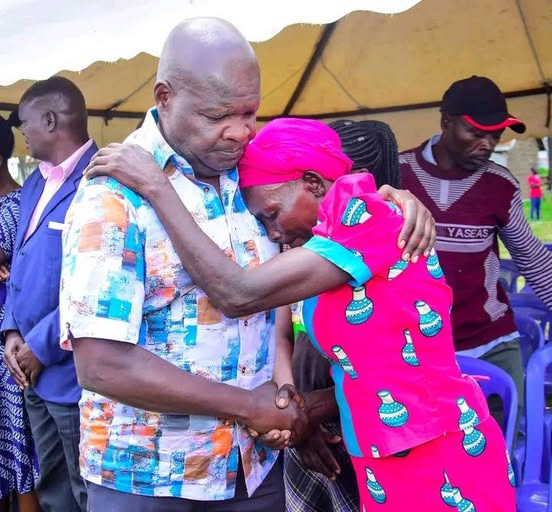
Migori gubernatorial aspirant Pamella Odhiambo has called for urgent government intervention following devastating floods that have disrupted livelihoods and infrastructure across several parts of the country, including Migori County.

Speaking in the wake of the heavy rains that triggered widespread flooding last weekend, Dr. Odhiambo urged residents living in riparian areas to relocate immediately to safer ground as authorities continue assessing the damage.

“We cannot control the current crisis,” she said. “Those living in riparian lands must move with speed and relocate to safer areas to avoid further loss of lives and property.”

Her remarks come as several regions across Kenya grapple with flooding caused by torrential rains that have led to fatalities, displacement of families, and destruction of infrastructure.

Reports from disaster response agencies indicate that dozens of people have lost their lives in flood-related incidents in different parts of the country over the past few days, while hundreds of households have been displaced as rivers burst their banks and roads were washed away.

Dr. Odhiambo lauded the swift decision by the Kenya National Highways Authority (KeNHA) to temporarily close the Migori main bridge along the busy Kenya–Tanzania Highway after floodwaters weakened sections of the structure, posing a danger to motorists and traders who rely on the route.

“The temporary closure of the Migori main bridge was a prudent decision to protect motorists and avert a possible tragedy. However, the national government must move with speed to conduct a comprehensive assessment and fast-track the rehabilitation and reconstruction works,” she said.

She noted that the bridge is a vital economic link connecting Kenya and Tanzania, facilitating cross-border trade and the movement of goods and services within the East African region.

Dr. Odhiambo further called on engineers and disaster response teams to carry out meticulous assessments of rivers and shorelines in flood-prone areas.

“The assessment should be done swiftly and meticulously. Authorities should introduce more dykes along vulnerable shorelines and ensure that overflow from rivers is properly contained,” she said.

Within Migori County, several areas have been severely affected by flash floods following the swelling of rivers after continuous rainfall. Residents in Angugo Village, Nyora Village, and Kabuto Village are among those hardest hit, with homes inundated and families forced to seek refuge on higher ground.

The situation has also been dire along River Ongoche, where rising water levels have marooned sections of the area and left the Ongoche Bridge badly affected by the raging floods.

Dr. Odhiambo appealed to both national and county governments to step up emergency response efforts and provide immediate relief to affected families.

“I urge disaster management teams to urgently supply both food and non-food items to families who have been displaced by the floods. Many households have lost their homes and sources of livelihood and require urgent humanitarian support,” she said.

She also challenged the County Government of Migori to prioritize rehabilitation of drainage systems in Migori Town, noting that poor drainage has contributed to frequent flash floods whenever heavy rains occur.

Additionally, Dr. Odhiambo urged the national government—particularly the ministries responsible for transport and special programmes—to cushion affected traders and small businesses whose operations have been disrupted by damaged roads and closed transport routes.

“To restore normalcy, the county government must also move with speed to upgrade feeder roads across the county so that residents and businesses can resume their daily activities,” she said.

Kenya’s disaster management agencies have in recent days intensified response operations in flood-affected regions, warning that continued heavy rains could worsen the situation.

Authorities are urging residents in flood-prone
areas to heed evacuation advisories while long-term mitigation measures—such as improved drainage infrastructure, strengthened river banks, and better urban planning—are implemented to reduce future flood risks.

Digital Dreams Take Flight: Kenya Launches AI-Powered BPO Hub in Siaya

0

By Duncan Ammon

In a significant boost to the country’s digital transformation journey, the Kenyan government has launched a cutting-edge Business Process Outsourcing (BPO) center at the Siaya Community Digital Hub. The state-of-the-art hub, equipped with AI-assisted technology, is poised to revolutionize the country’s outsourcing industry, creating new opportunities for young Kenyans and cementing the nation’s position as a competitive player in the global market.

The launch, which took place during the Siaya Digital Summit 2026, was graced by President William Ruto, who emphasized the government’s unwavering commitment to expanding digital connectivity, advancing youth skills development, and fostering the growth of Kenya’s creative economy. “Kenya’s digital future will be built in every county, in every ward, where young people are ready to innovate, create, and lead,” President Ruto said, underscoring the importance of digital empowerment.

The Siaya Community Digital Hub is part of the government’s ambitious Jitume Digital Hubs programme, which aims to establish hubs across all 1,450 administrative wards in Kenya. The programme is designed to bridge the digital divide, promote economic growth, and create new opportunities for young people.

A Hub of Innovation and Opportunity

The BPO center at the Siaya Community Digital Hub is a game-changer for the region, offering young Kenyans a chance to tap into the global outsourcing market. Twenty youth have already been trained to use the AI-powered platform, which enables them to intelligently handle customer service cases across messaging, web, and phone channels. This innovative technology is set to transform the way businesses operate, making it easier for companies to outsource services and for young people to access employment opportunities.

The hub is also equipped with high-speed internet connectivity, providing a conducive environment for digital innovation and entrepreneurship. The facility will serve as a collaborative space where youth can access connectivity, acquire practical skills, and explore opportunities in remote work, freelancing, digital content creation, and BPO.

A Bright Future Ahead

The launch of the Siaya Community Digital Hub is a testament to the government’s commitment to empowering young Kenyans and driving digital transformation. With over 75% of Kenya’s population under the age of 35, the government is keen to tap into the demographic dividend, creating new opportunities for young people to participate in the digital economy.

As Cabinet Secretary for Information, Communications and the Digital Economy, William Kabogo Gitau, noted, “Our Ministry remains firmly committed to expanding internet connectivity, equipping young people with practical digital skills, and ensuring access to affordable smart devices. These three pillars – connectivity, skills, and access – are the foundation of Kenya’s digital transformation.”

The Siaya Community Digital Hub is a shining example of what can be achieved when government, private sector partners, and communities come together to drive digital transformation. As Kenya continues to march towards its digital future, hubs like this one will play a critical role in shaping the country’s destiny.

Thrilling Start in Limuru as Karaya and Safari Win 2026 LOOP Safari Gravel Series Opening Leg

0

By PHILLIP ORWA

Kenneth Karaya and Dinnah Safari emerged the overall winners during the elite 100km race as the 2026 LOOP Safari Gravel Series kicked off with the opening event at the iconic Limuru Country Club, marking a powerful start to Season Three of East Africa’s premier gravel cycling series.

In the 100-kilometre elite men’s race, Karaya claimed the top spot with a planetary time of 03:06:50 He was closely followed by Stanley Ngugi (03:10:32) and Uganda’s Jordan Schleck (03:13:35), who secured second and third place respectively after a tightly contested finish.

“I am happy to have won today. The race was muddy but delivered a good experience. The competition was stiff but everything went on as I had planned. I look forward to an exciting series this year,” an excited Karaya said after the race.

The elite women’s race was equally competitive, with Safari powering to victory after a strong tactical ride with a time of 04:08:04. She was followed by Kendra Masiga (04:09:23) in second place and Monica Jelimo (04:12:52) in third, rounding out a podium that reflected the growing strength and depth of women’s gravel racing in the region.

“I did not expect to win today. The field was very competitive, but when I caught momentum, I decided to go for it. I am happy to have won the opening leg because that gives me the morale for the other legs in the year,” Safari offered after the race.

In the men’s 50-kilometre category, Ishmael Imani clinched first after clocking 02:05:31, followed by Ian Wanyeki (02:05:50) and Kelvin Kamore (02:06:18). Joanne Carroll (02:28:17) won the women’s race as Jill Magrath (02:31:43) and Nira Mwangi (02:33:09) came home second and third, respectively, to seal the podium places.

The 20-kilometre and 5- kilometres races saw an inspiring turnout of recreational riders and junior cyclists, underscoring the series’ commitment to inclusivity and grassroots development.

The top five winners in the elite 100-kilometre race, both men and women, were awarded cash prizes of Sh20,000, Sh15,000, Sh10,000, Sh7,000, and Sh5,000, respectively.

Beyond the race, the Limuru leg stood out for its strong community and sustainability focus. Participants joined hands in planting over 100 trees within the Limuru community as part of LOOP DFS environmental conservation efforts under its sustainability agenda.

In a landmark long-term community investment, LOOP DFS also handed over the newly renovated historic Cricket Pavilion at Limuru Country Club. The refurbishment will enhance sporting infrastructure at the club, providing improved facilities for local athletes, youth programs, and community events, a legacy project designed to create lasting social impact well beyond race day.

Speaking at the event, LOOP DFS CEO Eric Muriuki said: “Riding here in Limuru was an incredible personal experience, the terrain truly tested us, and the sense of community on and off the course was inspiring. As a participant, you feel the grit and resilience that define gravel racing. That’s exactly what we are building at LOOP DFS, not just a race series, but a lifestyle movement rooted in wellness, adventure, and shared purpose.

As a lifestyle brand connecting finance to real-life experiences, we remain committed to investing in people and the communities we visit, from environmental conservation to long-term projects like the renovation of the Cricket Pavilion at Limuru Country Club. We welcome more partners to join us in growing this platform and creating impact that extends far beyond race day.”

The 2026 calendar now moves to Naivasha on June 13 for the UCI-accredited second leg, followed by coast edition in Vipingo on August 28. The season will culminate in the highly anticipated Riders’ Choice edition on October 24, a unique finale where cyclists vote to determine the destination, reinforcing the community-led spirit of the series.

Organized by the Amani Project in collaboration with LOOP Digital Financial Services as the title sponsor, the LOOP Safari Gravel Series continues to foster a vibrant cycling culture, nurture emerging talent, and showcase Kenya’s breathtaking landscapes to the world.

The event that was staged at the Limuru’s Misty Tea Highlands and rolling countryside attracted an impressive field of 822 elite and recreational cyclists, with the riders navigating challenging gravel terrain, fast descents, and scenic climbs, delivering an electrifying showcase of endurance, strategy, and grit.

Ends

Men 100 KM Top 5
Kenneth Karaya – 03:06:50
Stanley Ngugi – 03:10:32
Jordan Schleck – 03:13:35
Benard Njoroge – 03:18:40
John Muchiri – 03:19:21

Women 100 KM Top 5
Dinnah Safari – 04:08:04
Kendra Masiga – 04:09:23
Monica Jelimo – 04:12:52
Martinie Ditona – 04:40:41
Mary Aleper – 04:44:37

Grishon Wainaina Wins as NCBA Golf Series Makes Historic Debut at Mt Kipipiri

0

By PHILLIP ORWA

Grishon Wainaina carded 35 points to emerge the Overall Winner as the NCBA Golf Series made its historic debut at Mt Kipipiri Golf & Resort during the club’s monthly mug tournament on Saturday.

Playing off handicap 24, Wainaina won the round to edge out Victor Kidiwa on Countback during the fifth leg of the 2026 series.

Kidiwa, handicap 19, also returned 35, to beat Patrick Githinji, playing off handicap 21, on Countback after he matched the leaders on 35 points to claim third place.

Handicap 43 Wambui Mwangi won the ladies’ category, after posting 30 points. The side prizes saw Benard Kiraithe, handicap 10, claim the First Nine award with 20 points, while Tonny Tugee, handicap 7, secured the Second Nine prize after carding 18 points.

The tournament attracted 80 golfers who gathered at the scenic Mt Kipipiri course in Nyandarua County, braving the cool highland conditions and the challenging layout of the relatively new course in pursuit of top honours and qualification opportunities to the NCBA Golf Series Grand Finale set for later in the year at Karen Country Club.

Speaking during the prize-giving ceremony, NCBA Nyahururu Branch Manager John Wachiuri described the tournament as a significant milestone for both the series and the host club.

“This is a special moment for us, not only because this is the first time the series is being played at this remarkable course, but also because it marks the fifth leg of the 2026 campaign.

Congratulations to our winners today. You have made history by being the first to qualify for the NCBA Golf Series Grand Finale from this club. Well done and all the best as you continue preparing for the finale that will be held in November at Karen Country Club.” He said

He noted that the bank remains committed to expanding the reach of the series while supporting the growth of golf across the country.

Wachiuri added “As NCBA, we are proud to continue expanding the footprint of this series across the country, bringing together communities, creating networking opportunities, and celebrating excellence on and off the course. Golf has been a key focus for us, and our commitment to the sport remains as strong as ever. Last month, our Pro Golfer, Njoroge Kibugu performed exceptionally well during the Magical Kenya Open and that shows why we continue supporting the sport at every level.

We want to inspire the junior golfers to be the next Njoroge’s while at the same time giving them opportunities to make a living out of golf. That is why we continue to walk hand in hand with the Junior Golf Foundation, the Kenya Golf Union, and the Professional Golfers of Kenya to strengthen the development of the sport at all levels and complete the golf cycle.”

The Mt Kipipiri outing marked the first time the NCBA Golf Series has been played at the course since the club opened its doors last year, reinforcing the bank’s commitment to supporting emerging golf destinations across the country.

The fifth leg follows successful outings earlier this season at Royal Nairobi Golf Club, Kericho Golf Club, Muthaiga Golf Club, and most recently Mombasa Golf Club, as golfers continue their quest for qualification to the season-ending Grand Finale.

Self-Regulation, Not State Regulation: A New Path for Theological Education in Kenya

0

By Dr. Edris Omondi esq

Last Thursday, Parliament received and positively considered a public petition by the Association of Pentecostal Vocational Training Institutions of Kenya (APVOTIK) proposing a new framework for theological education and ministerial formation in Kenya.

The proposal has now moved to the next constitutional stage being public participation; where citizens and faith communities will have the opportunity to shape its final form.

At a time when national conversations around religion are often framed in terms of state control, it is important to clarify a fundamental point: this initiative is not about government regulation of faith. Rather, it is about strengthening self-regulation within the religious sector.

Kenya’s Constitution is clear on matters of faith.

Article 8 affirms that the country has no state religion, while Article 32 guarantees freedom of conscience, belief, and worship. Any attempt by the State to control doctrine or spiritual practice would run contrary to these protections. The framework currently before Parliament respects these constitutional boundaries.

Instead of regulating religion itself, the proposal focuses on the quality and integrity of theological education–the training systems that prepare ministers, pastors, priests, and other religious leaders.

Across Kenya, hundreds of theological training institutions operate within different denominations and traditions. Many have faithfully served their communities for decades, yet their programs often lack standardized academic recognition within the national qualifications’ framework. This creates challenges for graduates seeking professional recognition and for institutions seeking consistent academic standards.

The proposed framework seeks to address this gap by establishing a faith-led, self-regulatory structure for theological education. Under this model, religious communities would take primary responsibility for setting training standards, accrediting institutions, and promoting ethical leadership within their own traditions.

Importantly, this is not a state-controlled commission dictating religious practice.

It is a collaborative structure in which recognized umbrella faith bodies; play a central role in guiding standards and accountability within the sector.

This approach reflects a simple but powerful principle: faith communities are best positioned to regulate their own theological training while working within the broader national education framework. This is constitutionalism, an upstream model that – Crime Prevention Initiative Trust (CPIT) stands for.

The benefits of such a system are significant. It would strengthen academic credibility for theological institutions, create pathways for recognition of prior learning among experienced ministers, and enhance ethical standards for those entering religious leadership. For communities, it would build confidence that spiritual leaders are trained within accountable and credible institutions.

Equally important, a self-regulatory model protects religious freedom while promoting public trust. Rather than imposing control from the outside, it empowers faith communities to uphold their own standards of responsibility and integrity.

The next stage, being public participation, is therefore crucial.

Parliament will now open its doors for citizens, religious leaders, educators, and community members to contribute their views on the proposed framework. This process ensures that the final legislation reflects the diversity of Kenya’s religious landscape while remaining faithful to constitutional principles.

Public participation is not merely a procedural step; it is an opportunity for the faith sector and the wider public to help shape a system that strengthens both freedom of worship and responsible leadership.

In the end, the goal is straightforward: to support credible theological education, encourage ethical ministry, and reinforce the public trust placed in religious institutions across the country.

This indeed is important, considering the times we are in.

A self-regulating framework offers a balanced path forward, one that preserves constitutional freedoms while enabling faith communities to lead in maintaining their own standards. As the conversation continues, the voices of Kenyans will play a decisive role in determining how this vision is realized, and perhaps, this was the missing link that was to sharpen the stalled religious organization bill too.

ADVISORY TO THE PUBLIC ON POTENTIAL HEALTH RISKS FOLLOWING THE ONGOING MARCH–APRIL–MAY (MAM) LONG RAINS

0

By Phillip Orwa

The Ministry of Health has alerted the public that the ongoing March–April–May (MAM) long rains are expected to continue in several parts of the country, and noted that while the rains are important for agriculture and water resources, they may also increase the risk of certain public health threats.

“Heavy rainfall and flooding can lead to contamination of water sources, increased
breeding of disease vectors such as mosquitoes, displacement of communities, and
disruptions to sanitation systems. These conditions can contribute to outbreaks of
communicable diseases and other health hazards.”
Principal Secretary State Department for Public Health & Professional Standards Mary Muthoni said.

The Principal Secretary State Department for Public Health & Professional Standards said that the health risks involves: –

Potential Health Risks
The public is advised to remain vigilant for the follow.

Communication department in Siaya County where employment is on political goodwill, and not certificates

0

By Team

Do you want to be employed as an Information Management Officer at the Siaya County Government? You don’t need to have academic papers. Let your mouth run the show at the political podium and you will easily land employment.

That is why in the Department of Communication you do not need to have qualifications but political relevance to gain employment in the department.

While several graduates from Siaya County continue to job hunt at the county government, unqualified persons including a plumber have landed a plum job as Information Management Officer.

And now another storm is brewing over the recent appointment of the Governor’s Director of Communication, Mr George Adeya, with the County Assembly demanding to be furnished with his academic testimonials.

In a letter from the Clerk of Assembly Eric Ogenga to the County Secretary Joseph Ogutu captioned “Statement on irregular appointment of the Director, Governor’s Press,”

On March 4, 2026, a Member of the Assembly, Booker Bonyo, sought guidance from the Speaker George Okode on the above.

Okode referred the matter to the Committee on General Oversight to investigate and report to the House on the qualifications.

The House wants to compare the qualifications of the former Director Ben Agina, who resigned in March 2024, to that of the new director George Adeya.

“You are asked to provide the following documents to assist in the said investigations by the committee before or on Thursday, March 12, 2026, by close of business.

Letter from the Governor to the County Public Service Board nominating the previous office holder, Benjamin Agina, for consideration for the position of Director, Governor’s Press, letter of appointment, resignation letter and academic qualifications.

The letter appointing Mr George Adeya to the previous position of Information Officer, letter from the Governor appointing Adeya as Director, Governor’s Press and academic certificates and testimonials of George attesting to his qualifications and experience in the field of communication or journalism,” read the letter in part.

The Assembly now also wants the list and contracts of all advisors and other staff appointed to serve during the tenure of the governor as provided for by the defunct Transition Authority, IGTRC and SRC exception of support staff.

“Provide academic certificates and testimonials of all staff and Director, Governor’s Press currently serving within the tenure of the governor,”

The Director of Human Resource was also advised not to process and pay salary and benefits to Adeya in relation to the position of Director, Governor’s Press pending the outcome of investigations.

In the same department, the Public Service Board also employed Kisumu-based plumber and political comedian Austin Omondi Odhiambo alias Makamu wa Makamu as Information Management Officer.

Information Management Officers typically require a Bachelor’s degree in IT, Computer Science, Data Science, or Information Science, often paired with 2–5 years of experience in data management or records systems. Key skills include proficiency in Microsoft Office Suite, GIS, and data visualization, alongside strong organizational and communication abilities.

Omondi was recently suspended from employment after what was termed as disrespectful remarks about Governor James Orengo.

Omondi, once a darling of Orengo, switched camp in the new emerging political realignment in the ODM headed by the party leader Dr Oburu Oginga, Wanga, Energy Cabinet Secretary Opiyo Wandayi, Alego MP Sam Atandi among other leaders from the region and found himself swallowing more than he could chew.

After the rally, Omondi received a suspension letter captioned “Notice of Suspension and Mandatory Show Cause.”

“This office is notified of an incident during a public political activity within Kisumu County on the 25th February 2026 at which you uttered unsavoury, derogatory, insulting and disrespectful remarks in reference to the person of H.E James Orengo, the Governor Siaya County…

Your actions in this regard amount to gross misconduct, inconceivable insubordination and flagrant breach of Section 16 of the Public Officer Ethics Act, Section 4, 6(c) and (d) of the Public Service Disciplinary Manual, 2022 as well as Section 1.7 and 1.18 of the Public Service Human Resource Policies and Procedures Manual 2016.

Consequently, and in line with the provision of Section 44(4)(d) of the Employment Act, you are hereby suspended from duty with immediate effect pending further processing and determination of your matter.

You are therefore directed to hand over any County Government property within your custody to the undersigned immediately.

Further, you are required to show cause within seven days henceforth why further disciplinary action, including dismissal from service, should not be instituted against you. Should you fail to submit a written response within this period, the matter will be processed and finalized without further reference to you, guided by applicable statutes and law,” signed by Walter Okelo, Chief Officer Governance, Administration and ICT, read the letter in part.

From a humble beginning as a plumber in the Kisumu sprawling slums of Manyatta to the high table of the Orange Democratic Movement (ODM), where he shared the podium with the party leadership.

From the political podium, Omondi landed employment at the County Government of Siaya.

Kisumu County Government puts in place mitigation measures to respond to floods

0

By Hope Barbra

Kisumu City has moved to put in place structures for flood preparedness during this rainy season and has put the disaster department at both the City and County levels on high alert.

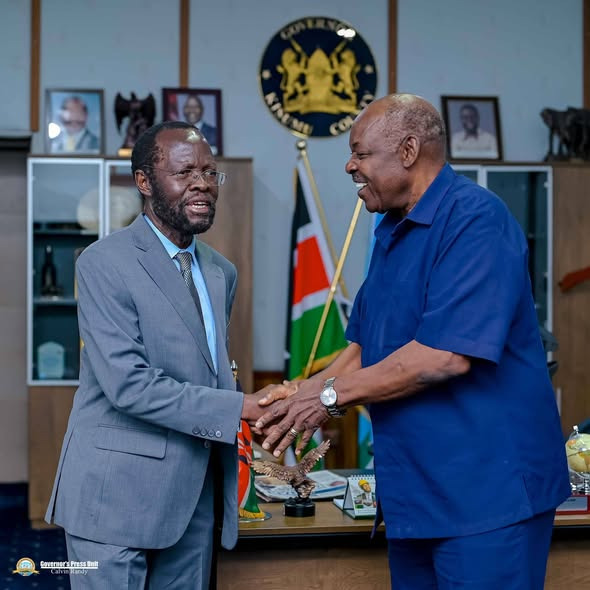
Kisumu Governor Prof. Anyang Nyong’o said the government has received flood warnings and expects floods in Nyamasaria, Kapuothe, Dunga and Migosi areas.

He said a crisis meeting with Red Cross officials and officers from the city and county departments of disaster management will be held on Monday to mitigate possible flooding in the area and to mobilize resources for any eventuality.

“The Nairobi flooding was a wake-up call to all of us and that is why we are reviewing and enhancing the disaster response structures we had put in place. We want to avoid such destruction as was witnessed in Nairobi,” he said.

Kisumu City Manager Abala Wanga said 80 percent of the city was free from flooding and there was no cause for alarm.

“In Kapuothe, the works have not been completed and with River Nyamasaria, Alewra and Wigwa almost breaking their banks, we are likely to have floods in the area,” he said.

He said the city disaster department was on high alert and ready to evacuate those affected by floods to safer and higher areas.

“We have and are still mobilizing resources to respond to floods and to ensure the victims are not left to suffer. We are mobilizing medical supplies and other assorted foodstuffs and requirements,” he said.

Kenya Red Cross has issued urgent guidelines for residents in flood-prone areas, saying that even shallow moving water is dangerous: six inches can knock an adult off their feet, and one foot of fast-flowing water can sweep away a vehicle.

Residents are advised to evacuate to higher ground, switch off electricity in inundated homes, avoid driving near rivers, and never cross flooded bridges.

Additional precautions include using a stick to test water depth, avoiding downed power lines, and refraining from walking through electrified or muddy water.

Authorities and communities are urged to remain vigilant, follow official updates, and use the toll-free emergency line 1199 for assistance.

NDC Trap: Oburu’s Waterloo

0

By Anderson Ojwang

The Orange Democratic Movement (ODM) faction of Dr. Oburu Oginga could be walking into legal traps through the scheduled March 27 National Delegates Conference (NDC).

The Oburu-led Linda Ground could be providing legal fodder to the opponent, the Linda Mwanainchi wing of party Secretary General Edwin Sifuna, Embakasi East MP Babu Owino, and Siaya Governor James Orengo to reap.

Through the NDC, Oburu and his team could knowingly or unknowingly be handing over the party to the Linda Mwanainchi faction in what could be viewed as a repeat of the Ford-K tussle which pitted then director of elections, the late Raila Odinga, against the then chairman, the late Wamalwa Kijana, and Orengo.

Legal grounds

Recently, the Linda Ground faction, through the Deputy Secretary General Catherine Omanya, gave notice for the NDC, which will usher in a legal battle and would leave camps licking wounds and confined to the obituaries.

Sifuna was sacked by the National Governing Council but went and got a reprieve from the Political Parties Tribunal Court. Dr. Oburu refers to Sifuna as the court Secretary General while Omanya is referred to as the party secretary.

In the notice, one of the agendas is the ratification of the National Governing Council resolution on party leadership. Just like the recent parliamentary group meeting endorsed the sacking of Sifuna, the NDC is likely to follow suit.

The notice fails to recognize that after every five-year cycle the party is expected to elect new leaders in accordance with the constitution.

The Ordinary NDC role is to elect, from among eligible party members, the National Officials of the Party who shall constitute the National Executive Committee for a term of five years as set out in the constitution.

“All National Officials other than the Secretary for Parliamentary Affairs, Secretary for Women Affairs, Secretary for Youth Affairs, and the Executive Director shall be elected by the National Delegates Conference.

Subject to Article 6.2.2 (a), all National Officials shall hold office for a term of five years,” reads the constitution.

Already, the Orengo-Sifuna team has declared they will not attend the NDC, terming it illegal and unconstitutional.

Orengo said they want to endorse certain party officials who have never been elected. They want those people to be pronounced as national officials by acclamation.

“The constitution requires, and the national principles of the party require, that in a convention where there is the election of national officials, all members, including all delegates who wish to be considered for any position, should be able to present their names,” he said.

Party leader

The ODM constitution stipulates that the Party Leader shall remain in office until the next election of National Officials.

In the event that the Party Leader is unable to discharge his or her duties by reason of physical or mental infirmity, death, resignation, or where he or she ceases to be a Party member or a Member of Parliament, a Special Session of the National Delegates Conference shall be convened to elect a new Party Leader.

Saboti MP Caleb Hamisi said the appointment of Dr. Oburu as the party leader was an illegality and unconstitutional.

“For Oburu to be validly elected party leader, a special NDC was supposed to be called when the party leader Raila Amolo Odinga died to give a mandate to the new party leader, and this was never called.

The question we are asking is why Oburu is in the office. It is the special NDC which was supposed to put him in office. You already occupy an office and now you are going for an election. Where have you seen such a thing?” he said.

The Secretary General

The ODM constitution is explicit on the roles and functions of the Secretary General and recognizes the office holder as the spokesperson.

Article 7.3 reads: “Procedure of Meeting at National Delegates Conference 7.3.1 Ordinary Session: An Ordinary Session of the National Delegates Conference shall be convened by a resolution of the National Executive Committee ratified by the National Governing Council, and held once every five years but not later than 31st December of the fifth year, at a place, time, and date to be determined by the National Executive Committee.

The notice and agenda convening the meeting shall be sent out by the Secretary General, failing which, any other Party official specially appointed for that purpose by the National Executive Committee at least twenty-one days before such date and published in a daily English newspaper with the greatest circulation, and carried in a leading Swahili radio broadcast.”

Orengo said the notice of the NDC must be given by the Secretary General and, as things stand, Sifuna is the Secretary General recognized by the law.

“It must be given notice by the Secretary General. That is mandatory. The NDC notice you have seen is in the hands of the Deputy Secretary General,” he said.

Equally, the constitution prescribes the functions of the Secretary General as the Party Spokesperson and as being responsible for the management of the National Secretariat, and remaining the principal custodian of party records from grassroots to the national level.

The mandate includes ensuring that all meetings, including the National Executive Committee, National Governing Council, and National Delegates Conference, take place as provided for in the constitution at such time as may be decided by the National Executive Committee,” reads the constitution in part.

Omanya said there was nothing wrong with her giving notice because the Secretary General was not there and even recently he did not attend the meeting.

“We cannot stop to wait for somebody. One person. The party is a club of members. We have almost 6 million members and we cannot wait for one person.

Let them not look at us as enemies but we are family. We can differ but remain a family. If they are genuine ODM MPs and delegates, they should not look at it as illegitimate. It is wrong,” she said.

Oburu said he was validly elected and challenged those opposed to his leadership to face him at the NDC.

“Those who are saying that Oburu was not validly elected, I challenge them to face me at the NDC. Let us go with them to the NDC and I will call it very soon,” he said.

Enough Water Sources But No Distribution Plan

0

By Billy Mijungu

Kenya does not lack water sources but a distribution strategy. The water sector has one of the largest concentrations of parastatals and semi autonomous agencies. Almost every county operates a water company. Yet across much of the country, these entities function without a comprehensive sewage system to complement water supply. In many towns and urban centres, sewage infrastructure simply does not exist. Even more concerning, there is no clear national framework guiding how these systems should grow alongside water provision.

At the national level, the sector continues to focus on constructing dams. Dams are important, but too often they remain exactly that: dams. Water is stored but not effectively distributed to the households, farms and industries that need it most. This does little to unlock the economic and social potential of water.

The irony is that the water sector sits closest to rivers and major water resources, yet meaningful collaboration with the energy sector to expand hydroelectric power generation is limited. Water should power industry, lower energy costs and drive economic growth.

Distribution, in fact, should be the simplest part of the solution. Eastern and Northern Kenya continue to face severe water scarcity while other regions possess relatively abundant water resources. A national water pipeline network could move water from areas of surplus to areas of need. Kenya already possesses the engineering experience to do this. If the country can pump oil from Mombasa to Kisumu through a national pipeline system, it can certainly pump water across the country.

Such a system could be powered partly by Kenya’s vast solar energy potential, particularly in the arid and semi arid regions where sunshine is abundant. Solar powered pumping stations could transform water delivery while reducing operational costs.

Water infrastructure is more than a development project. It is one of the most direct ways government can improve the everyday lives of citizens. Reliable access to water strengthens public health, supports agriculture, attracts investment and builds trust between the state and its people.

In a country where nearly two thirds of the land is arid or semi arid, irrigation must also sit at the centre of national planning. Expanding irrigation through better water distribution would unlock agricultural productivity and reduce dependence on rain fed farming.

Kenya has the water sources. What remains missing is the courage to build a national distribution system that delivers this resource to every region of the country.

Water is life. It is time to move it.

Follow on Facebook, X, Instagram, TikTok and LinkedIn @BillyMijungu

Forward #TusongeMbele