By PHILLIP ORWA
22-year-old Kenyan basketball star Madina Okot Mullah has promised to proudly fly Kenya’s flag high.
She said her drafting into the WNBA was a gateway for Kenya’s basketballers.
Okot revealed that obsession with details, dedication and commitment propelled her to success.
She said learning from the best helped her to be drafted into the WNBA.
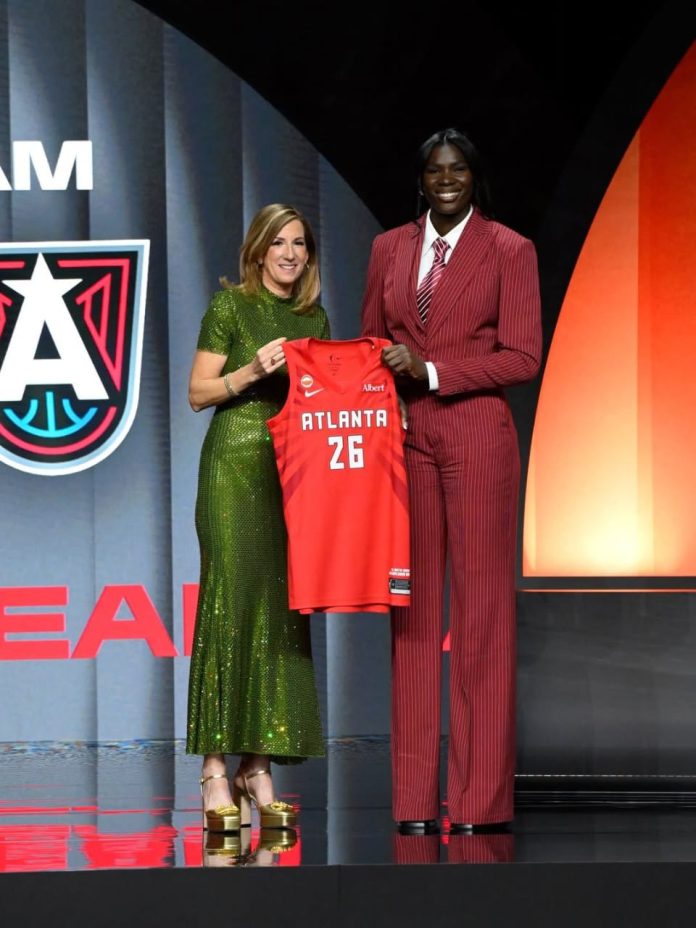
Okot was drafted in the WNBA Draft that took place on Monday, April 13, 2026, following a strong 2025/26 season that saw her emerge as one of the most productive frontcourt players in women’s college basketball.
“I always didn’t see myself being here today six years ago. I always acted like I was behind. I was always obsessed with details, putting in extra work, asking questions and learning from the more experienced players than me,” said Okot.
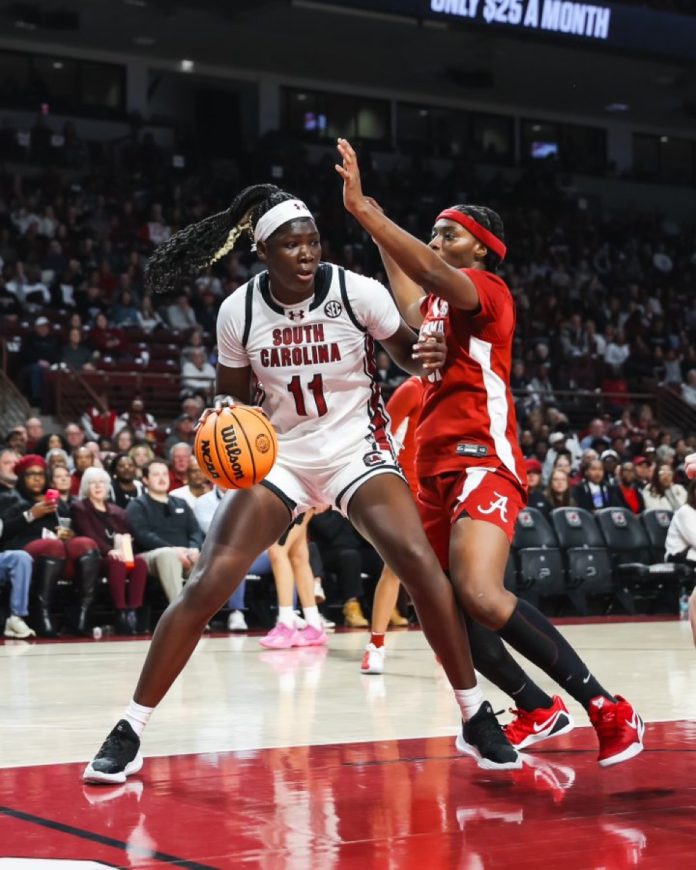
The Mumias-born girl was part of the Gamecocks squad that reached the NCAA Division I Women’s Basketball Championship final, competing at the highest level of the collegiate game.
“Madina brought so much to our team this year, both on the court and off. She is incredibly young in her basketball career, but her maturity and desire to improve her game go well beyond those years. We have seen so much growth from her over the course of the season, and everyone around our program is excited to see her thrive at the next level,” said Dawn Staley, head coach of the South Carolina Gamecocks.
Okot’s progression through the game has been notably accelerated, having only begun playing basketball in 2020. She started her college career in Kenya playing for Zetech University and then spent two years in the U.S. college system, first with the Mississippi State Bulldogs, before transferring to the South Carolina Gamecocks.
“Sometimes I wake up, and I’m like, ‘Am I really here?’ Sometimes it feels like it’s a dream because of what I’ve been through to get here. I’m just so grateful. Every day I wake up, I feel like it’s a great opportunity to get what I once dreamed about. I’m here. It’s just something to be grateful for,” Okot said in an interview with The Athletic.
Mullah (born August 23, 2004) has represented Kenya internationally on the country’s 3×3 and 5-aside teams. In 2022, Okot was named the Most Promising Girl at the Kenya Sports Personality of the Year (KSPY) Awards.
She first played volleyball at Bishop Sulumeti High School before transitioning into a basketballer while at Kaya Tiwi High School in 2020, while still green at the game.
At age 17, Okot was named to the Kenyan national basketball team, where she competed for Kenya’s FIBA 3×3 U23 team.
In 2022, Okot’s appearance playing for the 3×3 team in the 2022 Commonwealth Games caught the attention of Eastern Michigan University scouts, but visa issues prevented her from attending university in the United States.
Interestingly, Madina has been on a full scholarship throughout her basketball career of five years. She schooled at Kaya Tiwi High School on a full sports scholarship before joining Zetech University on another full scholarship as she turned out for Zetech Sparks in the women’s premier league.
When she was approached for the move to the US, it did not come as a surprise because Madina had offers before since she burst onto the scene playing for Kaya Tiwi.
After failing to secure a visa those four times, she remained in Kenya and played university basketball for Zetech University for two seasons while her visa issues were worked out, and signed for the Kenya Ports Authority team the same year, enabling the team to claim the Kenya Basketball Federation league title.
In 2023, Okot continued to play for Zetech and led the Kenya Ports Authority team to second place in the FIBA Africa Women’s Basketball League and was named to the Team of the Tournament. That year, she was the only African player to make the World Select Women’s Team roster at the Nike Hoop Summit.
When she went abroad, Mullah played all 34 games in her lone season in Starkville, averaging 11.3 points and a team-high 9.6 rebounds. She led the SEC and ranked fourth in the nation with a .649 field goal percentage. She ranked fourth in the SEC in rebounds per game, raising her average to 10.1 per SEC contest. She posted 12 double-doubles with a total of 22 games in double-figure points and 17 in double-figure rebounds.
Speaking yesterday to the media, Madina said that she was going to fly the Kenyan flag high with pride.
“Thank you for the prayers and sacrifices, and for believing in me. I will carry the Kenyan flag high,” she said.