By Remmy Butia
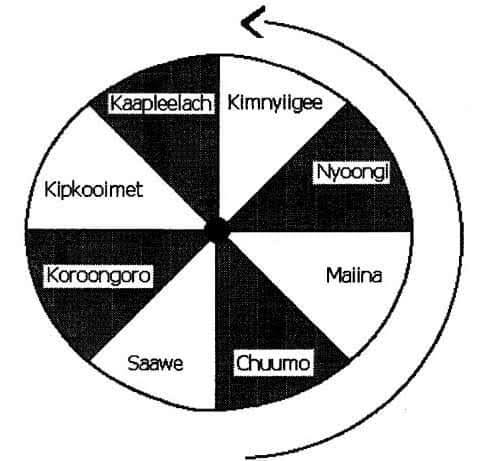
Within the rich tapestry of Kalenjin society, the cyclical rhythm of the age-set system (ipinda) has long dictated social structure, responsibilities, and collective identity.
Each age set, spanning roughly 15-20 years and recurring over a century, carries its own name, characteristics, and historical legacy.
Currently, the generation stepping into young adulthood within the Kalenjin community belongs to the Kipnyigei age set.
This generation coincides almost perfectly with the globally defined Gen Z (born roughly mid-1990s to early 2010s).
An exploration of the Kipnyigei, as understood through Kalenjin oral history and its application to today’s youth, reveals fascinating parallels and raises critical questions about generational change and perception.
The Kipnyigei Legacy: Independence and Disruption
Kalenjin oral tradition speaks of the Kipnyigei with distinct descriptors.
The name itself is often interpreted as “Kip-Nyit-Gei – INYITIEGI”, meaning “those who open themselves” or more colloquially, “people full of themselves”.
The defining characteristic passed down through lore is their pronounced independence and self-determination.
Elders recount that the Kipnyigei historically were known to:
- “Make decisions as they wish”: They are described as less bound by strict adherence to traditional counsel or hierarchical deference compared to previous sets. They possess a strong sense of individual agency.
- Challenge Established Norms: Their independent streak often manifested as a questioning or outright challenging of existing customs, leadership structures, and societal expectations deemed outdated or restrictive.
- Be Perceived as “Destructive”: This is the most potent part of the legacy. Oral histories frequently characterize the Kipnyigei cycle as a time of significant disruption, conflict, or social upheaval. This “destructiveness” is not necessarily literal violence (though conflict might feature), but rather the breaking down of old systems, traditions, and power dynamics. They are seen as dismantlers of the status quo.
This historical narrative paints the Kipnyigei as a necessary but turbulent force – the agents of change who clear the ground, often uncomfortably, for the new growth that the next age set (typically associated with rebuilding) will bring.
Gen Z Kalenjin: The Modern Embodiment?
Fast forward to the present. The current Kalenjin youth belonging to the Kipnyigei set are digital natives, globally connected, and navigating a world vastly different from their grandparents’. Strikingly, the traditional descriptors of Kipnyigei resonate powerfully with observed traits of Gen Z globally and within the Kalenjin context:
- Unprecedented Independence & Self-Assertion (“Full of Themselves”): Gen Z is renowned for valuing individuality, self-expression, and personal autonomy. They are confident in their opinions, unafraid to voice dissent, and prioritize authenticity. This aligns directly with the Kipnyigei trait of self-determination and making their own choices, sometimes perceived by elders as arrogance or being “full of themselves.”
- Challenging Traditions & Authority (“Make Decisions as They Wish”): Kalenjin Gen Z, like their global peers, actively question cultural norms, gender roles, political structures, and religious interpretations handed down to them. They leverage social media to organize, criticize, and demand accountability – often bypassing traditional channels of authority. This mirrors the historical Kipnyigei’s propensity to challenge established ways.
- Agents of Disruption (“Destructive Generation”): To the older generations deeply rooted in tradition, Gen Z’s actions can feel destructive:
- Cultural Shifts: Reinterpretation or rejection of certain customs (e.g., rigid gender roles, specific initiation practices, deference protocols) is seen as eroding cultural fabric.
- Political Engagement: Vocal criticism of community leaders or political figures traditionally accorded respect can be jarring.
- Technology’s Impact: The pervasive influence of smartphones and social media disrupts traditional community interaction and knowledge transmission.
Is this truly “destruction”? Or is it evolution?
This is the critical question. What elders perceive as the reckless dismantling of vital traditions, Gen Z Kipnyigei likely see as necessary progress, discarding harmful practices, demanding equality, and adapting their culture to survive and thrive in the 21st century. Their tools are digital activism, education, and global perspectives, not necessarily spears, but the impact on the existing social order feels similarly disruptive to those invested in maintaining it.
Analysis: Beyond Stereotypes, Understanding the Cycle
Labeling the current Kalenjin Gen Z as simply the “destructive Kipnyigei” is reductive and risks overlooking the context:
- Historical Lens: Every revolutionary or transformative generation appears “destructive” to the establishment it challenges. The Kipnyigei of the past likely brought necessary changes that older sets resisted.
- Global Gen Z Phenomenon: The traits observed are not unique to Kalenjin Gen Z; they are global Gen Z characteristics amplified by technology and rapid social change. The ipinda cycle provides a specific cultural framework for understanding this universal generational shift within the Kalenjin context.
- Misinterpretation of “Destruction”: Much of the perceived destruction is actually deconstruction – critically examining traditions to retain core values while discarding elements seen as oppressive, irrelevant, or unjust. It’s a push for relevance and inclusivity.
- The Rebuilding Phase: Kalenjin age-set theory suggests that after the Kipnyigei (disruptors) comes an age set associated with building and consolidation. The true test will be how this Kalenjin Gen Z transitions from challenging norms to actively shaping and rebuilding their community with their values.
A Necessary Storm?
The Kalenjin community finds its Gen Z youth intrinsically linked to the Kipnyigei age set – a set historically marked by fierce independence, decisive action, and a legacy of disruption.
While oral history may label them “destructive,” viewing the current generation solely through this lens is inadequate. Kalenjin Gen Z, as the modern Kipnyigei, are undoubtedly challenging the status quo, making independent choices that unsettle tradition, and dismantling structures they perceive as obsolete or unjust.
Whether this is destructive chaos or the necessary turbulence preceding positive transformation remains an open question whose answer lies in the future.
Their journey reflects the ancient Kalenjin understanding that societal renewal often requires the unsettling force of a generation unafraid to “open themselves” (Kip-Nyit-Gei – INYITIGEI) to new ideas and assert their will upon the world.
They are not merely repeating history; they are living the complex, modern incarnation of an ancient cyclical role, tasked with navigating the fraught but essential path between preserving cultural heritage and forging a relevant future.
The wisdom of the ipinda system reminds us that this disruptive phase is not an end, but a critical, recurring stage in the perpetual evolution of a people.