By Valentine Omondi
Murkier is the battle for President William Ruto’s deputy in the 2027 general elections as the broad-based allies fight over the seat.
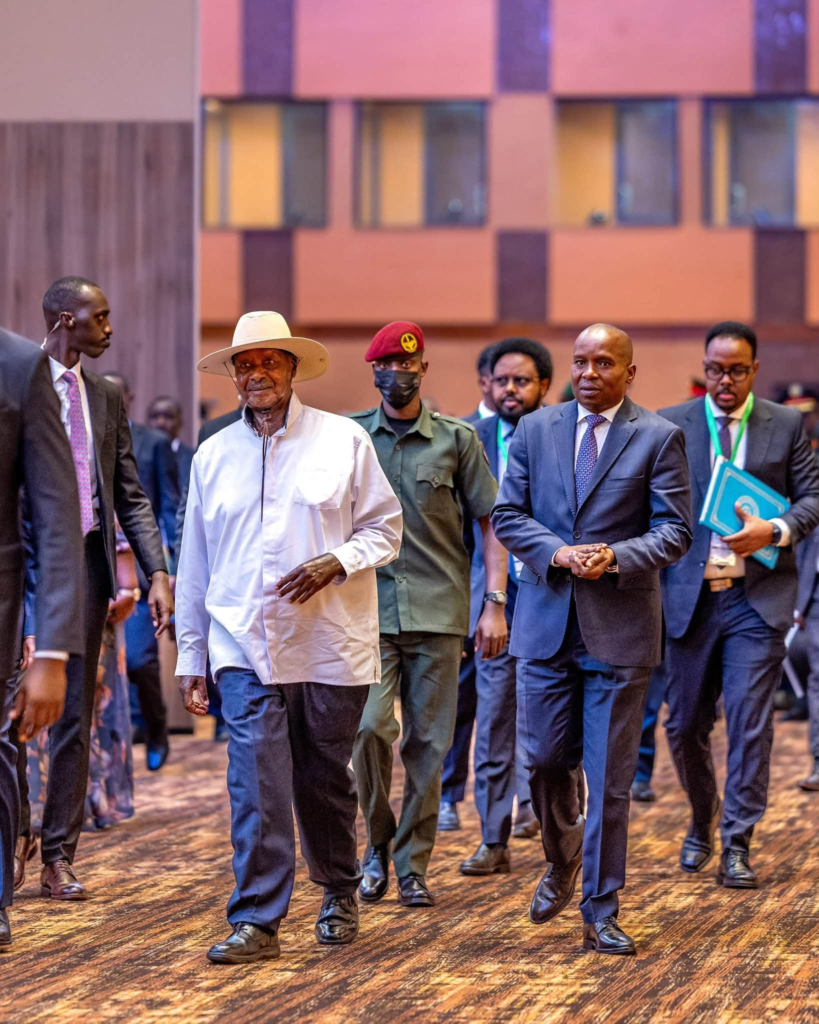
Cabinet Secretary Geoffrey Ruku has ungloved and is ready to protect Deputy President Kithure Kindiki from the current onslaught from ODM and other Cabinet Secretaries over the running mate slot.
“The office of the Deputy President is occupied. It is wrong for leaders to continue discussing it as though it were vacant. Such conversations amount to disrespect to the Deputy President and the institution he serves,” Ruku said.
Already ODM has maintained that in the pre-election coalition negotiations with UDA, they will demand the post of Deputy President.
Last weekend, National Assembly Minority Leader Junet Mohammed declared Cabinet Secretary Wycliff Oparanya as the preferred Deputy President and running mate to Ruto.
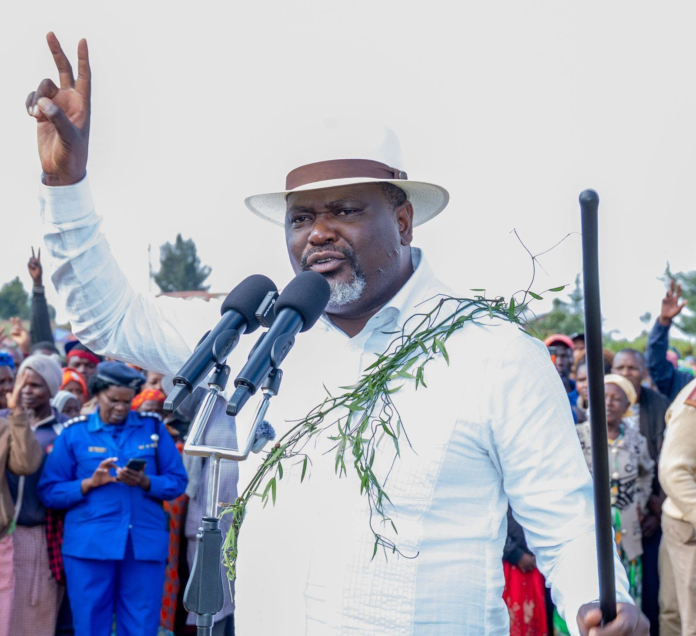
“We are forming an alliance between ODM and UDA with a view to forming the 2027 government with President William Ruto. If UDA takes the President’s slot, ODM will go for the Deputy slot, and that is what we will negotiate for. The person who qualifies and has experience, a Cabinet Secretary, former Deputy Party Leader, is Wycliff Oparanya. When we shall have agreed on a pre-election coalition pact, UDA will bring the President while ODM will go for the Deputy President. We will take Oparanya for the seat,” Junet said.
But Deputy President Kithure Kindiki has also maintained that he will not leave the government and will fight from within.
Kindiki allayed fears of his sacking, saying nothing will change ahead of the 2027 general election.
Kindiki said the number of people eyeing his seat has doubled and welcomed Oparanya to the ring.
“The number has increased with Oparanya and others joining the fray. They are welcome. We will fight from within, and we are not moving an inch,” he said.
Kindiki said he will not move an inch and will fight from within the slot, and Kenya Kwanza was their government.
“This is our government. There are some of our brothers who advised that we should resign and leave. I objected and told them we cannot. You cannot build a house, complete and furnish it, and then you abandon it for the forest,” he said.
Kindiki said it would be absurd for him to abandon what he has built for an unknown political destination.
“You have built a house, plastered it, furnished it with chairs, TV sets, and instead of enjoying it, you abandon everything to go live in the forest. I can’t do that and won’t,” he said.
Former Deputy President and DCP leader Rigathi Gachagua recently claimed that Kindiki was being subjected to the same mistreatment he went through before he was impeached.
He told Kindiki that he was welcome back home in the political formation that Mt Kenya has shifted to.
But Kindiki declined the overtures, saying he had built the party and cannot walk away, and will be President Ruto’s running mate.
On Friday, Public Service Cabinet Secretary Geoffrey Ruku criticised ODM for its calls for the Deputy President’s position.
The criticism has now opened to the public the emerging political contest within the broad-based government, highlighting growing differences over power-sharing ahead of the 2027 General Election.
Speaking in Meru, Ruku, a member of the United Democratic Alliance (UDA), cautioned ODM leaders against treating the office of the Deputy President as though it were vacant.
He insisted that Deputy President Kithure Kindiki occupies the position and deserves respect, arguing that continued public debate over his replacement undermines both the office and its holder.
“The office of the Deputy President is occupied. It is wrong for leaders to continue discussing it as though it were vacant. Such conversations amount to disrespect to the Deputy President and the institution he serves,” Ruku said.
Ruku said the move to undermine Kindiki will not be accepted or tolerated.
“The Deputy President deserves respect. Let us stop creating unnecessary debates over a position that is already occupied,” he added.
Ruku’s response signals a different position within UDA. While ODM appears to view the broad-based government as creating room for negotiations over key political positions, Ruku’s remarks suggest that UDA does not consider the running mate position open for discussion.
The statement was also aimed at reassuring UDA supporters, particularly in the Mt Kenya region, where Kindiki is seen as a key political figure. Any suggestion that the Deputy President could be replaced has fuelled speculation about the future of President Ruto’s 2027 ticket.
The exchange reflects the delicate balance within the broad-based administration. Although UDA and ODM continue to cooperate in government, both parties are simultaneously positioning themselves for the next election, with negotiations over influence and political rewards increasingly becoming part of the national conversation.