Home Blog Page 65

Give Us a Break! Owili Declares Front-Runner Status for Kisumu Governor 2027

0

By James Okoth

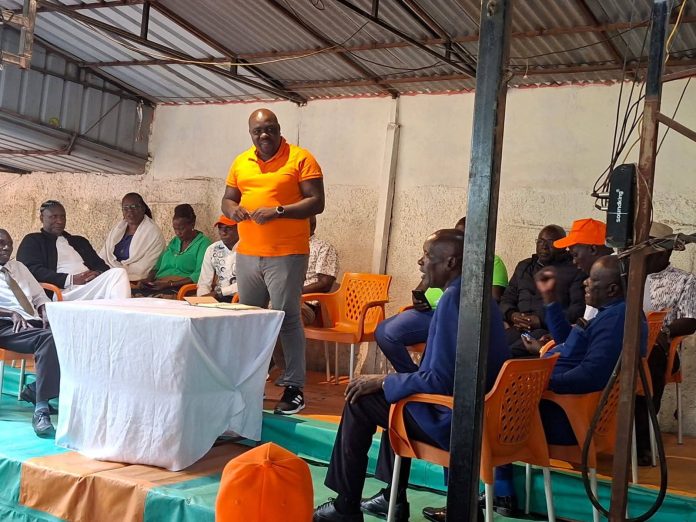
Kisumu’s political heat is on. Deputy Governor Dr. Mathews Owili is setting the pace with bold words that have rattled rivals, he has declared himself the front-runner in the 2027 gubernatorial race.

“Kisumu is having a transitional leadership in the gubernatorial position. I hear many people are eyeing the seat in 2027,” he said, “Each political position has a clear political path. An MP has to be a member of committee or a chair of a committe, from there one can become either minority or majority leader. If you don’t have such records, give us a break!” Owili fired, sending shockwaves across the county’s political circles.

Behind the calm, academic demeanour lies a sharp strategist. Having served under Prof. Anyang’ Nyong’o since 2017, Owili has quietly built a reputation as a dependable administrator. Now, with the governor entering his final term, Owili is emerging as the natural heir to Kisumu’s top seat.

The Deputy Governor’s remarks were more than casual talk. They were a warning. The road to leadership is not for political tourists. In a county where nearly half a dozen aspirants have declared interest, Owili is shifting the narrative from slogans to proven performance.

Among those eyeing the seat are Kisumu Central MP Dr. Joshua Oron, Nyakach MP Joshua Aduma Owuor, Senator Prof. Tom Ojienda, Woman Representative Ruth Odinga and former Governor Jack Ranguma. Yet, none has shaken the ground like Owili has.

Dr. Oron, though vibrant and youthful, is a first-term legislator with limited parliamentary experience. Aduma Owuor, a veteran of Nyakach politics, boasts committee experience but faces a stiff rivalry with Owili in their shared backyard.

Prof. Ojienda carries the weight of academia and political stature but is seen more as a national figure than a grassroots mobilizer. Ruth Odinga adds a gender and family dimension, while Jack Ranguma seeks a comeback that many view as nostalgic but unlikely.

Owili’s advantage lies in administrative experience, deep grassroots networks and strategic proximity to the Odinga political dynasty. He has been the loyal lieutenant, the quiet operator behind county programs and the man ready to step into the spotlight.

He also reaffirmed his loyalty to the Orange Democratic Movement, insisting the party fully supports Dr. Oburu Oginga as ODM leader. Owili intimated that the party will formally confirm Oburu’s position during the national delegates’ conference.

“The strength of ODM is what will give it both meaning and weight in the broad-based arrangement. Likewise, the strength of both ODM and UDA will make the government stronger and more deserving to steer the country forward,” he said.

By linking county ambitions with national party strategy, Owili positions himself as a bridge. He can secure Kisumu while reinforcing the party’s role in the broader coalition. His message is clear: leadership is earned, alliances matter and performance defines legitimacy.

Observers see Kisumu entering a delicate moment, a shift from intellectual leadership to a more pragmatic, operations-driven era. Owili embodies that change. He is calm but decisive, rooted in the system, unafraid to challenge its comfort zones.

For now, one thing is certain. The battle for Kisumu has begun in earnest. The others are still talking. He is already running the race.

From Capital Hill Nairobi to Kango ka Jaramogi: Raila’s New Centre of Power

0

By James Okoth

Kango ka Jaramogi, the resting place of the late Raila Odinga and once a tranquil homestead, is now pulsing with renewed political life. The site, marked by reverence and reflection, has quietly replaced Nairobi’s Capital Hill as the new axis of Raila’s influence.

Since his burial, the compound has turned into a magnet for leaders, allies and admirers seeking to affirm loyalty and draw inspiration. The air is charged with both emotion and strategy. Every visit carries the tone of renewal, each speech a reaffirmation of Raila’s enduring grip on the national soul.

On November 6th, Wiper leader Kalonzo Musyoka led a massive delegation of elected leaders and elders from Eastern Kenya to the Bondo compound. The group presented 150 herd of cattle to the Odinga family in a show of solidarity. Kalonzo declared that the visit symbolized “the spirit of unity Raila fought for,” and vowed that the opposition would guard his legacy with unwavering strength.

Earlier, on October 21st, Siaya Governor James Orengo and several Azimio figures made their way to Kango ka Jaramogi, calling Raila “a mighty tree under whose shade many found shelter.” Their visit, rich in emotion and symbolism, signaled the beginning of what many now call a pilgrimage to Kenya’s political shrine.

Even leaders from the Rift Valley, long seen as political rivals, made a powerful gesture of respect. A group of Kalenjin elders and MPs delivered 80 bulls to Bondo in tribute to Raila’s 80 years, declaring that “the unity he preached must live beyond him.” It was a rare show of goodwill that bridged Kenya’s deep political divides.

Since then, Kango ka Jaramogi has become a living stage of Kenyan politics. Meetings, declarations and quiet consultations unfold almost daily. Pilgrims continue to arrive from all corners of the country as visits reportedly remain fully booked until December 31.

To many, the shift from Capital Hill to Bondo is not retirement but rebirth. Raila’s spirit, now rooted in the soil of his ancestors, still stirs the nation. In life and beyond, his name remains the compass by which Kenya’s politics continues to find direction.

How President Museveni may have delivered activist Bob Njagi as a weaponized campaign tool to Mt Kenya

0

By Anderson Ojwang

President Yoweri Museveni may have inadvertently delivered a weaponized campaign tool to Mt. Kenya ahead of the 2027 presidential election with the detention and subsequent release of two Kenyan activists who were arrested in Uganda.

For 38 days, Kenyan activists Bob Njagi and Nicholas Oyoo were held in a Ugandan military facility over their alleged association with Ugandan opposition presidential candidate Bobi Wine.

Museveni said, “Here in Uganda we have very good intelligence. For instance, we arrested two Kenyans — I have their names but I do not remember their names — they were working with Kyagalanyi’s group. They are experts in riots; we picked them up and they have been in the fridge for some days. Some Kenyan leaders rang me and said that I should either put them in jail here or hand them back. We pick them and then after some time we release them.”

In Mt. Kenya, the release of their son Njagi is currently being attributed to former President Uhuru Kenyatta, and that narrative is gaining traction in the region — a historical stronghold of President William Ruto.

The release of the two by the Museveni administration opens a new political narrative in the country, mainly in Mt. Kenya, previously President Ruto’s stronghold. Currently, Mt. Kenya and President Ruto are reading from different scripts, with top leaders from the region associating with the United Opposition Alliance.

The attribution of the duo’s release to former President Uhuru comes hot on the heels of the recent installation of Dr. Fred Matiang’i as deputy party leader and presidential candidate; Matiang’i is a member of the United Opposition Alliance.

Uhuru’s ally Pauline Njoroge wrote on a Facebook page, “Just as in several recent instances where the Kenyan government has faced difficulties in securing the release of citizens detained abroad, the situation was no different for Nicholas Oyoo and Bob Njagi, who had been held incommunicado in Uganda. While our government made some efforts to intervene, including writing a protest letter, they failed to get a breakthrough until former President Uhuru Kenyatta personally placed a call to General Muhoozi Kainerugaba. It was this intervention that finally broke the deadlock, leading to the duo’s release and subsequent handover to Kenyan authorities.”

General Muhoozi allegedly said, “If not for the respect I have for Uhuru, those Kenyan boys could have remained in my fridge until the next elections period. Next time I won’t be as lenient as this time.”

Prime Cabinet Secretary Musalia Mudavadi described efforts by the Kenyan government to secure the duo’s release. He wrote, “The Government of Kenya welcomes the safe release of our two citizens, Mr. Bob Njagi and Mr. Nicholas Oyoo, who had been abducted by armed men around the Kireka area in Kampala, Uganda, on Wednesday, October 1, 2025. Following sustained diplomatic engagement between Kenya and Uganda, including a formal letter I personally addressed to Hon. Gen. Odongo Jeje Abubakhar, Minister of Foreign Affairs of the Republic of Uganda, both governments maintained open and constructive communication that has culminated in the safe release of our nationals. The Government of Kenya expresses its deep appreciation to the Government of Uganda for the cooperation extended throughout this process, and to our diplomatic team in Kampala for their vigilance, commitment, and professionalism. Arrangements have been finalized to ensure the two Kenyans reunite safely with their families. The safety and well-being of Kenyan citizens abroad remain a non-negotiable priority for the Government of Kenya. We continue to urge all Kenyans living, working, or travelling abroad to remain vigilant and to maintain regular contact with our embassies and consulates for timely assistance and updates.”

This was the second time Njagi has been arrested and detained. In August 2024, Njagi and others were held for 32 days for engaging in anti-Finance Bill demonstrations.

Njagi and Oyoo were arrested at a function with Ugandan opposition presidential candidate Bobi Wine, and early efforts to secure their release hit a stumbling block after Ugandan authorities denied abducting or detaining the two Kenyans.

Uganda police, in a press conference on October 6, denied holding the duo, saying, “I do not have any information to the effect that they are in police custody, nor do I have any information that they are accused by the police. If I had it, I would volunteer it here without any reservation.”

The military also denied holding the two. In a case filed in the Uganda High Court, the Uganda People’s Defence Forces said they had carried out investigations, searched all relevant detention facilities and records, and found no entry relating to the two missing activists.

On October 23, the Uganda High Court dismissed the case and asked the lawyers to make a formal report of missing persons.

Nandi Senator Samson Cherargei added fuel to the narrative in Mt. Kenya when he commended the Uganda president for the arrests, saying, “I want to ask President Museveni and President Suluhu that if you get any busy-body activists who want to destabilize the overmighty peace and tranquility of your country, finya hawa, warudishe nyumbani na tumalizie” (torture them and return them home to finish the job), he said.

Njagi previously served as ODM secretary for Humanitarian and Disaster Management Affairs.

The emerging narrative that Uhuru intervened in Njagi’s release is likely to become one of the campaign tools Mt. Kenya will use to de-campaign President Ruto and try to lock him out of the region.

When Juogi Spoke, Mahia Roared: Owalo Emphatically Dismantled Omollo at Nyayo in a New Dispensation

0

By Anderson Ojwang

On Sunday at 4:00 p.m., the spirits of Ogonda Wuon Okore, Ojijo Wuon Oteko, Nyakati Wuon Ogutu, and Gor Wuon Ogalo converged at Got Komolo to pay homage to Omollo Wuon Agar. The Mahia spirits were restless and not at peace.
It was time to appease the mystic — time to tower once again and hand over the baton of leadership to the new kid on the block.

Prophet Johana Wuod Owalo gently knocked at the door, and Omollo Wuon Agar opened. Raila smiled — then Juogi spoke to the patron of Police FC, Dr. Raymond Omollo, an ardent supporter of K’Ogalo. Gor en hono (Gor is mystic).
As Prophet Owalo read the scripture and Omollo Wuon Agar walked to the podium to welcome Raila, a new member, to the group, they unanimously agreed on Eliud to lead the new dispensation.

For the last two years, Nyakwar Agar had maintained a firm grip over Gor and had temporarily silenced Juogi, riding to victory as last year’s Kenya Premier League champions.
Police FC had played eight matches against K’Ogalo, won three, drawn three, and lost two — giving them bragging rights.

But yesterday, Eliud successfully avenged by emphatically beating Police FC 2–0, icing it with ending their unbeaten run. What a sweet revenge by the Deputy Head of Public Service over the Internal Security and Administration Permanent Secretary.
Felix Oluoch, in the third minute, sent the Police back to the station before Sharif Musa placed them in the cells in the 30th minute. With no guns or rungus, they watched helplessly as Mahia roared and rolled.

Gor Mahia posted on their X handle:

“It’s all over here at Nyayo National Stadium, ladies and gentlemen, as we corner these policemen with a convincing win. Hawa ndio defending champions? Walikuja na unbeaten record, pigwa kama kibuyu. Sirkal ni moja — we are Mahia.”

Owalo wrote:

“Gor Mahia hit two past Police FC. Joined other soccer faithful at Nyayo National Stadium for the KPL match between Gor Mahia and Kenya Police FC, which Gor Mahia won 2–0. KUDOS K’Ogalo!”

But Omollo, in his response, wrote on his X handle:

“Tough luck to Police FC after a hard-fought match against Gor Mahia. The spirit, discipline, and teamwork you displayed remain commendable. Keep your heads high — the season is long and greater victories lie ahead. Congratulations to Gor Mahia for their well-deserved victory. In this clash of sirkal versus serikali, the spirit of excellence triumphed either way.”

For Owalo, the new patron, the win was in line with the desire of the departed immediate former patron, Raila Odinga, for the team to reclaim the league and win games.
That is why, before Raila left for medical treatment in India, the last function he presided over at his Karen home was a breakfast meeting with Gor Mahia players and officials, where he presented them with a cheque of KSh 10 million.
His final wish to the team was for them to win the league, return to the continent, and lift trophies.

Gor Mahia posted on their X handle after the visit:

“An incredible visit to our patron Hon. Raila Odinga and Mama Ida Odinga’s home in Karen. The club management had a good time. In demonstration of his unwavering commitment and truly generous gesture, our patron presented the club with a monumental gift of Sh10 million to support administrative functions. We are deeply grateful to our patron and his family.”

Raila then wrote on his X handle:

“As the new football season kicks off, I had the pleasure of being briefed by Gor Mahia Football Club’s executive team, led by Chairman Ambrose Rachier, on the club’s campaign plans for the season.

Wishing K’Ogalo all the very best as they fly the Green flag higher and strive to return as champions once again. Let’s go Gor Mahia!”

That is why Owalo delivered the specific mandate of avenging Dr. Omollo for leading Police FC to their first silverware last season, relegating Gor Mahia to the unfamiliar runners-up position and subsequently denying them a chance to participate in the continental games.
Owalo now has a duty to return the bragging rights to Gor Mahia by ensuring his charges win tomorrow’s game by an even bigger margin.

How Safaricom Shares Alone Can Transform Konza, JKIA and the High-Speed Electric Train

0

By Billy Mijungu

Safaricom, Kenya’s largest and most profitable company, holds the key to unlocking Kenya’s next phase of infrastructural transformation if only we reimagine its potential beyond annual dividends. With an enterprise value of KSh 1.39 trillion and an annual profit of KSh 43 billion, the telco has become a goldmine that continues to enrich shareholders, yet a significant portion of its value lies idle from a national development perspective.

The government currently holds a 35% stake in Safaricom, valued at approximately KSh 417 billion. That investment, while impressive on paper, does not directly translate into tangible benefits for ordinary Kenyans. If strategically restructured, selling this stake or most of it could transform Kenya’s infrastructure landscape. The government could still retain a small 5% strategic shareholding, valued at about KSh 70 billion, enough to safeguard national communication and security interests while continuing to collect taxes from Safaricom’s annual profits, which already amount to about 30% of the company’s taxable income.

The real prize, however, lies in what that KSh 417 billion could achieve if reinvested wisely. Imagine channeling that money into Konza Technopolis, Jomo Kenyatta International Airport (JKIA), and a High-Speed Electric Rail line linking the two to the Nairobi Central Business District. Such an express electric corridor would transform mobility, trade, and technology integration in ways Kenya has never witnessed before.

A new international airport extension, coupled with a rapid rail connection to the city, would make Konza the beating heart of innovation, Africa’s own Silicon Valley. The ripple effects would be monumental, the creation of new cities, jobs, and infrastructure worth over KSh 500 billion, possibly growing into a trillion-shilling economy within a few years as investors rush to secure space and opportunities in the surrounding counties.

Beyond that, the 417 billion could be used as a revolving sovereign infrastructure fund, an independent investment vehicle dedicated to financing strategic national projects. The fund could attract additional capital from development partners, private investors, and diaspora bonds, multiplying the impact of the initial sale proceeds and ensuring that the money is not spent once but reinvested repeatedly to deliver long-term transformation.

Kenya could also tie the investment to a National Innovation Corridor stretching from Konza through JKIA to Nairobi and connecting seamlessly with the proposed Mombasa Nairobi Superhighway and the SGR. This would create a smart, green economic belt powered by clean energy, data-driven technology, and efficient mobility, a model of sustainable growth for the continent.

To make this vision work, governance and planning must be airtight. Every shilling from the sale must be directed to productive investment, not recurrent spending. If managed transparently, the sale of Safaricom shares could finance a generation of growth and innovation, proof that strategic thinking, not more debt, can power Kenya’s next phase of development.

Kabul wins NCB sponsored Kiambu golf club captain’s prize

0

By PHILLIP ORWA

Senior Kabundi emerged Victorious to beat a strong field of over 160 golfers, including seven junior golfers, becoming the overall combined winner during the NCBA-sponsored Kiambu Golf Club Captain’s Prize on Saturday, November 8th.

Kabundi managed a score of 72 on aggregate to floor all the other players and emerged the best as the club bid farewell to outgoing Captain William Muguima in the annual event.

David Thiong’o emerged the overall winner on Saturday with 42 points, playing off handicap 25 as JK Muchai(19) carded 37 points to win the men’s category, while Rose Kabutha won the ladies category after beating Beatrice Kungu on countback after both carded 35 points.

NCBA Group Director of Corporate & Investment Banking Advisory, Tirus Mwithiga, played a good round to win the Sponsor category with 35 points off handicap 11.

The week-long tournament featured the Clergy and Friends event, juniors day, a seniors tournament, and a special curtain raiser, and will have a Caddies Tournament on Monday, November 10th.

Speaking after his round on Saturday, the outgoing Captain Muguima pointed out a high uptake of the game by junior players at the club in the last year as one of his biggest achievements.

“Today was a good day, and I am happy that the week has ended well. Congratulations to all the winners throughout the week as we celebrated the Captain’s Prize. My tenure has been exceptional, and I believe we have achieved a lot. Our biggest achievement has
been on the junior front, where we have had more than 30 players get their handicaps this year. As a result, we have made sure that we reserved slots for junior players every time we have a tournament at the club, and we hope to see more juniors taking up the sport,”
Muguima said.

Elsewhere, three more golfers booked their slots for the upcoming 2025 NCBA Golf Series as the qualifying phase of the tournament came to an end on Saturday at the Nyahururu Golf Club.

Cyrus Lwenyi carded an impressive 37 points to emerge the overall winner and lead his clubmates to the Gand Finale qualification. Playing off 6, Samuel Njenga won the Overall Men category with a similar score as Lwenyi, who had a better score on countback.

Florence Wanjiru carded 34 points off handicap 12 to grab the Overall Lady title, joining Lwenyi, Njenga and other players from different clubs on the list for the Grand Finale.

Focus now turns to the Grand Finale showdown set to take place at Muthaiga on Saturday, November 28th.

The Eighth Leg of the Sunshine Development Tour-East Africa Teed Off at Limuru

0

By Philip Orwa

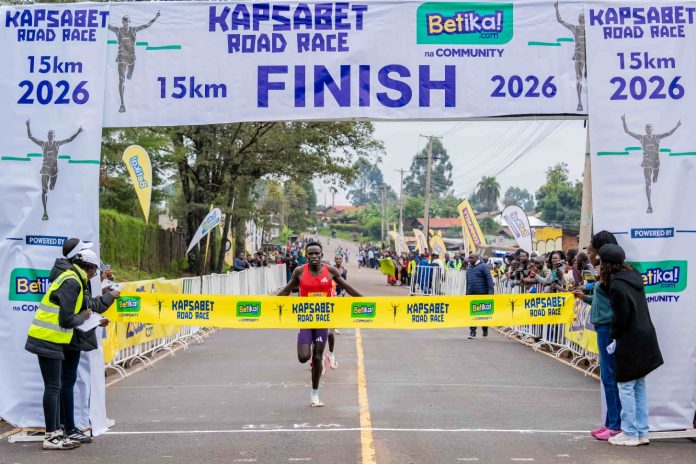
The well-attended ProAm played on Saturday, known as the Betika Masters, has attracted 88 professional and elite amateur golfers from Kenya, Uganda, Rwand a, Tanzania, Malawi, India and the United States, that will for the next three days the golfers will play for a share of the Sh2 Million prize purse, as well as Official World Golf Ranking (OWGR) points, World Amateur Golf Ranking (WAGR) points, and Safari Tour ranking points which count toward qualification for the 2026 Magical Kenya Open on the DP World Tour.

The tournament follows a lively ProAm held on yesterday, November 8, where more than 200 golfers took to the course for an exciting curtain-raiser.

Pro Justus Madoya led the winning team of the day, l guiding amateurs Antony Wangari, Dan Odongo, and Robert Mureithi to the top spot with a total on 85 points.

Finishing closely behind was the runner-up team comprising pro Ross Valentine and amateurs Victory Waiyaki, Kimani Njane, and Emmanuel Sanke, who matched the winning team’s score but lost on countback.

The third-best score was recorded by the group of professional Dennis Saikwa, who played with amateurs Ngugi Waweru, Aman Degon, and Nick Weru, closing on 84 points.

In the individual categories, Ngugi Waweru, playing off handicap18, delivered one of the standout amateur performances of the day, scoring 41 points to claim the Overall Amateur Winner title.

Among the men, Samuel Gitonga (handicap 35) finished as the Men’s Winner with 41 points, while handicap 27 Kiragu Kimani followed closely with 40 points to claim the runner-up slot.

In the ladies’ category, Grace Kihiu, playing off handicap 28 emerged the winner with 33 points, beating Catherine Mugane (handicap 32) who managed 29 points.

The guest category was topped by William Kimondo, who scored 41 points. The day’s longest drive contests were won by John Lejirma in the men’s category and Grace Kimeria among the ladies, while the nearest-to-the-pin award went to Godwin Karuga.

The first nine was won by Waithaka Ndungu with 23 points, and the second nine by Antony Wangari with 21.

The main tournament field features all winners of previous Sunshine Development Tour – East Africa Swing events, including three-time champion Njoroge Kibugu, John Lejirma, Dismas Indiza, and Rwanda’s two-time winner Celestin Nsanzuwera. Other Kenyan professionals in the draw include Greg Snow, Edwin Mudanyi, Jastas Madoya, John Wangai and Mike Kisia.

Speaking ahead of today’s opening round, IMG Kenya CEO Peter Gacheru emphasized the importance of the Betika Masters in the context of competitive golf in the region.

“As we tee off the main event, we are excited to see such strong representation from across Africa and beyond. The Betika Masters continues the momentum of this Tour, raising the standard of golf and creating pathways for our athletes to advance to the Sunshine Tour and global circuits.”

The top 30 players and ties after Round Two will progress to the final round on Tuesday, where the Betika Masters champion will be crowned.

Government Delivery Unit pushes for faster delivery of Isiolo–Kulamawe-Garbatulla-Modogashe road to unlock Northern Kenya’s potential.

0

By Patrick Amimo

The Government Delivery Unit (GDU) team, led by Acting Head, Mr. Olando Sitati, concluded a two-day inspection and stakeholder engagement in Isiolo County with a call for renewed urgency and collaboration among implementing agencies to accelerate the completion of the Isiolo–Kulamawe-Garbatulla-Modogashe road, a key infrastructure project under the Horn of Africa Gateway Development Project (HoAGDP).

The government, through the National Land Commission (NLC), has released funds for land compensation, with the Kenya National Highways Authority (KeNHA) tasked to ensure payment to Project Affected Persons (PAPs) begins within two weeks.

The visit covered Lot 1 and Lot 2 of the project, stretching 218 kilometers from Isiolo through Kulamawe and Garbatulla to Modogashe.

The project is a key promise by President William Ruto to the people of Northern Kenya and forms part of the Lamu Port-South Sudan-Ethiopia Transport (LAPSSET) corridor under Vision 2030’s LAPPSET framework.

Jointly funded by the Government of Kenya and the World Bank, the HoAGDP is a transformative initiative aimed at modernizing key transport infrastructure, boosting trade, and fostering socio-economic growth across Northern Kenya and the wider Horn of Africa.

The KES 12.5 billion project, implemented by China State Construction Engineering Corporation Ltd., involves upgrading 77 kilometres of the Isiolo–Kulamawe section and laying a fibre optic cable along the corridor. Construction work currently stands at 45 per cent completion.

The contractor has been directed to finalize critical bridges and tarmac over 60km by the end of this year, with substantial completion targeted for 2026.

The project has so far created over 2,000 direct jobs, with 80% of the workforce drawn from local communities.

During the inspection, the GDU team reviewed progress on earthworks, culverts, bridge construction, and service works.

The team was accompanied by Isiolo County Commissioner Mr. David Kiprop, Isiolo County Police Commander Mr. Paul Wambugu, County DCI officer Mr. Dennis Wekesa, KeNHA Project Inspector for Upper Eastern Mr. Gedion Mwiti, National Land Commission Officer Ms. Zahra Ahmed, Resident Engineers Mr. Joash Ochieng (Lot 1) and Mr. Justus Otwani (Lot 2), among other security and county officials.

Speaking during the site visit, Mr. Sitati lauded the quality of ongoing works but emphasized the need for faster execution.

“This is a flagship national project with immense economic and social value. We must overcome bottlenecks through collaboration, accountability, and urgency. Our focus is delivery,” he said.

He urged KeNHA to take full ownership of the project and fast-track pending land compensation and community sensitization exercises to maintain public trust and ensure timely completion.

Mr. Sitati identified insecurity and delayed land compensation as key challenges affecting progress and called for close coordination among security agencies to safeguard the project corridor.

He underscored the importance of community engagement, saying that project benefits must be equitable and well understood by residents. Alongside the road, the project is uplifting communities through investments in water, health, education, TVET, and security, with land compensation payments set to begin within two weeks.

“Security installations, including police stations along the corridor, are essential to sustaining progress and protecting investments,” he added.

Mr. Sitati further directed GDU Regional Lead Mr. Duncan Mwariri to prioritize complementary initiatives such as affordable housing and student hostels in Isiolo as part of the region’s wider development strategy.

He also proposed the use of mini power grids in the Garbatula section to expand access to electricity and called for partnerships with Kenya Power and the Rural Electrification and Renewable Energy Corporation (REREC) to expedite connectivity.

During the visit, the GDU team engaged local leaders, contractors, and residents, who expressed optimism that the project would transform livelihoods by improving access to markets, enhancing security, and creating new opportunities for enterprise.

Isiolo County Commissioner Mr. David Kiprop commended the project’s progress, noting the strong collaboration between implementing agencies and local authorities despite logistical challenges.

“The project team has demonstrated resilience and quality workmanship. With continued coordination, we will deliver this corridor on schedule,” said Mr. Kiprop.

The GDU, which operates under the Office of the Deputy Chief of Staff, Delivery and Government Efficiency, continues to inspect, verify, and fast-track national projects across the country to ensure efficient delivery, transparency, and impact for citizens.

Once completed in March 2026, the Isiolo–Kulamawe-Garbatulla-Modogashe road will enhance security and serve as a strategic economic lifeline for Northern Kenya, linking communities, strengthening trade networks, and unlocking the region’s vast economic potential.

Kenya Can Be Africa’s 3rd Largest Economy with Financial Boost from National Housing Schemes

0

By Billy Mijungu

According to the IMF’s projection of Africa’s 10 largest economies in 2025 by nominal GDP, South Africa will lead with 426.38 billion dollars, followed by Egypt at 349.26 billion, Algeria at 288.01 billion, Nigeria at 285 billion, Morocco at 179.61 billion and Kenya at 136.01 billion. Kenya ranks sixth, making it East Africa’s largest economy. These rankings reflect Africa’s growing strength and diversification, but Kenya’s position could dramatically shift upwards if its National Housing Scheme is implemented effectively and sustained with the right policy direction.

With President William Ruto’s strong push for affordable housing, the country’s financial landscape is bound to change in astronomical terms. Mgala muue, haki mpe, on housing he got it right. Though the program has been painful and imperfectly structured, it holds immense transformative potential. The initiative is largely commercialised, blending citizen contributions with government-provided land for development. Ideally, it should evolve into a social housing model, based on a rent-to-own system managed through the Housing Corporation rather than purely market-based or affordable housing. This would ensure long-term sustainability and inclusivity for ordinary Kenyans who form the majority of the workforce.

The ripple effect will draw in SACCOs, banks, and microfinance institutions, reshaping Kenya’s mortgage market from under one hundred thousand active mortgages today to over a million within a decade, potentially reaching five million at its peak. As more Kenyans own homes, housing will become the backbone of the economy, driving investments in commercial buildings, school dormitories, and institutional housing. This will in turn lower the cost of higher education and business premises, free up disposable income, and improve the quality of life for millions of citizens.

The construction sector will expand rapidly, providing employment to youth, artisans, and suppliers across the country. This multiplier effect will circulate money within communities and significantly boost national productivity. However, the biggest threat remains corruption, which could derail these noble intentions. For this vision to work, transparency, accountability, and institutional discipline are critical. Any administration after President Ruto must sustain the housing agenda until the market reaches maturity and saturation.

As organised housing transforms informal settlements and absorbs roadside sellers, taxation will become easier and more dignified. Structured urban living will restore order and pride in service delivery. If Kenya stays the course, it could rise to become Africa’s third-largest economy, built not on extractive industries but on people-centred financial systems and social transformation through housing.

Bondo Bursts to Life as Pilgrims Flood Kang’o ka Jaramogi

0

By James Okoth

Transport and business are thriving again in Bondo.

At Kang’o ka Jaramogi and its surrounding villages, a fleet of cars, matatus and buses in all colours and models has become the new norm.

The road to Bondo now feels alive. From the shores of Kisumu, the tarmac stretches like a silver ribbon under the morning sun. A white Toyota, dust trailing behind, snakes through Ahero, speeds past Akala and finally dips into the winding valleys of Siaya. Inside, passengers lean to the window, some in silence, some lost in thought, others clutching small flags and portraits. Every turn of the wheel feels like a journey home, a tribute in motion.

Children wake early. Before dawn, the small boy from Nyamonye rushes through his morning. He fetches water, feeds the chicken, gulps his tea and runs barefoot to the roadside. There, he joins others, their faces bright with curiosity. Together, they wait for the endless stream of vehicles. Each flashing headlight is a story, each convoy a spectacle. The children cheer, wave and point at the buses. To them, the road is a moving celebration.

Local traders are shifting their focus. The decades-old selling points of Bondo town are losing their grip. New markets are forming near Kang’o and Opoda. Stalls sprout like mushrooms. Vendors move where the people are.

“I used to sell vegetables at the Bondo bus park,” says Jackline Atieno, a trader who now runs a small stall near Kang’o ka Jaramogi. “These days I sell more bottled water and hats than vegetables. People want a memory to take home,” she joyfully remarks.

Public transport is reshaped. One travelling to Bondo is assumed to be heading to either Kang’o ka Jaramogi or Opoda farm. Those catching a ride back are believed to have come from there. The tales from these journeys unite strangers and friends. Each matatu ride becomes a shared story, each passenger a witness to something larger than a burial.

Victor Carilus Okoth, a matatu operator belonging to Bungoma line and used to ply Kisumu-Siaya route but shifted to Kisumu-Bondo, says the roads are never empty. “From dawn to dusk, our vehicles are full,” he says. “It is like a pilgrimage. People come to see, to feel, to belong,” he says, clutching the steering wheel ready to takeoff.

New trades have emerged. Caps and hats called the “Raila Odinga hat.” Luo relics. Branded T-shirts and wristbands. Emotion, passion and pride drive both sellers and buyers.

Online, the words “Bondo,” “Opoda farm,” and “Kang’o ka Jaramogi” top search engines.

Locals say the Enigma saw it all coming. He had the roads tarmacked, the paths widened. They ask, what would this movement have looked like if the roads were still rough and dusty?

As dusk falls, a bus leaves Bondo. Its windows glow gold in the fading light. Inside, passengers sit shoulder to shoulder, some holding souvenirs, others humming quiet tunes. A woman clutches a folded T-shirt, a young man scrolls through photos of Kang’o, while an old man whispers stories of the Enigma he once met. Their faces carry conviction, pride and peace. The hum of the bus mingles with laughter and silence alike.

Bondo disappears behind them, still alive, still calling.

What began as mourning has turned into motion.

And motion, here in Bondo, is life.