Home Blog Page 69

Raila’s last mission: Accomplished the spirit and aspiration of the National Anthem, Peace, Unity and Liberty

0

By Anderson Ojwang

The late Raila Odinga, before his death, must have been on a mission to accomplish the spirit and the aspirations of the country’s National Anthem, the foundation of the country at independence.

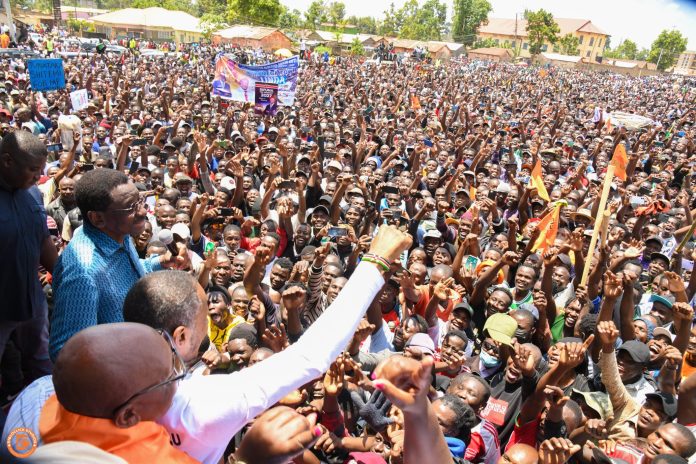
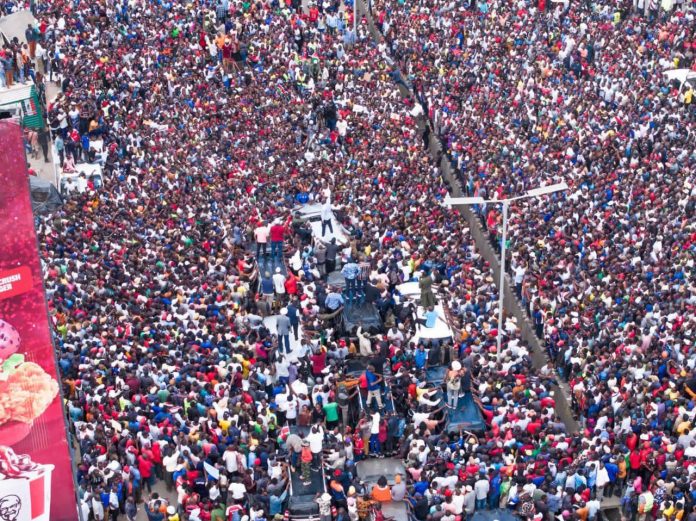
And indeed, he accomplished the mission, and that is why, when he passed on peacefully in India on the morning of 15 October 2025, and within 72 hours the county and the world converged at Kango Ka Jaramogi and online to pay their last respects, honour, and witness mission accomplished.

In his last powerful speech in Karachuonyo during the burial of the matriarch Mama Phoebe Muga Asiyo, he evoked the spirits of the National Anthem of peace, unity, liberty and rising to defend the nation.

“I do not regret what we did. We did it in the best interest of our country and Kenya must move forward. We were in a very serious situation sometime last year. Everybody knows where we were.
There was a possibility of Kenya degenerating into a failed state. People who do not understand history talk very easily.
Ask them what happened in Libya? What happened in Egypt after the Arab Spring? Why do we have a military regime in Egypt today after the Arab Spring? Even Tunisia — people do not understand — that is why they are making it very simple and they are not able to write articles in the newspapers. I read them and I just laugh.
They tried to trivialise what was a very serious situation. What we have today is basically something that was forced upon us because of the circumstances that existed at that time. I want to invite somebody to tell me their own solution — how this could have been solved. We sacrificed so that there could be peace in this country, and that is the reason why we are here today,”
he said.

The powerful and last speech to the nation echoes with the country’s National Anthem: “O God of all creation, bless this our land and nation. Justice be our shield and defender, may we dwell in unity, peace and liberty.
Plenty be found within our borders. Let one and all arise with hearts both strong and true. Service be our earnest endeavour, and our homeland of Kenya, heritage of splendour, firm may we stand to defend.
Let all with one accord in common bond united build this our nation together, and the glory of Kenya, the fruit of our labour, fill every heart with thanksgiving.”

In Raila’s mission, he started by uniting his community in East Africa, from Ethiopia, Uganda, Congo and Tanzania, who last year converged in Siaya County during the Piny Luo Cultural ceremony, which was attended by President William Ruto and Ugandan President Yoweri Museveni. Delegations from these countries converged and visited Got Ramogi, a site of cultural significance to the Luo community.

“We gather here at a time in which the world is increasingly interconnected through globalisation, while at the same time we are witnessing the resurgence of nationalist aspirations.
This resurgence of nationalist aspirations is being complemented by the emergence of multi-nationalism, which is nurtured by resilient communities. These multi-national aspirations do not seek to undermine national projects in their host countries but rather to harness the linguistic, cultural and social fabric upon which most states were built,”
he said then.

From uniting his community, Raila moved to unite the nation by reconciling President Ruto and his predecessor, former President Uhuru Kenyatta.

This culminated in President Ruto visiting Uhuru’s Ichaweri home, and he later appointed to the Cabinet five allies of Uhuru. In a statement dated 9 December 2024, it read in part: “His Excellency President William Ruto today visited former President Uhuru Kenyatta at his family home in Gatundu. During the visit, the two national leaders discussed several issues of national and regional importance.
President Ruto took the opportunity to reiterate his appreciation and commendation of His Excellency President Kenyatta’s statesmanship in overseeing the peaceful transfer of power after the 2022 elections, as well as the goodwill the former President has continued to demonstrate towards his fellow leaders and his support for Kenya’s ongoing progress and development.
They also underscored the importance of cultivating a nationalistic, patriotic, and harmonious working relationship among all Kenyans and stakeholders, including the three arms of government, religious leaders, civil society, and other partners, to ensure collective national stability and progress. Additionally, the leaders appreciated the need to achieve broader and more inclusive political consensus in the governance of our country to accelerate the attainment of inclusive growth and fulfil the national development agenda.”

From Uhuru, Raila united and brokered peace between President Ruto and his rival from the Kalenjin community, Gideon Moi, the son of Kenya’s second President, Daniel Moi.

Moi, who had expressed interest in the Baringo senatorial by-election scheduled for this month, withdrew from the race and is likely to be appointed to the Cabinet.

“I told Gideon, kindly join me and let us pull the country together. I have had conversations with Raila Odinga. I have sat down with my predecessor, Uhuru Kenyatta, and explained to him that we need to move this country to the next level.
And I have looked for my brother Gideon. I told him it is time for us to move Kenya to the next level. We must work together, and that is why I looked for Gideon.
I told him, I want you to come and help me pull this country together to elevate it to the next level. If there is a mistake anywhere, blame it on me,”
he said.

Gideon, in a statement, wrote: “We’ve elected to pursue the path of unity and shared purpose at this crucial point in our nation. As such, I extend my heartfelt gratitude to the people of Baringo for their support and for granting us a chance to move beyond our differences and mould a cohesive and prosperous nation.”

Raila also maintained constant contact with the opposition and consulted with Wiper leader Kalonzo Musyoka, among others.

The delegation visiting Kango Ka Jaramogi from every corner of the country and political divide is testimony that Raila, in his death, accomplished the spirit and aspirations of the National Anthem.

The Most Misused Term: “The Country is Bigger than an Individual”

0
Billy Mijungu

By Billy Mijungu

The country is bigger than an individual” has become one of the most misused phrases in our political space. Ironically, it is most often uttered by those who have either made a mess of the country or are desperately clinging to power. Every time the political heat rises or an election is disputed, this statement is thrown at citizens like a moral weapon, meant to silence those demanding justice or accountability.

The time has come for this phrase to be used responsibly and truthfully. When a leader loses an election or rigs themselves into power, it is hypocritical to preach that “the country is bigger than an individual.” If indeed the country is greater, then that leader should be the first to step aside and allow the nation to move forward without them. True patriotism is not shown by holding on, but by letting go when the people have spoken.

The country becomes genuinely bigger when we are willing to lay down weapons and embrace dialogue. It becomes stronger when we prefer peace over pride and unity over stubbornness. The nation grows when leaders are ready to take half a loaf instead of destroying everything in the quest for the full. Kenya, like any other country, becomes great not through slogans, but through selfless acts of humility and fairness.

Our collective greatness lies in justice, equity, and principle. When these values are compromised, when leaders manipulate systems, when truth is buried under propaganda, then the country shrinks in moral stature, no matter how loud the rhetoric. Those who cling to power despite the people’s will should not hide behind this phrase. They must live its meaning. If the country is truly bigger, they should step down, not dig in.

The test of true leadership is not in quoting patriotic phrases, but in embodying them. A leader’s worth is measured by their willingness to prioritize national peace over personal ambition. History will always remember those who yielded for the greater good, not those who spoke lofty words while tightening their grip on power.

The country indeed is bigger than any one individual, but only when we all, especially those in leadership, prove it through our actions.

The House That Raila Built Must Have Enough Rooms for All

0

By James Okoth

The winds of political realignment are sweeping across Kenya and the Orange Democratic Movement (ODM) stands at a defining moment. With Raila Amolo Odinga slowly stepping back from the political frontline, the question is no longer who inherits his name, but who carries forward his ideals.

When Elisha Jack Oraro, Speaker of the Kisumu County Assembly, led a delegation to Bondo, Raila’s ancestral home, it was not a routine political tour. It was a statement. A reminder that legacy and renewal can exist side by side.

Maseno, in Kisumu West, is where Raila was born, baptised and built his residence. His sister Ruth Odinga and other family members still live there. Speaking from that ground is to speak from the heart of Raila’s story.

Oraro’s political journey tells of steady rise and quiet influence. He began as MCA for Kisumu North Ward, later elected Speaker of the Kisumu County Assembly, now serving his second term. He is respected for calm leadership and balance, qualities that have earned him credibility as he now eyes the Kisumu West parliamentary seat.

The Bondo visit at Kang’o ka Kajaramogi and later to his Opoda farm gathered a broad team, including the clergy, local administrators, professionals, politicians, youth, women and the members Luo Council of Elders led by Ker Odungi Randa. It was a picture of inclusion and strategy, not mere ceremony.

Ker Randa invoked Raila’s legacy in his remarks.

“Raila Odinga was a man who loved peace,” he said. “It is not surprising that he had a strong bond with Speaker Oraro because Elisha too is a man of peace who values harmony among his people.”

Oraro used the moment to make a larger point about ODM’s future.

“Anyone who wishes to join ODM should be welcomed with open arms,” he said. “That is what Baba would have wanted, a party that unites, not divides.”

His message came at a time of renewed political intrigue. President William Ruto is believed to be warming up to ODM, while Nairobi Governor Johnson Sakaja has hinted that ODM could be his next political home. Oraro’s words sounded like a coded but clear response.

“We cannot claim to defend Raila’s legacy while locking others out,” he added. “Baba built a movement, not a clique. ODM must remain a home for everyone who believes in justice and democracy.”

With MP Rosa Buyu away on official duty abroad, Oraro dominated the event both in presence and message. He came across as calm, steady and deliberate, speaking unity in a time of political uncertainty.

In Kisumu West, where Raila’s name still carries spiritual weight, Oraro’s call for inclusivity struck deep. It was a reminder that ODM’s strength has always come from its openness and diversity.

His journey, from MCA to two-term Speaker and now an MP hopeful, reflects patience and discipline. His message from Bondo in Siaya county was not just about politics, but about the future of a movement.

The house that Raila built must indeed have enough rooms for all. For ODM to survive and thrive, it must stay open, adaptable and inclusive. That is the challenge Oraro has placed before the movement and perhaps, before the next generation of ODM leadership.

Uhuru’s Honest Reflection on Illness Opens New Chapter in Leaders’ Openness About Health

0

By James Okoth

Former President Uhuru Kenyatta has opened up about his recent health struggles, revealing that the past two years have tested his strength and resilience. Speaking during the funeral of his close friend and former Housing Finance (HF) Group Managing Director Frank Ireri in Nairobi, the former Head of State struck an emotional and reflective tone that immediately captured national attention.

“I shall continue to fight health challenges,” Uhuru said quietly, his voice tinged with gratitude and resolve. “Last year and this year have not been easy for me. I’ve been sick, but I thank God for strength.”

The admission was rare for a man long regarded as private and composed. It came at a time when more public figures are choosing to speak openly about their health, breaking decades of political tradition built on silence, speculation, and secrecy.

In his brief but heartfelt remarks, Uhuru celebrated the late Ireri as a loyal friend and dedicated professional, noting how their friendship had endured through personal and professional trials. He spoke of Ireri’s faith and calm spirit, describing him as “a man who lived with quiet dignity and strength.”

The former President’s disclosure echoed a growing trend among Kenya’s top leaders who are now publicly addressing their health battles. Just weeks earlier, COTU Secretary General Dr. Francis Atwoli revealed that he had been hospitalised for several weeks, recounting how the late Raila Odinga personally cared for him during his illness.

“At my lowest moment, Raila came to my bedside,” Atwoli said recently. “He ensured I got the best treatment, sat with me, prayed with me, and checked on me every day. That is the kind of man we’ve lost, a true friend and a leader who cared for others beyond politics.”

These confessions by Uhuru and Atwoli have quietly shifted the tone of Kenya’s public discourse on health, showing a rare vulnerability from figures often seen as larger than life. Their openness has been widely praised as a sign of authenticity and courage in a political culture that traditionally equates illness with weakness.

Analysts see this as part of a generational transition in Kenyan leadership. “Uhuru’s words carry moral and cultural weight,” says political analyst Eng. Bovince Ochieng’.“By admitting illness, he is not only humanising leadership but dismantling the myth that power shields one from pain. It’s a gesture that invites empathy, not pity.”

Still, the shift comes with caution. In a country where health has political implications, public admissions often spark speculation about capability and succession. But Uhuru’s tone was measured and purposeful. His message was one of endurance, faith and gratitude, not frailty.

“Leadership is not about pretending to be strong,” he said. “It’s about accepting our human limits and still choosing to serve.”

As Kenyans continue to mourn the late Frank Ireri, Uhuru’s candid reflection on his own health has resonated far beyond the cemetery. It has become a quiet reminder that even the nation’s most powerful are not immune to struggle and suffering, and that honesty about one’s frailty may be the strongest form of leadership yet.

Owalo urges strategic HR overhaul to exploit the knowledge of digital Gen Z

0

By Reporter

Deputy Chief of Staff Mr. Eliud Owalo has called for a radical shift in how organizations manage human capital, urging leaders to embrace long-term strategic goals and harness the potential of Generation Z to drive productivity and sustainability.

Speaking at the 29th Annual National Conference of the Institute of Human Resources in Naivasha, Mr. Owalo emphasized that Gen Z, the first truly digital generation, is reshaping workplace culture with demands for authenticity, inclusivity, and purpose-driven work.

“Organizations must tap into their energy, agility, and mindset,” he said, “but that requires a new approach to leadership and human resource management.”

Mr. Owalo criticized the influence of short-term political interests on corporate boards, warning that Kenya’s economic challenges will persist unless leaders prioritize performance over politics.

“Boards must be guided by long-term goals that link outputs to outcomes and impact,” he stated.

He advocated for the adoption of Diversity, Inclusivity, Empowerment, and Belonging (DIEB) principles, noting that strategic HR must evolve to reflect Gen Z’s values.

“This generation thrives on collaboration, transparency, and innovation. Rigid cultures and poorly managed change will only alienate them.”

Mr. Owalo also addressed the “politics of people” — the informal power dynamics within organizations — arguing that political skill, when guided by integrity, can be a force for positive transformation.

“Leaders must be politically astute, culturally sensitive, and emotionally mature,” he said. “People, not systems, are the true drivers of success.”

Auditor General Report on Ugunja NG-CDF returns to haunt the ODM candidate, immediate former constituency Manager for the By-Election

0

By Reporter

Ahead of this month’s Ugunja parliamentary by-election, the Auditor General Report has come back to  haunt the ODM candidate Moses Okoth Omondi, who is the immediate former constituency manager.

Odhiambo had served under the Energy Cabinet secretary Opiyo Wandayi  before he was appointed to the cabinet in the broad based government arrangement between president William Ruti and former Prime Minister, the late Raila Odinga.

In the 2022-2023 audit report flags several unprocedural practices including delayed project implementation, unprocedural procurement and violation of the law.

Unexplained Variance in Receipts

The statement of receipts and payments reflects total receipts amounting to Kshs.175,777,758. Review of the Fund’s bank statements and computation of all the receipts to the Fund during the year revealed a total of Kshs.180,277,758, resulting in unexplained variance of Kshs.4,500,000. In this circumstance, the accuracy and completeness of receipts totaling Kshs.175,777,758 could not be confirmed.

Unreconciled PMC Bank Balances 

The financial statements reflects Project Management Committees (PMC) accounts balances amounting to Kshs.22,325,620  but bank reconciliation statements for the accounts and other related supporting documents such as bank statements and cashbooks were not provided for audit review contrary to Regulation 90(1) of the Public Finance Management (National Government) Regulations, 2015.

Returns from the PMCs to the constituency committee were not provided for audit review hence, it was not confirmed whether the PMCs accounted for funds transferred to the respective accounts as required in the National Government Constituency Development Fund Regulations, 2016.

 In the circumstances, the accuracy and completeness of Project Management Committee account balances totaling Kshs.22,325,620 could not be confirmed. 

Un-procedural Procurement of Sports Items 

A supplier was contracted to supply sports items for tournaments held on 12 March, 2022 and 21 March, 2022 for Kshs.386,000 and Kshs.524,400 respectively. The Management during procurement of the items issued quotations to only two suppliers contrary to Section 106(2)(b) of the Public Procurement and Asset Disposal Act, 2015 which provides that quotations should be issued to as many persons as necessary to ensure effective competition and shall be given to at least three persons. 

Further, the supplier was awarded the second supply contract at a price of Kshs.524,400 which was higher compared to the other bidder who had quoted Kshs,521,600 for the same items. 

Irregular Award of Contract 

A local construction company was awarded a contract for construction of ablution block at Dr. Ida Odinga Girls Secondary School at a contract price of Kshs.1,938,637. 

According to the evaluation committee report of 1 January, 2022, two bidders were found responsive in technical evaluation by both scoring thirty (30) marks and were subjected to financial evaluation, scoring 19.2 and 20 marks respectively. 

The tender documents indicated that the highest score was to be determined from combining technical and financial scores, which would have resulted in a combined score of 49.2 and 50 for the two bidders respectively. However, the evaluation committee recommended awarding the bidder with a lower combined score of 49.2. This effectively led to the Fund incurring an extra cost of Kshs.75,677 since the awarded bidder had quoted Kshs.1,862,960 compared to that of Kshs.1,787,283 by the higher scorer.

 In addition, the Project Management Committee further directly engaged the contracted company for further works costing Kshs.324,914 to complete the ablution block without justification.

Irregular Procurement of Renovation works 

The Management awarded a contract to a local contractor for renovation of three classrooms at Sirandumb Primary School under emergency fund. Review of the project file revealed that the contractor was not the lowest evaluated bidder in the combined technical and financial score according to the evaluation committee report. 

The three evaluated bidders had registered a combined score of 18, 40, and 39.87 respectively. 

However, the bidder who registered a score of 39.87 was awarded the contract under unclear circumstances. In addition, the contract period was ninety (90) days but the contractor had taken more than six (6) months with no extension to the contract period and the works were still incomplete as at the time of audit in March, 2023.

In the circumstances, Management was in breach of the law.

Un-procedural change of Project Scope 

The statement of receipts and payments reflects transfers to other Government units amounting to Kshs.76,182,407. As disclosed in Note 6 to the financial statements, the transfers included an amount of Kshs.39,821,286 to secondary schools.

 Review of the beneficiaries of the funds revealed that Kshs.6,000,000 and Kshs.2,000,000 disbursed to Dr. Ida Odinga Girls Secondary School, Asango for construction of twenty (20) cubicle rooms bungalow dormitory and construction of 10-room capacity ablution block with five rooms for people living with disabilities (PWD) in accordance with the approved work plan and procurement plan. 

Physical verification of the projects revealed change of the scope of the projects whereby the school ablution block done was changed to 8-room capacity ablution block with no rooms for the PWD. Further, the school dormitory contained only seven (7) cubicles instead of the twenty (20) cubicles room capacity initially planned for and approved by the board. 

The change of scope was not supported by requisite approvals, design changes and price variation and adjustments. In the circumstances, the value for money for the project could not be confirmed and the accruing benefits to the school were yet to be realized. 

Invalid Contract 

During the year under review, Management engaged a contractor for construction of two classrooms at Murumba Nyiro Primary School at a contract price of Kshs.1,949,496. Physical verification of the works at the school in March, 2023 revealed the contractor was still on site and the project was ongoing despite the contract period having elapsed in September, 2022. Although the contractor had sought an extension of one month from 24 September, 2022 and which was approved by the Project Management Committee, no other extension was sought after the lapse of the one-month extension. The contractor was therefore working without a valid contract. In the circumstances, Management was in breach of law and delay in completion of the project denied the community accruing benefits from the project

Expenditure above Procurement Threshold 

The statement of receipts and payments reflects expenditure on use of goods and services amounting to Kshs.11,087,736. Review of the payment vouchers and supporting documents revealed expenditure of Kshs.1,682,970 being payment for supplies of food items, computer, office supply, stationery and electrical items which were purchased in cash using standing import. However, the expenditures exceeded the approved limit of Kshs.50,000 allowed under the Public Procurement and Assets Disposal Act, 2015 for use of cash purchases and ought to have been procured competitively. 

In the circumstances, the regularity for expenditure of Kshs.1,682,970 on use of goods and services could not be confirmed. 

Delays in Implementation of Projects 

Review of the projects’ implementation status report for Ugunja Constituency as at 30 June, 2022 revealed that Management planned to implement fifty-three (53) projects and allocated a total of Kshs.137,088,879 in the year under review. 

However, forty-nine (49) projects with an allocation of Kshs.125,008,879 or 91% of the planned projects had been completed, while four (4) projects with allocation of Kshs.12,000,000 or 9% had not started or were still ongoing as at the time of audit in March, 2023.

 In the circumstances, the residents of Ugunja Constituency were denied the benefits associated with the completed projects. The audit was conducted in accordance with ISSAI 4000. 

Babu–Fazul meeting shakes Nairobi politics

0

By Correspondent

The optics of the encounter matter. Embakasi East MP Paul Ongili (Babu Owino) has, in recent months, been a headline figure — alternating between courtroom drama, high-profile protests, and populist initiatives — and any meeting he holds with a retired security elite is bound to attract attention.

Social posts and local pages flagged a “lengthy” closed-door discussion between Babu and Fazul Mohamed, the former Director-General of the Private Security Regulatory Authority, and that lone report quickly multiplied across platforms.

The immediate effect was a swirl of speculation: strategy for the Nairobi governorship? Security briefings? A new campaign alliance?

According to former Westlands MP and one-time Minister for Regional Development Fred Gumo, the Babu Owino–Fazul meeting may have been intended to win the support of the Somali community in Nairobi.

“For a long time, members of the Somali community have not been very active in Nairobi politics. I can see Babu Owino trying to use Fazul to bring them on board for his campaign for the Nairobi seat. Remember, these people are also financially well-organized and can make a major impact on city politics,” Gumo says.

On his part, Babu Owino said they met as former university student leaders with several common interests.

“First, we met as former university student leaders, and we enjoyed a ‘mentally challenging’ game of chess during our interaction. We discussed several issues, and politics was just one of them,” Babu said.

Timing has amplified the story. The meeting surfaced days after Babu had recently joined Gen-Z anniversary protests in downtown Nairobi — a visible act of solidarity that many saw as a deliberate alignment with youth activists and a sharp rebuke to the government.

The meeting also came at a time when Babu had expressed concerns that his Orange Democratic Movement (ODM) party may deny him the ticket to vie for the Nairobi gubernatorial seat to challenge incumbent Johnson Sakaja, who is believed to be favoured by President William Ruto and the late Raila Odinga’s broad-based government alliance.

It is also not lost that during the funeral proceedings of the late Raila, sections of mourners were heard chanting pro-Babu Owino slogans — a move that appeared not to go down well with some ODM honchos.

Babu Owino has been one of the youthful lawmakers, including Nairobi Senator Edwin Sifuna, Githunguri MP Gathoni Wamuchomba, and Saboti MP Caleb Amisi, behind the Kenya Moja Movement that advocates for generational change.

For Nairobi’s politically engaged, the confluence of Babu’s street mobilization, the loss of his protection, and this discreet meeting reads like a turning point.

Two types of excitement are visible. First is tactical curiosity: what was discussed, and why a former PSRA boss? Fazul Mohamed’s background in private security regulation gives him credibility on matters of protection, risk management, and the private security sector — all relevant to an MP who publicly says he fears for his safety after taking provocative stances.

Observers are asking whether Babu sought technical advice on personal security, vetted allies among private security firms, or explored ways to professionalize constituency security efforts without state detail. The social media chatter that first reported the meeting framed it in security terms, which made this line of inquiry plausible.

Second is political dramaturgy: Nairobi thrives on symbolism. A closed meeting between a combative MP and a former security chief lends itself to interpretations that go beyond logistics.

Opposition supporters see it as Babu shoring up professional defenses for a protracted political campaign; detractors fret about shadowy networking with security figures; neutral observers wonder whether the meeting is the opening move of a broader coalition-building exercise that could reshape Nairobi’s politics into a more structured force.

“The meeting thus functions as both a practical consultation and a signal — intentionally or not — that Babu is preparing for a sustained role in the city’s political theatre,” says Martin Andati, a political analyst.

He says what makes Nairobi particularly reactive is the city’s dense political ecosystem. Activists, politicians, and private security companies are packed into a small geography — and every handshake is scanned for meaning.

When an MP celebrated by young protestors also consults a former regulator, it creates cross-cutting narratives that appeal to different constituencies: safety to older voters, organization to political operatives, and momentum to the youth. That multiplicity of audiences explains why the story ballooned quickly on platforms that feed Nairobi’s news cycle.

For Babu, consulting an experienced security figure reduces personal risk and may professionalize his team — sensible given the withdrawal of state protection.

For Fazul, the meeting is a re-entry into visible public life, and his network within the Somali community in Nairobi could be of political advantage to Babu Owino.

The meeting came a day after acting ODM leader Dr. Oburu Odinga had assured Babu that the party will not deny him the Nairobi gubernatorial ticket if he wins the nominations.

Speaking during an interview on Ramogi TV, Dr. Oburu dismissed claims that ODM could lock out Babu for allegedly opposing the party’s dalliance with President Ruto, saying he sees no reason why the youthful MP should be worried about his chances.

“I do not see anything wrong with Babu Owino, although I hear there are some issues that may be troubling him,” said Dr. Oburu.

Trade Mrima Hills for Ksh 8 Trillion to Offset the National Debt

0

By Billy Mijungu

Kenya could make life easier for her citizens and safeguard her borrowing principles by taking a bold step: leveraging the immense wealth buried beneath Mrima Hills in Kwale County. Valued at over Ksh 8 trillion, the rare earth minerals in this coastal hill could be the single greatest asset in Kenya’s economic history. Instead of allowing the deposits to sit idle or become a source of disputes, Kenya could explore a strategic swap by trading Mrima Hills mineral rights with a willing nation ready to clear our national debt.

Reports from global media such as The Times of India and Business Daily Africa reveal that Mrima Hill is home to vast deposits of rare earth oxides and niobium, crucial in manufacturing electric vehicles, renewable energy systems, and advanced electronics. According to Kenya’s 2019 to 2021 State of Environment Report, the hill could contain over 110 million tonnes of rare earth oxides, a resource valued in the tens of billions of dollars.

Australian companies RareX Limited and Iluka Resources have already shown interest, forming a consortium to pursue the project through a special purpose vehicle. Other nations including the United States and China have been eyeing the site as part of the global race for rare earth dominance. If properly negotiated, Kenya could ask such nations to settle its Ksh 11 trillion debt in exchange for mining rights, with guarantees for local employment and technology transfer.

The potential benefits are immense. The move would immediately free up fiscal space, release liquidity into the economy, and redirect resources from debt repayment to development. It would also secure jobs for local youth, promote training in mining and technology, and open opportunities for regional industrial hubs.

But such a deal must come with caution. Mrima Hill lies in a forest reserve and sacred cultural site, raising environmental and heritage concerns among the local Digo community. Past licensing disputes, such as the Cortec Mining case, also remind us that poor governance can turn opportunity into costly litigation.

If well structured with transparent terms, environmental safeguards, and strict community benefit agreements, Kenya could achieve a first by turning debt into development. Mrima Hill can become Kenya’s gateway to financial freedom and industrial transformation.

The question now is whether we will negotiate wisely or once again let foreign hands write our future.

Could Ruto be plotting to be ODM flag bearer in the 2027 Presidential Elections?

0

By Anderson Ojwang

In Kenya’s presidential elections, apart from the election of the country’s second President, the late Daniel Arap Moi, who won the first multi-party election on a KANU ticket and defended the seat successfully, the rest of the successful presidential candidates have changed vehicles midway in what can be said to be strategic rebranding.

With the exit of Moi, KANU set a precedent after its presidential candidate in the 2002 General Election, Uhuru Kenyatta, was overwhelmingly defeated by Mwai Kibaki of the NARC Coalition. The trend has gone on to redefine the country’s presidential landscape.

President Kibaki, in 2007, sought re-election through the Party of National Unity (PNU) and controversially won the disputed election. Currently, PNU is in the political Intensive Care Unit (ICU).

Uhuru rode to the presidency in 2013 through his party, TNA, in which he formed the Jubilee Alliance with William Ruto’s URP.

In 2017, the Jubilee Alliance was transformed into a political party and secured a controversial second term for President Uhuru.

So, when President William Ruto spoke at Kango Ka Jaramogi during the burial of former Prime Minister Raila Odinga, where he said ODM will either form the government or be in a coalition that will form the government, what did he really imply?

“I know I am the leader of the UDA party in the Kenya Kwanza Coalition. I want to assure you, ODM, in Raila’s desire, he built the largest political party—ODM. I want to promise that we will respect ODM and support ODM to hold together.

ODM must be strong as we go to 2027 because that is how we will have a strong government. Political parties are the foundations of any meaningful democracy. Therefore, the future of ODM, the strength of ODM, and the welfare of ODM matter a great deal to me.

That is how we are going to have a strong nation—by having strong and vibrant political parties.

I want to assure you that ODM will form the government or form part of the next government. What I cannot allow, in honour of Raila, is for those who want to remove ODM and use it for their own selfish gains,” he said.

Acting ODM Party Leader Oburu Oginga echoed President Ruto’s sentiment on ODM producing a president or forming a coalition government.

“If President Ruto sees our party as the most active, you may see him rejoin us and even seek to be our presidential candidate. Ruto is free to rejoin ODM. Ruto was a founding member of ODM, and he is expected to attend the party’s 20th anniversary. He will be subjected to competition if he rejoins us.

We, as ODM, will decide to either have a presidential candidate or form a coalition. We must be in the government—on our own or through a coalition,” he said.

The recent political activities by ODM leadership and MPs point not only to a probable and possible coalition but also to the likelihood that President Ruto could be a potential presidential candidate for the party.

ODM Deputy Party Leader Simba Arati, during a recent meeting with ODM officials from Nairobi, said that President Ruto was welcome back to the party.

“William Ruto, I welcome you back to ODM, and in honour of Raila, let’s ensure the party wins the 2027 General Elections. ODM is like a big river that can only be joined by other parties.

We have been in the opposition far too long. Now we have our members in the Cabinet. William Ruto was a founding member of the party, as were Uhuru Kenyatta and Kalonzo Musyoka. If you respect Baba, come back to the party.

We will compete for the ODM presidential flag bearer position so that we get the winner,” he said.

Nyando MP Jared Okello was more explicit, saying Ruto was welcome to the party and to be the flag bearer.

“The President is welcome to run on an ODM ticket. The party has 1.4 million officials nationally drawn from its grassroots leadership. ODM has 7 million paid-up members and a large base of supporters.

One person joining a political outfit is welcome. If President Ruto would want to run through the ODM party, he is welcome. There are people also angling to run through ODM, so he will have to contest with them, and if he wins, that is fine; if he loses, he will have to support whoever wins.

President Ruto, up to now, belongs to UDA, but that party was made up of supporters of the impeached Deputy President Rigathi Gachagua. Gachagua is now DCP party leader, and his departure has affected UDA,” he said.

Oburu has maintained that Raila left the party in the Broad-Based Government and that they will remain in the coalition until 2027.

“We will remain in the Broad-Based Government; that is where Raila left us. By 2027, we will have political activities, and we do not want to talk before we reach the bridge,” he said.

The demise of Raila has left the party without any formidable presidential candidate, and President Ruto would be the most suitable candidate to fill the void.

A majority of ODM leaders and MPs have been rooting for President Ruto’s second term, and it is just a matter of when, not if, the President will take full charge of the party.

Institution of Engineers of Kenya Mourns Eng. Raburu, Calls for End to Systemic Neglect of Contractors

0

By James Okoth

A wave of grief and disbelief swept through Kenya’s engineering fraternity on Thursday following the death of Engineer Juma Hannington Raburu, the proprietor of Gogni Rajope Construction Company Limited, who allegedly took his own life at the Kenya Revenue Authority (KRA) offices in Kisumu.

In a strongly worded statement, the Institution of Engineers of Kenya (IEK) described Eng. Raburu’s death as “a tragic loss of a father, husband, mentor, professional colleague and a friend to many.” The association expressed deep concern over the growing emotional and financial distress faced by professionals in Kenya’s construction sector, distress that often goes unnoticed until it claims lives.

“It is regrettable that we lose a life that is promising and a resource to the nation through such an occurrence,” said Eng. Jackton Mwembe, Secretary General of the Institution of Engineers of Kenya. “No Kenyan should die because they owe their government money in form of taxes or otherwise. The best act is to have an amicable engagement and a favourable payment plan,” he added.

Eng. Mwembe pointed to pending bills owed by government institutions to contractors and consultants as a major cause of financial collapse and psychological strain among engineers. He noted that most institutions initiate projects without budgeted funds, leaving professionals to rely on loans, bridge financing and personal savings, only to face delayed or denied payment once work is completed.

“The procurement of services should not be initiated unless funds have been allocated,” Mwembe warned. “Public institutions must also work collaboratively so that if one arm fails to honour payment, a promissory note should be issued to cushion service providers from unnecessary embarrassment,” he said.

According to the Institution of Engineers of Kenya, the government’s accumulated pending bills have grown exponentially over successive administrations, with the built environment sector, encompassing engineers, architects and contractors, among the hardest hit. Many firms have since collapsed under debt, while others operate at the brink of insolvency.

Behind the statistics lies a quieter crisis, one of emotional torture, shame and unrelenting anxiety.
For engineers like Eng. Raburu, the combination of delayed payments, heavy taxation and political vilification can amount to a psychological siege.

Contractors often face public humiliation when labelled “defaulters” by revenue agencies, even as the same government delays their dues. The weight of unpaid salaries, family responsibilities and company debts pushes many professionals into isolation and despair.

Mental health experts warn that the construction industry, once viewed as a mark of economic strength, has become a breeding ground for depression and burnout.

“Engineers, by their training, are problem-solvers. When they are trapped in a system where honesty and effort don’t guarantee survival, they internalize the failure as personal,” noted a counselling psychologist familiar with contractor support groups in Kisumu. “That emotional spiral is deadly and it rarely makes the news.”

IEK’s statement urged the government to rethink how it balances taxation and economic recovery, emphasizing that while paying taxes is a patriotic duty, the same government must uphold fairness by settling its own debts promptly.

“The government must facilitate the prompt settlement of debts to service providers to enable them to carry out their constitutional duties,” Eng. Mwembe said.
“Our brother, father, friend and colleague needed a listening ear and understanding.”

Eng. Raburu’s company, Gogni Rajope Construction Limited, once symbolized hope for local engineering talent, a rare success story of a fully Kenyan-owned firm competing in a space dominated by multinational contractors. But years of political hostility, stalled contracts and financial strain took their toll.

As tributes pour in from fellow professionals, Raburu’s death has reignited painful questions about the state’s relationship with local contractors, the lack of mental-health support in professional sectors and the human cost of systemic failure.

For the Institution of Engineers of Kenya, this tragedy is more than an obituary. It is a call to conscience.

“We must build systems that protect the human beings behind our infrastructure. Roads, bridges and buildings mean nothing if the people who build them are breaking inside,” said Eng. Mwembe.

Investigations into the exact circumstances surrounding Eng. Raburu’s death are ongoing.