Home Blog Page 71

EACC Wins 18-Year War to Reclaim Grabbed Karura Forest Land Valued at KSh2.8 Billion

0

By James Okoth

After nearly two decades of legal battles, missing records and high-level intrigue, justice has finally caught up with one of Kenya’s most audacious land grabs. The Ethics and Anti-Corruption Commission (EACC) has triumphantly recovered a 17-acre parcel valued at KSh2.8 billion that was illegally hived off from Karura Forest in 1997 — a victory the Commission describes as “a defining moment” in its long campaign against land plunder.

The landmark ruling, delivered on October 23 by the Nairobi Environment and Land Court, declared that the parcel, originally reserved for Karura Forest and the Kenya Technical Teachers College (KTTC), had been unlawfully allocated to the late former Cabinet Minister Joseph Kamotho before being sold to private investors. The Court’s decision, following 18 years of relentless litigation, has now restored the property to the State.

In a statement on its official X account, the EACC celebrated the outcome as the culmination of years of investigative tenacity and legal perseverance.

“This judgment marks a major victory for the protection of public land. The recovered parcel, reserved partly as forest land and partly as institutional land, now reverts to the public land and remains public property,” the Commission stated, terming the decision a reaffirmation of Kenya’s constitutional right to protect public resources.

The case, first filed in 2007, had stalled multiple times due to complex ownership transfers, powerful interests and deliberate bureaucratic obstruction. EACC investigators traced the illegal allocation back to a flawed directive within the then Ministry of Lands, executed through collusion by two senior land commissioners who will now face prosecution for their roles in the fraudulent process.

“The court also found Mr Wilson Gacanja and Mr James Raymond Njega, both Commissioners of Lands, personally liable for their manifestly illegal and ultra vires action,” EACC added.

The Commission noted that the recovery not only safeguards a vital section of the environmentally fragile Karura Forest but also ensures that the adjacent KTTC retains the land originally set aside for its institutional expansion.

“This is not just about reclaiming land, it’s about restoring integrity to public land management,” EACC emphasised.

The Karura case symbolises more than just a legal triumph; it mirrors Kenya’s slow but steady march towards justice in the face of systemic corruption. It sends a resounding message to land grabbers in the past, present and future that public land is not up for auction and that time does not erase accountability.

Some of the recently concluded cases include:

○ Recovery of a road reserve land worth KSh30 million that had been grabbed in Nyali, Mombasa; reserved for the expansion of a link road adjoining 1st Avenue.

○ Recovery of a prime parcel of land worth KSh35 million belonging to the Ministry of State Department for Housing and Urban Development, located next to Bungoma State Lodge at Milimani area in Bungoma Town.

○ Public auction of six prime properties, recovered from the former Migori Governor Okoth Obado and former Head of Treasury at the City County of Nairobi, Mr Stephen Osiro, realising a total value of KSh75.4 million. Other assets belonging to the two individuals are scheduled to be auctioned in the coming days.

○ Recovery of public land valued at KSh50 million, located within the Kenya Railways Light House Kizingo Estate in Mombasa County belonging to Kenya Railways Corporation.

As the Commission moves to implement the Court’s ruling, it has pledged to intensify surveillance on public land, particularly forest and riparian reserves that have long been targets of speculative greed. The EACC has also urged other state agencies to expedite boundary reviews, digitise land records and strengthen environmental enforcement to prevent future encroachment.

Eighteen years later, the recovered Karura parcel stands as a testament to institutional persistence, public vigilance and a reminder that justice, however delayed, still holds value measured not just in billions, but in the restoration of national conscience.

Oburu on Reconciliatory Path to Avert Split

0

By James Okoth

The Orange Democratic Movement (ODM) stands at a crossroads. Following Raila Odinga’s death, the party that once defined Kenya’s political rhythm is now grappling with internal unrest and competing ambitions. At the heart of this transition stands Dr Oburu Oginga, tasked with uniting a movement built on loyalty, legacy and emotion.

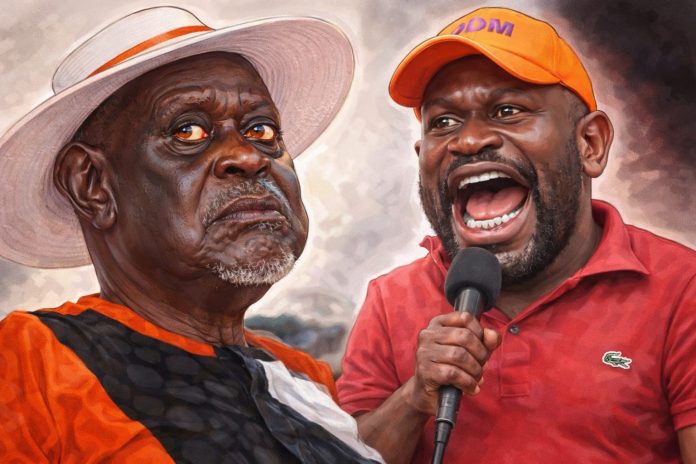
Embakasi East MP Babu Owino has lately found himself increasingly isolated within the party. Once ODM’s youthful torchbearer, he now appears disillusioned after the party’s leadership shielded Nairobi Governor Johnson Sakaja from impeachment. What was presented as a call for calm left Babu feeling betrayed, marking the beginning of visible tension between him and the party hierarchy.

His recent online remarks and subtle jabs at ODM’s leadership reflect a deeper frustration, one quietly shared by other members who feel sidelined. The once-solid unity within ODM’s ranks is beginning to show cracks, particularly among younger leaders eager for fairness and recognition.

Oburu Oginga’s rise to party leadership has injected a new tone into the conversation. Calm and calculated, he has chosen reconciliation over confrontation, acknowledging Babu’s frustrations and promising to personally engage discontented members. His mission is simple but urgent: heal, rebuild and restore trust.

“I have heard the rumours,” he admitted during a live interview on a vernacular radio station. “I am just a Siaya Senator who visits Nairobi like other elected leaders and I had not been briefed about Babu.”

He added that he had been preoccupied with his legislative duties and was previously unaware of certain party matters.

“Now that I have taken over the leadership, I will reach out. Babu Owino is our son. I will look for him. ODM must have a candidate in the Nairobi gubernatorial race in 2027,” he assured.

One of Oburu’s boldest declarations is the end of hand-picking candidates. He insists that all aspirants will now face the electorate through open and fair primaries, a commitment that, if honoured, could redefine ODM’s internal democracy and silence long-standing accusations of favouritism.

“What has derailed ODM as a party is direct nomination or hand-picking,” he affirmed. “I want to assure all members that there will be no hand-picking. All aspirants will have to face the electorate.”

The timing could not be more critical. During the last nomination season, several positions in Migori, Siaya and Homa Bay were exempted from primaries and awarded through direct tickets. The result was outrage. In Migori, protests erupted as aspirants cried foul, while in Homa Bay and Siaya, defections followed.

That rebellion soon translated into results at the ballot. A notable number of independent candidates emerged victorious in traditional ODM strongholds across Nyanza, a clear warning that the Orange wave was fading where democracy seemed absent.

Oburu’s leadership now faces its first real test in the upcoming by-elections across Nyanza and Western Kenya. How he rebuilds trust and reconciles party disputes will determine whether ODM reclaims its footing or continues to fragment under internal pressure.

For Babu Owino, this new political order is both a test and an opportunity. If Oburu’s reforms hold, he could reclaim relevance through a transparent contest, free from fears of sabotage. But if old habits persist, his frustrations may deepen ODM’s internal rift.

Oburu’s challenge is immense. He must balance tradition with transformation, loyalty with fairness and ambition with unity. Yet his early tone — inclusive, deliberate and firm — suggests that ODM may finally be learning to govern itself from within.

If his promises are matched by action, ODM could rise again, not just as Raila’s legacy party, but as a redefined political force built on transparency and trust. The Orange flame, once flickering, might yet find new life under Oburu’s steady hand.

Diaspora lobby launches insurance cover for Kenyans living abroad

0

By Correspondent

A lobby group championing the welfare of Kenyans living abroad on Monday launched an initiative seeking to cushion Kenyans overseas from the burden of huge medical bills for themselves and their kin.

The Kenyans living abroad are going to be part of improved healthcare services following the launch of a Diaspora Medical Insurance Cover in Nairobi.

The new insurance product is a partnership bringing together the Kenya Diaspora Alliance (KDA), Bupa Global Kenya, Kenbright, and Jubilee Health Insurance.

Under the arrangement, Jubilee Health Insurance will provide local medical coverage in Kenya, while Bupa Global Kenya will cater to overseas healthcare needs. Kenbright will serve as the coordinating broker, ensuring seamless integration between local and international benefits.

“People abroad send money back home to their loved ones when they are sick, but with this cover, their relatives will access healthcare services seamlessly without disruptions,” said Njeri Jomo, Chief Executive Officer and Principal Officer at Jubilee Health Insurance.

Jomo noted that the new plan will ease the financial burden faced by Kenyans abroad who often send money home to support sick family members.

Jubilee Health Insurance Limited (JHIL) is the health insurance arm of Jubilee Holdings Limited, one of East Africa’s leading insurance providers with a strong footprint in Kenya’s private healthcare market.

Bupa Global Kenya Chief Executive Officer and Principal Officer Uditha Jayaratne said the cover will provide Kenyans abroad with access to quality healthcare across borders.

“Health cover is the most important protection you can give your loved ones,” Jayaratne said. “Since our focus is overseas, we will be able to identify the best hospitals abroad, coordinate transfers, and ensure members receive the care they need — that’s what we specialise in.”

Bupa Global Kenya is the locally licensed arm of Bupa Global, the international private medical insurance division of UK-based Bupa, which operates in over 190 countries.

Ochuodho added that the new insurance product provides an opportunity for Kenyans abroad to contribute more effectively to the country’s economic growth.

Diaspora remittances are a major source of foreign exchange for Kenya, surpassing traditional exports such as tea and coffee. The funds — mainly from countries like the United States, Germany, Australia, the UAE, Tanzania, and Canada — support families, investments, and the national economy.

The Diaspora Medical Insurance Cover is expected to make healthcare access more reliable and affordable for thousands of Kenyan families with relatives abroad, marking a milestone in cross-border insurance innovation.

From a Disputed Park to a Crown of Beauty — The Remaking of Oile Park

0

By Sandra Blessings

From a once disputed park that left deep wounds and scars to both the occupants and politicians, to a crowned park of beauty, Oile Park is today’s Kisumu Jevanje.

Majority of those who drive through Kisumu, as you approach the Kisumu Boys roundabout, lies the Jevanje of Kisumu.

The once park teeming with criminals, street children and uncollected mounds of garbage, the park is today a home to many to while the day.

Gazetted in 1976 and named after the controversial and battle-hardened former Kisumu Mayor, the late Aloyce Akinyi Oile, the park tells the story of Kisumu — from a bloodbath to a peaceful city.

Oile, through his gang of the famous Baghdad Boys, controlled Kisumu politics and terrorised even the former Prime Minister, the late Raila Odinga.

Oile renamed the park after himself and, just like his name provoked controversy, violence and dispute in the lake city, the park has lived to the billing. It has been a battleground, and dispute has been its other name.

One of the political casualties of the park includes the first Governor of Kisumu, Jack Ranguma, who stood accused of relocating the business community to the peri-urban areas.

During the 2017 General Elections, for the Kisumu Senator Anyang’ Nyong’o’s team, the park offered a crucial and lethal campaign tool which they used to incite the traders against Ranguma — and indeed, they scored. Ranguma became the people’s enemy.

By 2014, the public recreational park had been encroached upon by over 1,000 traders, and the eviction brought sharp differences between Ranguma and his deputy, Ruth Odinga.

Odinga wanted the traders to stay at the disputed facility, while then City Manager Doris Ombara maintained there was no turning back in her resolve to restore the park to its original stature.

The park then was predominantly occupied by street children, and it was a security risk and often avoided by residents.

Apart from insecurity, it became an open defecation area posing a serious health concern and became a hideout for criminals.

But for residents and travellers, it offered a quick shopping stop where they could buy fish and second-hand clothes.

For the traders, it became their lifeline and a source of income to the business community.

Guess what, today Oile Park is the beacon of hope to several youths and women engaged in beauty services.

A beautician, Samwel Odoyo, a businessman at the park since 2007, says the Oile Park Youth Group is a registered organisation that brings them together.

“We as beauticians have been neglected by the County Government. We requested that they allow us to conduct our business and we are happy to be securing our future from the facility,” he says.

But a section of the traders interviewed complained of the high cost of rent charged by the team that manages the park.

The manager charges them Sh10,000 in rent per month for the open space and forces them to hire their plastic chairs and tables, which they say is expensive.

Odoyo says one only requires a rechargeable machine which costs Sh5,000, gel at a cost of Sh500, and other basic facilities. For only Sh15,000–20,000, it is possible to start the business.

Kisumu City Manager Abala Wanga says the open business space has become an employment creator, and the County Government is committed to helping the beauticians.

“We are happy that the park has become a one-stop shop for soloists and beauticians. This is one way of creating employment,” he says.

He says the government will address the concerns raised by the traders on the high cost of rent and maintaining cleanliness at the facility.

Kisumu businessman Mr Edward Onyango, alias Bob CEO, says the park has become the mainstay of the informal sector for Kisumu residents and the County Government should create an enabling environment for the traders.

“We hope the City Management will equip all the parks to allow traders to conduct business and earn a living. We can turn the parks into business points for the business community,” he says.

Onyango says Kisumu’s parks are capable of creating employment for the youths in the city and that forms his manifesto for Kisumu Central Constituency.

ODM–UDA: A Political Ceasefire, Not a Permanent Merger

0

Sifuna’s Vindication

By James Okoth

At Raila Odinga’s burial in Bondo, what was meant to be a solemn farewell quickly turned into a political declaration. Speaker after speaker from the ODM hierarchy praised President William Ruto, pledging to work with him “until 2032” in what they termed as the continuation of Raila’s vision for a “broad-based government.” Their tone suggested that ODM’s path forward was firmly tied to Ruto’s administration.

Governor Gladys Wanga, among others, led the charge, declaring that “Baba left us in broad-based, and in broad-based we shall remain.” Her message, echoed by several senior party figures, implied that Raila’s final political gesture, cooperation with Ruto, was meant to be long-term, if not permanent. The rhetoric from the dais painted a picture of a new political alignment, one that blurred the lines between the ruling UDA and the opposition ODM.

President William Ruto, as if confirming a permanent ODM–UDA pact, took his entire time to passionately popularise and speak about ODM without ever mentioning UDA in his speech. The President, in more than one occasion, declared the popular ODM slogan, “ODM!” as the mammoth of crowd roared back, “Tuko tayari!”

But when Edwin Sifuna rose to speak, the atmosphere changed. His speech, though brief, was firm, unshaken and unapologetic. “Raila Odinga did not say that ODM will support President Ruto until 2032,” he declared, his voice cutting through the murmurs. “He called for peace and dialogue, not surrender. ODM remains a political party with its own vision and will have a presidential candidate in 2027.”

It was the least applauded and most uncomfortable speech of the day. For many ODM loyalists, Sifuna’s words sounded like defiance in a moment of unity. For others, they were a much-needed reminder that Raila’s legacy was not to be misused for political convenience.

What followed was a storm. Party insiders close to the government branded Sifuna a hardliner. Social media attacks poured in from both camps — those accusing him of sabotaging ODM’s new relationship with Ruto and others claiming he was simply out of touch with reality. His insistence that the broad-based arrangement was a “political ceasefire, not a permanent merger” drew criticism from colleagues who viewed him as an obstacle to access and influence within government.

Yet, Sifuna held his ground.

As Secretary-General, he continued to defend ODM’s independence, often reminding the public that Raila Odinga had never declared ODM defunct or merged. Instead, he said, Raila’s intention was to ease political tensions after a divisive election — not to erase party boundaries.

Days later, during the ODM Central Committee meeting on October 27, 2025, his position was vindicated. The party’s official statement, read by Sifuna himself, settled the matter.

“We reiterate the commitment of the Party to the broad-based government until 2027, a relationship guided by the ten-point agenda entered into for the sake of peace and stability of the Country,” read Sifuna, flanked by the newly confirmed party leader, Oburu Oginga, Homa Bay Governor Gladys Wanga and other party top brass.

The inclusion of the words “until 2027” was deliberate and powerful. It signalled a return to political clarity that ODM’s cooperation with UDA was temporary, issue-based and rooted in Raila’s peace legacy, not in long-term political surrender.

For leaders like Gladys Wanga, who had earlier pledged allegiance to Ruto beyond 2027, the statement was a quiet but firm correction. It made clear that ODM was not folding into the ruling coalition, but rather engaging within a framework defined by principle and time limits. The so-called “handshake spirit” had an expiry date and it wasn’t 2032.

This outcome reshapes the post-Raila political landscape. It clarifies that while ODM honours Raila’s commitment to national unity, it will not mortgage its political future. The broad-based government remains a ceasefire, not a merger. Standing at the centre of this renewed identity is Edwin Sifuna, now seen by many as the voice of ideological integrity within the party.

Sifuna’s vindication carries profound implications. It cements him as a man of conviction, someone who read Raila’s message beyond the noise of politics. His insistence on principle over expedience restores a sense of direction to a party struggling to find footing after its founder’s passing.

Politically, the moment elevates Sifuna’s standing within ODM. Once seen merely as a loyal administrator and fiery spokesperson, he now emerges as a potential successor to Raila’s moral authority. His ability to navigate between maintaining dialogue with the government while asserting party independence positions him as a bridge between Raila’s old guard and the younger generation yearning for ideological renewal.

The road ahead, however, will not be smooth. Those who had aligned themselves with Ruto’s government for political advantage are unlikely to retreat quietly. ODM’s internal power struggle will continue to simmer beneath the surface, with Sifuna expected to face resistance from governors, MPs and strategists who benefit from the current détente. Still, the October 27 declaration has tilted the balance of legitimacy in his favour.

For ODM, the reaffirmation of independence offers both relief and challenge. Relief, because it finally resolves the confusion that followed Raila’s passing — a confusion that had blurred the line between cooperation and capitulation. Challenge, because the party must now rebuild its political machinery, redefine its message and prepare for a competitive 2027 contest without the magnetic force of Raila’s personal influence.

In the broader national context, the ODM–UDA statement is a signal to Kenya’s political class that the “broad-based” experiment has limits. It shows that dialogue and peacebuilding need not translate into political absorption. For a country fatigued by endless mergers and betrayals, ODM’s decision revives the idea of loyal opposition, which is a crucial pillar of democracy.

Sifuna’s political future, meanwhile, looks brighter than ever. His vindication gives him credibility that no internal election or appointment could offer. Within ODM circles, he now carries the moral weight of a man who stood for the party’s identity when others wavered. Among younger politicians, he represents a fresh brand of leadership — assertive, intellectual and uncompromising on principle.

If ODM is to reinvent itself for the post-Raila era, it will need leaders like Sifuna, grounded in ideology, fluent in modern politics and unafraid to challenge power even from within. His newfound stature could see him play a pivotal role in shaping ODM’s 2027 strategy, or even in defining the succession matrix itself.

Ultimately, the October 27 meeting was more than a party gathering; it was a reckoning. It reaffirmed that ODM still belongs to its members, not to convenience. It reminded Kenyans that peace is not the same as submission and that Raila’s legacy was built on courage and not compliance.

Edwin Sifuna’s journey from being the least applauded speaker at Raila’s burial to the most vindicated voice in ODM is a testament to political consistency in a season of confusion. He stood for clarity when others sought comfort. Today, his words have become party doctrine.

ODM lives on. The ceasefire holds. The merger dies. From Raila’s long shadow, a new leader begins to rise… Edwin Sifuna.

Is Baba’s Grave the New Pilgrimage of Kenyan Politics?

0

By James Okoth

Days after Raila Odinga’s burial at Kang’o ka Jaramogi in Bondo, the site has turned into an unlikely political attraction. Leaders from across Kenya’s political divide are making their way there — not just to mourn, but to be seen.

From governors and senators to old rivals, the steady stream of visitors has transformed the grave into what some now describe as the new political shrine of Kenya. It is as though, in death, Raila’s influence has grown larger — and access to his resting place now confers a new kind of political legitimacy.

The family compound at Kang’o ka Jaramogi, where Raila now rests beside his father Jaramogi Oginga Odinga, has long carried historical weight. It is the cradle of Kenya’s reform politics — a space that has produced and buried two of the country’s fiercest opposition icons.

Since the funeral, delegations have been trooping in daily. Siaya Governor James Orengo led one group, describing the visit as “a moment of renewal for the journey Baba began.” Migori’s Ochilo Ayacko said he went “to draw strength from Raila’s spirit of resilience.”

Even leaders aligned with President William Ruto’s UDA party have made quiet appearances, speaking of “respecting a patriot who transcended partisanship.”

But to many observers, the sudden frequency of visits appears more political than spiritual. Cameras precede convoys. Speeches follow silence. Each visitor seems to carry both a bouquet and a political motive.

Kenya has always revered political symbols — from Kenyatta’s mausoleum in Nairobi to Moi’s resting place in Kabarak. But Raila’s case is unique. His grave at Kang’o ka Jaramogi represents not state power, but the people’s struggle.

Visiting it, therefore, carries both emotional and political weight. To be seen at Kang’o is to signal connection with the reform movement that shaped Kenya’s modern democracy. It is to align with a legacy that still commands loyalty from millions who called him Baba.

In a political landscape already preparing for 2027, that symbolism is priceless.

Locals in Bondo say they now see convoys every day.

“Some come with prayers, others with cameras,” one resident said. “You can tell who is here to honour him and who is here to make a statement,” he affirmed.

Raila’s legacy was built on conviction, not convenience. He fought for justice, democracy and unity — often at great personal cost. To convert his final resting place into a campaign stop would distort that legacy and reduce history to theatre.

The new wave of visits to Kang’o ka Jaramogi reveals something deeper about Kenya’s political soul — a craving for association with moral power, even when the moral voice is gone. It shows how leaders often chase proximity to history rather than its lessons.

If Baba’s grave must be visited, let it be with purpose, not publicity. Let those who kneel there draw from his courage to stand firm, his humility to serve, and his vision of a just Kenya.

Raila Odinga’s truest shrine is not the tomb at Kang’o ka Jaramogi. It lives in the spirit of millions still inspired by his lifelong creed — that this nation can and must be better.

Owili Calls for Calm and Unity in ODM: “Let Us Not Kill Amolo Odinga Twice”

0

By James Okoth

Kisumu Deputy Governor Dr Mathews Owili has urged the ODM leadership to embrace dialogue and preserve party unity, warning that internal divisions could dishonour the memory and legacy of Raila Odinga.

Speaking in Kisumu at AIC Church during a fundraiser, Owili made an impassioned plea for reconciliation, describing the recent days as “very difficult” and calling on ODM members to show gratitude where it is due — including to President William Ruto’s government for its support during Raila Odinga’s funeral.

“We’ve had a very difficult time in the few days. Let us give respect and thank people where it is due. Tell the President that we are very grateful for what the Government of Kenya did,” he said.

His remarks come at a time when ODM is grappling with internal discord following conflicting statements from senior officials, particularly after the party leadership publicly opposed Deputy President Rigathi Gachagua’s visit to Bondo — remarks that drew widespread criticism across the country.

Owili’s tone struck a delicate balance between loyalty to the party and acknowledgment of the government’s cooperation during a sensitive national moment.

“What we know is that the strength of ODM and UDA will be good for the democracy of the country and good for the broad-based government,” he said, emphasising the need for political coexistence rather than confrontation.

The Deputy Governor appealed to ODM leaders to sit together and resolve their disputes, warning that ongoing infighting risked tearing apart the movement Raila Odinga built through decades of struggle.

“I am asking the leadership of the party to sit at the table and sort out our differences. Let us not kill Amolo Odinga twice by dividing the party. Let us keep the party intact as an honour to Raila Odinga,” he declared, drawing emotional applause from the congregation.

Owili’s message extended beyond party politics. It was a call for national unity and ethnic tolerance at a time when political tensions threaten to reopen old wounds.

“Despite the unfortunate utterances of Kahiga, we shall remain intact with the rest of the tribes of this country,” he said. “You cannot force us as a Luo community to hate your tribe because of the bile that you harbour in your heart,” he affirmed.

His words, seen by many as a veiled rebuke to leaders fanning ethnic hostilities, underscored his commitment to inter-ethnic harmony and political maturity in the post-Raila era.

Political analysts say Owili’s remarks reflect a growing awareness within ODM that unity and moderation are critical if the party is to survive beyond the towering legacy of Raila Odinga. With tensions rising between hardliners and moderates, his appeal for dialogue could mark the beginning of a reconciliation process within the movement.

In Kisumu, Owili’s message landed as both a prayer and a warning — a reminder that political survival will depend not on noise or defiance, but on the courage to heal and rebuild.

Uproar over request by Homa Bay County Government for authorisation by the Assembly to borrow Sh 1.4 billion

0

By Anderson Ojwang

Governor Gladys Wanga is in the eye of a storm again. This time, it is about the alleged request for authorisation by the County Assembly to borrow Sh 1.4 billion for capital expenditure.

But a section of Members of the County Assembly (MCAs) are up in arms over what they allege are “cooked documents” by the Assembly granting the Executive authority to borrow.

The MCAs want the Speaker and the Clerk to produce the Assembly’s Order Paper when the motion was tabled and debated, which approved the request.

In a circular from the Office of the Speaker addressed to the County Executive Committee Member for Finance and Economic Planning, dated 25th July 2025, Ref. HBCA/ADM1/6/VOL.IV (50), captioned “Re-Authorisation to borrow up to Sh 1.4 billion”,
the Speaker, Mr Polycarp Okombo, wrote:

“Following a motion moved by Hon. Richard Ogindo and seconded by Hon. Bob Obondo dated 22nd July 2025, and approved on the same date, and based on the confirmation that all necessary conditions have been met, this letter authorises you to engage granters of credit to borrow up to Sh 1.4 billion to mitigate cash flow challenges within the county, pursuant to the provisions of Article 212 (b) of the Constitution and Section 142 of the Public Finance Management Act, 2012.

We acknowledge that the following conditions, as outlined in relevant legislation and procedures, have been fulfilled.

Nature of borrowing – A proposal detailing the nature of lending confirms its usage for capital expenditures only and adherence to established limits.

Executive Committee Approval – The borrowing proposal is accompanied by minutes and approval of the Executive Committee.

Draft loan agreement with clear costs – A draft loan agreement between the lending bank and the Executive is attached, outlining interest rates, bank charges and repayment schedules.

Concrete justification for the need to borrow – The County Executive Committee has provided a concrete justification for the need to borrow, explaining cash flow challenges and how funds will address them.

Competitive sourcing and best proposal – The County Treasury has demonstrated that the chosen lender was competitively sourced and offered the best available proposal.

This authorisation is granted based on the understanding that all the aforementioned conditions have been demonstrably met. You are empowered to finalise negotiations and execute the loan agreement on behalf of the County Government, ensuring responsible and transparent use of borrowed funds to address identified cash flow challenges.

This letter supersedes the prior written letter dated 15th April 2025. We urge you to continue exercising due diligence throughout the process and remain accountable for the effective utilisation of these funds for the betterment of the county and its residents.”

A recent audit report by Members of the County Assembly revealed failure by the government to implement multi-million-shilling ward-based development projects.

In the last financial year, according to the report by the Assembly Ward Projects Committee on the status of ward projects for FY 2024/2025, there was a failure to implement the projects as stipulated in the budget.

In the report, the Department of Roads, Public Works, Transport and Infrastructure was allocated Sh 400 million for the implementation of ward projects across the county, translating into Sh 10 million per ward.

The department reported that the road inventory and condition survey exercise had been completed and the final report compiled, and that the Cabinet had approved all the projects which were at the tender document preparation stage.

The Committee observed that all the projects were awaiting the preparation of tender documents; therefore, there was no project status report.

In the Health Department, it was allocated Sh 120 million for the implementation of ward projects across the county, with each ward having a budgetary allocation of Sh 3 million.

The department reported that 33 projects had been awarded, three were not responsive, four were completed, one document not returned, and two facilities were to be supplied with assorted medical equipment.

The Committee observed that six projects were completed, 20 projects were yet to start, 10 projects were work in progress, three projects were not responsive, and two facilities were awaiting supply and delivery of assorted medical equipment.

In the Department of Youth, Sports, Gender Inclusivity, Cultural Heritage and Social Services, Sh 40 million was allocated for ward projects for the upgrading of 40 playfields.

The department listed 40 playgrounds to be upgraded, but no project had been tendered and no work had commenced.

The Committee found that there was no tendering done, and so there was no project status report by the department.

The Committee’s general findings revealed late commencement of procurement processes for the implementation of most ward projects, leading to failure to actualise them.

Some projects had been completed, and others were work in progress, as reported by the Department of Health and Medical Services. This was in tandem with Article 43 of the Constitution of Kenya, 2010.

There was work in progress in the implementation of ward projects by the Department of Health and Medical Services, as a considerable number of projects were about to be completed.

Other departments such as Roads, Transport, Public Works and Infrastructure, and Youth, Sports, Gender Inclusivity, Cultural Heritage and Social Services gave no report on the status of project implementation.

This was occasioned by sluggish procurement processes, which is contrary to the dictates of Articles 56 and 174 of the Constitution of Kenya, 2010.

The County Government has also been in the public eye over a fake employment scandal that has left tens of residents losing millions of shillings in the racket.

Cartels in the County Government have been issuing fake appointment letters and UPN numbers to unsuspecting victims.

In the scam, 101 individuals had been integrated into the new HRS system but were not captured in the manual payroll.
Also, 107 individuals have UPN numbers but were not earning salaries, while 64 officers are working but lack UPN numbers.

Similarly, there are allegations of irregular appointments without competitive recruitment, nepotism and favouritism.

Another report also revealed that the Auditor-General found serious integrity and corruption issues at the Finance Department.

The report found discrepancies in salaries, payment of both special and basic salaries to some employees, failure by chief officers to account for human resources in their departments, unexplained removal and reinstatement of staff in the payroll, irregular health risk payments, and non-compliance with allowance guidelines.

The report revealed unexplained removal and reinstatement of staff in the payroll, which could have led to loss of money.

An analysis of the Integrated Personnel and Payroll Database (IPPD) for the period between June 2024 and November 2024, and the payroll for the period between December 2024 (when the HRIS payroll system was adopted) and May 2025, revealed that 430 individuals were being removed and returned to the payroll in different months of the year.

Further, sample files of these employees reviewed had no information or letters explaining the removal and return of their details in the payroll systems. The management did not provide any plausible explanation for the inconsistent appearance of these individuals in the payroll system.

As a result, it could not be confirmed if they are legitimate employees of the Homa Bay County Government — pointing to poor human resource management practices.

How KDF, NYS and Police Recruitment Can Be Fair Once and for All

0
Billy Mijungu

By Billy Mijungu

It is disheartening that a single slot for a Police or KDF officer can be sold for up to one million shillings. That means only the rich can afford to place their own, while qualified and deserving Kenyans are left out. This must change.

If Kenya is to be fair and professional in security recruitment, the process must be automated. Tests including psychometric, aptitude, and general intelligence should be conducted through an online portal with timed evaluations. This system would help identify the most capable candidates without human interference or manipulation.

Recruitment should be structured, data-driven, and transparent. The government can easily design a portal on the eCitizen platform dedicated to disciplined services recruitment. It should allow applicants to register, take their tests, and track progress. Once results are processed, the system can generate merit-based shortlists automatically, removing the temptation of bribery and favouritism.

Fitness verification should also be standardised. The government should establish accredited fitness centres in every county where candidates can earn a National Fitness Certificate. Just like a Certificate of Good Conduct, this document could be valid for a year and used across all recruitment drives. With such a system, young people can stay prepared, knowing that the opportunity will not depend on who they know or how much they can pay.

We can no longer trust recruitment to individuals who commercialise it for personal gain. Security service entry points have become cash cows for a privileged few, yet they are meant to serve the nation. To clean up the system, the government should borrow from models like the Kenya Youth Empowerment Programme and the ongoing NYOTA initiative, both of which have used technology to promote transparency and fairness at the intake level.

This reform must extend beyond the Police, KDF, and NYS to include the National Intelligence Service (NIS) and the Ministry of Foreign Affairs cadet recruitments. These positions have quietly become the preserve of a select class, eroding public trust in the fairness of public service appointments.

Kenya must act now. The integrity of our disciplined forces begins with how their members are recruited. Once technology is placed at the centre, recruitment can finally be fair, transparent, and truly national.

Could Mt Kenya Be Facing Political Bankruptcy as Raila Fades Out?

0

By Anderson Ojwang

When Nyeri Governor Mutahi Kahiga allegedly celebrated the recent demise of Raila Odinga, he was indeed flogging a dead horse.
The horse traversed the Mountain and became the agenda for the community in its political dispensation.
For the last six decades, the horse — the Jaramogi Oginga Odinga family — has remained a political campaign tool in the region.
It has been the quickest-selling political brand, and through it, several politicians have risen to elective seats, while those who have sided with the horse have had their political ambitions vanquished.

After independence and the eventual fallout between President, the late Mzee Jomo Kenyatta, and his Vice-President, the late Jaramogi Oginga Odinga, the former resorted to oathing the community against the Luo.
Former Cabinet Secretary Martha Karua has candidly spoken about the 1969 oath by the Mt Kenya community against the lake.

“I am in Kerugoya in Standard Six. Suddenly there is oathing — the 1969 oath. All people of Mt Kenya are trooping to Gatundu, to Jomo Kenyatta’s home to take oath.
Even school children are being told to take oath. I come home for holiday, I am being told even my younger brothers walked to go and take oath. The oath was being taken in Kabare. People walked for eight kilometres. A whole school, people of all ages, would walk.
The oath was that the presidency will not go outside Mt Kenya and will not go, especially, to the Luo nation,”
she said then.

After the fallout and the oathing, Odinga became a tool and object of campaign in Mt Kenya, and any attempt to reconcile the communities to support a candidate from Nyanza has often met stiff opposition.
When Jaramogi exited, his son Raila entered, who, like his father, tried several times to appease the Mountain and bury the hatchet — but Raila remained the black sheep.

That is why, when Kahiga recently spoke in his native Kikuyu language, he claimed that Odinga’s demise was a blessing in disguise for the Mt Kenya region, stating that the former Prime Minister’s passing on would now free government resources for the Central Kenya region.
Kahiga maintained that the former Prime Minister’s handshake with President William Ruto had shifted government resources to the Nyanza region.

“You can see what had been planned, but God brought something up. Now it’s total confusion. Everybody can see that. We did not harbour hate for anyone, but God came through for us.

For you who do not travel — because I was in that region — all goodies were being directed there because of tomorrow’s plans, because it seemed like they did away with us, but God came and brought this thing,” he claimed.

This explains why, in the 2022 General Elections, when President Uhuru Kenyatta endorsed Raila for the presidency, Ruto’s team, led by impeached Deputy President Rigathi Gachagua, had an easy task deconstructing Uhuru and Raila in the Mountain.

“We have chosen Raila Odinga, without any opposition, to be the fifth President of Kenya,” Kenyatta told a then cheering crowd of thousands in the capital, Nairobi.

But the endorsement was quickly dismissed, and the 1969 oath was evoked — something that was manifested in the 2022 presidential election results in Mt Kenya.

President Ruto received 3.5 million votes from Mt Kenya, while Raila, with the support of Uhuru, managed only 622,473.

  • Kiambu County – Total registered voters: 1,275,168, of which Raila got 210,580, while Ruto received 606,429.
  • Murang’a County – Total registered voters: 621,027, of which Raila received 73,526, while Ruto got 343,349.
  • Kirinyaga County – Total registered voters: 376,137; Raila got 37,909, while Ruto received 220,984.
  • Nyeri County – Total registered voters: 482,000, of which Raila got 52,052, while Ruto won by 272,507.
  • Nyandarua County – Total registered voters: 361,217, of which Raila received 49,228, while Ruto won by 189,519.
  • Tharaka-Nithi County – Total registered voters: 231,966; Raila got 15,062, while Ruto received 145,081.
  • Meru County – Total registered voters: 772,573, with Raila getting 103,679, while Ruto won 398,946.
  • Embu County – Total registered voters: 334,684, of which Raila got 31,209, while Ruto secured 187,981.

After Raila’s failed AU Chairmanship bid, the former Prime Minister was offered overtures for the 2027 presidential election.
Gachagua said, “If Raila Odinga wants to be President in Kenya, he can talk to us. We have no problem with Raila; our main problem is Ruto. ODM MPs voted for my impeachment because Ruto deceived them, but I have no problem with them. My problem is President William Ruto,” he said.

But Raila dismissed the overture, wondering how Gachagua could forget so fast when he used to abuse him while in power.
While in office, Gachagua seized every opportunity to humiliate Raila by placing traps in State House to ensure Raila and Ruto never met.

But he later said he had removed all the traps he had set at State House, allowing ODM leader Raila Odinga unfettered access to the Head of State.
Gachagua said he removed the traps after noticing that his boss appeared to be reuniting with a former political foe.

“My boss and I had agreed we set up traps so that Raila does not join the government through the back door. I would check the traps every morning and evening.
I would constantly check the traps to see whether they had captured anything,”
he said then.

“Uhuru Kenyatta told us Raila was bad, but they ended up working together. Ruto told us Raila was bad, but they are working together. I sat and wondered — was I, Gachagua, in the dark?
I started wondering why we beat Uhuru so much, saying we did not want Raila, we wanted Ruto — so the person who made us hate Uhuru has now been declared to be a good person by President Ruto,”
he said then.

For politicians from Mt Kenya, criticism of Raila was a ticket to an elective post. With Raila now out of the picture, are they staring at political bankruptcy?