Learning has resumed at Ambira Boys High School after most of the parents have taken back their students.
This followed a move by a section of them moving to the High Court to challenge the levy imposed on them by the administration after the recent strike.
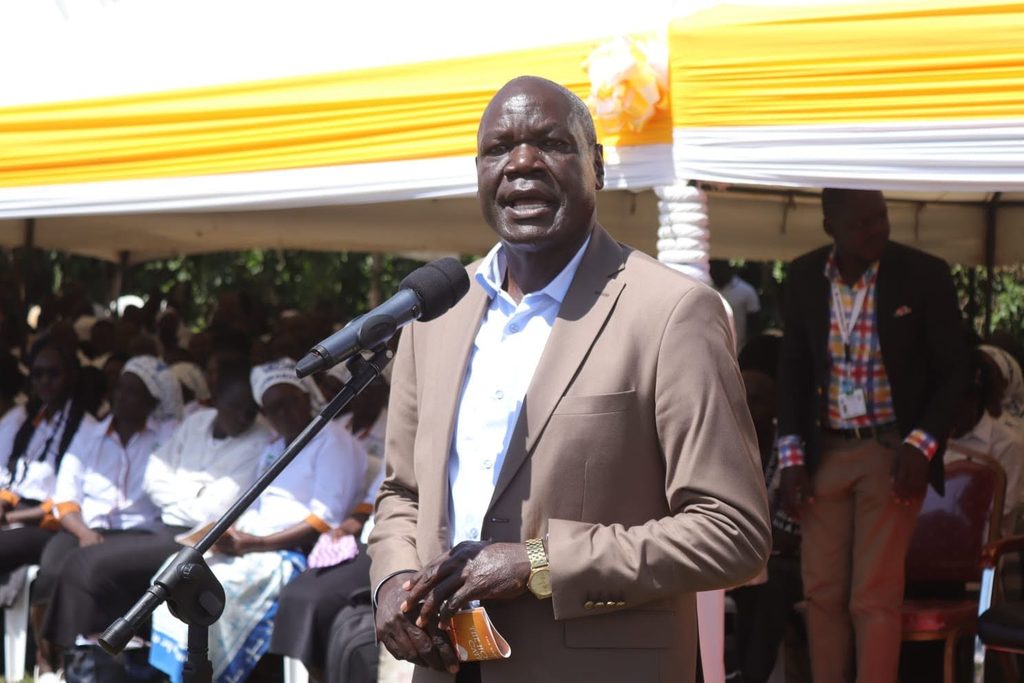
The Principal, Mr Boaz Adit, expressed satisfaction with the turnout, saying they were committed to resuming studies immediately.
“We are happy with the number of students who have reported and the positive gestures by the parents on resumption of learning,” he said.
Adit also dismissed a video clip which went viral alleging that the returning students were being given corporal punishment.
“This is a wider scheme by our enemies to tarnish our names. We have held productive engagement, and we know that corporal punishment was banned in the country,” he said.
On Thursday, a group of 165 parents from Ambira Boys High School moved to the High Court seeking orders to stop the school from compelling Grade 10 students to pay a Ksh 33,000 levy imposed following damage caused during a student strike.
In a petition filed before the Constitutional and Human Rights Division, the parents argued that their children were not involved in the unrest that occurred on May 18 and 19, 2026, and should not be punished for actions allegedly carried out by other students.
The parents have sued the school’s Chief Principal, the Board of Management, the Principal Secretary for Basic Education and the Teachers Service Commission, claiming that the levy violates the students’ constitutional rights to education, fair administrative action, equality and a fair hearing.
According to the court documents, the school suffered extensive damage during the strike, with losses estimated at Ksh 50 million.
The petitioners state that during a parents’ meeting held on May 21, the principal assured them that Grade 10 learners would not face disciplinary action because they had not participated in the unrest.
However, the parents contend that the school later issued a letter directing all students to report back on June 2 and requiring each learner to contribute Ksh 33,000 towards repairs.
The parents are seeking declarations that the levy is unlawful, orders compelling the school to readmit the affected students unconditionally, and compensation for the alleged violation of their constitutional rights.
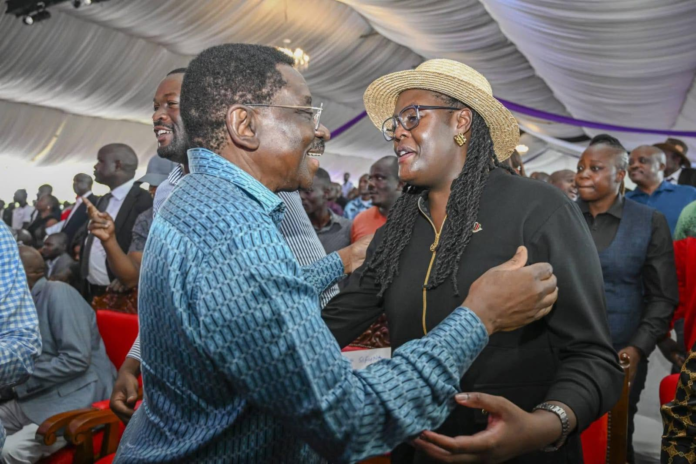
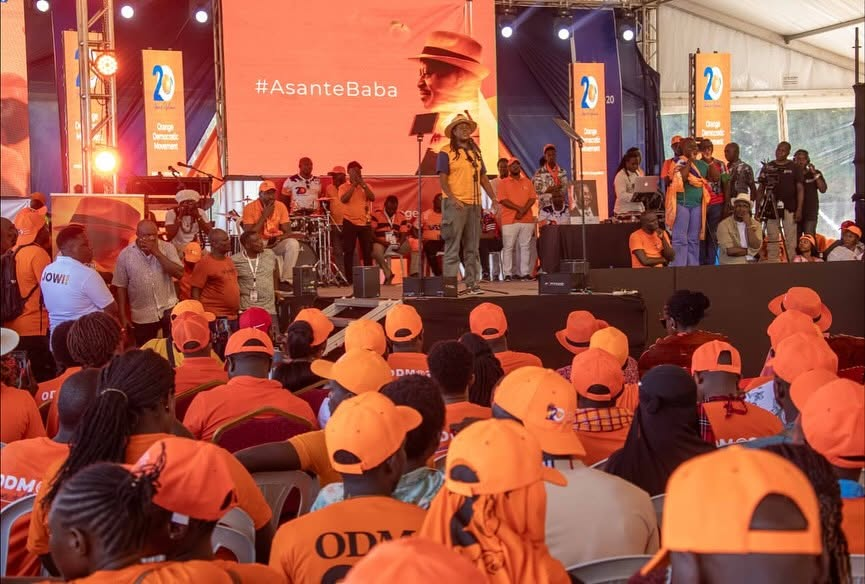
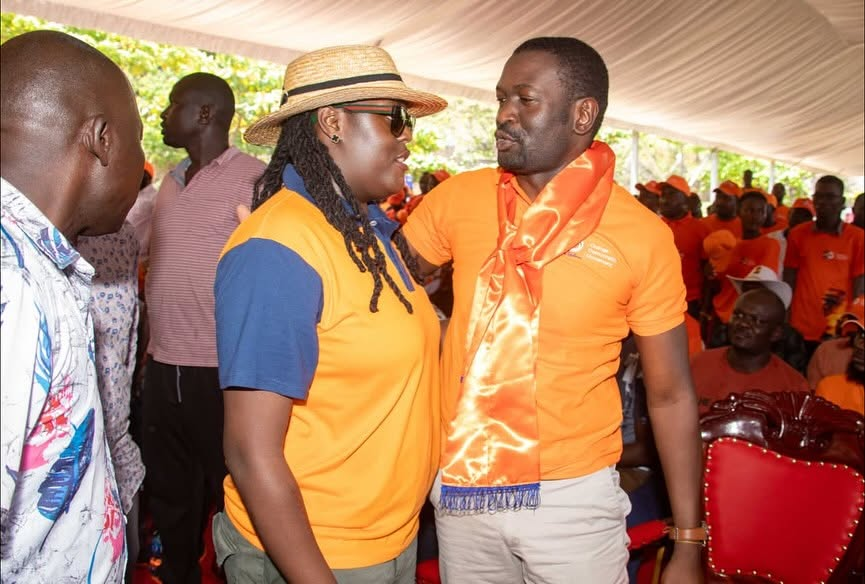
Even before the dust over last weekend’s Orange Democratic Movement (ODM) rally in Kisumu has settled, questions have emerged over the Sh100,000 meant for each Member of the County Assembly (MCA) from the four counties of Nyanza.
Kisumu Senator Prof Tom Ojienda stoked the fire after he claimed that the party had set aside Sh100,000 for each MCA and between Sh500,000 and Sh600,000 for each Member of Parliament for mobilisation.
On Thursday, during a TV interview, a section of MCAs from Kisumu and Migori counties demanded their share of the Sh200 million pie.
Kisumu County has 49 MCAs, which could have translated to Sh4.9 million, while Migori has 56 MCAs, accounting for Sh5.6 million.
Nominated MCA Regina Atieno Kizitio opened up, saying she did not receive any money as part of the Sh100,000 that had been earmarked for MCAs.
“I was shocked when Senator Tom Ojienda revealed that Sh100,000 had been earmarked for each MCA for mobilisation. I had no idea about the money which had been earmarked for the MCAs,” she said.
Instead, Kizitio said she ferried 150 people from the county to the Kirembe rally from her own pocket.
“It is unfortunate that we had to facilitate people to the rally, yet some people sat on the facilitation money for MCAs,” she said.
She said that for Kisumu West constituency, area MP Rosa Buyu gave all the MCAs Sh100,000 facilitation money.
For Muhoroni, the MCAs did not receive any coin and wondered who was given their allocation.
“I have consulted with elected MCAs from Muhoroni, and I too come from the same constituency. We didn’t get any cent. We want to know who is withholding our money,” she said.
For Kisumu Central constituency, she said the 11 nominated MCAs looked for the area MP Joshua Oron after the rally, and he gave them Sh25,000 each, totalling Sh275,000.
“This was after the event. For instance, Honourable Nancy Matara took people to the rally. She used her money to pay the people she mobilised,” she said.
If the MCAs were to get Sh100,000 each, which comes to Sh1,100,000, where is the balance of Sh825,000 for the 11 nominated MCAs?
Dr Oron did not pick up our call or respond to our text messages over the allegations.
In Seme Constituency, she said on the day of the rally, she met area MP Dr James Nyikal at the residence of Kisumu Governor Prof Anyang’ Nyong’o and asked him if there was an allocation to the MCAs.
“I met Nyikal that morning. I asked him about the mobilisation money. Nyikal told me he was not given any money for mobilisation but received Sh500,000 for his own mobilisation,” she said.
Nyikal did not respond to our telephone calls or text messages to respond to the allegations.
But on Wednesday, after Ojienda’s revelation, she claimed Nyikal sent Sh10,000 each to the MCAs, but one of the MCAs refunded the money immediately.
“It is true he was given the money, and if it is not true, then why was he sending them the money? They did not request him for money,” she said.
Kizitio said the MCAs were under intense pressure over the Sh100,000 mobilisation which they did not even get.
“Our MCAs cannot speak in the ward WhatsApp groups. We have been accused of keeping the mobilisation funds. We want the truth over this matter,” she said.
North Kanyamkago MCA of Migori County, George Omamba, said he was not aware of the mobilisation money and was not given his share because he does not support the government of the day.
“I didn’t know about the money and was shocked to learn about it at the assembly. In Migori, it was on a reducing balance, with some MCAs receiving Sh4,950. So where is the Sh95,550, and who has it?” he asked.
Interestingly, in Kisumu East, MCAs had to face the party leader Dr Oburu Oginga on the eve of the rally to ask for their share of the mobilisation fund.
Sources told Western Insight that Oburu had to call National Chairperson Gladys Wanga over the matter, and Wanga is said to have also called the representative who had taken the money on behalf of the five MCAs.
The representative, a senior official in the ODM branch office, telephoned the disgruntled MCAs and handed over their share.
The North Nyakach MCA said his colleagues from the constituency also did not receive their share of the pie.
“It is a thorny issue. I have not got my share. I have received messages from constituents asking about the money. It’s difficult to justify to the people,” he said.
The Kirembe rally took three weeks of planning and strategic meetings to make it a success.
ODM National Chairperson Gladys Wanga recently claimed the rally was attended by 115,000 people and showed the might of the party in the region.
“We held one of the biggest rallies in Kisumu. We used drones to count the people, and we came up with 115,000. ODM is strong, and we have resolved to remain united and to be in the broad-based government,” she said.
Ojienda opened the lid to the inside story of how the party leadership used millions to ferry people to the rally.
Ojienda said Members of County Assembly from Kisumu were each given Sh100,000, while the MPs were given between Sh500,000 and Sh600,000 for the same purpose.
For instance, Kisumu County Assembly has 42 MCAs, which translates to Sh4.2 million, while there are seven constituencies; at Sh600,000 each, that comes to Sh4.2 million, totalling Sh8.4 million.
Apart from Kisumu, Migori, Homa Bay and Siaya were also expected to bring people to the rally, and all were bankrolled for the meeting, running into millions of shillings.
This was just the first avenue through which funds were channelled, including the county party office and the sub-branches.
Ojienda said: “I was never given a cent. But I know so well that the MCAs were given Sh100,000 each to bring people to the meeting. I know the MPs were given, I think, between Sh500,000 and Sh600,000 to bring people to the rally.”
The ODM party leader, Dr Oburu Oginga, in a recent interview with a local TV station, said the government had released Sh200 million for their operations.
The Sh200 million has also brought differences in the Linda Ground faction over its usage and threatens to divide it further after Linda Mwananchi of James Orengo, Babu Owino and Edwin Sifuna bolted out.
Ojienda also heard that each ward was given Sh700,000, and there was a problem in North Nyakach where some officials were accused of disappearing with Sh700,000.
“There should be accountability in the party over the funds disbursed to enable the party to be built. I don’t think there is a problem over the usage of Sh200 million,” he said.
He said ODM gave out facilitation for the rally because the party seems to be in a strong and sound financial standing.
Ojienda said there were people mobilised from Kisumu, Siaya, Migori and Homa Bay, and the party had to mobilise.
“There were tractors from Muhoroni. There were 18 buses from Muhoroni which brought people to the rally. The party wanted to give everyone an opportunity to attend the meeting,” he said.
Ojienda said from Muhoroni, Wanga’s younger brother Robert Nyasuna ferried several people in trucks and lorries, while Migori Governor Ochillo Ayacko had buses and tractors ferrying people to the rally.
“From Homa Bay, Governor Wanga also brought hundreds of people, and the same from Siaya. This was a meeting meant to show Luo unity,” he said.
For many Nairobians, particularly those who have spent their lives in the city, the mention of a slum often evokes a familiar stereotype. We are conditioned to believe that the youth who live in these communities are criminals, phone snatchers, drug users, and individuals who have somehow chosen a life of lawlessness. It is a narrative that has been repeated for decades, shaping public perception and influencing how society engages with some of its most vulnerable citizens.
This year, I made a deliberate decision to challenge that narrative. I spent considerable time in informal settlements across Kibra and Lang’ata, not as an observer passing through, but as someone seeking to understand the realities of the people who call these communities home. I attended Kamukunji Bunge la Wananchi, sat with young people in Lang’ata, shared meals and tables with them, listened to their stories, and engaged in countless conversations about their lives, their aspirations, and their frustrations. What I discovered has been one of the most profound learning experiences of my life.
The youth of our informal settlements are not criminals. They are not inherently wayward. They are young Kenyans searching for opportunities in a country where poverty is often manufactured through exclusion, neglect, and unequal access to resources. Like any other young people, they dream of a better future. They want jobs, education, dignity, and a chance to contribute meaningfully to society.
Yet their realities are shaped by challenges that many outside these communities rarely understand. One young man captured this frustration in a few painful words: “Tunakaa kwa nyumba, hakuna mauradi ama mauradi ziko lakini lazima ujuane na chifu. Inabidi tuibie wasee.” We stay at home. There are no jobs, or when opportunities arise, they are reserved for those with connections. We are left with no option but to steal from others. His words reveal a deeper truth. Unemployment remains one of the leading drivers of crime in informal settlements. Young people are willing to work, but opportunities are scarce and often distributed through patronage networks. When livelihoods depend on who you know rather than what you can do, frustration grows. Hunger grows. Desperation grows.
The solution is not condemnation; it is opportunity. Both the national and county governments must become more deliberate in creating sustainable pathways for youth employment. Skills training programmes must be expanded and made accessible. Community-based industries such as waste recycling, environmental conservation, urban farming, and sanitation initiatives should be developed to create jobs within the settlements themselves. When young people are given meaningful work, crime declines, incomes rise, and communities become safer and more prosperous.
Water presents another urgent challenge. In many parts of the settlements, residents pay between two and five shillings for water that should be readily available and affordable. Yet water is not a luxury—it is life. Without reliable access to clean water, sanitation becomes impossible, health risks increase, and families are forced to spend a significant portion of their income on a basic necessity.
The continued exploitation of slum residents by water cartels is unacceptable. Governments must invest in reliable and affordable water infrastructure that serves these communities directly. Organizations such as Shofco have demonstrated what is possible through consistent water provision in Kibra. Their efforts show that when access is prioritized, lives improve. Scaling such interventions would lead to healthier communities, reduced disease outbreaks, and greater economic stability for families.
Electricity is equally concerning. During my visits, one resident lamented, “Manyumba zetu zinachomeka.” Our houses keep burning down.
Because of high electricity costs and limited access to safe connections, many residents resort to illegal and unsafe power connections. The consequences are devastating: frequent fires, loss of property, injuries, and sometimes loss of life. If Kenya is serious about improving living conditions in informal settlements, it must explore subsidized electricity programmes and affordable solar energy solutions. Safe and affordable power would reduce fires, improve security, support small businesses, and enhance the overall quality of life. Education remains perhaps the most critical challenge of all. Many informal settlements lack adequate schools, and where schools exist, fees often remain beyond the reach of struggling families. The result is that thousands of children are left out of the classroom.
When children are denied education, they do not simply remain idle. They become vulnerable to exploitation, crime, substance abuse, and early pregnancies. During one of my recent visits, I was told the story of a ten-year-old girl who was already pregnant. I struggled to believe it, yet it was a painful reminder of what happens when society fails to protect and invest in its children.
We must strengthen access to quality education in informal settlements. This means building and equipping schools, supporting vulnerable families, expanding scholarship programmes, and ensuring that no child is denied learning because of poverty. The result will be a generation empowered with knowledge, skills, and hope—a generation capable of breaking the cycle of poverty. My time in Kibra and Lang’ata has taught me that the greatest mistake we make is viewing slum dwellers through the lens of stereotypes. The young people I have met are not problems to be solved; they are potential waiting to be unlocked. If we invest in jobs, we will reduce crime. If we provide affordable water, we will improve public health. If we ensure access to safe electricity, we will enhance safety and economic productivity. If we strengthen education, we will secure the future of our nation.
The future of Kenya cannot be separated from the future of its informal settlements. The youth of these communities do not need pity. They need opportunity. They need inclusion. They need leaders who see them, hear them, and invest in them. When that happens, we will not only transform the slums—we will transform Kenya itself.
From Washington to Western Kenya, political establishments often react the same way when a new generation leader begins to capture the public imagination.
History has a fascinating way of repeating itself.
When Barack Obama emerged on the American political scene, many assumed his greatest challenge would come from Republicans. They were wrong.
Some of Obama’s earliest and most vocal skeptics came from within the very community he was expected to represent. Sections of the established Black political leadership questioned whether America was ready for a Black president.
Others suggested that Obama should wait his turn. Some openly argued that Hillary Clinton was the safer and more realistic choice.
Their arguments were presented as political wisdom. Their concerns were packaged as advice. Their warnings were framed as concern for Obama’s future.
Yet millions of Americans saw something different.
Many believed that behind the caution was a political establishment uncomfortable with the rise of a new political force that threatened to disrupt existing power structures.
History eventually rendered its verdict.
Barack Obama became President of the United States. Today, a similar conversation appears to be unfolding in Kenya.
As Senator Edwin Sifuna’s national profile continues to rise, an increasing number of political leaders, particularly from his own backyard, have suddenly become concerned about his political future.
They have advice for him. They want him to be patient.
They want him to wait. They want him to support others.
They want him to postpone his ambitions for another day.
The question many of Sifuna’s supporters are asking is simple:
Where were these concerns when Sifuna was building his political career?
Where were these political guardians when he was fighting political battles, defending his party, articulating national issues, and earning his place in Kenya’s political conversation?
Why has the advice become louder precisely at the moment when Sifuna is attracting national attention and building support far beyond Western Kenya?
To many observers, this is not about protecting Edwin Sifuna.
It is about protecting political careers.
For decades, many leaders in Mulembe Nation have enjoyed political relevance within a predictable political order.
They understood the hierarchy. They knew who could rise and who was expected to wait.
They were comfortable operating within a system where ambition was carefully managed and political succession was controlled by established players.
Then came Edwin Sifuna.
Unlike many regional politicians before him, Sifuna’s appeal is increasingly extending beyond his ethnic base. Whether in Ukambani, Coast, Narok, Nairobi, or among the Kenyan diaspora, he is attracting audiences that many traditional politicians struggle to reach.
His supporters point to his eloquence, courage, communication skills, political discipline, and ability to articulate issues affecting ordinary Kenyans.
They see in him a leader capable of speaking a national political language rather than merely a regional one. That is precisely why some political veterans appear uneasy. Because if Sifuna’s political momentum continues to grow, it could fundamentally reshape political calculations within Western Kenya.
Many of the leaders now offering unsolicited advice to understand this reality.
A genuinely national Sifuna movement would force every politician in the region to redefine their relevance.
It would challenge old assumptions about who can lead. It would disrupt long-established political networks.
And it would create a new generation of political expectations among young voters.
This is why some supporters describe the criticism directed at Sifuna using expressions familiar across African cultures. In Nigeria, they would call it “Bad Belle”, resentment toward another person’s success.
Among the Luhya community, some might describe it as “Inda Ndulu”, the discomfort that emerges when one of your own begins to achieve what others never thought possible.
Whether one agrees with Sifuna politically or not, one reality is becoming increasingly difficult to ignore:
The debate surrounding him is no longer a Western Kenya conversation.
It is becoming a national conversation.
And that may explain why some politicians are growing nervous.
For many years, Mulembe Nation united behind national causes and national leaders. The community’s political influence was never derived from isolation but from its ability to participate meaningfully in broader national coalitions.
Today, many supporters believe Sifuna represents a continuation of that tradition.
Not because he is Luhya.
But because they believe he possesses qualities capable of attracting support beyond the Luhya community.
History teaches us that the greatest challenge facing an emerging political movement is often not opposition from rivals.
It is resistance from those who feel threatened by change within their own ranks.
That was true in Barack Obama’s America.
And some believe it may be true in Edwin Sifuna’s Kenya.
Whether that comparison ultimately proves accurate will be decided by voters, not political gatekeepers.
But one thing is certain.
Whenever a new political generation begins to emerge, the establishment rarely applauds.
It usually resists.
And that resistance is often the first sign that something significant is happening.
SIFUNA NI SISI, NI WEWE, NI SISI WOTE. SIFUNA FOR PRESIDENT 2027.
The County of Migori should not fail in ultimately making Suba-Kuria the border city that it should be. It spreads from the Migori aerodome that serves the local tourists circuits from Nyatike to Maasai Mara in Narok County with flights dedicated at an average of 6 in a week. Which points to opportunity. The same aerodone, Lichota can be modernised to serve the Tanzanians and be an Inter-country logistics hub that can also be exploited by Multinationals but also passenger service.
This hub will be complemented by the shared customs at Isibania in Kehancha that would ultimately grow revenue for KRA. Its possible. With dairy and meat products dominating Kuria and fish landing sites in Muhuru Bay in Nyatike, value addition industries automatically created and just between Kuria Migori town and Nyatike, in Macalder Kanyaruanda, exists a County aggregation centre recently completed that can serve that end of value addition and a foundation for industrial growth. With minerals all around the County should receive investors every single minute but you know what, everything rises and falls on leadership.
Yet beyond these already clear advantages, Kuria holds even deeper, largely untapped economic potential that could transform it into one of Kenya’s most strategic growth corridors. One of the most immediate opportunities lies in formalizing cross-border trade. The already vibrant movement of goods and people between Kenya and Tanzania can be elevated into structured export zones, modern markets, and logistics parks. This would empower local traders, increase compliance, and significantly boost national revenue streams.
Kuria also presents a strong case for expanded agro-processing industries beyond dairy and meat. With consistent agricultural output, the region can support maize milling plants, banana processing factories, animal feed production, and horticultural packaging industries. These would reduce losses while creating jobs for the region’s growing youth population.
Energy remains a silent enabler. With its open landscapes, Kuria is ideal for solar energy projects and rural electrification mini-grids. Affordable and reliable energy would unlock industrial growth, support SMEs, and attract long-term investors.
Another overlooked pillar is skills and education development. Establishing technical training institutions focused on logistics, mining, agribusiness, and trade would ensure that local communities are not just spectators but active participants in economic transformation. Tourism, too, remains largely underdeveloped. Kuria can evolve from a transit corridor into a cultural and eco-tourism destination, showcasing its rich traditions, landscapes, and proximity to major tourism circuits. Strategic investment in hospitality infrastructure would open new revenue streams.
Additionally, the presence of minerals presents an opportunity for localized value chains in mining. Rather than exporting raw materials, the county can attract industries that process and refine minerals locally, increasing both value and employment.
In today’s digital era, Kuria must also embrace digital infrastructure and connectivity. By strengthening internet access and digital systems, the region can support e-commerce, fintech, and cross-border digital trade—positioning itself for the future economy. Ultimately, Suba–Kuria’s transformation into the ultimate border city will not be defined by geography alone, but by leadership, vision, and execution. The foundation is already laid. What remains is the will to act decisively and consistently.
Follow on Facebook X Instagram TikTok and LinkedIn @BillyMijungu #Forward #TusongeMbele #Change
An Early Childhood Development and Education (ECDE) feeding programme provides critical nutritional support, which boosts brain development, increases school enrolment, and enhances daily attendance.
Many learners in many countries suffer from classroom hunger; these programmes are essential for concentration and overall cognitive development.
However, it is worth noting that despite the programme, learners are entitled to clean and safe learning infrastructure, which is essential as they shift the focus from routine memorisation to skill-building.
Learners utilise technology, flexible layouts, and self-paced models to foster critical thinking, collaboration, and digital literacy. This ensures students are well-prepared for the demands of the real world.
In Homa Bay County, the administration has prioritised infrastructure development before venturing into the feeding programme.
Appearing before the Senate Standing Committee on Education chaired by Senator Betty Montet, Homa Bay Governor Gladys Wanga noted that her government had prioritised infrastructure because they found insufficient work done by the previous regime during their 10-year tenure when they came into power.
Wanga, however, assured the committee that her administration is working on the programme and the model, as it is one of the priorities in the education sector among the ECDE.
“We shelved the feeding programme, even though it is a priority for us. We are going to work out the cost and the model that will work for us since we have to feed our children even on islands,” said Wanga.
The governor, who was flanked by County Committee Members Martin Opere (Education) and Solomon Obiero (Finance), was also asked to explain why some schools have very high teacher-to-learner ratios.
She admitted the issue, noting that her administration has been verifying personnel in the system, especially those hired on contract when she took leadership.
The governor said they started with teachers hired in 2013, and the verification process has been ongoing, although it incurs high payroll costs.
She revealed that her administration has not hired new teachers yet but has completed confirmations and plans to begin hiring in the next financial year.
“We have placed 1,657 teachers on permanent and pensionable terms and are working toward a 1:25 teacher-pupil ratio.”
The county supports over 60,000 learners across 881 ECDE centres.
Wanga also revealed that through the “Ondoa Kaunda” Classroom Initiative, her administration has upgraded infrastructure in 604 centres, down from 23 centres inherited from the previous regime, at a cost of Ksh 1 million per classroom, with local contractors carrying out the work.
“Some village committees do the construction works and even leave some cash for furniture. The level of prudence is remarkable, and the most important thing is the economic stimulus,” she said.
“So, in case we disburse Ksh 3 million, all the money remains in the region, circulating locally among contractors and hardware shops,” added Wanga.
She further revealed that all 35 public Vocational Training Centres are operating optimally, with modern infrastructure and 1,200 youth trained and certified through the “Fundi Mang’ula” Initiative.
“We remain committed to giving Homa Bay’s children and youth equal opportunities to reach their educational and career goals,” she stated.
“We have made significant progress in education; we found 23 ECDE classrooms, and by the end of this financial year, we will have built over 600 classrooms in less than four years. This reflects the tremendous effort we have put into education,” she concluded.
The second leg of the 2026 Sunshine Development Tour – East Africa Swing season, the NCBA Royal Classic, is set to tee off this Sunday at the century-old Royal Nairobi Golf Club in Nairobi’s Kibera area.
The three-day tournament, scheduled for June 7 – 9, has attracted 96 golfers from 11 countries, underlining the growing stature of the Tour as the leading professional golf development platform in the region.
The tournament will bringing together one of the strongest and most diverse fields assembled on the Tour this season that include golfers from Kenya, Uganda, Rwanda, Tanzania, Nigeria, Ghana, Zimbabwe, Côte d’Ivoire, India, the United Kingdom, and the United States, who will battle for crucial Official World Golf Ranking (OWGR) points, World Amateur Golf Ranking (WAGR) points, Order of Merit points, and a share of the Sh2 million prize purse as the race for Sunshine Tour progression intensifies.
The field features a compelling blend of established professionals, elite amateurs, junior players, and leading women golfers from across the continent.
Leading the charge will be reigning Thika Sports Club champion Celestin Nsanzuwera of Rwanda, who arrives in Nairobi fresh from claiming the opening leg of the season. The Kigali Golf Resort professional will be joined by fellow Sunshine Development Tour winners Dismas Indiza, Greg Snow, and newly-turned professional John Lejirma, who famously won the Royal Nairobi leg during the inaugural season.
Kenya boasts the largest contingent in the field, led by professionals including Samuel Njoroge, Michael Karanga, Mutahi Kibugu, John Karichu, Erick Ooko, Edwin Mudanyi, Abraham Galgalo, Tony Omuli, Rizwan Charania, and David Wakhu among others.
The amateur ranks will feature some of the country’s brightest prospects, including Ali Wasim who won the Tour’s Q-School in Limuru, Kevin Anyien, William Odek, Tsevi Soni, Lyndon Darker, Adel Balala, Elvis Muigua, Fred Njoroge, Paul Ichangi, Mitansh Thacker, and Yuvraj Singh Rajput. Regional representation remains strong, with Rwanda fielding defending champion Celestin Nsanzuwera, Aloys Nsabimana, Emile Nshimyumuremyi, Jacques Byiringiro, Felix Dusabe, and Jean D’Amour Hitayezu.
Uganda’s strong side will be spearheaded by Abraham Ainamani, Gaita Rodell Tadeo, Phillip Kasozi, Marvin Kibirige, Ronald Otile, James Koto, and professional lady golfer Irene Nakalembe.
Tanzania will be represented by Nuru Mollel, Isaac Wanyeche, Abdallah Yusufu, Angel Eaton, Neema Olomi, and Madina Hussein, while Nigeria’s contingent includes Francis Epe, Godwin Okoko, Solomon Ideriah, Kamalu Bako, Ajayi Tajudeen, Eze Monday, and Sunday Olapade. Additional international flavour will come from Ghana’s Ezekiel Afisco, Zimbabwean professionals Liberty Gumisa and Lloyd Dube, Côte d’Ivoire’s Kouame Kouakou Richard and Kouassi Jean-Romaric Djezou, American professionals Andrew Proctor and Gabriel Cruz, as well as British professional Elliot Bradley.
The women’s field continues to showcase the Tour’s commitment to inclusivity and development, with professionals Naom Wafula, Angel Eaton, Irene Nakalembe, Joyce Wanjiru, Margaret Njoki, and Kasango Grace set to compete alongside leading amateurs Kellie Gachaga, Mercy Nyanchama, Madina Hussein, and Neema Olomi. Speaking ahead of the tournament, Sunshine Development Tour – East Africa Swing Tournament Director David Kihara expressed confidence in both the quality of the field and the preparations for the event.
“We are delighted to bring the Sunshine Development Tour back to Royal Nairobi Golf Club, one of the most iconic venues in East African golf. The response from players has been exceptional and reflects the growing importance of the Tour as a pathway for golfers seeking progression to the Sunshine Tour and ultimately the global stage.
What is particularly encouraging is the diversity of the field. We have established professionals, emerging amateurs, women golfers, juniors and players from across Africa and beyond all competing on the same platform. That is exactly what the Tour was created to achieve.
“The Qualifying Schools in East and West Africa were a tremendous success and have expanded the reach of the Tour significantly. We have already seen players earn Sunshine Tour opportunities through this pathway, and we expect the competition at Royal Nairobi to be of an extremely high standard as players continue their pursuit of ranking points, titles and career progression.”
The tournament follows a successful season opener at Thika Sports Club, where Rwanda’s Celestin Nsanzuwera claimed victory after finishing on four-under-par to secure the first title of the new season.
Kenya’s Samuel Njoroge and newly-turned professional Michael Karanga finished tied for second, setting up what promises to be an exciting battle at Royal Nairobi.
If there is a day Kenya must pay attention to, it is 24th June 2026. This is not just another date on the calendar—it is a political turning point. On this day, strategies will be tested, alliances revealed, and intentions laid bare. Every serious political actor will be watching closely, calculating how to survive or succeed in 2027.
This anniversary has evolved into a symbol of youth political awakening. It is where narratives are shaped and where momentum begins to crystallize. The President carries the greatest responsibility on this day. His strategists must be fully alert, ensuring the events of 24th June tilt in his favor. If mishandled, the political energy generated could build into an unstoppable force heading into 2027.
If the pattern of 2024 and 2025 repeats itself, then little will change. In fact, the consequences may be worse. By the time the country is just months away from the General Election, the political direction may already be irreversible.
Political capital must be spent wisely—and early. Half of all election resources should be deployed around this date. Waiting until 2027 will be too late. Elections are not won in the final months; they are decided in defining moments like this.
The Linda Mwananchi movement, largely backed by Gen Z, understands this reality. They will use the anniversary to draw clear lines—who stood with them, and who did not. In politics, perception quickly becomes truth.
One possible counter-strategy may resemble dramatic political maneuvers seen in past moments of symbolic defiance. But such approaches come with heavy risks. It is a delicate balance—act, and face consequences; fail to act, and lose ground.
Ultimately, beyond politics, one thing must prevail: peace. As the nation approaches 24th June 2026, all stakeholders must ensure that expression does not turn into unrest.
This day will shape not only political outcomes, but the spirit of the nation
The Naivasha Law Courts has today accepted an application by the Director of Public Prosecutions (DPP) to detain nine Utumishi Girls Academy students for 21 days to facilitate investigations into an arson attack that claimed the lives of 16 students and caused extensive destruction of property.
In allowing the application, the court agreed with the DPP’s submissions that investigations into possible arson and murder charges remain ongoing and require additional time to be completed.
The prosecution informed the court that key forensic processes, including DNA analysis and other scientific examinations, are yet to be finalised.
Further, the prosecution argued that the continued detention of the minors is necessary not only to safeguard the integrity of investigations, but also for their own protection and welfare, given the sensitivity and public interest surrounding the matter.
The court directed that the minors be held at the Nakuru Children’s Home for the duration of the detention period. During this time, they will have regular and unrestricted access to officers from the Children’s Department to ensure their rights and welfare are fully protected.
Chief Magistrate Abdulqadir Ramadhan also barred members of the media and the public from taking, publishing, sharing, or disseminating images of the students. The order is intended to protect the children’s privacy and ensure compliance with legal provisions governing matters involving minors.
Additionally, the court directed that the students be granted access to legal representation and other necessary support services throughout the proceedings.
The matter will be mentioned on 24th June 2026 for further directions and an update on the progress of investigations.
The growing debate surrounding the future leadership of ODM should not be reduced to personalities or emotional loyalty. It is fundamentally about the survival, direction, and national relevance of one of Kenya’s most significant political parties.
There comes a time in every political movement when difficult truths must be spoken openly. That time has now arrived for ODM.
It is becoming increasingly clear that Dr Oburu Oginga cannot effectively steer ODM as a modern national political party operating in today’s highly competitive political environment. Leadership of a movement built by Raila Odinga requires energy, strategic coordination, national outreach, and constant engagement across every corner of the country. This is not a ceremonial role. It is a demanding 24-hour assignment requiring vision, organisation, negotiation, mobilisation, and relentless political warfare.
Instead, what we are witnessing is a narrow regional consolidation strategy centred almost entirely around Nyanza politics, without a compelling national agenda capable of reigniting ODM’s support bases in Western Kenya, Coast, Nairobi, North Eastern, Lower Eastern, and other regions where Raila painstakingly built political goodwill over decades.
ODM was never intended to become a regional preservation vehicle. It was built as a national reform movement.
The uncomfortable reality is that age is no longer on Oburu’s side. Politics today is fast, digital, aggressive, and unforgiving. The next ODM leader must possess the stamina to operate continuously – holding strategy meetings at midnight, engaging youth movements online, coordinating county structures daily, countering government narratives instantly, and rebuilding the party machinery nationally.
That is not happening.
In fact, Oburu’s declaration that he will defend the Siaya Senate seat speaks volumes. It sends a clear message that even he may not fully believe in ODM’s future prospects under the current arrangement, nor is he entirely convinced that the broader political realignments with UDA guarantee long-term security for the party.
Those of us who have been insiders within ODM politics for years are not surprised. Historically, whenever his political survival appeared uncertain, Oburu has often sought protective political arrangements. It has long been whispered within ODM circles that during tense nomination periods he would privately express doubts about Raila’s chances of winning, while simultaneously lobbying for control over candidate selection in Siaya to secure his own political interests.
This pattern reflects a deeper concern: the institutionalisation of self-preservation politics within ODM.
Many party members still remember how nomination politics in Siaya frequently revolved around personal loyalty networks rather than competitive democracy. The controversial backing of Cornel Rasanga over Engineer Gumbo, and how the late Jakoyo Midiwo was supporting, remains one of the most emotionally charged episodes within the Odinga political family itself. Jakoyo’s fallout with sections of the ODM establishment deeply wounded party loyalists who believed merit and independent political thought were being punished.
Questions have also persisted regarding why a senior political figure such as Oburu would continue accepting nominated parliamentary positions – including slots constitutionally designed to uplift youth and marginalised voices – rather than mentoring and creating space for a new generation of leaders.
ODM now faces a defining moment.
As Anyang’ Nyong’o recently observed, ODM is a national party and must continue behaving, organising, and presenting itself as one. That statement was not accidental. It was a warning.
The internal tensions between the so-called “Linda Mwananchi” and “Linda Ground” factions risk tearing the party apart if sober leadership does not prevail quickly. Unless these groups close ranks and agree on a coherent national strategy, ODM risks gradual decline into regional irrelevance at a time when Kenya’s political landscape is rapidly reorganising itself ahead of the next electoral cycle.
What ODM desperately needs now is not entitlement politics or inherited influence. The party requires generational renewal, ideological clarity, organisational discipline, and a leadership team capable of reconnecting with young voters, professionals, grassroots mobilisers, and forgotten reformists across Kenya.
The future of ODM cannot survive on nostalgia alone.
Raila built a movement rooted in sacrifice, detention, resistance, and national inclusion. Preserving that legacy requires more than family lineage – it requires bold leadership, fresh thinking, and the courage to embrace renewal before it is too late.
The writer is a former Alego MP and Siaya Senatorial Aspirant
We use cookies to ensure that we give you the best experience on our website. If you continue to use this site we will assume that you are happy with it.