Home Blog Page 56

Nyamita Warns Leaders Against Witch-Hunt, Urges Unity and Development for Nyanza

0

By James Okoth

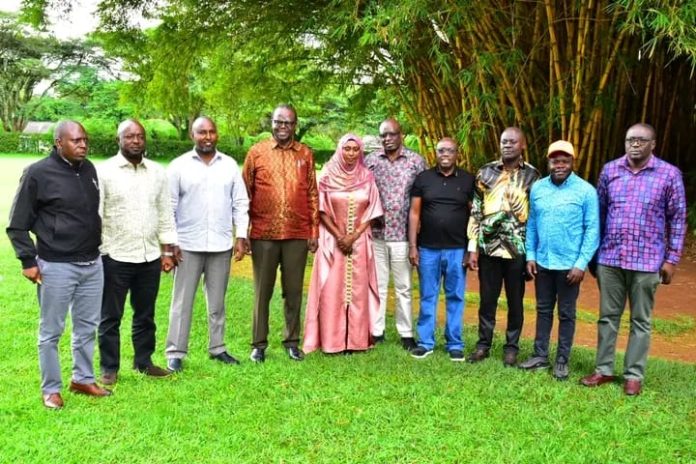
Uriri MP Mark Nyamita has cautioned political leaders in Nyanza against engaging in what he termed a destructive wave of witch-hunts and political mudslinging targeting Luo leaders already serving in government.

Speaking during a public function in Migori County, Nyamita urged leaders, particularly those close to the President, to use their access to power constructively by lobbying for more appointments and development projects for the region, instead of discrediting those already in office.

“Those who have the President’s ear should not spend their time naming who should be fired,” Nyamita said. “They should use that access to lobby for more opportunities, more development and more representation for our people. That is how regions grow and gain strength.”

His remarks come against the backdrop of renewed tension within Nyanza’s political class, following the widely publicised feud between Homa Bay Governor Gladys Wanga and Interior Principal Secretary Dr Raymond Omollo. The clash, which attracted nationwide attention, laid bare long-standing mistrust and competition among Luo leaders in and outside government circles.

The public fallout between the two leaders sparked a national conversation on the state of unity within the region, with many Kenyans expressing concern that personal and political rivalries were beginning to undermine collective progress.

Nyamita, a vocal advocate for pragmatic leadership, said such divisions only weaken the region’s influence and bargaining power in national politics.

“When we begin fighting each other publicly, we lose credibility and make it easier for outsiders to dismiss us,” he warned. “Nyanza must stand together, because unity is our strength and disunity our greatest weakness.”

The Uriri legislator further cautioned that leaders fuelling internal divisions and smear campaigns risk being publicly exposed in the coming year.

“If this continues, early next year we will begin naming those sabotaging progress through backdoor politics,” Nyamita said. “The people of Nyanza deserve progress and not endless political quarrels that serve no one.”

Nyamita also appealed to politicians to stop targeting civil servants unfairly, urging them to let technocrats perform their duties without fear of political victimisation.

“We cannot build Nyanza by attacking our own officers,” he said. “Let civil servants do their work. Political witch-hunts only slow down service delivery and development.”

His remarks were met with approval from residents and local leaders, who said the persistent infighting has overshadowed key priorities such as job creation, youth empowerment and infrastructure development.

Political observers note that Nyamita’s statement reflects growing frustration among reform-minded leaders keen to steer the region away from personality-driven politics and towards a shared vision of progress.

As the year draws to a close, Nyamita’s message strikes a chord across the lakeside counties as a reminder that unity, tolerance and focused leadership remain the cornerstones of Nyanza’s advancement.

“This is not the time to fight our own,” he concluded. “It is the time to stand together and build a stronger Nyanza, one that honours our past and secures our future.”

ODM Should Propose Kalonzo as President or Deputy

0

By Billy Mijungu

The Orange Democratic Movement should take a bold and unifying political position by proposing Kalonzo Musyoka as either a presidential candidate or a deputy presidential candidate, depending on the coalition it chooses to work with. ODM can decide to cooperate with the United Opposition or engage President Ruto and his allies, but in either arrangement, Kalonzo should be presented as the principal leader or the deputy. This would be a strategic and principled move that reflects loyalty, experience and long-standing sacrifice.

For more than fifteen years, Kalonzo Musyoka has stood firmly with ODM and with Raila Amolo Odinga through disappointments and moments of political isolation. He offered unconditional support without demanding shortcuts or threatening party cohesion. In a political culture where loyalty is often temporary, ODM has a rare opportunity to reward consistency and integrity. Kalonzo deserves to be considered for either President or Deputy President.

ODM should resist the temptation of promoting politically impatient figures whose ambitions could destabilise the party. Proposing red-hot contenders with little regard for unity risks fragmenting the very foundation that Raila Odinga spent decades building. The strength of ODM has always rested in discipline, order and collective purpose rather than individual ambition. That tradition must be preserved.

Party unity is paramount and should be protected deliberately. The current internal balance, where senior leaders do not aggressively pursue national apex positions beyond the level of governor, has helped maintain cohesion. This status quo should be sustained for now to allow the party to mature institutionally, strengthen internal democracy and heal lingering divisions without pressure.

Taking a step back from immediate power contests would give ODM the opportunity to grow leadership organically. It would also allow time for sober decision-making that is not rushed by electoral timelines or personal interests. Strong parties are built through patience, internal elections and clear rules rather than constant realignment around personalities.

Following the death of Raila Odinga, the party has witnessed an unprecedented surge in membership, goodwill and national appeal. Its support base has expanded beyond traditional regions and surpassed that of all other major parties. This political capital must be guarded.

That strength should be preserved by avoiding divisive national power struggles, conducting free and fair grassroots elections and enforcing discipline in party affairs. ODM must focus on institutional consolidation rather than short-term power calculations to secure its future relevance.

Luhya–Luo councils of Elders want ODM to resolve emerging dispute, to foster unity as leaders bicker over 2027 alliance

0

By Anderson Ojwang

The Council of Elders from the Luhya and Luo communities want the Orange Democratic Movement (ODM) leadership to resolve any emerging dispute without breaking the party.

The Elders said the party has been the backbone of Nyanza and Western Kenya and should never be allowed to disintegrate.

“The joint council called upon the ODM leadership to closely pay attention to the matter instead of division between the two communities,” the resolution read.

The elders said the two communities have never had any boundary dispute and have enjoyed a cordial political relationship, which must be nurtured at all costs.

“It was noted that Luos and Luhyas are the only neighbouring communities that have never had inter-tribal warfare,” they said.

The joint council resolved to unify the two communities for socio-economic and political dispensation.

“The joint council unanimously resolved to work together and form a formidable unity that will help them work together in resolving common economic, social and even political concerns,” they said.

ODM Deputy Party Leader Geoffrey Osotsi, Secretary General Edwin Sifuna and Siaya Governor James Orengo have accused a section of the party leaders, led by the National Chairperson Gladys Wanga, of trying to auction the party to President William Ruto through a broad-based government arrangement.

The leaders have claimed Wanga was trying to hand over the party to President Ruto in what they termed a hostile plot for a takeover.

“ODM is not for sale. ODM members have not decided and resolved on who to support as the president in the next general election.

The late Raila Odinga told us the ODM party has the power to produce a presidential candidate. If you want to tell us that you will support someone else, Baba asked us to ask you who told you?” he said.

Orengo said they will not allow the party to be auctioned and that he has evidence to that effect.

“ODM is not for sale. I know there are people who want to sell ODM, and I can even produce evidence that there are some people trying to sell this great party,” he said.

Orengo claimed the group wants a hostile takeover of ODM and is making deals on how to auction the party.

Osotsi said the 10-point agenda between ODM and UDA will determine future negotiations between the parties involved.

Wanga defended the party’s engagement in the broad-based government, saying it was the wish of Raila and for the good of the country.

“In the 2022 general election, we voted for Raila Odinga. This is not the government we voted for. But despite not having voted for it, when we sat at the table, we in ODM got six ministers.

We got critical dockets such as the Treasury Cabinet Secretary, for the first time after independence,”she said.

Wanga said politics was about interests and that they will be in the broad-based government up to 2027.

“We will go to the negotiation table with UDA and ODM, and that is why we must put our houses in order. As ODM, that is what we are doing,” she said.

Osotsi said if there will be any arrangements, the cards must be placed on the table for open and transparent negotiations.

ODM Party Leader Dr Oburu Odinga said the community will remain in government into the future and cannot break the agreement with President Ruto.

“Jim, do not think we are cowards; we know what is happening. We are careful. We have an agreement up to 2027 and we cannot break it because that is where Raila left us.

We cannot break it; we want to make ODM strong. We cannot leave the government, and even in the future we want ODM to be in government,”he said.

Oburu revisited the political coalition with former President Daniel Moi and Raila Odinga, where the council of elders visited the then president at his Kabarak home in Nakuru.

He said that could be one of the incidents Orengo might have been alluding to, where the community was betrayed.

Alego Usonga legislator Samuel Atandi has urged ODM party members to support President Ruto during the 2027 elections.

He said the ODM party currently has no capacity to contest the presidency and that the best bet for members was to support the re-election of the president.

The legislator said that former ODM leader Raila Odinga did not anoint anybody to run for the presidency on the party ticket, and the only option is to support the re-election of President Ruto.

“ODM, as a party, is not ready to present a presidential candidate in the 2027 general election. Those leaders who claim Raila never endorsed President Ruto have no capacity to run against him,” Atandi said.

The mysterious hand: Who is controlling ODM from outside? As MP Caroli says Raila only allowed Mbadi and Wandayi and not MPs to champion President Ruto’s two term campaign

0

By Anderson Ojwang

The death of former ODM leader Raila Amolo Odinga left a power vacuum in the party and provided an opportunity for mysterious hands to call shots at the second largest party in the country.

Similarly, allegations of betrayal of Raila in death by a section of MPs now championing President William Ruto’s two term campaigns after they failed to seek Raila’s permission at the party’s last meeting before his death.

Even before the body of Raila arrived in the country from India, where he died while seeking medical care, the mysterious hand had staged a coup in the ODM leadership structure.

Even the beneficiary of the coup, Dr Oburu Odinga, was not aware of the urgently engineered changes in the party leadership structure.

The engineered leadership coup locked out Kisumu Governor Prof Peter Anyang’ Nyong’o, who, by the time of Raila’s death, had not handed over the instrument of power to the deceased and should have continued to act and steer the transition of the party.

Oburu told reporters, “When we were receiving the body of Raila at the airport and the party had just met at 6.00 a.m. in the morning, the NEC and somebody just came and whispered to me, when I was still in shock, that do you know what the NEC has done? You have been appointed as the interim party leader.

I was so shocked. How did they appoint me at this time, when I am still in this state? Then they told me to think about it. They have nominated you to be the one. I feel I am the most sober in the circumstances and I am trying to sober myself. In terms of experience, which other people matches mine?”he said.

ODM Deputy party leader and Mombasa Governor Abdulsmawad Sheriff Nassir read the press statement after the National Executive Council (NEC) meeting.

“We believe in unity of purpose and a stronger democratic party and a party that must live on in many years to come. With this regard the NEC has designated the senator of Siaya County Dr Oburu Odinga to be the acting party leader until the time top party organs will meet and elect a substantive party leader to fit the big shoes that have been left by our party leader,” he read.

From the above, several questions have emerged on who engineered the changes in ODM at 6.00 a.m. before Raila’s body landed in Kenya by 9.00 a.m. aboard a Kenya Airways plane and why.

Why was Nyong’o, who had previously acted on the seat and had not handed over the instrument of power to Raila, ignored in the new power arrangement?

Suba South MP Caroli Omondi gave an insight of what could be happening in the party and the emergence of a mysterious hand pulling shots in the party.

“There was a very quick transition even before Baba’s body arrived. When Mzee Oburu announced that he had accepted to be the party leader, he said he did not even know that there was a process to make him party leader.

What that implies is that that call came from somewhere else. And that worries me a lot. This is because, it therefore seems that ODM is getting directions and controls from somewhere else,”he said.

Caroli said the party must not turn it back to former allies, terming that as betrayal, and that there was need for engagement.

“We cannot just wake up and turn our back on the entire Western Kenya that has stood with us on the four election circles. Eastern three election circles, Coast, Masai, Turkana, Kisii four election circles. How do we just walk away? Baba had 7 million votes in the last general elections. Those 7 million votes, I think 24 percent were Luos, so where are 76 percent? There is a big constituency of Baba that we need to engage with,” he said.

Caroli said Raila only allowed Cabinet Secretary for Treasury John Mbadi and his Energy counterpart Opiyo Wandayi to champion Ruto two term campaigns while the MPs were restrained, save for Alego MP Sam Atandi, who had asked for exemptions.

“Raila told us not to say two term. And of any MP who wants to contradict that, let them try and we will tell them where they were told.

Only Alego MP Sam Atandi raised his hands as the chairman and member of the Budget Committee and asked Raila to allow him sometimes to say two term. Baba’s instructions were that only Mbadi and Wandayi should say two term, the rest were a no,”he said.

Caroli said there was need for a structured engagement with UDA ahead of the 2027 general elections.

“We cannot just move like crowds and cheering like. We must sit down and look at how our engagement is going to be with UDA.

Since UDA came to power, three fundamental things have happened, one Genz revolution, two was the rebellion of Mt Kenya and three the sad demise of former Prime Minister Raila Odinga.

All these things have to be factored in as you engage with them going forward,” he said.

Party national chairperson Gladys Wanga has defended the broad-based arrangement, saying the party was not apologetic of the party being in the broad-based government and that they have seen results of being in the broad-based government.

But the Secretary General Edwin Sifuna said the ODM members have not resolved to support any candidate for the 2027 presidential election.

“Raila told us that ODM was capable of producing a presidential candidate in the 2027 general elections. Baba asked us to ask you, who told you,” he said.

Why 2025 was a defining period for LBDA, with major strides as the Authority focuses on priority projects in 2026 to spur development

0

Author CPA Wycliffe Ochiaga, EBS

The year 2025 has been a defining period for LBDA as we continued to advance our mandate of promoting sustainable socio-economic
development across our region, while remaining firmly aligned with our strategic objectives and the national BETA agenda.

Throughout the year, we deepened our institutional capacity, expanded value-chain productivity, strengthened our revenue base, and built partnerships that anchor long-term sustainability. These achievements reflect our collective resilience, commitment to excellence, and clarity of purpose.

Our investment in human capital formed a strong foundation for the year’s progress. A total of 29 staff members received specialised local training across various disciplines, and two benefited from international training opportunities that enhanced their technical and leadership competencies.

To contribute to national skills development, we provided industrial attachment opportunities to 182 students from various institutions. Recognising the significance of staff welfare, mental health awareness programmes were conducted for all employees.

We also finalised and operationalised key governance instruments, including the Affirmative Action Plan, the Internship Policy, and the Gender Mainstreaming Policy, ensuring
that LBDA remains aligned with national priorities and global best practices.

ISO Certification

Our commitment to quality management was reaffirmed through successful recertification under the ISO 9001:2015 standard.

Additionally, we strengthened ICT governance through the development and implementation of the ICT Policy, which enhanced data security, cybersecurity, and overall digital maturity.

Our automation agenda also progressed significantly, with more processes digitised and integrated with e-GP systems for efficiency and transparency.

We made notable strides in strengthening our commercial portfolio and enhancing own-source revenue.

Operationalisation of Real Estate

The operationalisation of the real estate division within the Commercial Services Directorate led to an increase in mall occupancy from 30% to 45%, reflecting improved market confidence and operational efficiency.

The hay production and livestock value-chain pilot in Migori County demonstrated positive outcomes and presents a promising revenue stream as we scale up.

Our Aquaculture Centre in Kibos continued to be an important asset, producing over 15 million fingerlings and training more than 600 farmers, while also providing hands-on learning opportunities for students from institutions across the region.

Food Security

These initiatives reinforce LBDA’s role in transforming local food systems and supporting livelihoods.

Significant progress was also made in modernising agriculture and strengthening value chains in support of the BETA agenda.

Through our rice mopping-up programme, we procured 5,000 tonnes of rice from Ahero, Kimira-Oluch, Nyatike, Siaya, and Bunyala at KSh 60 per kilogram, injecting substantial resources into local economies and stabilising farmer incomes.

Construction and rehabilitation of 20 kilometres of canals within the Kimira-Oluch Irrigation Scheme in Homa Bay County advanced significantly, targeting 8,000 acres of land under production.

With a projected yield of 3 tonnes per acre, this initiative is poised to significantly increase local rice output, generate employment, and enhance food security.

To strengthen the downstream segment of the rice value chain, we created dedicated space at our rice mill plant for the full automation of the packaging component.

This strategic intervention is critical to improving throughput, ensuring consistency in packaging quality, and reducing post-harvest losses.
The automated system will significantly enhance processing capacity, enabling timely dispatch of milled rice to the market while meeting strict standards for weight accuracy, branding, and food safety.

This investment improves overall operational efficiency, strengthens market competitiveness, and positions the rice mill as a scalable commercial enterprise supporting farmer incomes and LBDA’s revenue sustainability.

To further strengthen productivity and financing options for farmers, we signed an MoU with GreenTech Hub Ltd, while our partnership with Safaricom Foundation under the Wezesha Programme began to bear fruit, with horticulture demonstration farms taking shape in Busia County, equipping youth with modern agricultural skills.

Our commitment to environmental sustainability and climate resilience remained strong. We propagated over 380,000 seedlings, 15% of which were fruit trees, contributing to catchment conservation and
improved community nutrition.

Flood mitigation efforts

Flood mitigation efforts continued through the construction of dykes in Nyando, Kisumu County, reducing vulnerability for communities and protecting farmlands and critical infrastructure.

We also improved access to clean water by drilling and equipping 14 boreholes across institutions and communities within our region, directly contributing to public health and resilience.

Stakeholder engagement and media relations were strengthened throughout the year, enhancing transparency, visibility, and public confidence in the Authority’s work.

Performance contracting

We successfully underwent the 2024/2025 Performance Contract evaluation, with our results once again ranking consistently very good, an affirmation of our institutional discipline and commitment to delivering value.

2026 priorities and projects

Looking ahead to 2026, our focus is to consolidate the gains achieved and accelerate high-impact programmes for even greater community benefit. We intend to complete and operationalise the Kimira-Oluch Irrigation Scheme and commence development of the South West Kano Irrigation Project in Kisumu, targeting 4,000 acres under irrigation.

We also plan to scale up poultry value-chain development by promoting modern layer-farming technologies and building the capacity of community farmers to increase productivity and household incomes. Strengthening community outreach will remain central as we deepen engagement with beneficiaries and partners. Guided by our sustainability strategy, we aim to steer LBDA towards full financial self-reliance within the next two years through enhanced commercial ventures, efficient internal systems, and expanded value-chain opportunities.

While the year registered strong progress, we acknowledge the challenges that persisted, including resource limitations, climate-related disruptions, ageing infrastructure, and occasional delays in project implementation. These challenges tested our adaptability but also strengthened our resolve and informed the strategies we will carry into 2026.

I extend my sincere appreciation to our staff for their dedication, professionalism, and unwavering support, and to the Board of Directors for their strategic leadership and guidance.

As we move forward, we remain guided by the principle that resilience, clarity of vision, and unwavering focus are the bedrock of sustainable transformation. With continued collaboration and commitment, LBDA is well positioned to deliver even greater impact for our communities and for the nation.

Merry Christmas and a Prosperous New Year 2026

The writer is Managing Director, Lake Basin Development Authority.

Why businessman and philanthropist, Edward Onyango is rattling the Kisumu Central politics ahead of the 2027 general elections

0

By Sandra Blessings

The battle for the 130,148 votes in Kisumu Central constituency has begun in earnest, with various aspirants rolling up their sleeves for the contest.

This time, Kisumu Central constituency contest has attracted youthful aspirants, with Edward Onyango, popularly known as Bob CEO, leading the pack.

Bob CEO, a respected Kisumu-based businessman and philanthropist, is unsettling the political order in the city and emerging as one of the top contenders.

The soft-spoken and humble businessman is viewed as a potential Member of Parliament for the city, engaging in various development projects, and enjoys the family brand that has become synonymous with the lakeside city.

Onyango enjoys the brand of his grandmother, the first Kisumu woman mayor and the first woman Member of Parliament, the late Mama Grace Onyango.

Mama Grace was not only a woman of many firsts, but also became the first woman Deputy Speaker and was respected for her honesty, truthfulness, support to the needy and vulnerable members of society, and her non-controversial nature.

Mama Grace was admired for her leadership, which was people-driven and transformative, and when she retired from politics, she settled to run family businesses and enjoy family time.

Her grandson, Bob CEO, has inherited the character and virtues of his grandmother and has been steadfast in helping orphans, the needy and the vulnerable by supporting them through school fees payments and the provision of basic needs.

“It is a calling for me to share and support the needy and orphans by supporting their education. In education, you are building a successful community, and that is my ideology. This is one of the reasons why I am persuaded to be the next MP, to expand this noble initiative,” he said.

Bob CEO also enjoys the brand of the Kisumu populous eating joint, Akwacha, known for its mouth-watering delicacies and as the city’s home of food.

Bob CEO has grown the franchise into one of the leading hospitality brands in the country, with branches in Nairobi and Siaya County.

His business acumen and strategic investment knowledge would be ideal for the city, which is on an expansion trend, helping to blend and provide the much-needed leadership in transforming the lakeside town.

**“I have a vast wealth of knowledge and, with engagement with the governor of the day, I am convinced we can take the city to the next level. I am tested and proven in my management and leadership skills.

Running the hospitality industry is very challenging, and having people trust your brand for decades is a show of honour and confidence in your management.

That is why I am asking the 130,148 electorate of the city to show me that confidence and trust at the 2027 ballot. I am prepared to be the change they want,”** he said.

Bob CEO has presided over and sponsored several medical camps in the constituency and is committed to talent development by supporting sports activities in the city.

He has been instrumental in agitating for the rights of the vulnerable and has been at the forefront in opposing the move to relocate the Jua Kali sector from their business points.

“I have presided over several empowerment programmes in the constituency and donated to various start-up businesses to jump-start them, and I am happy that the majority are doing well. I constantly mentor them, and that is my happiness,” he said.

Bob CEO enjoys wide support from the youth, who identify with him as one of their own and see him as a truthful and honest leader whose background is well known and respected.

The business community also see him as one of their own who will articulate their agenda. Equally, he enjoys the support of women, Jua Kali artisans and men, who believe he can offer the kind of leadership his grandmother, Grace Onyango, offered the city.

The current MP, Dr Joshua Oron, has switched his attention to the Kisumu gubernatorial race, leaving the seat open for grabs.

Bob CEO is not leaving anything to chance in his quest to be the next Member of Parliament for Kisumu Central and has embarked on elaborate campaign strategies to win the seat.

Kevin Juma Triumphs at NCBA Golf Series Grand Finale 5th Edition

0

By Phillip Orwa

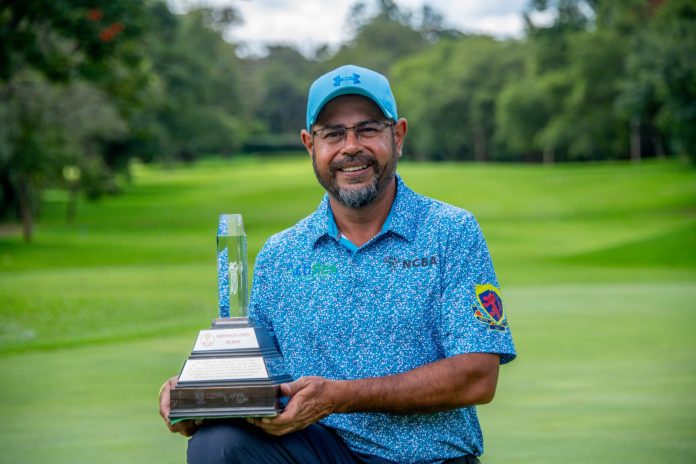
Kevin Juma posted a round 76 gross to the Clinch the Fifth edition of the NCBA Golf Series during the Grand Finale held on 28th November at the Muthaiga Golf Club.

The Royal Nairobi Golf Club handicap 4 player emerged victorious after a tightly contested round that brought together 90 qualifiers from Kenya, Uganda, Tanzania and Rwanda. The field featured some of the best amateur golfers from across the region, all battling for one of the most prestigious amateur golf titles in East Africa.

Speaking after his win, Juma said “This victory means a lot to me because the NCBA Golf Series brings together some of the strongest players from across the region. The Muthaiga course was demanding as usual, so I had to focus on every shot. I tried to stay patient and play my game, especially on the back nine where conditions were tough. I am grateful for the opportunity to compete at this level, and I want to thank NCBA for creating a platform that pushes golfers like us to keep improving.”

Juma, had also earlier won the Overall Men’s title at his home club’s leg of the series in September, with the win, the handicap 4 took home a cash prize of Sh130,000, an air ticket to London courtesy of Kenya Airways, a signature leather bag from Sandstorm and a bottle of Johnnie Walker courtesy of EABL.

Following in the second place was VetLab Sports Club’s John Odhiambo, playing off handicap 3, who carded 76 gross but lost on countback due to Juma’s lower handicap.
Odhiambo, who also secured his ticket to the Grand Finale by winning his home club leg, walked home with Sh130,000, an air ticket to Mauritius courtesy of Kenya Airways, a Sandstorm signature bag and a bottle of Johnnie Walker.

VetLab produced another champion through Mary Karano, who claimed the Overall Lady Winner title. Playing off handicap 12, she carded an impressive 79 gross to secure her place among the top performers of the tournament.
Karano also earned Sh130,000, an air ticket to South Africa courtesy of Kenya Airways, a Sandstorm bag and a Johnnie Walker bottle.

In the Nett divisions, Lugalo Golf Club’s Mwanansu Nsajigwa (handicap 8) from Tanzania won Division One with 77 points after beating Evans Kirui (handicap 12) on countback.

In Division Two, Kitale’s Joseph Kitavi (handicap 23) secured the top spot with 44 points, while the ladies’ Division Two winner was Lillian Kong’ani with 37 points.

In Division Three, Ann Atieno (handicap 29) edged Josephine Chesang (handicap 26) by a single point after posting 40 points.

Among the juniors, Marcel Adeyemo (handicap 28) posted an impressive 41 points to claim the junior title, showcasing the growing strength of youth golfing talent across the region.

In the subsidiary categories, Amon Ngecu (handicap 25) claimed the Staff prize with 38 points, while Patrick Cheruiyot (handicap 26) won the Guest prize after carding 44 points.
Speaking during the awards gala, NCBA Group Managing Director John Gachora said
“Tonight is special because it marks five years since we began this journey. When we launched the NCBA Golf Series in 2021, our vision was to build a platform that could help grow the sport, nurture talent, and bring communities together. Looking back today, I am extremely proud of what we have accomplished collectively.”

Over these five years, our investment of over Sh200 million in golf has seen us connect with more than 10,000 golfers, activate over 400 tournaments, and work closely with nearly all golf clubs across the region. The 2025 Golf Series season spread across East Africa hosted 38 events, including qualifiers, mugs and club nights. Together, these events formed a vibrant and connected golfing community,” he added.

Gachora also announced that rising star Njoroge Kibugu has officially joined the NCBA professional squad. He becomes the latest addition to the group of pros the bank is supporting on the PGK Equator Tour, which includes Edwin Mudanyi, Eric Obura and Abraham Galgalo.

The NCBA Golf Series Grand Finale attracted a field of 250 players, made up of the 90 regional qualifiers and invited guest players.

The tournament was supported by; EABL through its Johnnie Walker brand, Sandstorm Kenya, VISA, JCB Ganatra and Kenya Airways.

Kenya Needs to Revive Science, Technology and Innovation Ministry (STI)

0

By Otula Owuor

Kenya can revive the much-needed Ministry of Science, Technology and Innovation (MSTI). The country has highly skilled scientists and is among the African nations able to attain and sustain science-driven socio-economic development.

However, scientists and professional associations at universities, national and international research institutes need to take note of President William Ruto’s major policy statement that Kenya aims to attain first-world status by 2055.

According to the President, Kenya aims to allocate 2% of its Gross Domestic Product (GDP) to Research and Development (R&D).

He lamented that the country exports tea, coffee, cotton, fish, minerals and hides and skins in raw form, only to import them back at a premium as finished products.

The statements also constitute a strong wake-up call for scientific institutions and industries to help Kenya curb excessive dependency on imports and exports of raw materials.

Thus, scientists in Kenya and other African nations need to focus more on research aimed at producing goods and services for competition in local, national, regional, and global markets.

The country’s research institutes include Kenya Medical Research Institute (KEMRI), Kenya Agricultural and Livestock Research Organization(KALRO), Kenya Forestry Research Institute(KEFRI), Kenya Industrial Research and Development Institute (KIRDI) and Kenya Marine and Fisheries Research Institute (KMFRI).

Still, the Kenya Veterinary Vaccines Production Institute (KEVEVAPI) conducts research that leads to the development of effective veterinary vaccines to protect and improve the livestock industry in Kenya and other African nations.

Even more, there are very strong indicators that the country is on the path to advanced research and development activities if adequate funding is made available to the rapidly evolving Kenya Advanced Institute of Science(KAIS)

According to the country’s Cabinet News of March 11, 2025, KAIS is a specialized postgraduate degree-granting institution of strategic national importance, founded in collaboration with South Korea.

The institute’s advanced courses are mostly associated with various engineering fields, including civil, agricultural, chemical, mechanical, electrical, and electronic engineering. Nuclear science has also been included among others.

However, it is notable that worldwide scientific research is already highly integrated, including the use of similar or related equipment, processes and scientific skills, among others.

Kenya can revive the much-needed Ministry of Science, Technology and Innovation (MSTI). The country has highly skilled scientists and is among the African nations able to attain and sustain science-driven socio-economic development.

Otula Owuor is the Founder Of Science Africa

ODM in Slumber Slide, Worrying Stats, Potent Rebellion Ahead of 2027 Elections

0

By Anderson Ojwang

Orange Democratic Movement (ODM) may have won the just-concluded three parliamentary by-elections in its strongholds of Nyanza and the Coastal region, but the party could be walking into a slumber slide with emerging worrying statistics and a potent growing rebellion.

The statistics in the Ugunja and Kasipul by-election victories are so telling and worrying for the party ahead of the 2027 general elections that they cast aspersions on ODM’s future.

Similarly, the loss of Kariobangi North ward by-election to former Deputy President Rigathi Gachagua’s party DCP, and the failure to field candidates in Kakamega and Nyamira counties in the just-concluded by-elections—regions that were the late Raila Odinga’s strongholds—is baffling.

Low voter turnout — or is it a potent protest against the party?
In the 2022 presidential election, President William Ruto defeated Raila by only 200,000 votes to be declared the fifth president of Kenya. Raila got 6,942,980 against Ruto’s 7,176,141.

Siaya County alone, with a total of 533,595 registered voters, gave Raila 371,092 against Ruto’s 4,320, with 376,354 having voted.
Siaya alone, with 157,241 voters who elected not to vote, could have forced a rerun.

In Kisumu County, with 606,754 registered voters, Raila got 419,997 against Ruto’s 10,011. A total of 431,005 votes were cast, while 175,749 did not vote.

In Migori County, with 469,019 registered voters, Raila got 294,136 votes against Ruto’s 52,525, accounting for 347,773 votes cast, while 121,246 did not vote.

Homa Bay County had 551,071 registered voters, with Raila getting 399,784 votes against Ruto’s 3,497, while a total of 404,112 votes were cast. 146,959 did not vote.

From the above statistics, the four counties had a total of 2,095,863 registered voters, of which 601,195 did not vote—accounting for 28.7 percent.

The question, therefore: Why has there been a significant decline in voters during general elections in the region? Could it be a silent rebellion?

The answer could easily be derived from the just-concluded Ugunja and Kasipul by-elections.

The Ugunja and Kasipul by-elections opened a can of worms on what could have been affecting ODM for ages—flawed and manipulated party primaries.

In Ugunja and Kasipul, there were allegations of flawed nominations, which later reared their ugly head in the by-elections.

For instance, in Ugunja, with 60,114 registered voters, only 15,017 voted, translating to 24.9 percent turnout, while 45,097 voters did not turn out. A powerful statement.

The ODM candidate won with 9,447 votes. In the ODM primaries, the top three candidates shared 9,451 votes, with Moses winning with 5,326. Interestingly, Moses won the by-election with 9,447—a drop of 11 votes from the total garnered by the top three contenders in the party primary—while 5,570 electors voted against the party.

In the Kasipul ODM nomination, a total of 22,727 party members participated in the exercise, which was won by Boyd Were after getting 22,727 votes.

Were won the by-election by garnering 16,819 votes, meaning that along the way the party lost 5,908 loyal members, accounting for 26 percent of those who participated in the nomination. This statistic is extremely telling and worrying.

The voter turnout was 36 percent, accounting for 31,077 voters from the 67,017 registered voters in the constituency.

The joint opposition garnered 14,258 votes, translating to 45.9 percent, against ODM’s 16,819, which translates to 54.1 percent. A worrying trend in the absence of Raila in the 2027 general elections.

The reality remains that a majority of voters did not turn up in the last general election after the party issued direct tickets and denied several aspirants the opportunity to contest. The silent protest cost Raila the presidency.

Recently, Embakasi East MP Babu Owino claimed that ODM would not give him the party ticket to contest for the Nairobi gubernatorial race and preferred the incumbent Johnson Sakaja over him.

This forced the new party leader, Dr. Oburu Odinga, to summon and reassure him that the party would conduct a free and fair election.

But old habits die hard, and with 2027 approaching, the party may revert to old habits and issue direct tickets or manipulate the nomination exercise. Time will tell, as this is likely to lead to protest and rebellion.

Waning influence in Luhya and Kisii counties
Raila turned Luhya and Kisii counties into his strongholds, and ODM was the party of choice. But the recent by-elections and failure to field candidates in parliamentary and civic by-elections left the party colorless in the region.

In Kisii County, Deputy Party Leader of Jubilee Dr. Fred Matiang’i has rattled the vote bloc and threatens ODM’s existence in the region.

UPA, a party associated with him, won the Ekerenyo ward through Jeremiah Ongaro, while Jackson Mogusu of PDP won Nyansiongo ward. The two parties are allied to Matiang’i.

In Kakamega County, ODM failed to field a candidate in Malava constituency and Kisii East ward, while in Bungoma County’s Chwele-Kabuchai ward, it also did not have a candidate.

The emergence of Trans Nzoia Governor George Natembeya in Luhya politics is also rattling ODM and outfoxing it in the region.

Loss of Kariobangi North ward — tip of the iceberg of what awaits the party
Gachagua’s DCP won the Kariobangi North ward through David Warui, while ODM’s candidate came a distant third in what was previously known as their stronghold.

ODM Secretary General Edwin Sifuna is the Nairobi Senator, while Babu wants to be governor, and the duo enjoy massive support in the city. But they never went out of their way to aggressively campaign for the party candidate, which could have contributed to the loss.

The Oburu Odinga and Broad-Based Factor
The decision to confirm Oburu as the party leader has split the party down the middle, with some arguing that Kisumu Governor Prof. Anyang’ Nyong’o was still the party leader at the time of transition.

Winnie Odinga recently called for an NDC to elect new officials, while Babu also expressed interest in the seat.

The broad-based arrangement has also split the party, with one wing led by National Chairperson Gladys Wanga, Oburu, and Junet Mohammed supporting it, while another wing led by Siaya Governor James Orengo—including Sifuna and Babu—opposes it.

The demise of Raila leaves the party in a precarious position, and if not handled well, it may plunge into the fate that befell Ford-K, founded by Raila’s father, the late Jaramogi Oginga Odinga.

Election is Not Just an IEBC Affair: It’s a Collective Responsibility of All Civic Actors

0

Dr. Edris Omondi Esq.

Emerging Trends of Violence in the Just concluded By-Election Demand Urgent Action

The Just concluded by-elections in Kenya have revealed a disturbing pattern of violence, intimidation, and disruption that threatens the integrity of the electoral process. From clashes between rival supporters to attacks on polling agents, the incidents signal a worrying escalation that, if unchecked, could have serious consequences ahead of the 2027 general elections.

Across multiple counties, voters and candidates experienced a range of disturbing incidents:

Polling station disruptions: Party agents and candidates reported being threatened or physically attacked while overseeing voting. Some polling centers closed early due to fear of escalation.

Intimidation and property destruction: Vehicles and campaign offices were targeted, and youth groups armed with crude weapons were seen around several polling centers.

Low voter turnout: Fear of violence discouraged many citizens from participating, undermining democratic representation.

Experts say these incidents are not isolated, but rather indicate an emerging national trend: pre-election intimidation, organized youth mobilization, attacks on observers, and misinformation are becoming tools for manipulating outcomes.

The implications are serious. If these patterns persist, Kenya risks widespread instability during national elections, eroding public trust in democratic institutions.

The Crime Prevention Initiative Trust (CPIT), a leading civil society organization dedicated to crime prevention, is stepping forward with a solution-oriented approach. CPIT proposes:

• Electoral risk mapping and early-warning systems to monitor and prevent outbreaks of violence in high-risk areas.

• Community peacebuilding initiatives that engage youth, religious leaders, and local stakeholders to reduce recruitment into political violence.

• Election monitoring and documentation, providing evidence for accountability and ensuring that perpetrators of intimidation face justice.

• Public civic education campaigns to inform voters of their rights and promote peaceful participation.

CPIT emphasizes that elections are not only about casting votes, they are about creating safe, transparent, and credible environments for all citizens. Civil society, government institutions, security agencies, and community leaders must collaborate to address the current gaps and ensure that violence does not determine electoral outcomes.

“Peaceful elections are not a privilege, they are a constitutional right and a shared responsibility,” says CPIT. “We must act now to safeguard democracy before the 2027 general election.”

As Kenya looks ahead, the question is clear: will all stakeholders rise to the challenge, or will fear and intimidation continue to shape the country’s democratic future?

edris@crimeprevention.net
www.crimeprevention.net
The Writer is a former County Attorney and the Executive Director and Founder of Crime Prevention Initiative Trust.